
Characterising Gabriel and Bathsheba Chapter 1 and Chapter
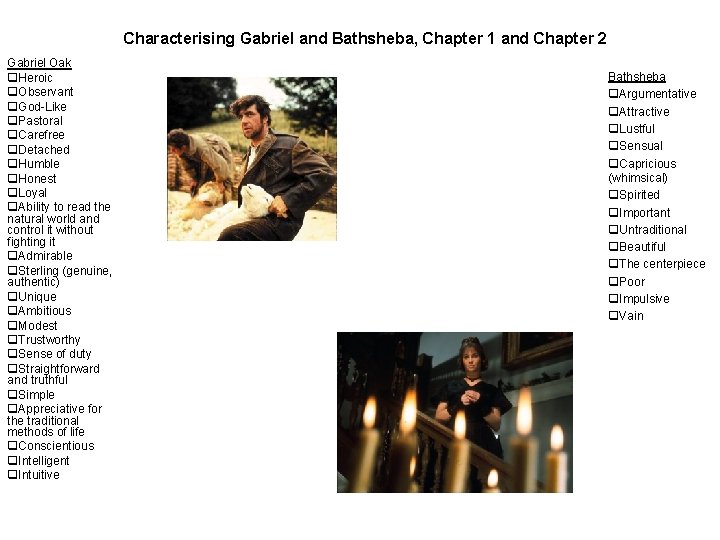
Characterising Gabriel and Bathsheba, Chapter 1 and Chapter 2 Gabriel Oak q. Heroic q. Observant q. God-Like q. Pastoral q. Carefree q. Detached q. Humble q. Honest q. Loyal q. Ability to read the natural world and control it without fighting it q. Admirable q. Sterling (genuine, authentic) q. Unique q. Ambitious q. Modest q. Trustworthy q. Sense of duty q. Straightforward and truthful q. Simple q. Appreciative for the traditional methods of life q. Conscientious q. Intelligent q. Intuitive Bathsheba q. Argumentative q. Attractive q. Lustful q. Sensual q. Capricious (whimsical) q. Spirited q. Important q. Untraditional q. Beautiful q. The centerpiece q. Poor q. Impulsive q. Vain
Chapter 2 Questions 1. 2. 3. 4. 5. 6. 7. 8. How is pathetic fallacy used at the start of the chapter? What might it suggest? How is the hill described, why it is described and how does the image of the hill connect structurally to the previous chapter? Notice the waves of sensory details, use of adjectives/adverbs/verbs and the implied personification (when nothing is personified literally, but implied by the abundant amount of description and sensory details). There is a second wave of pathetic fallacy—’the sky was clear’ and the clarity of the night on a whole. What may this suggest…foreshadow? What’s the effect of the repetition of the pathetic fallacy? This question connects with previous three. Hardy is purposefully creating an idyllic atmosphere. Why? Impact on readers? How is Oak characterised? Look at how Hardy describes his actions and what the connotations of these actions represent, particularly in regard to how he is framed within the abyss of night. What is the symbolic nature of Oak’s actions with the lamb? What does Oak do when he arrives at Bathsheba’s hut? How does what he hear foreshadow his future actions? How is Bathsheba characterized? Prophetic Fallacy--Alternatively, characters might have a vision of a terrible future and give up hope, but discover that the vision was of something fairly innocuous that looked unusually dangerous because of the limits that the vision imposed.
- Slides: 2