
CHARACTER TRAITS WHY IS IT IMPORTANT TO KNOW
- Slides: 11
CHARACTER TRAITS WHY IS IT IMPORTANT TO KNOW THIS CONCEPT?
CHARACTER TRAITS THESE HELP US DEVELOP OPINIONS AND EMOTIONS ABOUT CHARACTERS IN A STORY SO THAT THE STORY • HOLDS OUR INTEREST • RELATES TO OUR LIVES • MAKES US DEVELOP FEELINGS THAT ENGAGE US IN A STORY.
ARE CHARACTER TRAITS GOOD OR BAD? • Character traits can be good or bad---positive or negative. • Basically, character traits define how a character in a story behaves and tells us his/her personality.
WHICH CHARACTERS HAVE CHARACTER TRAITS? • Mostly all characters have character traits. We usually just identify the traits of the main characters in the story. AND guess what? • A character can have more than one trait • AND a character can change throughout a story
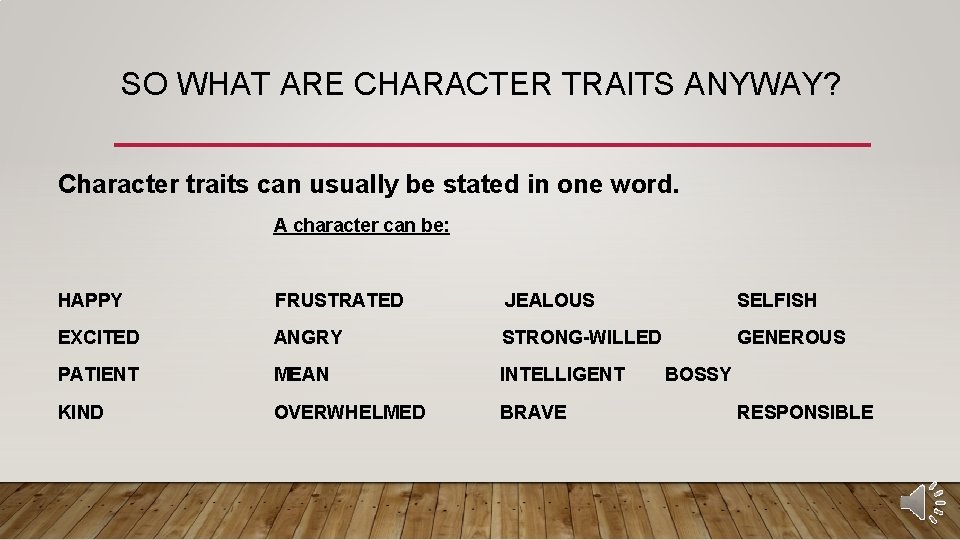
SO WHAT ARE CHARACTER TRAITS ANYWAY? Character traits can usually be stated in one word. A character can be: HAPPY FRUSTRATED JEALOUS SELFISH EXCITED ANGRY STRONG-WILLED GENEROUS PATIENT MEAN INTELLIGENT KIND OVERWHELMED BRAVE BOSSY RESPONSIBLE
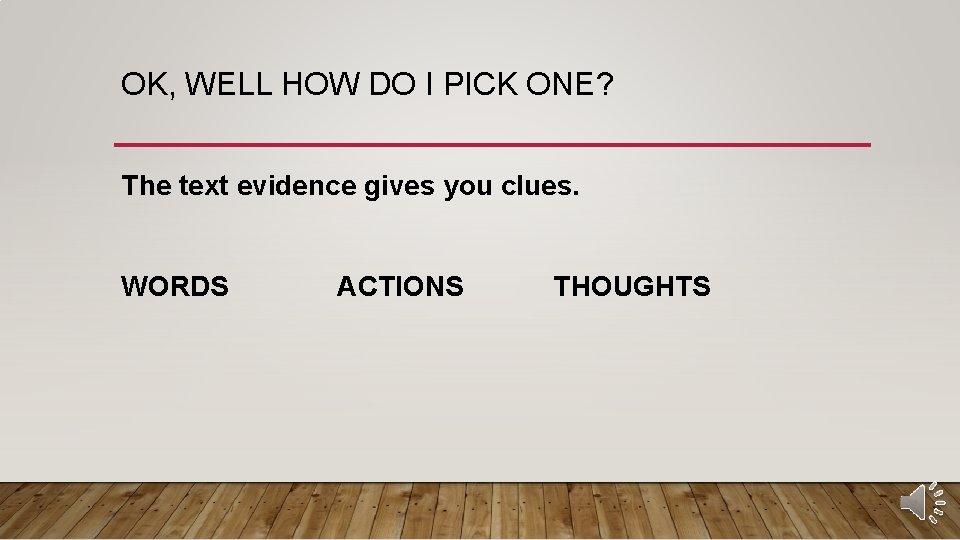
OK, WELL HOW DO I PICK ONE? The text evidence gives you clues. WORDS ACTIONS THOUGHTS
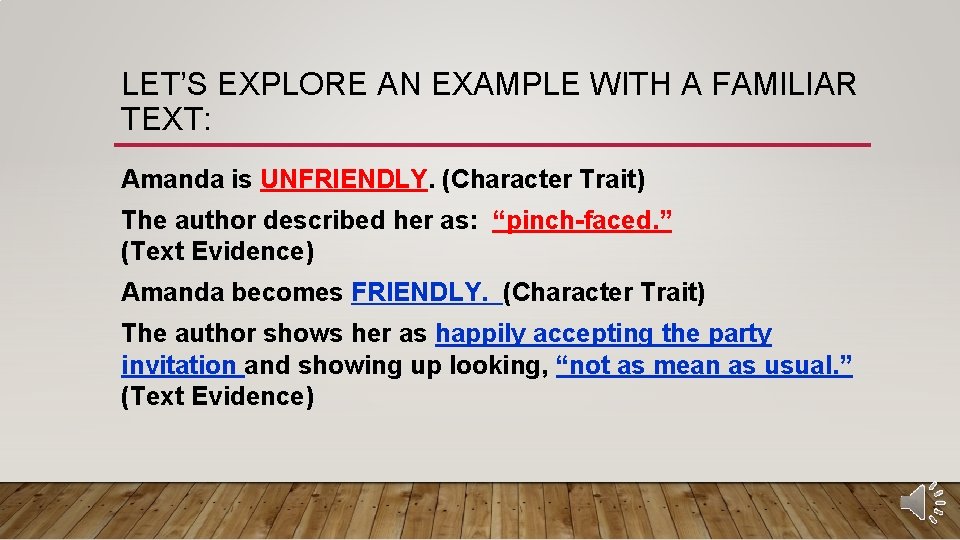
LET’S EXPLORE AN EXAMPLE WITH A FAMILIAR TEXT: Amanda is UNFRIENDLY. (Character Trait) The author described her as: “pinch-faced. ” (Text Evidence) Amanda becomes FRIENDLY. (Character Trait) The author shows her as happily accepting the party invitation and showing up looking, “not as mean as usual. ” (Text Evidence)
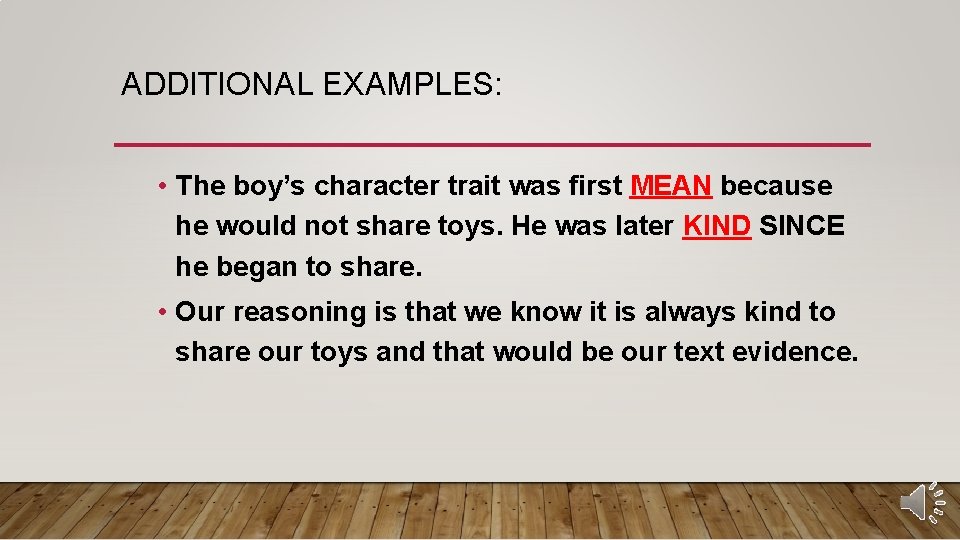
ADDITIONAL EXAMPLES: • The boy’s character trait was first MEAN because he would not share toys. He was later KIND SINCE he began to share. • Our reasoning is that we know it is always kind to share our toys and that would be our text evidence.
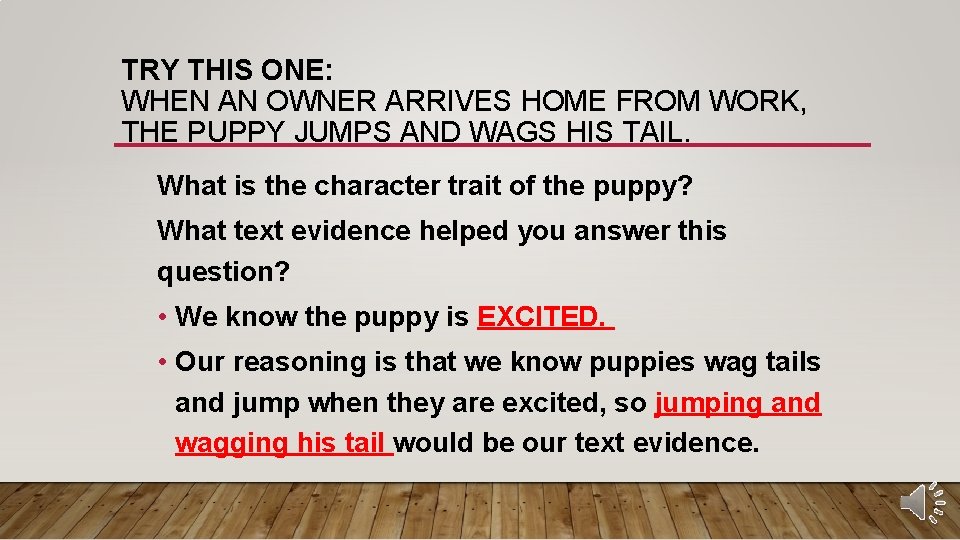
TRY THIS ONE: WHEN AN OWNER ARRIVES HOME FROM WORK, THE PUPPY JUMPS AND WAGS HIS TAIL. What is the character trait of the puppy? What text evidence helped you answer this question? • We know the puppy is EXCITED. • Our reasoning is that we know puppies wag tails and jump when they are excited, so jumping and wagging his tail would be our text evidence.
YOUR TURN • Now, read a story. • Identify the main characters. • Identify a character trait for each of the characters. • Locate evidence in the text to justify your reasoning.
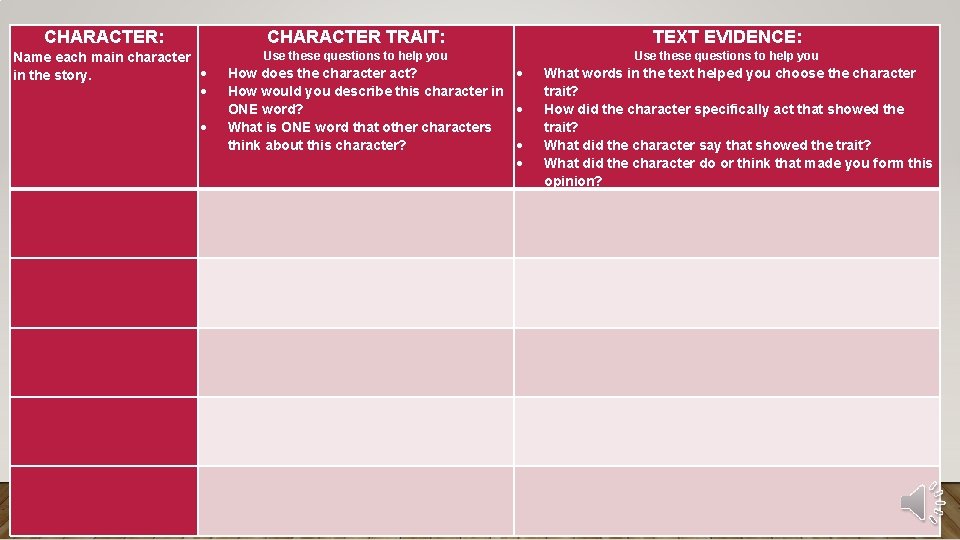
CHARACTER: Name each main character in the story. CHARACTER TRAIT: TEXT EVIDENCE: Use these questions to help you How does the character act? How would you describe this character in ONE word? What is ONE word that other characters think about this character? What words in the text helped you choose the character trait? How did the character specifically act that showed the trait? What did the character say that showed the trait? What did the character do or think that made you form this opinion?