
Character Development Designing strong protagonists and secondary characters
- Slides: 27
Character Development { Designing strong protagonists and secondary characters
There are many key characters in every story… 1) Protagonist: Your main character. The character your audience should root for (not always a “good guy”). 2) Antagonist: A person or entity that works AGAINST your protagonist (The antagonist can be a good person. If the protagonist is a murderer, the antagonist may be a cop). 3) Foil: A character that is the opposite of the protagonist. This enhances the protagonist’s main traits. 4) Secondary Characters: Everybody else.
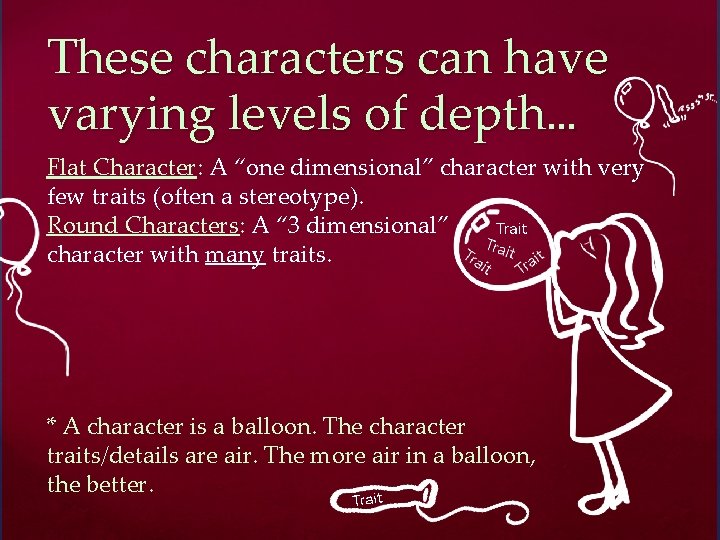
These characters can have varying levels of depth… Flat Character: A “one dimensional” character with very few traits (often a stereotype). Round Characters: A “ 3 dimensional” character with many traits. * A character is a balloon. The character traits/details are air. The more air in a balloon, the better.
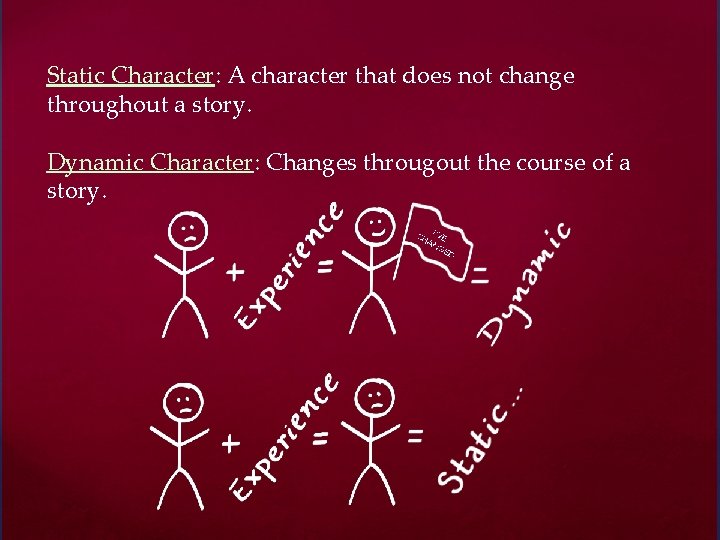
Static Character: A character that does not change throughout a story. Dynamic Character: Changes througout the course of a story.
The Protagonist: The main character that the audience roots for (should be round and dynamic).
A protagonist needs to be a character that the reader/viewer WANTS to root for… Choosing one of these archetypes can help: 1) The Common Man: 2) The Underdog: 3) The Idol: 4) The Antihero:
Different archetypes go in and out of style, just like clothing and other trends…
The Idol is a character that dates back to mythology. They are the best representatives of humanity with extraordinary intelligence, honesty, beauty, and/or kindness. * The Idol is almost always a “Willing Hero” It has become increasingly less popular in recent years. Modern audiences sometimes find these characters unrealistic. Some famous idols include: - Many Superheroes (Superman) - Agents (James Bond) -Detectives (Sherlock Holmes) Make sure you give your character one flaw to make them more relatable (Kryptonite, Weak Spot for Women, Drug Addict) ** You have to be careful when designing an idol. They can easily become flat and static (one dimensional). (There is a reason that Batman movies are more diverse than Superman movies)
The Antiheros have become increasingly popular in the last 10+ years. They lack conventional heroic attributes like idealism, courage, or morality. Even though they sometimes do the right thing, it is often “unwillingly” or for the wrong reasons. Some famous antiheros include: - Batman - The Punisher - Dexter - Jack Sparrow - Han Solo - Severous Snape * The more “anti” your antihero is, the more you’re risking your readers turning against him. There is a difference between gruff, rough, damaged, or grumpy, and being outright evil. **Antiheroes can change, but be careful about turning them into someone else completely.
The Everyman The everyman has been a staple for protagonists since the dawn of stories. This is an ordinary human being that is caught up in something outside of their control: a disaster, a love story, the Hunger Games etc. It is through these events that this character reaches their full potential. This character can be “willing” or “unwilling” Some examples of the everyman are: - Rick Grimes - John Mc. Clane (Die Hard) - Nemo & Marlin - Jesus * Highlights the great potential that lies within everyone
The Underdogs continue to be popular to this day; however, they really hit their stride in the 80 s-90 s. The underdog is a “zero” at the beginning of the story; however, It is through these events that this character reaches greatness. Some examples of underdogs are: - Karate Kid - Rocky - Luke Skywalker - Cinderella * - Katness Everdeen - Harry Potter Highlights the conflict of an individual vs. an oppressive environment.
Now it’s time to design your own protagonist… Choose one of the 4 archetypes listed below: - Idol - Antihero - Everyman - Underdog
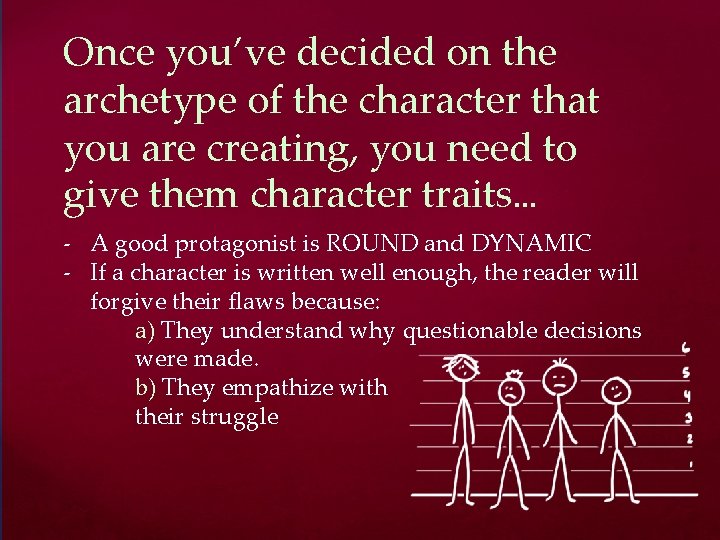
Once you’ve decided on the archetype of the character that you are creating, you need to give them character traits… - A good protagonist is ROUND and DYNAMIC - If a character is written well enough, the reader will forgive their flaws because: a) They understand why questionable decisions were made. b) They empathize with their struggle
Come up with a back story for your character. Even if you don’t tell your reader everything, it will make their actions and decisions consistent.
Consider what shapes your protagonist… NATURE Traits that you are born with. - Appearance Identifying Gender Health Temperament Natural skills and talents NURTURE Traits that come from life experience. - Attitude (Moral) Self esteem Peer group and people your drawn to Priorities Personality Acquired skills Etc.
List put 5 traits for your character in each of the columns below 1) What do they look like? 3) What are their skills? 5) What do they want? 2) What is their personality? 4) What are their priorities? 5) What do they fear?
Activity: Write a one page summary of your character’s life up until where your story will start. A lot of this information will not be included in your story; however, this knowledge will be instrumental in the choices you make while writing. Include: - Birth - Parents and their relationship with them - Happiest memory - Worst memory - Key events, facts, or moments that lead to who they are today.
Now you have your central character; however, it is difficult to have a story with only one character: (Difficult… Not impossible…)
The Antagonist: The “villain” or conflicting character (Should be round. Can be static or dynamic)
First… It should be noted that an antagonist does not have to be human. It can be a force of nature, animal, or some other obstacle. If this is the case for you, many of these tips should still be taken into account.
The antagonist is the opposing force that gets in the way of the protagonist… Your antagonist must be equal to or more powerful than the antagonist If your antagonist is human, it should be a ROUND character. A good antagonist has motivation. They believe in what they are doing. They think that they are in the right (even if they are wrong).
Why is your antagonist the way they are? NATURE Traits that you are born with. - Appearance Identifying Gender Health Temperament Natural skills and talents NURTURE Traits that come from life experience. - Attitude (Moral) Self esteem Peer group and people your drawn to Priorities Personality Acquired skills Etc.
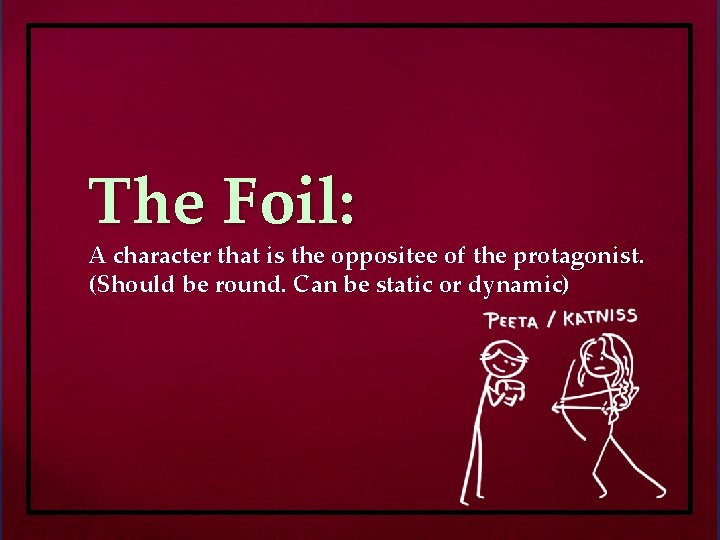
The Foil: A character that is the oppositee of the protagonist. (Should be round. Can be static or dynamic)
The foil does not have to be the main antagonist. It can be a minor obstacle, or a friend or helper. Having an opposite, makes the protagonist’s traits stand out even more. If your protagonist is: - Emotional and romantic, the foil is calm and realistic (ie. Romeo and Benvolio) - Etable and predictable, the foil is is often chaotic and unpredictable (ie. Batman & The Joker). - Physically strong, the foil is often intelligent and cunning (Superman & Lex Luther) - Naturally talented, the foil is often someone who works hard fot their success (ie. Harry Potter & Ron Weasley.
Secondary Characters: Populate your story and help move the plot along. (Can vary in detail: flat, round, static, and dynamic).
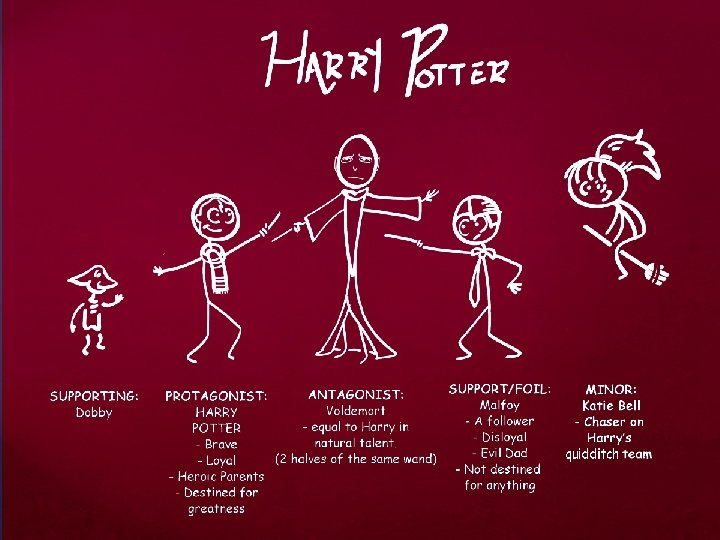
There are two types of secondary characters: Supporting Characters: Essential to the plot: They help move the story forward (foils, helpers etc. ) Minor Characters: Background characters that add to the setting of the story. The story could be told without them, although it would seem more flat.