
Character Analysis Protagonists and Antagonists Protagonists The main
- Slides: 9
Character Analysis
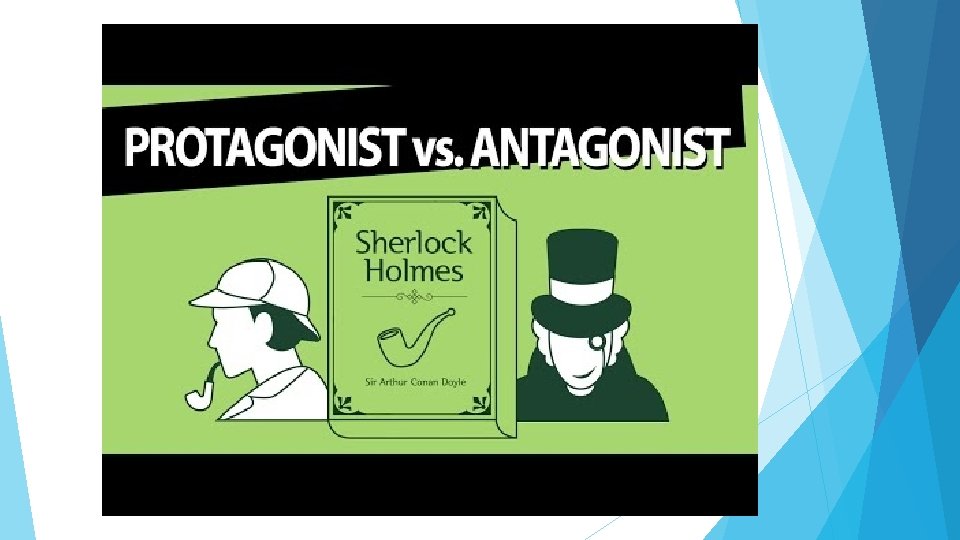
Protagonists and Antagonists Protagonists ● The main character of a narrative ● Usually considered the “good guy” ● The author’s goal is to have the reader cheer for the protagonist ● Examples: ● Harry Potter ● Batman Antagonists ● The character or entity that goes against the protagonist ● Usually considered the “bad guy” or villain ● Authors use antagonists to create the conflict(s) that drive the plot forward ● Examples: ● He-who-should-not-be-named (Voldermort) ● The Joker
Static vs. Dynamic Characters Static Characters ● a literary character who does NOT undergo an important inner change during the course of the story ● Examples: ● The Joker from Batman Dynamic Characters ● A literary character who undergoes an important inner change. This change can be sudden, but expected based on the story’s events. ● Examples: ● Harry Potter ● Ebenezer Scrooge from A Christmas Carol ● Katniss Everdeen from the Hunger Games
Characterization ● How the author introduces, describes and develops a character ● Characterization can be used to describe how a character looks, acts and feels. ● The author uses both indirect and direct characterization when developing their character for the reader.
Direct vs. Indirect Characterization Direct Characterization ● The author explicitly tells you something about the character ● Example: ● Shannon is bright, cheerful and energetic ● Billy was motivated by money and fame; he had no need for love. Indirect Characterization ● The author does not directly tell the reader about the character. The reader must infer. ● Example: ● When the teacher called on Tim, he slowly melted into his chair and tried to disappear. ● When his mother came in to tell him it was bedtime, Michael threw his book on the floor and glared at her.
Video for Characterization
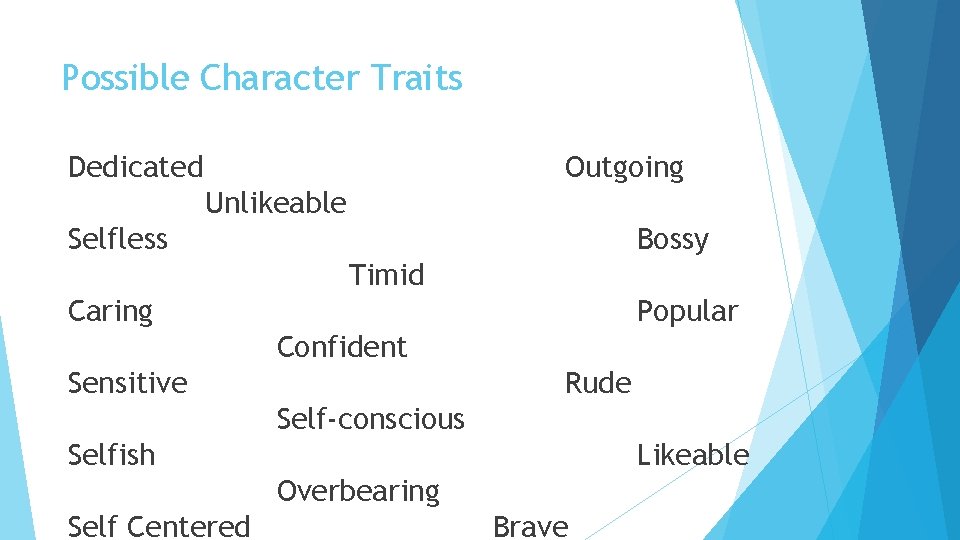
Possible Character Traits Dedicated Outgoing Unlikeable Selfless Bossy Timid Caring Popular Confident Sensitive Rude Self-conscious Selfish Likeable Overbearing Self Centered Brave