
Chapters 54 and 55 Energy Flow Essential Idea
- Slides: 31
Chapters 54 and 55 Energy Flow Essential Idea: Ecosystems require a continuous supply of energy to fuel life processes and to replace energy lost as heat.
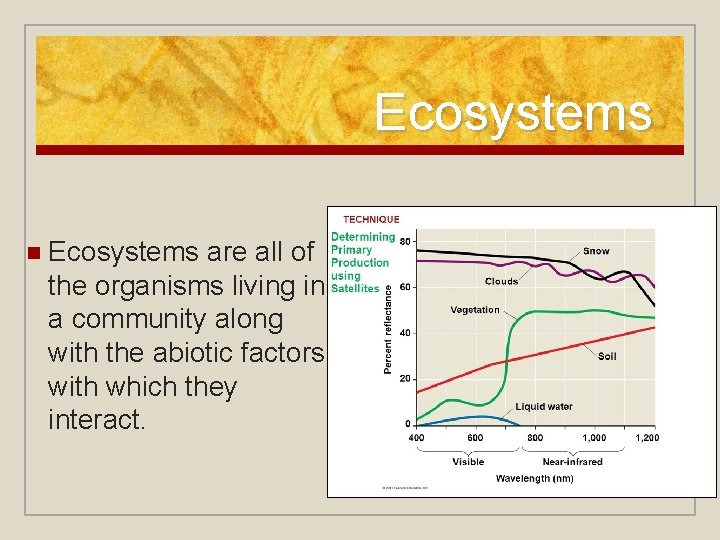
Ecosystems n Ecosystems are all of the organisms living in a community along with the abiotic factors with which they interact.
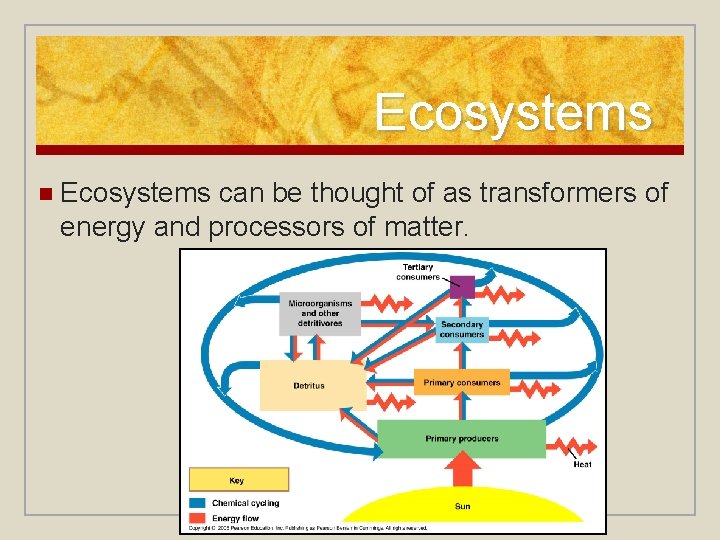
Ecosystems n Ecosystems can be thought of as transformers of energy and processors of matter.
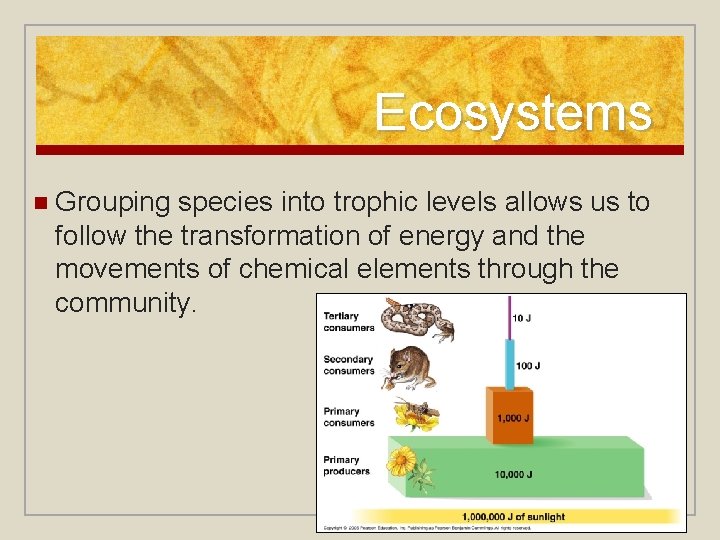
Ecosystems n Grouping species into trophic levels allows us to follow the transformation of energy and the movements of chemical elements through the community.
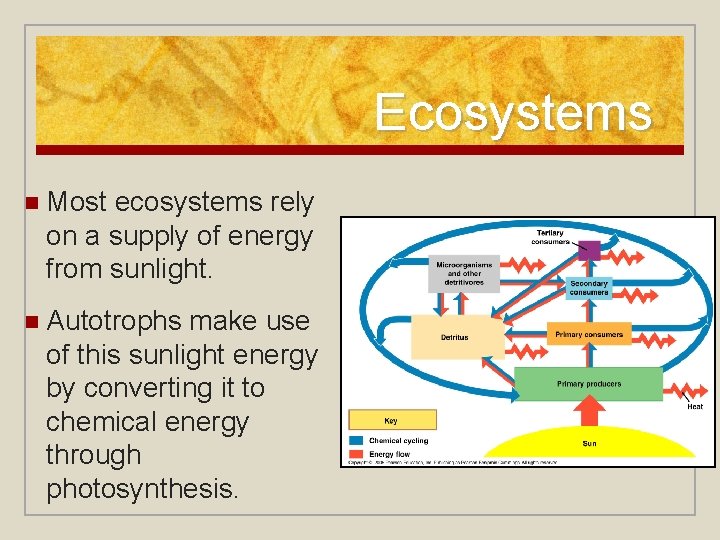
Ecosystems n Most ecosystems rely on a supply of energy from sunlight. n Autotrophs make use of this sunlight energy by converting it to chemical energy through photosynthesis.
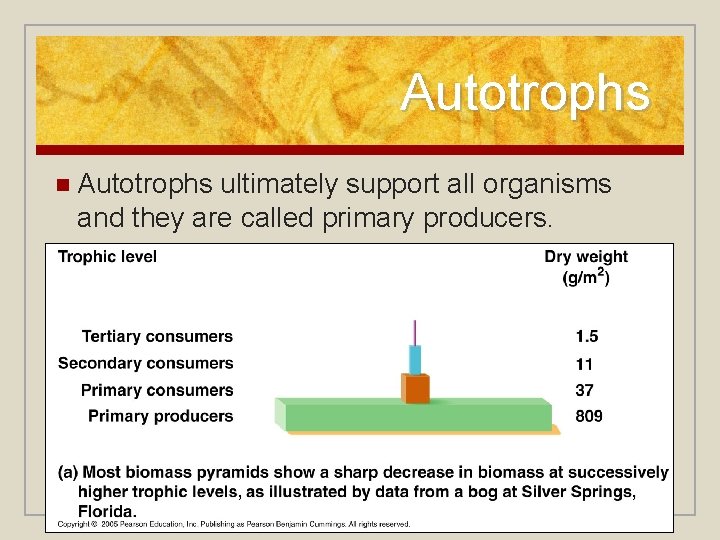
Autotrophs n Autotrophs ultimately support all organisms and they are called primary producers.
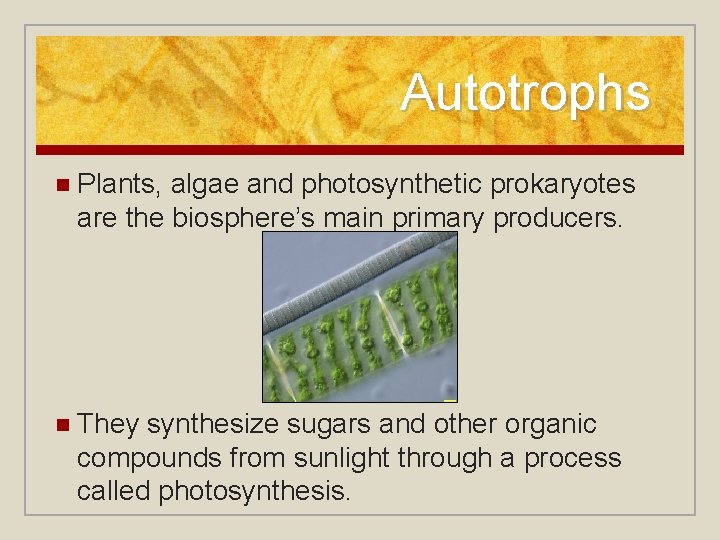
Autotrophs n Plants, algae and photosynthetic prokaryotes are the biosphere’s main primary producers. n They synthesize sugars and other organic compounds from sunlight through a process called photosynthesis.
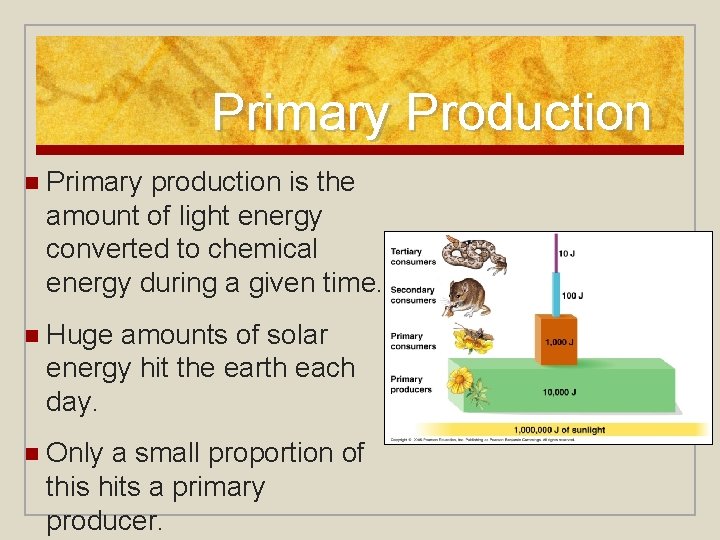
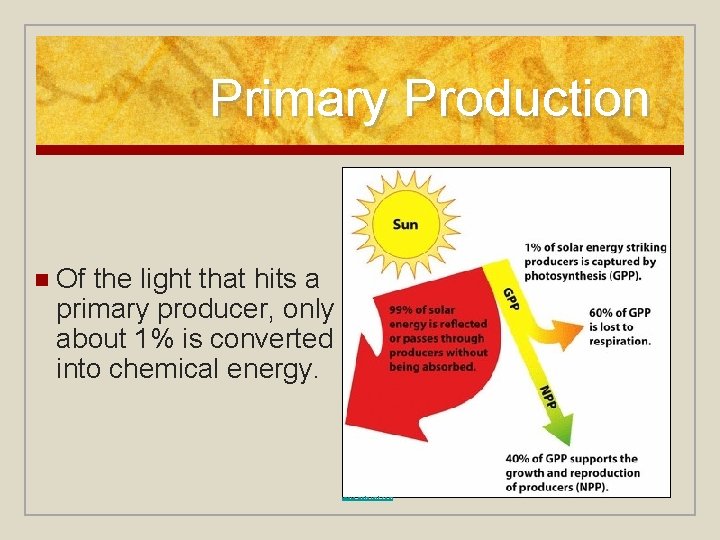
Primary Production n Primary production is the amount of light energy converted to chemical energy during a given time. n Huge amounts of solar energy hit the earth each day. n Only a small proportion of this hits a primary producer.
Primary Production n Of the light that hits a primary producer, only about 1% is converted into chemical energy. www. pinterest. com
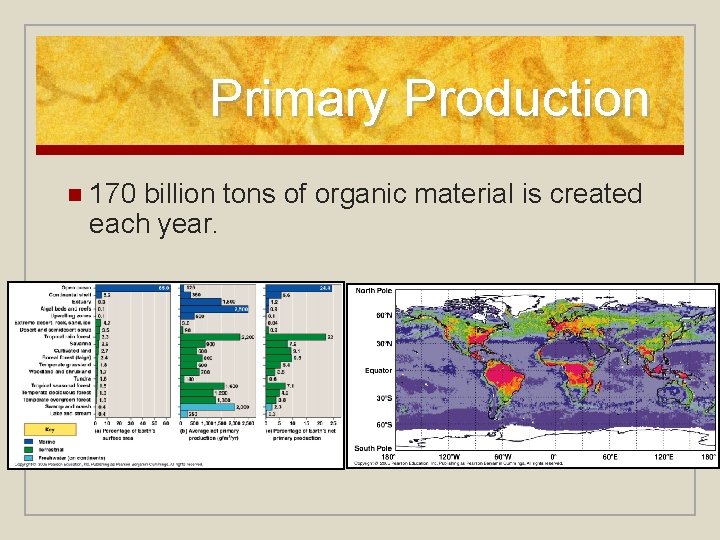
Primary Production n 170 billion tons of organic material is created each year.
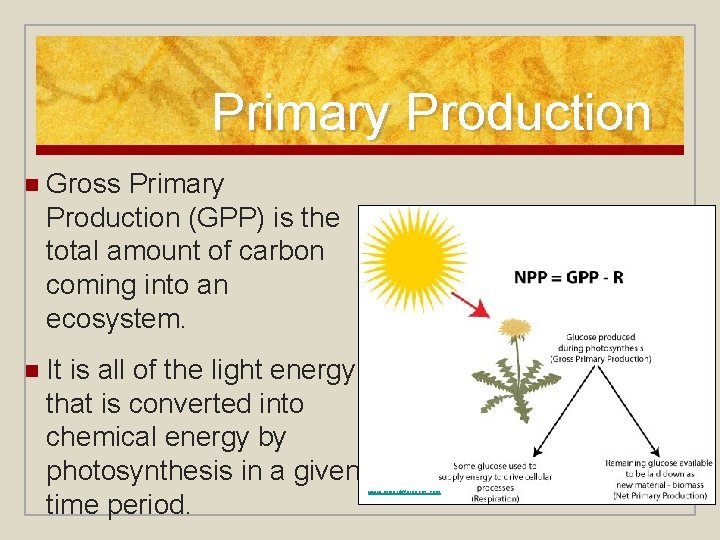
Primary Production n Gross Primary Production (GPP) is the total amount of carbon coming into an ecosystem. n It is all of the light energy that is converted into chemical energy by photosynthesis in a given time period. www. majordifferences. com
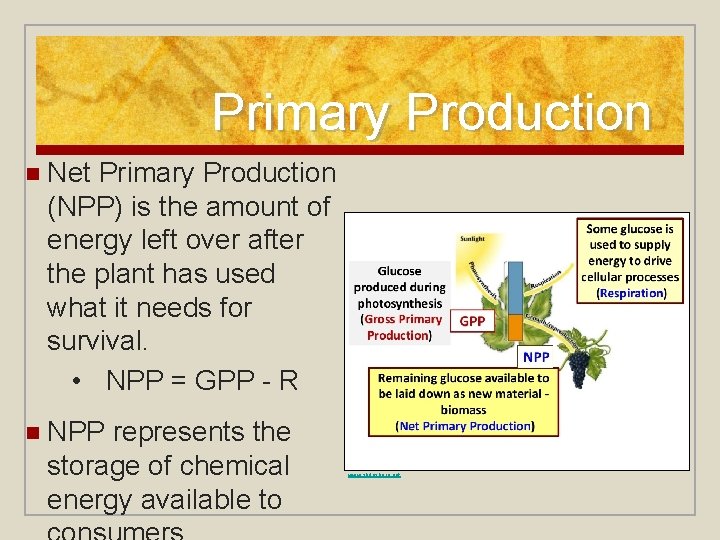
Primary Production n Net Primary Production (NPP) is the amount of energy left over after the plant has used what it needs for survival. • NPP = GPP - R n NPP represents the storage of chemical energy available to www. slideshare. net
NPP n NPP is always the total new biomass added in a given time. n It is always calculated as dry weight. n The standing crop refers to the total (dried) biomass of an ecosystem. n Rain forests, estuaries, and coral reefs have a high net primary production.
Primary Production n There are 2 main factors which control primary production: n 1. Light limitations n 2. Nutrient limitations
Primary Production n The amount of light an ecosystem receives contributes to the amount of primary production that occurs. n In water, primary production is limited by depth, on land it is limited by the amount of plants.
Primary Production n For instance, in water the depth of light penetration controls production. n More than half of the total solar energy is absorbed in the first meter of water. n Light isn’t the only factor which controls primary production. n The lack of a production gradient between the equator and the poles demonstrates this.
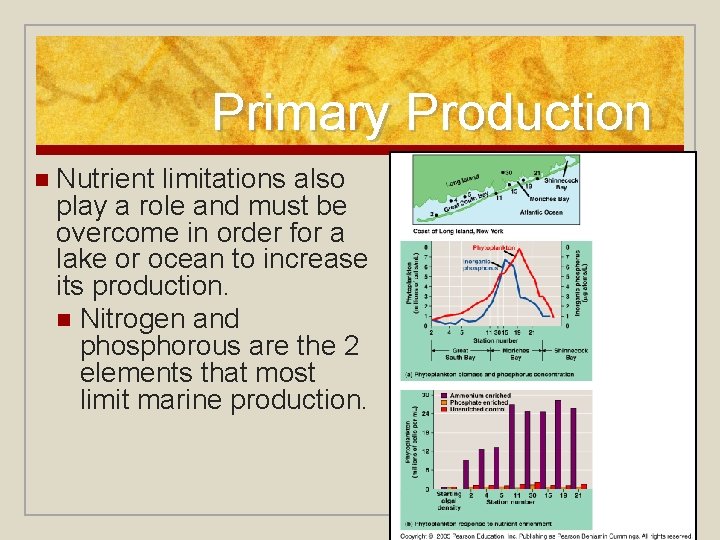
Primary Production n Nutrient limitations also play a role and must be overcome in order for a lake or ocean to increase its production. n Nitrogen and phosphorous are the 2 elements that most limit marine production.
Primary Production n The role nutrient limitations play in an ecosystem were first noticed and studied by David Schindler. www. dal. ca
David Schindler n He noticed that runoff from farms and yards added a lot of nutrients to lakes. n He also documented the idea of eutrophication--the increased numbers of cyanobacteria and excessive growth due to runoff which causes an overgrowth of plant life.
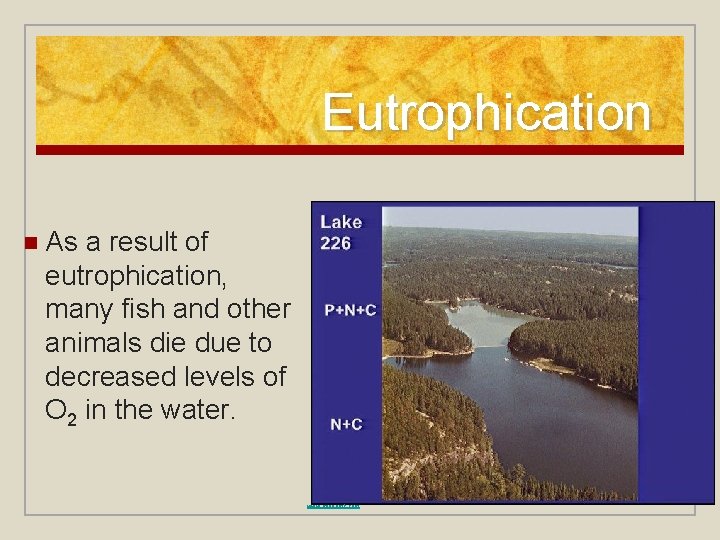
Eutrophication n As a result of eutrophication, many fish and other animals die due to decreased levels of O 2 in the water. www. minnpost. com
David Schindler n He conducted a lot of research on eutrophication. n Discovered that phosphorous was the main limiter of cyanobacteria growth. n He is the reason why phosphorous was removed from detergents and other water reform measures were adopted.
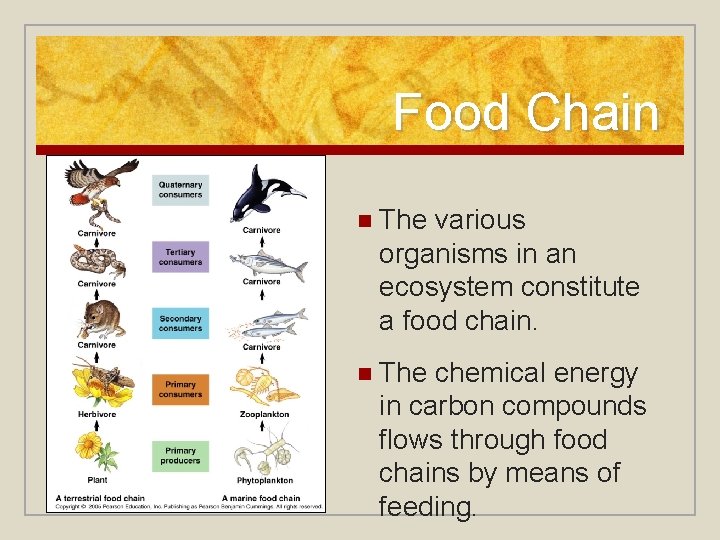
Heterotrophs n Heterotrophs comprise the trophic level above the primary producer. These organisms feed on autotrophs. n Herbivores are primary consumers. n Carnivores eat herbivores and are secondary consumers. n Carnivores that eat other carnivores are tertiary consumers and so on. . .
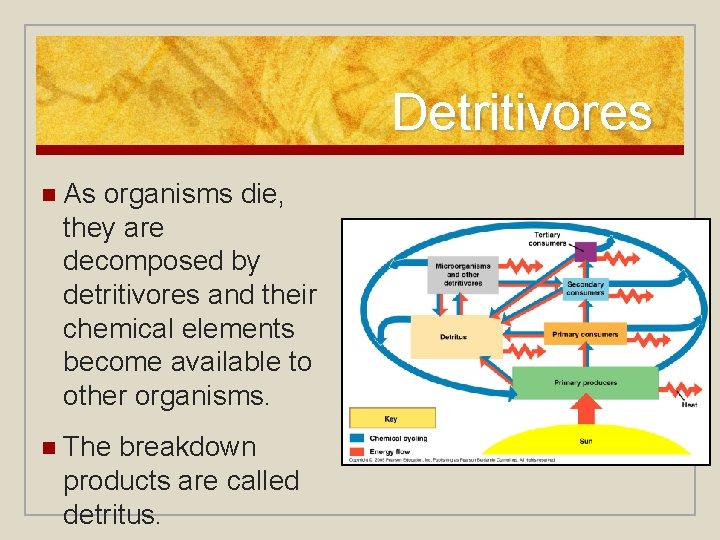
Food Chain n The various organisms in an ecosystem constitute a food chain. n The chemical energy in carbon compounds flows through food chains by means of feeding.
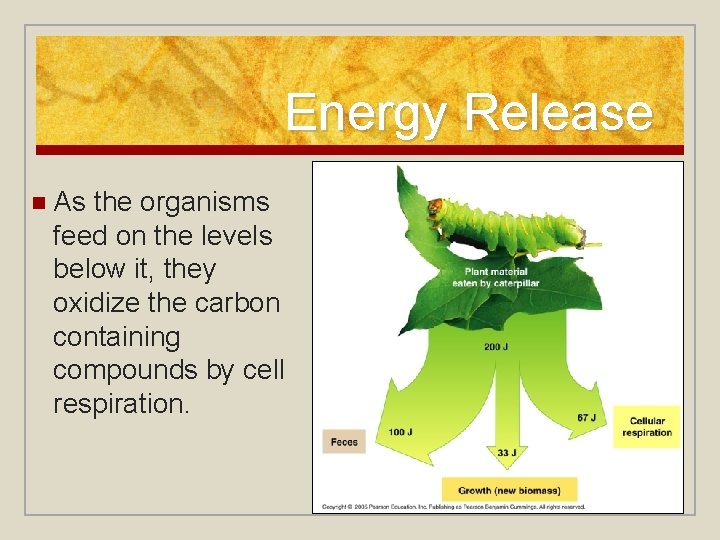
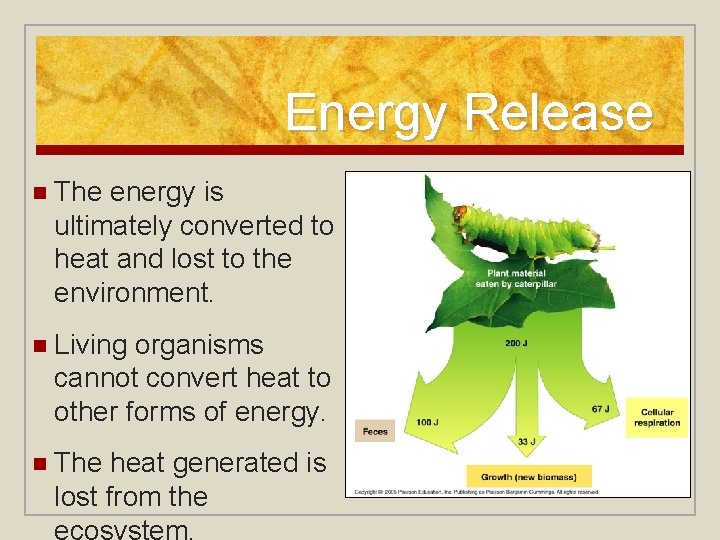
Energy Release n As the organisms feed on the levels below it, they oxidize the carbon containing compounds by cell respiration.
Energy Release n The energy is ultimately converted to heat and lost to the environment. n Living organisms cannot convert heat to other forms of energy. n The heat generated is lost from the ecosystem.
Detritivores n As organisms die, they are decomposed by detritivores and their chemical elements become available to other organisms. n The breakdown products are called detritus.
Secondary Production n Secondary production is the amount of energy in a consumer’s food source that gets converted into biomass--it is the same as NPP. n Most primary production is not consumed because consumers can only eat so much.
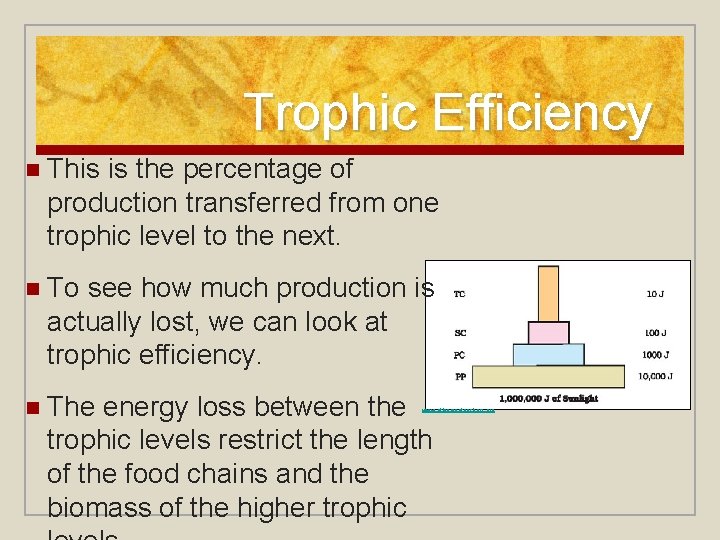
Trophic Efficiency n This is the percentage of production transferred from one trophic level to the next. n To see how much production is actually lost, we can look at trophic efficiency. n The energy loss between the trophic levels restrict the length of the food chains and the biomass of the higher trophic www. ethiopianteachers. org
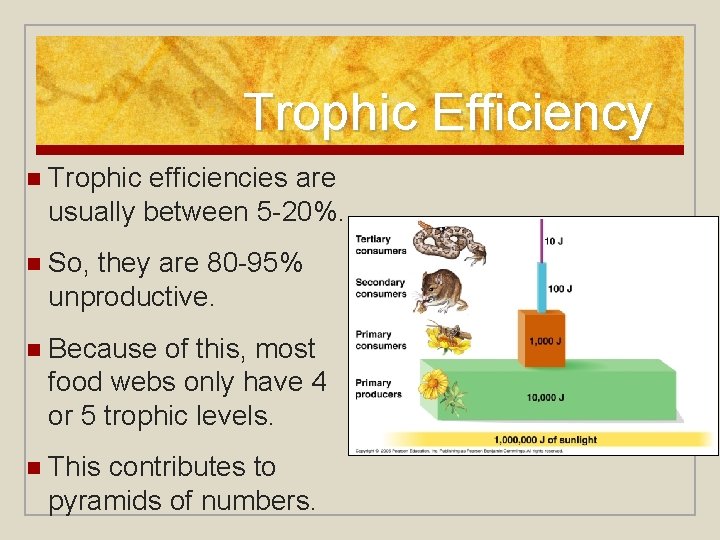
Trophic Efficiency n Trophic efficiencies are usually between 5 -20%. n So, they are 80 -95% unproductive. n Because of this, most food webs only have 4 or 5 trophic levels. n This contributes to pyramids of numbers.
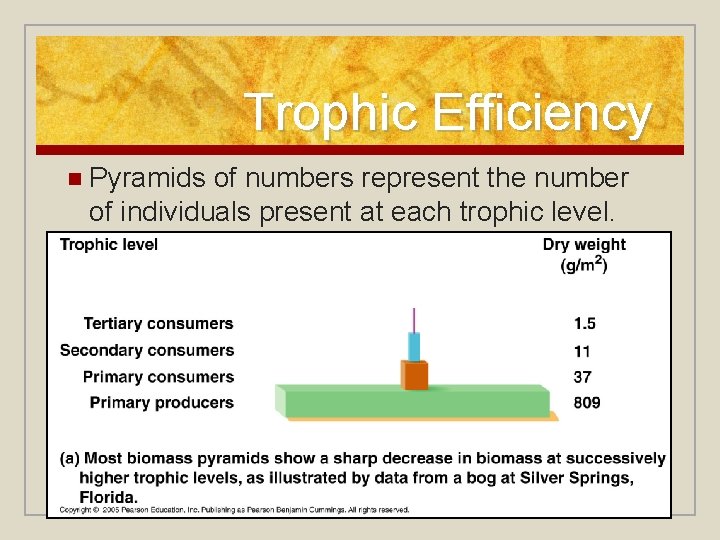
Trophic Efficiency n Pyramids of numbers represent the number of individuals present at each trophic level.
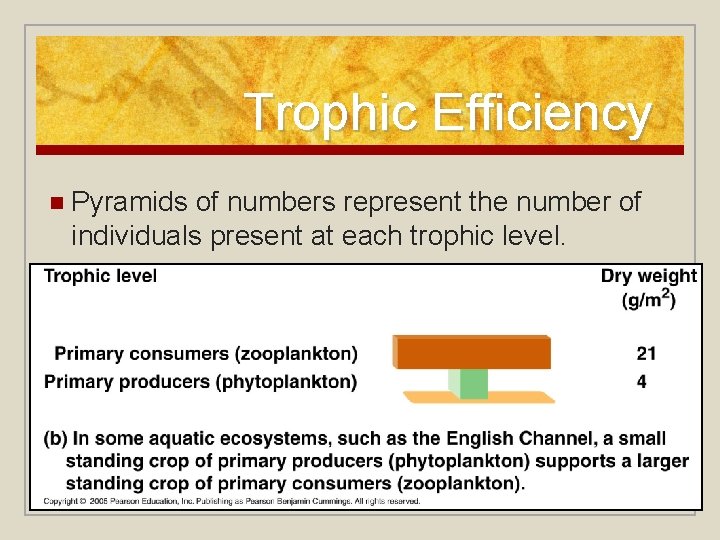
Trophic Efficiency n Pyramids of numbers represent the number of individuals present at each trophic level.