
Chapters 22 24 KINGDOM PLANTAE GENERAL CHARACTERISTICS Cell
- Slides: 22
Chapters 22 -24 KINGDOM PLANTAE
GENERAL CHARACTERISTICS • Cell type • Cell organization • Mo. N • Mostly terrestrial, some aquatic • Cell walls made of
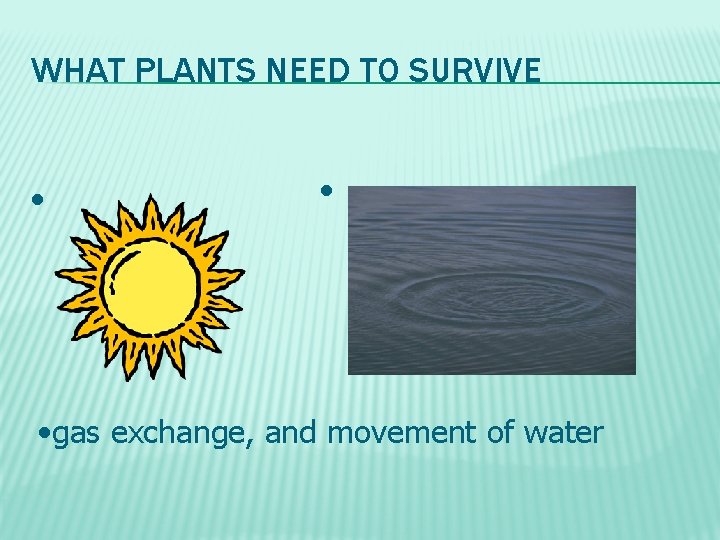
WHAT PLANTS NEED TO SURVIVE • • • gas exchange, and movement of water
WHICH GROUP DO SCIENTISTS BELIEVE PLANTS EVOLVED FROM? A. B. C. D. Fungi Protozoans Algae Bacteria
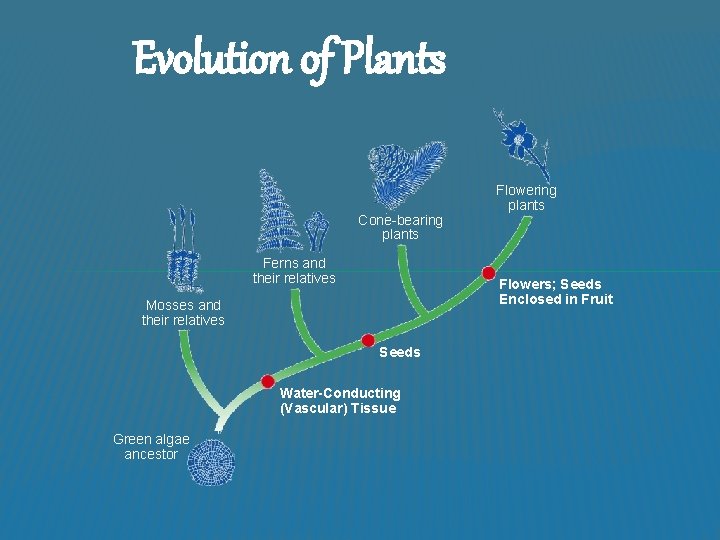
Evolution of Plants Cone-bearing plants Ferns and their relatives Flowers; Seeds Enclosed in Fruit Mosses and their relatives Seeds Water-Conducting (Vascular) Tissue Green algae ancestor Flowering plants
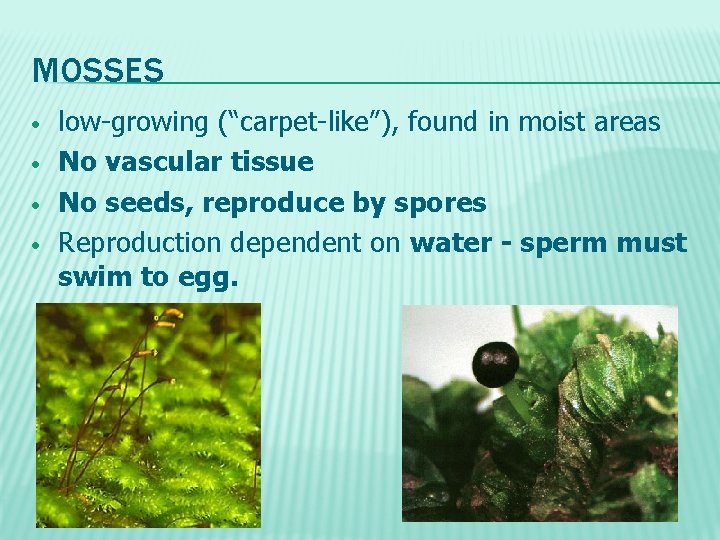
MOSSES • • low-growing (“carpet-like”), found in moist areas No vascular tissue No seeds, reproduce by spores Reproduction dependent on water - sperm must swim to egg.
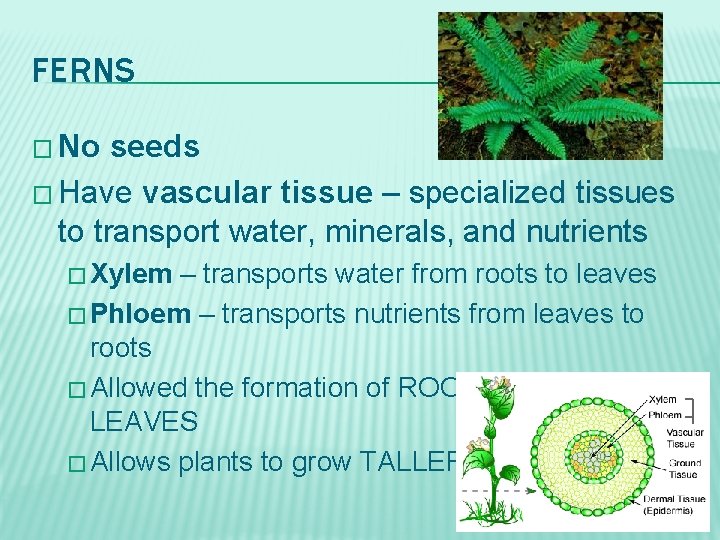
FERNS � No seeds � Have vascular tissue – specialized tissues to transport water, minerals, and nutrients � Xylem – transports water from roots to leaves � Phloem – transports nutrients from leaves to roots � Allowed the formation of ROOT, STEMS, and LEAVES � Allows plants to grow TALLER!
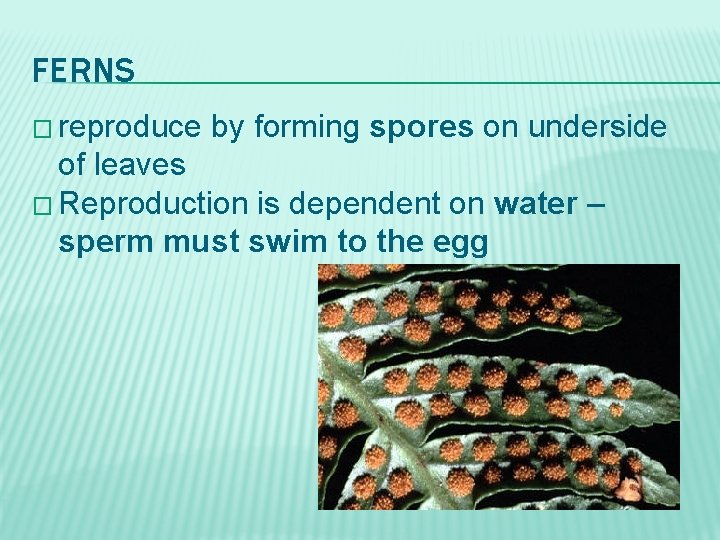
FERNS � reproduce by forming spores on underside of leaves � Reproduction is dependent on water – sperm must swim to the egg
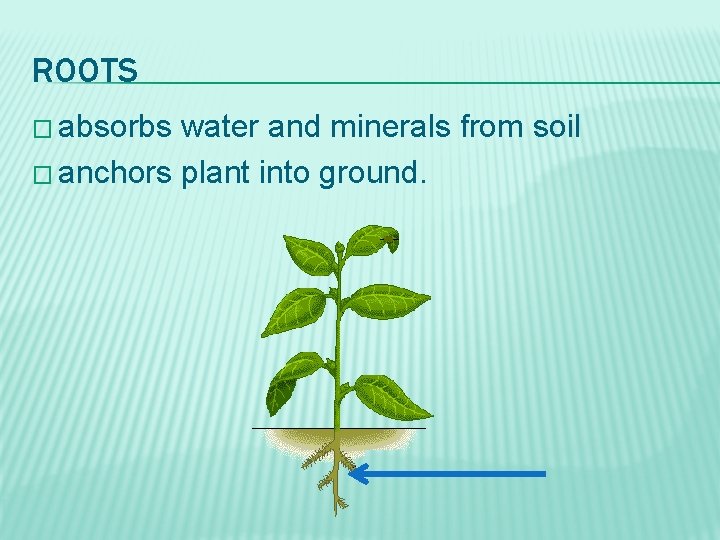
ROOTS � absorbs water and minerals from soil � anchors plant into ground.
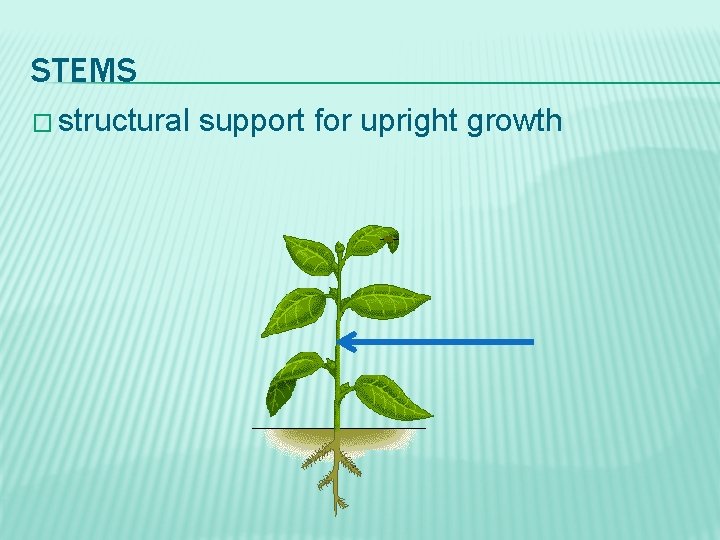
STEMS � structural support for upright growth
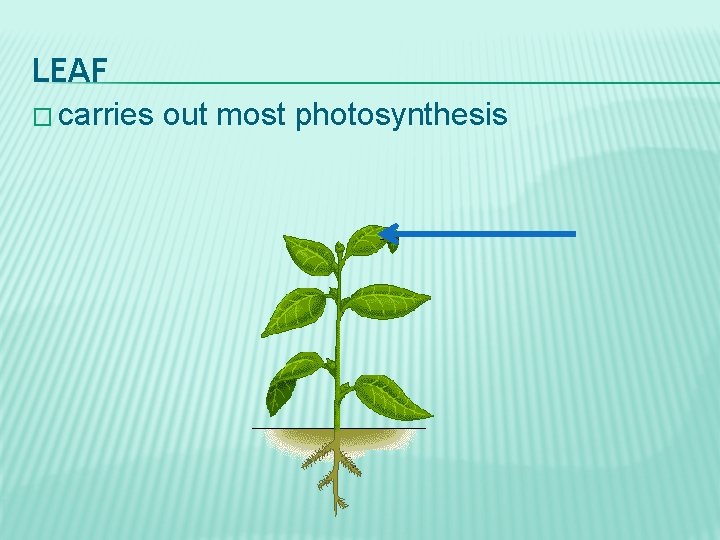
LEAF � carries out most photosynthesis
GYMNOSPERMS & ANGIOSPERMS � Contain adaptations that allow plants to reproduce without water: � Flowers or cones (gametes grow within these), � transfer of sperm by pollen, � seeds that house embryo
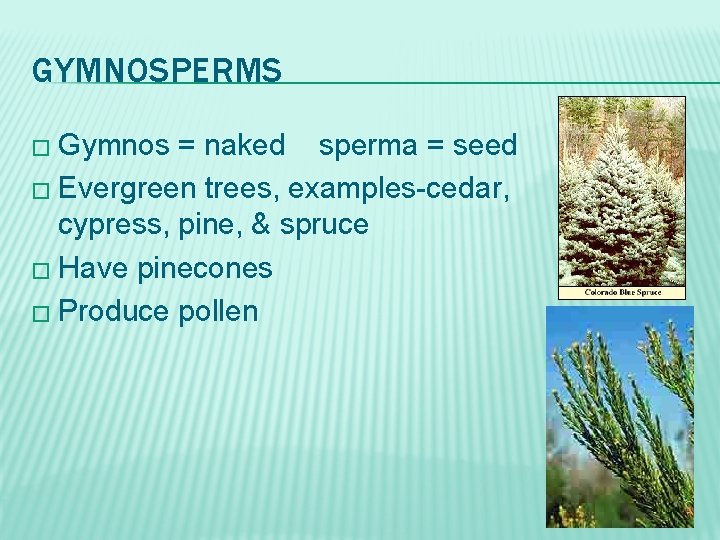
GYMNOSPERMS � Gymnos = naked sperma = seed � Evergreen trees, examples-cedar, cypress, pine, & spruce � Have pinecones � Produce pollen
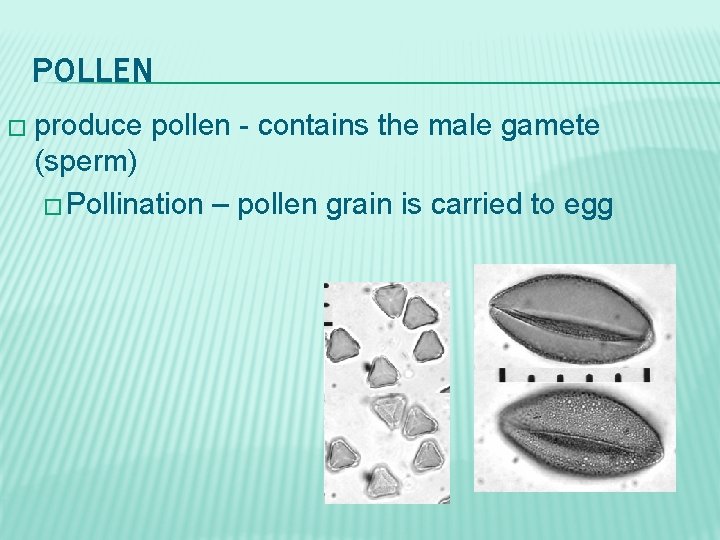
POLLEN � produce pollen - contains the male gamete (sperm) � Pollination – pollen grain is carried to egg
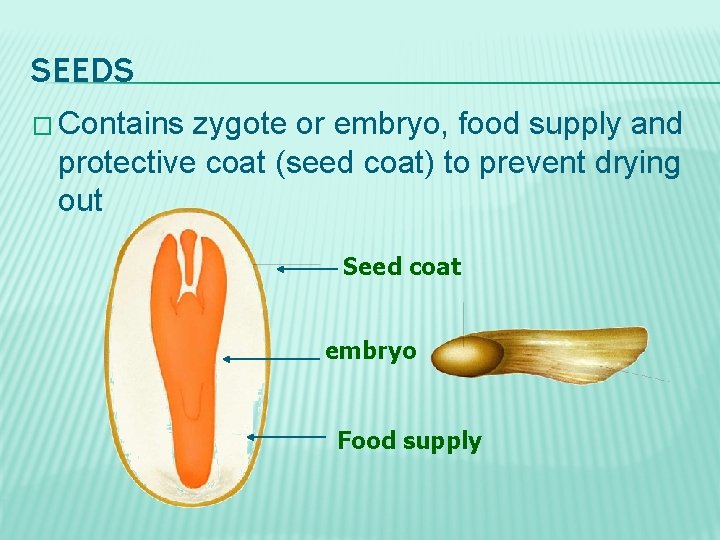
SEEDS � Contains zygote or embryo, food supply and protective coat (seed coat) to prevent drying out Seed coat embryo Food supply
SEEDS (CONT) � Seeds allow offspring of plants to be dispersed to new locations by wind, water, and animals increases BIODIVERSITY!
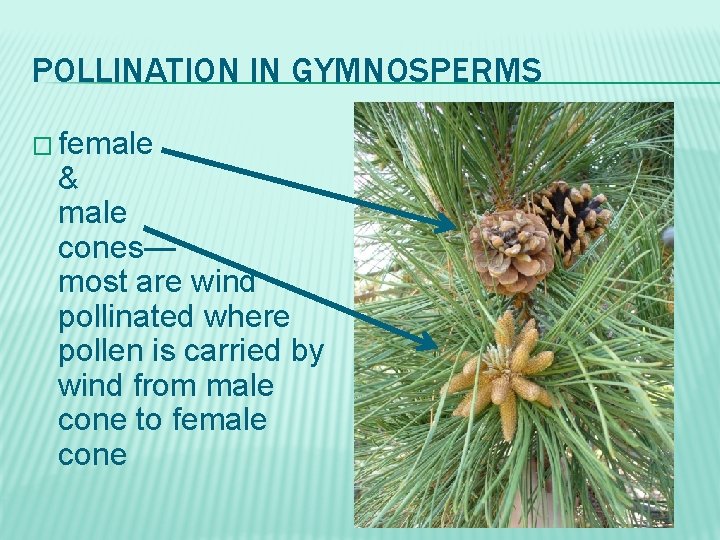
POLLINATION IN GYMNOSPERMS � female & male cones— most are wind pollinated where pollen is carried by wind from male cone to female cone
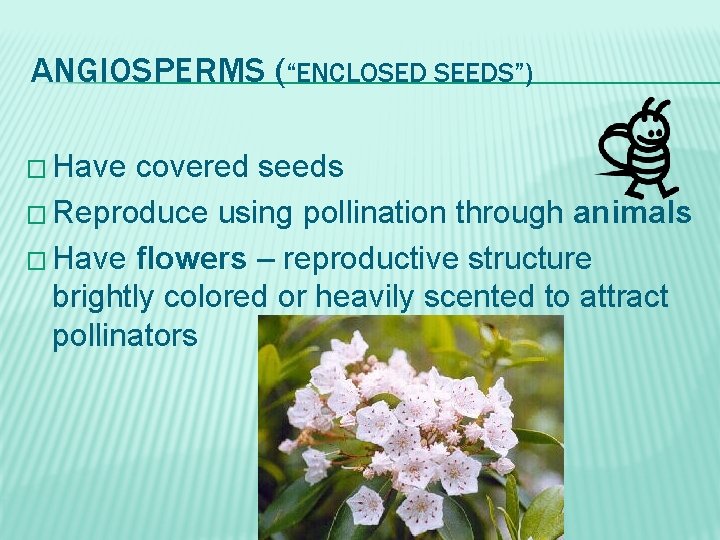
ANGIOSPERMS (“ENCLOSED SEEDS”) � Have covered seeds � Reproduce using pollination through animals � Have flowers – reproductive structure brightly colored or heavily scented to attract pollinators
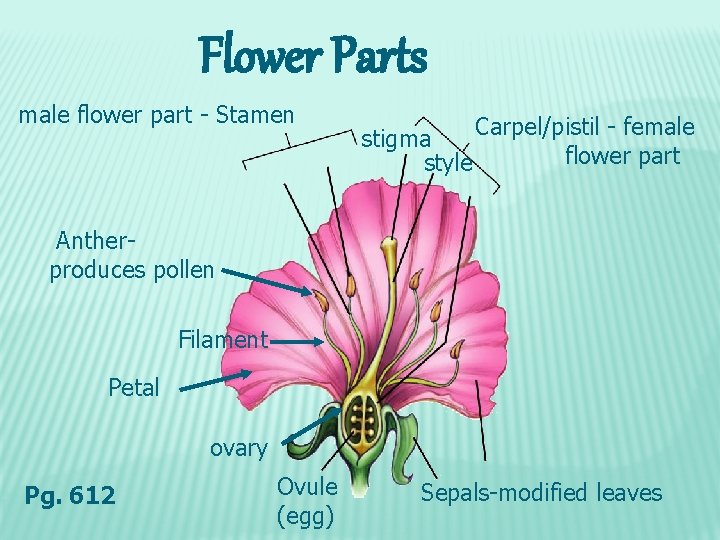
Flower Parts male flower part - Stamen Carpel/pistil - female stigma flower part style Antherproduces pollen Filament Petal ovary Pg. 612 Ovule (egg) Sepals-modified leaves
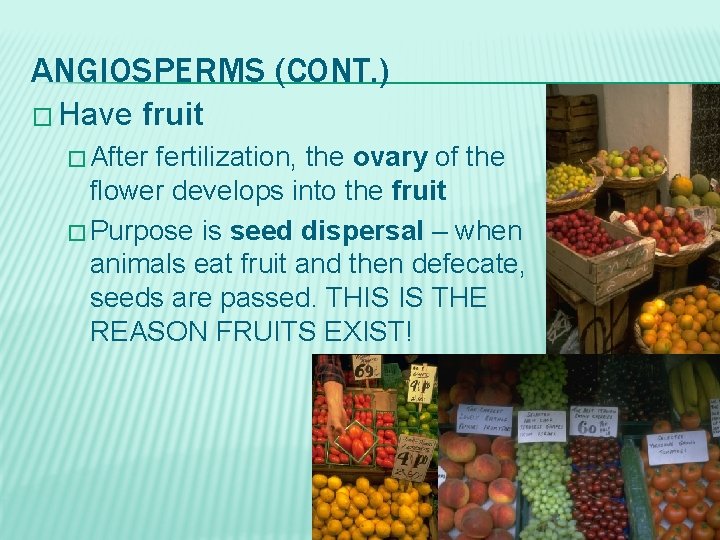
ANGIOSPERMS (CONT. ) � Have fruit � After fertilization, the ovary of the flower develops into the fruit � Purpose is seed dispersal – when animals eat fruit and then defecate, seeds are passed. THIS IS THE REASON FRUITS EXIST!
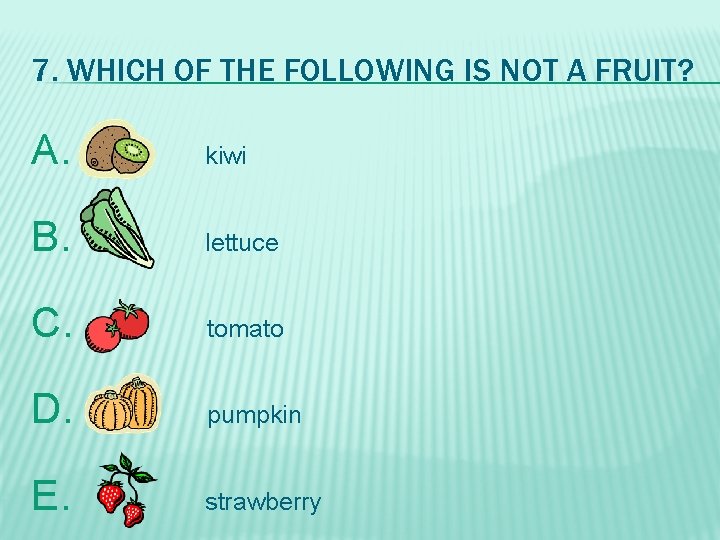
7. WHICH OF THE FOLLOWING IS NOT A FRUIT? A. kiwi B. lettuce C. tomato D. pumpkin E. strawberry