
Chapters 2 5 ECOLOGY Principles of Ecology Chapter

- Slides: 43
Chapters 2 -5 ECOLOGY
Principles of Ecology Chapter 2
Section 2. 1 �Organisms and Their Relationships
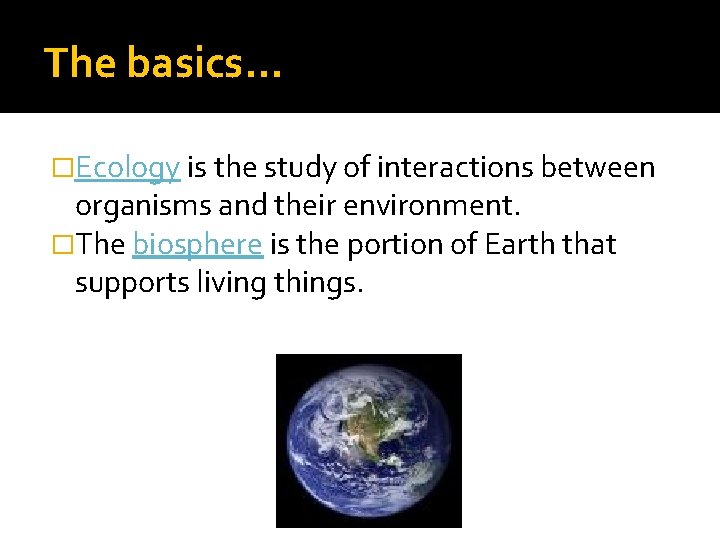
The basics… �Ecology is the study of interactions between organisms and their environment. �The biosphere is the portion of Earth that supports living things.
Abiotic vs. Biotic Factors �Abiotic factors are nonliving parts of an organism’s environment Ex. Temperature, amount of rainfall, landscape �Biotic factors are all the living organisms that inhabit an environment. Ex. Predators, food sources, competitors, etc.
Levels of Organization � Organism—an individual living thing � Population—all the individuals of the same species living together in one area � Biological community —all the populations of different species living in the same area � Ecosystem—Made up of interacting populations and the community’s abiotic factors Types: Terrestrial & Aquatic � Biome � Biosphere
What is smaller than the organism? � Organ systems – Two or more organs working together � Organ- A structure made up of several tissues that work together � Tissue – A group of similar cells that perform a specific function � Cell – The smallest unit of life � Organelle – A structure within a cell that performs a specific function � Molecule – A combination of atoms � Atom –The smallest particle of an element that retains that element’s properties � Sub-atomic particles - Particles that make up an atom
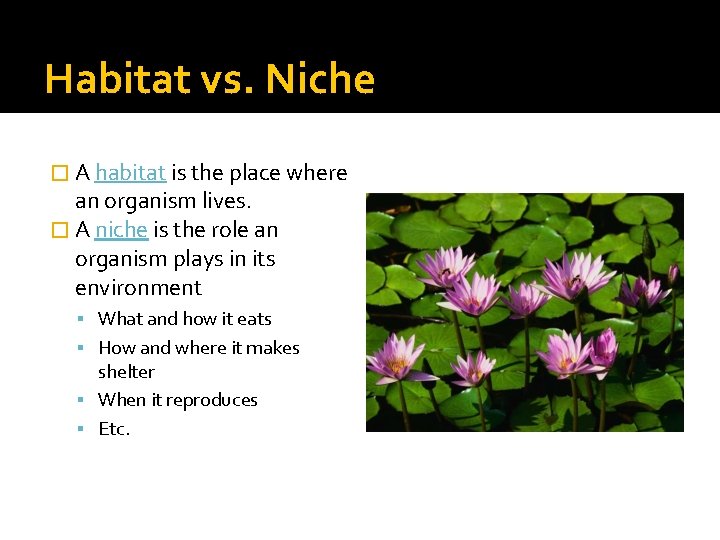
Habitat vs. Niche � A habitat is the place where an organism lives. � A niche is the role an organism plays in its environment What and how it eats How and where it makes shelter When it reproduces Etc.
Niches �No two species can exist in the same community and occupy the same niche for long. �Why? They would be competing for space, food, etc. One species would dominate while the other would move or go extinct.
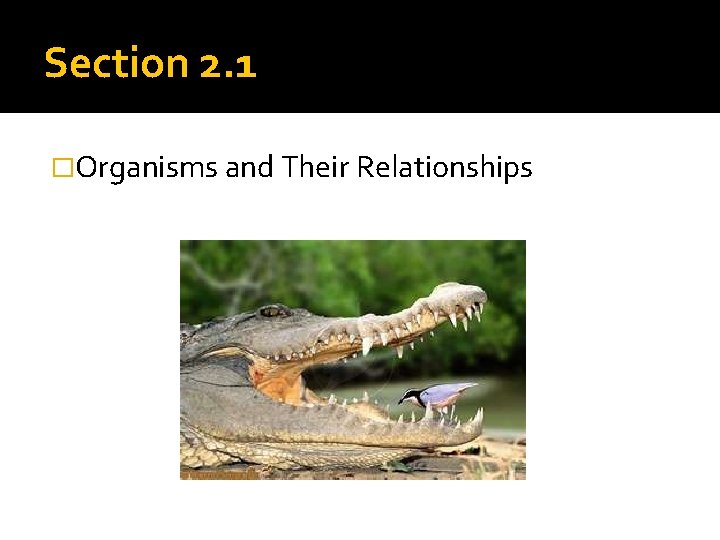
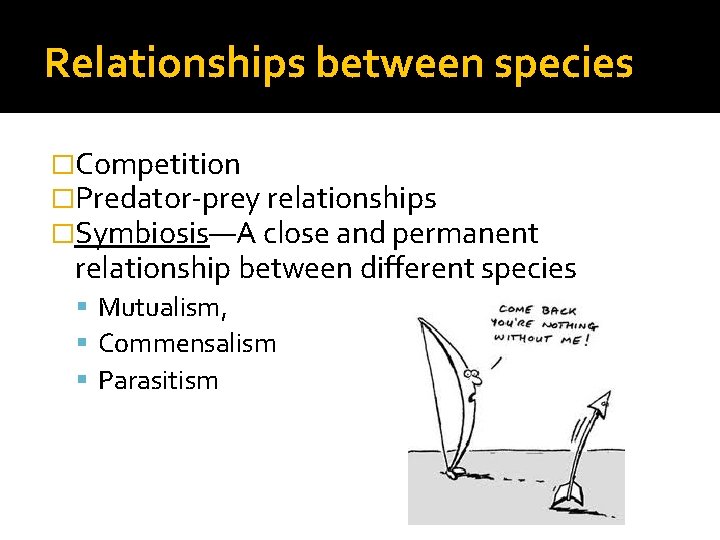
Relationships between species �Competition �Predator-prey relationships �Symbiosis—A close and permanent relationship between different species Mutualism, Commensalism Parasitism
Competition �Interspecific Competition occurs when members of different species compete for a limited resource. �Competitive Exclusion occurs when one of those species uses the resource more efficiently. This is why no two species occupy exactly the same niche.
Results of Competition �It’s best for species not to compete so they adjust their niche in order to all survive. �The fundamental niche is the range of conditions and resources that a species CAN TOLERATE. �The realized niche is the part of the niche that the species ACTUALLY USES. �If species don’t adjust, one of them dies out.
Competition – A little humor
Predation �One organism eats another
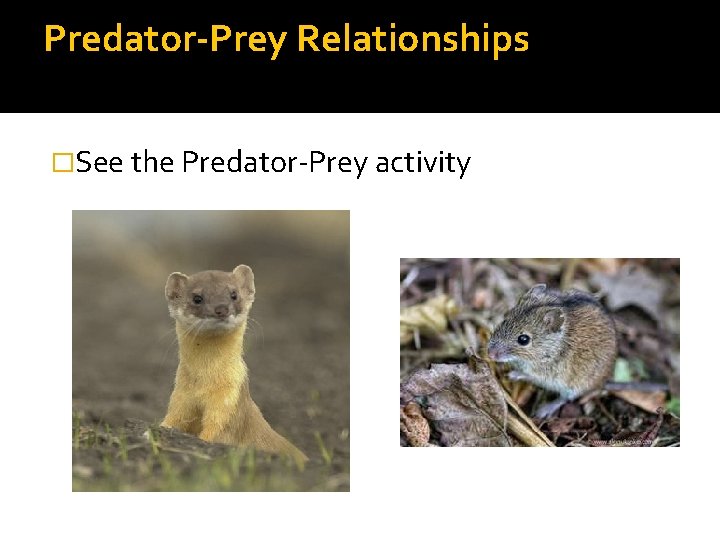
Predator-Prey Relationships �See the Predator-Prey activity
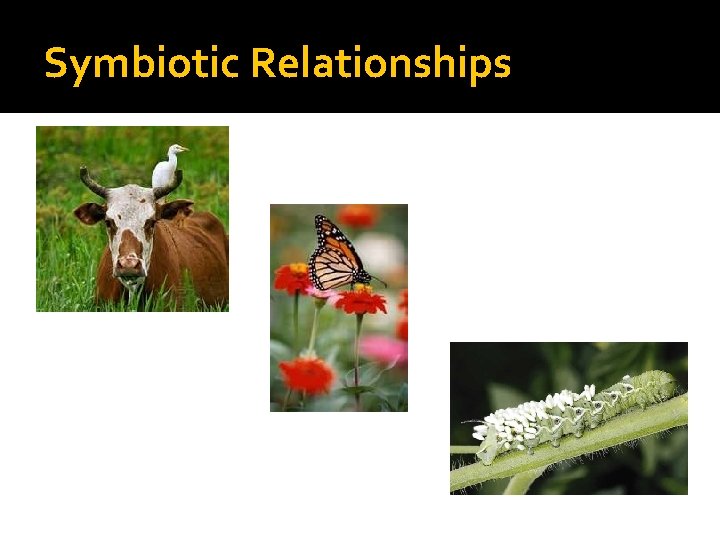
Symbiotic Relationships
Mutualism �Both species benefit from the interaction
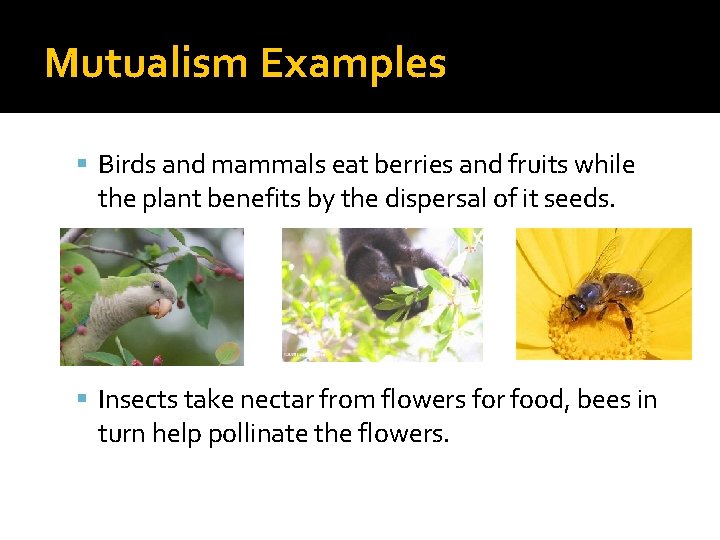
Mutualism Examples Birds and mammals eat berries and fruits while the plant benefits by the dispersal of it seeds. Insects take nectar from flowers for food, bees in turn help pollinate the flowers.
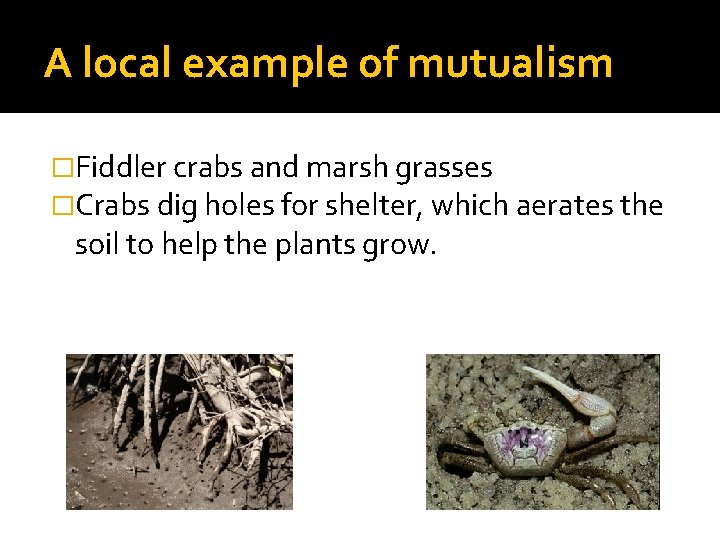
A local example of mutualism �Fiddler crabs and marsh grasses �Crabs dig holes for shelter, which aerates the soil to help the plants grow.
Commensalism �One species benefits, the other is neither benefited nor harmed
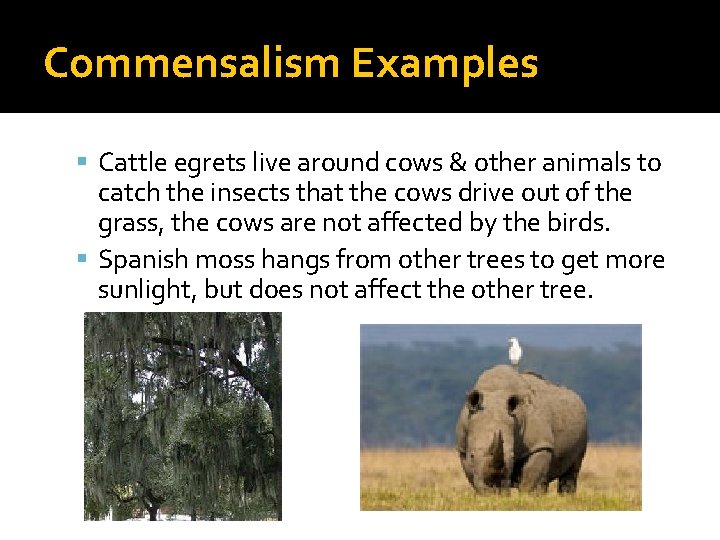
Commensalism Examples Cattle egrets live around cows & other animals to catch the insects that the cows drive out of the grass, the cows are not affected by the birds. Spanish moss hangs from other trees to get more sunlight, but does not affect the other tree.
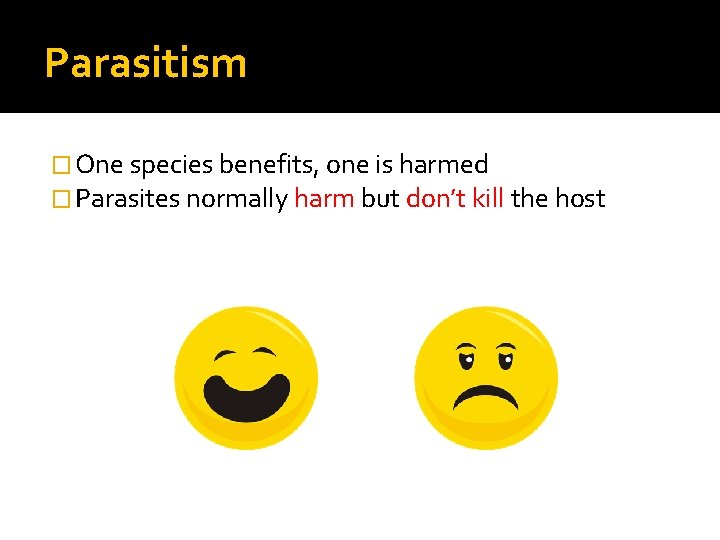
Parasitism � One species benefits, one is harmed � Parasites normally harm but don’t kill the host
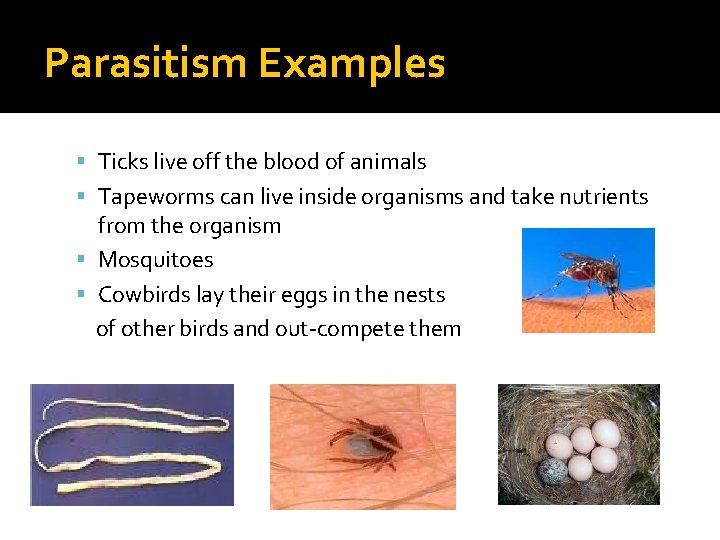
Parasitism Examples Ticks live off the blood of animals Tapeworms can live inside organisms and take nutrients from the organism Mosquitoes Cowbirds lay their eggs in the nests of other birds and out-compete them
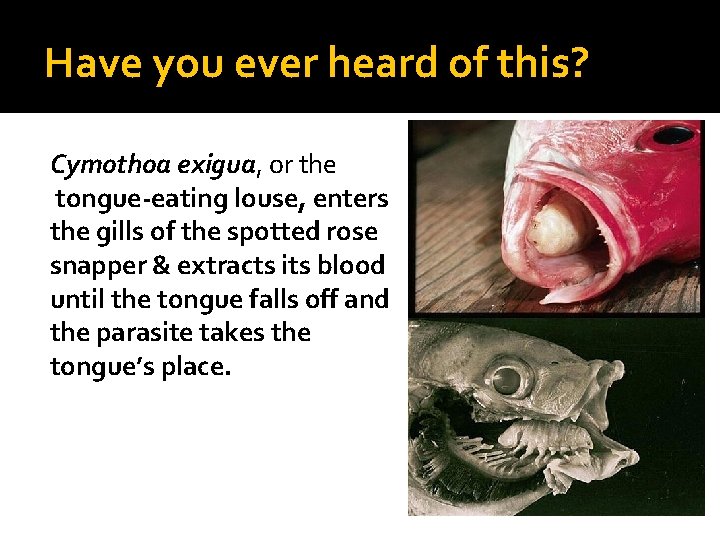
Have you ever heard of this? Cymothoa exigua, or the tongue-eating louse, enters the gills of the spotted rose snapper & extracts its blood until the tongue falls off and the parasite takes the tongue’s place.
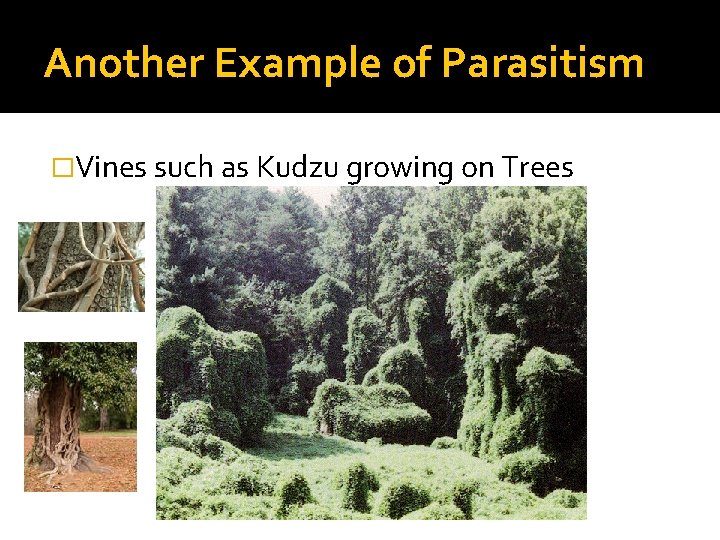
Another Example of Parasitism �Vines such as Kudzu growing on Trees
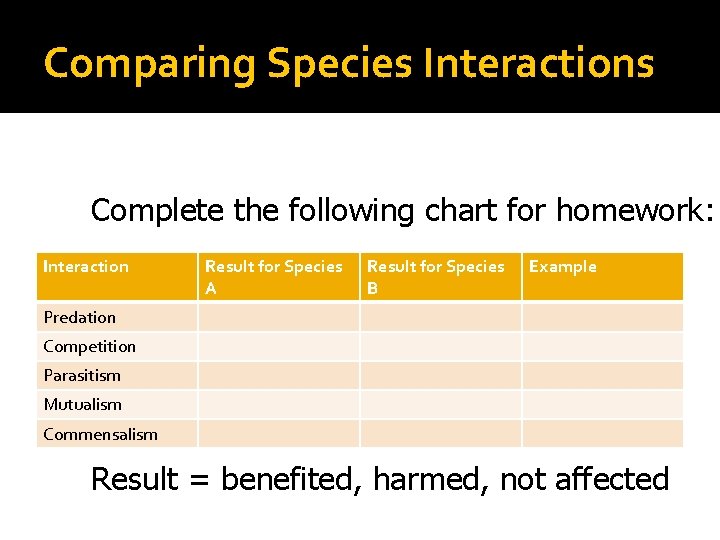
Comparing Species Interactions Complete the following chart for homework: Interaction Result for Species A Result for Species B Example Predation Competition Parasitism Mutualism Commensalism Result = benefited, harmed, not affected
Section 2. 2 �Flow of Energy in an Ecosystem �SC. 912. L. 17. 9 Use a food web to identify and distinguish producers, consumers, and decomposers. Explain the pathway of energy transfer through trophic levels and the reduction of available energy at successive trophic levels.
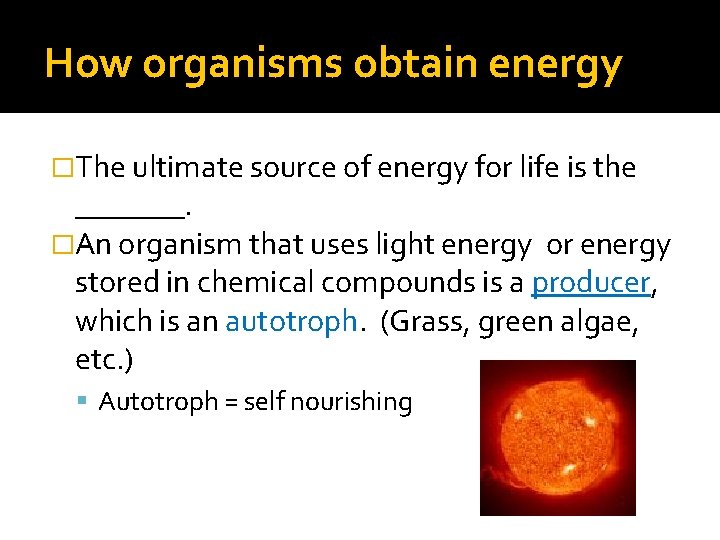
How organisms obtain energy �The ultimate source of energy for life is the _______. �An organism that uses light energy or energy stored in chemical compounds is a producer, which is an autotroph. (Grass, green algae, etc. ) Autotroph = self nourishing
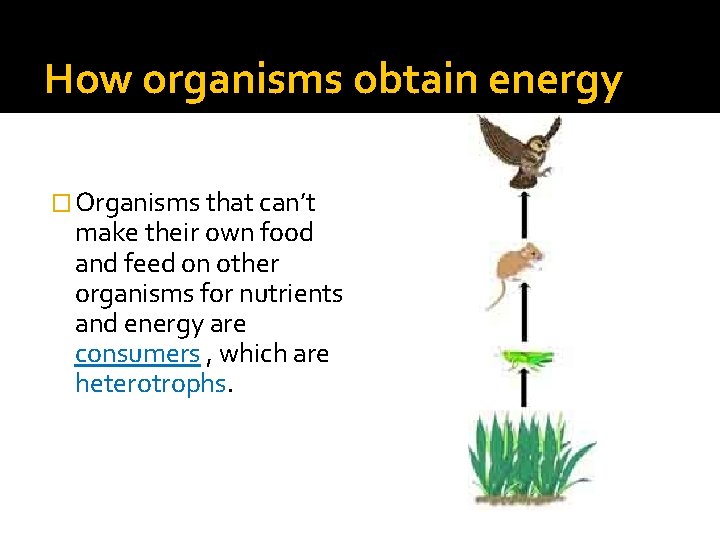
How organisms obtain energy � Organisms that can’t make their own food and feed on other organisms for nutrients and energy are consumers , which are heterotrophs.
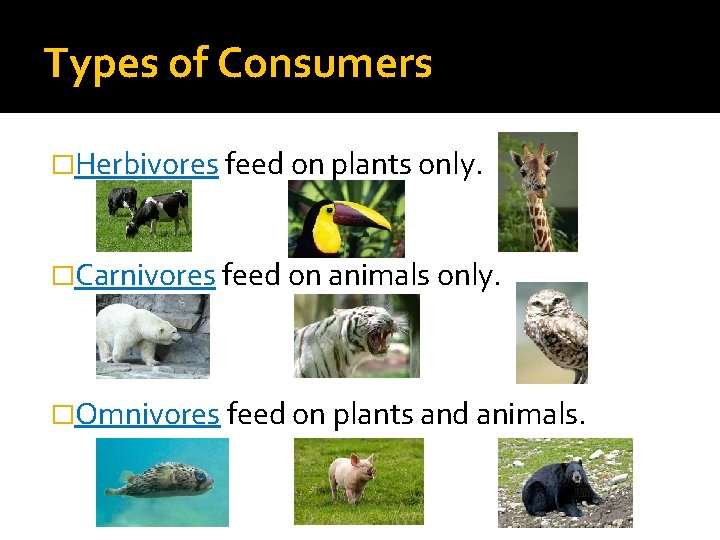
Types of Consumers �Herbivores feed on plants only. �Carnivores feed on animals only. �Omnivores feed on plants and animals.
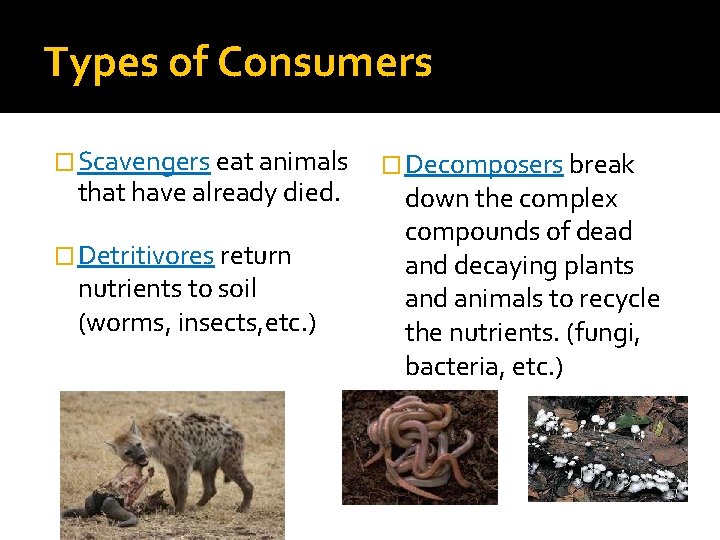
Types of Consumers � Scavengers eat animals that have already died. � Detritivores return nutrients to soil (worms, insects, etc. ) � Decomposers break down the complex compounds of dead and decaying plants and animals to recycle the nutrients. (fungi, bacteria, etc. )
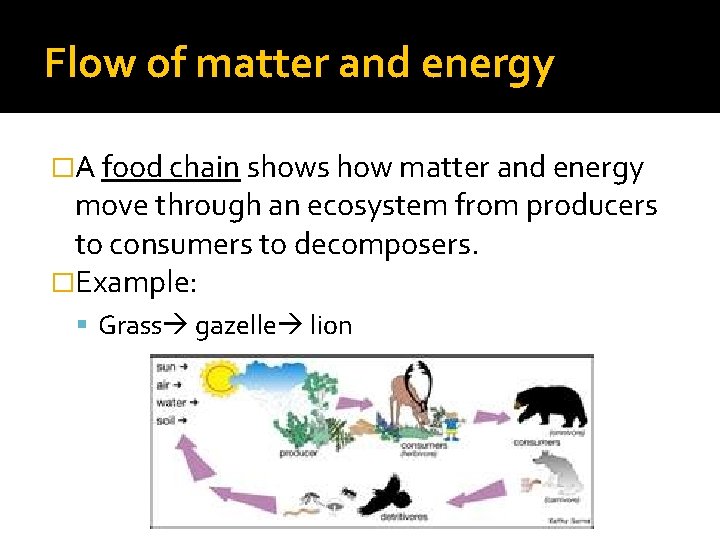
Flow of matter and energy �A food chain shows how matter and energy move through an ecosystem from producers to consumers to decomposers. �Example: Grass gazelle lion
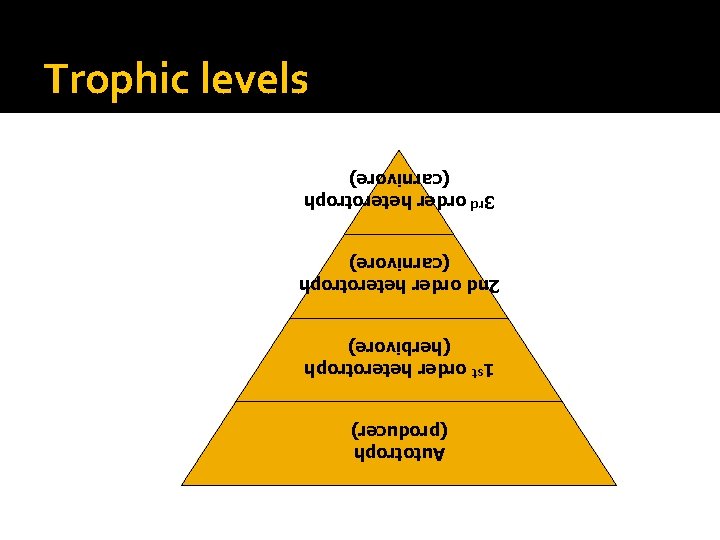
Flow of matter and energy �Each organism in a food chain represents a feeding step, called a trophic level. �Energy is lost at each level as the organism digests, grows, etc. , so there is less energy available at each successive trophic level. �Generally there are 4 -5 trophic levels in an ecosystem
Autotroph (producer) 1 st order heterotroph (herbivore) 2 nd order heterotroph (carnivore) 3 rd order heterotroph (carnivore) Trophic levels
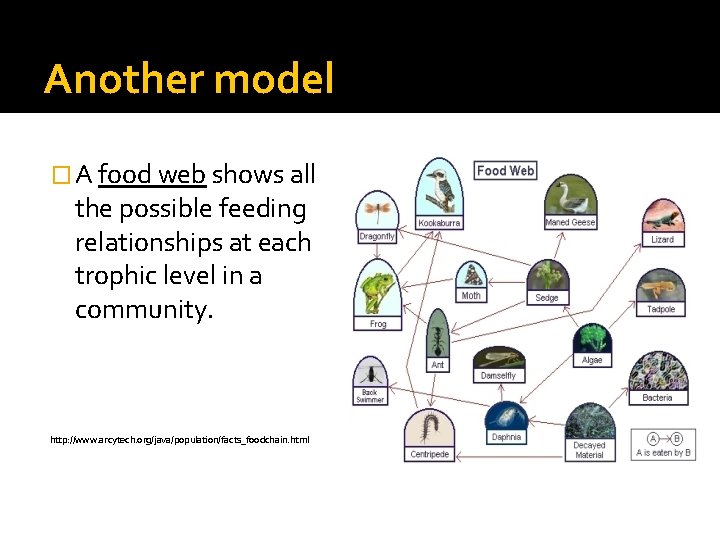
Another model � A food web shows all the possible feeding relationships at each trophic level in a community. http: //www. arcytech. org/java/population/facts_foodchain. html
Food Web Activity �Items to include: (See p. 43 for an example) Producers – at least 2 Consumers (all three levels) – at least 2 of each Decomposers – at least 1 �Connect organisms with arrows �Label each organism’s trophic level �Define: producer, 1 st order consumer, 2 nd order consumer, 3 rd order consumer, & decomposer
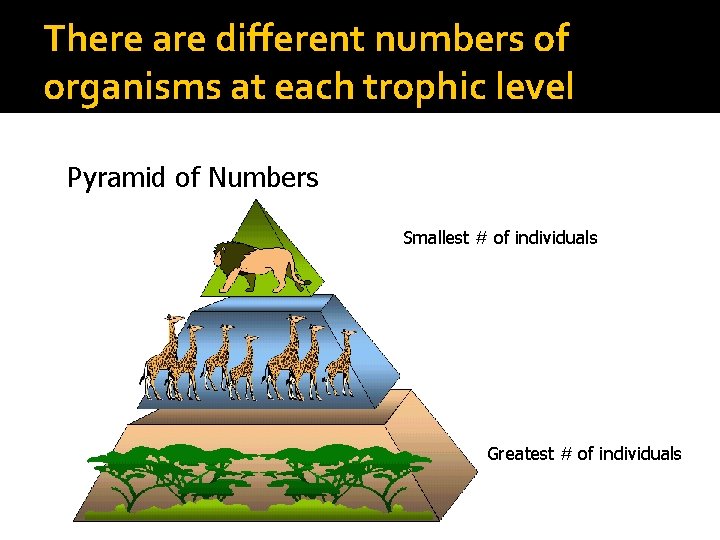
There are different numbers of organisms at each trophic level Pyramid of Numbers Smallest # of individuals Greatest # of individuals
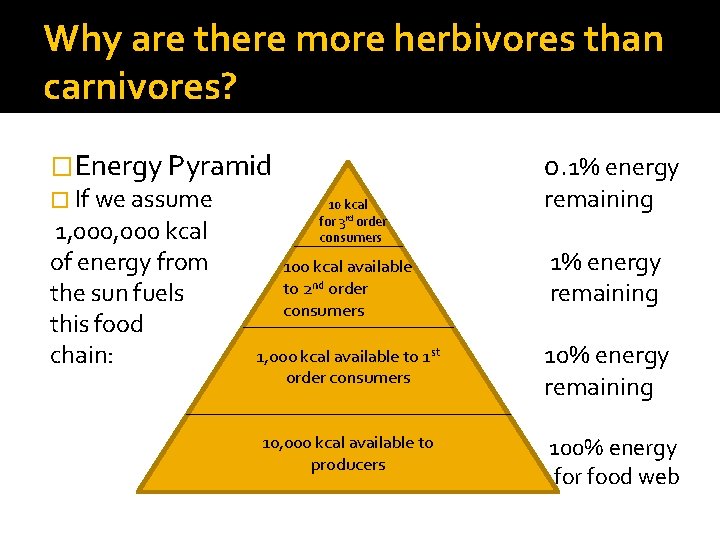
Why are there more herbivores than carnivores? �Energy Pyramid � If we assume 1, 000 kcal of energy from the sun fuels this food chain: 0. 1% energy 10 kcal for 3 rd order consumers 100 kcal available to 2 nd order consumers 1, 000 kcal available to 1 st order consumers 10, 000 kcal available to producers remaining 1% energy remaining 100% energy for food web
Why do the energy levels and # of individuals decrease? �#’s generally decrease because the higher order organisms are larger and they must eat more of the smaller organisms. �Energy decreases because: Not all organisms at a certain level are consumed Some of the energy is used for metabolism (digestion, growth, etc. ) Some is lost as heat.
Another model �Pyramid of Biomass is the total dry weight of living material at each trophic level. Pyramid of Biomass is used because the pyramid of numbers is not always accurate. ▪ For example, squirrels eat acorns. The oak trees that the acorns come from are lesser in number than the squirrels that feed off of them, but the biomass of the trees is greater.
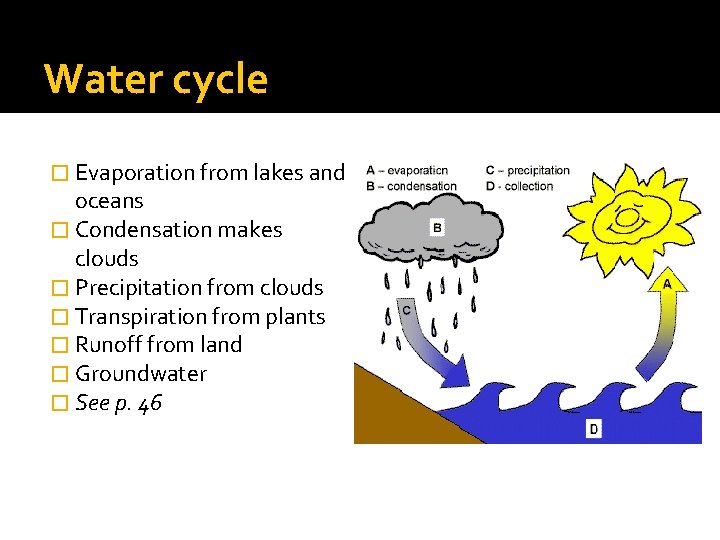
Water cycle � Evaporation from lakes and oceans � Condensation makes clouds � Precipitation from clouds � Transpiration from plants � Runoff from land � Groundwater � See p. 46
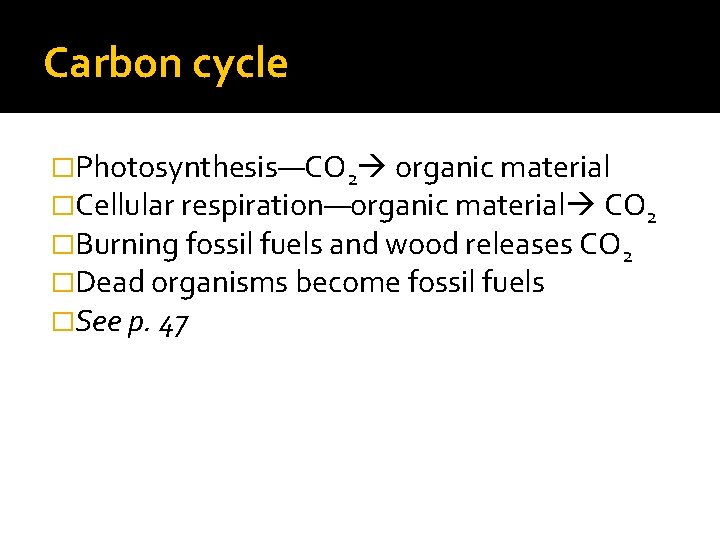
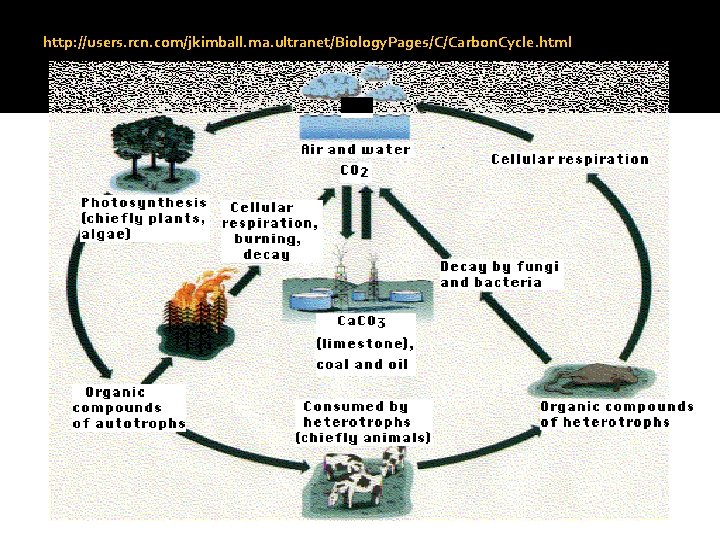
Carbon cycle �Photosynthesis—CO 2 organic material �Cellular respiration—organic material CO 2 �Burning fossil fuels and wood releases CO 2 �Dead organisms become fossil fuels �See p. 47
http: //users. rcn. com/jkimball. ma. ultranet/Biology. Pages/C/Carbon. Cycle. html