
Chapters 1 2 Review Chapter 1 Exploration Reasons
- Slides: 12
Chapters 1 -2 Review
Chapter #1 Exploration
Reasons for Exploration of New World � European demand for more and cheaper products � Search for New Routes to the East- Ottomans had a monopoly on trade routes � The 3 G’s- “Gold, Glory, Gospel” (Explorers wanted Gold and Glory/ missionaries wanted to convert Natives
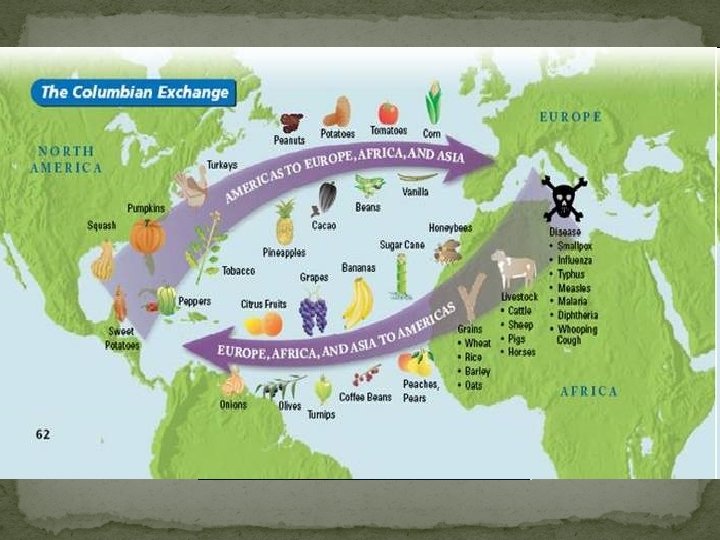
Effects of Exploration � Slave Trade needed for sugar plantations in the West Indies � Spread of disease- Again, “Guns, Germs, and Steel” killed 90% of population � Conflicting Claims- many European nations claimed the same area based on similar explorations a) Papal Line of Demarcation (1493)- Pope Alexander VI divided the “new world” between Spain and Portugal b) Treaty of Tordesilla (1494), which gave most of the “new world” in the Americas except Brazil to Spain. � The Colombian Exchange: � Dramatically widespread exchange of animal, plants, culture (including slaves), diseases, and ideas between the Eastern and Western hemispheres. � Effects: Cultural Diffusion, changes two worlds forever
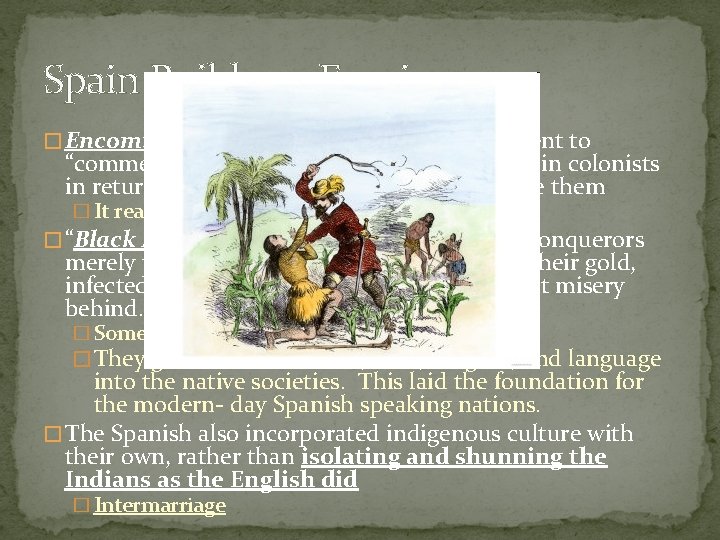
Spain Builds an Empire � Encomienda System - allowed the government to “commend”, or give, Indians and land to certain colonists in return for the promise to try to Christianize them � It really was slavery. � “Black Legend”- false concept held that the conquerors merely tortured and killed the Indians, stole their gold, infected them with smallpox, and left little but misery behind. � Somewhat true � They grafted their culture, laws, religion, and language into the native societies. This laid the foundation for the modern- day Spanish speaking nations. � The Spanish also incorporated indigenous culture with their own, rather than isolating and shunning the Indians as the English did � Intermarriage
Chapter 2 Planting of English America
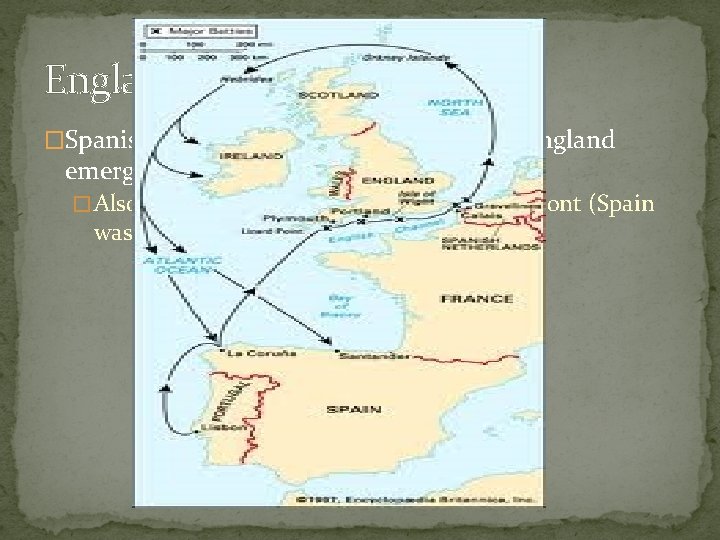
England Emerges �Spanish Armada is defeated by England; England emerges as a naval power � Also brings a Protestant nation to the forefront (Spain was Catholic)
Characteristics of English Empire �Types of Colonies: �Charter chartered trading companies made up of stock- holders who shared both the profits and the losses of the colonies (Virginia). �Proprietorships Royal grant of land to Royal favorites (Maryland- Lord Baltimore) �Royal ruled by the Crown of England (Georgia)
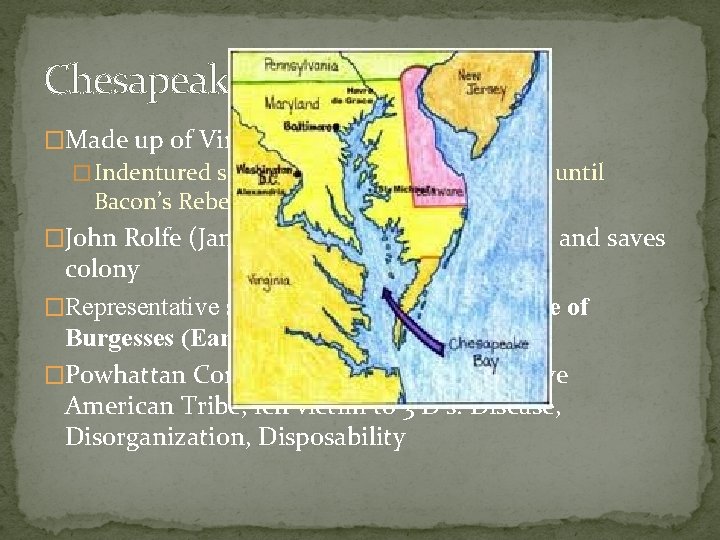
Chesapeake Bay �Made up of Virginia and Maryland � Indentured servants were early labor source until Bacon’s Rebellion �John Rolfe (Jamestown) introduces tobacco and saves colony �Representative self- government- 1619 - House of Burgesses (Early form of self-government) �Powhattan Confederacy: Neighboring Native American Tribe, fell victim to 3 D’s. Disease, Disorganization, Disposability
MD and VA key terms �MD (Lord Baltimore) Proprietorship �Acts of Toleration – guarantees religious toleration to all Christians ONLY � Not to Jews �Indentured Servants: Worked a period of 5 -7 years in exchange for passage to America
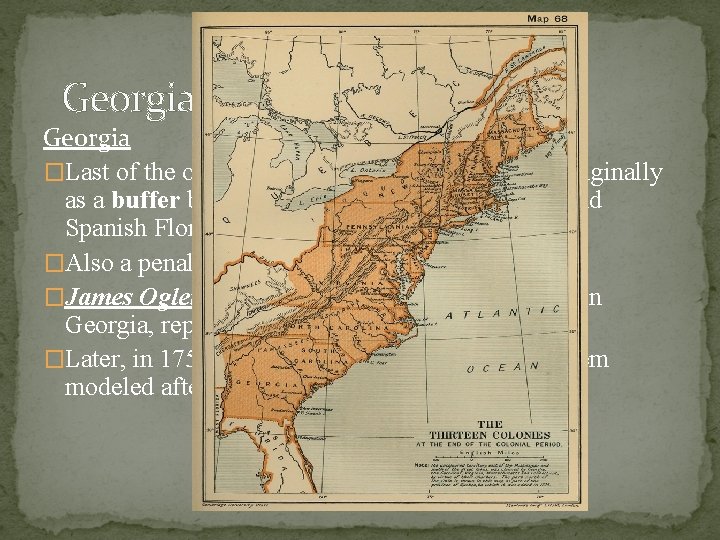
Georgia: The Buffer Colony Georgia �Last of the original 13 colonies formed in 1733 originally as a buffer between aristocratic South Carolina and Spanish Florida and French Louisiana. �Also a penal colony for debtors �James Oglethorpe became the leading statesman in Georgia, repelled Spanish attacks �Later, in 1750, Georgia adopts the plantation system modeled after SC
That’s it! �Subscribe to my channel �Help spread the word �Questions? Comments? Ideas for videos? � Email or leave in comments Subs Dow cribe n he re! Subscribe for APUSH nuggets of wisdom!