
Chapter6 Energy and Oscillations Outline 1 2 3
- Slides: 37
Chapter-6 Energy and Oscillations
Outline 1 2 3 4 5 Simple Machines, Work, and Power Kinetic Energy Potential Energy Conservation of Energy Springs and Simple Harmonic Motion Everyday Phenomenon: Energy and the Pole Vault
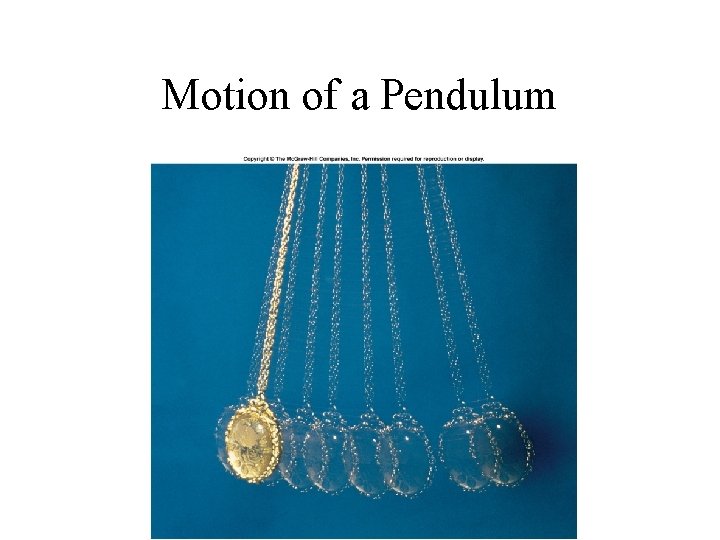
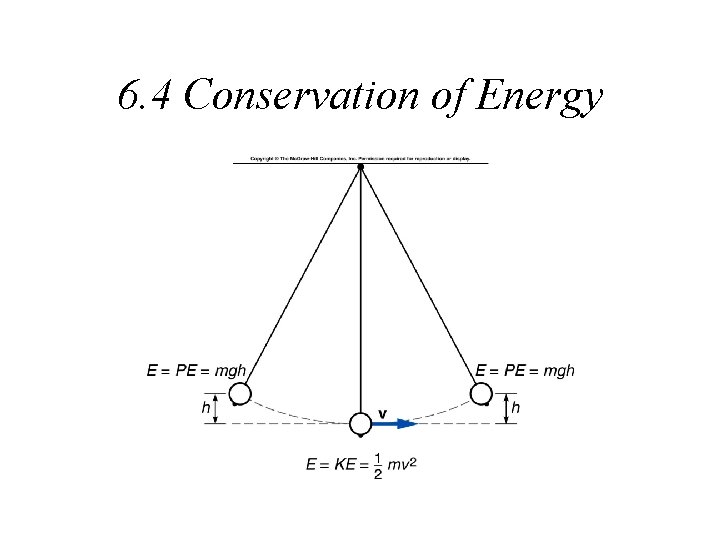
Motion of a Pendulum
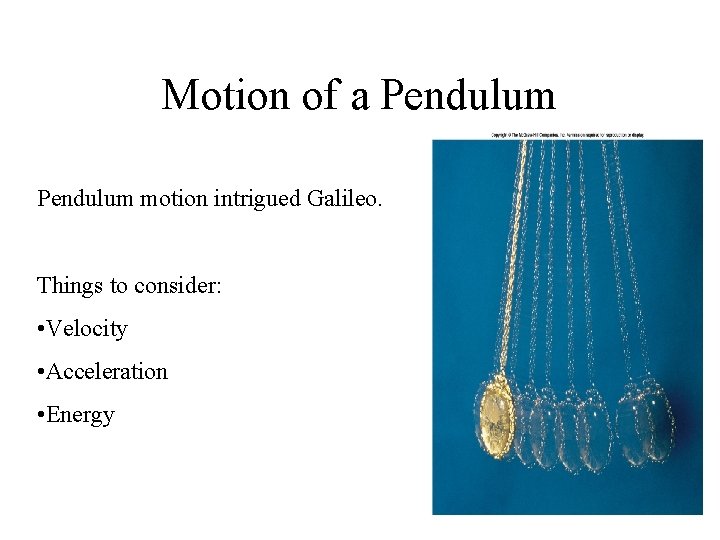
Motion of a Pendulum motion intrigued Galileo. Things to consider: • Velocity • Acceleration • Energy
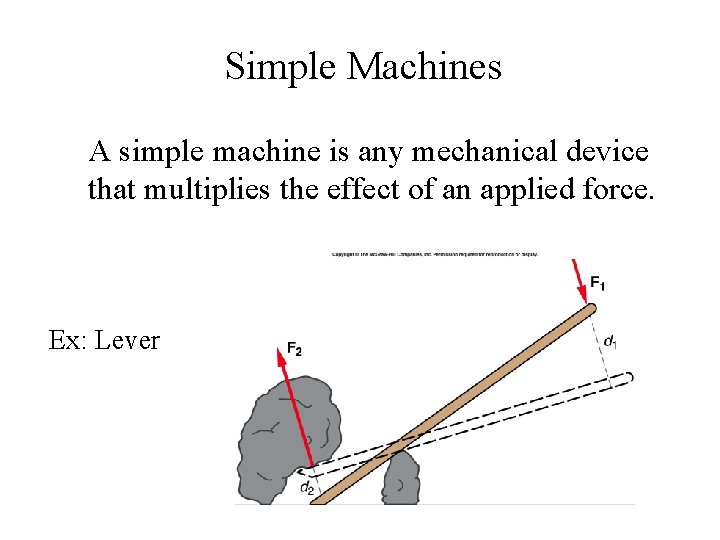
Simple Machines A simple machine is any mechanical device that multiplies the effect of an applied force. Ex: Lever
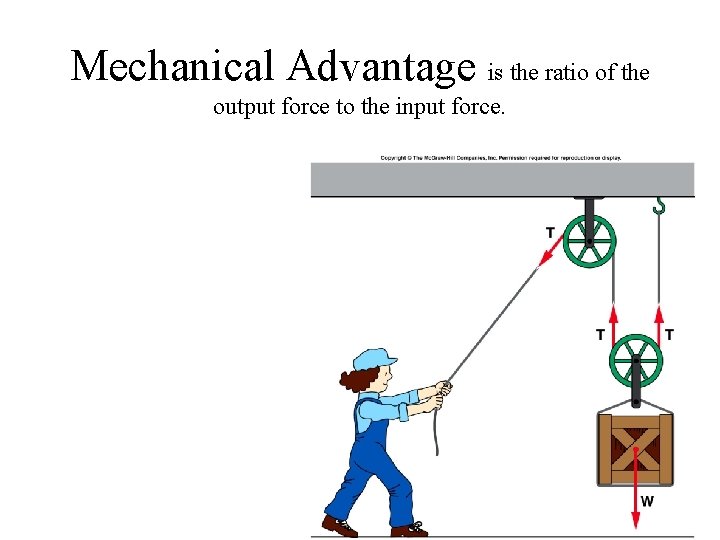
Mechanical Advantage is the ratio of the output force to the input force.
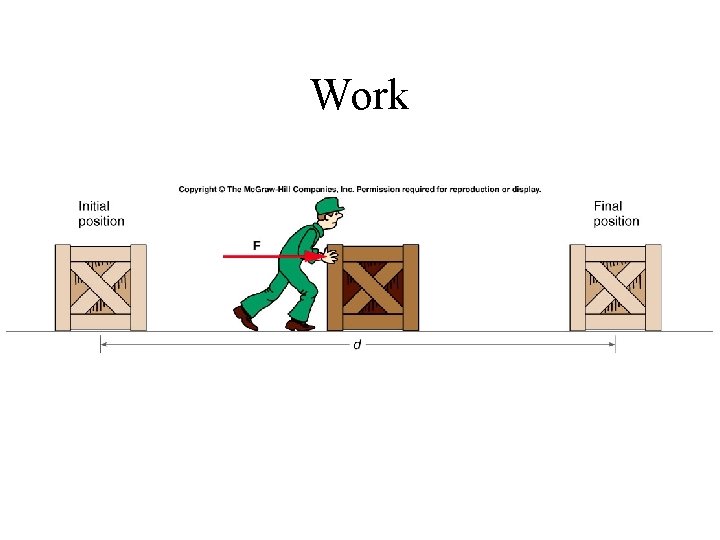
Work
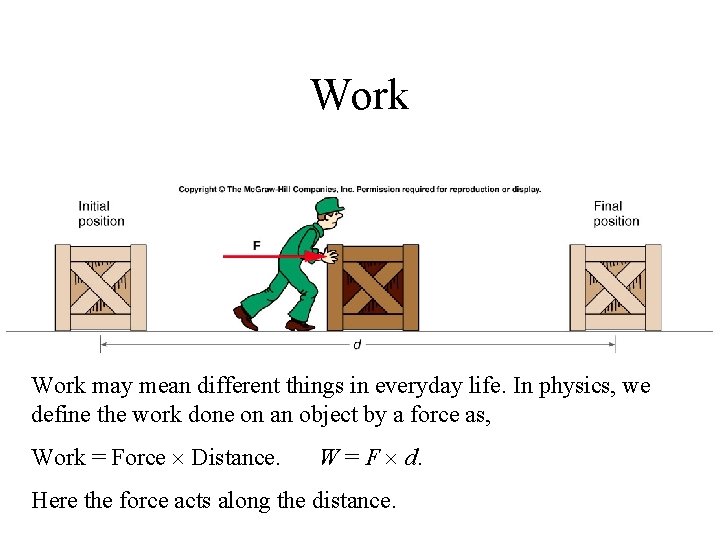
Work may mean different things in everyday life. In physics, we define the work done on an object by a force as, Work = Force Distance. W = F d. Here the force acts along the distance.
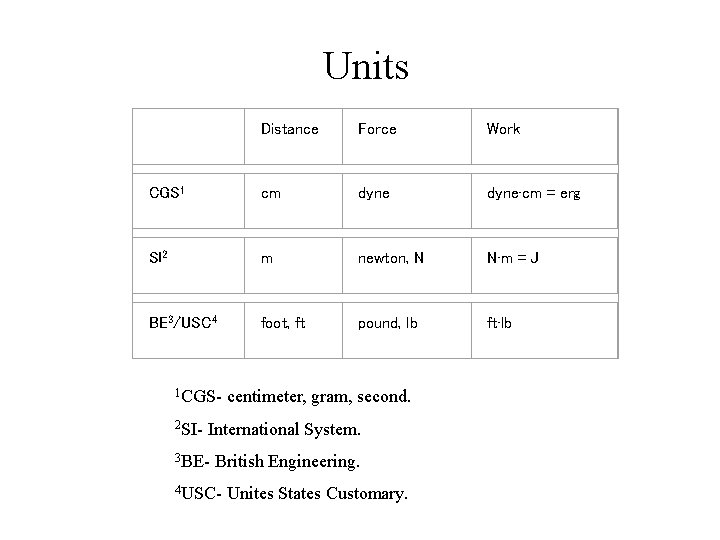
Units Distance Force Work CGS 1 cm dyne·cm = erg SI 2 m newton, N N·m = J BE 3/USC 4 foot, ft pound, lb ft·lb 1 CGS 2 SI- centimeter, gram, second. International System. 3 BE- British Engineering. 4 USC- Unites States Customary.
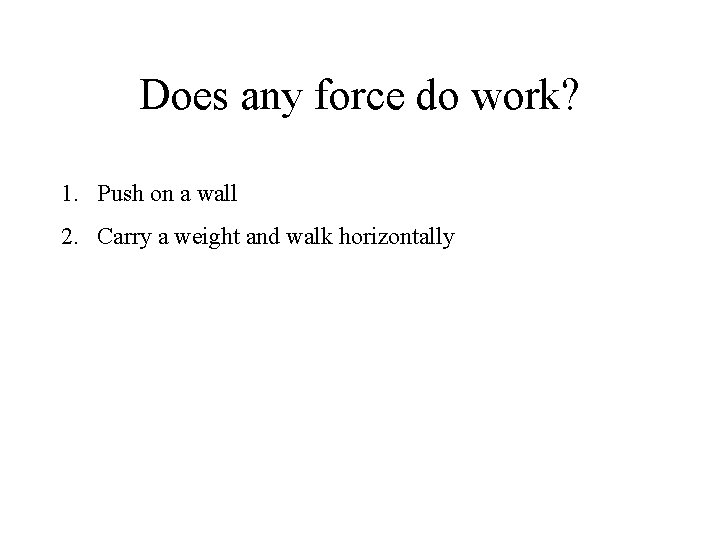
Does any force do work? 1. Push on a wall 2. Carry a weight and walk horizontally
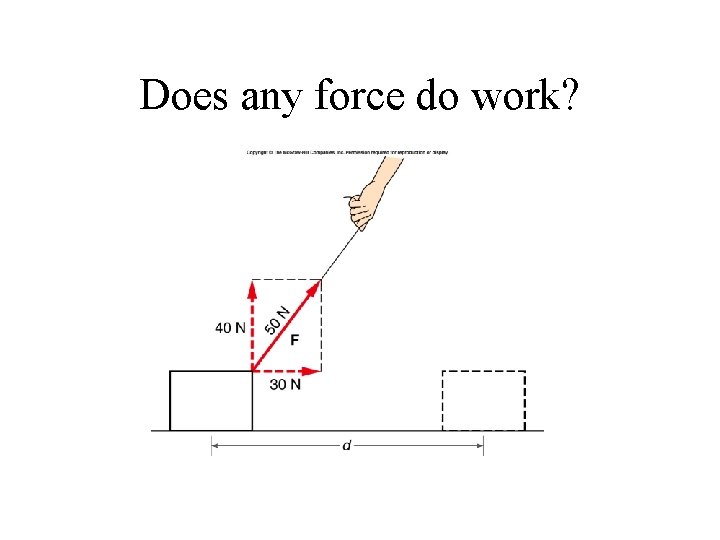
Does any force do work?
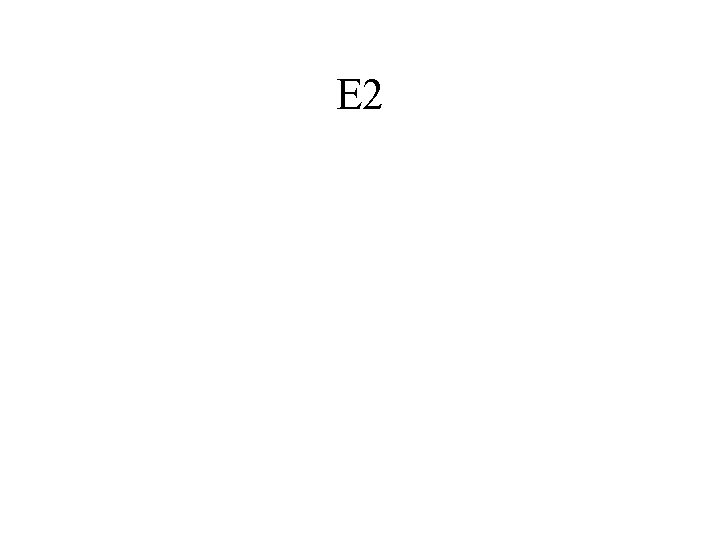
E 2
Power The rate at which work is done is called the power.
Power The rate at which work is done is called the power.
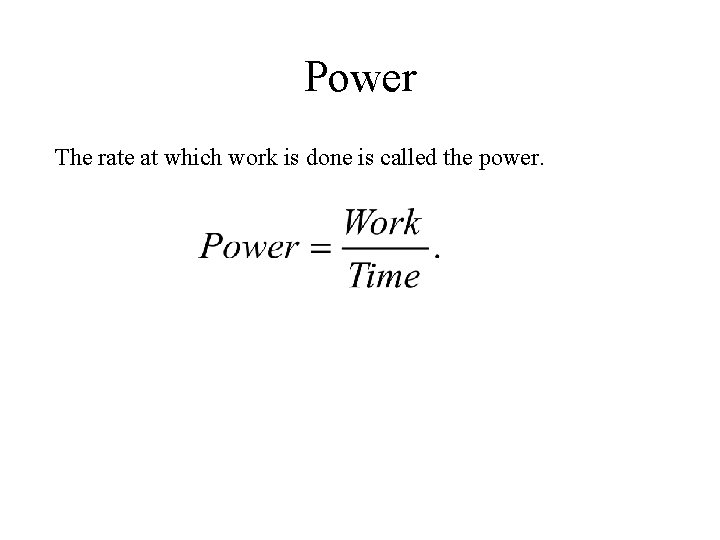
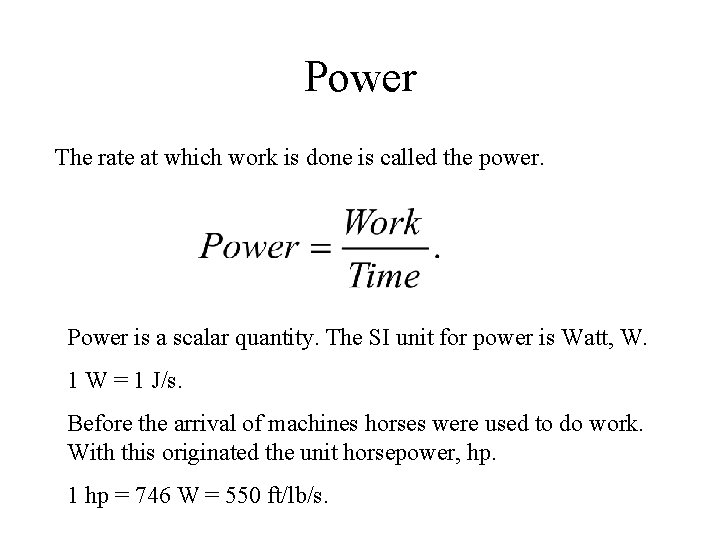
Power The rate at which work is done is called the power. Power is a scalar quantity. The SI unit for power is Watt, W. 1 W = 1 J/s. Before the arrival of machines horses were used to do work. With this originated the unit horsepower, hp. 1 hp = 746 W = 550 ft/lb/s.
Problem A person weighs 110 lbs, climbs 10 steps of stairs, in 5 second. If the height of a step is 6 inches. Calculate the work and power.
6. 2 Kinetic Energy Kinetic energy is the energy of motion. The word “kinetic” originated from the Greek word kinetikos, meaning “motion”.
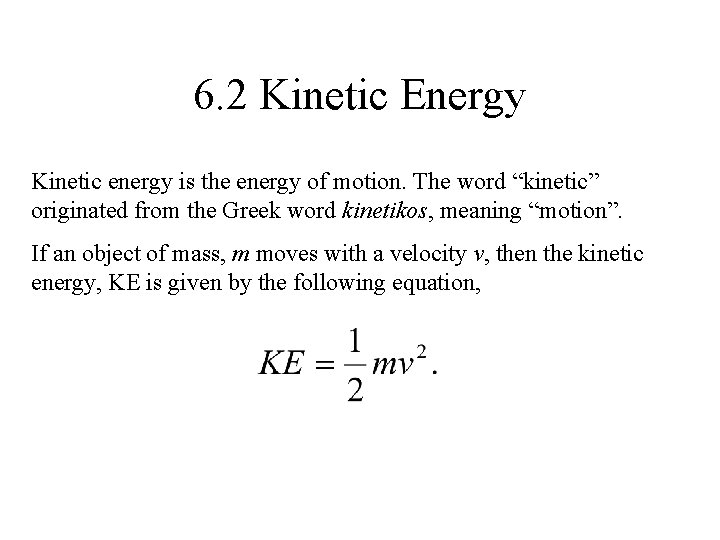
6. 2 Kinetic Energy Kinetic energy is the energy of motion. The word “kinetic” originated from the Greek word kinetikos, meaning “motion”. If an object of mass, m moves with a velocity v, then the kinetic energy, KE is given by the following equation,
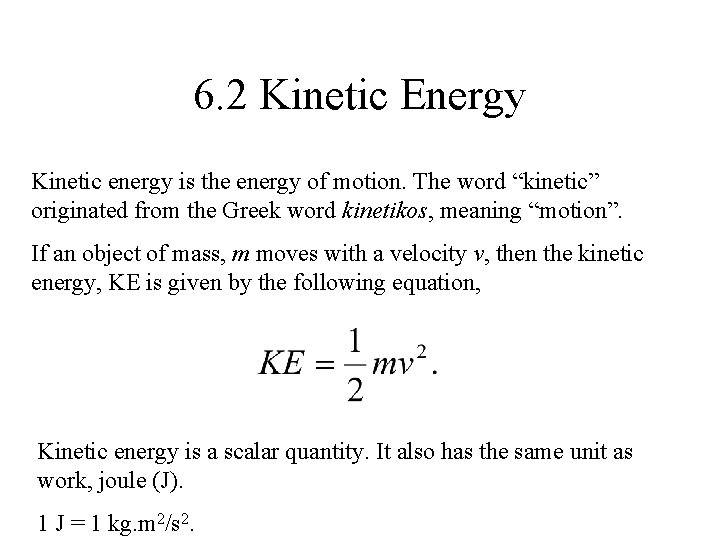
6. 2 Kinetic Energy Kinetic energy is the energy of motion. The word “kinetic” originated from the Greek word kinetikos, meaning “motion”. If an object of mass, m moves with a velocity v, then the kinetic energy, KE is given by the following equation, Kinetic energy is a scalar quantity. It also has the same unit as work, joule (J). 1 J = 1 kg. m 2/s 2.
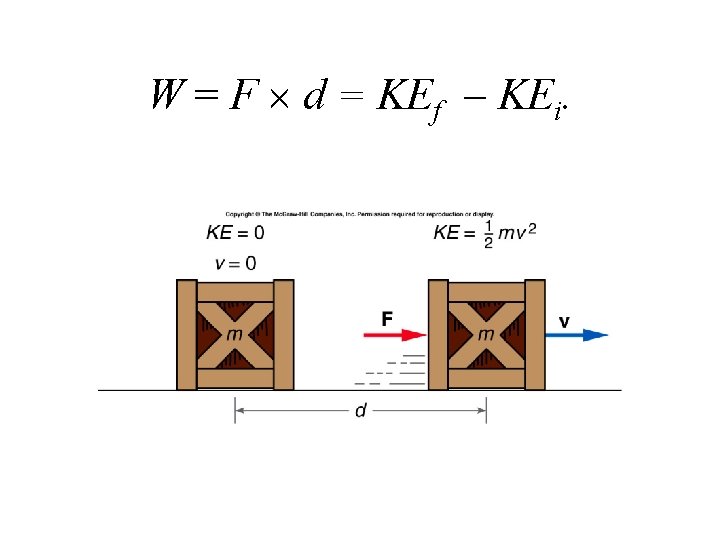
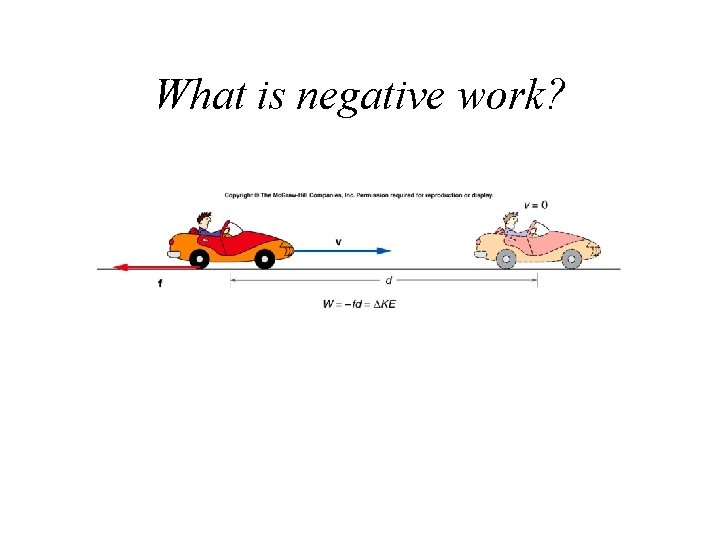
W = F d = KEf KEi.
What is negative work?
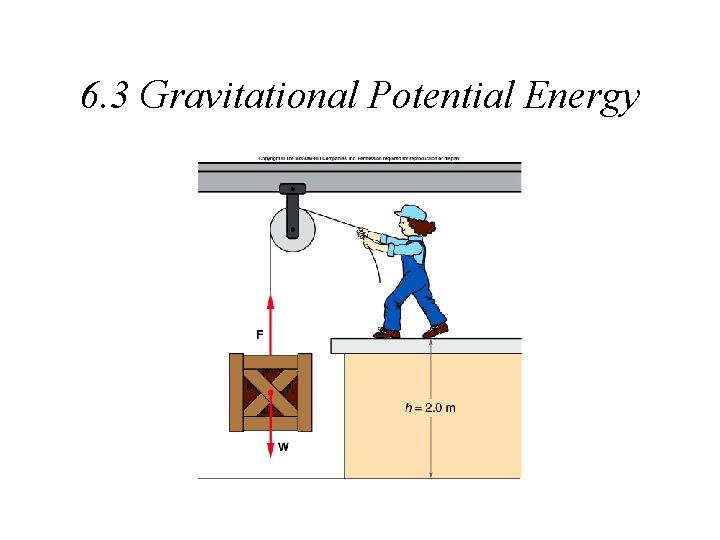
6. 3 Gravitational Potential Energy
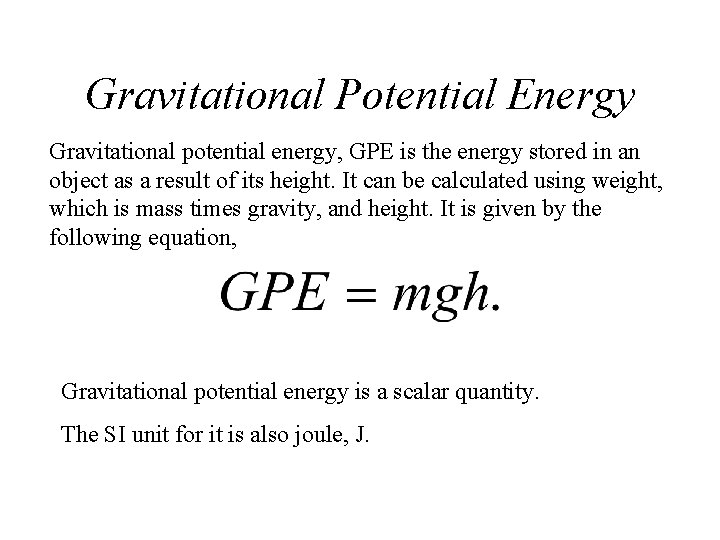
Gravitational Potential Energy Gravitational potential energy, GPE is the energy stored in an object as a result of its height. It can be calculated using weight, which is mass times gravity, and height. It is given by the following equation, Gravitational potential energy is a scalar quantity. The SI unit for it is also joule, J.
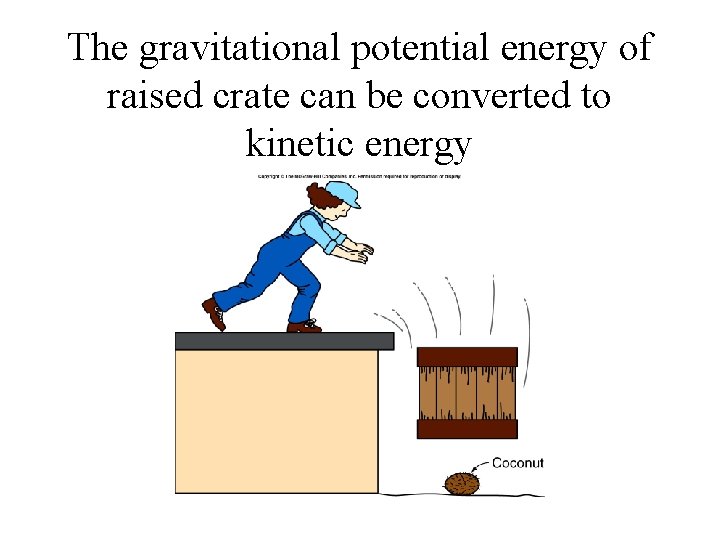
The gravitational potential energy of raised crate can be converted to kinetic energy
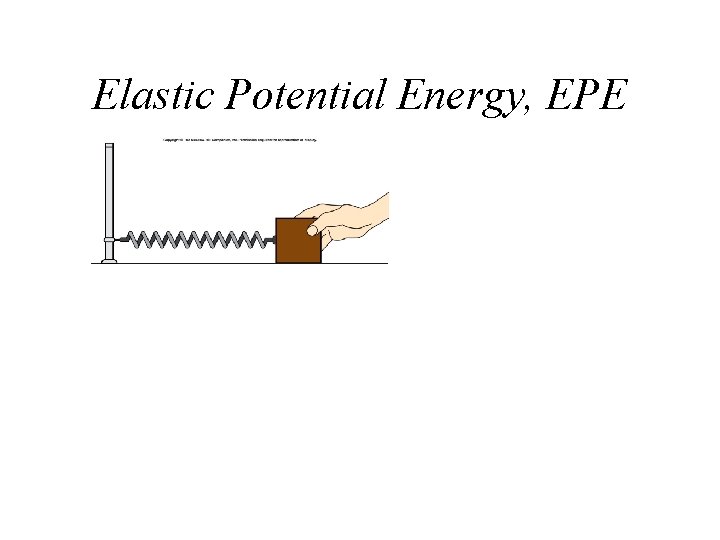
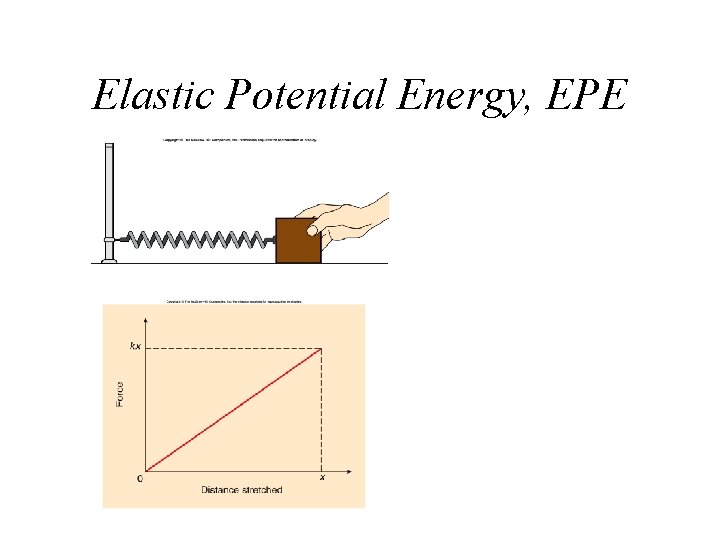
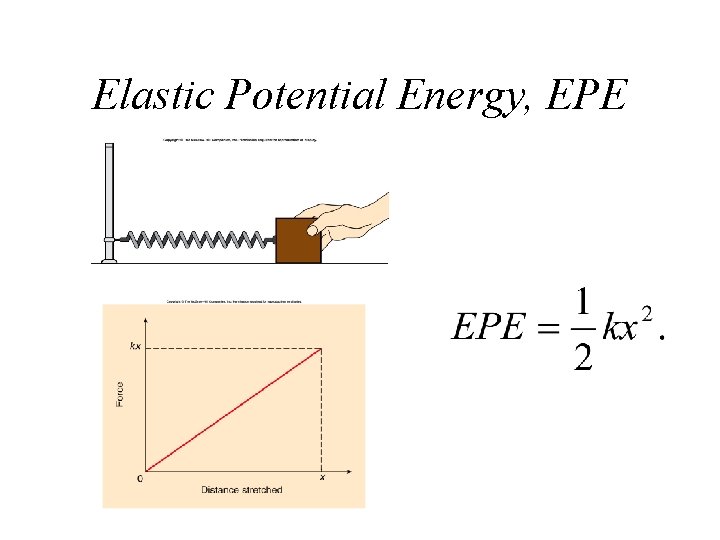
Elastic Potential Energy, EPE
Elastic Potential Energy, EPE
Elastic Potential Energy, EPE
Conservative Forces A force is conservative if the work it does on moving an object is independent of the path. Gravitational force is a conservative force. The work required against gravity to move an object between two points depends on the height between the objects. It does not depend on the path taken to move the object between the two points. Other conservative forces are elastic spring force, magnetic force, and electric force.
6. 4 Conservation of Energy
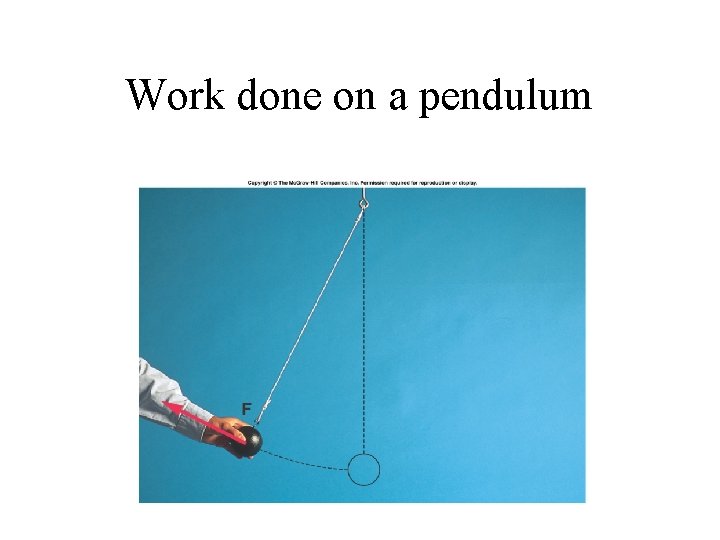
Work done on a pendulum
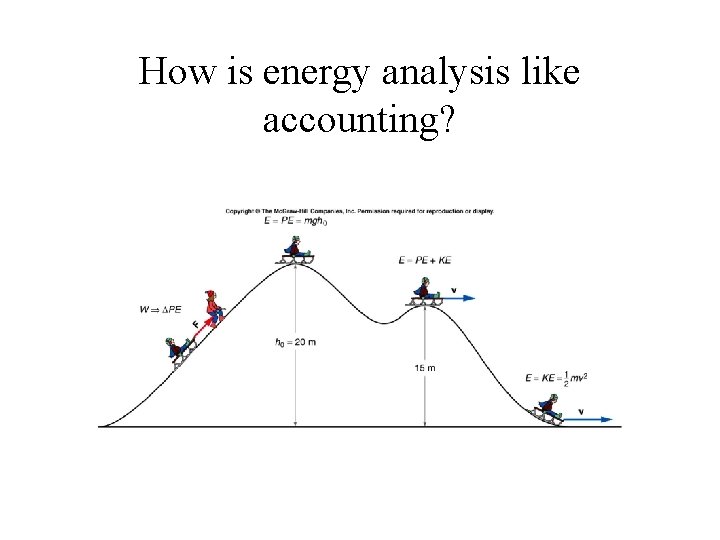
Conservation of Mechanical Energy Mechanical energy = KE + PE In the presence only conservative forces, the total mechanical energy of a system remains a constant.
Try this box 6. 4
How is energy analysis like accounting?
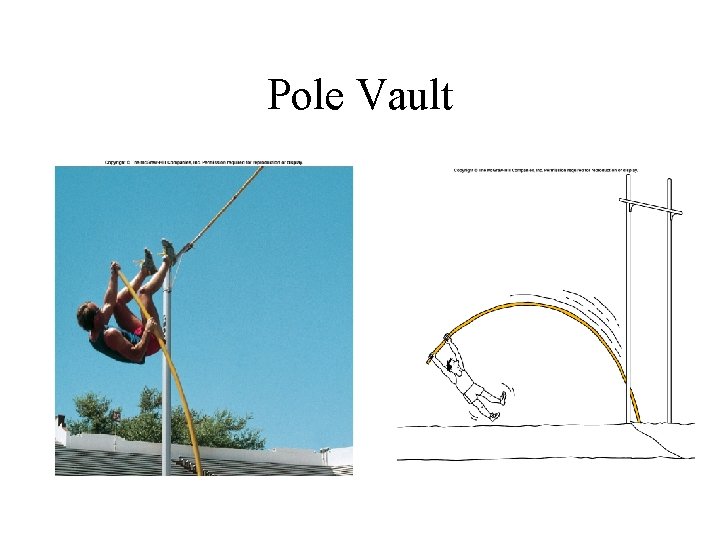
Pole Vault
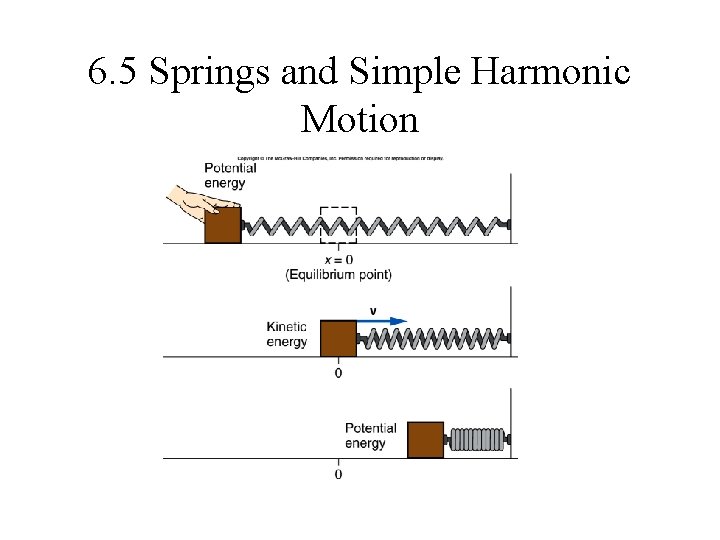
6. 5 Springs and Simple Harmonic Motion
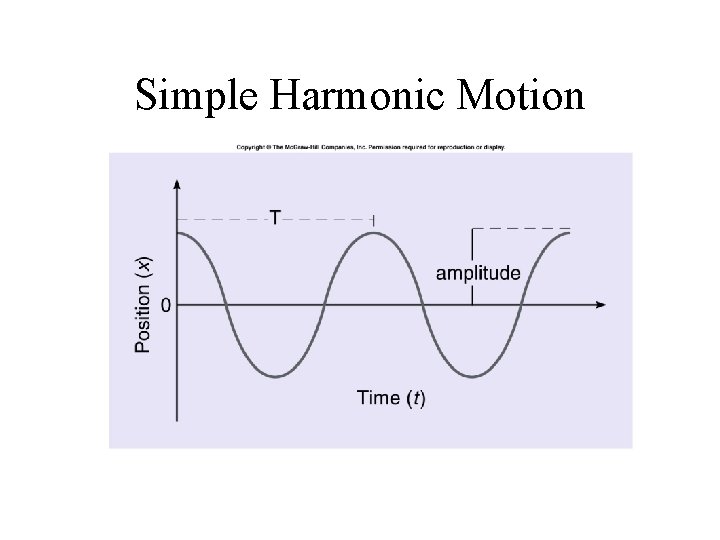
Simple Harmonic Motion
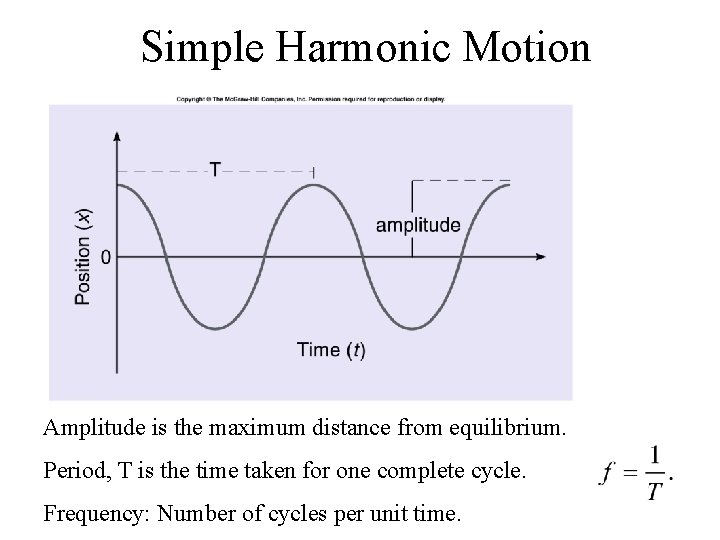
Simple Harmonic Motion Amplitude is the maximum distance from equilibrium. Period, T is the time taken for one complete cycle. Frequency: Number of cycles per unit time.