
CHAPTER2 DIMENSIONAL ANALYSIS SIMILITUDE AND HYDRAULIC MODELS Objectives
CHAPTER-2 DIMENSIONAL ANALYSIS, SIMILITUDE AND HYDRAULIC MODELS
Objectives Understand the concept and application of dimensional homogeneity Understand dimensional analysis and know its uses. Be capable of solving and proving equations using the two methods of dimensional analysis. Know and explain the different types of hydraulic similarities. Classify and explain the different types of hydraulic models.
Physical quantities can be divided into: Fundamental quantities Mass Length Time Temperature (Only for compressible fluids) Derived quantities this are quantities which are expressed in terms of fundamental quantities The dimension of any physical quantities can be expressed as, In M-L-T system In F-L-T system
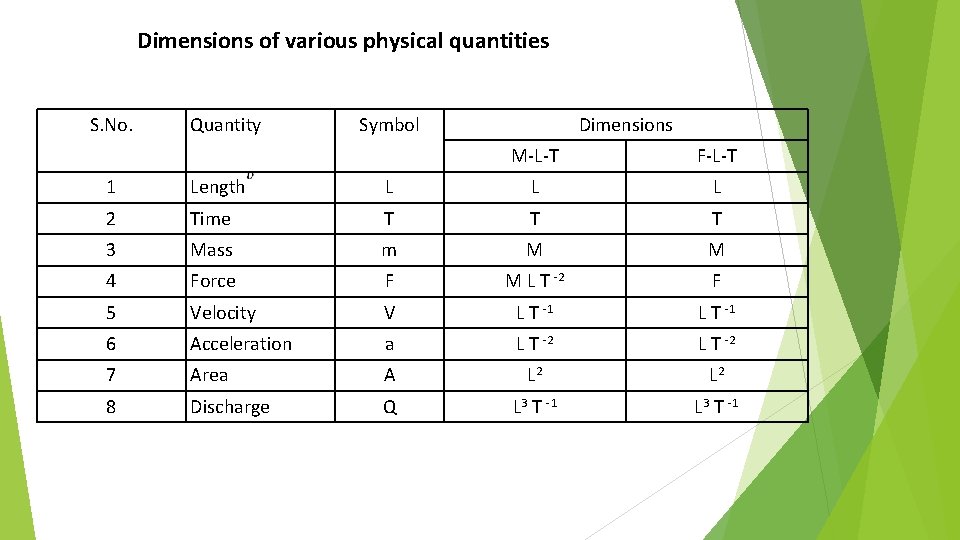
Dimensions of various physical quantities S. No. Quantity Symbol Dimensions M-L-T F-L-T 1 Length L L L 2 Time T T T 3 Mass m M M 4 Force F M L T -2 F 5 Velocity V L T -1 6 Acceleration a L T -2 7 Area A L 2 8 Discharge Q L 3 T -1
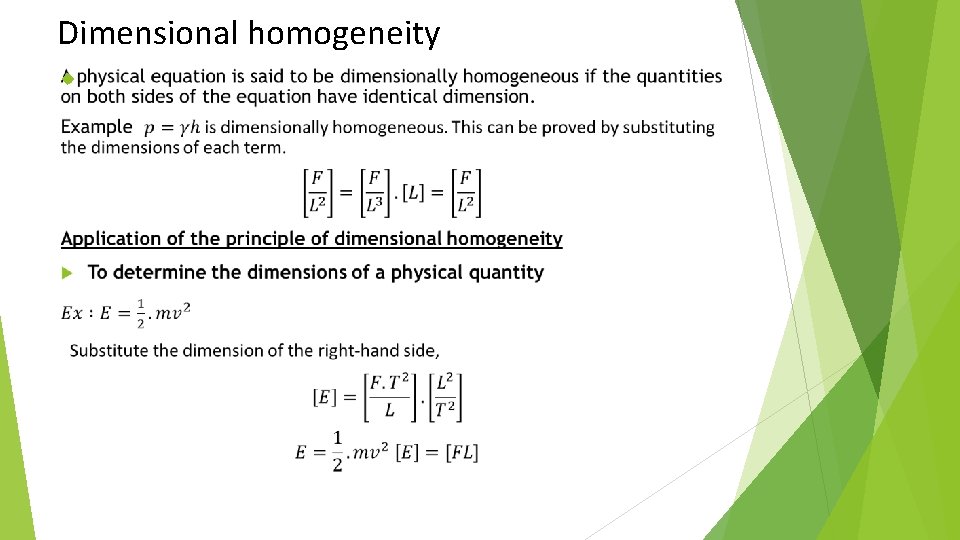
Dimensional homogeneity
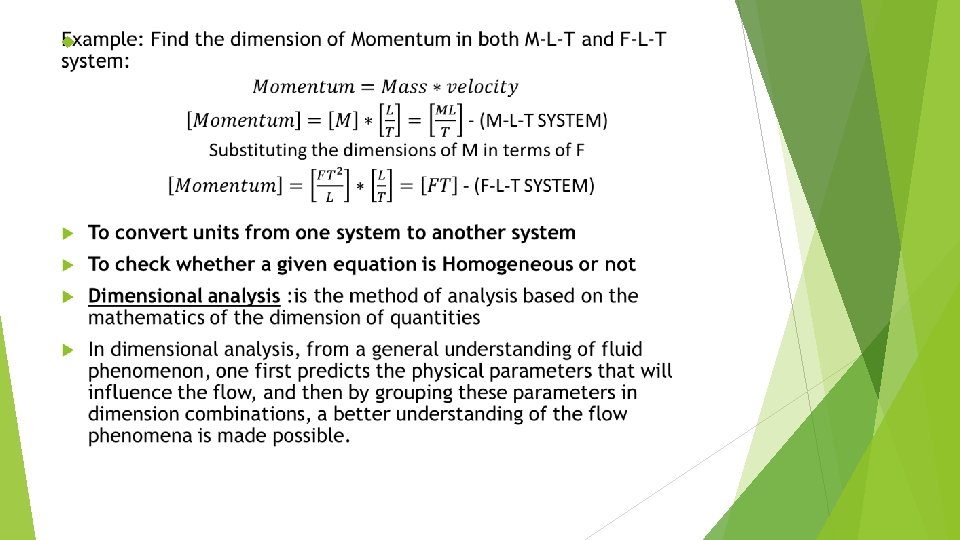
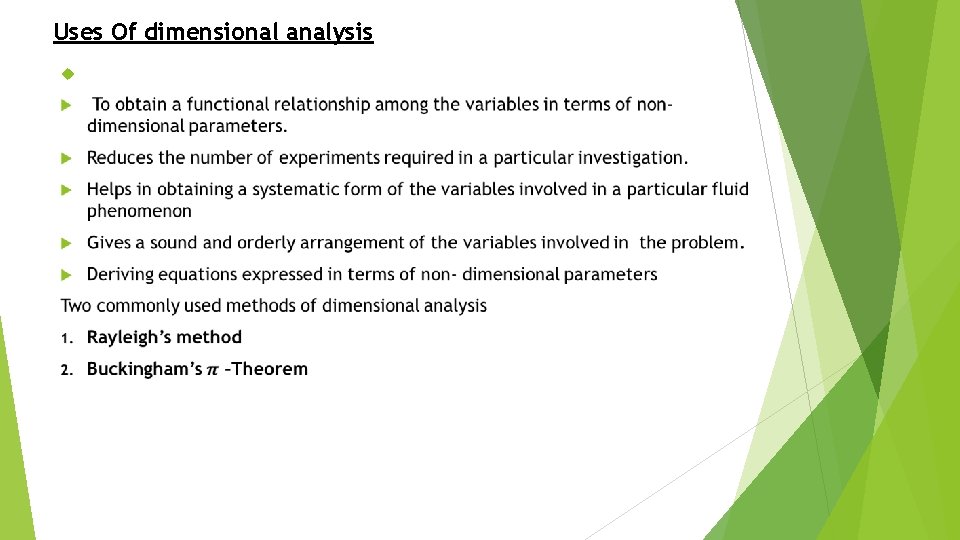
Uses Of dimensional analysis
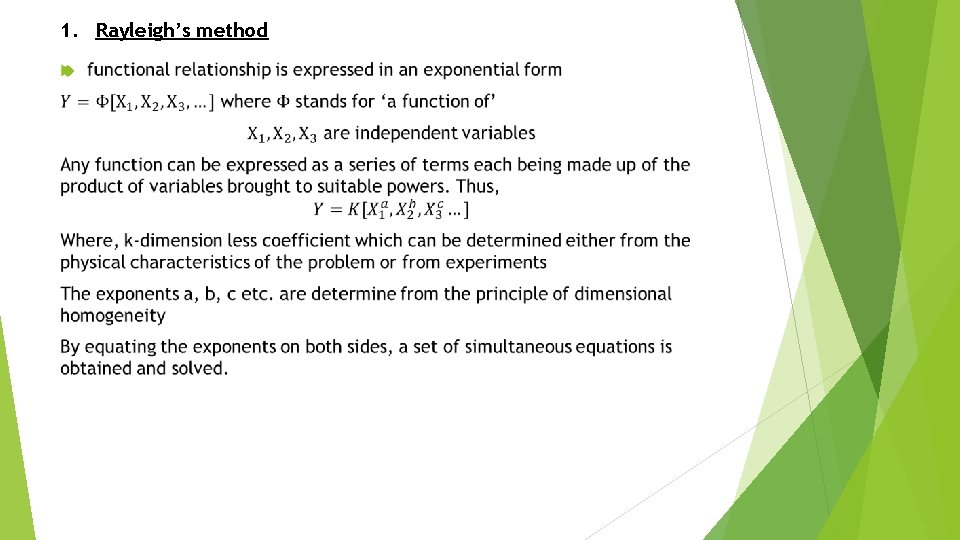
1. Rayleigh’s method
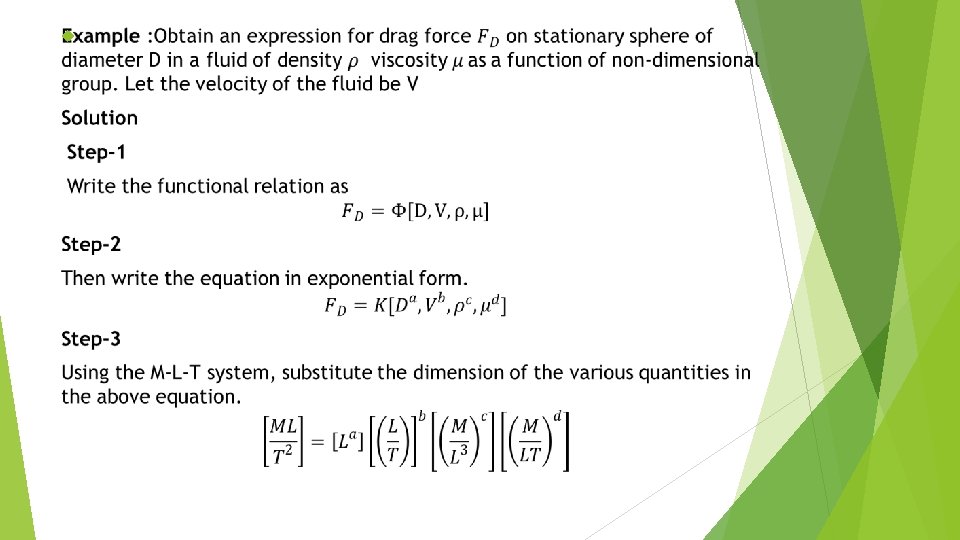
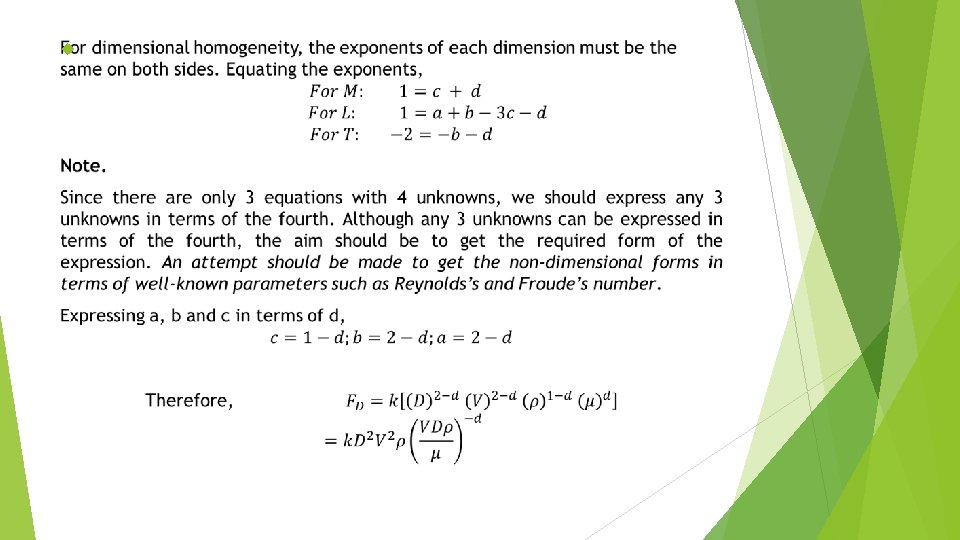
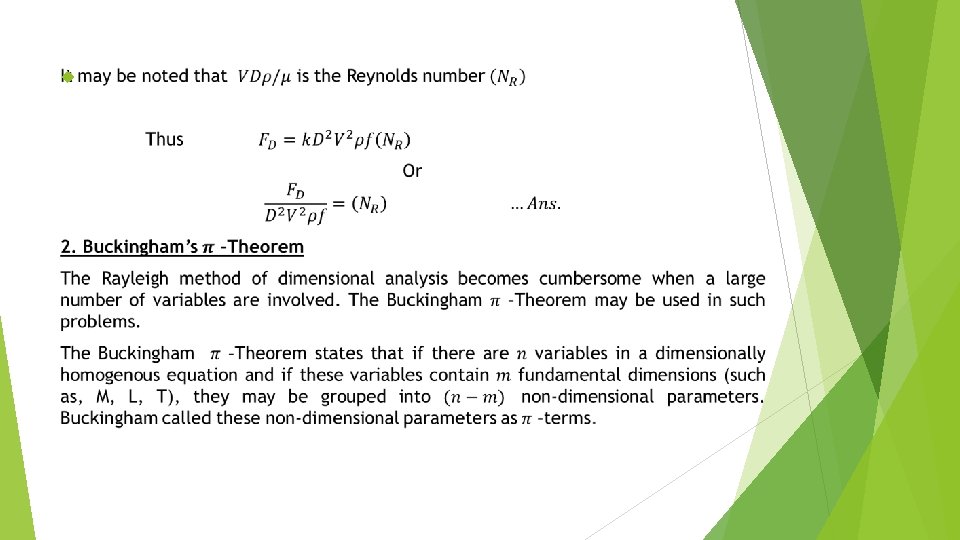
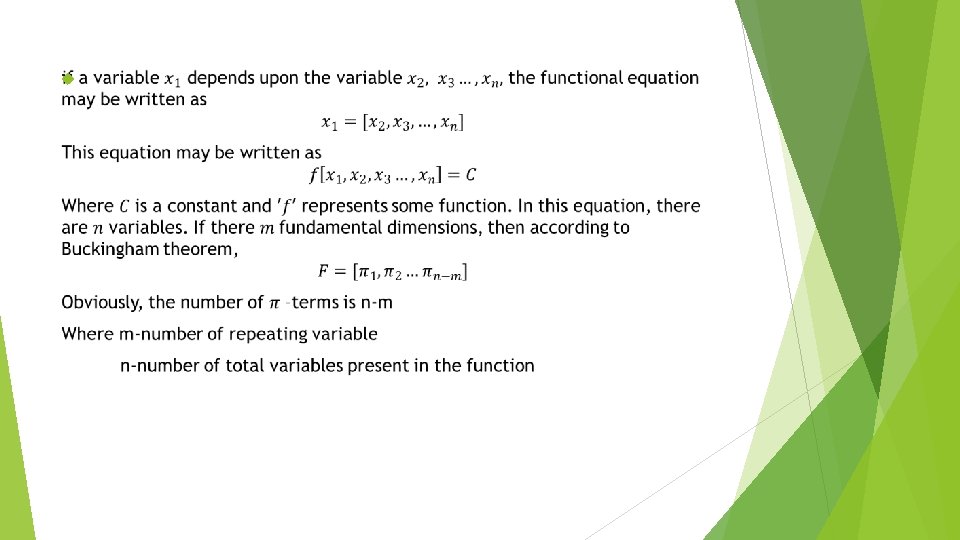
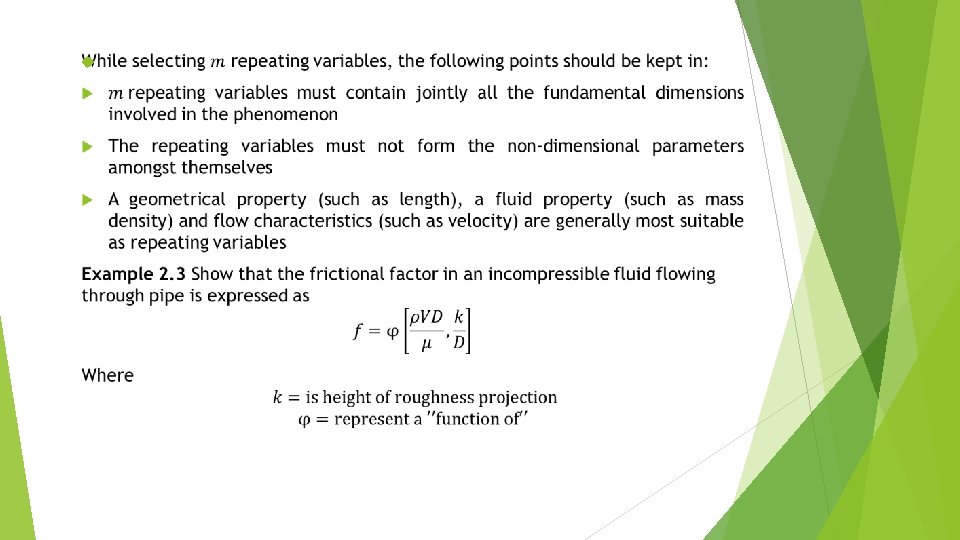
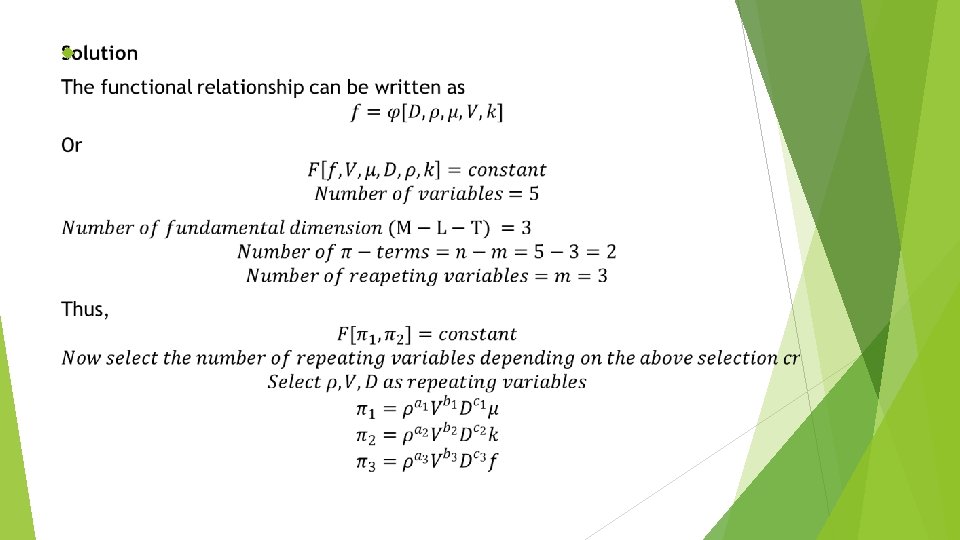
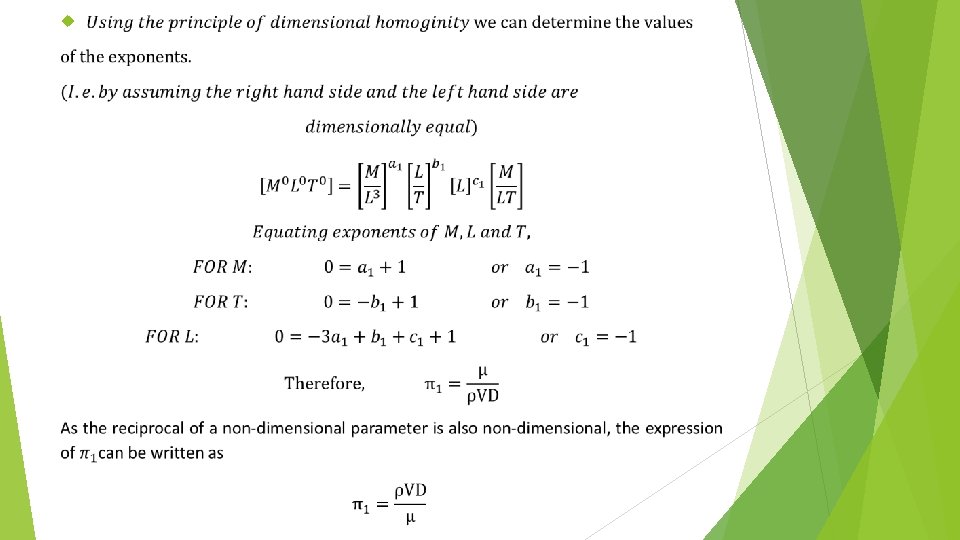
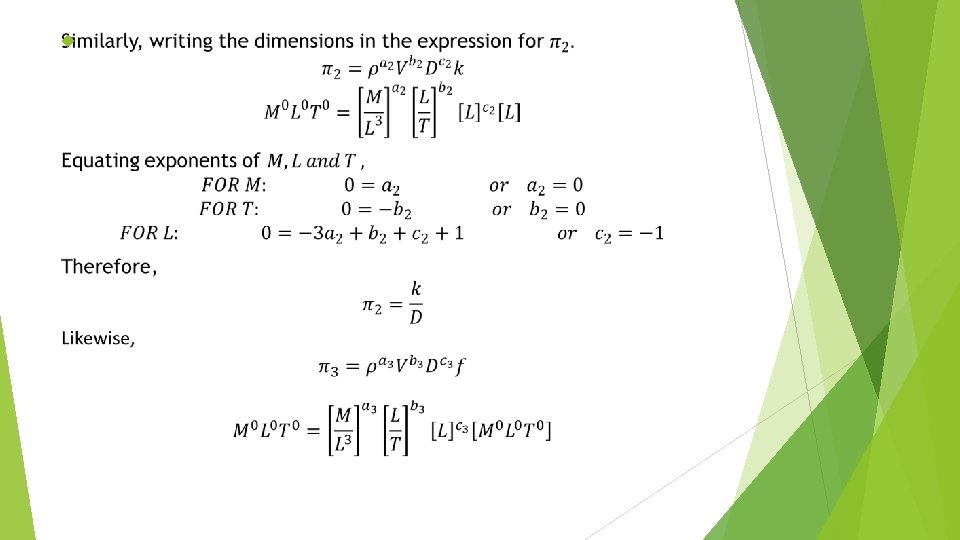
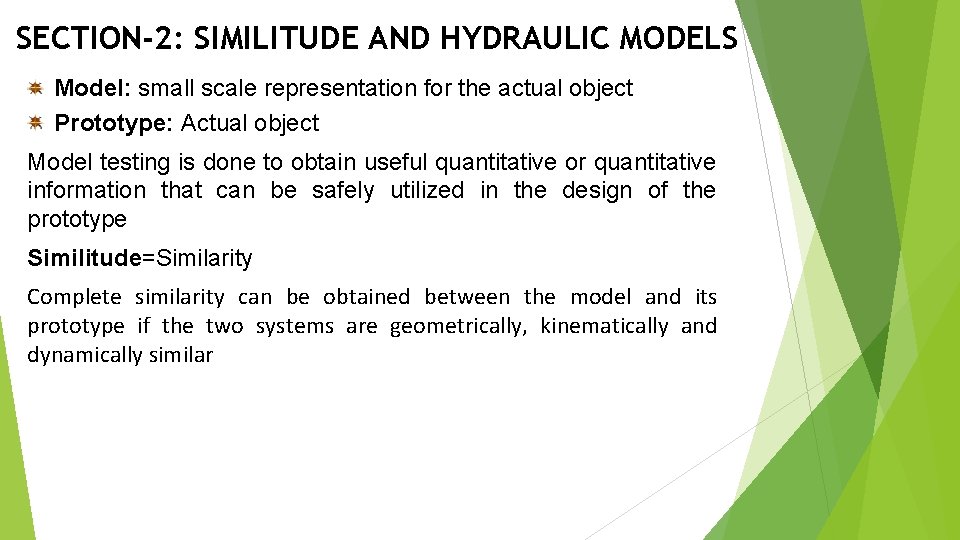
SECTION-2: SIMILITUDE AND HYDRAULIC MODELS Model: small scale representation for the actual object Prototype: Actual object Model testing is done to obtain useful quantitative or quantitative information that can be safely utilized in the design of the prototype Similitude=Similarity Complete similarity can be obtained between the model and its prototype if the two systems are geometrically, kinematically and dynamically similar
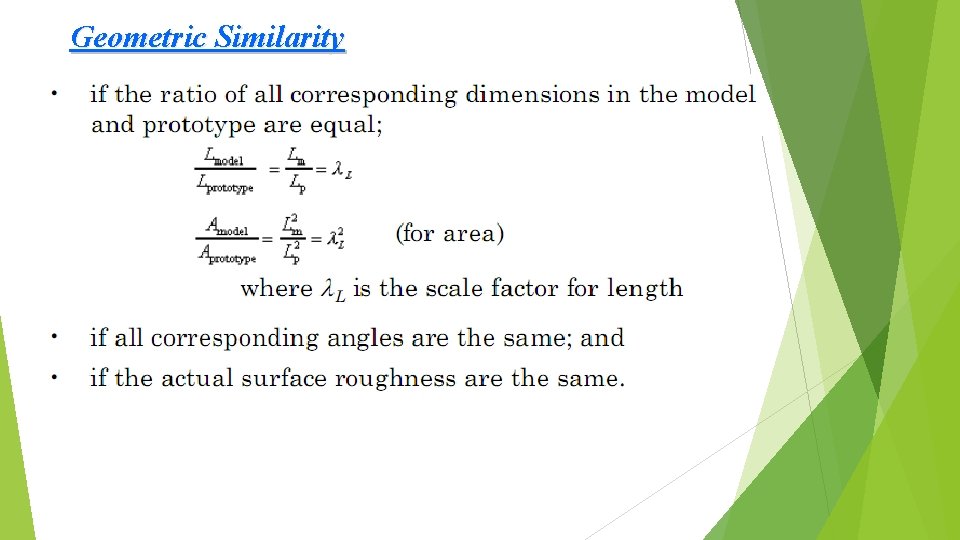
Geometric Similarity
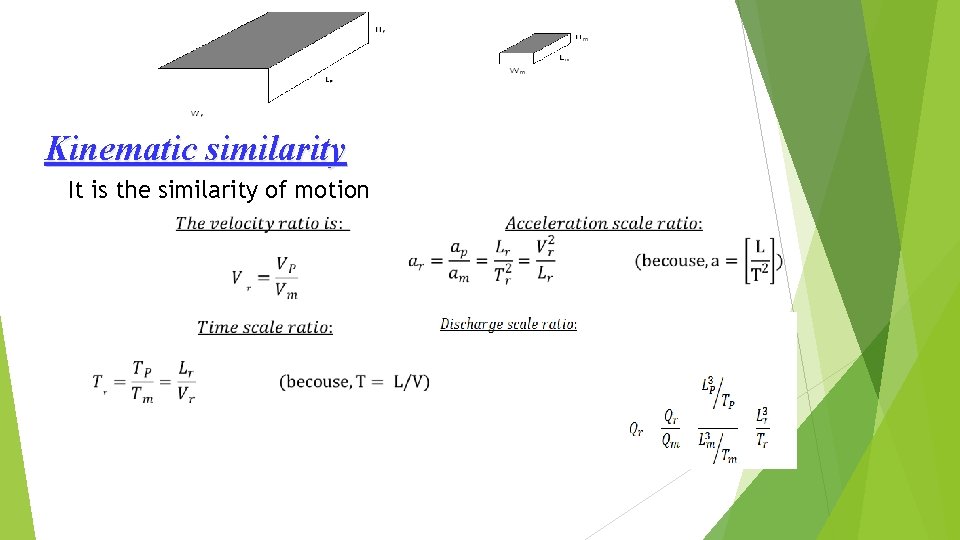
Kinematic similarity It is the similarity of motion
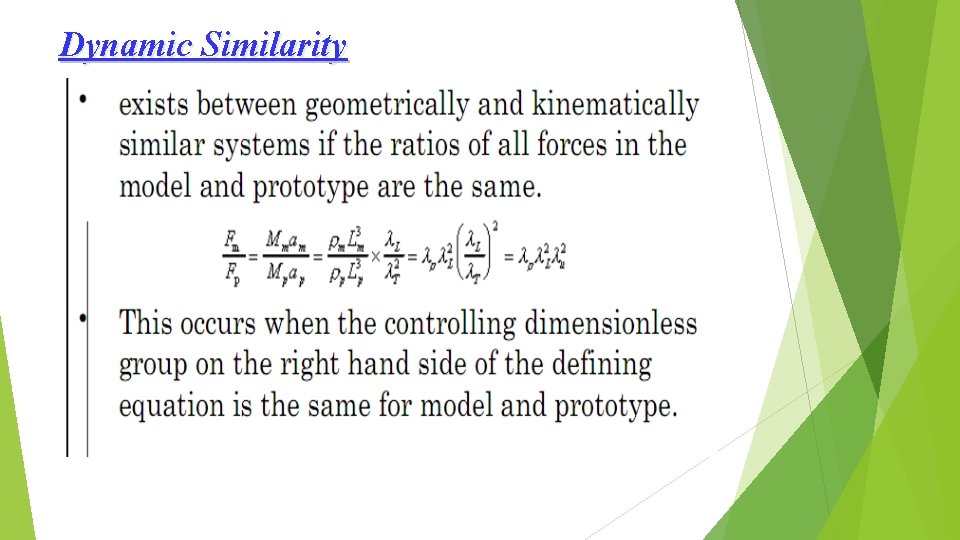
Dynamic Similarity
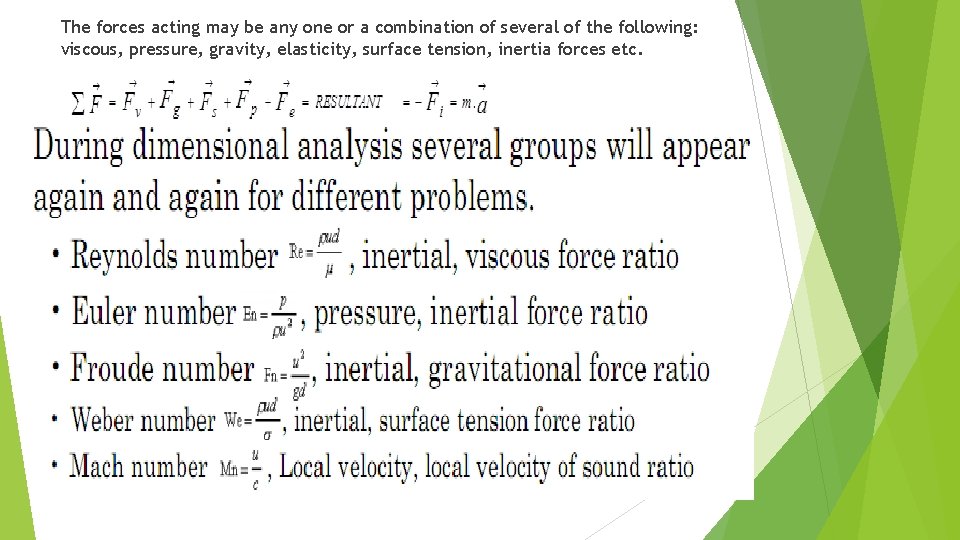
The forces acting may be any one or a combination of several of the following: viscous, pressure, gravity, elasticity, surface tension, inertia forces etc.
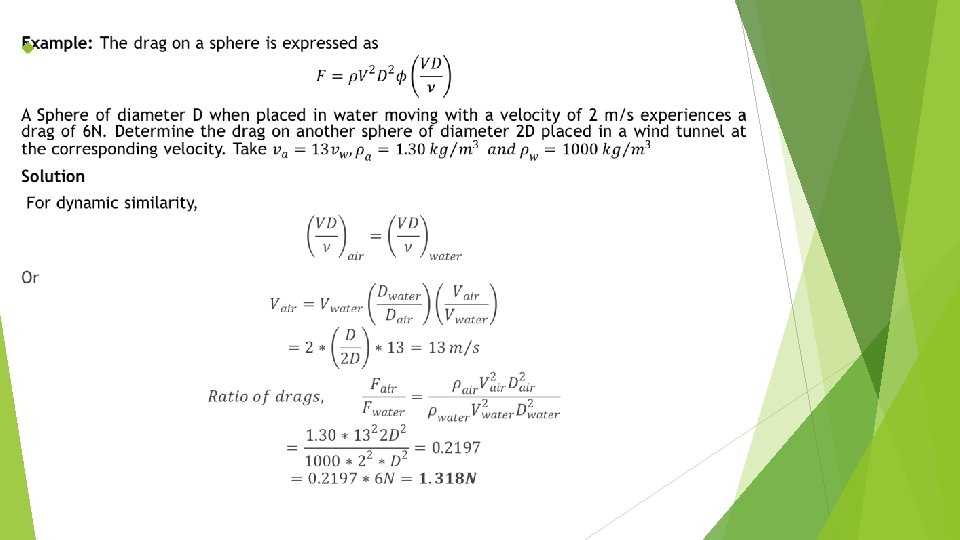
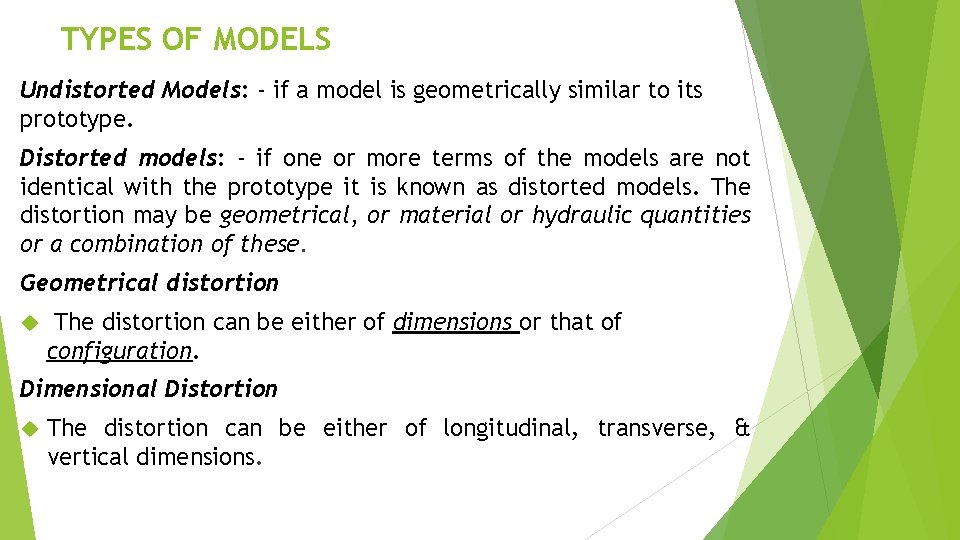
TYPES OF MODELS Undistorted Models: - if a model is geometrically similar to its prototype. Distorted models: - if one or more terms of the models are not identical with the prototype it is known as distorted models. The distortion may be geometrical, or material or hydraulic quantities or a combination of these. Geometrical distortion The distortion can be either of dimensions or that of configuration. Dimensional Distortion The distortion can be either of longitudinal, transverse, & vertical dimensions.
Distortion of configuration results when the general configuration of the model doesn’t have resemblance with its prototype. Material distortion is occurred when the physical properties of the material used in the model and prototype are different. Distortion of hydraulic quantities is occurred for certain uncontrollable hydraulic quantities such as time, discharge etc.
- Slides: 25