
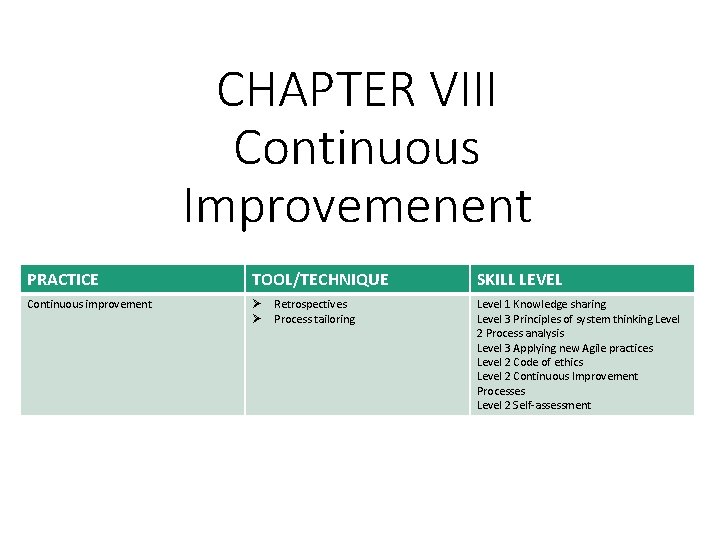
CHAPTER VIII Continuous Improvemenent PRACTICE TOOLTECHNIQUE Continuous improvement
- Slides: 36
CHAPTER VIII Continuous Improvemenent PRACTICE TOOL/TECHNIQUE Continuous improvement Ø Ø Retrospectives Process tailoring SKILL LEVEL Level 1 Knowledge sharing Level 3 Principles of system thinking Level 2 Process analysis Level 3 Applying new Agile practices Level 2 Code of ethics Level 2 Continuous Improvement Processes Level 2 Self-assessment
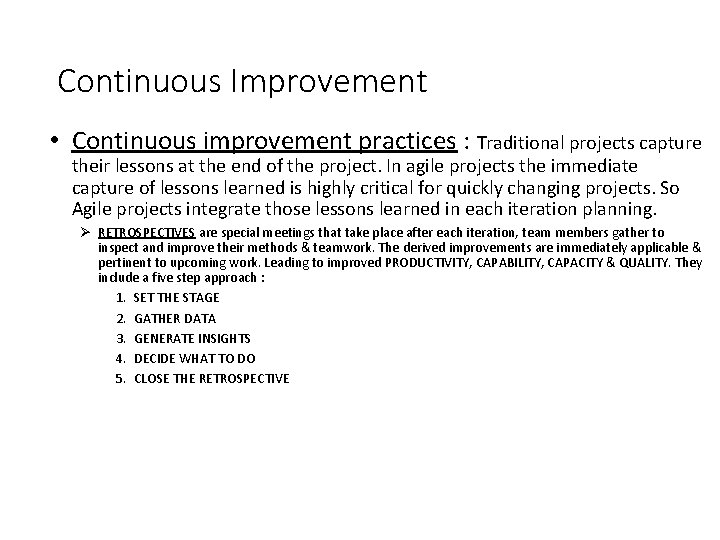
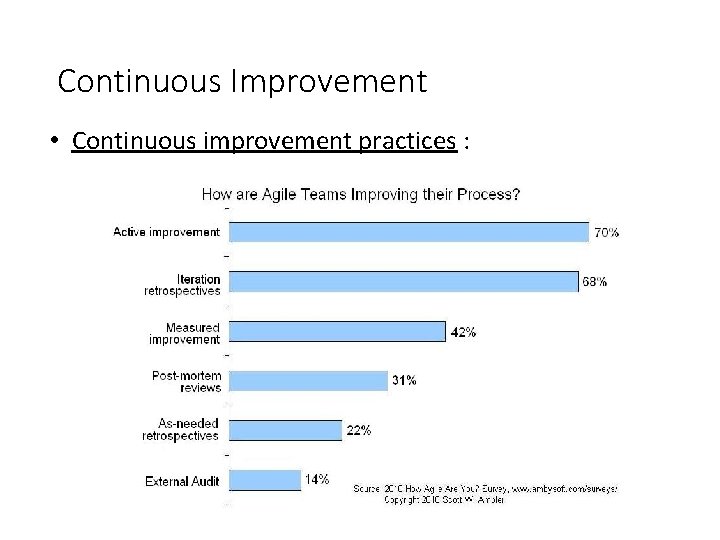
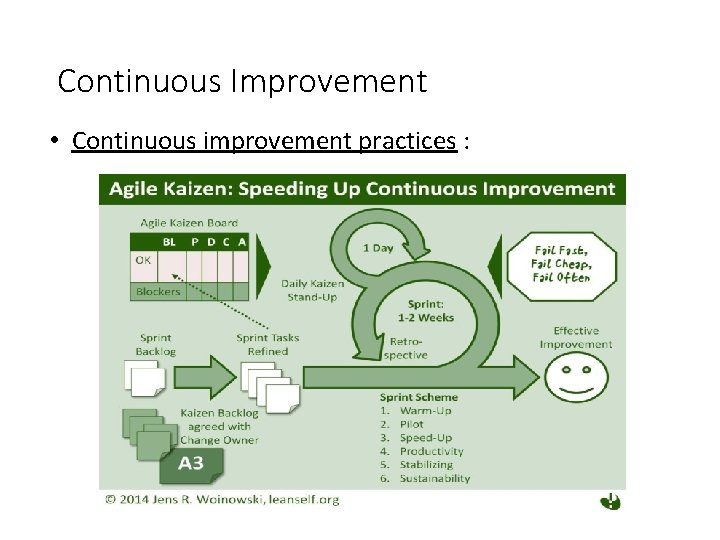
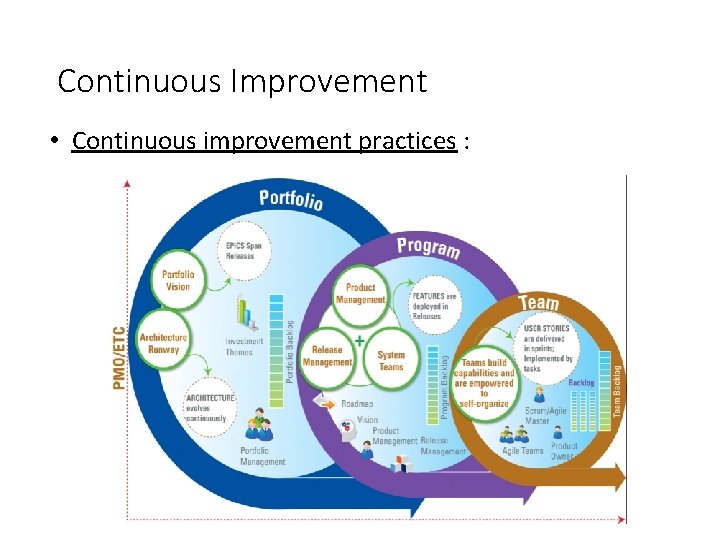
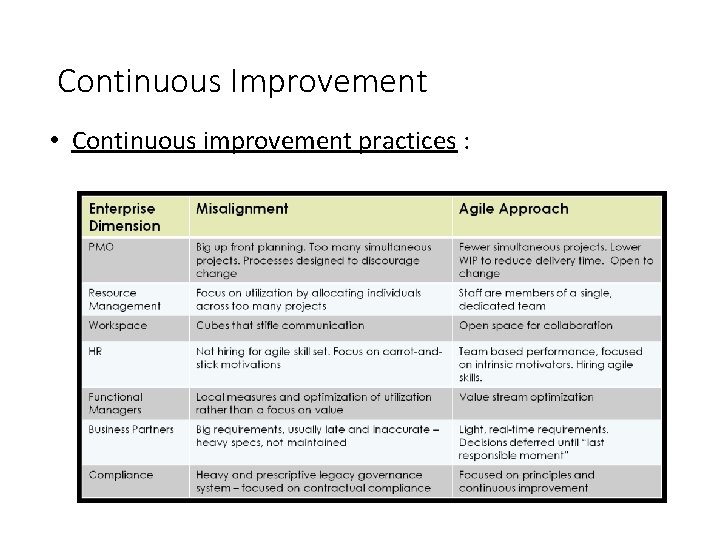
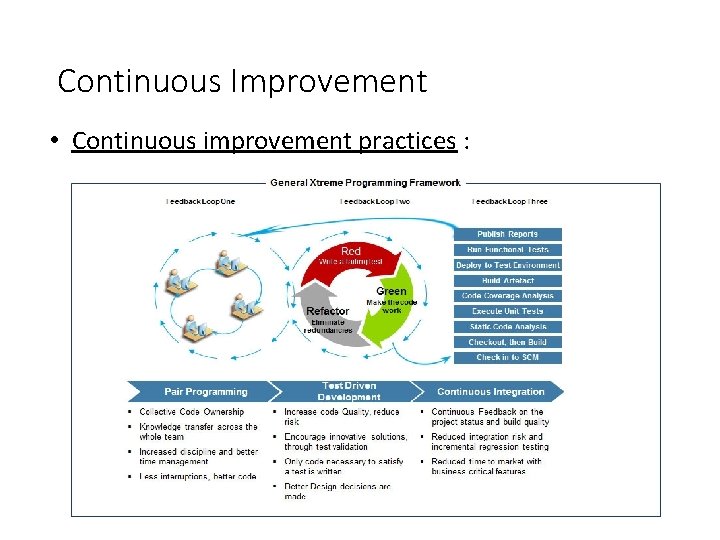
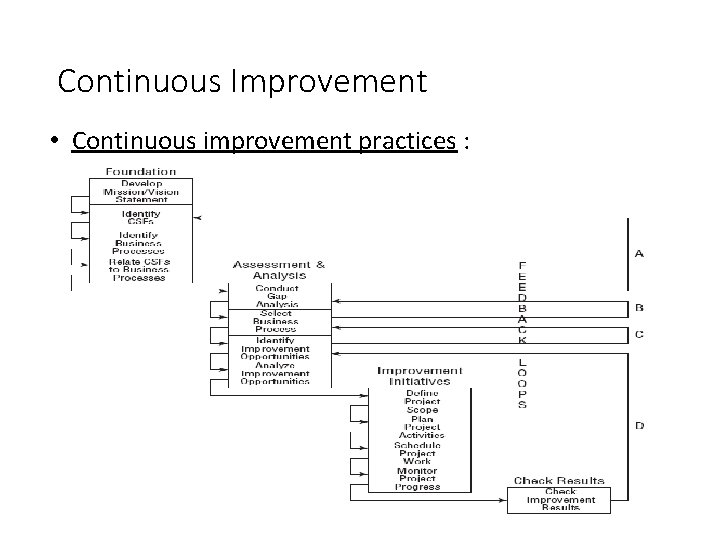
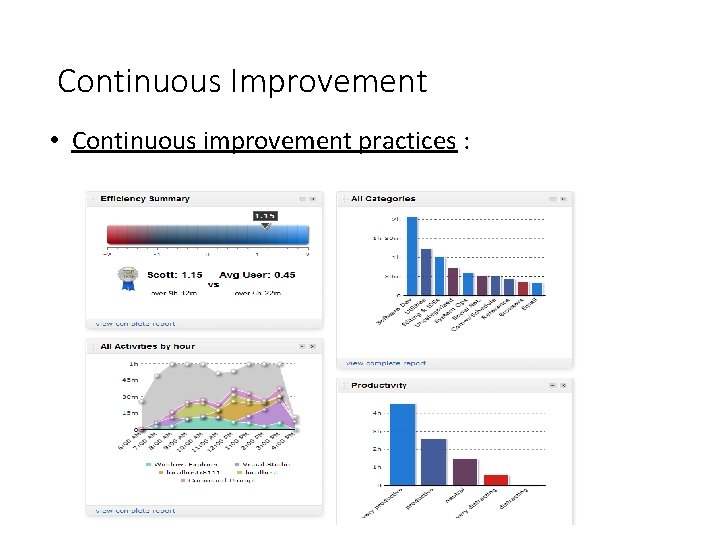
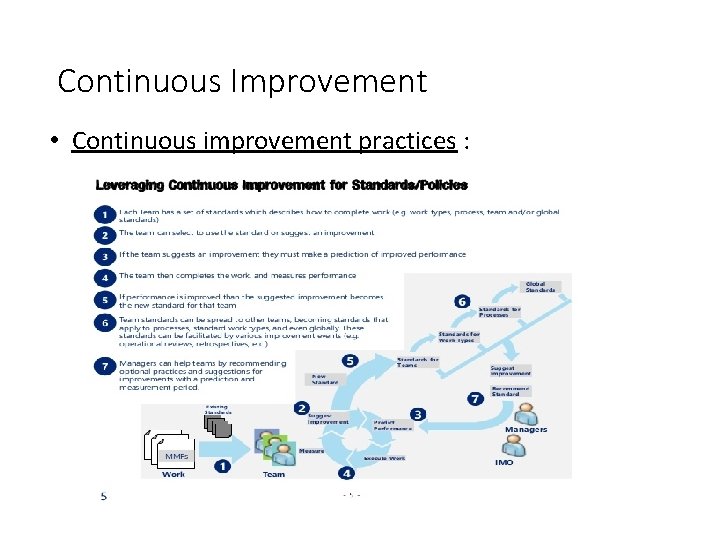
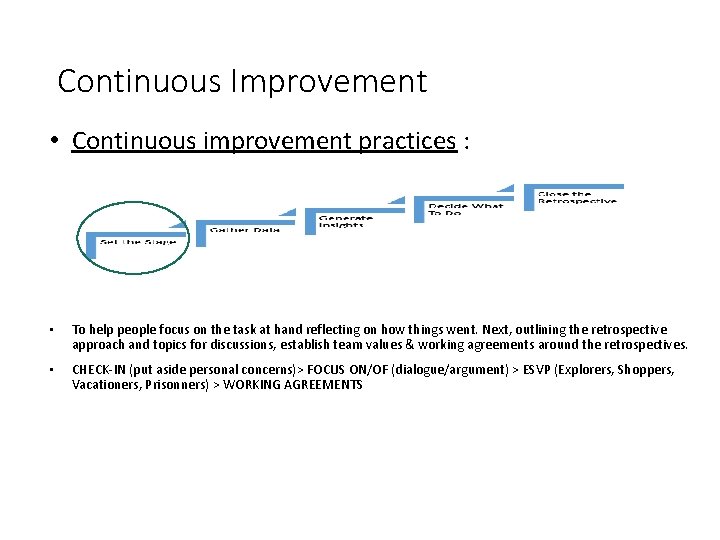
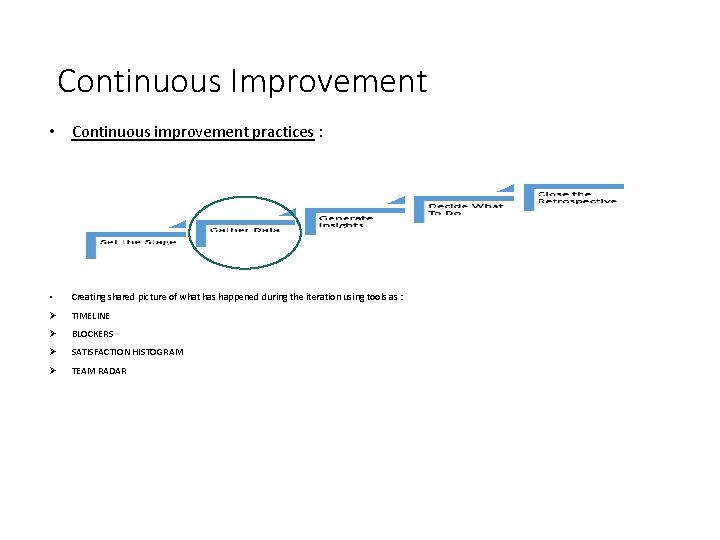
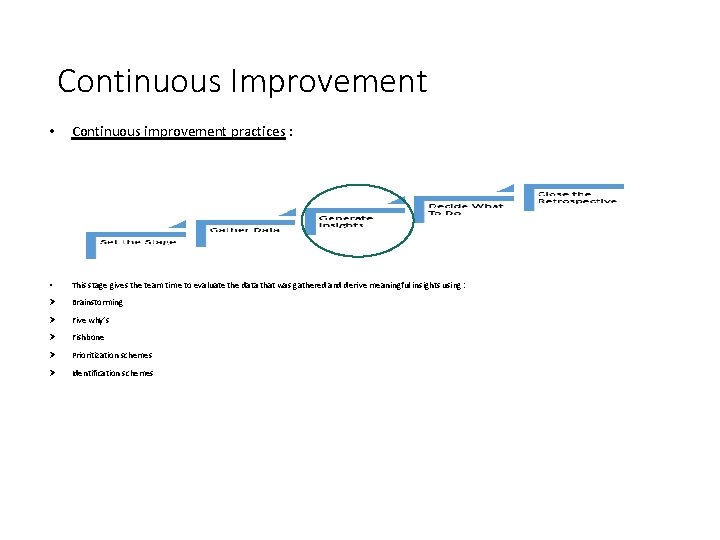
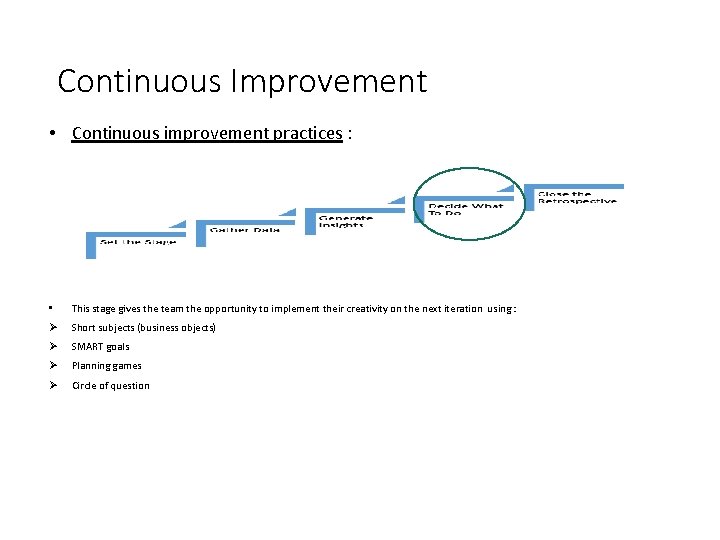
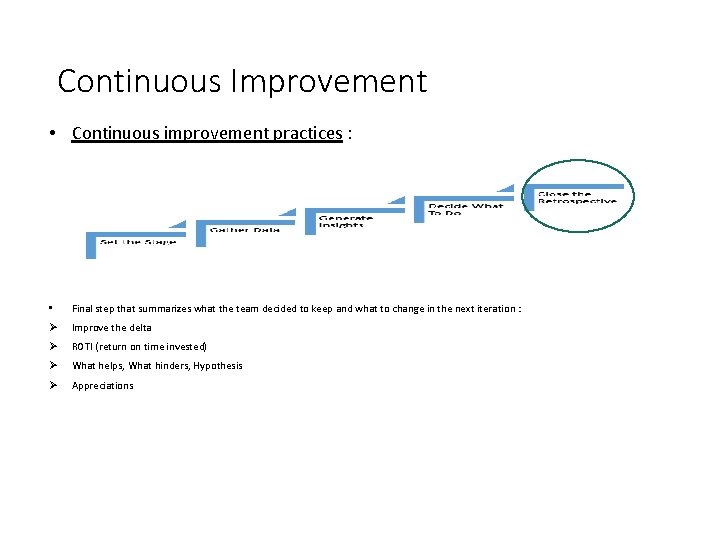
Continuous Improvement • Continuous improvement practices : Traditional projects capture their lessons at the end of the project. In agile projects the immediate capture of lessons learned is highly critical for quickly changing projects. So Agile projects integrate those lessons learned in each iteration planning. Ø RETROSPECTIVES are special meetings that take place after each iteration, team members gather to inspect and improve their methods & teamwork. The derived improvements are immediately applicable & pertinent to upcoming work. Leading to improved PRODUCTIVITY, CAPABILITY, CAPACITY & QUALITY. They include a five step approach : 1. SET THE STAGE 2. GATHER DATA 3. GENERATE INSIGHTS 4. DECIDE WHAT TO DO 5. CLOSE THE RETROSPECTIVE
Continuous Improvement • Continuous improvement practices :
Continuous Improvement • Continuous improvement practices :
Continuous Improvement • Continuous improvement practices :
Continuous Improvement • Continuous improvement practices :
Continuous Improvement • Continuous improvement practices :
Continuous Improvement • Continuous improvement practices :
Continuous Improvement • Continuous improvement practices :
Continuous Improvement • Continuous improvement practices :
Continuous Improvement • Continuous improvement practices : • To help people focus on the task at hand reflecting on how things went. Next, outlining the retrospective approach and topics for discussions, establish team values & working agreements around the retrospectives. • CHECK-IN (put aside personal concerns)> FOCUS ON/OF (dialogue/argument) > ESVP (Explorers, Shoppers, Vacationers, Prisonners) > WORKING AGREEMENTS
Continuous Improvement • Continuous improvement practices : • Creating shared picture of what has happened during the iteration using tools as : Ø TIMELINE Ø BLOCKERS Ø SATISFACTION HISTOGRAM Ø TEAM RADAR
Continuous Improvement • Continuous improvement practices : • This stage gives the team time to evaluate the data that was gathered and derive meaningful insights using : Ø Brainstorming Ø Five why’s Ø Fishbone Ø Prioritization schemes Ø Identification schemes
Continuous Improvement • Continuous improvement practices : • This stage gives the team the opportunity to implement their creativity on the next iteration using : Ø Short subjects (business objects) Ø SMART goals Ø Planning games Ø Circle of question
Continuous Improvement • Continuous improvement practices : • Final step that summarizes what the team decided to keep and what to change in the next iteration : Ø Improve the delta Ø ROTI (return on time invested) Ø What helps, What hinders, Hypothesis Ø Appreciations
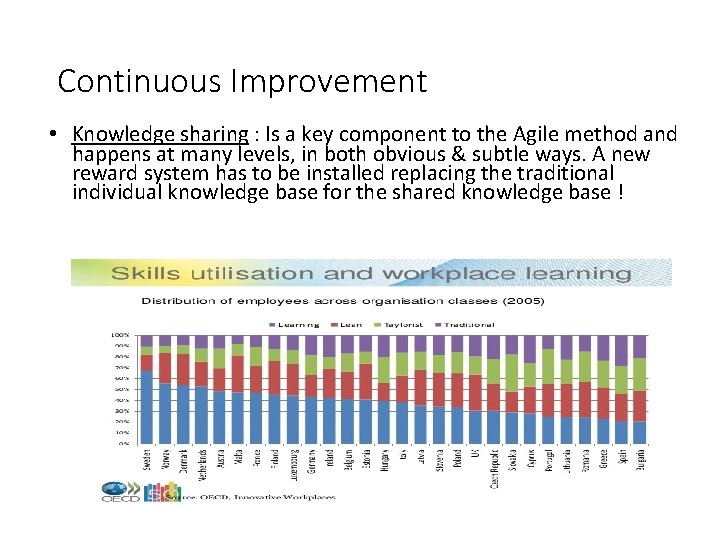
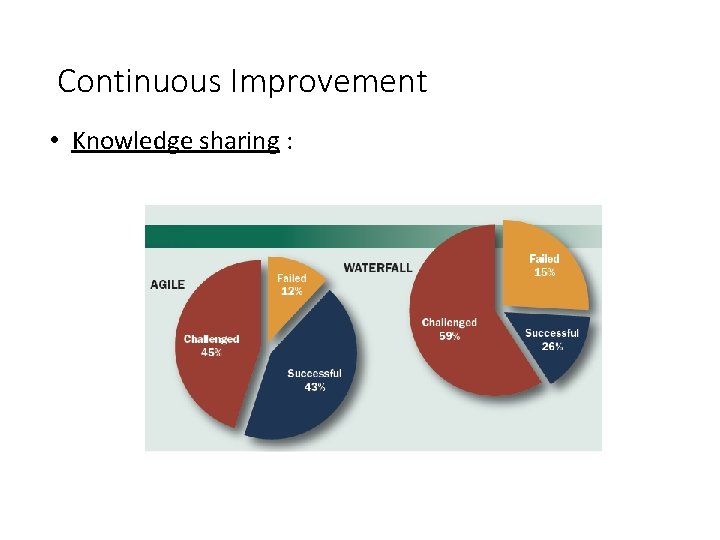
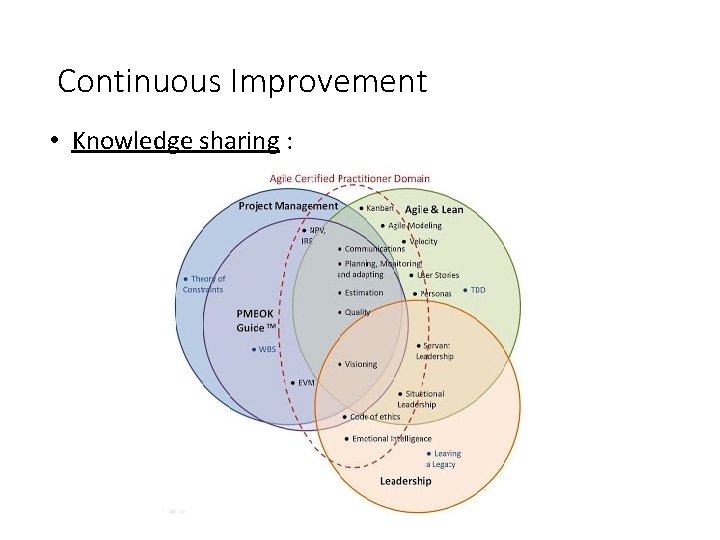
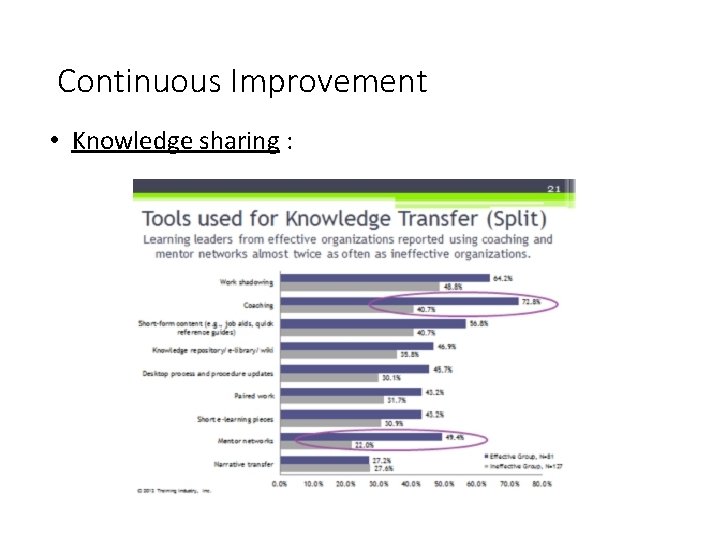
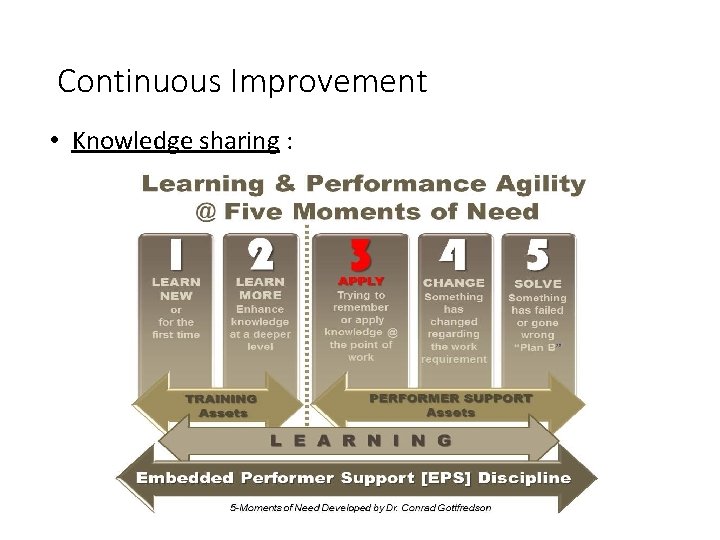
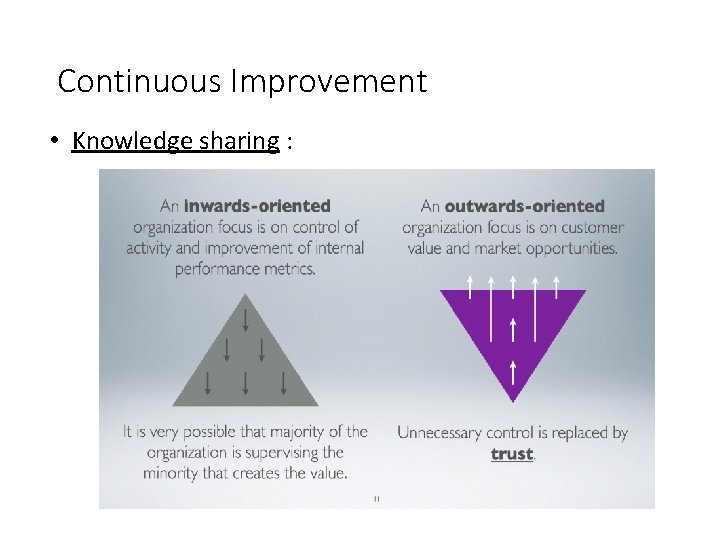
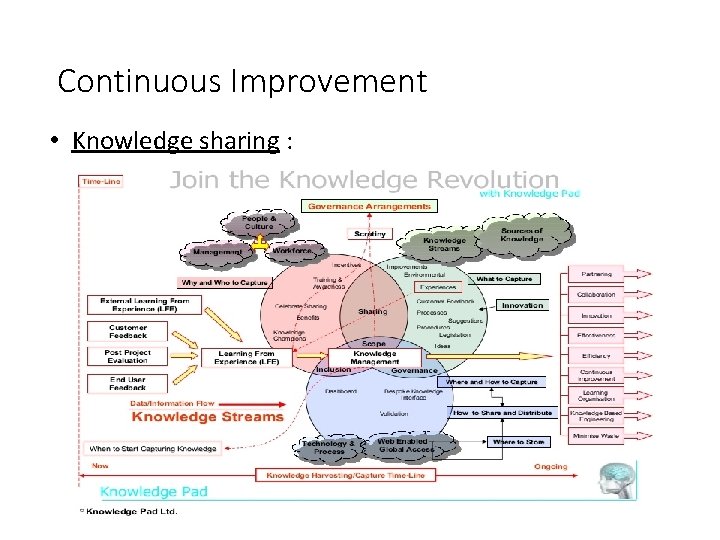
Continuous Improvement • Knowledge sharing : Is a key component to the Agile method and happens at many levels, in both obvious & subtle ways. A new reward system has to be installed replacing the traditional individual knowledge base for the shared knowledge base !
Continuous Improvement • Knowledge sharing :
Continuous Improvement • Knowledge sharing :
Continuous Improvement • Knowledge sharing :
Continuous Improvement • Knowledge sharing :
Continuous Improvement • Knowledge sharing :
Continuous Improvement • Knowledge sharing :
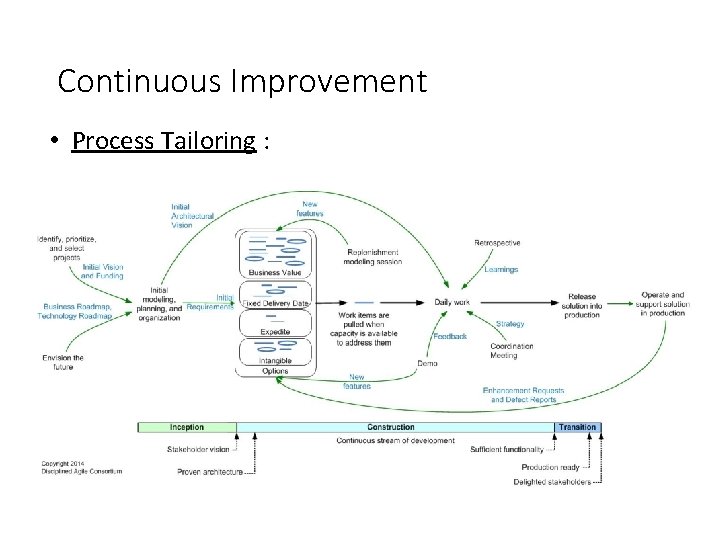
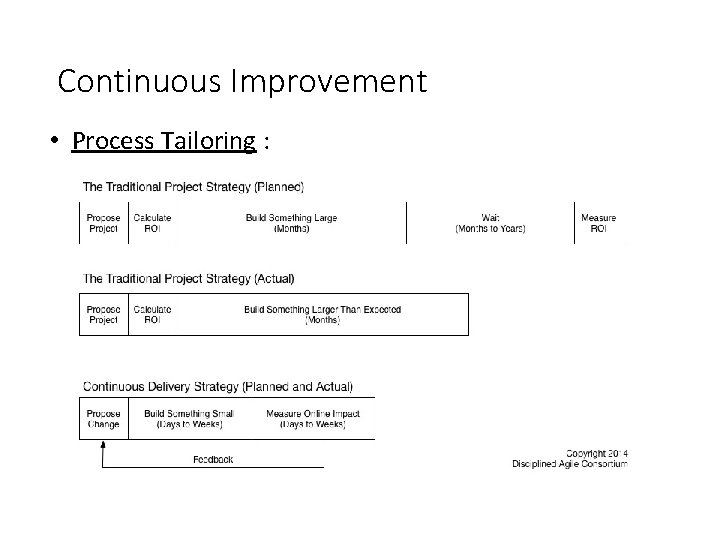
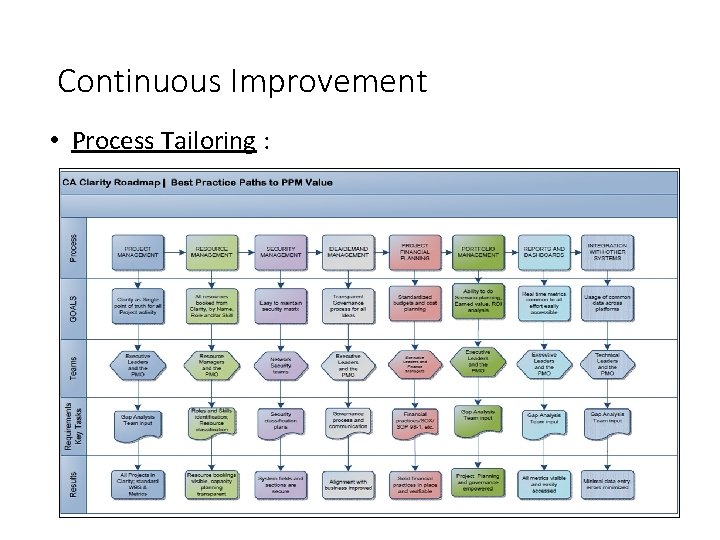
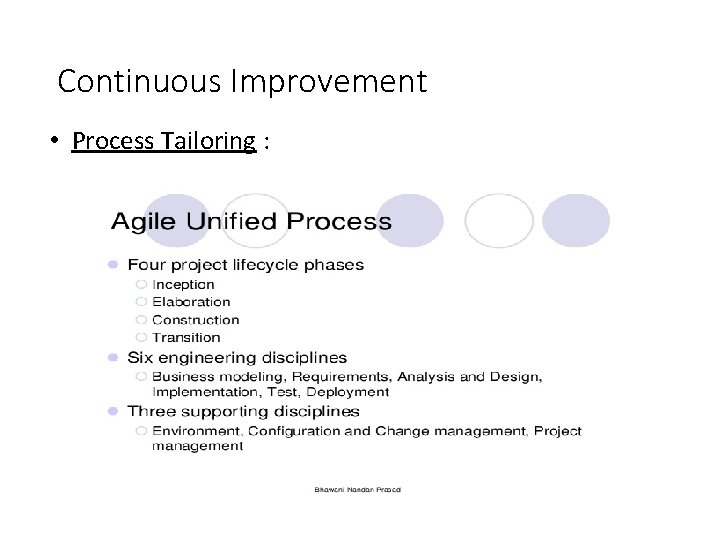
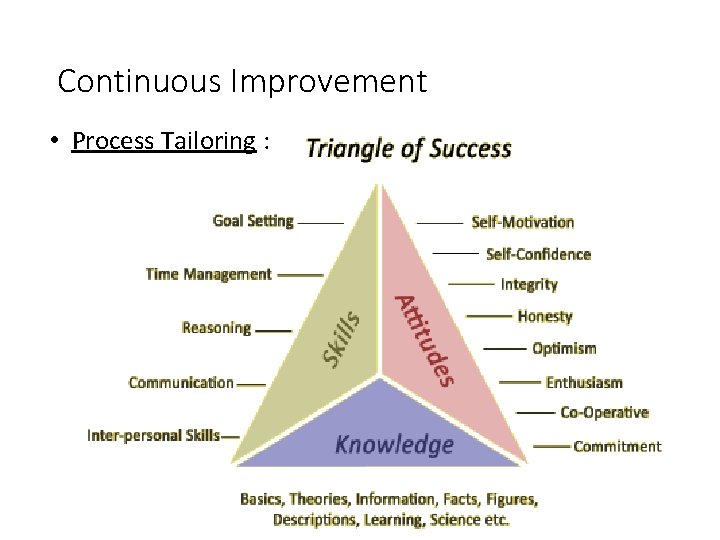
Continuous Improvement • Process Tailoring :
Continuous Improvement • Process Tailoring :
Continuous Improvement • Process Tailoring :
Continuous Improvement • Process Tailoring :
Continuous Improvement • Process Tailoring :
Continuous Improvement • Process Tailoring :
Continuous Improvement • Process Tailoring :
Continuous Improvement Test • Select the best definition 'done. ' • A- A team defined term that indicates when a user story point is completed. • B- A team defined term that indicates when a project is successfully completed. • C- A team and product owner defined term that indicates when a feature or product is considered to be completed and ready for shipping. • D- A team defined term that indicates when a scrum has completed for the day.
Continuous Improvement Test • Select the best definition 'done. ' • A- A team defined term that indicates when a user story point is completed. • B- A team defined term that indicates when a project is successfully completed. • C- A team and product owner defined term that indicates when a feature or product is considered to be completed and ready for shipping. • D- A team defined term that indicates when a scrum has completed for the day. • • C - Because a cornerstone of the scrum framework in agile is to 'always have a product that you could theoretically ship, ' it is important for the team and product owner to have a definition of 'done' or what criteria is necessary to consider user features or functionality in a state of finality. [Coaching Agile Teams. Lyssa Adkins. ] [Product quality]
Continuous Improvement Test • In agile, what is meant by frequent verification and validation? • A- Because of its tendency to release working products in short time increments, verification and validation take place frequently. • B- Because of its tendency to reuse old programming software, verification and validation take place frequently. • C- Because customer requirements are constantly changing, frequent verification and validation is the only means to ensure the work breakdown structure. • D- Because working products are released only at the end of a project, verification and validation take place frequently.
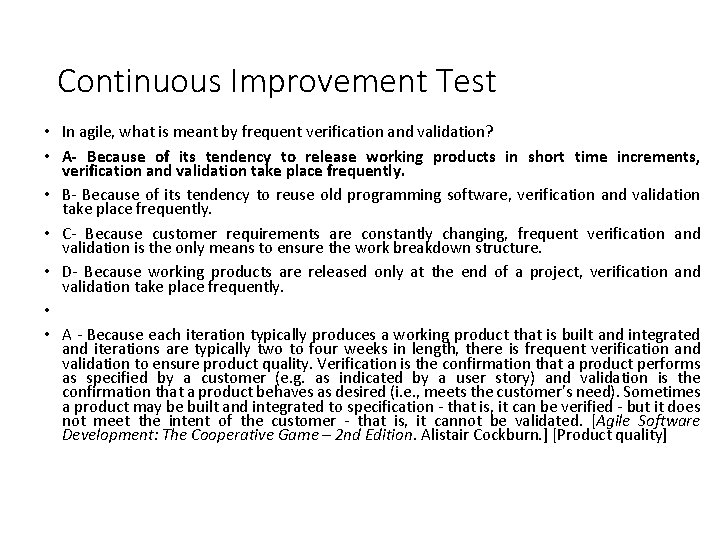
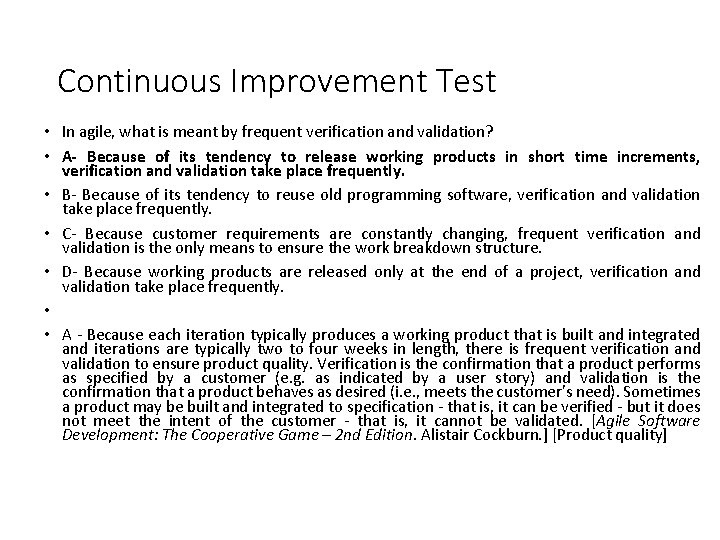
Continuous Improvement Test • In agile, what is meant by frequent verification and validation? • A- Because of its tendency to release working products in short time increments, verification and validation take place frequently. • B- Because of its tendency to reuse old programming software, verification and validation take place frequently. • C- Because customer requirements are constantly changing, frequent verification and validation is the only means to ensure the work breakdown structure. • D- Because working products are released only at the end of a project, verification and validation take place frequently. • • A - Because each iteration typically produces a working product that is built and integrated and iterations are typically two to four weeks in length, there is frequent verification and validation to ensure product quality. Verification is the confirmation that a product performs as specified by a customer (e. g. as indicated by a user story) and validation is the confirmation that a product behaves as desired (i. e. , meets the customer's need). Sometimes a product may be built and integrated to specification - that is, it can be verified - but it does not meet the intent of the customer - that is, it cannot be validated. [Agile Software Development: The Cooperative Game – 2 nd Edition. Alistair Cockburn. ] [Product quality]
Continuous Improvement Test • In agile, what is meant by frequent verification and validation? • A- Because of its tendency to release working products in short time increments, verification and validation take place frequently. • B- Because of its tendency to reuse old programming software, verification and validation take place frequently. • C- Because customer requirements are constantly changing, frequent verification and validation is the only means to ensure the work breakdown structure. • D- Because working products are released only at the end of a project, verification and validation take place frequently. • • A - Because each iteration typically produces a working product that is built and integrated and iterations are typically two to four weeks in length, there is frequent verification and validation to ensure product quality. Verification is the confirmation that a product performs as specified by a customer (e. g. as indicated by a user story) and validation is the confirmation that a product behaves as desired (i. e. , meets the customer's need). Sometimes a product may be built and integrated to specification - that is, it can be verified - but it does not meet the intent of the customer - that is, it cannot be validated. [Agile Software Development: The Cooperative Game – 2 nd Edition. Alistair Cockburn. ] [Product quality]
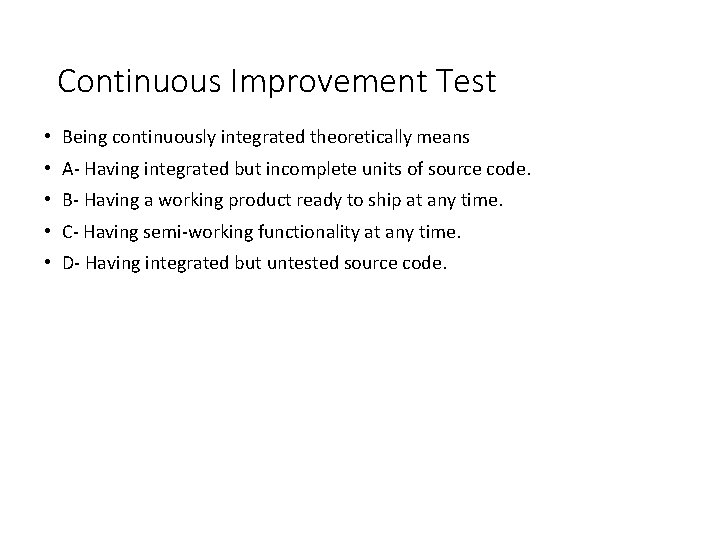
Continuous Improvement Test • Being continuously integrated theoretically means • A- Having integrated but incomplete units of source code. • B- Having a working product ready to ship at any time. • C- Having semi-working functionality at any time. • D- Having integrated but untested source code.
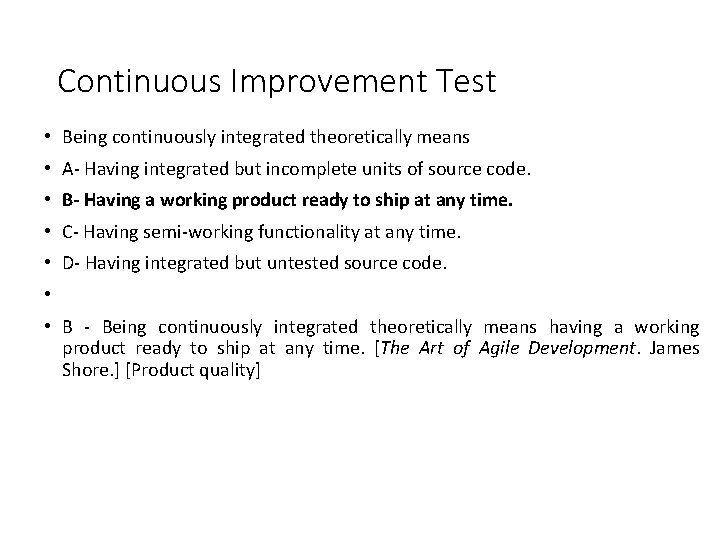
Continuous Improvement Test • Being continuously integrated theoretically means • A- Having integrated but incomplete units of source code. • B- Having a working product ready to ship at any time. • C- Having semi-working functionality at any time. • D- Having integrated but untested source code. • • B - Being continuously integrated theoretically means having a working product ready to ship at any time. [The Art of Agile Development. James Shore. ] [Product quality]