
CHAPTER VII OTHER GRAM NEGATIVE ENTERIC PATHOGENS Genus
- Slides: 51
CHAPTER VII OTHER GRAM NEGATIVE ENTERIC PATHOGENS
Genus Pseudomonas General characteristics § Gram-negative motile aerobic rods having very simple growth requirement. § Can be found in water, soil, sewage, vegetation, human and animal intestine. § Species of medical importance: - P. aeruginosa - P. pseudomallei
Pseudomonas aeruginosa § Found in human and animal intestine, water, soil and moist environment in hospitals. § Primarily a nosocomial pathogen. § Invasive and toxigenic, produces infections in patients with abnormal host defences.
Virulence factors 1. Pili: Adhere to epithelial cells 2. Exopolysaccharide: Anti-phagocytic property/ inhibit pulmonary clearance 3. Lipopolysaccharide: Endotoxic effect 4. Enzymes - Elastases: Digests protein (elastin, collagen, Ig. G) - Proteases - Hemolysins - Phospholipases C (heat labile): Degrade cytoplasmic membrane components 5. Exotoxin A: Cytotoxic by blocking protein synthesis
Pathogenesis and clinical manifestations P. aeruginosa can be found in the intestinal tract, water, soil and sewage and is frequently found in moist environments in hospitals, (sinks, cleaning buckets, drains, humidifiers etc). It is able to grow in some eye drops (especially quaternary ammonium compounds), saline and other aqueous solutions. Because of this, many infections with P. aeruginosa are opportunistic hospitalacquired, affecting those already in poor health and Immuno-suppressed. Infections are often difficult to eradicate due to P. aeruginosa being resistant to many antimicrobials.
Infections caused by P. aeruginosa include: § Skin infections, especially burn sites, wounds, pressure sores, and ulcers (often as secondary invader). Septicaemia may develop. § Urinary infections, usually following catheterization or associated with chronic urinary disease. § Respiratory infections especially in patients with cystic fibrosis or conditions that cause immuno-suppression. § External ear and eye infections often secondary to trauma or surgery.
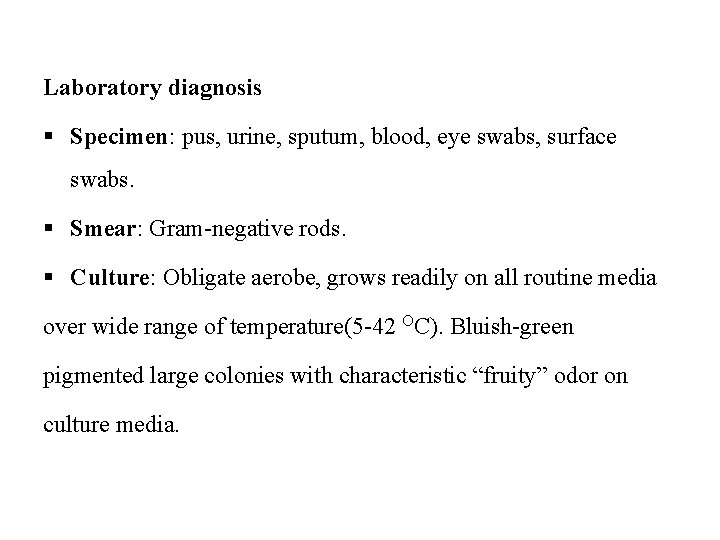
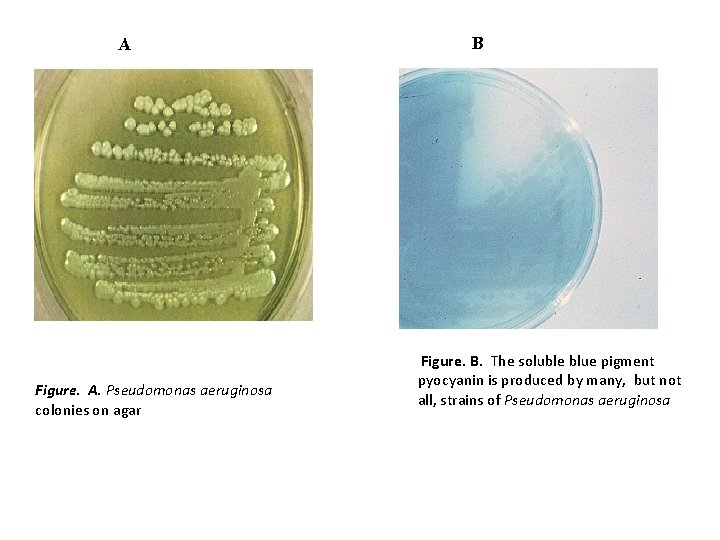
Laboratory diagnosis § Specimen: pus, urine, sputum, blood, eye swabs, surface swabs. § Smear: Gram-negative rods. § Culture: Obligate aerobe, grows readily on all routine media over wide range of temperature(5 -42 OC). Bluish-green pigmented large colonies with characteristic “fruity” odor on culture media.
A Figure. A. Pseudomonas aeruginosa colonies on agar B Figure. B. The soluble blue pigment pyocyanin is produced by many, but not all, strains of Pseudomonas aeruginosa
Biochemical reactions § Oxidase positive § Catalase positive § Citrate positive § Indole negative § Produce acid from carbohydrate by oxidation, not by fermentation.
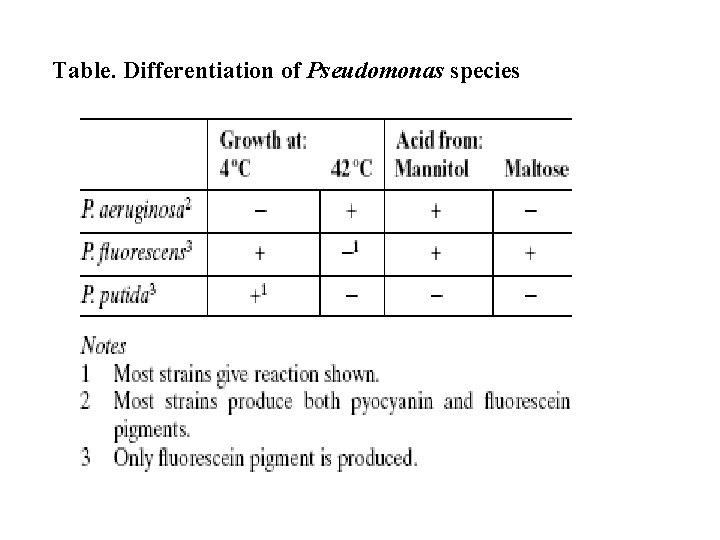
Table. Differentiation of Pseudomonas species
Treatment P. aeruginosa is resistant to most of the commonly used antibiotics. Antimicrobials that usually show activity against Pseudomonas include aminoglycosides, polymyxin, and some penicillins and cephalosporins. Prevention and control § P. aeruginosa can best be controlled by observing proper isolation procedures, aseptic technique, and careful cleaning and monitoring of respirators, catheters, and other instruments. § Topical therapy of burn wounds with antibacterial agents such as silver sulfadiazine, coupled with surgical debridement, dramatically reduces the incidence of P. aeruginosa sepsis in burn patients.
Genus Vibiro General characteristics § The genus Vibrio consists of Gram-negative straight or curved rods, motile by means of a single polar flagellum. § Vibrios are capable of both respiratory and fermentative metabolism. § They are distinguished from enterics by being oxidase-positive and motile by means of polar flagella. § Vibrios are distinguished from pseudomonads by being fermentative as well as oxidative in their metabolism. § Of the vibrios that are clinically significant to humans, Vibrio cholerae, the agent of cholera, is the most important.
§ Found in fresh water, shellfish and other sea food. § Man is the major reservoir of V. cholerae-01, which causes epidemic cholera. § Readily killed by heat and drying; dies in polluted water but may survive in clean stagnant water, esp. if alkaline, or sea water for 1 -2 weeks.
Antigenic structure O antigen § Six major subgroups. § All strains possess a distinctive O antigen and belong to subgroup I with subdivision into three serotypes; Ogawa, Inaba, Hikojima. § Any serotype can be either Classical or El Tor biotype. § El Tor biotype is more resistant to adverse conditions than Classical diotype of V. cholerae. H antigen - little value in identification.
Vibiro cholerae More than 130 different O serogroups have been described. The classical cause of epidemic cholera possess the O 1 antigen, and it is known Vibiro cholera 01. Vibiro cholerae 01 Biotypes El Tor (also written eltor) which is responsible for most V. cholerae 01 cholera. Serotypes: Inaba and Ogawa
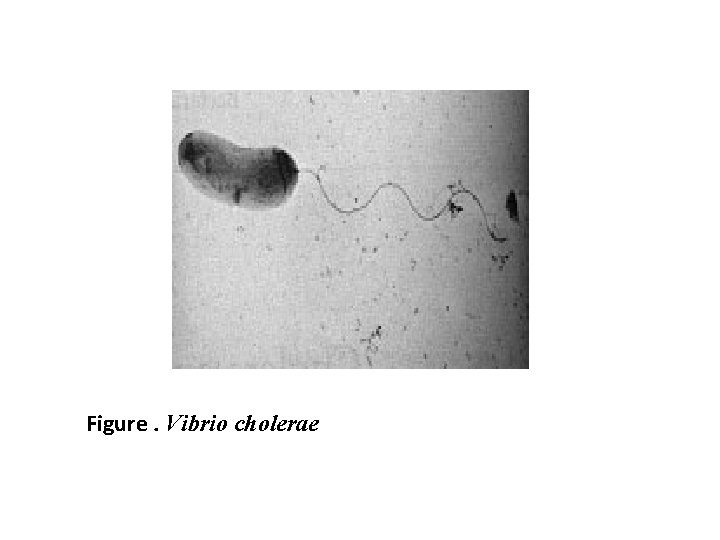
Figure. Vibrio cholerae
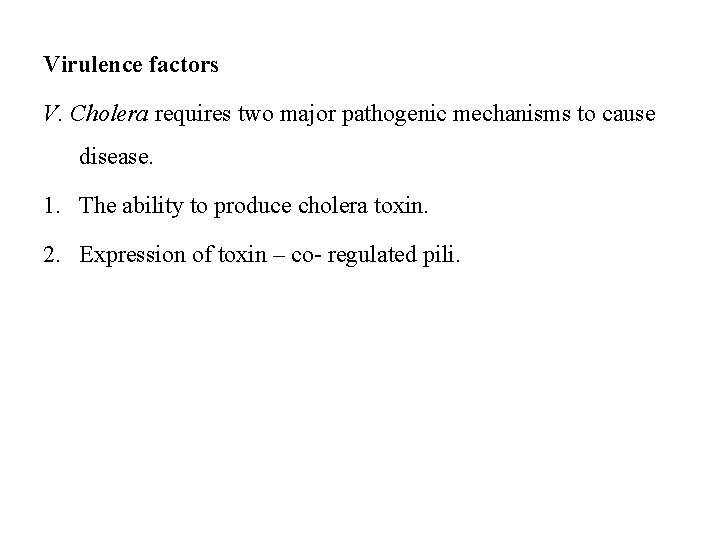
Virulence factors V. Cholera requires two major pathogenic mechanisms to cause disease. 1. The ability to produce cholera toxin. 2. Expression of toxin – co- regulated pili.
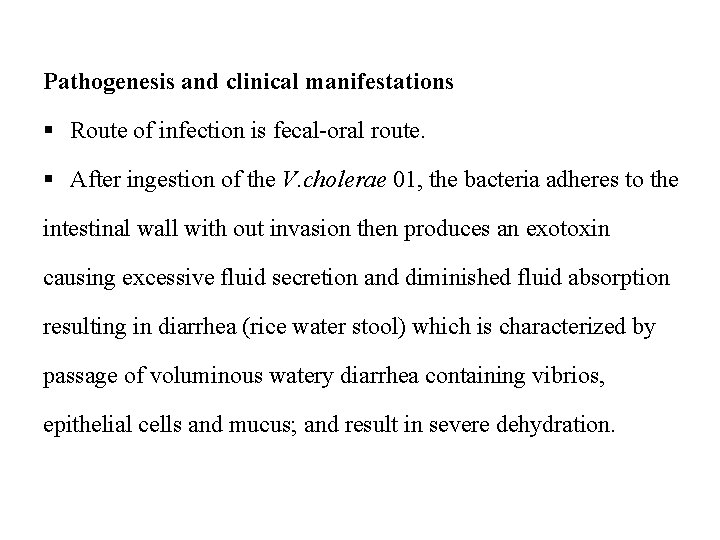
Pathogenesis and clinical manifestations § Route of infection is fecal-oral route. § After ingestion of the V. cholerae 01, the bacteria adheres to the intestinal wall with out invasion then produces an exotoxin causing excessive fluid secretion and diminished fluid absorption resulting in diarrhea (rice water stool) which is characterized by passage of voluminous watery diarrhea containing vibrios, epithelial cells and mucus; and result in severe dehydration.
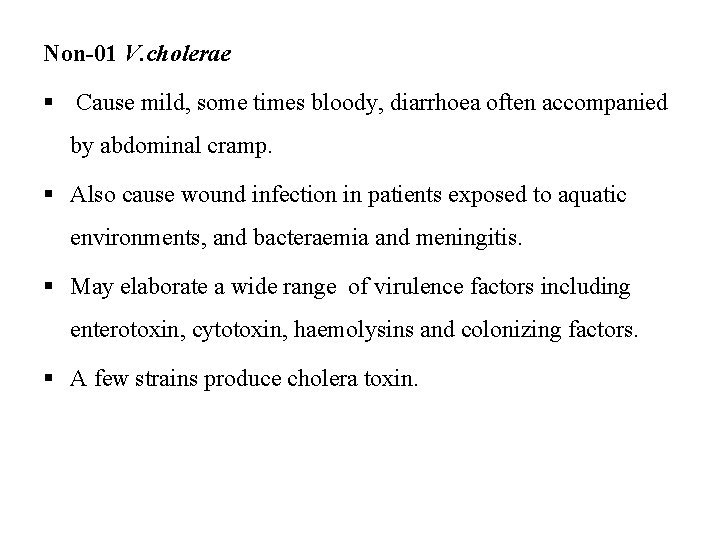
Non-01 V. cholerae § Cause mild, some times bloody, diarrhoea often accompanied by abdominal cramp. § Also cause wound infection in patients exposed to aquatic environments, and bacteraemia and meningitis. § May elaborate a wide range of virulence factors including enterotoxin, cytotoxin, haemolysins and colonizing factors. § A few strains produce cholera toxin.
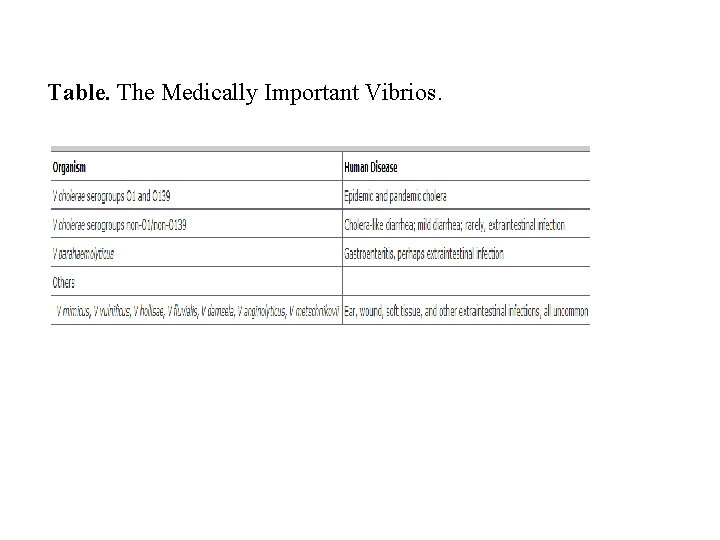
Table. The Medically Important Vibrios.
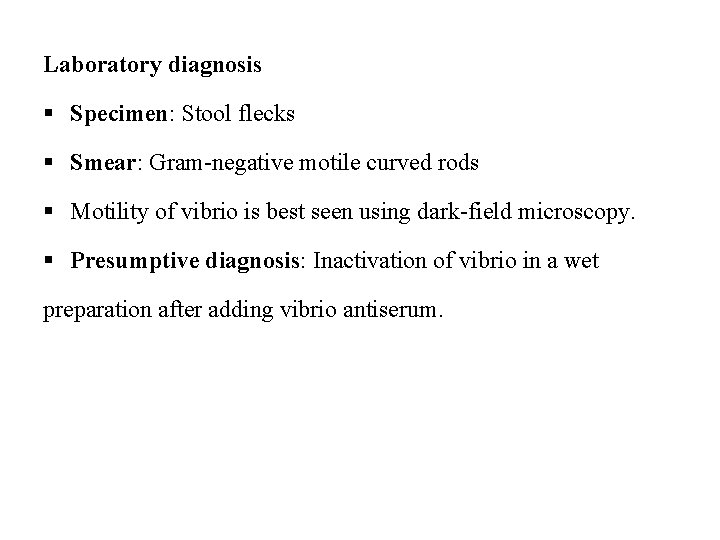
Laboratory diagnosis § Specimen: Stool flecks § Smear: Gram-negative motile curved rods § Motility of vibrio is best seen using dark-field microscopy. § Presumptive diagnosis: Inactivation of vibrio in a wet preparation after adding vibrio antiserum.
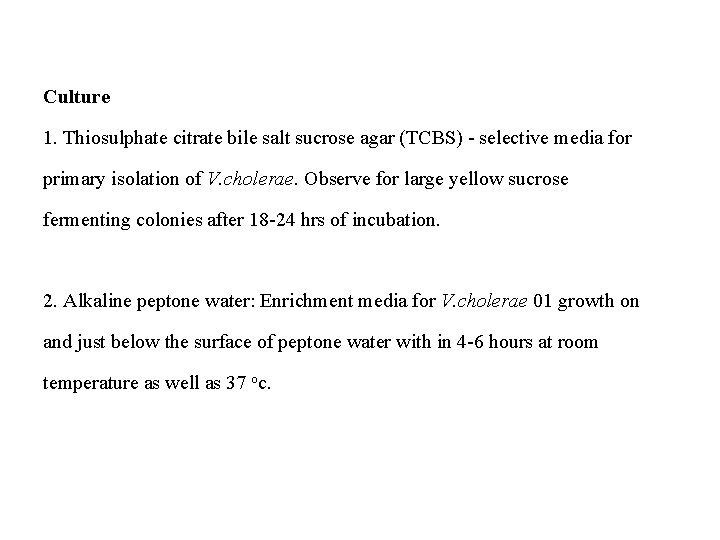
Culture 1. Thiosulphate citrate bile salt sucrose agar (TCBS) - selective media for primary isolation of V. cholerae. Observe for large yellow sucrose fermenting colonies after 18 -24 hrs of incubation. 2. Alkaline peptone water: Enrichment media for V. cholerae 01 growth on and just below the surface of peptone water with in 4 -6 hours at room temperature as well as 37 oc.
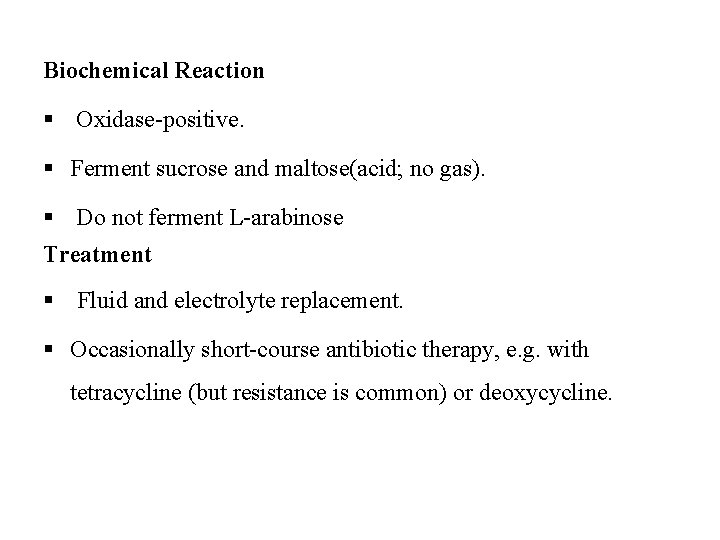
Biochemical Reaction § Oxidase-positive. § Ferment sucrose and maltose(acid; no gas). § Do not ferment L-arabinose Treatment § Fluid and electrolyte replacement. § Occasionally short-course antibiotic therapy, e. g. with tetracycline (but resistance is common) or deoxycycline.
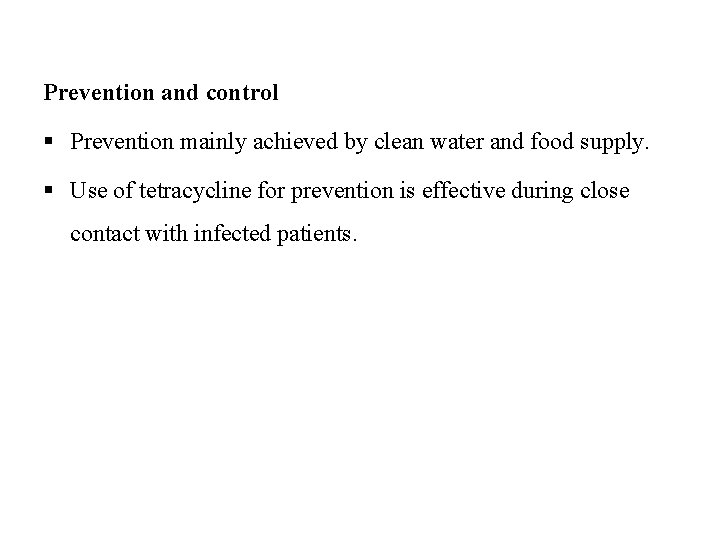
Prevention and control § Prevention mainly achieved by clean water and food supply. § Use of tetracycline for prevention is effective during close contact with infected patients.
Genus Campylobacter General characteristics § Camppylobacters were first isolated in 1096 from aborting sheep in the UK. Originally taught be vibiros, they were latter placed in their own genus. § Campylobacters cause both diarrhoeal and systemic diseases and are among the most widespread causes of infection in the world. § Campylobacters are motile, curved, oxidase-positive, Gramnegative rods similar in morphology to vibrios.
§ The cells have polar flagella and are often are attached at their ends giving pairs “S” shapes or a “seagull” appearance. § More than a dozen Campylobacter species have been associated with human disease § Of these C. jejuni, and C. coli are by far the most common and similar enough to be considered as one. § Some other Campylobacter species are potential causes of diarrhea.
§ The primary reservoir is in animals and the bacteria are transmitted to humans by ingestion of contaminated food or by direct contact with pets. § Campylobacters are commonly found in the normal gastrointestinal and genitourinary flora of warm-blooded animals, including sheep, cattle, chickens, wild birds, and many others. § Domestic animals such as dogs may also carry the organisms and probably play a significant role in transmission to humans.
§ The most common source of human infection is undercooked poultry, but outbreaks have been caused by contaminated rural water supplies and unpasteurized milk often consumed as a “natural” food. Species of medical importance - Campylobacter jejuni - Campylobacter coli Less important Campylobacters - C. upsalinsis - C. lari - C. fetus - C. rectus - C. concisus
Virulence factors § Lipopolysaccharides with endotoxic activity. § Cytopathic extra cellular toxins. § Enterotoxins.
Pathogenesis and clinical manifestations § Campylobacter jejuni accounts for 90 to 95% of human campylobacter infections in most parts of the world. § Campylobacter jejuni and Campylobacter coli cause enteritis which may take the form of toxigenic watery diarrhoea or dysentery. § The organisms are able to produce enterotoxins and cytotoxins. § In developing countries, C. jejuni and C. coli cause disease mainly in children under 2 years.
§ The jejunum and ileum are the firs sites to be come Colonized followed by the colon and rectum. In well developed infections, mesenteric lymph nodes are enlarged. § Colonization of the intestine require factors such as chemotactic motility, iron uptake system and several potential adhesins. § Diarrhoea is likely to result from disruption of intestinal mucosa due to cell invasion by campylobacters and the production of toxins. § The toxin blocks the cell cycle of host cells, but its precise role is not yet clear.
§ C. upsalinsis and C. lari are occasionally associated with diarrhoea in children in developing countries. § C. fetus is a major cause of abortion in sheep and cattle. § C. rectus and C. concisus are associated with periodontal disease.
Laboratory diagnosis • Specimen: Fresh diarrhoeal or dysenteric specimens containing blood, pus and mucus • Microscopy: Typical ‘gull-wing’ shaped gram-negative rods. • Typical darting motility of the bacteria under dark field microscopy or phase contrast microscopy
Culture § Campylobacter species are strictly micro-aerophilic, requiring incubation in an atmosphere of reduced oxygen (5– 10%) with added carbon dioxide (about 10%). § C. jejuni and C. coli are thermophilic, i. e. they will grow at 4243 ºC and 36– 37 ºC but not at 25 ºC. § Incubation at 42 -43 ºC helps to identify C. jejuni and C. coli. However, when using Improved Preston blood-free selective medium, isolations of campylobacters are increased when cultures are incubated at 37 ºC.
Blood agar: C. jejuni and C. coli produce non-haemolytic spreading, droplet-like colonies on blood agar. Examine the colonies microscopically for campylobacters and perform an oxidase test. Butzller’s medium and Charcoal - based blood -free agar containing antimicrobial agent such as vancomycin, polymyxin B, and trimethoprims are selective culture media for campylobacter species.
Biochemical tests § Campylobacter species are oxidase and catalase positive. § A presumptive diagnosis of Campylobacter enteritis can be made by isolating oxidase and catalase positive colonies (from a selective medium or faecal suspension filtrate cultured on a non selective medium), showing typical Campylobacter morphology.
Hippurate hydrolysis: If required, this test (e. g. using a Rosco diagnostic tablet) can be used to differentiate C. jejuni from C. coli. Hippurate is hydrolyzed by C. jejuni and not hydrolyzed by C. coli. § C jejuni ………………. . hydrolyzes hippurate. § C. coli …………………. . does not hydrolyze hippurate.
Treatment 1. Erythromycin or ciprofloxacin are drugs of chice for C. jejuni enterocolitis. 2. C. jejuni is typically susceptible to macrolides and fluoroquinolones but resistant to -lactams. 3. Fluoroquinolones are also effective, but resistance is becoming more common.
Prevention and control 1. Proper cooking of foods. 2. Avoiding contact with infected human or animals and their excreta. 3. Pasteurizing of milk and milk products. 4. No vaccine available.
Genus Helicobacter In 1983, Warren and Marshal suggested that gastritis and peptic ulcers were infectious diseases, contradicting the long-held beliefs and dogma that bacteria could not colonize the stomach. General characteristics § Spiral-shaped gram negative, microaerophilic, motile rods with polar flagella. § Nearly 20 species Helicobacter are now recognized. § One group, the gastric helicobacters, colonize stomach the other, the enterohepatic group colonize the intestine and liver.
Species of medical importance Helicobacter pylori Less common helicobacters - H. cinaedi - H. fennelliae - H. heilmanni
Helicobacter pylori § Infection with H. pylori (formerly Campylobacter pylori) is widespread. § Transmission is by person to person contact, and probably also by contaminated water and food. § H. pylori is thought to be the cause of most gastric and duodenal ulcers. § In developing countries, H. pylori may also contribute to diarrhoea, malnutrition and growth failure in young children (reduced gastric acid protection leads to infection with entero pathogens).
Virulence factors 1. Vaculating toxin (Vac A): has been associated with pore formation in host cell membranes, the loosening of the tight junctions between epithelial cells, thus affecting mucosal barrier permeability. 2. Cytotoxin A (Cag A) : gene is a marker of increased risk of both peptic ulceration and gastric malignancy.
Pathogenesis and clinical manifestations § Multiple factors can contribute to the gastric inflammation, alteration of gastric acid production and others. § Initial colonization is facilitated by blockage of acid production by a bacterial acid – inhibitory protein and neutralization of gastric acids by the ammonia produced by bacterial urease activity. § The actively motile Helicobacter can then pass through gastric mucus and adhere to the epithelial cells. § Localized tissue damage is mediated by urease by products, mucinase, phospholipase and the activity of vaculating cytotoxin that induce epithelial cell damage.
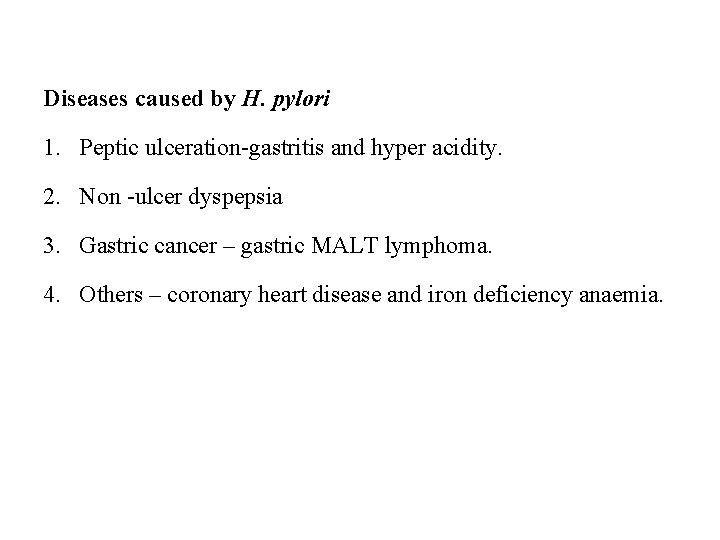
Diseases caused by H. pylori 1. Peptic ulceration-gastritis and hyper acidity. 2. Non -ulcer dyspepsia 3. Gastric cancer – gastric MALT lymphoma. 4. Others – coronary heart disease and iron deficiency anaemia.
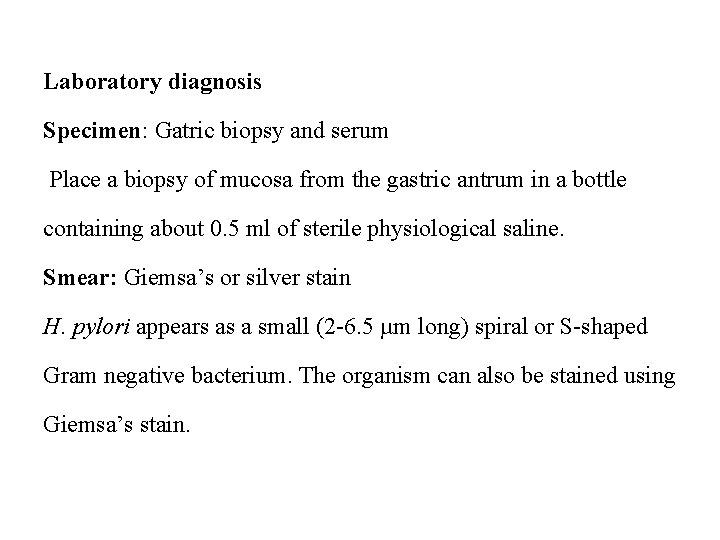
Laboratory diagnosis Specimen: Gatric biopsy and serum Place a biopsy of mucosa from the gastric antrum in a bottle containing about 0. 5 ml of sterile physiological saline. Smear: Giemsa’s or silver stain H. pylori appears as a small (2 -6. 5 µm long) spiral or S-shaped Gram negative bacterium. The organism can also be stained using Giemsa’s stain.
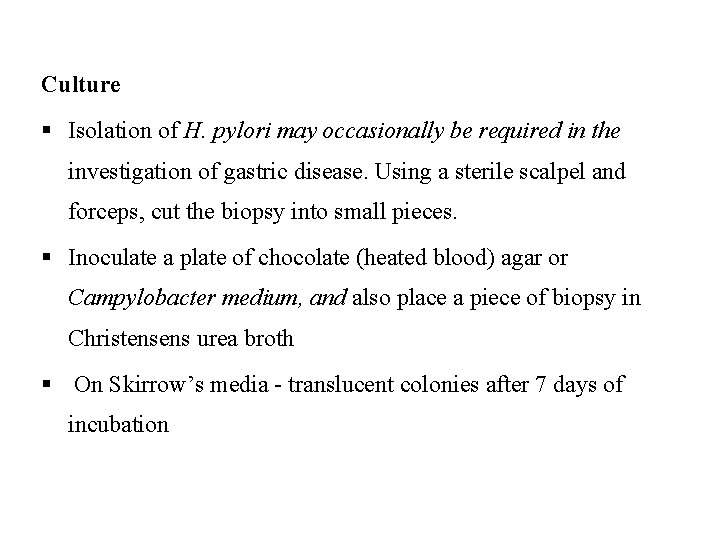
Culture § Isolation of H. pylori may occasionally be required in the investigation of gastric disease. Using a sterile scalpel and forceps, cut the biopsy into small pieces. § Inoculate a plate of chocolate (heated blood) agar or Campylobacter medium, and also place a piece of biopsy in Christensens urea broth § On Skirrow’s media - translucent colonies after 7 days of incubation
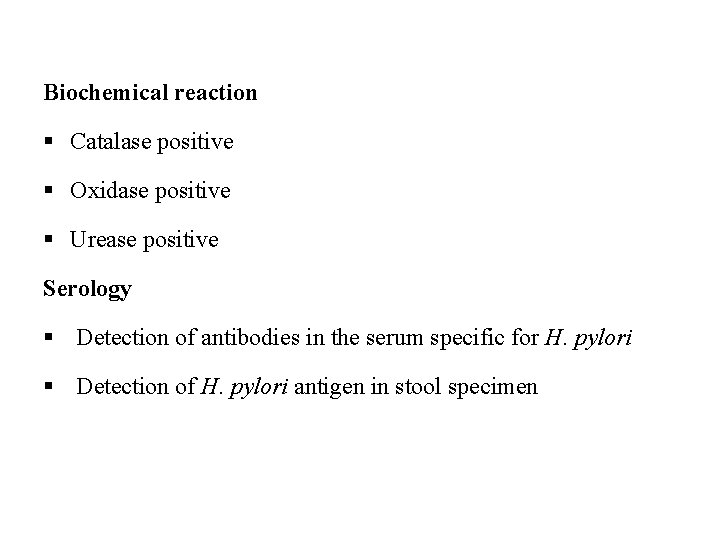
Biochemical reaction § Catalase positive § Oxidase positive § Urease positive Serology § Detection of antibodies in the serum specific for H. pylori § Detection of H. pylori antigen in stool specimen
Urease breath test § This non-microbiology test may be performed in specialist gastroenterology centres. § The patient ingests 13 C or 14 C radio-labelled urea. § Any carbon dioxide produced by urease producing H. pylori is detected in the breath using a mass spectrometer or a scintillation counter.
Treatment Triple or quadruple therapy: Amoxicillin plus clarithromycin/ metronidazole plus Proton pump inhibitors (PPI), Omeprazole or lansoprazole, or Metronidazole plus Bismuth subsalicylate/ Bismuth subcitrate + Amoxicillin / Tetracycline plus PPI.
Prevention and control § Improving sanitary hygiene § Safe and clean water supply. § Proper storage of food. § No vaccine available.