
Chapter VI Perforating shaped charge conical charge 12




- Slides: 19
Chapter VI Perforating
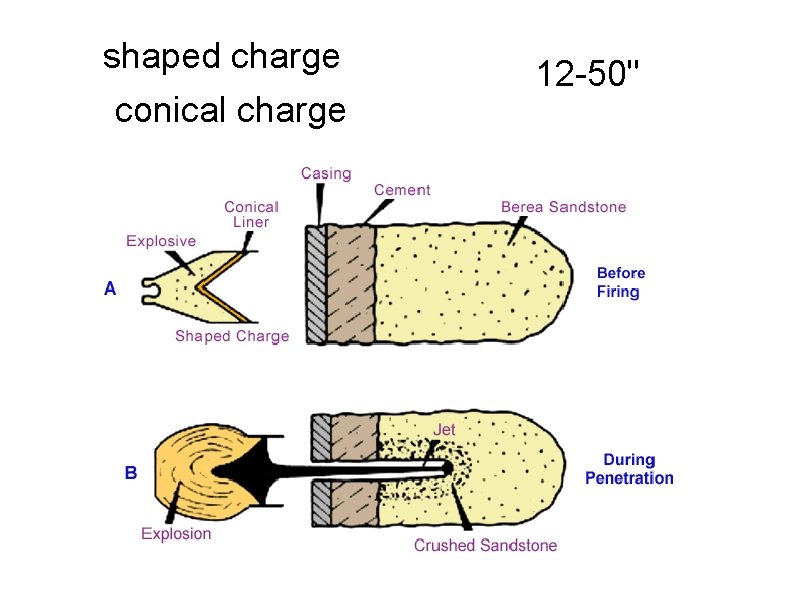
shaped charge conical charge 12 -50"
API RP 43 Defines penetration tests RP 67 Defines safety requirements before arming EBBA electric ballistic
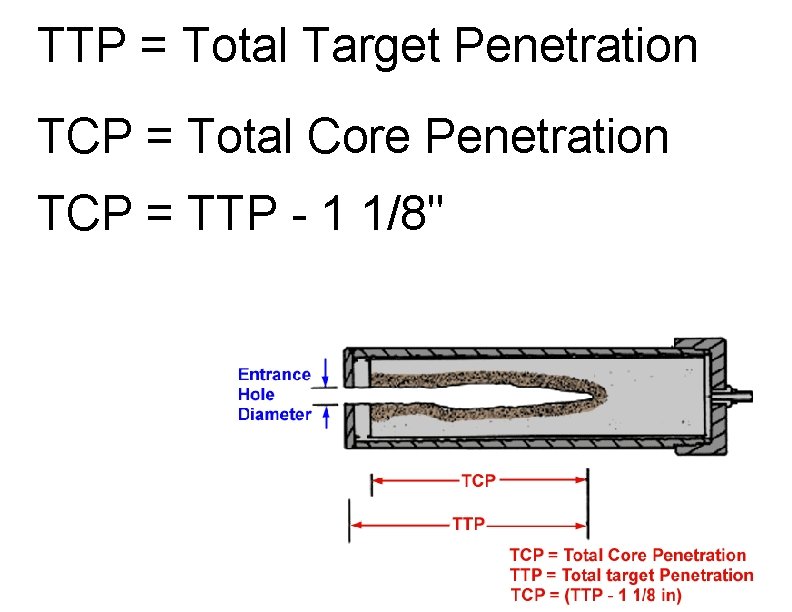
TTP = Total Target Penetration TCP = Total Core Penetration TCP = TTP - 1 1/8"
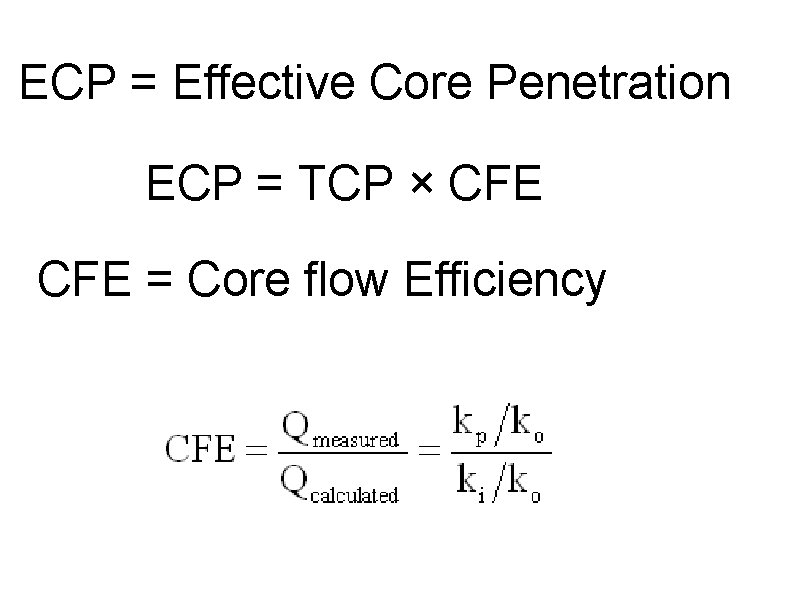
ECP = Effective Core Penetration ECP = TCP × CFE = Core flow Efficiency
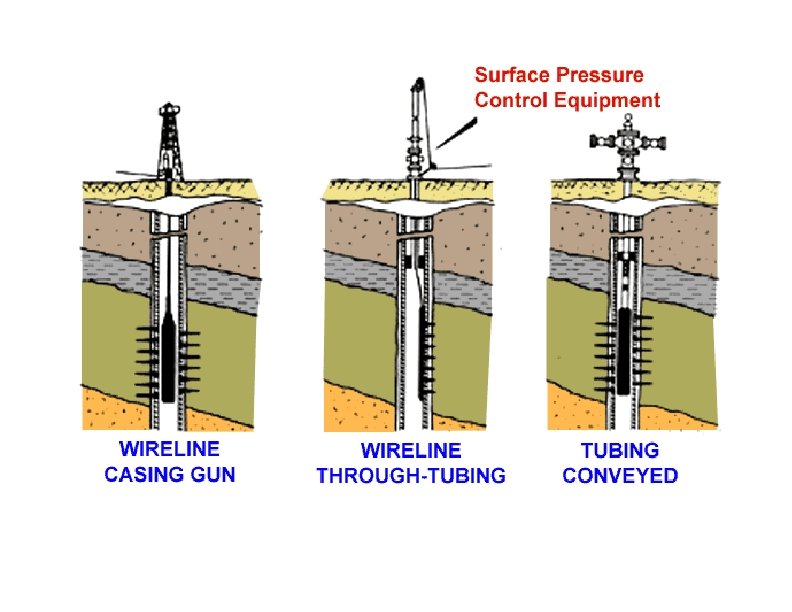
2 types of guns Tubing conveyed deviated wells Wireline Cheaper More accurate depth location
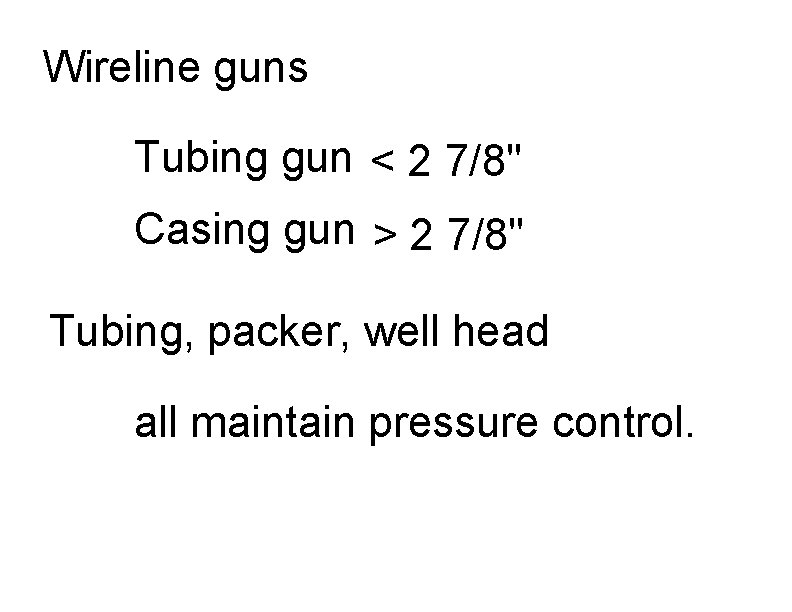
Wireline guns Tubing gun < 2 7/8" Casing gun > 2 7/8" Tubing, packer, well head all maintain pressure control.
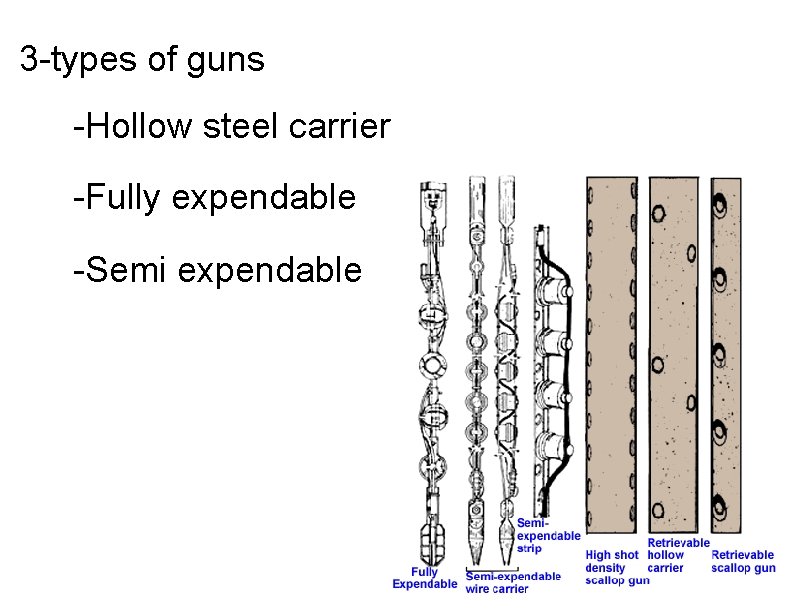
3 -types of guns -Hollow steel carrier -Fully expendable -Semi expendable
Hollow steel carrier 1. ) Absorbs shock 2. ) Gas tight 3. ) Protects charges during transport & installation 4. ) Good temp & pressure resistance. 5. ) No debris in hole 6. ) Easily decentralised
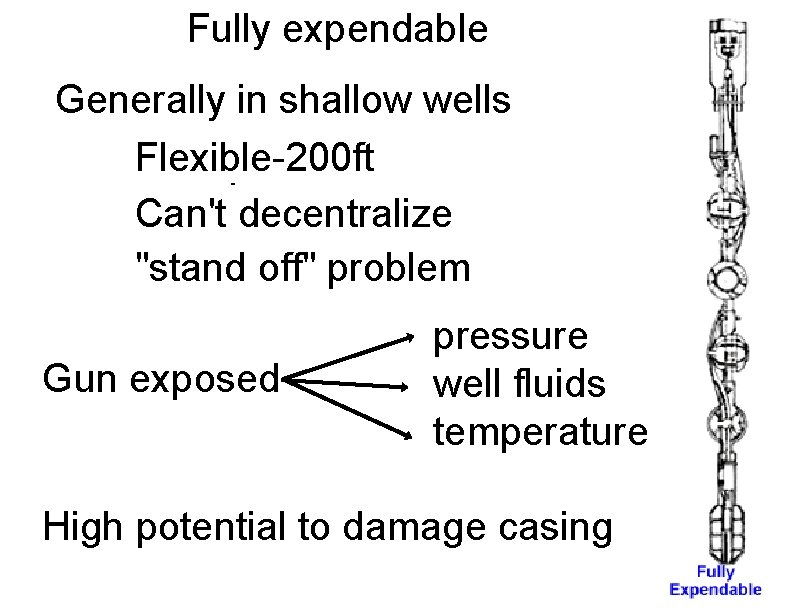
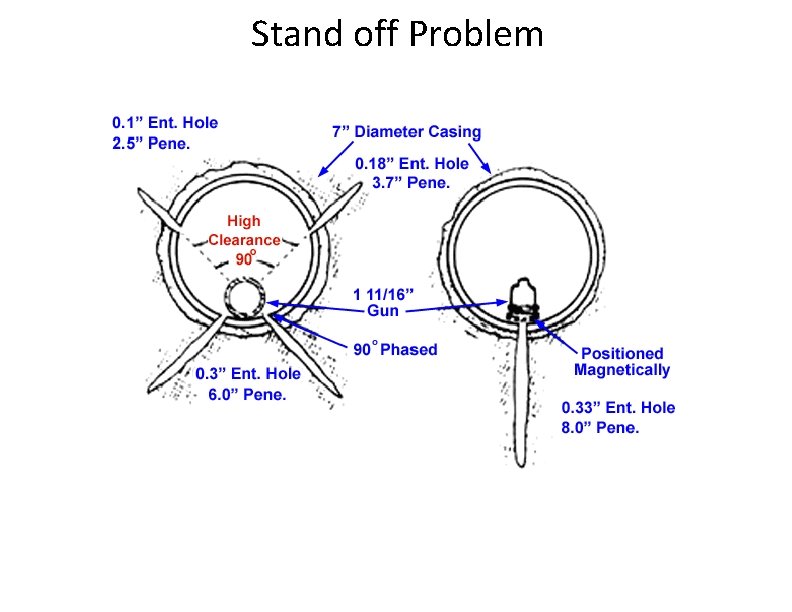
Fully expendable Generally in shallow wells Flexible-200 ft Can't decentralize "stand off" problem Gun exposed pressure well fluids temperature High potential to damage casing
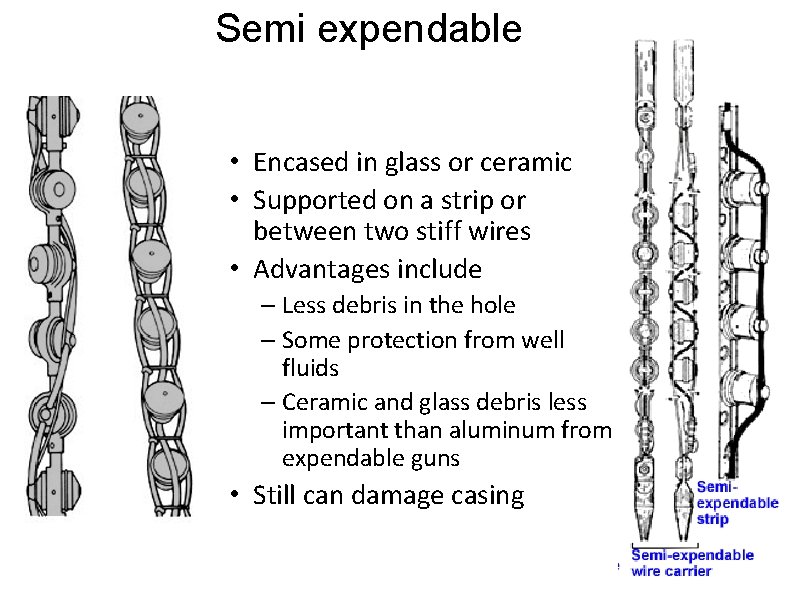
Semi expendable • Encased in glass or ceramic • Supported on a strip or between two stiff wires • Advantages include – Less debris in the hole – Some protection from well fluids – Ceramic and glass debris less important than aluminum from expendable guns • Still can damage casing
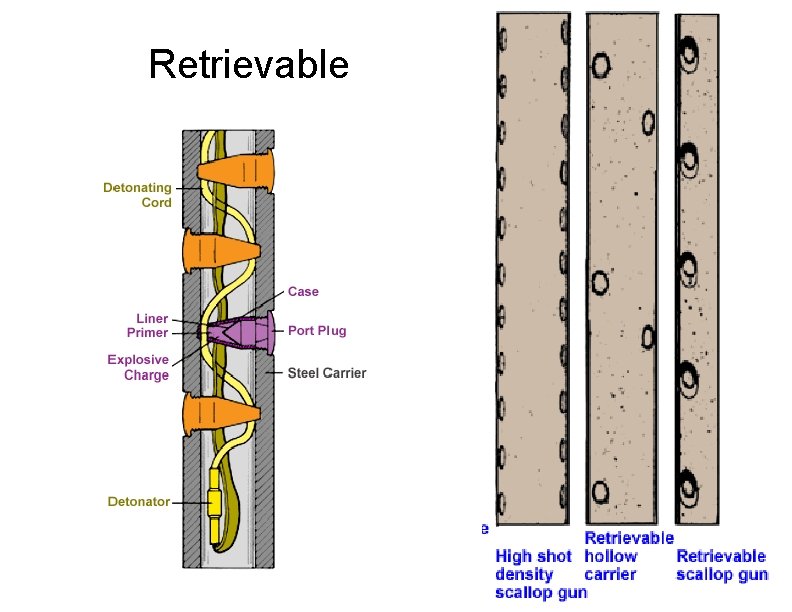
Retrievable
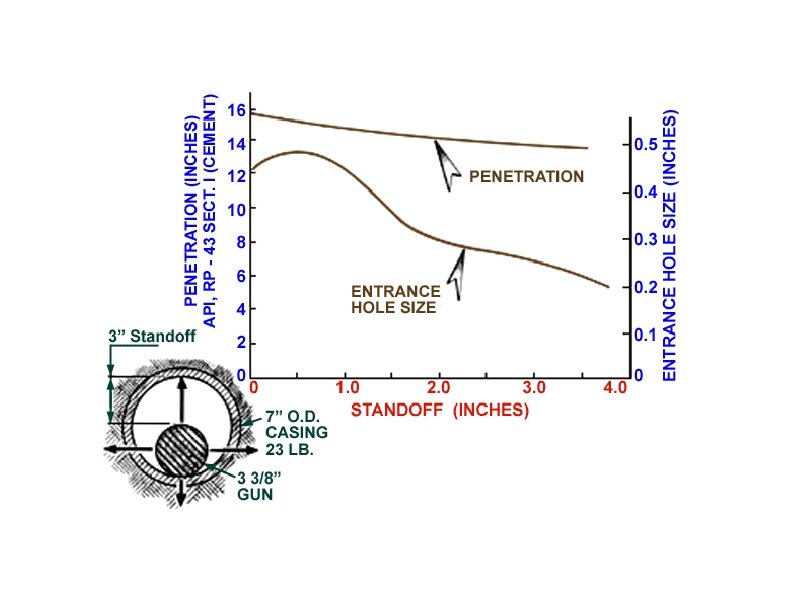
Stand off Problem
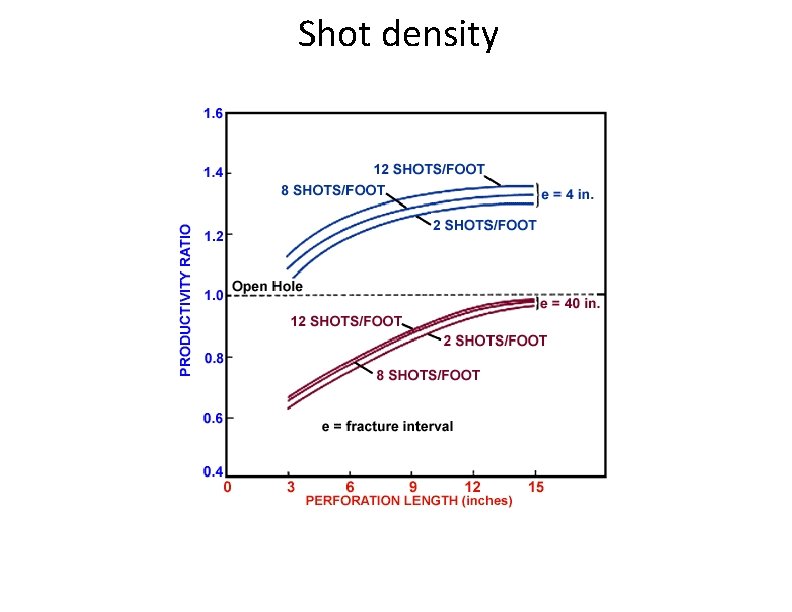
Shot density
Shot orientation
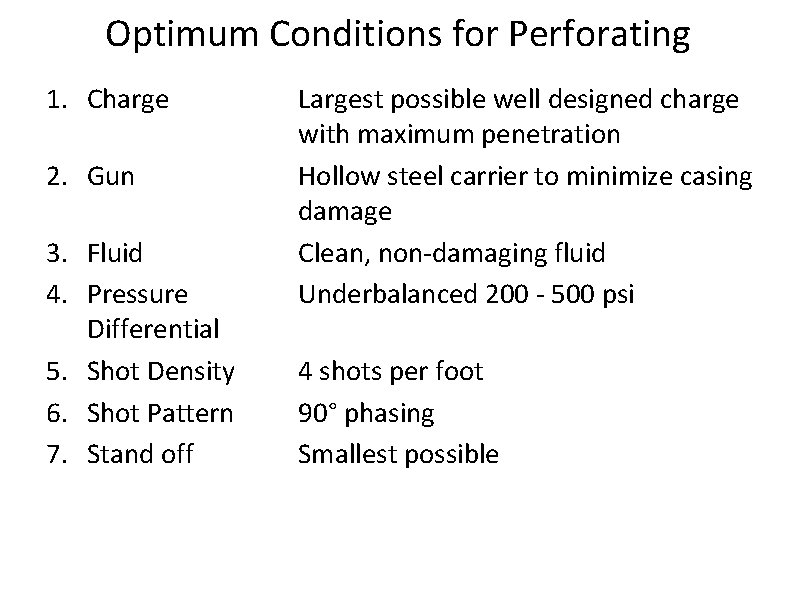
Optimum Conditions for Perforating 1. Charge 2. Gun 3. Fluid 4. Pressure Differential 5. Shot Density 6. Shot Pattern 7. Stand off Largest possible well designed charge with maximum penetration Hollow steel carrier to minimize casing damage Clean, non-damaging fluid Underbalanced 200 - 500 psi 4 shots per foot 90° phasing Smallest possible