
Chapter V Linear Momentum A B C D
Chapter V Linear Momentum A. B. C. D. E. Center of Mass Momentum of a Particle Impulse and Momentum Conservation of Momentum Collisions
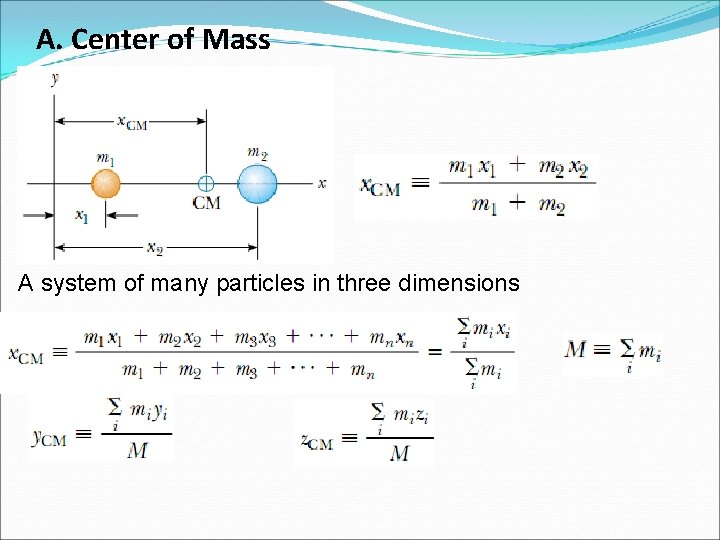
A. Center of Mass A system of many particles in three dimensions
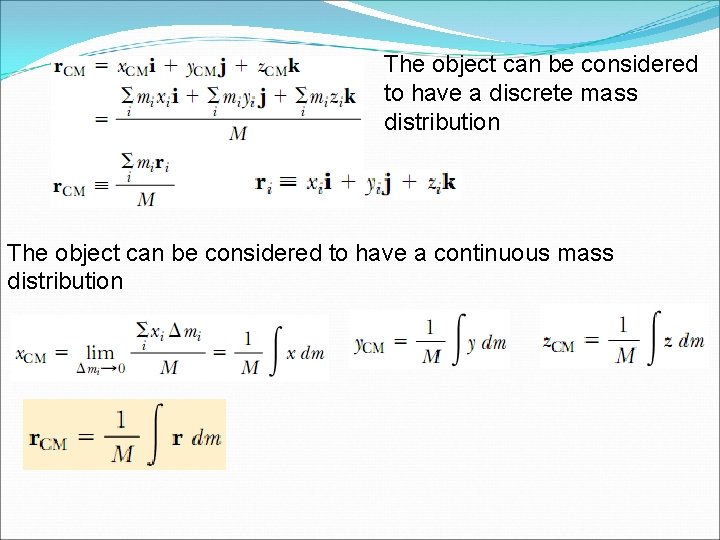
The object can be considered to have a discrete mass distribution The object can be considered to have a continuous mass distribution
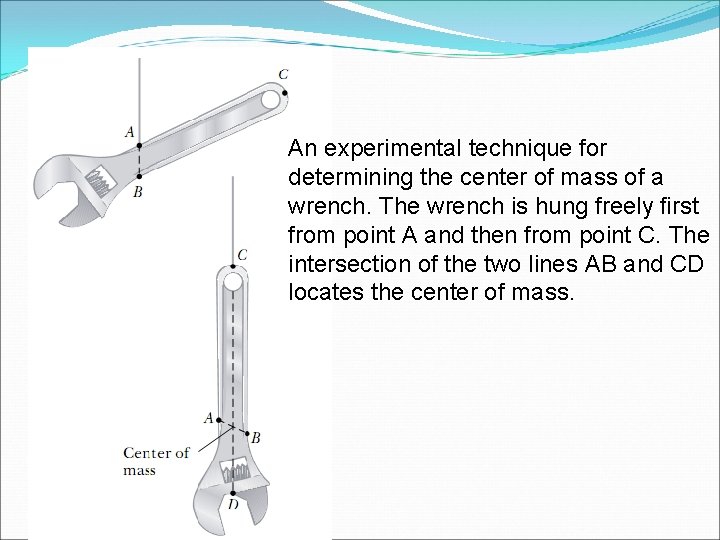
An experimental technique for determining the center of mass of a wrench. The wrench is hung freely first from point A and then from point C. The intersection of the two lines AB and CD locates the center of mass.
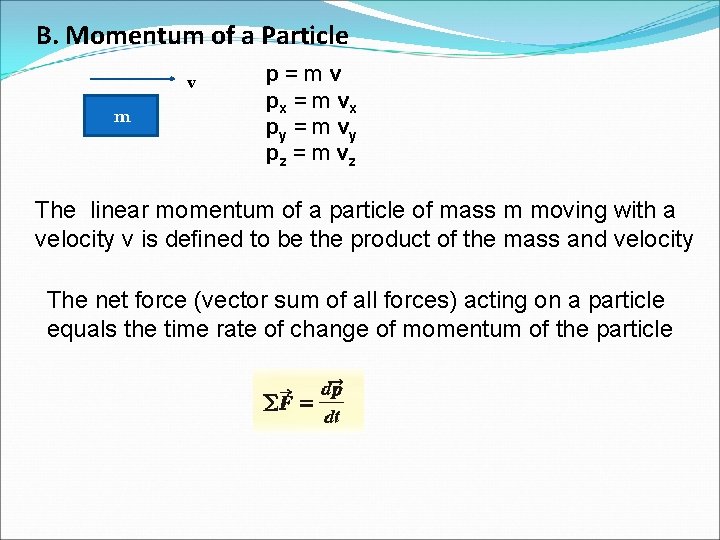
B. Momentum of a Particle v m p=mv p x = m vx p y = m vy p z = m vz The linear momentum of a particle of mass m moving with a velocity v is defined to be the product of the mass and velocity The net force (vector sum of all forces) acting on a particle equals the time rate of change of momentum of the particle
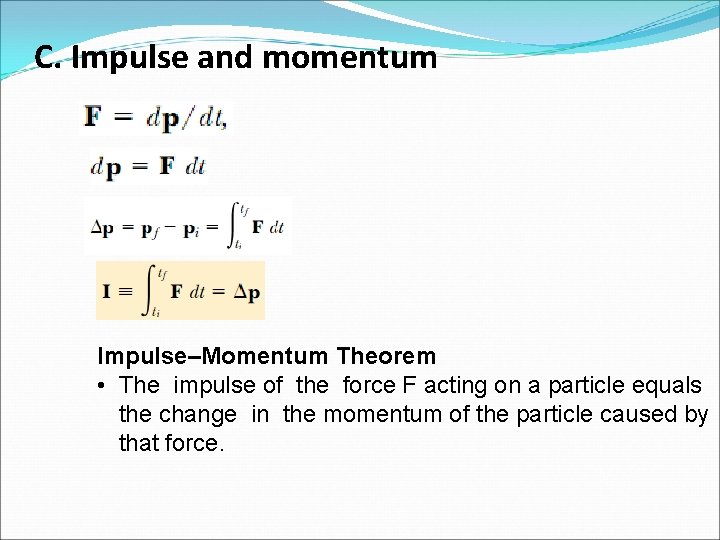
C. Impulse and momentum Impulse–Momentum Theorem • The impulse of the force F acting on a particle equals the change in the momentum of the particle caused by that force.
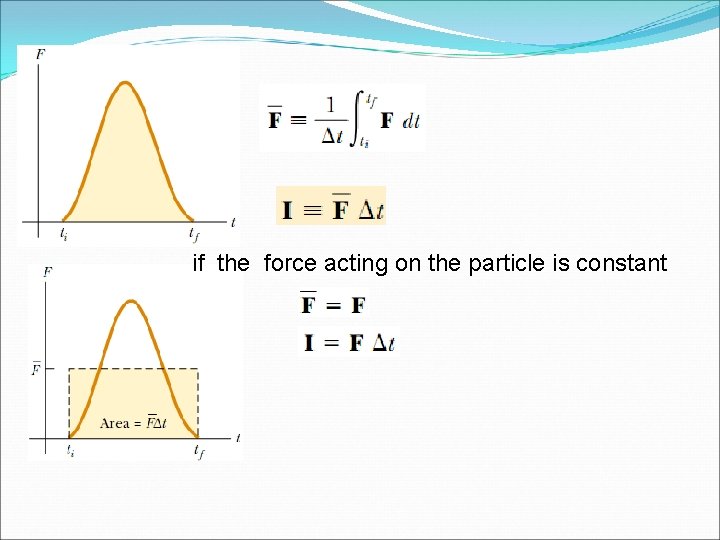
if the force acting on the particle is constant
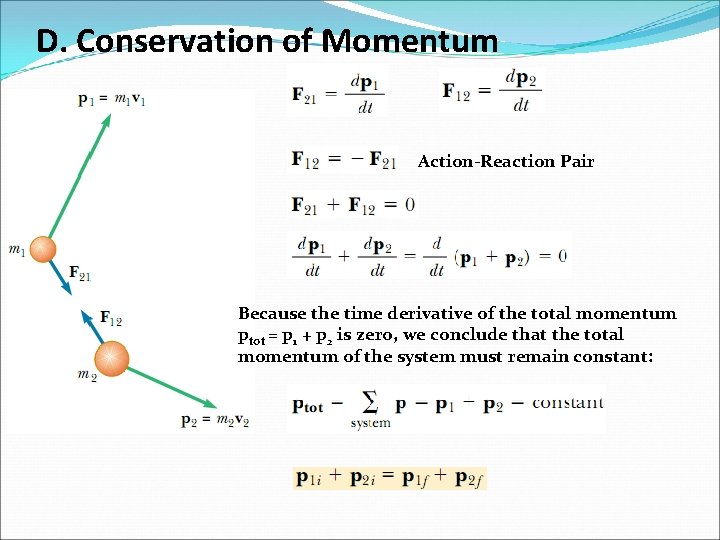
D. Conservation of Momentum Action-Reaction Pair Because the time derivative of the total momentum ptot = p 1 + p 2 is zero, we conclude that the total momentum of the system must remain constant:
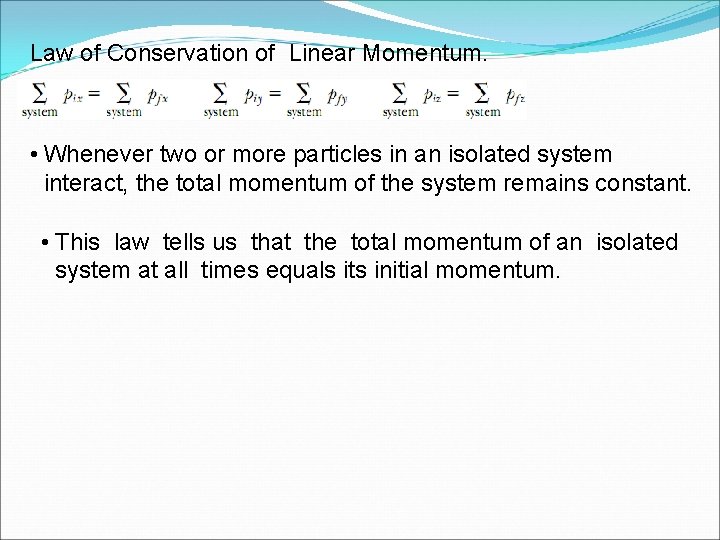
Law of Conservation of Linear Momentum. • Whenever two or more particles in an isolated system interact, the total momentum of the system remains constant. • This law tells us that the total momentum of an isolated system at all times equals its initial momentum.
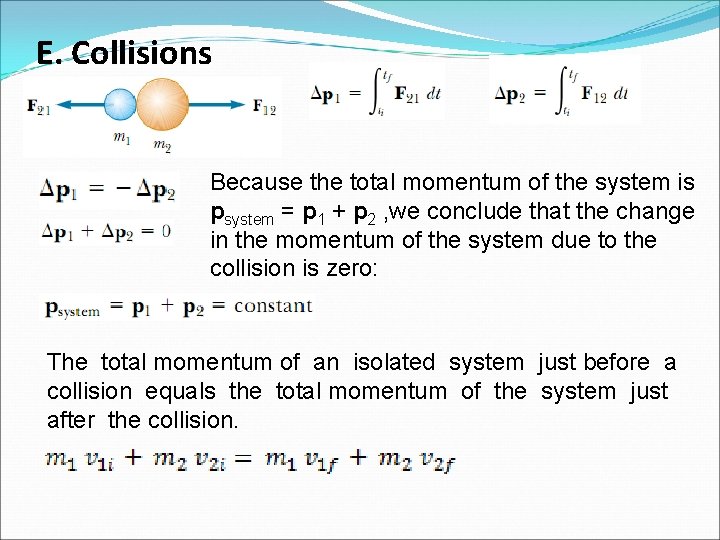
E. Collisions Because the total momentum of the system is psystem = p 1 + p 2 , we conclude that the change in the momentum of the system due to the collision is zero: The total momentum of an isolated system just before a collision equals the total momentum of the system just after the collision.
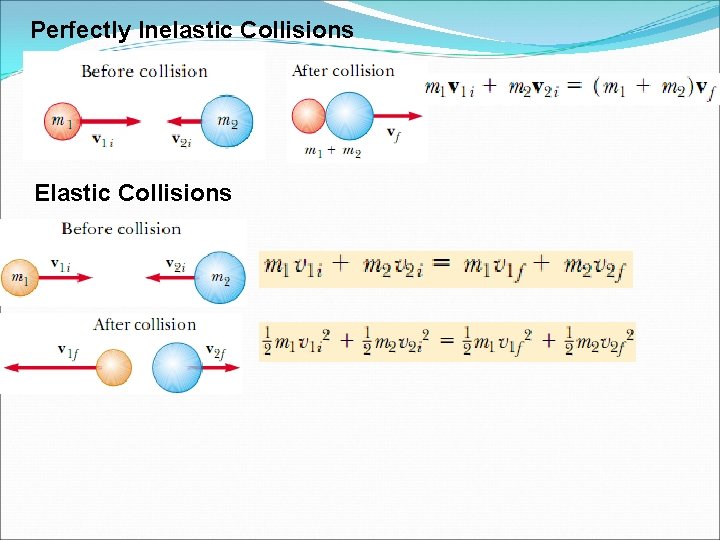
Perfectly Inelastic Collisions Elastic Collisions
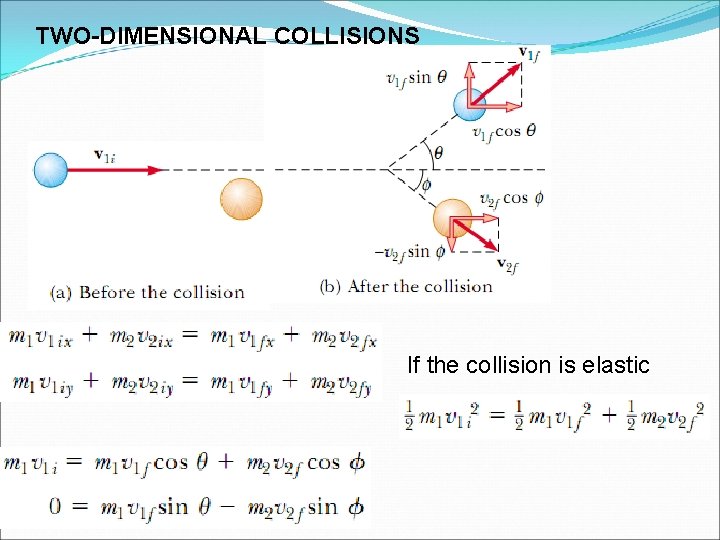
TWO-DIMENSIONAL COLLISIONS If the collision is elastic
- Slides: 12