
CHAPTER TWO THE MARKET SYSTEM AND THE CIRCULAR

- Slides: 8
CHAPTER TWO THE MARKET SYSTEM AND THE CIRCULAR FLOW In this chapter you will learn: • The difference between a command system and a market system • The main characteristics of the market system • How the market system answers four fundamental questions • How the market system adjusts to change and promotes progress • The mechanics of the circular flow model
ECONOMIC SYSTEMS The Command System Also known as socialism or communism The Market System Also known as capitalism
CHARACTERISTICS OF THE MARKET SYSTEM Private Property Freedom of Enterprise and Choice Self-Interest Competition Markets and Prices Technology and Capital Goods Specialization Division of labor Geographical specialization Use of Money Active, but Limited Government
FOUR FUNDAMENTAL QUESTIONS What will be produced? How will goods and services be produced? Who will get the output ? How will the system promote progress? Technological advance Capital accumulation
THE INVISIBLE HAND Every exchange is mutually beneficial Firms and resource suppliers fulfill self-interest by providing a certain good/service because it yields better profits, while led by the invisible hand, they also promote the interest of society
THE DEMISE OF THE COMMAND SYSTEMS The Coordination Problem The Incentive Problem
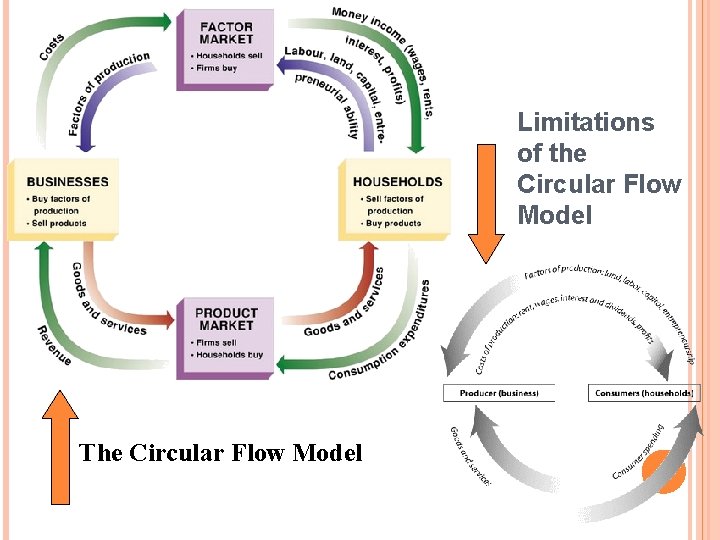
THE CIRCULAR FLOW MODEL Resource Market Product Market Households provide resources: land, capital, labor, entrepreneurship Firms pay rent, interest, wages, and profits (respectively) for the resources
Limitations of the Circular Flow Model The Circular Flow Model