
CHAPTER TWO PRECIPITATION AYANSA T B Sc In
CHAPTER TWO PRECIPITATION AYANSA T. (B. Sc. In HY. , M. Sc. in WRE)
Introduction • Precipitation is the part of atmospheric moisture, which reaches the earth's surface in different forms. • Some of the precipitation that might get intercepted while reaching the ground by trees and buildings and evaporates back is called the initial loss. • The other part meets requirements like depression storage and infiltrates into the ground. • The excess rainfall flows in streams to large water bodies. • Nearly one-fourth of the total precipitation that falls on land reaches large water bodies as direct runoff. • The balance three-fourths of water returns back to the atmosphere at different times as evaporation.
Forms of precipitation ØRain Water drops that have a diameter of at least 0. 5 mm. It can be classified based on intensity as, • Light rain up to 2. 5 mm/h • Moderate rain 2. 5 mm/h to 7. 5 mm/h • Heavy rain >7. 5 mm/h ØSnow Precipitation in the form of ice crystals which usually combine to form flakes, with an average density of 0. 1 g/cm 3
Cont’d ØGlaze • When rain or drizzle touches ground at 0 o. C, glaze or freezing rain is formed. ØSleet • It is frozen rain drops of transparent grains which form when rain falls through air at subfreezing temperature. ØHail • It is a showery precipitation in the form of irregular pellets or lumps of ice of size more than 8 mm. ØDrizzle Rain-droplets of size less than 0. 5 mm and rain intensity of less than 1 mm/h is known as drizzle.
Types of precipitation • Based on the “mechanism” by which air is lifted. Ø Frontal lifting: • Warmer air is forced to go above cooler air in equilibrium with a cooler surface. Ø Orographic lifting: • Air is forced to go over mountains (and it’s the reason why windward slopes receive more precipitation). Ø Convective Lifting: • Warm air rises from a warm surface and progressively cools down. Ø Cyclonic Lifting: • A cyclonic storm is a large, low pressure system that forms when a warm air mass and a cold air mass collide.

Frontal lifting

Orographic lifting

Convectional lifting
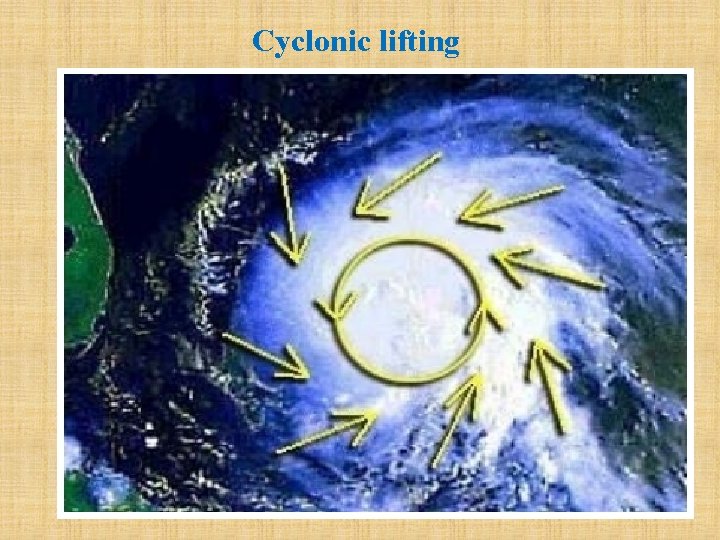
Cyclonic lifting
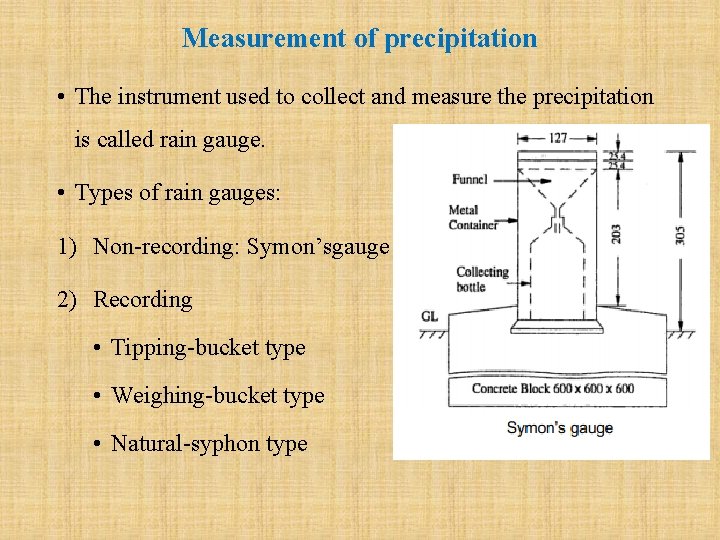
Measurement of precipitation • The instrument used to collect and measure the precipitation is called rain gauge. • Types of rain gauges: 1) Non-recording: Symon’sgauge 2) Recording • Tipping-bucket type • Weighing-bucket type • Natural-syphon type
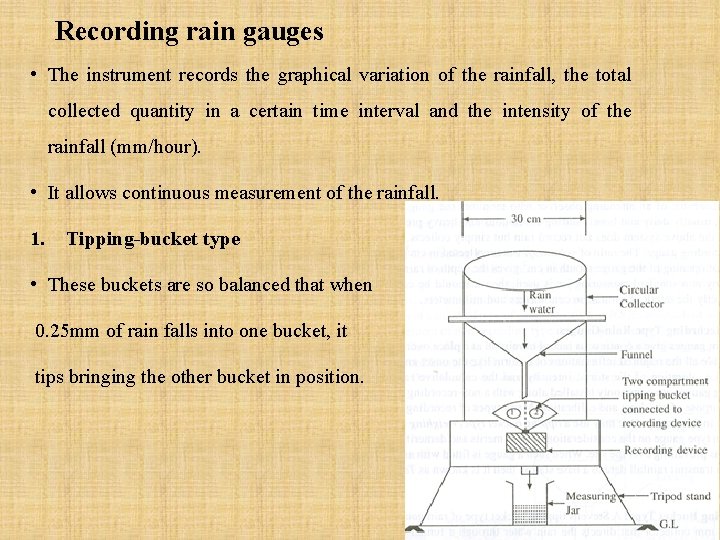
Recording rain gauges • The instrument records the graphical variation of the rainfall, the total collected quantity in a certain time interval and the intensity of the rainfall (mm/hour). • It allows continuous measurement of the rainfall. 1. Tipping-bucket type • These buckets are so balanced that when 0. 25 mm of rain falls into one bucket, it tips bringing the other bucket in position.
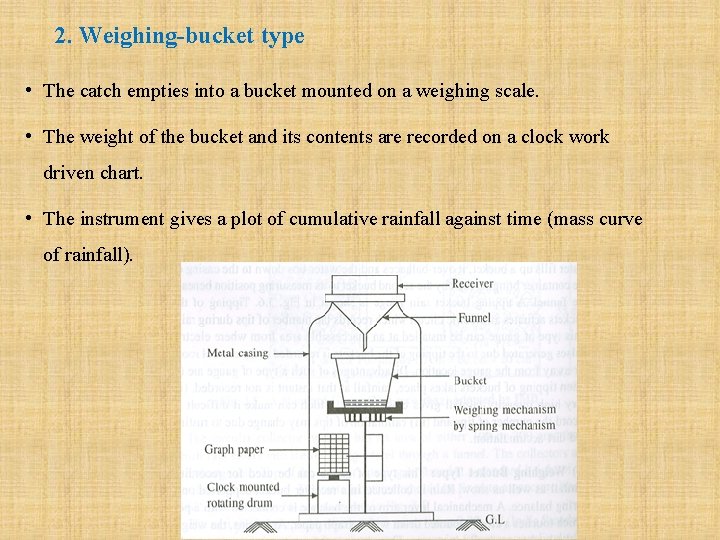
2. Weighing-bucket type • The catch empties into a bucket mounted on a weighing scale. • The weight of the bucket and its contents are recorded on a clock work driven chart. • The instrument gives a plot of cumulative rainfall against time (mass curve of rainfall).
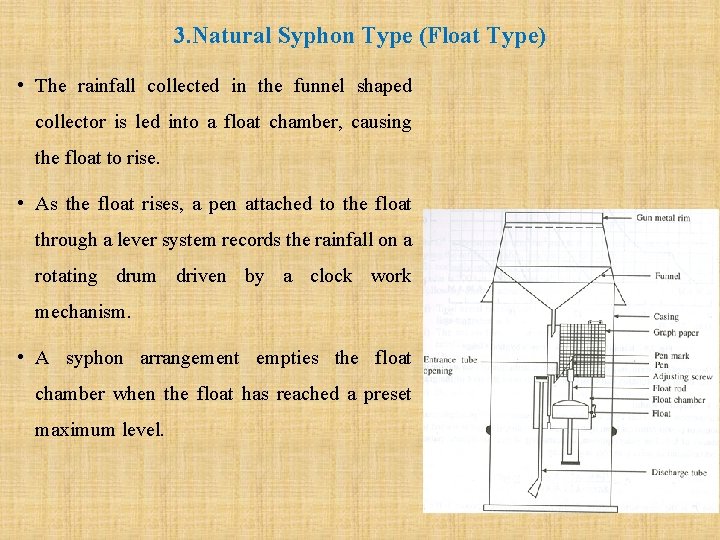
3. Natural Syphon Type (Float Type) • The rainfall collected in the funnel shaped collector is led into a float chamber, causing the float to rise. • As the float rises, a pen attached to the float through a lever system records the rainfall on a rotating drum driven by a clock work mechanism. • A syphon arrangement empties the float chamber when the float has reached a preset maximum level.
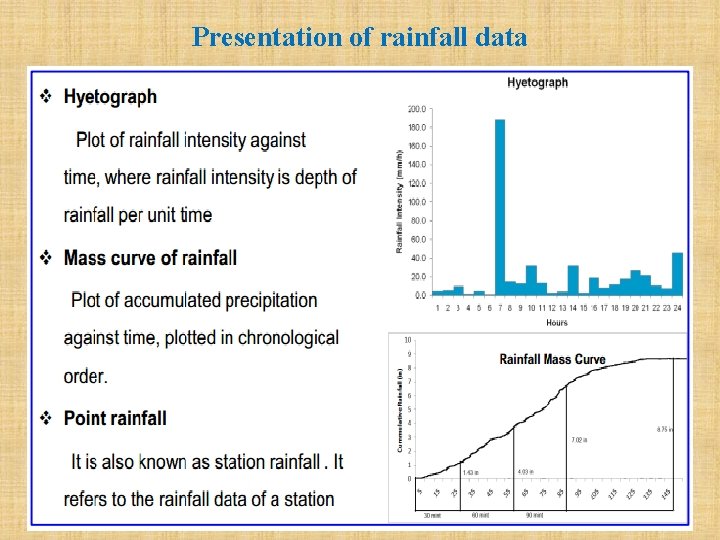
Presentation of rainfall data
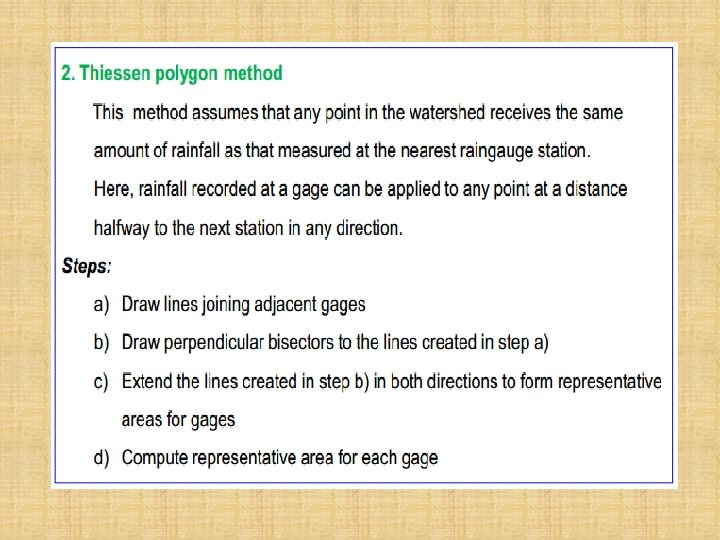
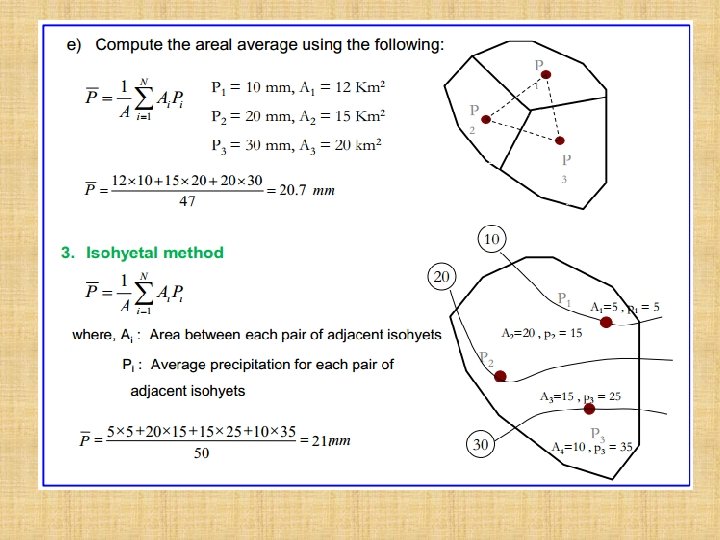
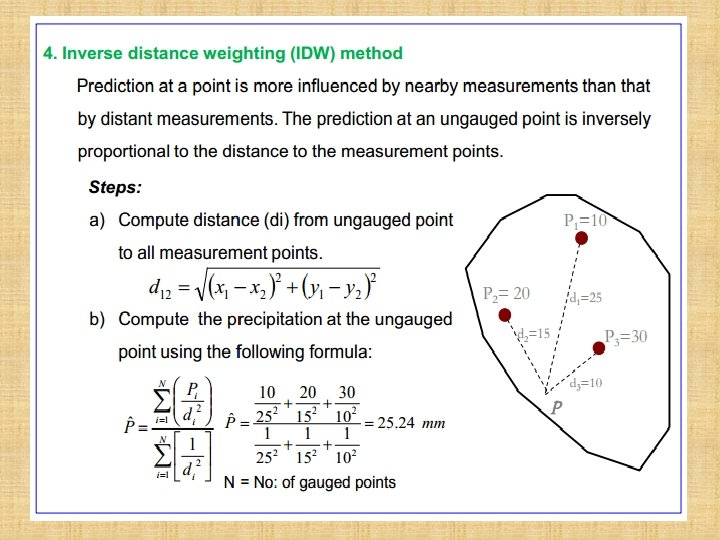
Mean precipitation over an area
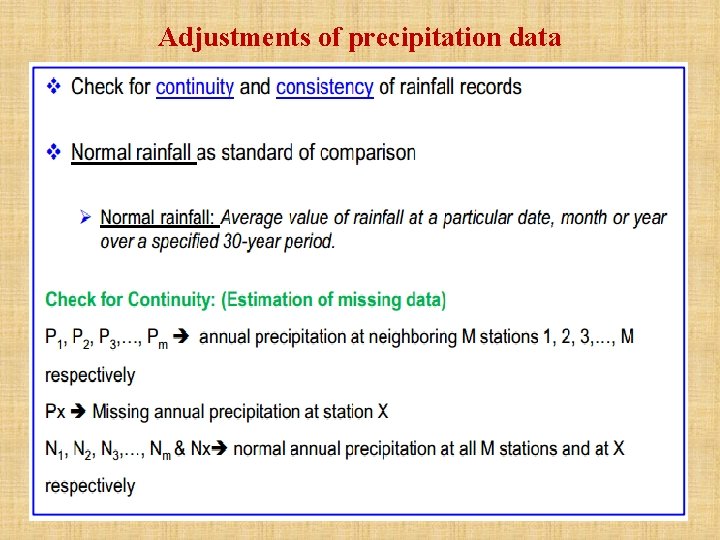
Adjustments of precipitation data
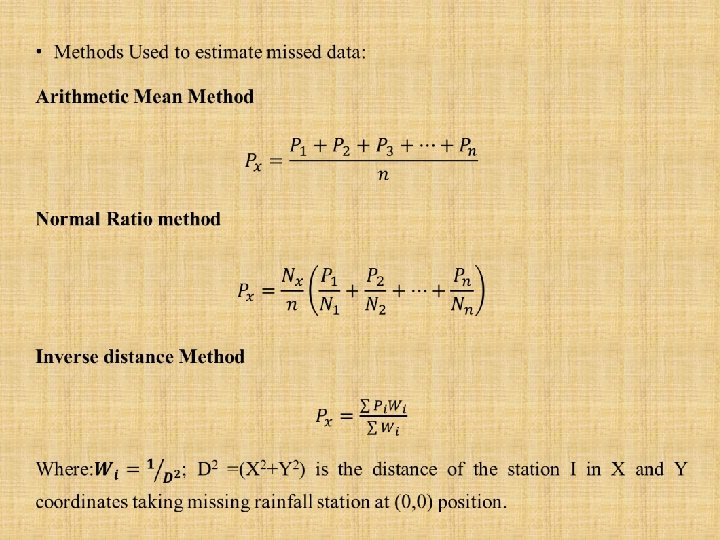
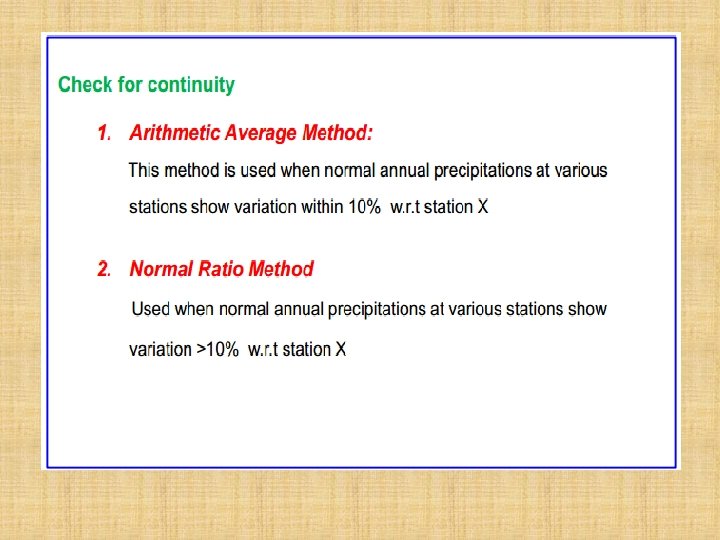
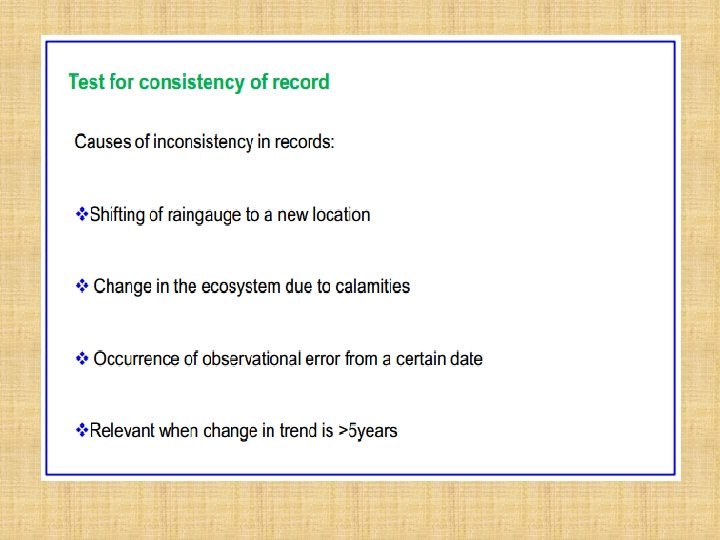
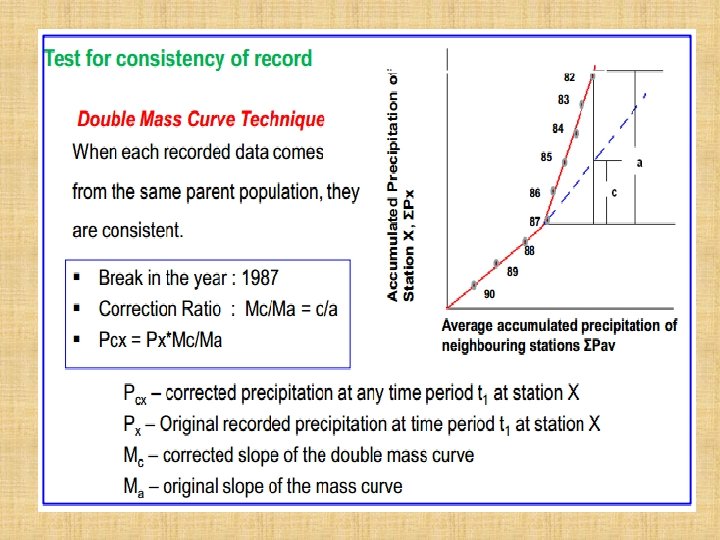
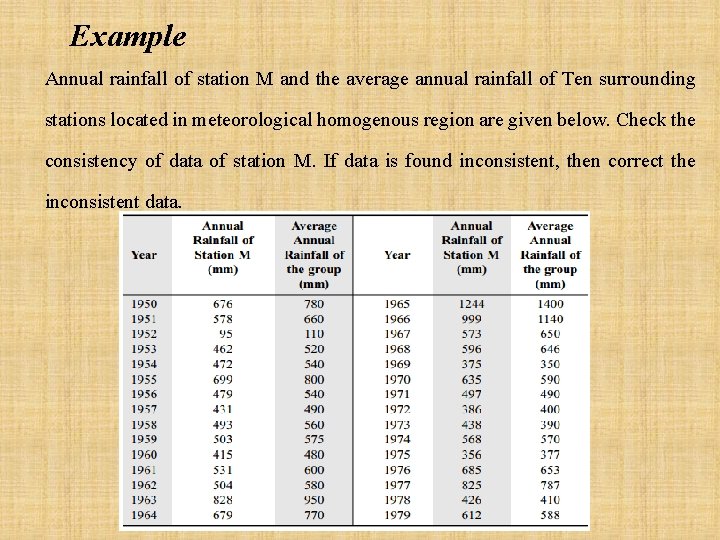
Example Annual rainfall of station M and the average annual rainfall of Ten surrounding stations located in meteorological homogenous region are given below. Check the consistency of data of station M. If data is found inconsistent, then correct the inconsistent data.
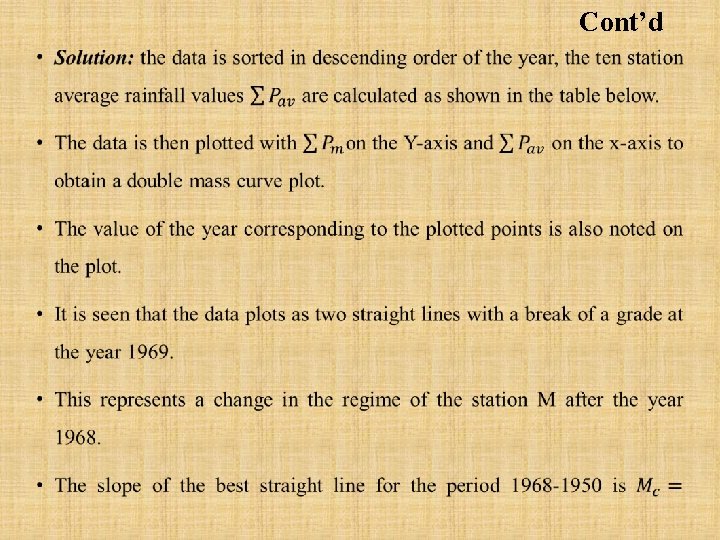
• Cont’d
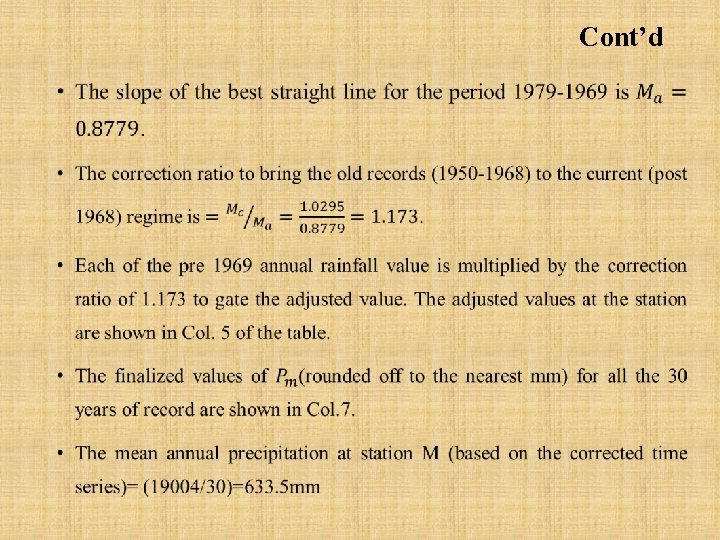
Cont’d •
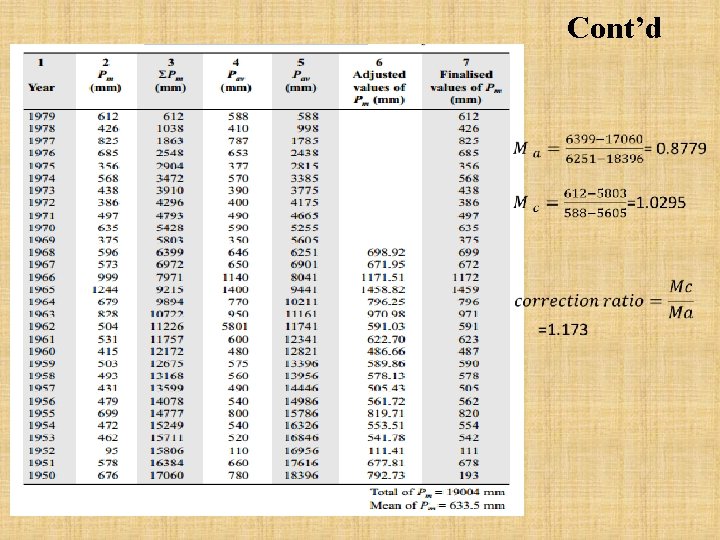
Cont’d
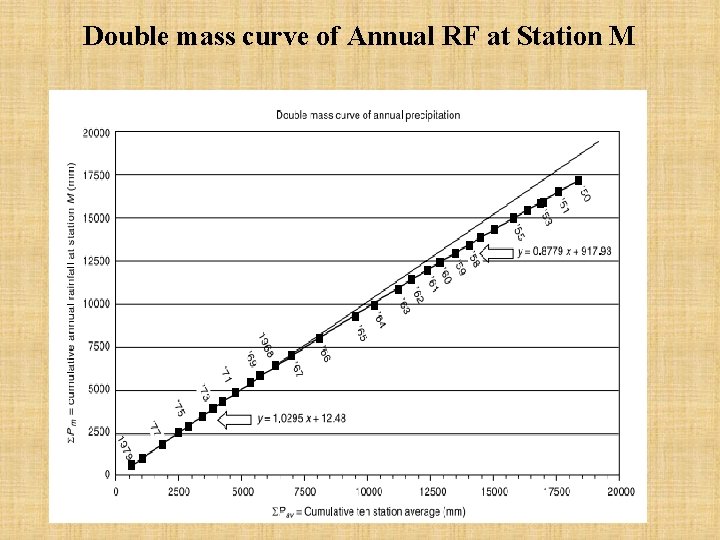
Double mass curve of Annual RF at Station M
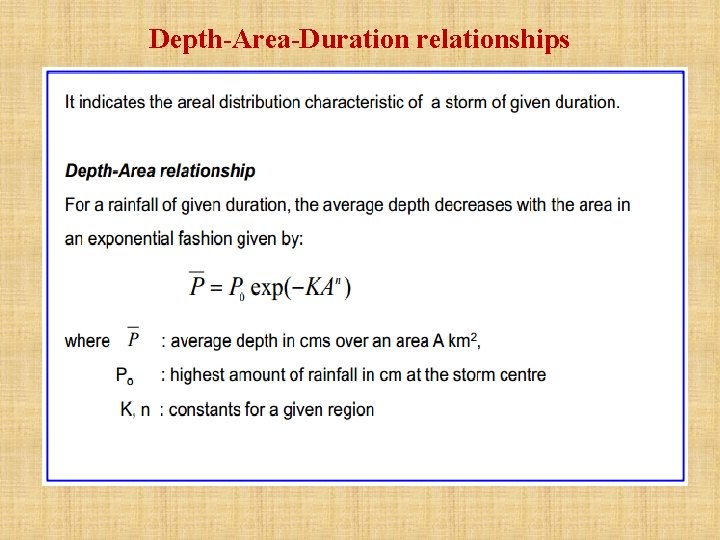
Depth-Area-Duration relationships
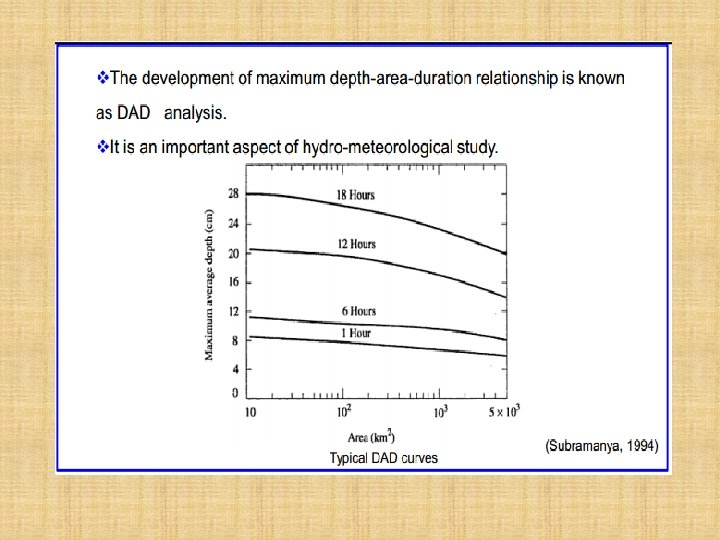
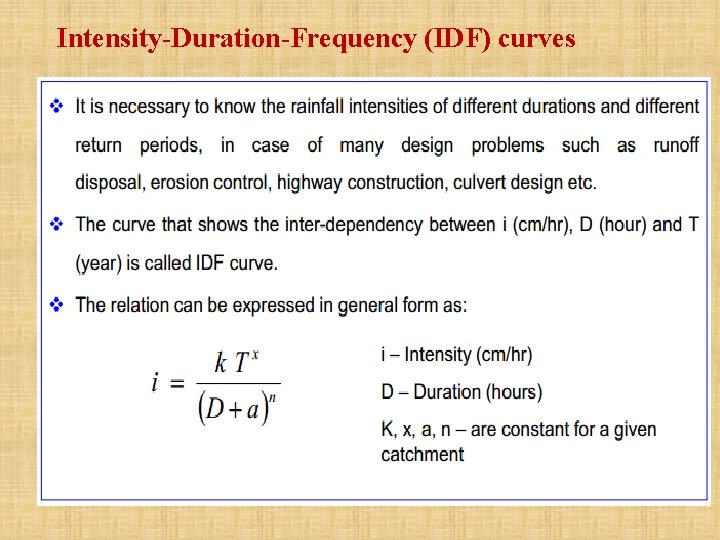
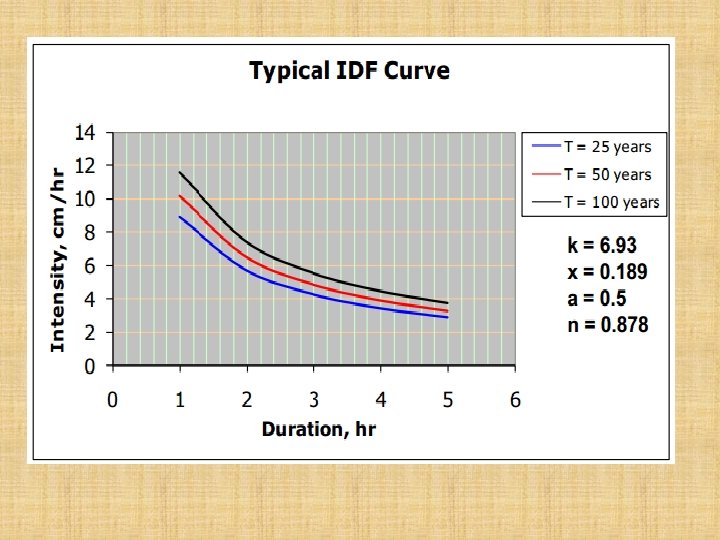
Intensity-Duration-Frequency (IDF) curves
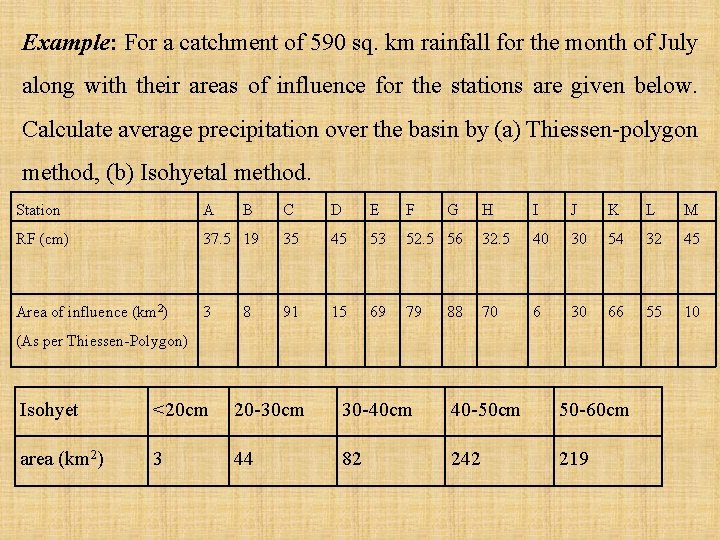
Example: For a catchment of 590 sq. km rainfall for the month of July along with their areas of influence for the stations are given below. Calculate average precipitation over the basin by (a) Thiessen-polygon method, (b) Isohyetal method. Station A RF (cm) Area of influence (km 2) B C D E F 37. 5 19 35 45 53 3 91 15 69 8 G H I J K L M 52. 5 56 32. 5 40 30 54 32 45 79 70 6 30 66 55 10 88 (As per Thiessen-Polygon) Isohyet <20 cm 20 -30 cm 30 -40 cm 40 -50 cm 50 -60 cm area (km 2) 3 44 82 242 219
- Slides: 34