
Chapter Two Decent Manners What is manners The


- Slides: 17
中国传统礼仪习俗概论 Chapter Two. Decent Manners
What is manners? • The unenforced standards of conduct which show the actor that you are proper, polite, and refined. • No formal system for punishing transgressions, other than social disapproval. • Decent manner in life and work 2
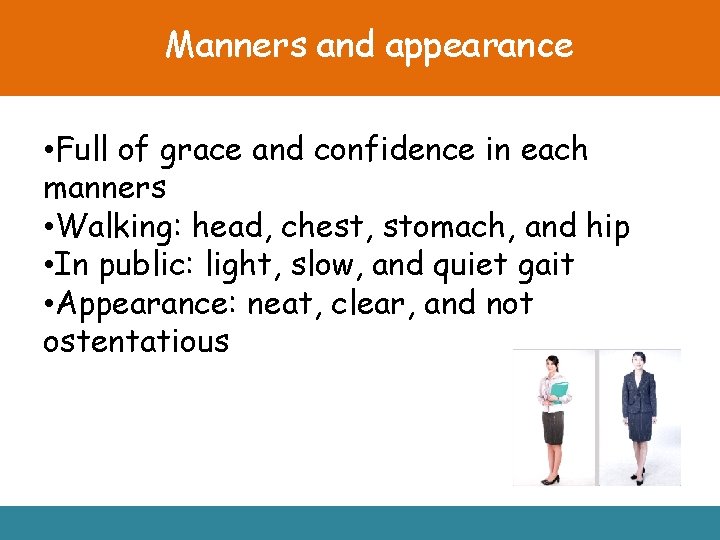
Manners and appearance • Full of grace and confidence in each manners • Walking: head, chest, stomach, and hip • In public: light, slow, and quiet gait • Appearance: neat, clear, and not ostentatious 3
Decent manners • Sense of time • Handshake • Eye contact • In and out of an office • When taking an elevator or escalator • When taking a car • Smile
Be punctual • Basic discipline • 15 minutes in advance • 30 minutes in advance • Being late or arrive hastily • Far away from destination
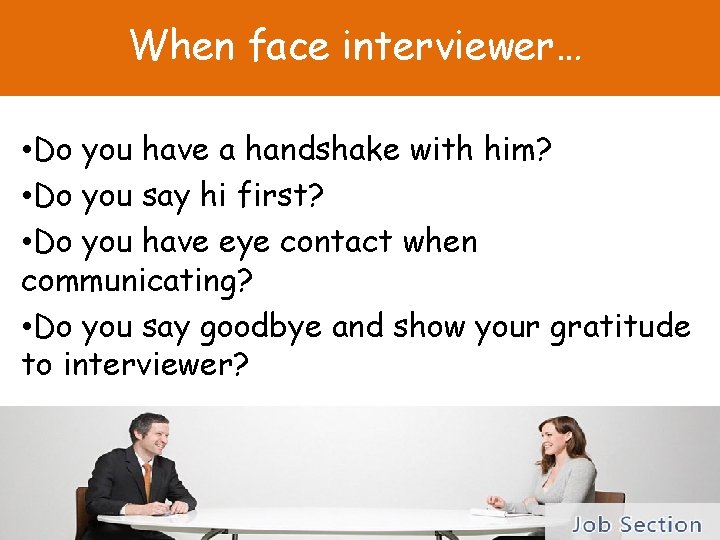
When face interviewer… • Do you have a handshake with him? • Do you say hi first? • Do you have eye contact when communicating? • Do you say goodbye and show your gratitude to interviewer?
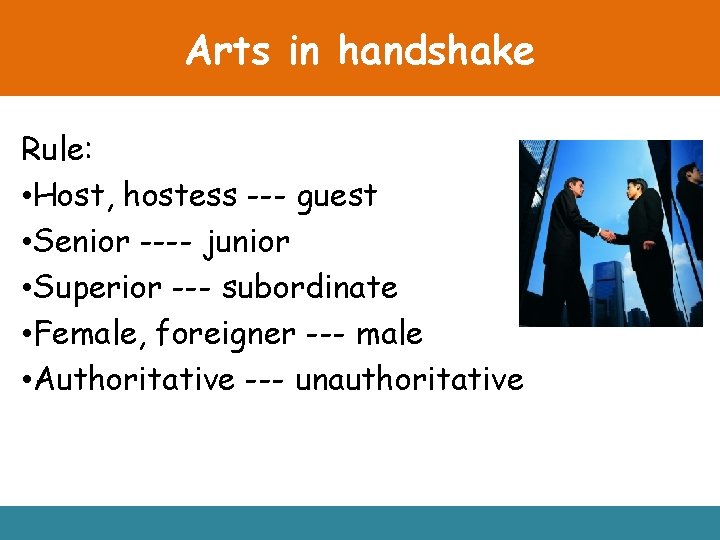
Arts in handshake Rule: • Host, hostess --- guest • Senior ---- junior • Superior --- subordinate • Female, foreigner --- male • Authoritative --- unauthoritative
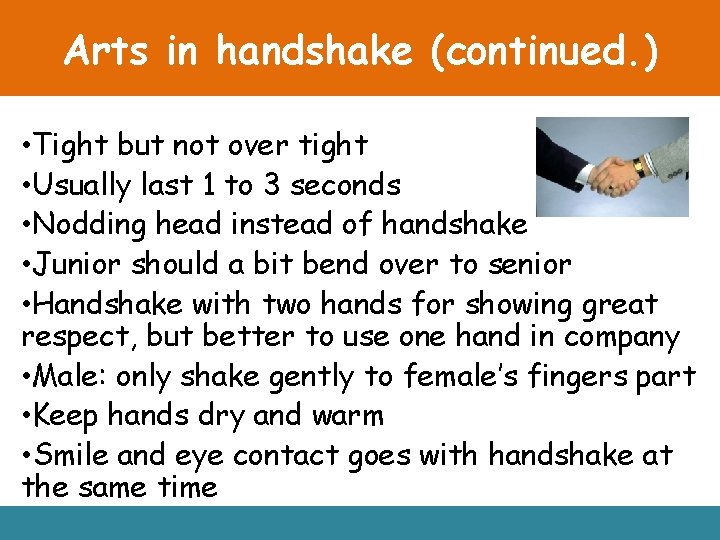
Arts in handshake (continued. ) • Tight but not over tight • Usually last 1 to 3 seconds • Nodding head instead of handshake • Junior should a bit bend over to senior • Handshake with two hands for showing great respect, but better to use one hand in company • Male: only shake gently to female’s fingers part • Keep hands dry and warm • Smile and eye contact goes with handshake at the same time
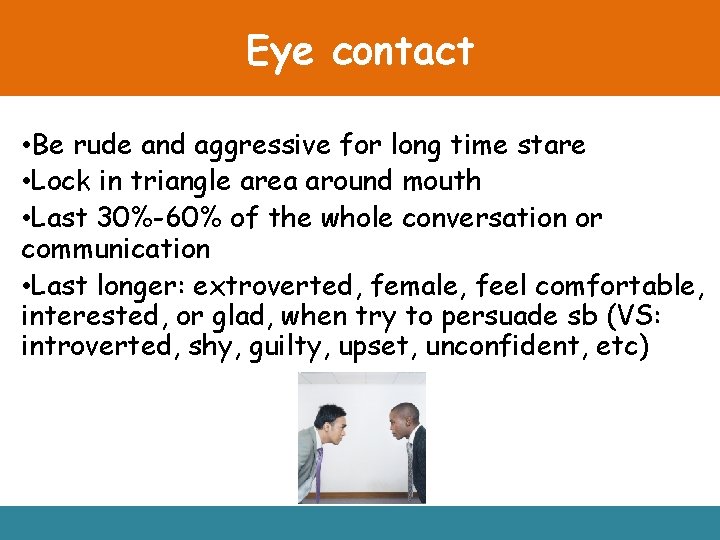
Eye contact • Be rude and aggressive for long time stare • Lock in triangle area around mouth • Last 30%-60% of the whole conversation or communication • Last longer: extroverted, female, feel comfortable, interested, or glad, when try to persuade sb (VS: introverted, shy, guilty, upset, unconfident, etc)
Eye contact (continued. ) It is rude and aggressive for lasting eye contact more than 60% of the communication, except for: • Junior and inexperienced to senior and sophisticated for respect or interest • Superior to subordinate for appreciation or recognition • More interested in person than topics (p. l. visiting friend) • In negotiation, it stands for strength and confidence
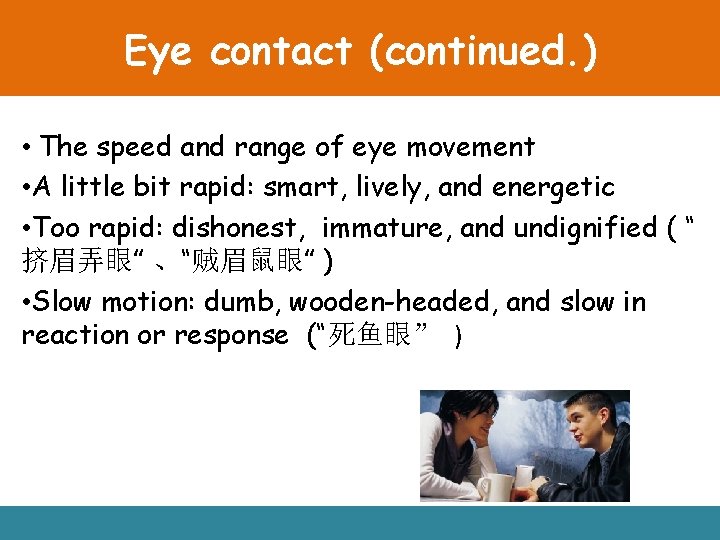
Eye contact (continued. ) • The speed and range of eye movement • A little bit rapid: smart, lively, and energetic • Too rapid: dishonest, immature, and undignified ( “ 挤眉弄眼” 、“贼眉鼠眼” ) • Slow motion: dumb, wooden-headed, and slow in reaction or response (“死鱼眼” )
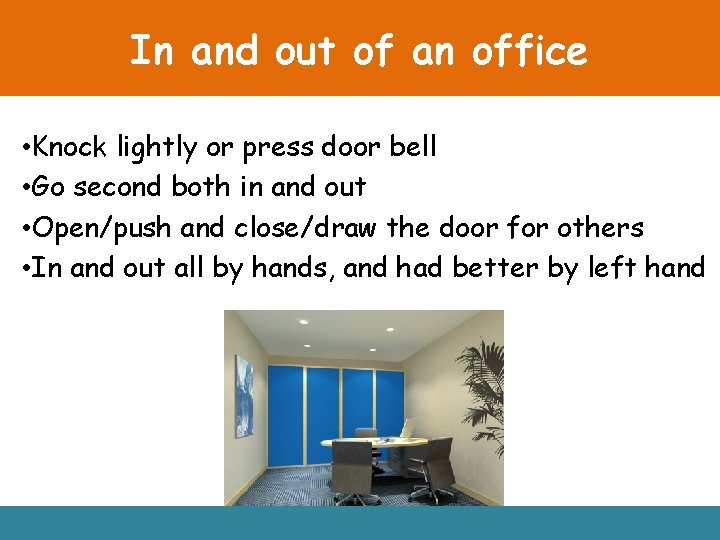
In and out of an office • Knock lightly or press door bell • Go second both in and out • Open/push and close/draw the door for others • In and out all by hands, and had better by left hand
When taking an elevator or escalator • 2 people • 3 people • 4 people can not walk shoulder to shoulder • When with more than one guest, senior, superior, and lady, to go into an elevator: 1. Some one in elevator 2. Empty elevator • Press button to different floors for others including strangers • Press open button and let people out first • Standing position
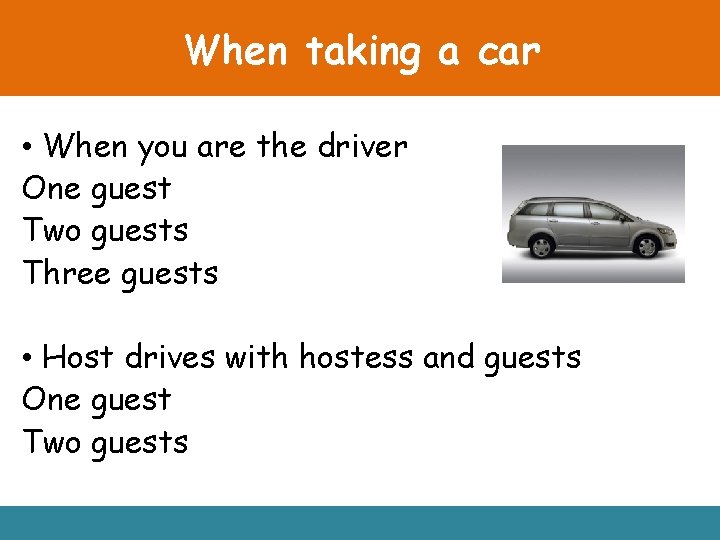
When taking a car • When you are the driver One guest Two guests Three guests • Host drives with hostess and guests One guest Two guests
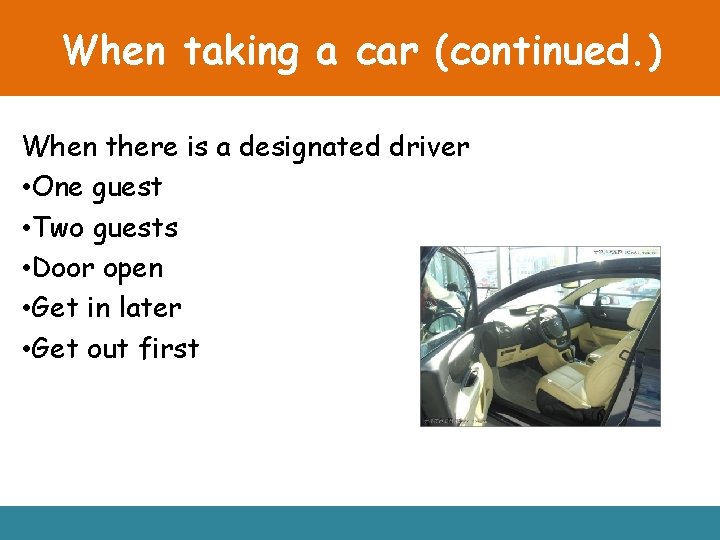
When taking a car (continued. ) When there is a designated driver • One guest • Two guests • Door open • Get in later • Get out first
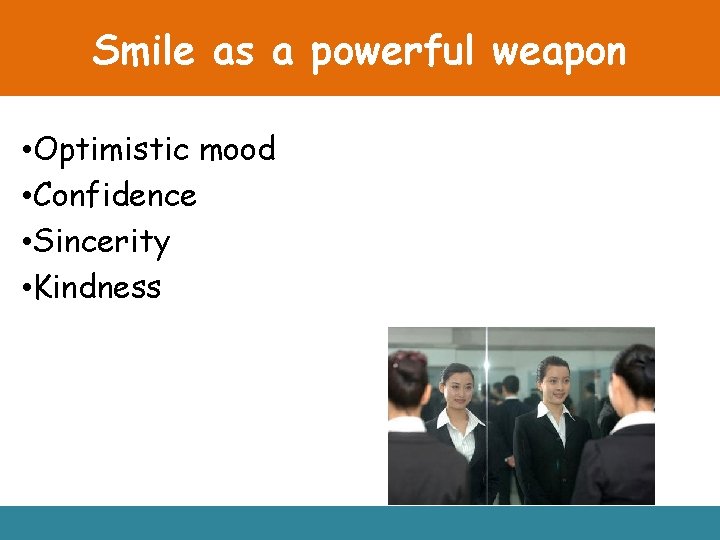
Smile as a powerful weapon • Optimistic mood • Confidence • Sincerity • Kindness
Thank you for your patience! 中国传统礼仪习俗概论 Jemelia_zhou@yahoo. com