
CHAPTER TWO Being in Place WHAT IS PLACE
CHAPTER TWO Being in Place
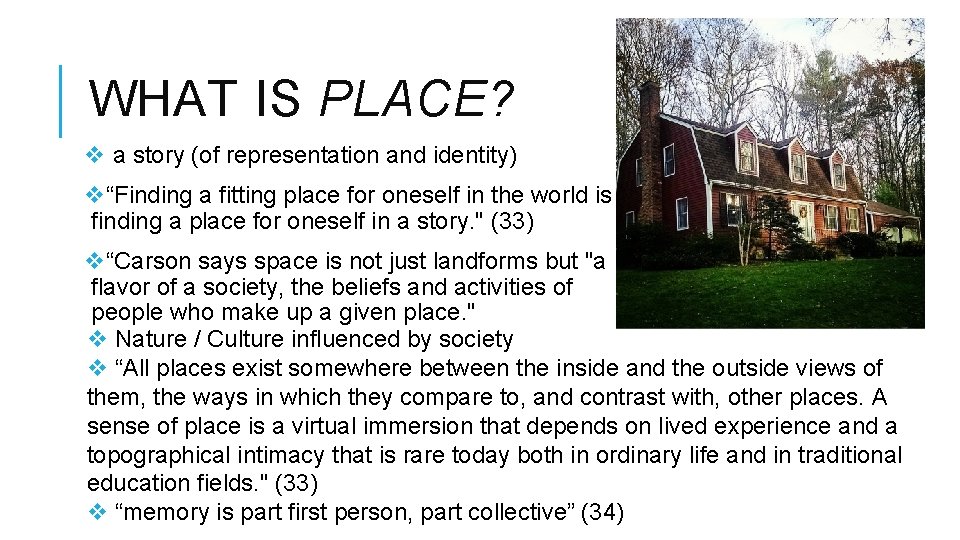
WHAT IS PLACE? v a story (of representation and identity) v“Finding a fitting place for oneself in the world is finding a place for oneself in a story. " (33) v“Carson says space is not just landforms but "a flavor of a society, the beliefs and activities of people who make up a given place. " v Nature / Culture influenced by society v “All places exist somewhere between the inside and the outside views of them, the ways in which they compare to, and contrast with, other places. A sense of place is a virtual immersion that depends on lived experience and a topographical intimacy that is rare today both in ordinary life and in traditional education fields. " (33) v “memory is part first person, part collective” (34)
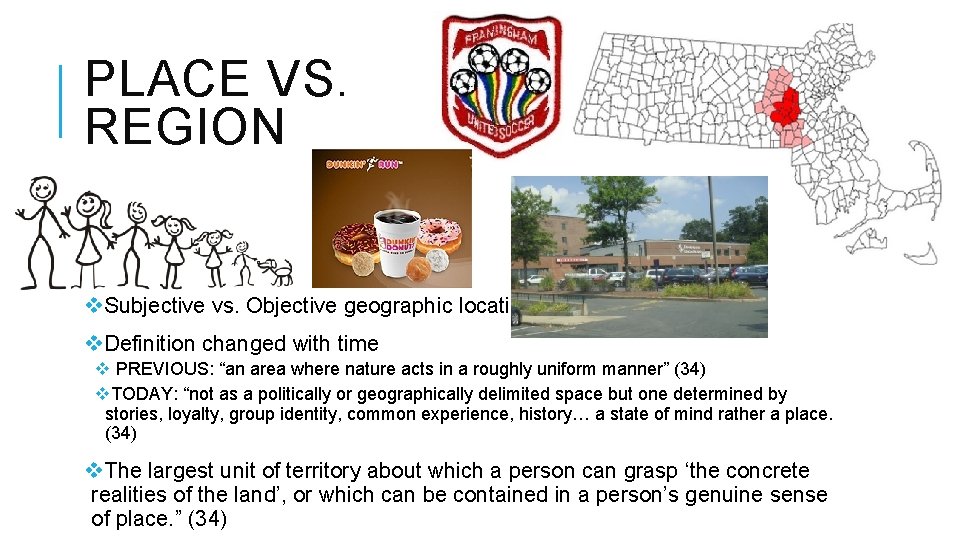
PLACE VS. REGION v. Subjective vs. Objective geographic location v. Definition changed with time v PREVIOUS: “an area where nature acts in a roughly uniform manner” (34) v. TODAY: “not as a politically or geographically delimited space but one determined by stories, loyalty, group identity, common experience, history… a state of mind rather a place. (34) v. The largest unit of territory about which a person can grasp ‘the concrete realities of the land’, or which can be contained in a person’s genuine sense of place. ” (34)
REGION ALISM v Is the art in NYC Regional? v Is regionalism applicable in today’s society? v Local vs. Foreign art v “everybody comes from someplace, and the places we come from – cherished or rejected – inevitably affect our work. ” v What is the “best” at creating regional art? v “good regional art has both roots and reach” (37) v Peripheral place vs. Central place
- Slides: 4