
Chapter TwentyFour Integration of Metabolism Cellular Signaling Connections
Chapter Twenty-Four Integration of Metabolism: Cellular Signaling
Connections between Metabolic Pathways • All metabolism is ultimately linked to photosynthesis and the energy from the sun • The citric acid cycle plays a central role in metabolism • All metabolic pathways are related, and some metabolites appear in several pathways • Many reactions take place simultaneously
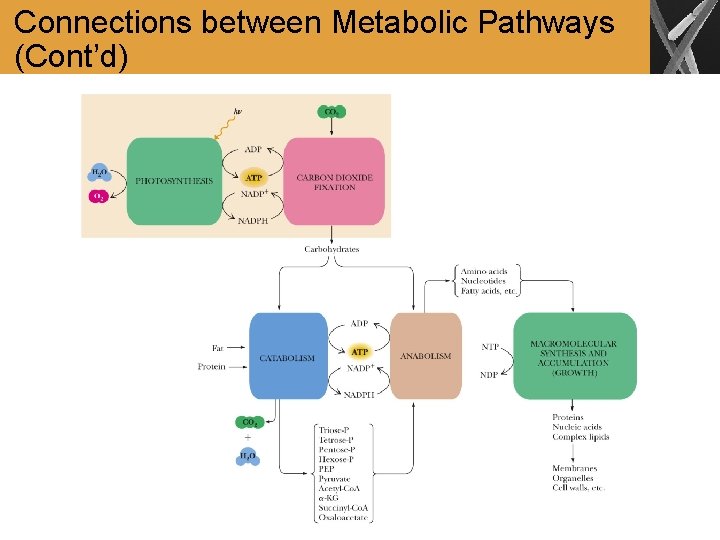
Connections between Metabolic Pathways (Cont’d)
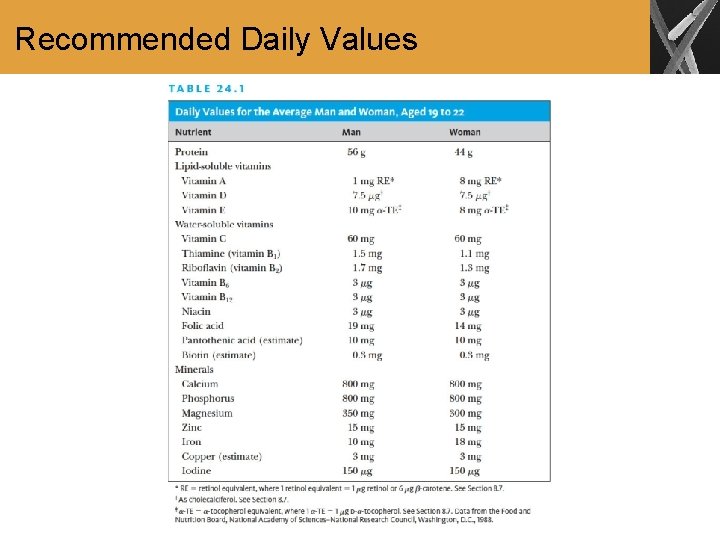
Biochemistry and Nutrition • Macronutrients: carbohydrates, fats, and proteins • Micronutrients: vitamins and minerals • Macrominerals: Na, K, Cl, Mg, P, and Ca • Microminerals: requirements well established for Fe, Cu, Zn, I, and F • Microminerals: requirements for some not clear and no daily values yet established. For example, Cr for glucose metabolism and Mn for bond formation
Recommended Daily Values
Vitamins
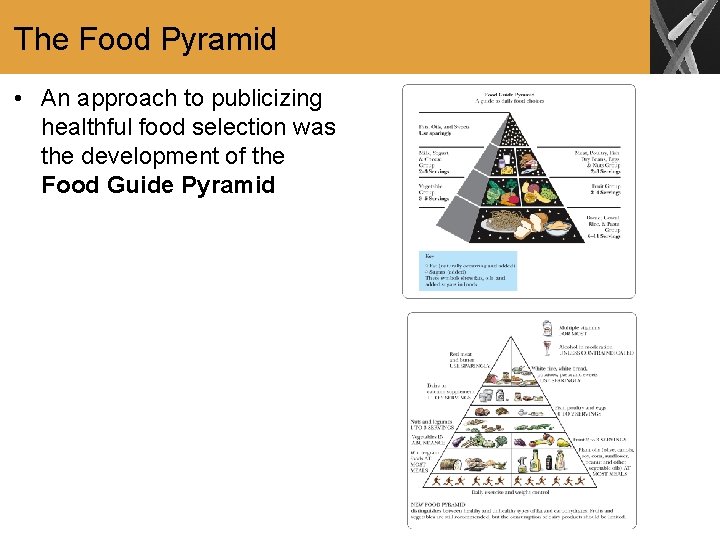
The Food Pyramid • An approach to publicizing healthful food selection was the development of the Food Guide Pyramid
The Food Pyramid (Cont’d)
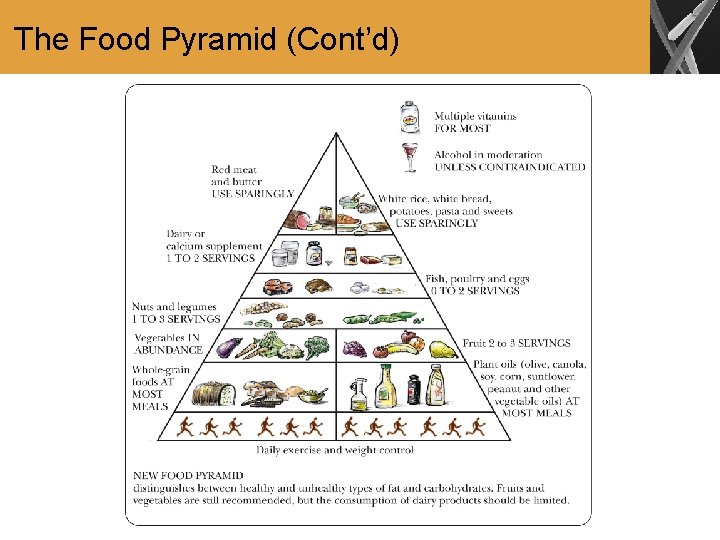
The Food Pyramid (Cont’d)
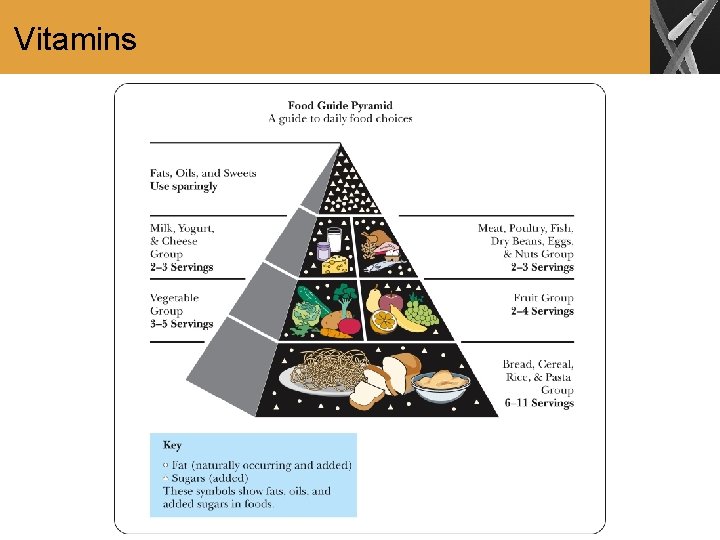
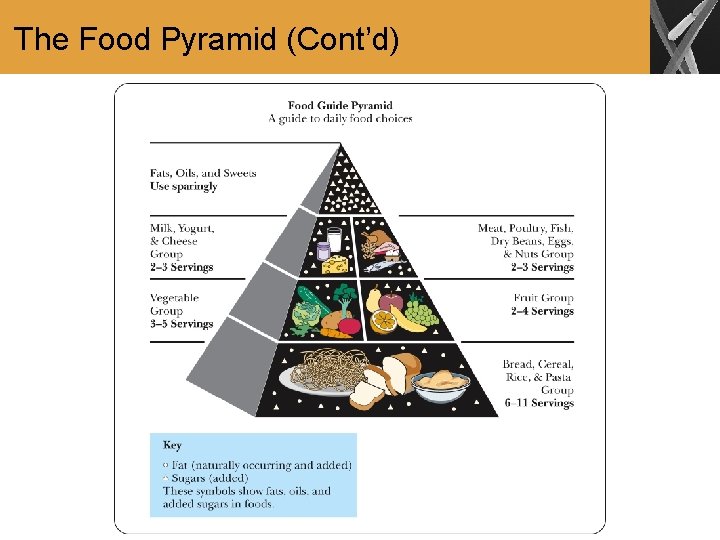
Summary • The sources of substrates for catabolism and for anabolism are the nutrients derived from food stuffs • In humans, the choice of diet becomes important in the interest of obtaining enough of essential nutrients while avoiding excesses of others, such as saturated fats, where excess is known to play a role in the development of health problems • In 1992, a food guide pyramid was published to explain nutrition basics to the public. The pyramid is currently being replaced by a newer version that recognizes the differences between various types of fats and carbohydrates instead of just sending the message that all fats are bad, and all carbohydrates are good
Hormones and Second Messengers • Hormone: an intracellular messenger produced in the ductless glands of the endocrine system • Transported from the site of synthesis to the site(s) of action by the bloodstream • Types include • Steroids, such as estrogens androgens • Polypeptides such as insulin and glucagon • Amino acid derivatives such as epinephrine • Roles include • Maintenance of homeostasis • Regulation of growth and development

Hormones (Cont’d)

Selected Human Hormones
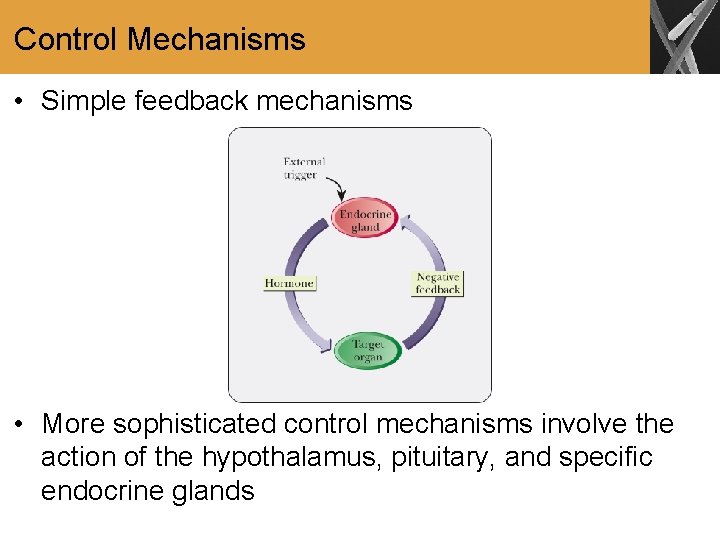
Control Mechanisms • Simple feedback mechanisms • More sophisticated control mechanisms involve the action of the hypothalamus, pituitary, and specific endocrine glands
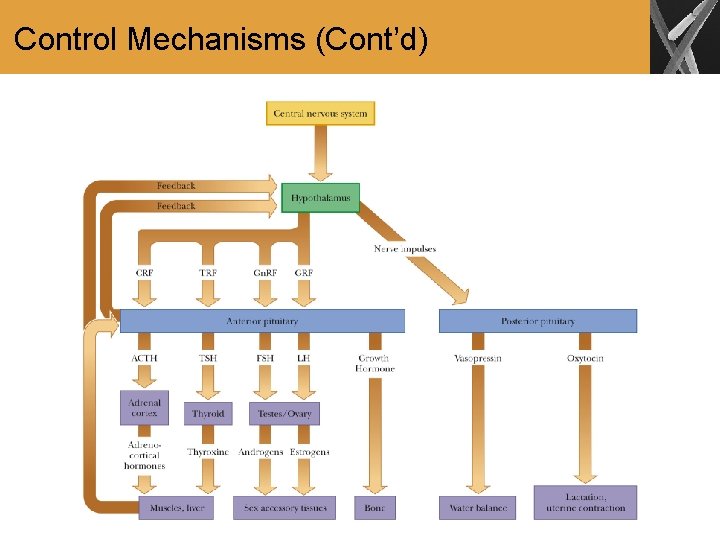
Control Mechanisms (Cont’d)
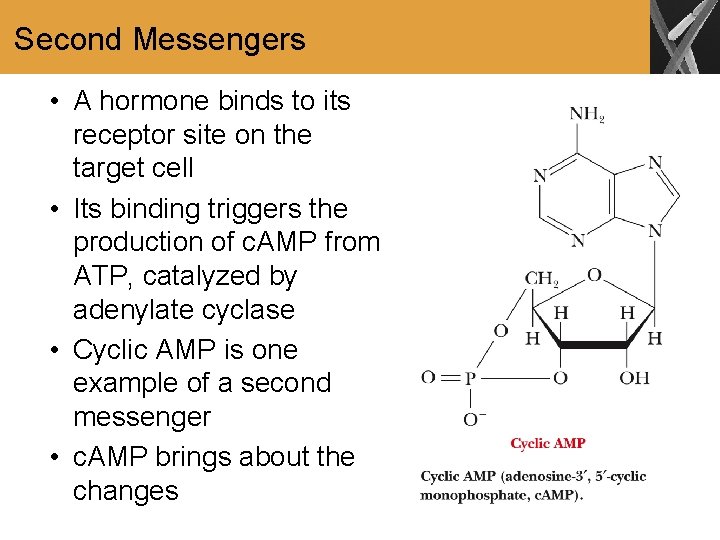
Second Messengers • A hormone binds to its receptor site on the target cell • Its binding triggers the production of c. AMP from ATP, catalyzed by adenylate cyclase • Cyclic AMP is one example of a second messenger • c. AMP brings about the changes
Cyclic AMP • Reactions of cyclic AMP are mediated by a stimulatory G protein • The G protein is bound to the plasma membrane • It consists of three subunits: , , and • It is inactive when GDP is bound to the subunit • Binding of hormone to its receptor site causes exchange of GTP for GDP, which activates the G protein • The active G protein stimulates adenylate cyclase, which catalyzes the conversion of ATP to c. AMP and pyrophosphate • c. AMP in turn stimulates a protein kinase by binding to its regulatory subunits
Cyclic AMP (Cont’d) • The catalytic subunits of the kinase are released and, in turn, catalyze the phosphorylation of a target enzyme • The target enzyme then elicits the response of the target cell to the hormonal signal • The usual site of phosphorylation by the kinase is the OH group of a serine or threonine • This scheme applies to the case where phosphorylation activates the target enzyme; cases exist in which phosphorylation inactivates the target enzyme • The active G protein (active when its subunit is bound to GTP) has GTPase activity; hydrolysis of GTP to GDP returns the G protein to its inactive form
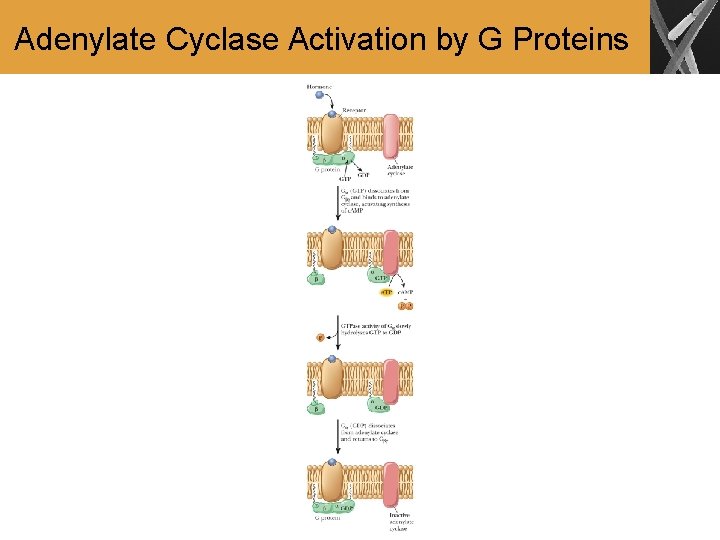
Adenylate Cyclase Activation by G Proteins
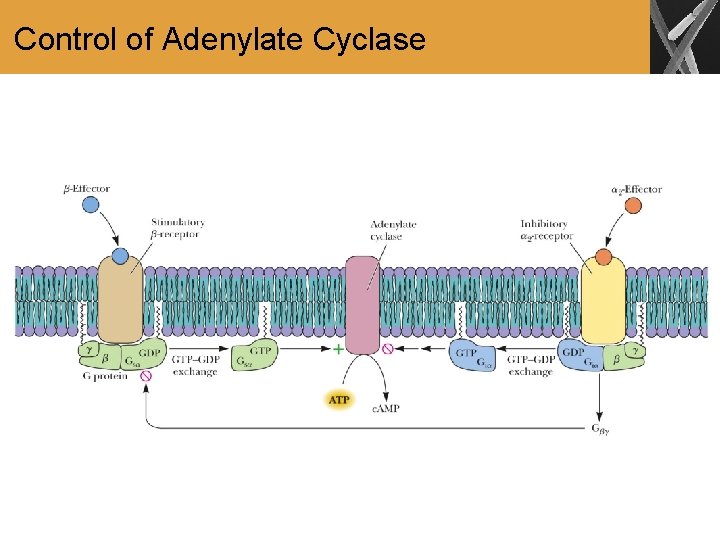
Control of Adenylate Cyclase
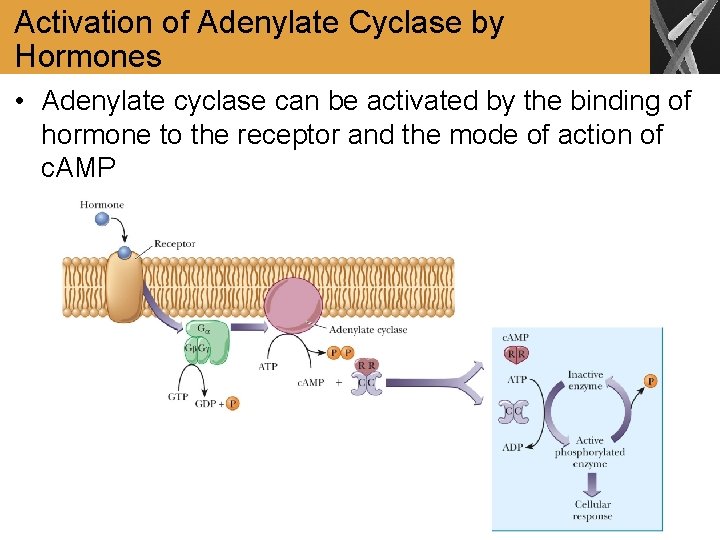
Activation of Adenylate Cyclase by Hormones • Adenylate cyclase can be activated by the binding of hormone to the receptor and the mode of action of c. AMP
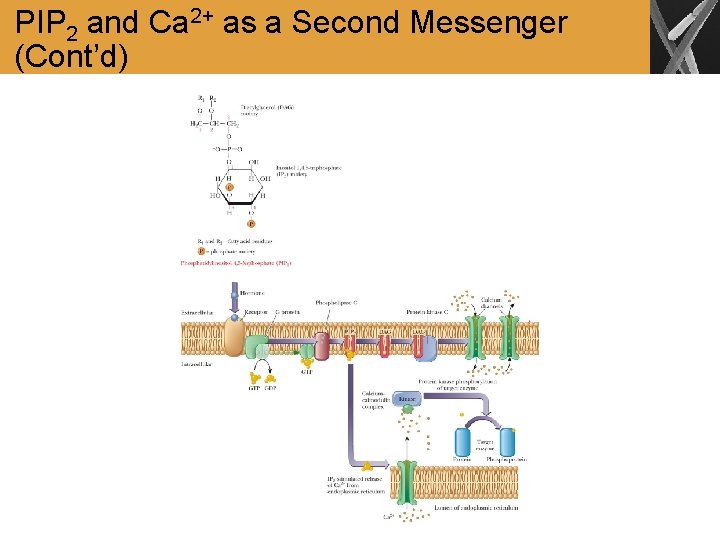
PIP 2 and Ca 2+ as a Second Messenger • Calcium ion is involved in another ubiquitous secondmessenger scheme • PIP 2 is also involved in this scheme • A hormone binds to its receptor and activates phospholipase C in a process mediated by the G protein • Phospholipase C catalyzes the hydrolysis of PIP 2 to inositol 1, 4, 5 -triphosphate (IP 3) and a diacylglycerol (DAG) • IP 3 is the actual second messenger in this scheme • IP 3 stimulates the release of Ca 2+ from intracellular reservoirs in the endoplasmic reticulum (ER) • Ca 2+ forms a complex with calmodulin, a calcium binding protein • This complex activates a cystolic protein kinase for phosphorylation of a target enzyme
PIP 2 and Ca 2+ as a Second Messenger (Cont’d) • The diacylglycerol (DAG) remains bound to the plasma membrane where it activates a membranebound protein kinase C (PKC) • PKC is involved in the phosphorylation of a number of target enzymes • PKC also phosphorylates channel proteins that control the flow of Ca 2+ in and out of the cell
PIP 2 and Ca 2+ as a Second Messenger (Cont’d)
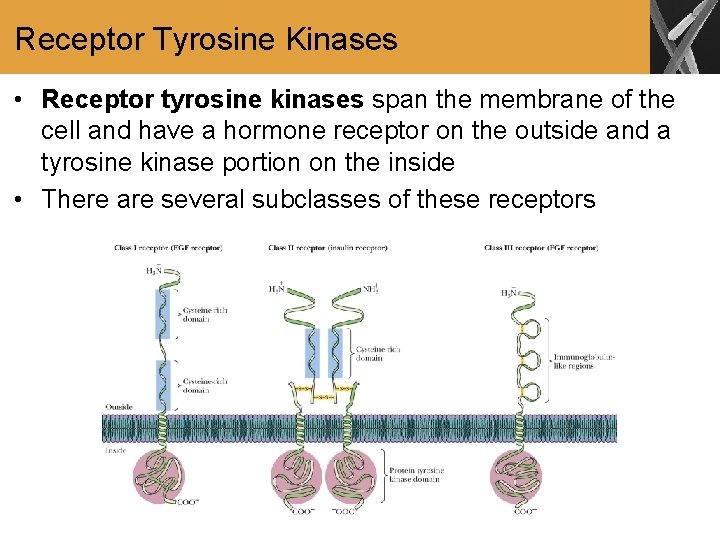
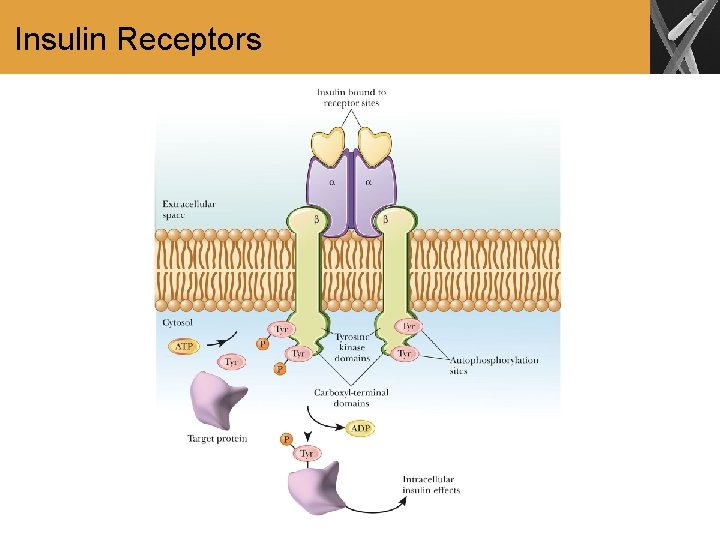
Receptor Tyrosine Kinases • Receptor tyrosine kinases span the membrane of the cell and have a hormone receptor on the outside and a tyrosine kinase portion on the inside • There are several subclasses of these receptors
Summary • Sophisticated fine-tuning of metabolic processes in multicellular organisms is possible through the actions of hormones and second messengers • In humans, a complex hormonal system has evolved that requires releasing factors (under the control of the hypothylamus), trophic hormones (under the control of the pituitary), and specific hormones for target organs (under the control of endocrine glands) • Feedback control occurs at every level of the system • One important system involves hormones that stimulate a membranebound G protein, which then stimulates adenylate cyclase to produce c. AMP. In these cases, c. AMP is the second messenger • In another important system, a hormone stimulates a different G protein that then stimulates phospholipase C. Phospholipase C converts phosphatidylinositol 4, 5 -bisphosphate (PIP 2) to DAG and IP 3, both of which stimulate the opening of calcium channels and the release of calcium. • Receptor tyrosine kinases are a third important type of membrane protein involved in second-messenger systems
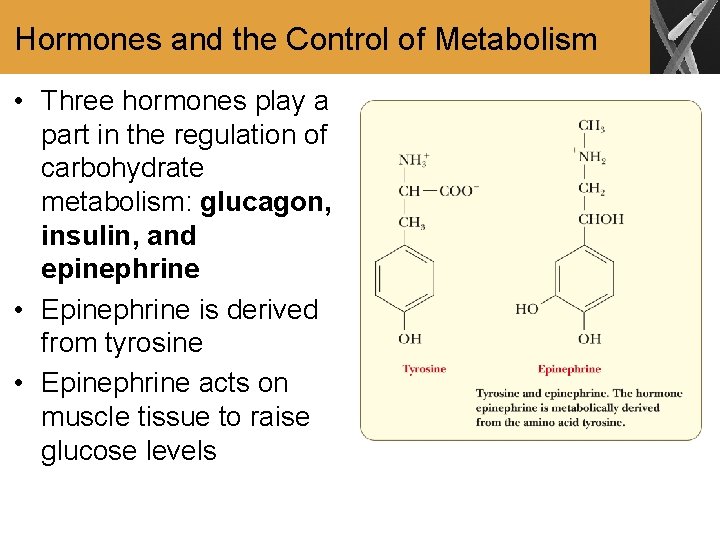
Hormones and the Control of Metabolism • Three hormones play a part in the regulation of carbohydrate metabolism: glucagon, insulin, and epinephrine • Epinephrine is derived from tyrosine • Epinephrine acts on muscle tissue to raise glucose levels
Hormones and the Control of Metabolism (Cont’d) • Glucagon • A polypeptide of 29 amino acid residues • Released by the -cells of the islets of Langerhans • Binds to specific receptor sites to set off a chain of events to make glucose available to the organism • Hormonal amplification • Each time epinephrine or glucagon binds to its specific receptor, it activates a number of stimulatory G proteins • Each activated G protein, in turn, stimulates adenylate cyclase a number of times which increases the production of c. AMP
Hormones and the Control of Metabolism (Cont’d) • Increasing levels of c. AMP in turn increase the activity of c. AMP-dependent protein kinases • The c. AMP-dependent protein kinases phosphorylate and, thus, activate enzymes involved in gluconeogenesis and glycogen breakdown, and decrease the activity of enzymes involved in glycogen storage • This series of amplifying steps is called a cascade • The operation of such a cascade is the reason why small amounts of hormones have such strongly marked effects

Epinephrine Action
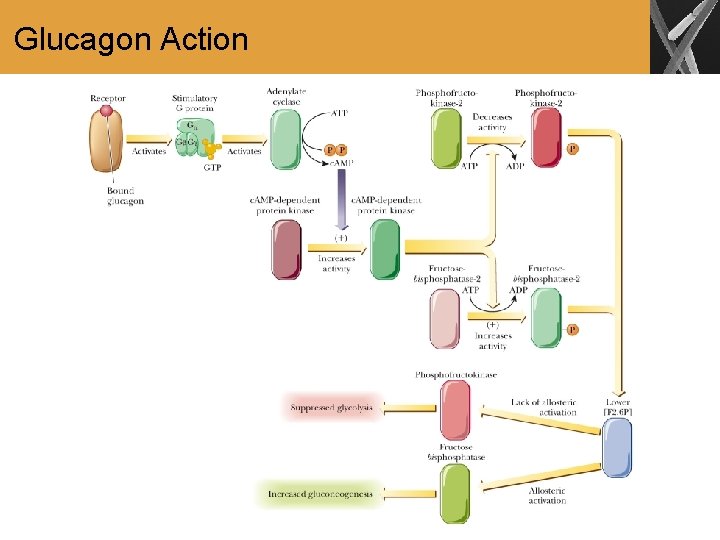
Glucagon Action
Summary • When a hormone binds to its receptor on the plasma membrane of a target cell, it sets off a cascade of reactions by which second messengers elicit the actual cellular response • Two of the most important second messengers, c. AMP, and PIP 2, activate protein kinases, which phosphorylate key enzymes. Calcium ion is intimately involved in the action of PIP 2 • Epinephrine stimulates adenylate cyclase in muscle cells, leading to activation of c. AMP-dependent protein kinase. This ultimately leads to activation of glycogen phosphorylase and degradation of glycogen for energy • Glucagon stimulates adenylate cyclase in liver cells, leading to activation of c. AMP-dependent protein kinase. This leads to inhibition of PFK-2 and activation of fructose bisphosphatase-2. This lowers the level of fructose-2, 6 -bisphosphate, which suppresses glycolysis and stimulates gluconeogenesis in the liver, leading to increased glucose production • Hormonal triggering can be added to other levels of control of metabolism, such as allosteric activation and covalent modification, to ensure an efficient response to the needs of the organism
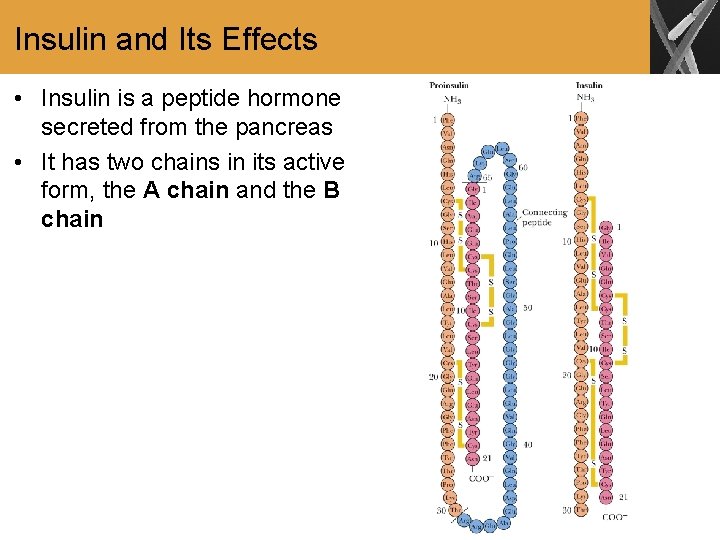
Insulin and Its Effects • Insulin is a peptide hormone secreted from the pancreas • It has two chains in its active form, the A chain and the B chain
Insulin Receptors
Insulin Affects Many Enzymes
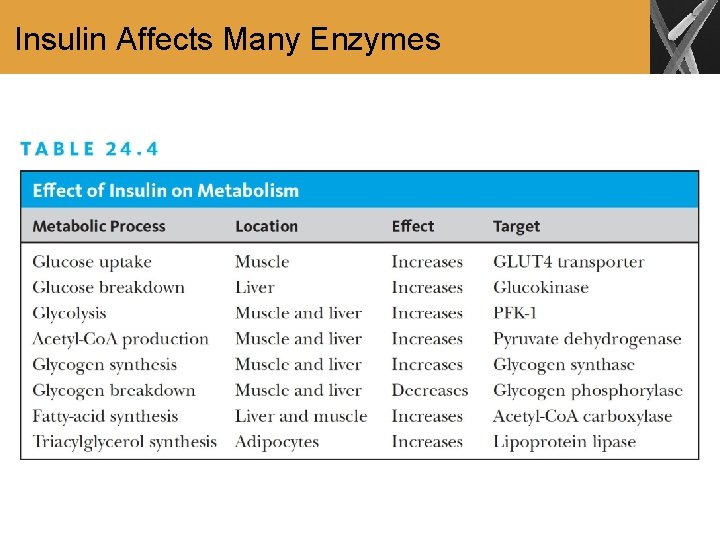
Summary • Insulin’s primary job is to stimulate the glucose transporters in muscle, particularly the GLUT 4 transporter- to take up glucose from the blood • In addition, insulin has a wide range of intracellular effects, such as switching off glycogen breakdown and turning on glycogen synthesis, stimulating glycolysis in the liver and muscle, turning off gluconeogenesis in the liver, and stimulating fatty-acid synthesis and storage • A recent discovery is that elevated levels of insulin in the blood may be related to Alzheimer’ disease • Physical training appears to increase the sensitivity of the GLUT 4 transporter to insulin so that an athlete needs less insulin to clear glucose out of the blood than a sedentary person
- Slides: 36