
Chapter Twenty Nine Aggregate Demand Aggregate Supply and
- Slides: 40
Chapter Twenty Nine Aggregate Demand, Aggregate Supply, and Inflation
Aggregate Demand Aggregate demand represents the total demand for all goods and services in the economy.
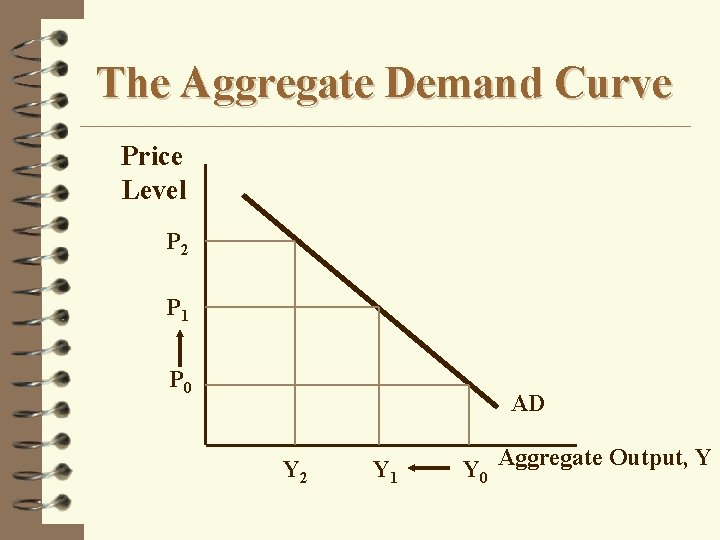
The Aggregate Demand Curve The AD curve shows the negative relationship between aggregate output (income) and the price level. Each point on the AD curve is a point at which both the goods market and the money market are in equilibrium. The Aggregate Demand curve is NOT a market demand curve.
The Aggregate Demand Curve Price Level P 2 P 1 P 0 AD Y 2 Y 1 Y 0 Aggregate Output, Y
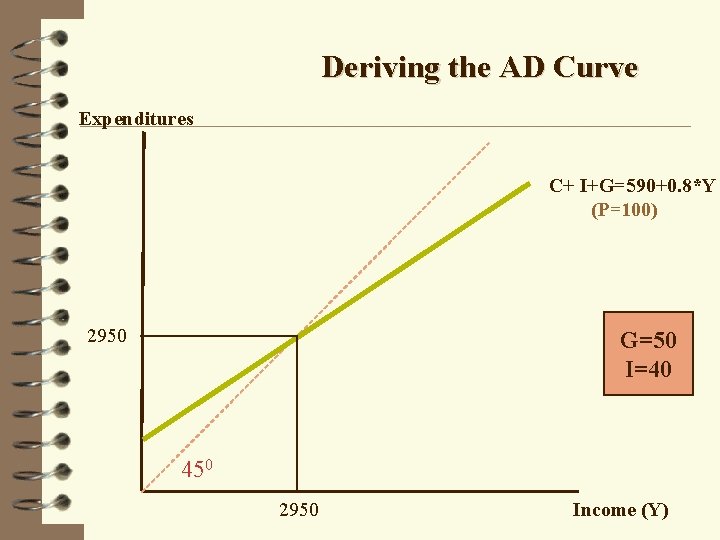
Deriving the AD Curve Expenditures C+ I+G=590+0. 8*Y (P=100) 2950 G=50 I=40 450 2950 Income (Y)
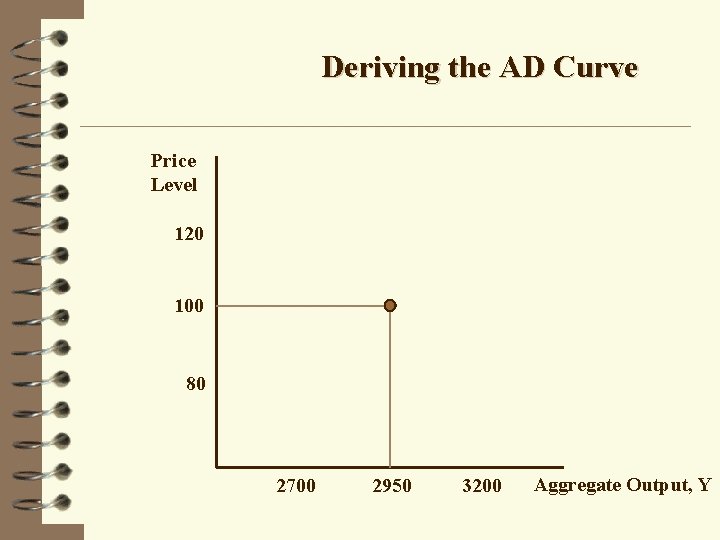
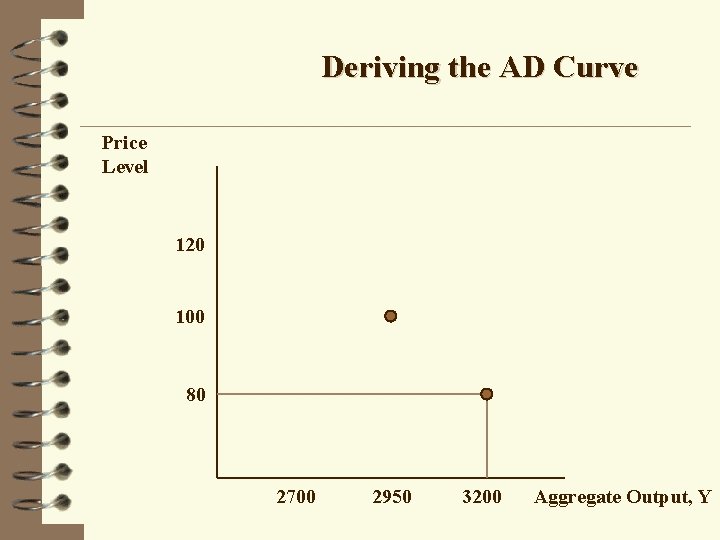
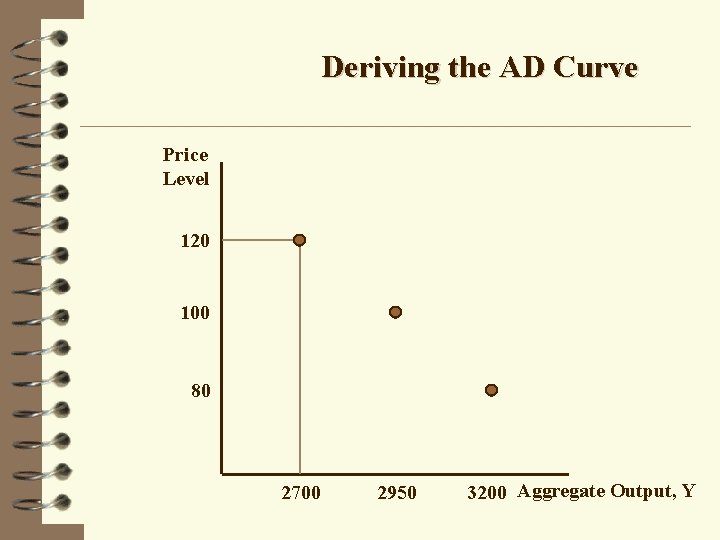
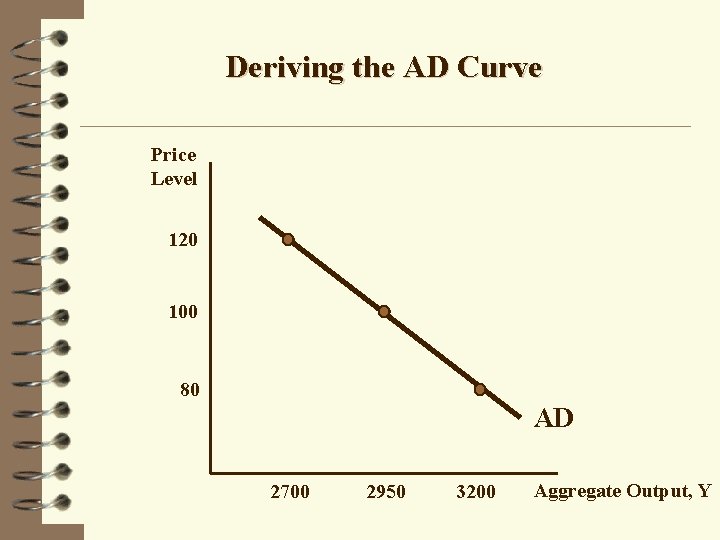
Deriving the AD Curve Price Level 120 100 80 2700 2950 3200 Aggregate Output, Y
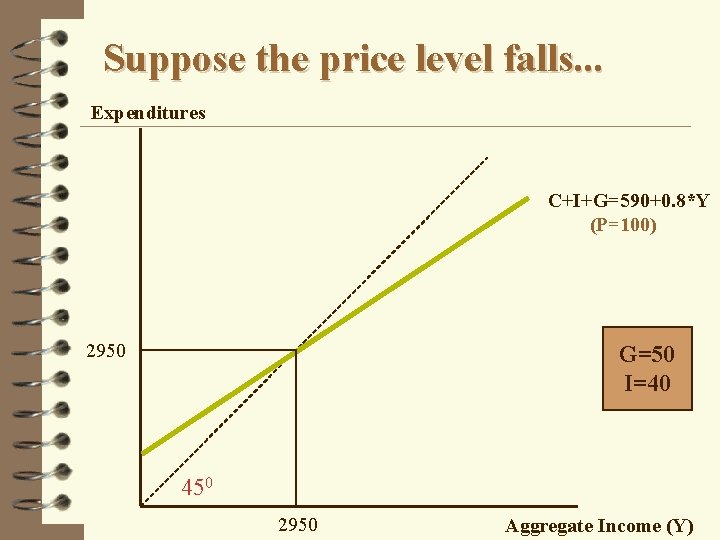
Suppose the price level falls. . . Expenditures C+I+G=590+0. 8*Y (P=100) 2950 G=50 I=40 450 2950 Aggregate Income (Y)
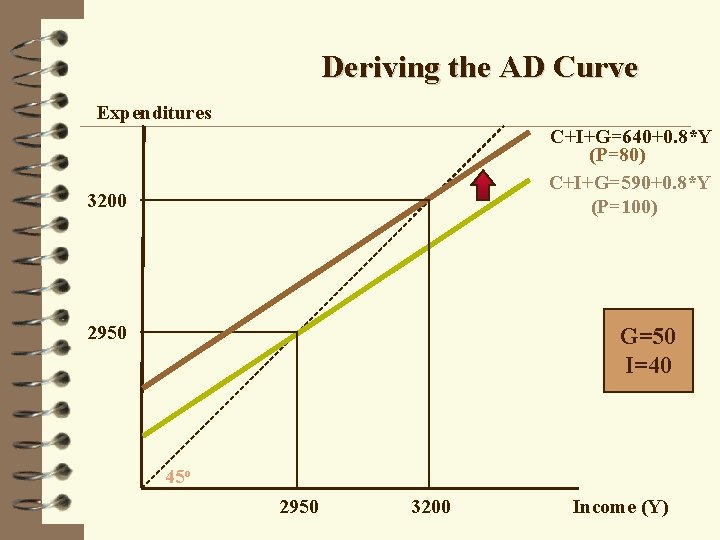
Deriving the AD Curve Expenditures C+I+G=640+0. 8*Y (P=80) C+I+G=590+0. 8*Y (P=100) 3200 2950 G=50 I=40 45 o 2950 3200 Income (Y)
Deriving the AD Curve Price Level 120 100 80 2700 2950 3200 Aggregate Output, Y
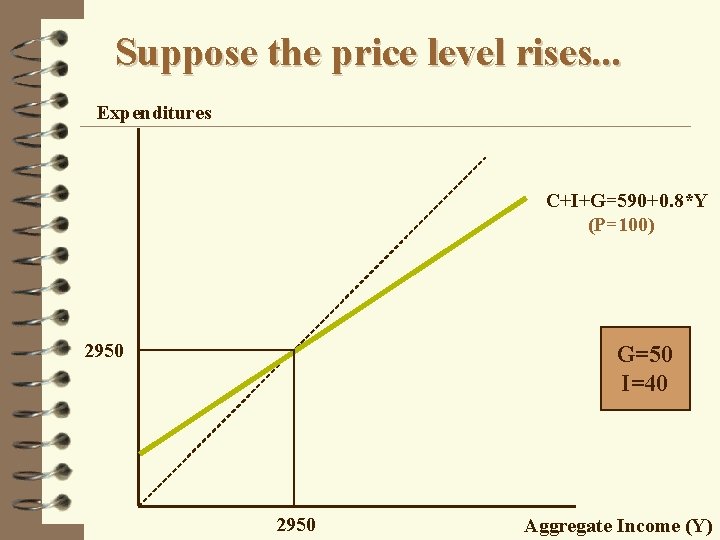
Suppose the price level rises. . . Expenditures C+I+G=590+0. 8*Y (P=100) 2950 G=50 I=40 2950 Aggregate Income (Y)
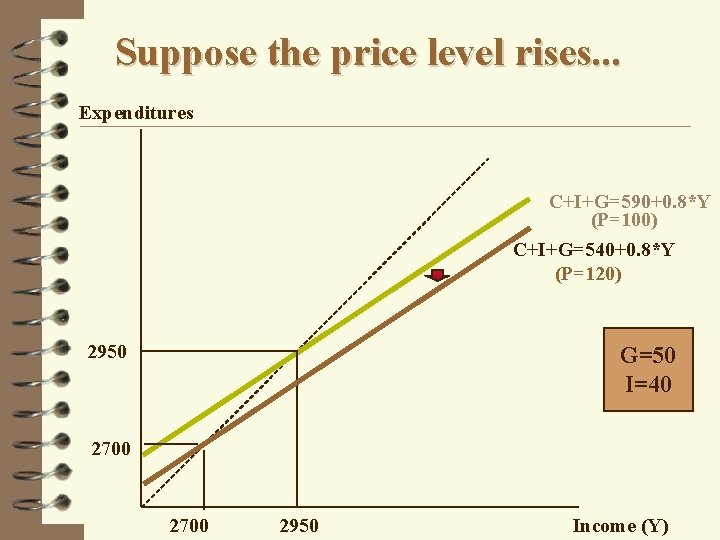
Suppose the price level rises. . . Expenditures C+I+G=590+0. 8*Y (P=100) C+I+G=540+0. 8*Y (P=120) 2950 G=50 I=40 2700 2950 Income (Y)
Deriving the AD Curve Price Level 120 100 80 2700 2950 3200 Aggregate Output, Y
Deriving the AD Curve Price Level 120 100 80 AD 2700 2950 3200 Aggregate Output, Y
Why does AD slope downward? Aggregate demand falls when the price level increases because the higher price level causes the demand for money (Md) to rise. With the money supply constant, the interest rate will rise to reestablish equilibrium in the money market. It is the higher interest rate that causes aggregate output to fall.
Other Reasons for a Downward -Sloping AD Curve 4 The Consumption Link 4 The Real Wealth (Real Balance) Effect
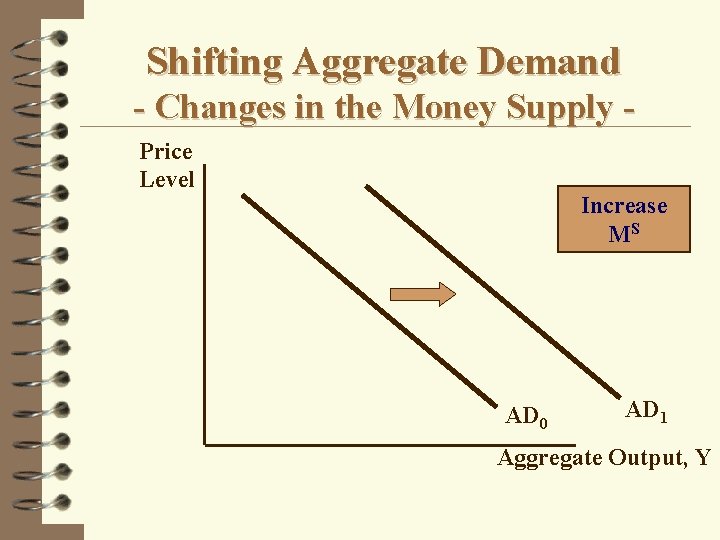
Shifting Aggregate Demand - Changes in the Money Supply Price Level Increase MS AD 0 AD 1 Aggregate Output, Y
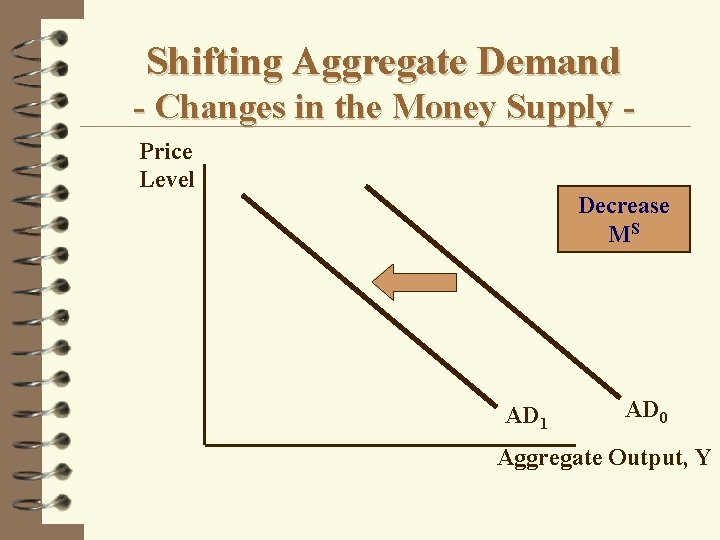
Shifting Aggregate Demand - Changes in the Money Supply Price Level Decrease MS AD 1 AD 0 Aggregate Output, Y
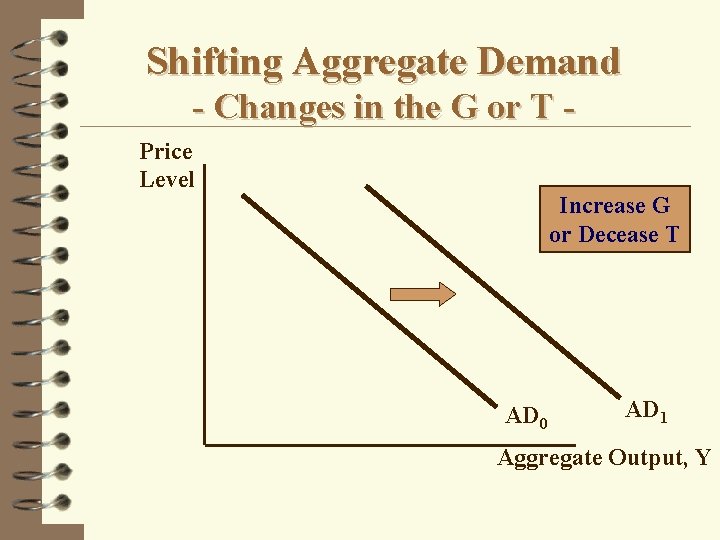
Shifting Aggregate Demand - Changes in the G or T Price Level Increase G or Decease T AD 0 AD 1 Aggregate Output, Y
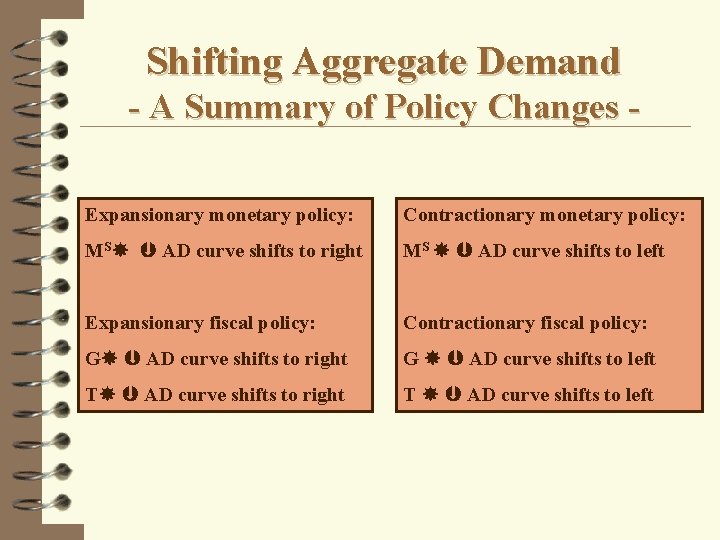
Shifting Aggregate Demand - A Summary of Policy Changes Expansionary monetary policy: Contractionary monetary policy: MS AD curve shifts to right MS AD curve shifts to left Expansionary fiscal policy: Contractionary fiscal policy: G AD curve shifts to right G AD curve shifts to left T AD curve shifts to right T AD curve shifts to left
Aggregate Supply Aggregate supply represents the total supply of all goods and services in an economy.
Aggregate Supply (AS) Curve The AS curve is a graph that shows the relationship between the aggregate quantity of output supplied by all firms in an economy and the overall price level.
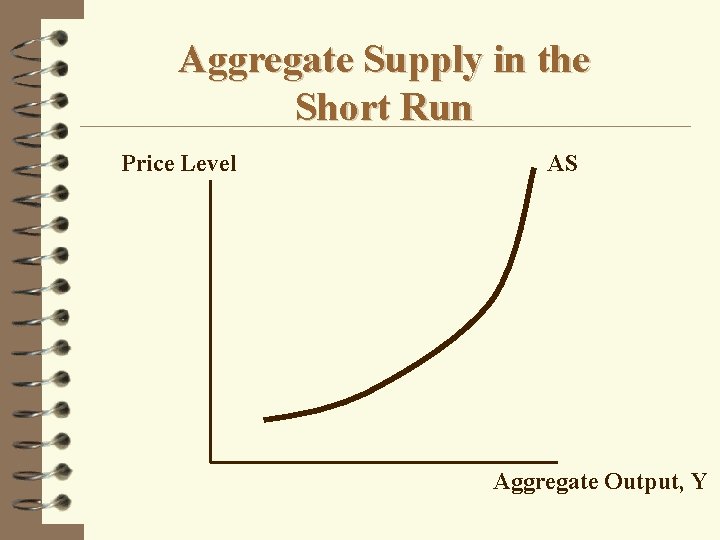
Aggregate Supply in the Short Run Price Level AS Aggregate Output, Y
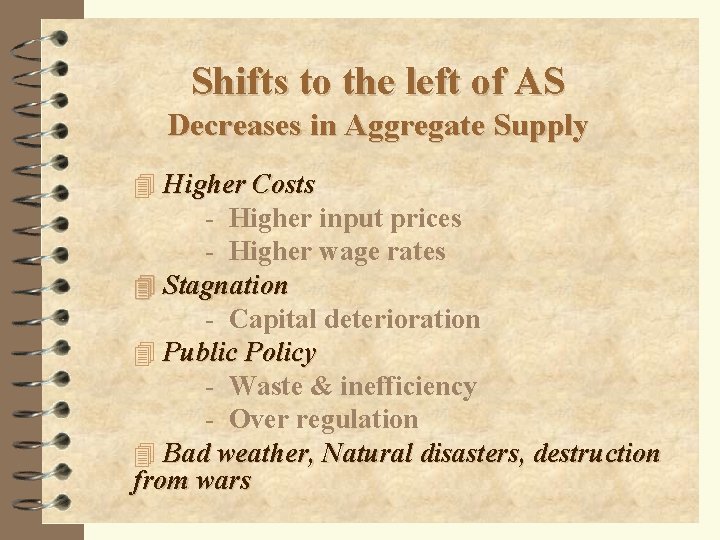
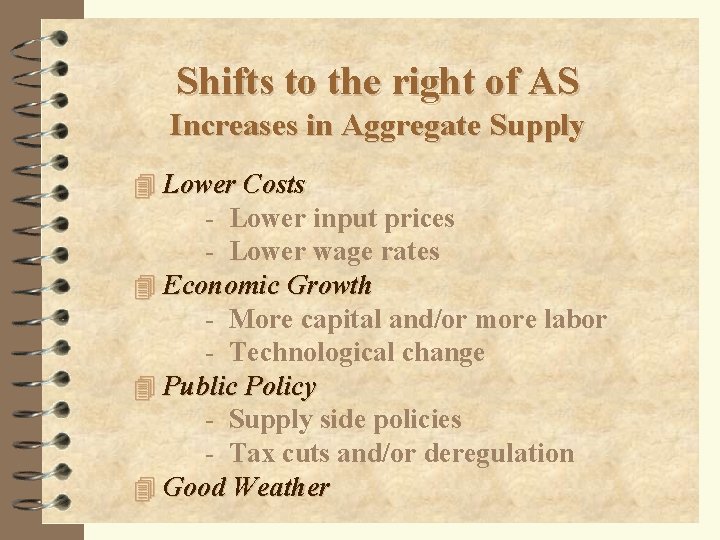
Factors That Shift the Short-Run Aggregate Supply Curve 4 Cost Shocks 4 Economics Growth 4 Stagnation 4 Public Policy 4 Natural Disasters
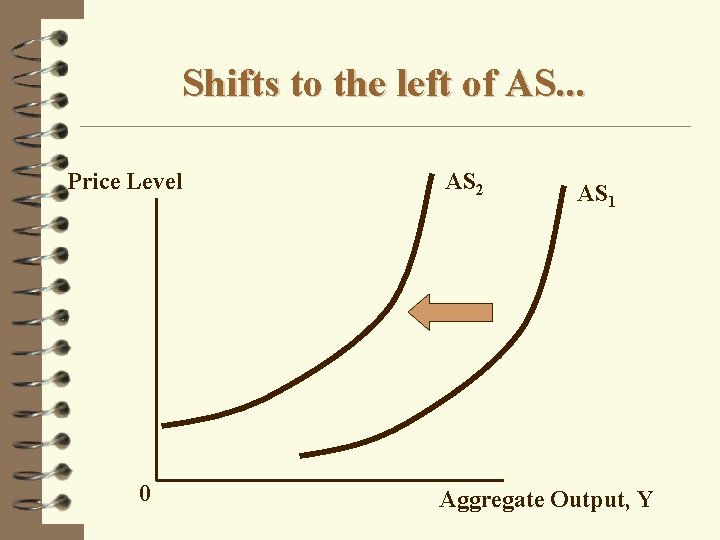
Shifts to the left of AS. . . Price Level 0 AS 2 AS 1 Aggregate Output, Y
Shifts to the left of AS Decreases in Aggregate Supply 4 Higher Costs - Higher input prices - Higher wage rates 4 Stagnation - Capital deterioration 4 Public Policy - Waste & inefficiency - Over regulation 4 Bad weather, Natural disasters, destruction from wars
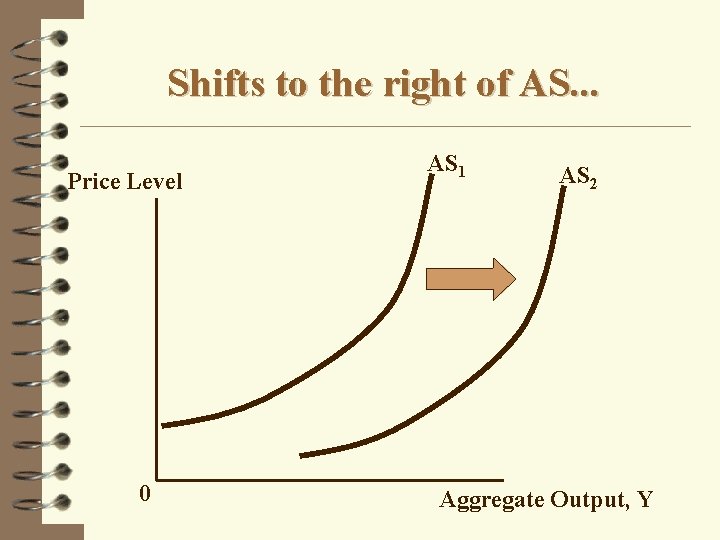
Shifts to the right of AS. . . Price Level 0 AS 1 AS 2 Aggregate Output, Y
Shifts to the right of AS Increases in Aggregate Supply 4 Lower Costs - Lower input prices - Lower wage rates 4 Economic Growth - More capital and/or more labor - Technological change 4 Public Policy - Supply side policies - Tax cuts and/or deregulation 4 Good Weather
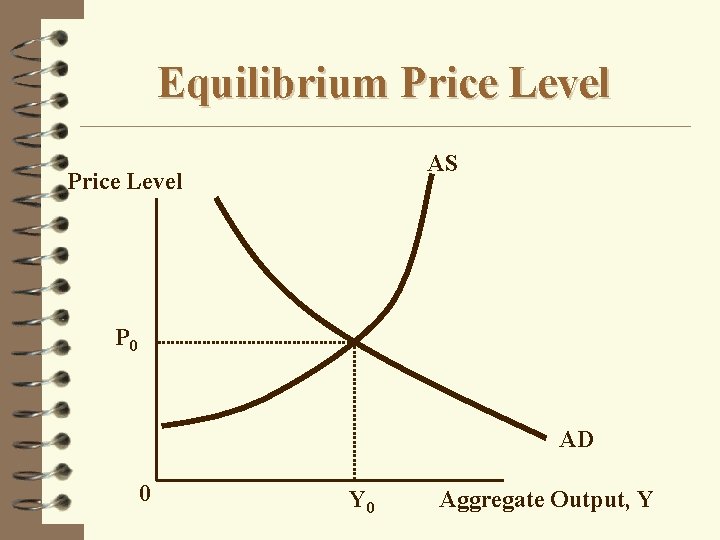
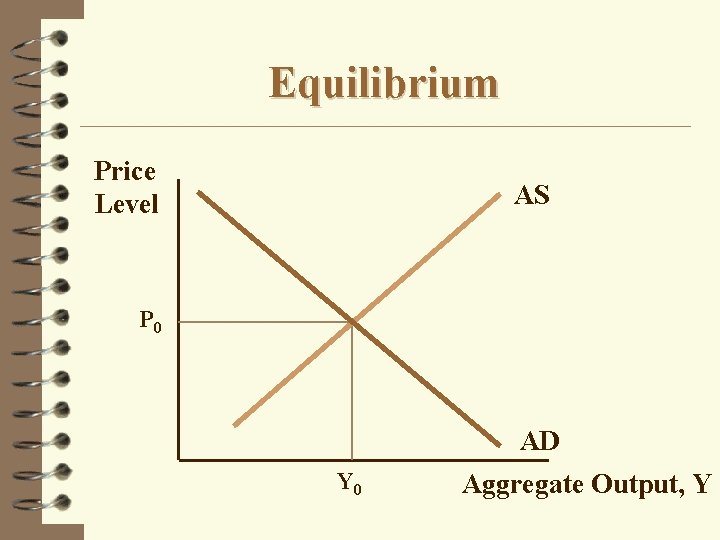
Equilibrium Price Level AS Price Level P 0 AD 0 Y 0 Aggregate Output, Y
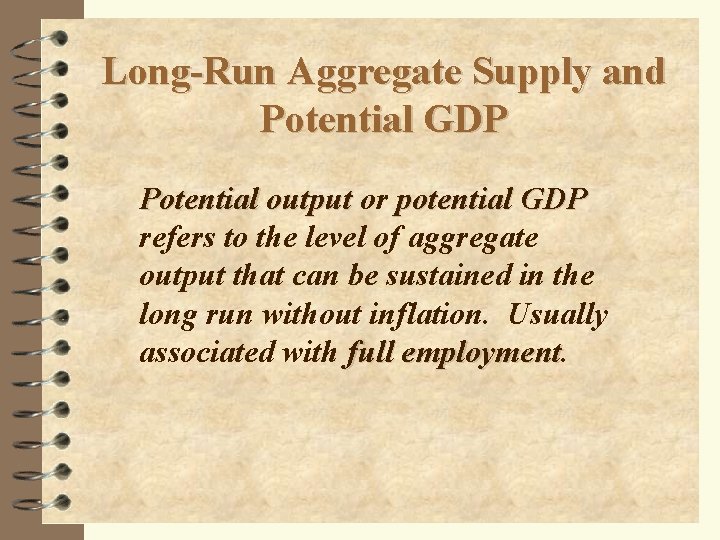
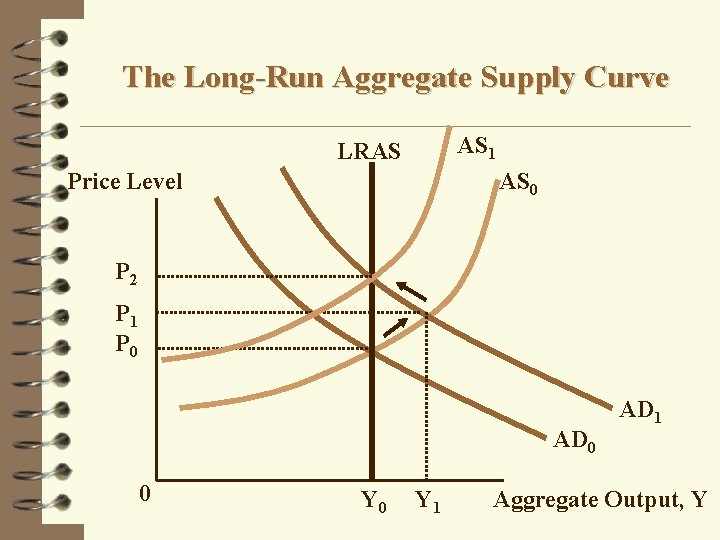
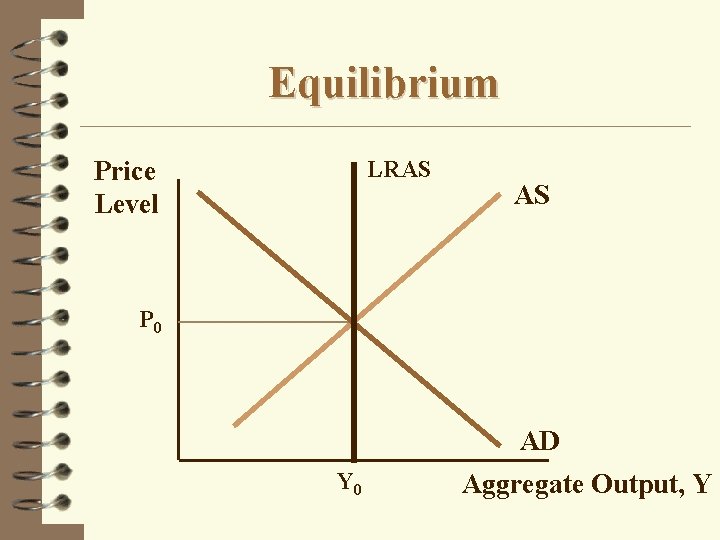
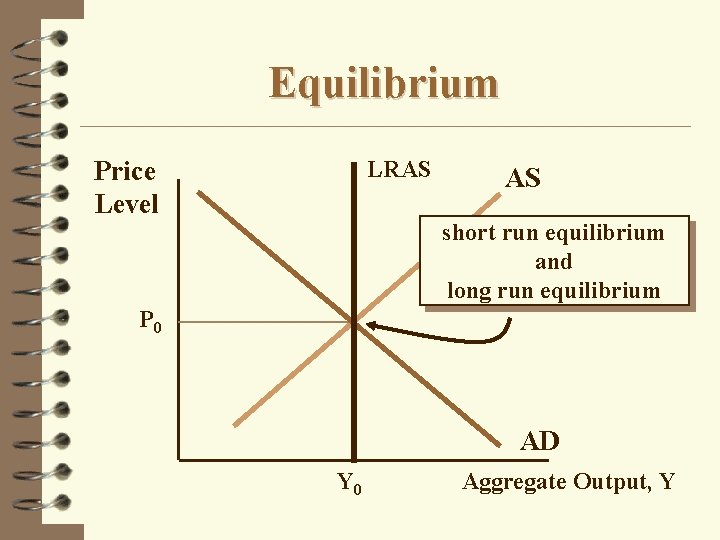
Long-Run Aggregate Supply and Potential GDP Potential output or potential GDP refers to the level of aggregate output that can be sustained in the long run without inflation. Usually associated with full employment
The Long-Run Aggregate Supply Curve AS 1 LRAS Price Level AS 0 P 2 P 1 P 0 AD 0 0 Y 1 AD 1 Aggregate Output, Y
Equilibrium Price Level AS P 0 AD Y 0 Aggregate Output, Y
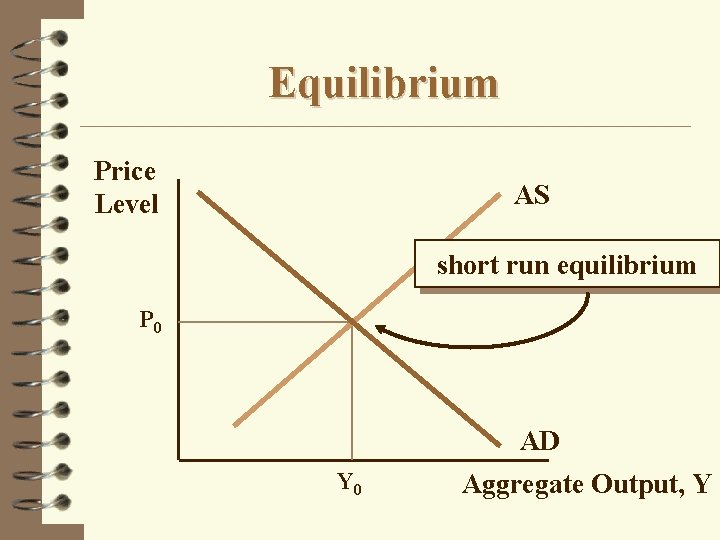
Equilibrium Price Level AS short run equilibrium P 0 AD Y 0 Aggregate Output, Y
Equilibrium Price Level LRAS AS P 0 AD Y 0 Aggregate Output, Y
Equilibrium Price Level LRAS AS short run equilibrium and long run equilibrium P 0 AD Y 0 Aggregate Output, Y
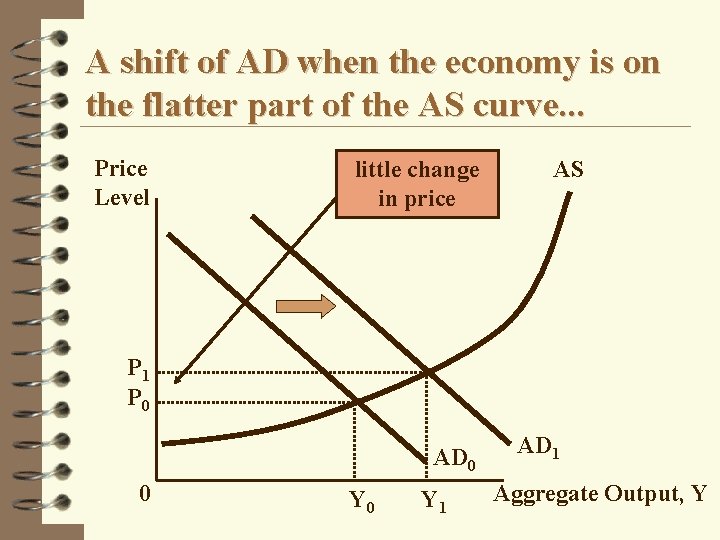
A shift of AD when the economy is on the flatter part of the AS curve. . . Price Level little change in price AS P 1 P 0 AD 0 0 Y 1 AD 1 Aggregate Output, Y
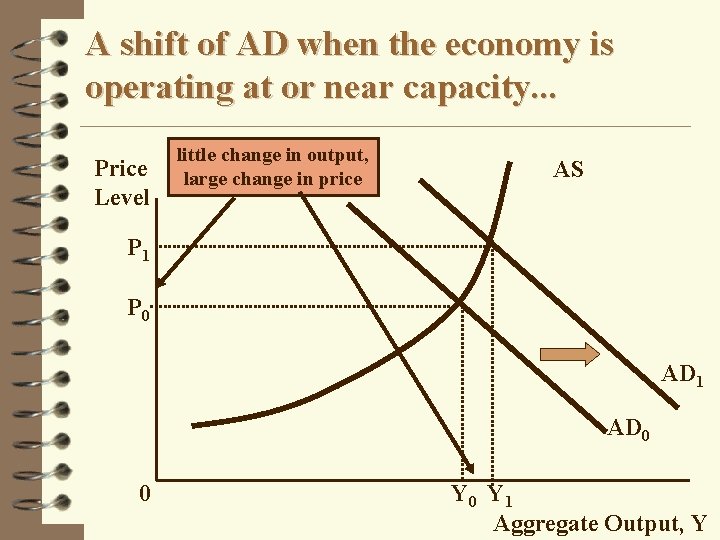
A shift of AD when the economy is operating at or near capacity. . . Price Level little change in output, large change in price AS P 1 P 0 AD 1 AD 0 0 Y 1 Aggregate Output, Y
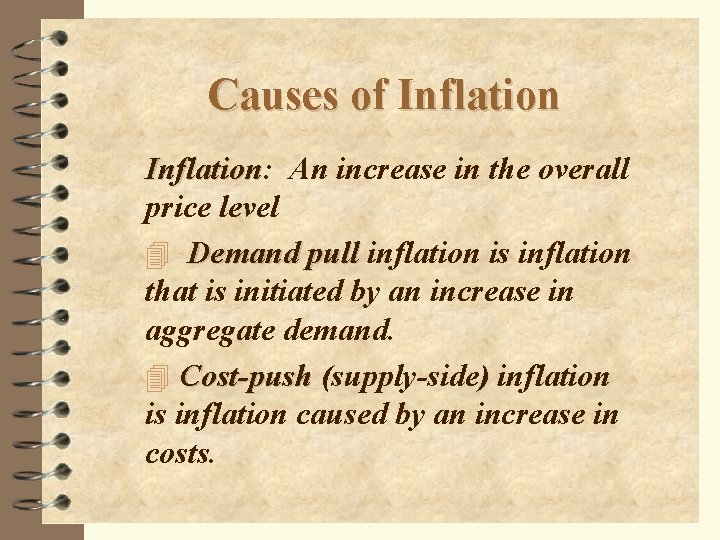
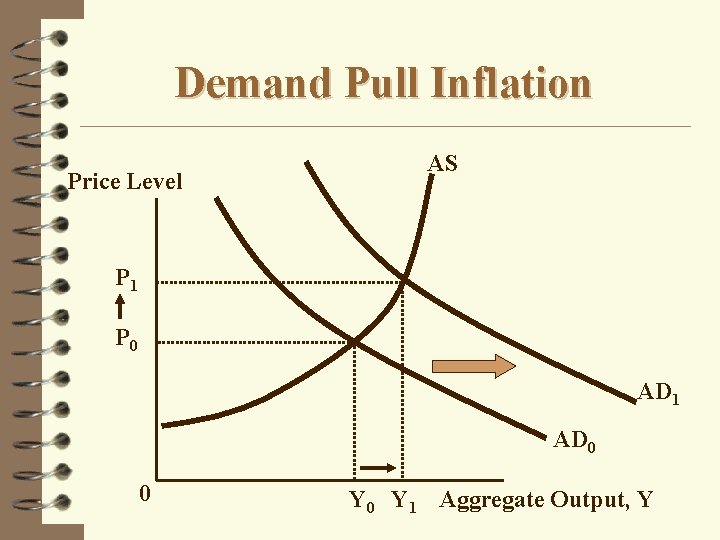
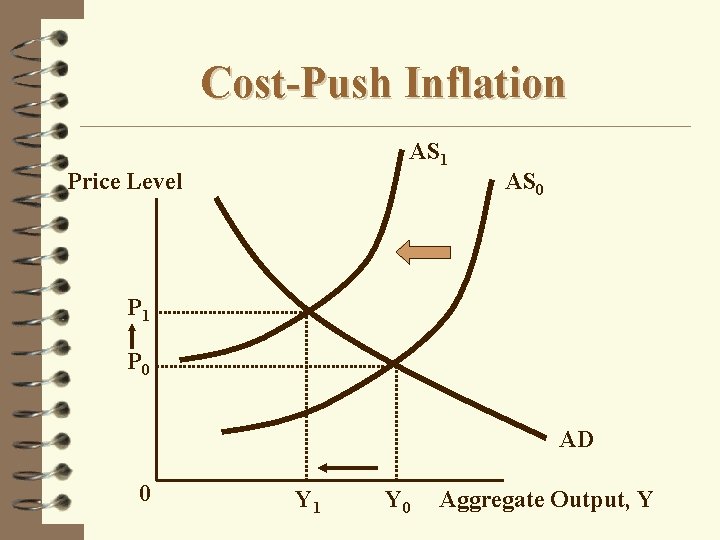
Causes of Inflation: Inflation An increase in the overall price level 4 Demand pull inflation is inflation that is initiated by an increase in aggregate demand. 4 Cost-push (supply-side) inflation is inflation caused by an increase in costs.
Demand Pull Inflation Price Level AS P 1 P 0 AD 1 AD 0 0 Y 1 Aggregate Output, Y
Cost-Push Inflation AS 1 Price Level AS 0 P 1 P 0 AD 0 Y 1 Y 0 Aggregate Output, Y
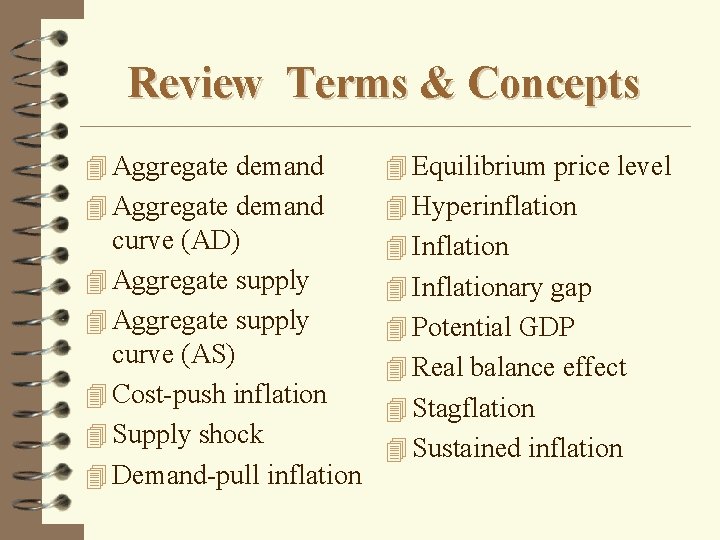
Review Terms & Concepts 4 Aggregate demand 4 Equilibrium price level 4 Aggregate demand 4 Hyperinflation curve (AD) 4 Aggregate supply curve (AS) 4 Cost-push inflation 4 Supply shock 4 Demand-pull inflation 4 Inflationary gap 4 Potential GDP 4 Real balance effect 4 Stagflation 4 Sustained inflation