
Chapter Twenty Eight Aggregate Supply Aggregate Demand and




- Slides: 23
Chapter Twenty. Eight: Aggregate Supply, Aggregate Demand, and Inflation: Putting it All Together
Aggregate Demand Inflation
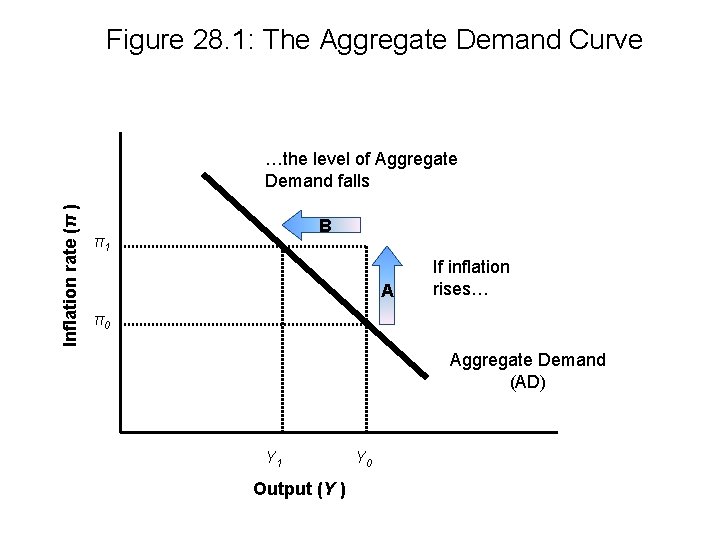
Figure 28. 1: The Aggregate Demand Curve Inflation rate (π ) …the level of Aggregate Demand falls B π1 A If inflation rises… π0 Aggregate Demand (AD) Y 1 Output (Y ) Y 0
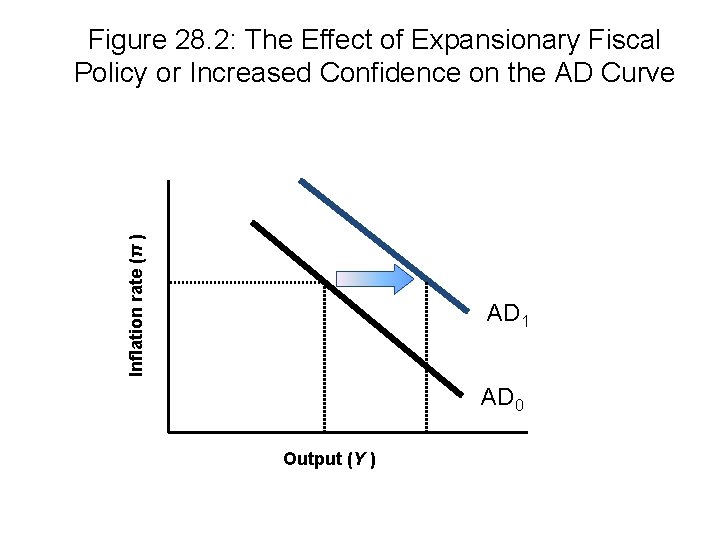
Inflation rate (π ) Figure 28. 2: The Effect of Expansionary Fiscal Policy or Increased Confidence on the AD Curve AD 1 AD 0 Output (Y )
Aggregate Demand Inflation
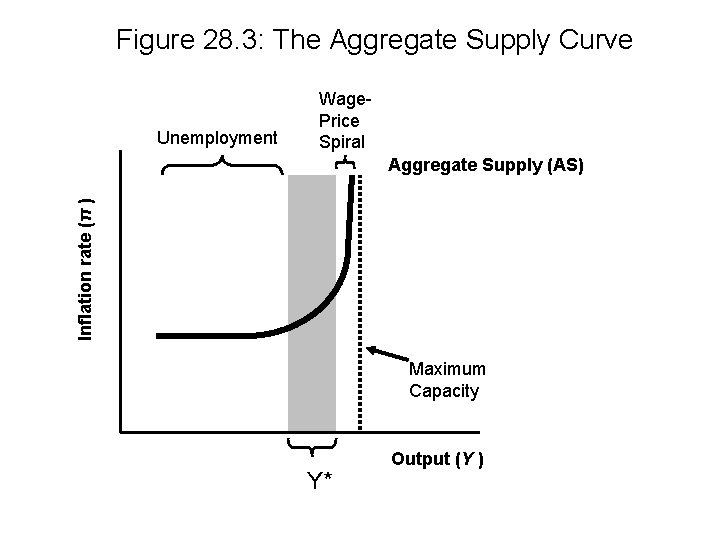
Figure 28. 3: The Aggregate Supply Curve Unemployment Wage. Price Spiral Inflation rate (π ) Aggregate Supply (AS) Maximum Capacity Y* Output (Y )
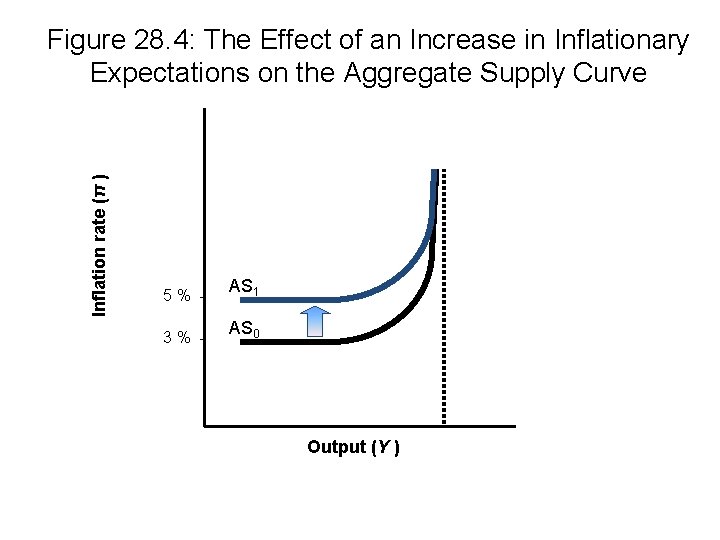
Inflation rate (π ) Figure 28. 4: The Effect of an Increase in Inflationary Expectations on the Aggregate Supply Curve 5% - AS 1 3% - AS 0 Output (Y )
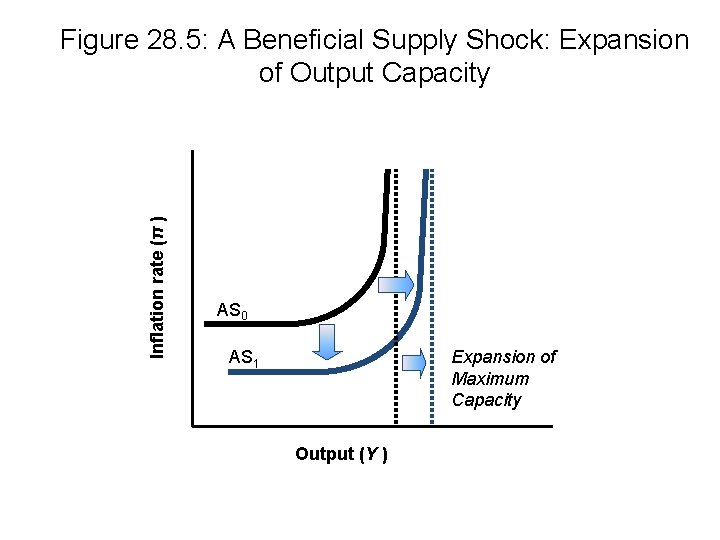
Inflation rate (π ) Figure 28. 5: A Beneficial Supply Shock: Expansion of Output Capacity AS 0 AS 1 Expansion of Maximum Capacity Output (Y )
Putting the AS/AD Model to Work
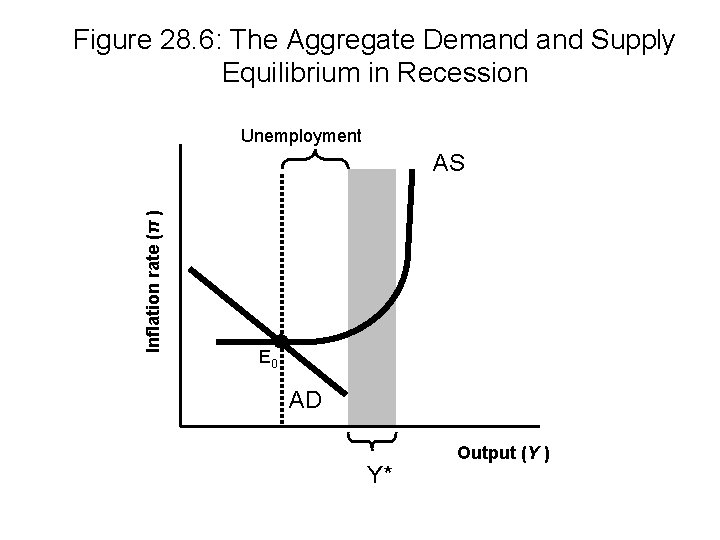
Figure 28. 6: The Aggregate Demand Supply Equilibrium in Recession Unemployment Inflation rate (π ) AS E 0 AD Y* Output (Y )
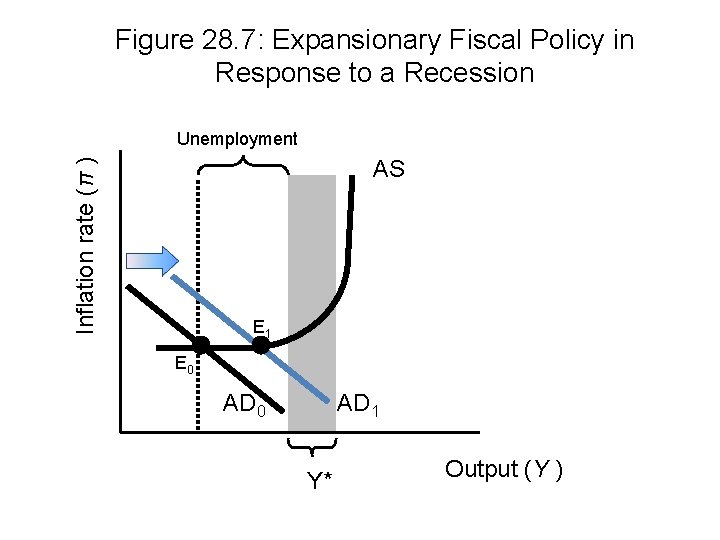
Figure 28. 7: Expansionary Fiscal Policy in Response to a Recession Unemployment Inflation rate (π ) AS E 1 E 0 AD 1 Y* Output (Y )
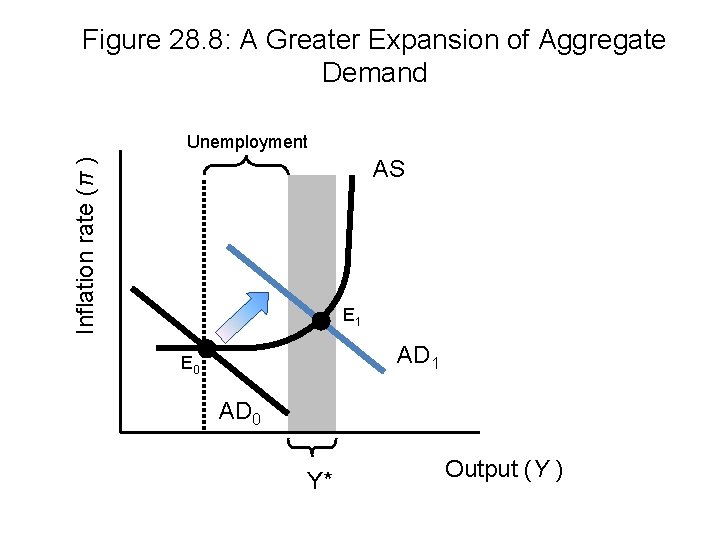
Figure 28. 8: A Greater Expansion of Aggregate Demand Unemployment Inflation rate (π ) AS E 1 AD 1 E 0 AD 0 Y* Output (Y )
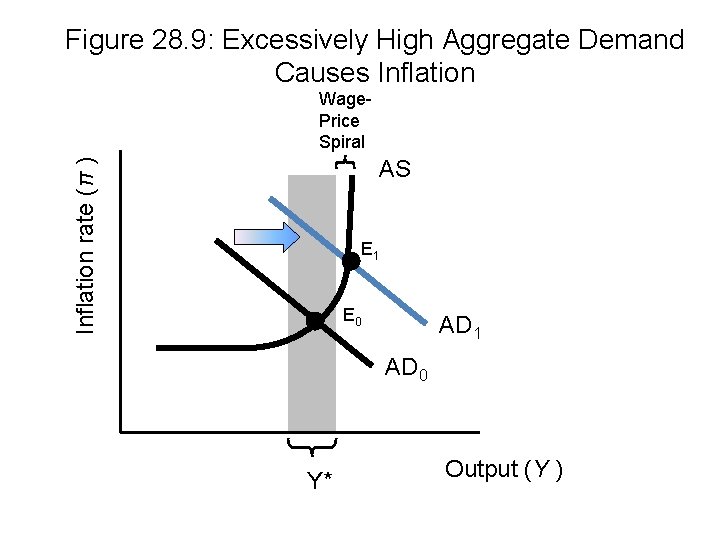
Figure 28. 9: Excessively High Aggregate Demand Causes Inflation Wage. Price Spiral Inflation rate (π ) AS E 1 E 0 AD 1 AD 0 Y* Output (Y )
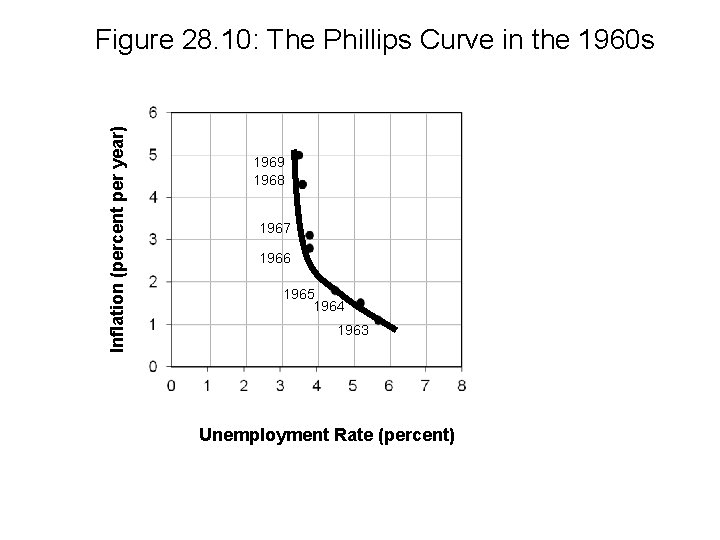
Inflation (percent per year) Figure 28. 10: The Phillips Curve in the 1960 s 1969 1968 1967 1966 1965 1964 1963 Unemployment Rate (percent)
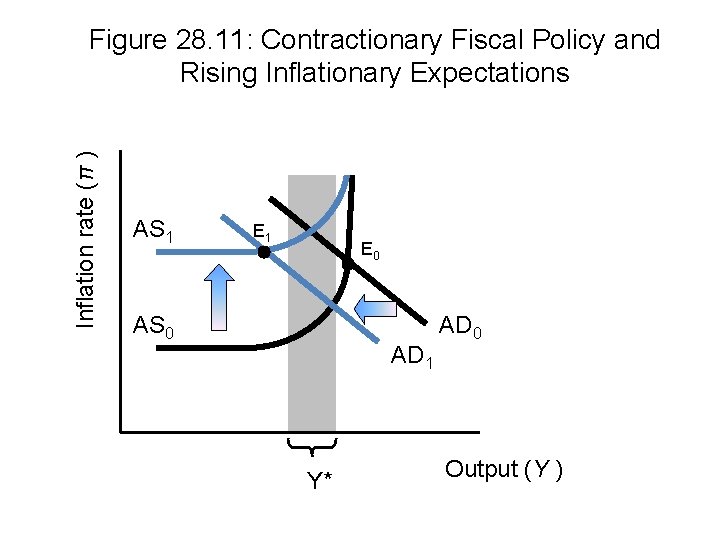
Inflation rate (π ) Figure 28. 11: Contractionary Fiscal Policy and Rising Inflationary Expectations AS 1 E 0 AS 0 AD 1 Y* AD 0 Output (Y )
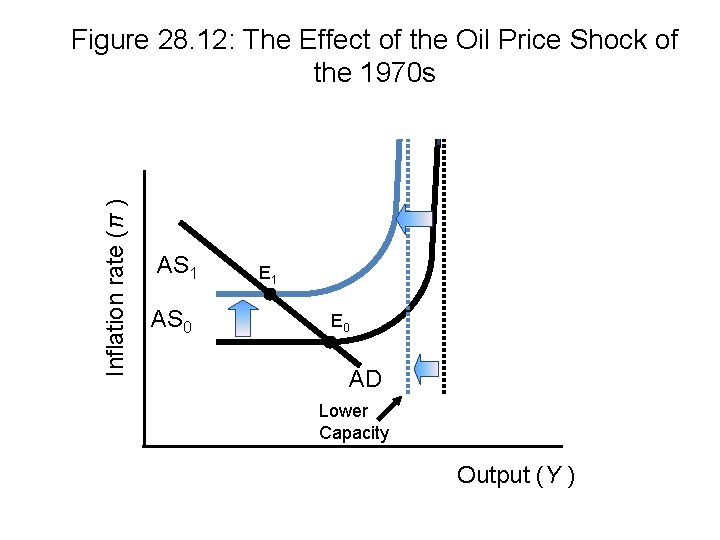
Inflation rate (π ) Figure 28. 12: The Effect of the Oil Price Shock of the 1970 s AS 1 AS 0 E 1 E 0 AD Lower Capacity Output (Y )
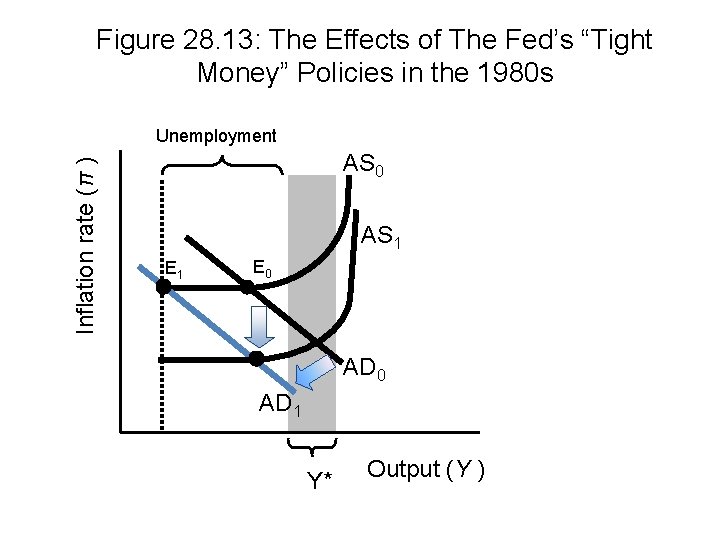
Figure 28. 13: The Effects of The Fed’s “Tight Money” Policies in the 1980 s Inflation rate (π ) Unemployment AS 0 AS 1 E 0 AD 1 Y* Output (Y )
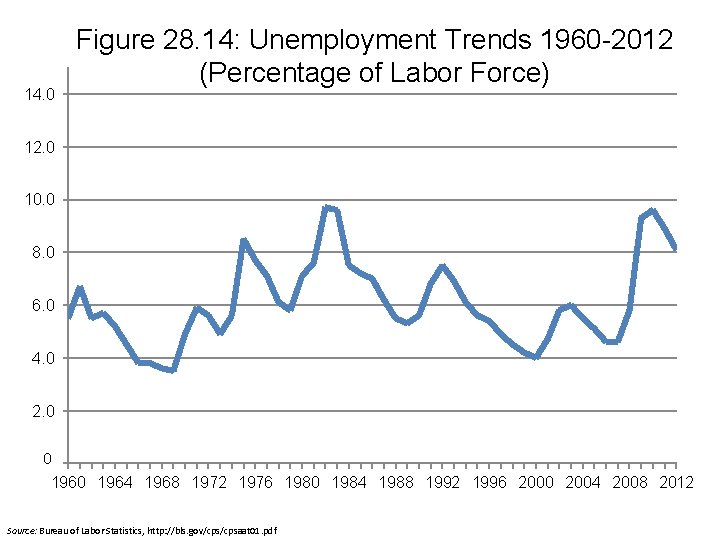
14. 0 Figure 28. 14: Unemployment Trends 1960 -2012 (Percentage of Labor Force) 12. 0 10. 0 8. 0 6. 0 4. 0 2. 0 01960 1964 1968 1972 1976 1980 1984 1988 1992 1996 2000 2004 2008 2012 Source: Bureau of Labor Statistics, http: //bls. gov/cpsaat 01. pdf
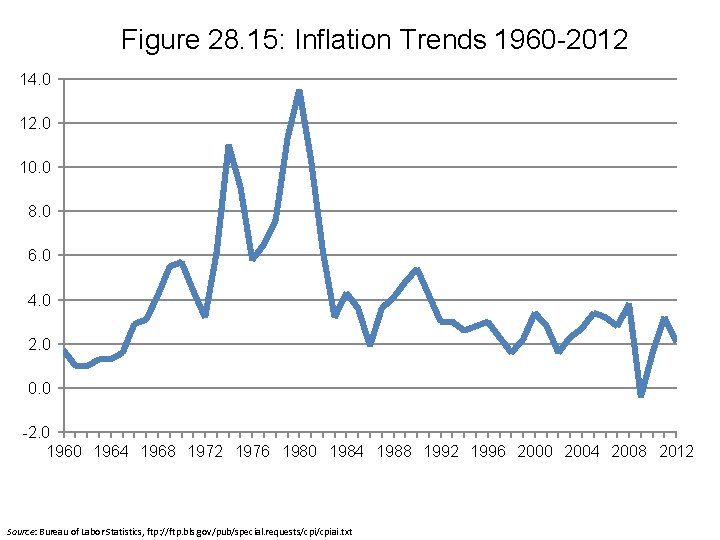
Figure 28. 15: Inflation Trends 1960 -2012 14. 0 12. 0 10. 0 8. 0 6. 0 4. 0 2. 0 0. 0 -2. 0 1964 1968 1972 1976 1980 1984 1988 1992 1996 2000 2004 2008 2012 Source: Bureau of Labor Statistics, ftp: //ftp. bls. gov/pub/special. requests/cpiai. txt
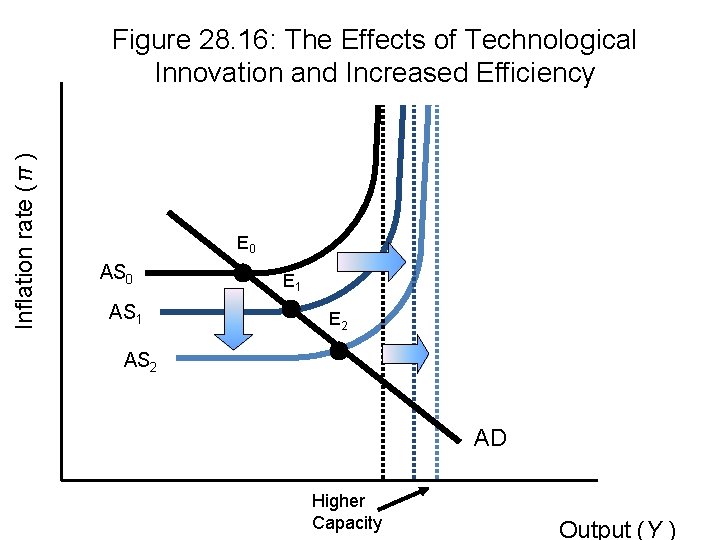
Inflation rate (π ) Figure 28. 16: The Effects of Technological Innovation and Increased Efficiency E 0 AS 1 E 2 AS 2 AD Higher Capacity Output (Y )
Competing Theories
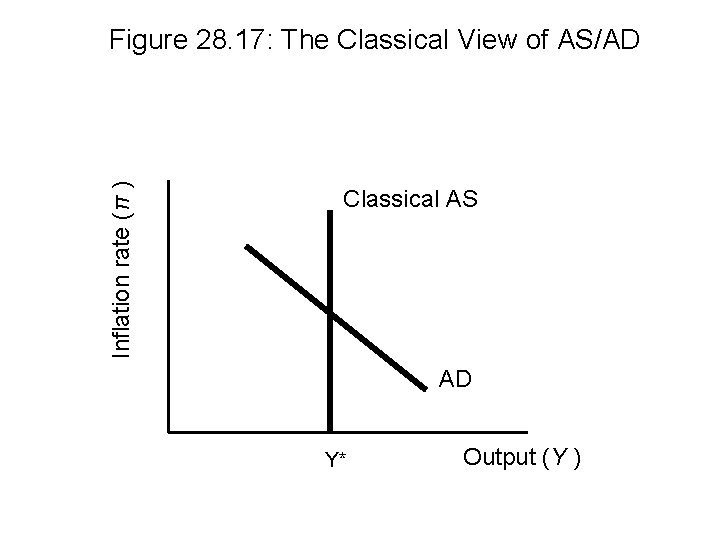
Inflation rate (π ) Figure 28. 17: The Classical View of AS/AD Classical AS AD Y* Output (Y )
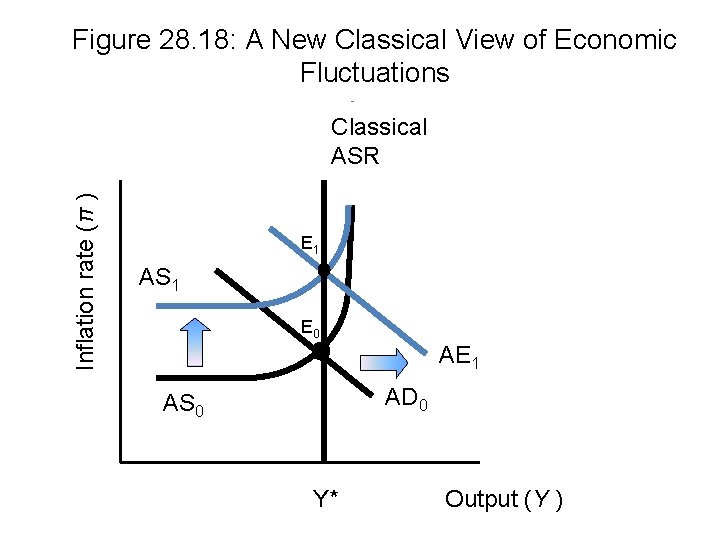
Figure 28. 18: A New Classical View of Economic Fluctuations Inflation rate (π ) Classical ASR E 1 AS 1 E 0 AE 1 AD 0 AS 0 Y* Output (Y )