
CHAPTER THREE EBUSINESS ELECTRONIC BUSINESS VALUE The Mc
CHAPTER THREE EBUSINESS ELECTRONIC BUSINESS VALUE ©The Mc. Graw-Hill Companies, All Rights Reserved
SECTION 3. 1 WEB 1. 0 EBUSINESS ©The Mc. Graw-Hill Companies, All Rights Reserved
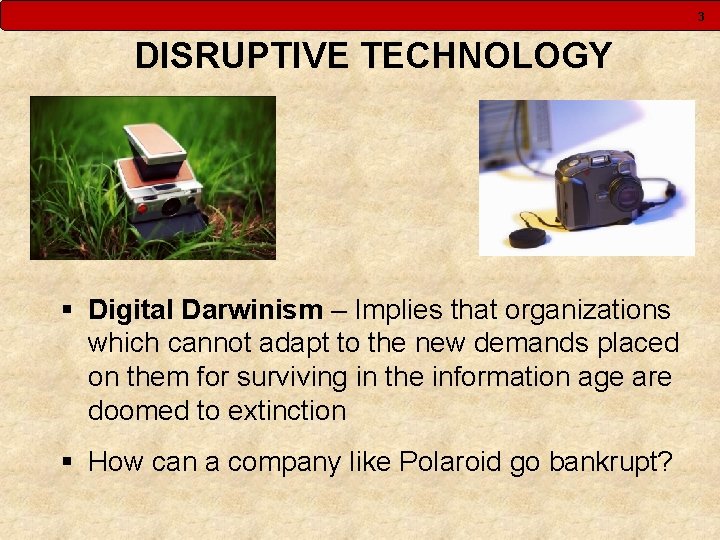
3 DISRUPTIVE TECHNOLOGY § Digital Darwinism – Implies that organizations which cannot adapt to the new demands placed on them for surviving in the information age are doomed to extinction § How can a company like Polaroid go bankrupt?
4 Disruptive versus Sustaining Technology § What do steamboats, transistor radios, and Intel’s 8088 processor all have in common? • Disruptive technology – A new way of doing things that initially does not meet the needs of existing customers • Sustaining technology – Produces an improved product customers are eager to buy
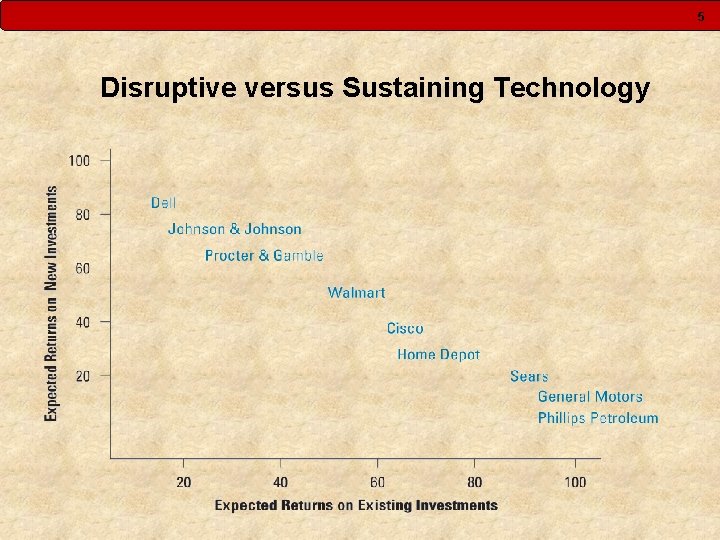
5 Disruptive versus Sustaining Technology
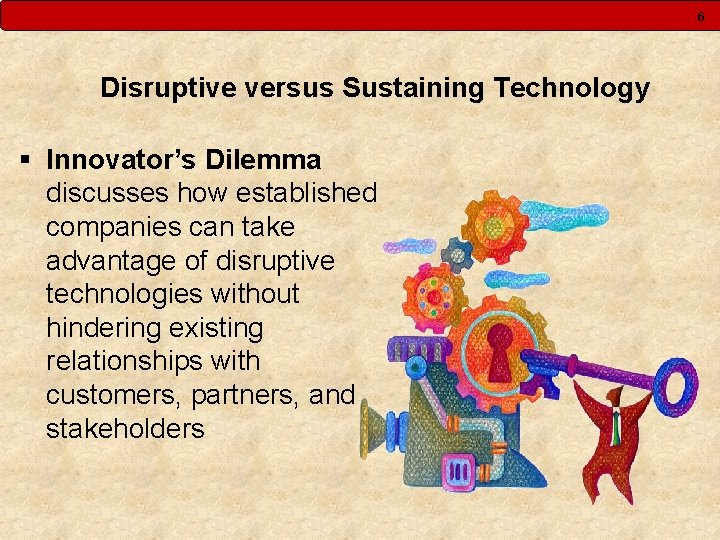
6 Disruptive versus Sustaining Technology § Innovator’s Dilemma discusses how established companies can take advantage of disruptive technologies without hindering existing relationships with customers, partners, and stakeholders
7 The Internet and World Wide Web – The Ultimate Business Disruptors § One of the biggest forces changing business is the Internet – A massive network that connects computers all over the world and allows them to communicate with one another § Organizations must be able to transform as markets, economic environments, and technologies change § Focusing on the unexpected allows an organization to capitalize on the opportunity for new business growth from a disruptive technology
8 The Internet and World Wide Web – The Ultimate Business Disruptors § The Internet began as an emergency military communications system operated by the Department of Defense § Gradually the Internet moved from a military pipeline to a communication tool for scientists to businesses
9 The Internet and World Wide Web – The Ultimate Business Disruptors § World Wide Web (WWW) – Provides access to Internet information through documents including text, graphics, audio, and video files that use a special formatting language called HTML – hypertext markup language § Web browser – Allows users to access the WWW § Hypertext Transport Protocol – The Internet protocol Web browsers use to request and display Web pages using URL – universal resource locator
10 The Internet and World Wide Web – The Ultimate Business Disruptors § Reasons for growth of the WWW • • Microcomputer revolution Advancements in networking Easy browser software Speed, convenience, and low cost of email • Web pages easy to create and flexible
11 Web 1. 0 – The Catalyst For Ebusiness § The Internet has had an impact on almost every industry including • Travel • Entertainment • Electronics • Financial services • Retail • Automobiles • Education and training
12 Web 1. 0 – The Catalyst For Ebusiness § Web 1. 0 – A term to refer to the WWW during its first few years of operation between 1991 and 2003 § Ecommerce – Buying and selling of goods and services over the Internet § Ebusiness – Includes ecommerce along with all activities related to internal and external business operations
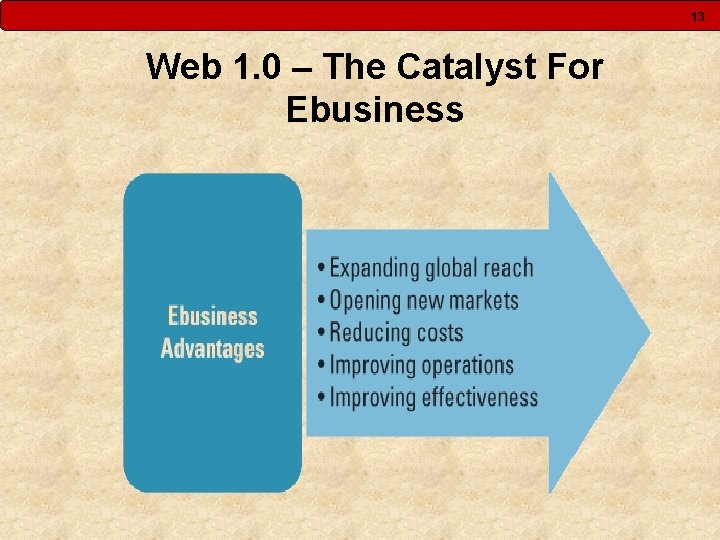
13 Web 1. 0 – The Catalyst For Ebusiness
14 Expanding Global Reach § The Internet’s impact on information • • Easy to compile Increased richness Increased reach Improved content
15 Opening New Markets § Mass customization – The ability of an organization to tailor its products or services to the customers’ specifications § Personalization – Occurs when a company knows enough about a customer’s likes and dislikes that it can fashion offers more likely to appeal to that person
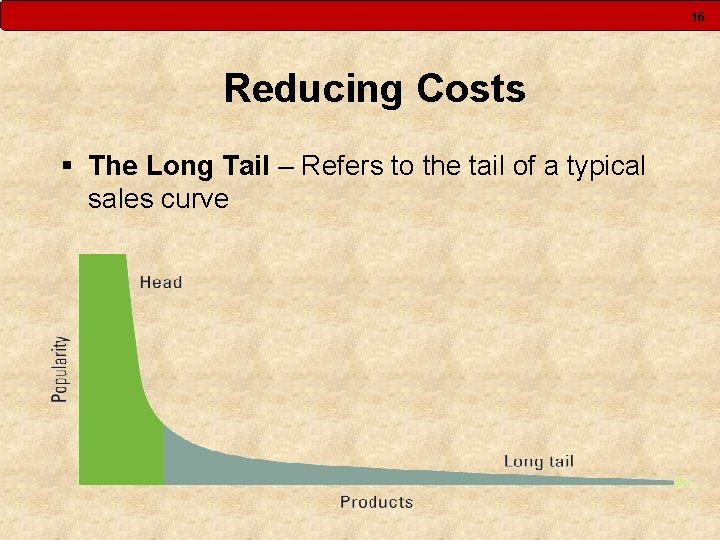
16 Reducing Costs § The Long Tail – Refers to the tail of a typical sales curve
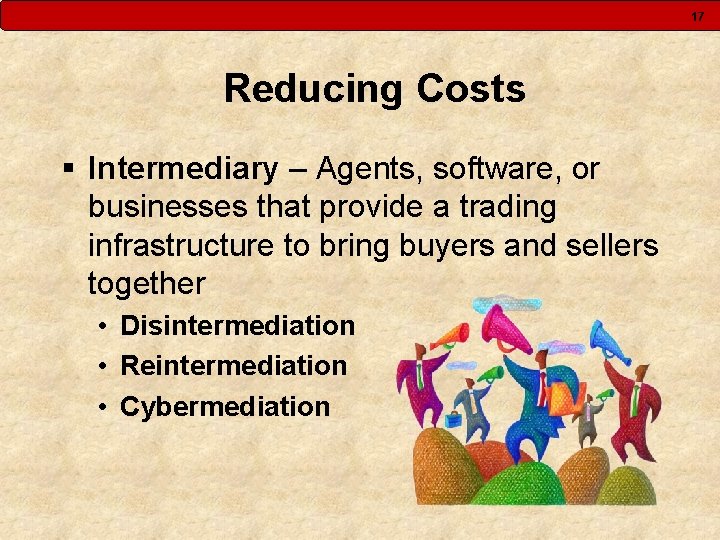
17 Reducing Costs § Intermediary – Agents, software, or businesses that provide a trading infrastructure to bring buyers and sellers together • Disintermediation • Reintermediation • Cybermediation
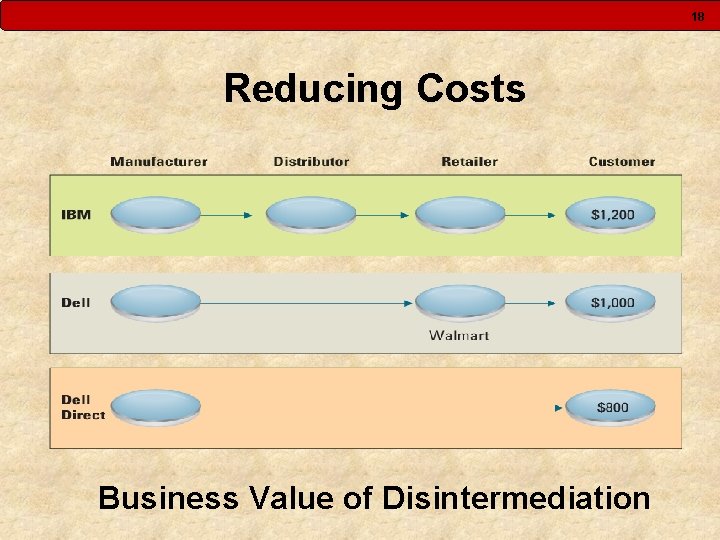
18 Reducing Costs Business Value of Disintermediation
19 Improving Effectiveness § Clickstream data tracks the exact pattern of a consumer’s navigation through a website § Clickstream data can reveal • Number of page views • Pattern of websites visited • Length of stay on a website • Date and time visited • Number of customers with shopping carts • Number of abandoned shopping carts
20 Marketing/Sales § Generating revenue on the Internet • Banner ad - Box running across a web page that contains advertisements • Pop-up ad - A small web page containing an advertisement • Associate program (affiliate program) - Businesses generate commissions or royalties • Viral marketing - A technique that induces websites or users to pass on a marketing message
21 Improving Effectiveness § Website metrics include • Visitor metrics • Exposure metrics • Visit metrics • Hit metrics
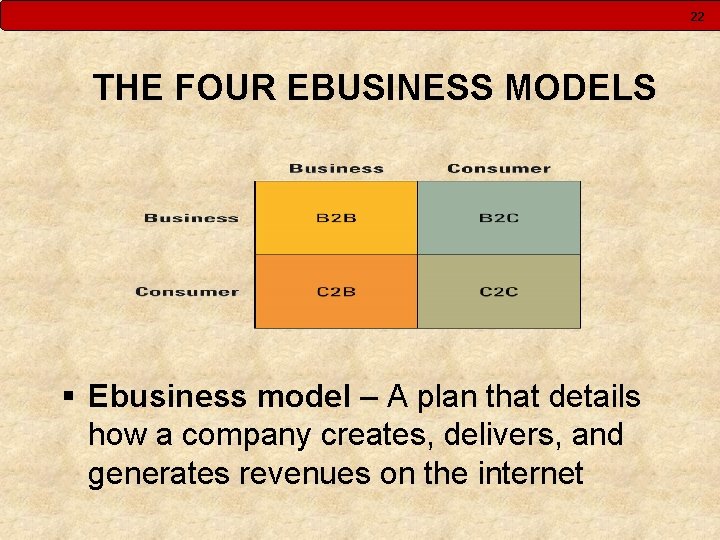
22 THE FOUR EBUSINESS MODELS § Ebusiness model – A plan that details how a company creates, delivers, and generates revenues on the internet
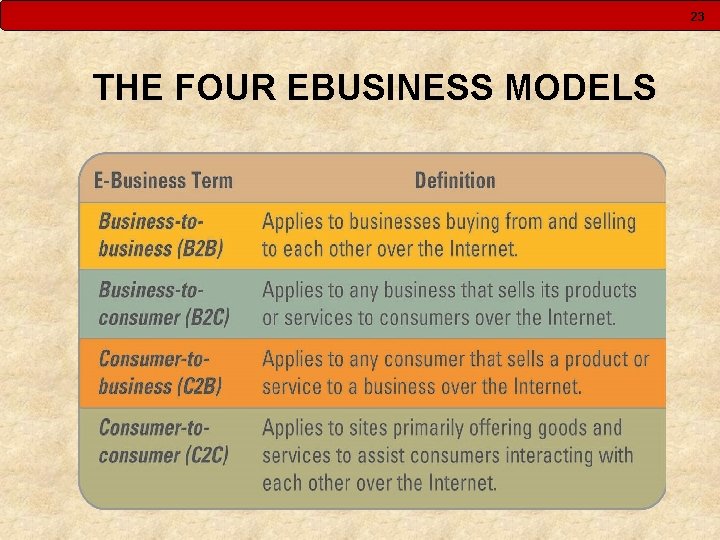
23 THE FOUR EBUSINESS MODELS
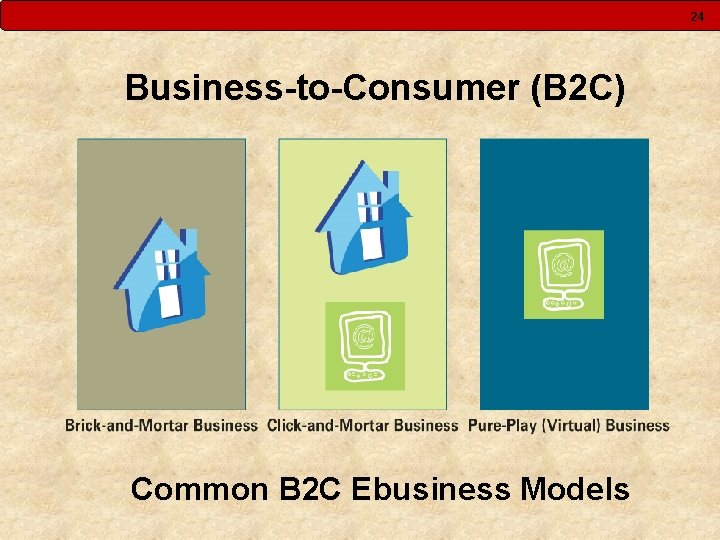
24 Business-to-Consumer (B 2 C) Common B 2 C Ebusiness Models
25 Ebusiness Forms and Revenue. Generating Strategies § Common ebusiness forms • Content providers - Netflix • Infomediaries - Zillow • Online marketplaces - Amazon • Portals - Google • Service providers – Mapquest, Youtube • Transaction brokers - Etrade
26 Ebusiness Forms and Revenue. Generating Strategies § Search engine – Website software that finds other pages based on keyword matching similar to Google § Search engine ranking – Evaluates variables that search engines use to determine where a URL appears on the list of search results § Search engine optimization – Combines art along with science to determine how to make URLs more attractive to search engines resulting in higher search engine ranking
27 Ebusiness Forms and Revenue. Generating Strategies § Ebusiness revenue models • • • Advertising fees License fees Subscription fees Transaction fees Value-added service fees § Pay-per-click § Pay-per-call § Pay-per-conversion
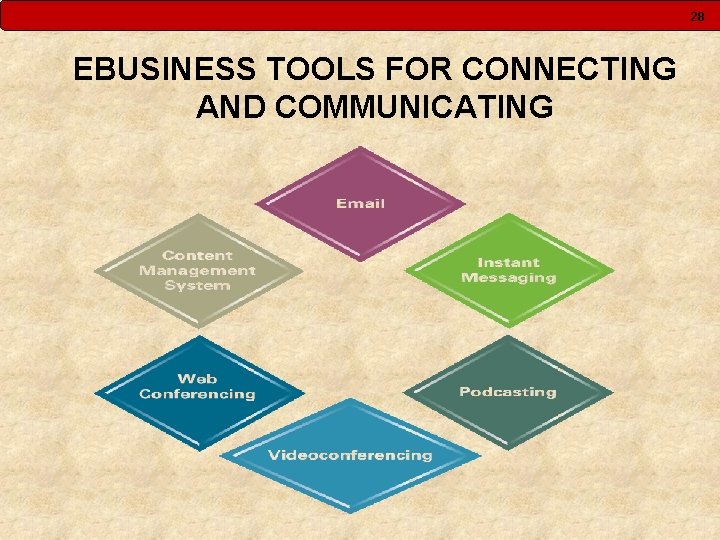
28 EBUSINESS TOOLS FOR CONNECTING AND COMMUNICATING
29 EBUSINESS TOOLS FOR CONNECTING AND COMMUNICATING § Email § Instant messaging § Podcasting § Videoconferencing § Web conferencing § Content management system
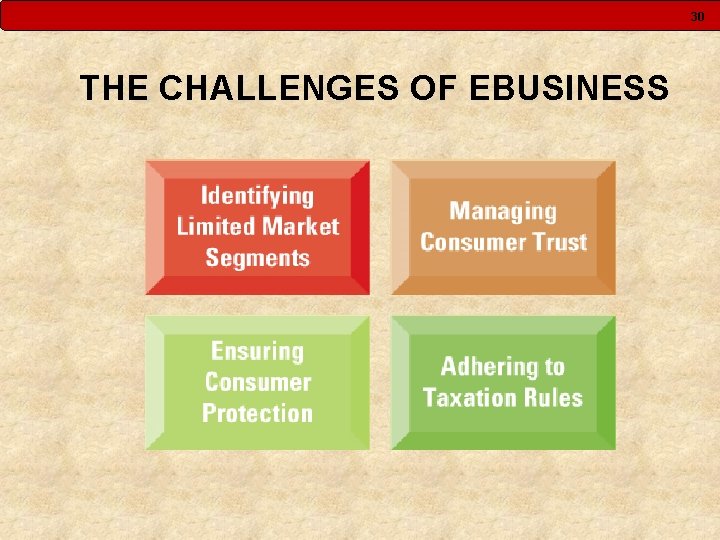
30 THE CHALLENGES OF EBUSINESS
SECTION 3. 2 WEB 2. 0: BUSINESS 2. 0 ©The Mc. Graw-Hill Companies, All Rights Reserved
32 WEB 2. 0: ADVANTAGES OF BUSINESS 2. 0 § Web 2. 0 – The next generation of Internet use – a more mature, distinctive communications platform characterized by three qualities • Collaboration • Sharing • Free
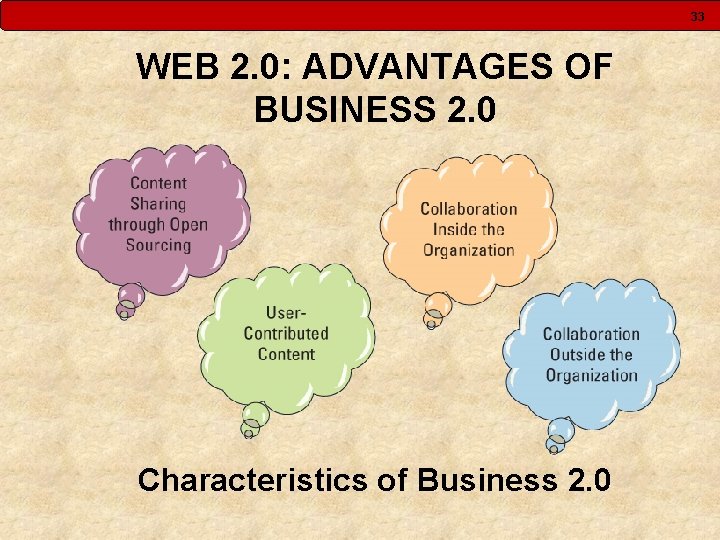
33 WEB 2. 0: ADVANTAGES OF BUSINESS 2. 0 Characteristics of Business 2. 0
34 Content Sharing Through Open Sourcing § Open system – Nonproprietary hardware and software based on publicly known standards that allows third parties to create add-on products to plug into or interoperate with the system • Source code • Open source • Closed source
35 User-Contributed Content § User-contributed content – Created and updated by many users for many users • Native advertising • Reputation system
36 Collaboration Inside the Organization § Collaboration system – Tools that support the work of teams or groups by facilitating the sharing and flow of information § Collective intelligence – Collaborating and tapping into the core knowledge of all employees, partners, and customers § Knowledge management - Involves capturing, classifying, evaluating, retrieving, and sharing information assets in a way that provides context for effective decisions and actions
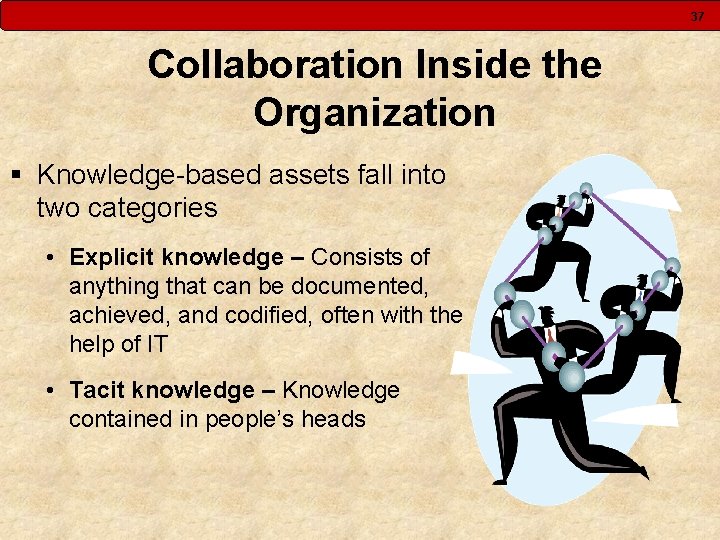
37 Collaboration Inside the Organization § Knowledge-based assets fall into two categories • Explicit knowledge – Consists of anything that can be documented, achieved, and codified, often with the help of IT • Tacit knowledge – Knowledge contained in people’s heads
38 Collaboration Outside the Organization § Crowdsourcing – the wisdom of the crowd • Asynchronous communication • Synchronous communication
39 NETWORKING COMMUNITIES WITH BUSINESS 2. 0 § Social media – Websites that rely on user participation and user-contributed content § Social network – An application that connects people by matching profile information § Social networking – The practice of expanding your business and/or social contacts by a personal network
40 Social Tagging § Tags – Specific keywords or phrases incorporated into website content for means of classification or taxonomy • Social tagging • Folksonomy • Website bookmark • Social bookmarking
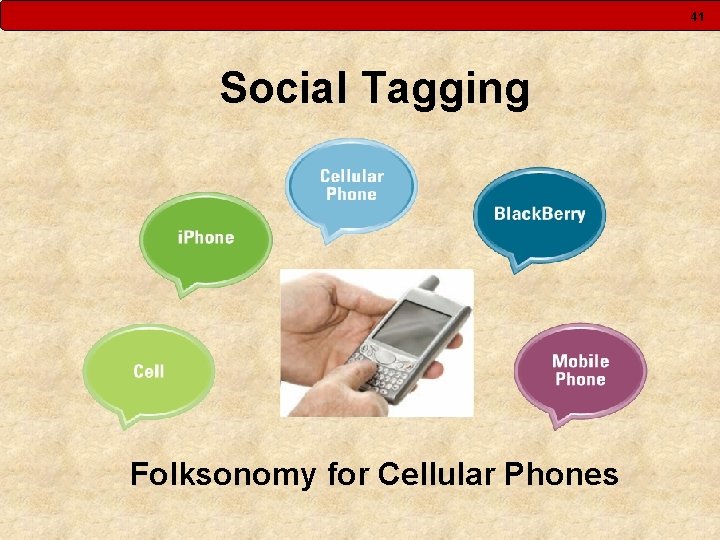
41 Social Tagging Folksonomy for Cellular Phones
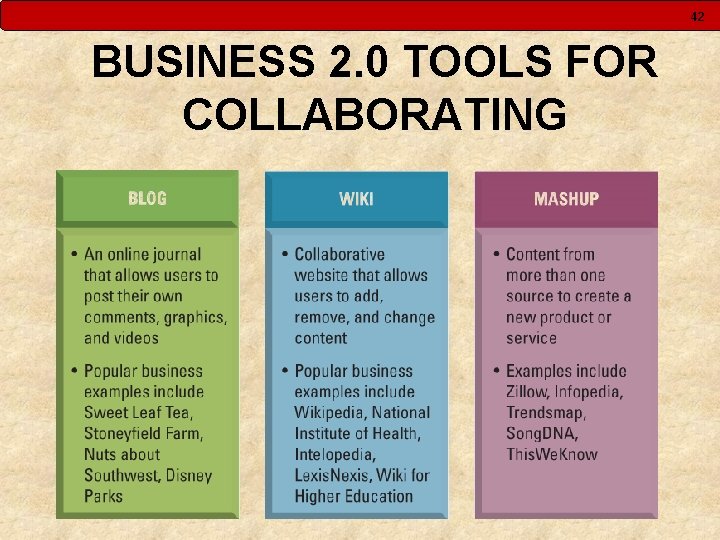
42 BUSINESS 2. 0 TOOLS FOR COLLABORATING
43 Blogs § Blog – Online journal that allows users to post their own comments, graphics, and video • Microblogging • Real simple syndication
44 Wikis § Wiki – Collaborative Web page that allows users to add, remove, and change content, which can be easily organization and reorganized as required • Network effect
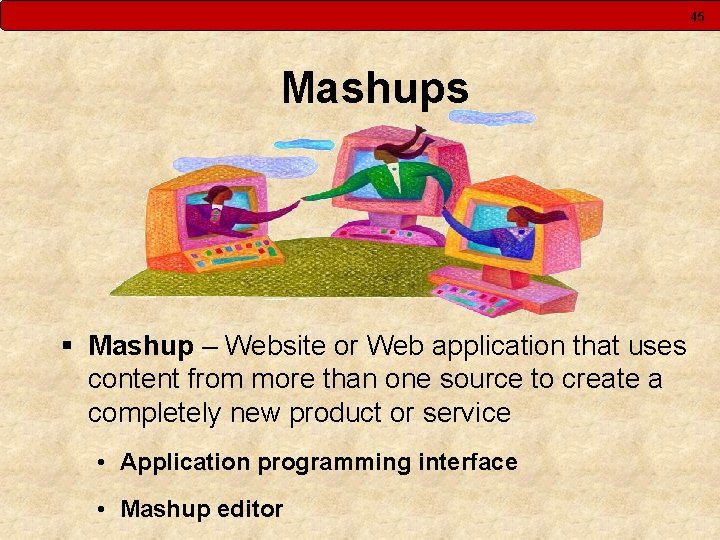
45 Mashups § Mashup – Website or Web application that uses content from more than one source to create a completely new product or service • Application programming interface • Mashup editor
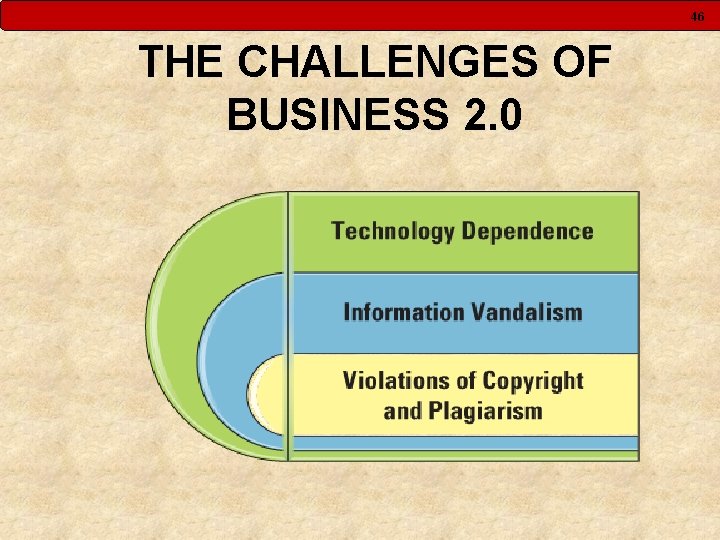
46 THE CHALLENGES OF BUSINESS 2. 0
47 WEB 3. 0 § Web 3. 0 – Based on “intelligent” Web applications using natural language processing, machinebased learning and reasoning, and intelligence applications § Semantic Web – A component of Web 2. 0 that describes things in a way that computers can understand
48 Egovernment: The Government Moves Online § Egovernment - Involves the use of strategies and technologies to transform government(s) by improving the delivery of services and enhancing the quality of interaction between the citizenconsumer within all branches of government
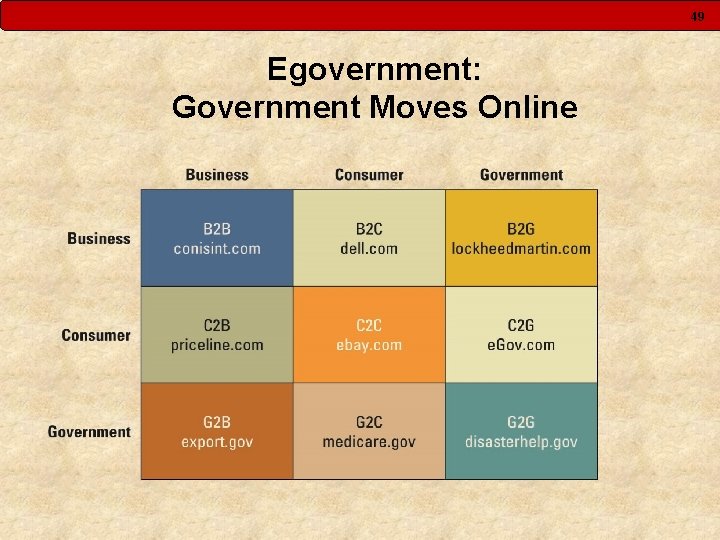
49 Egovernment: Government Moves Online
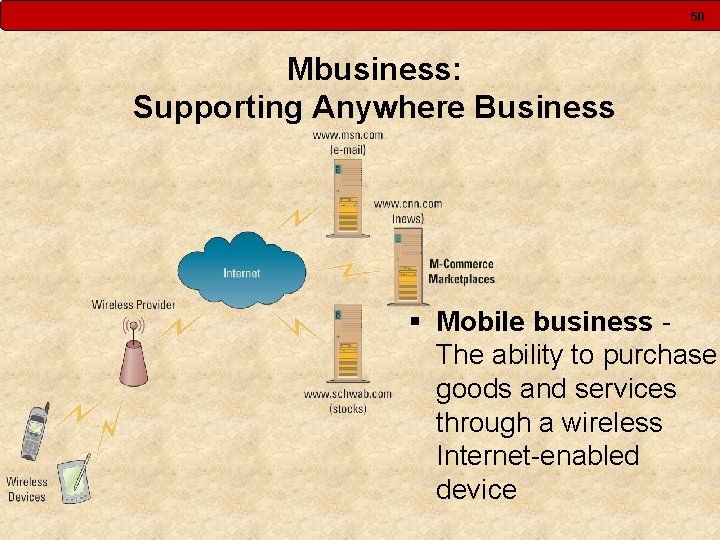
50 Mbusiness: Supporting Anywhere Business § Mobile business The ability to purchase goods and services through a wireless Internet-enabled device
- Slides: 50