
Chapter Three Classification of Hyphae B Shape and
Chapter Three

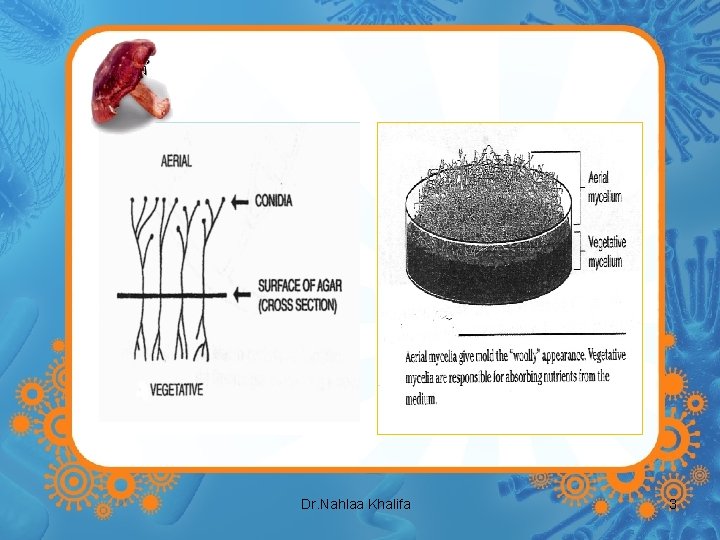
Classification of Hyphae B. Shape and Morphology § Spiral § Nodular § Root-like (rhizoid) C. Way of growing § Vegetative hyphae ; grow down into medium § Aerial hyphae ; grow up from surface , carry reproductive cells or spores Dr. Nahlaa Khalifa 2
Dr. Nahlaa Khalifa 3
Fungi Reproduction • Fungi are so successful because they can reproduce both sexually and asexually – Asexual • Spores are formed through budding or conidia formation – Sexual reproduction • Spores are formed following fusion of male & female strains & formation of sexual structure Sexual spores are one basis for classification Dr. Nahlaa Khalifa 4
SPORES CHARACTERISTICS §Fungi produce both sexual and asexual spores §Some fungi may produce more than one type of spore depending on the environmental conditions §Spores function in reproduction of fungi 1. Sexual reproduction --Sexual spores 2. Asexual reproduction--Asexual spores 3. Parasexual reproduction--Genetic exchange Dr. Nahlaa Khalifa 5
Sexual reproduction 1. Zygomycetes 2. Ascomycetes 3. Basidiomycetes Dr. Nahlaa Khalifa 6
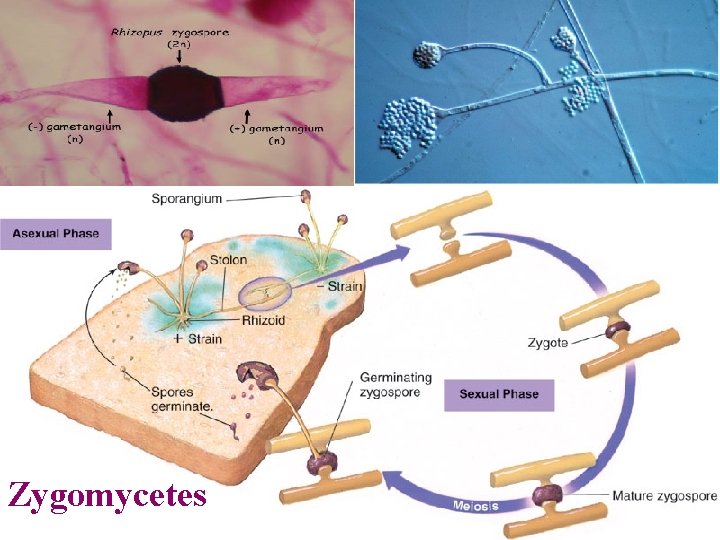
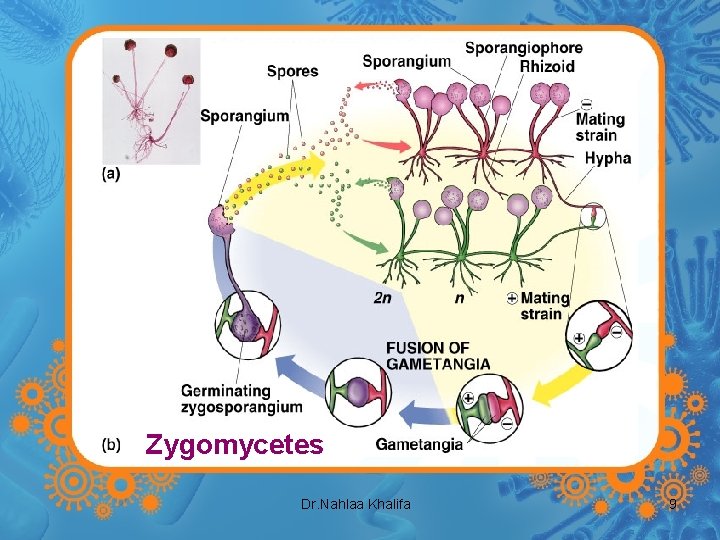
Sexual reproduction § Medically important fungi are classified into three groups according to the sexual spore they produce 1. Zygomycetes: § reproduce sexually by the production of spores known § as zygospores and asexually by means of sporangiospores produced in aerial sporangia The young hyphae produced by organisms in this group are typically non- septsted. Examples include Rhizopus , Mucor Dr. Nahlaa Khalifa 7
Zygomycetes Dr. Nahlaa Khalifa 8
Zygomycetes Dr. Nahlaa Khalifa 9
Sexual reproduction 2. Ascomycetes: § Reproduce sexually by the production of ascospores formed specialized sac- like structure known as asci ( an ascus contains usually eight ascospores ) which are normally formed inside a fruit body(ascocarp) , but some types produce asci directly on the mycelium , e. g. Byssochlamys. Dr. Nahlaa Khalifa 10
Sexual reproduction § In single- celled ascomycetes ( yeast) the cell (mother cell) acts as the ascus , e, g. Saccharomyces cerevisiae , in which only four ascospores are formed. § Examples of yeasts include Saccharomyces and Schizosaccharomyces § Examples of mycelial types include Byssochlamys Dr. Nahlaa Khalifa 11
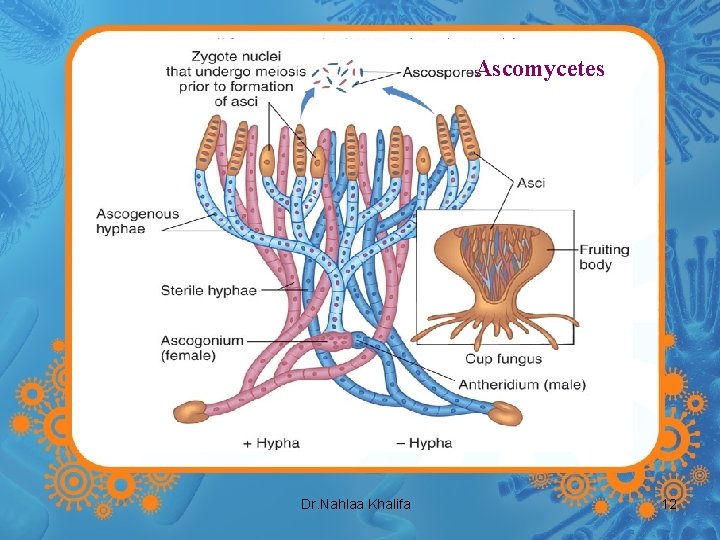
Ascomycetes Dr. Nahlaa Khalifa 12
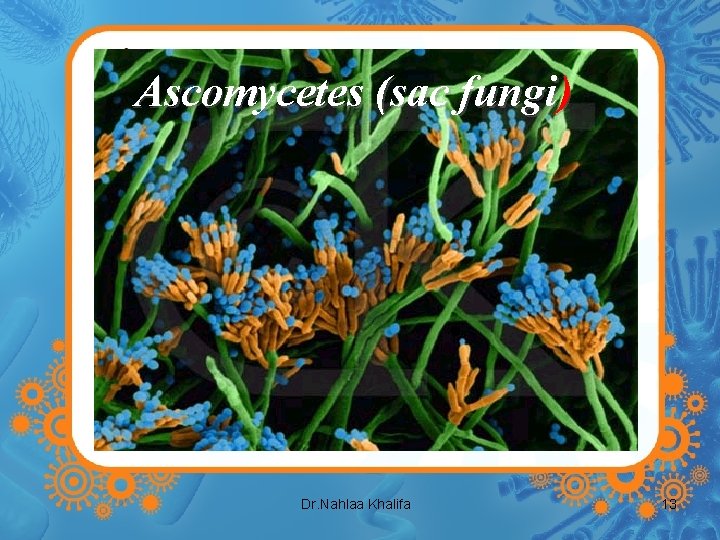
Ascomycetes (sac fungi) Dr. Nahlaa Khalifa 13
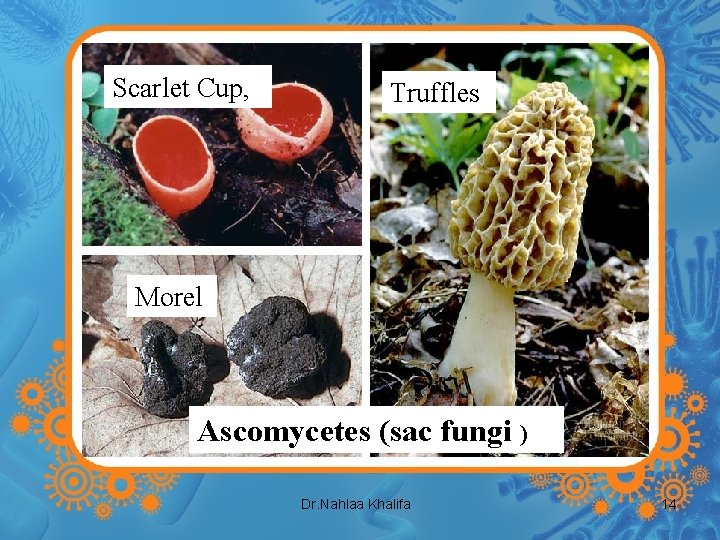
Scarlet Cup, Truffles Morel Ascomycetes (sac fungi ) Dr. Nahlaa Khalifa 14
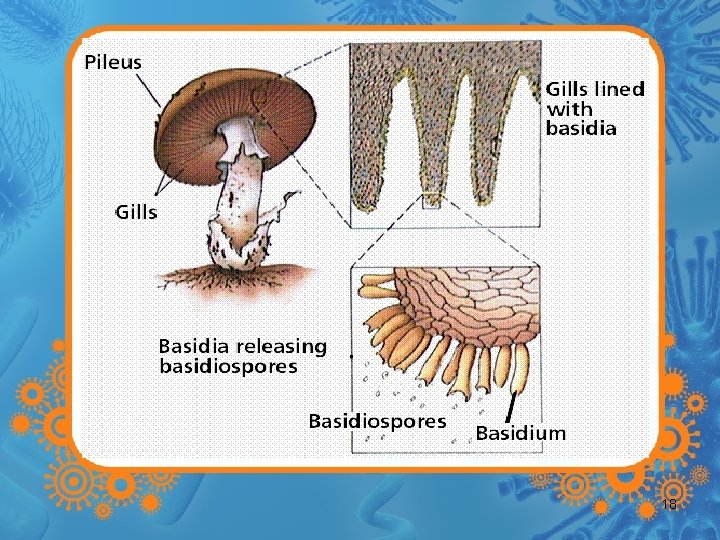
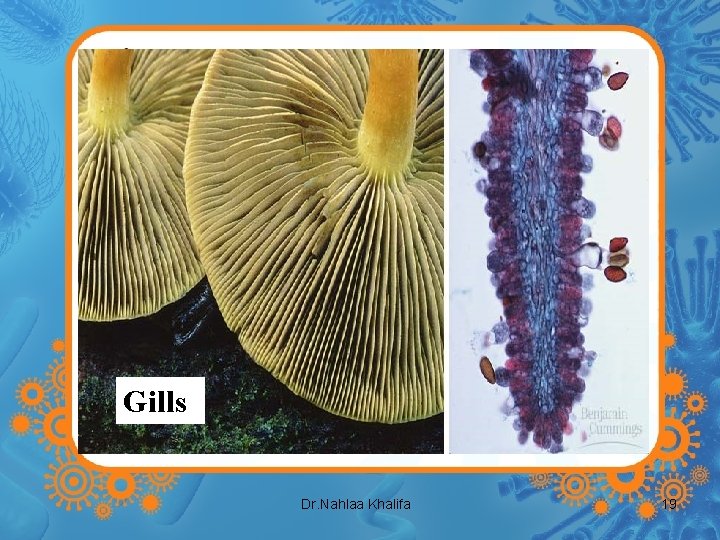
Sexual reproduction 3. Basidiomycetes (Club Fungi) § Typically , basidiomycetes produce large complex fruiting bodies ( basidiocarp) that support the sexual spore- bearing structure (basidia) § Each basidium produces four basidiospores. § The basidiocarp is the fruiting body that we know as the mushroom. § Saprobic basidiomycetes are very effective at decomposing lignin. § Mushrooms” are club fungi Dr. Nahlaa Khalifa 15
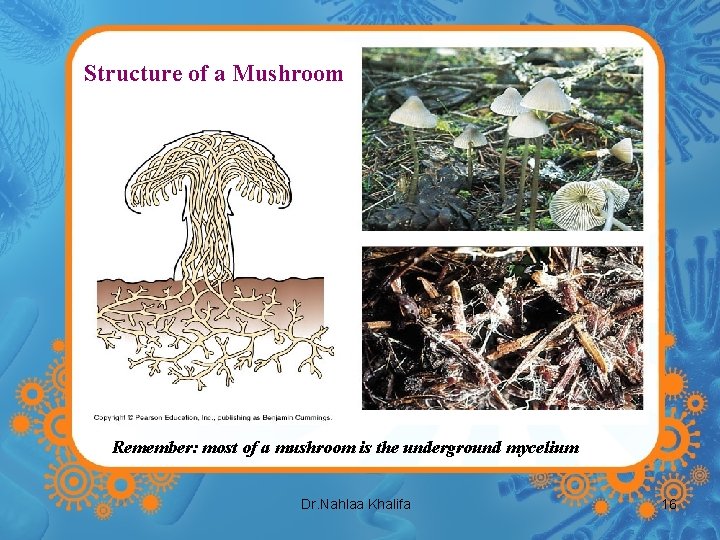
Structure of a Mushroom Remember: most of a mushroom is the underground mycelium Dr. Nahlaa Khalifa 16
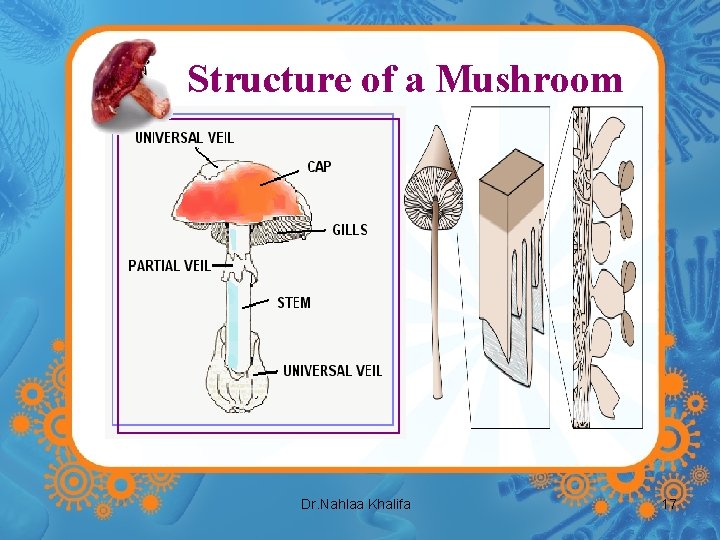
Structure of a Mushroom Dr. Nahlaa Khalifa 17
18
Gills Dr. Nahlaa Khalifa 19
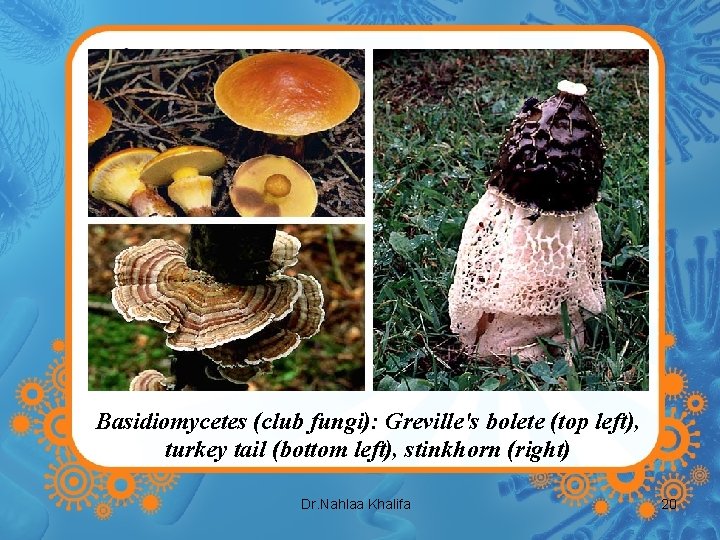
Basidiomycetes (club fungi): Greville's bolete (top left), turkey tail (bottom left), stinkhorn (right) Dr. Nahlaa Khalifa 20
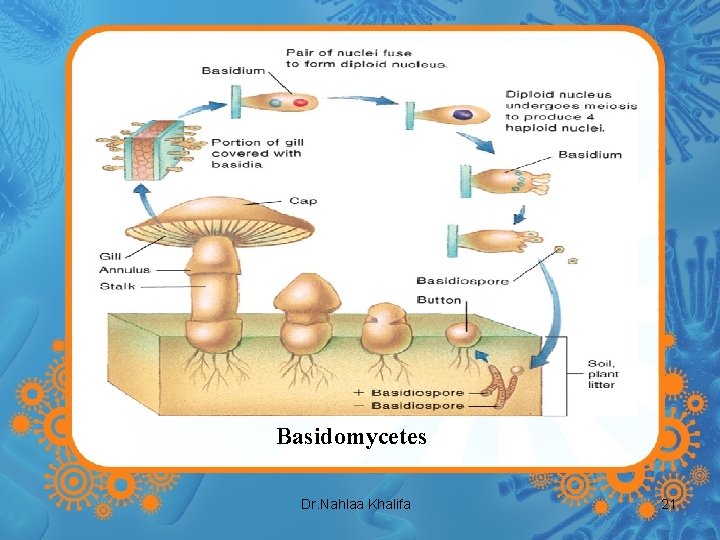
Basidomycetes Dr. Nahlaa Khalifa 21
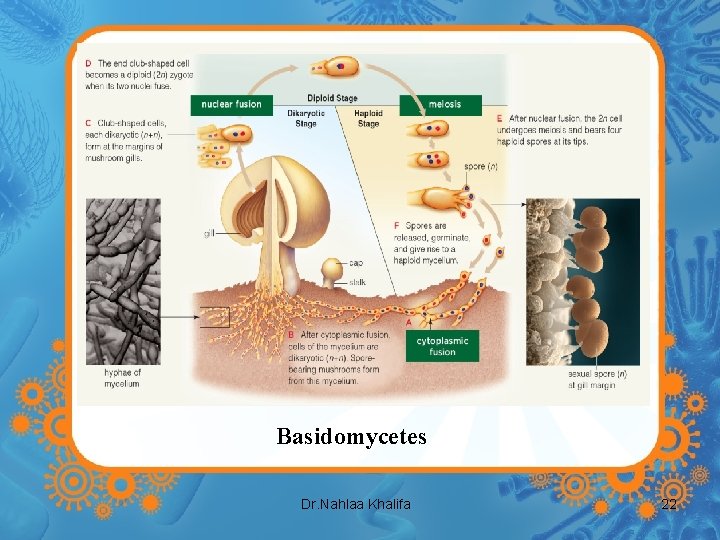
Basidomycetes Dr. Nahlaa Khalifa 22
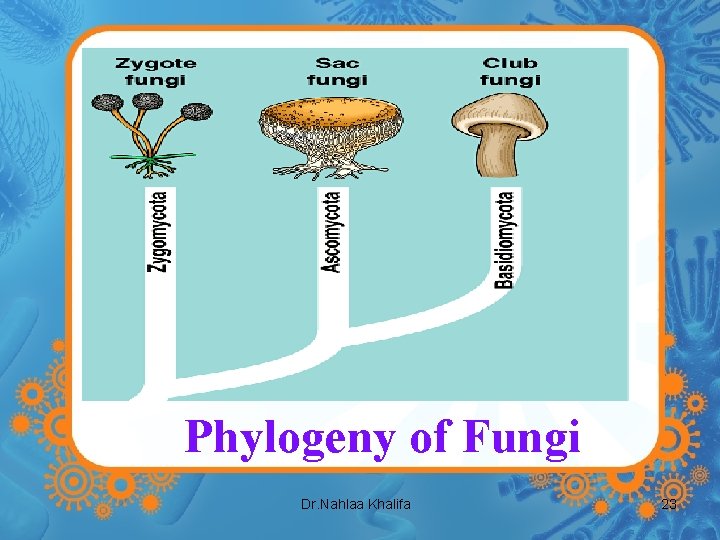
Phylogeny of Fungi Dr. Nahlaa Khalifa 23
- Slides: 23