
Chapter Thirteen Effective Leadership Processes Mc GrawHillIrwin 2008

- Slides: 23
Chapter Thirteen Effective Leadership Processes Mc. Graw-Hill/Irwin © 2008 The Mc. Graw-Hill Companies, Inc. All rights reserved.
Learning Objectives • Define leadership. • Present the background and classic studies of leadership. • Discuss the traditional theories of leadership, including the trait, group and exchange, contingency, and path-goal approaches. • Identify modern theoretical processes for leadership, such as charismatic, transformational, social cognitive, substitutes, and now authentic leadership. • Examine leadership across cultures giving special attention to the GLOBE project.
Introduction • Leadership is the focus and conduit of most of the other areas of organizational behavior
What is Leadership? • Has been controversial in terms of its definition – Leadership does remain pretty much of a “black box, ” or unexplainable concept.
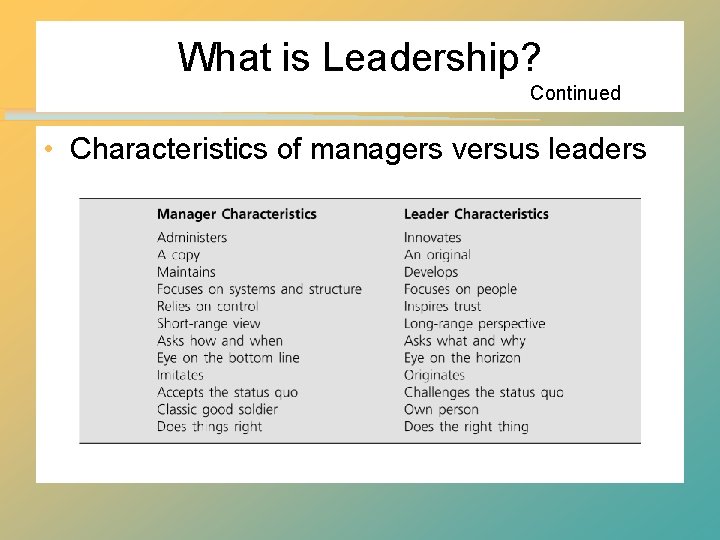
What is Leadership? Continued • Characteristics of managers versus leaders
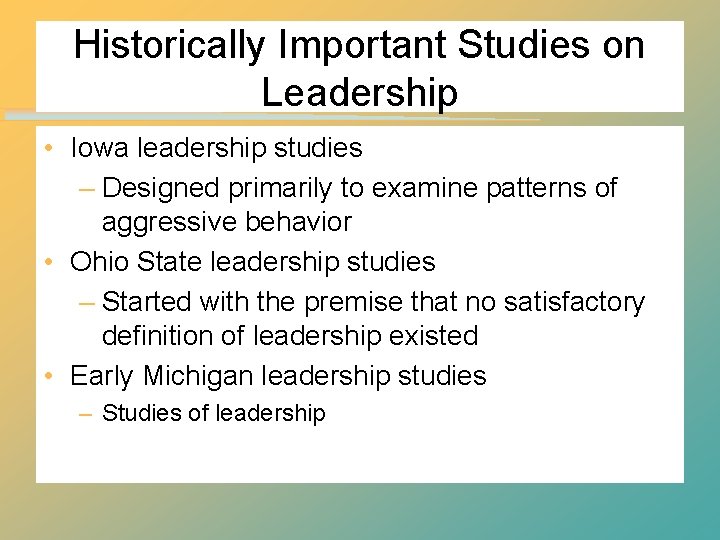
Historically Important Studies on Leadership • Iowa leadership studies – Designed primarily to examine patterns of aggressive behavior • Ohio State leadership studies – Started with the premise that no satisfactory definition of leadership existed • Early Michigan leadership studies – Studies of leadership
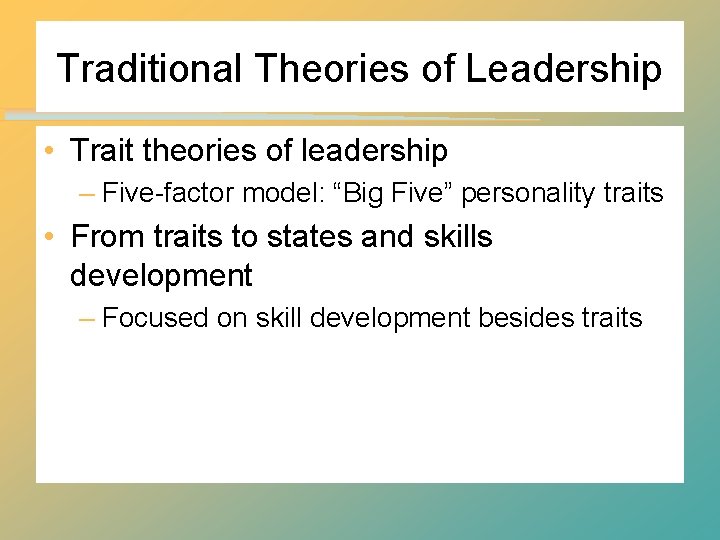
Traditional Theories of Leadership • Trait theories of leadership – Five-factor model: “Big Five” personality traits • From traits to states and skills development – Focused on skill development besides traits
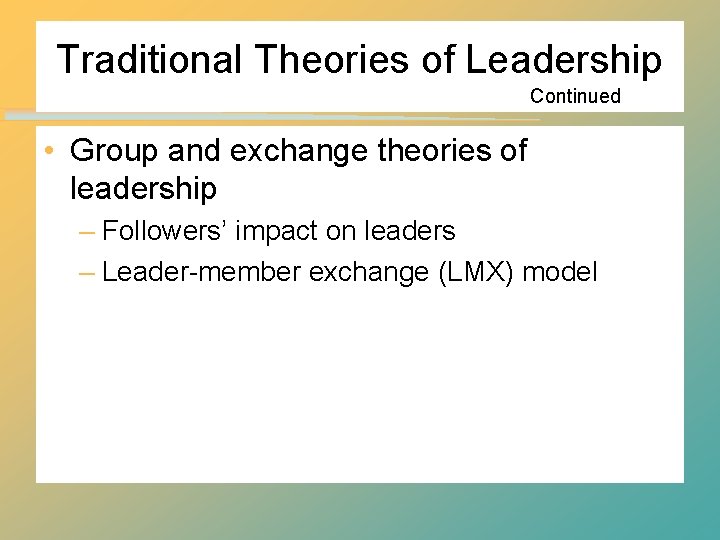
Traditional Theories of Leadership Continued • Group and exchange theories of leadership – Followers’ impact on leaders – Leader-member exchange (LMX) model
Traditional Theories of Leadership Continued • Three domains of leadership – Leader-based – Follower-based – Relationship-based
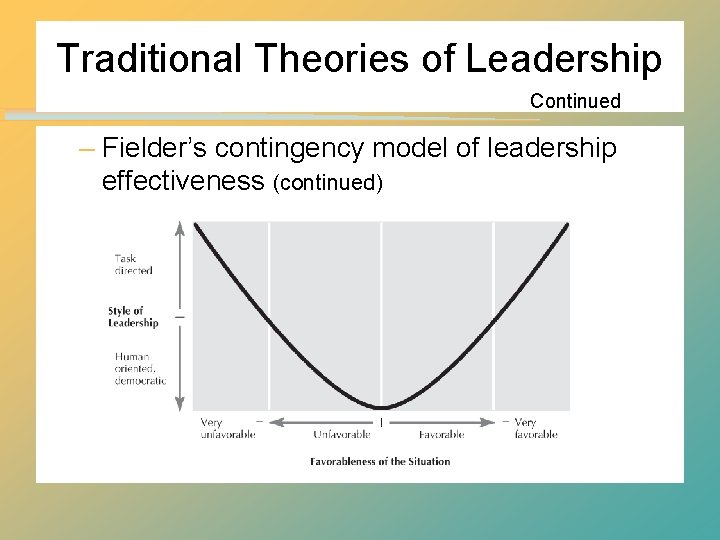
Traditional Theories of Leadership Continued • Contingency theory of leadership – Fielder’s contingency model of leadership effectiveness • Leader-member relationship • Degree of task structure • Leader’s position power
Traditional Theories of Leadership Continued – Fielder’s contingency model of leadership effectiveness (continued)
Traditional Theories of Leadership Continued • Contingency theory of leadership (continued) – Research support for the contingency model • Methodologically sound validation studies have on the whole provided substantial support for theory – Fielder’s contingency theory in perspective • First highly visible leadership theory • Emphasized the importance of both the situation and characteristics • Stimulated a great deal of research
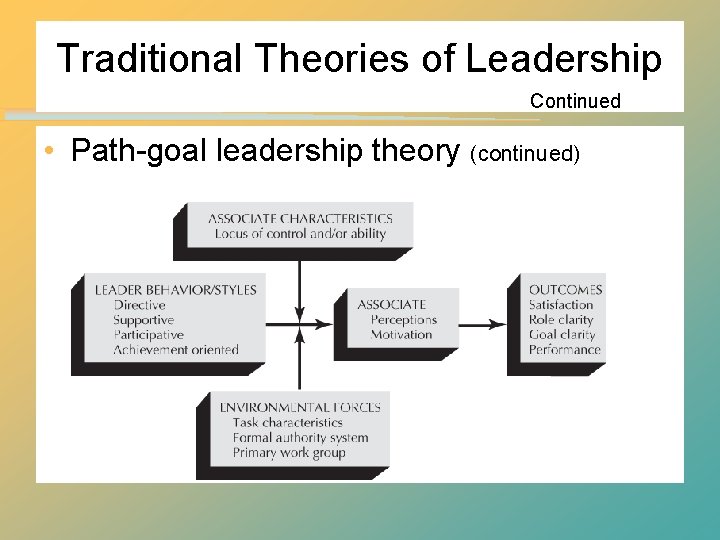
Traditional Theories of Leadership Continued • Path-goal leadership theory – Directive leadership – Supportive leadership – Participative leadership – Achievement-oriented leadership
Traditional Theories of Leadership Continued • Path-goal leadership theory (continued)
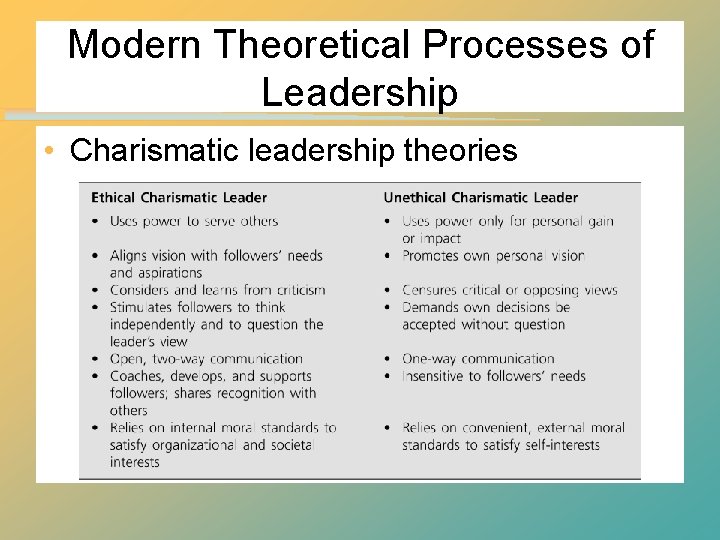
Modern Theoretical Processes of Leadership • Charismatic leadership theories
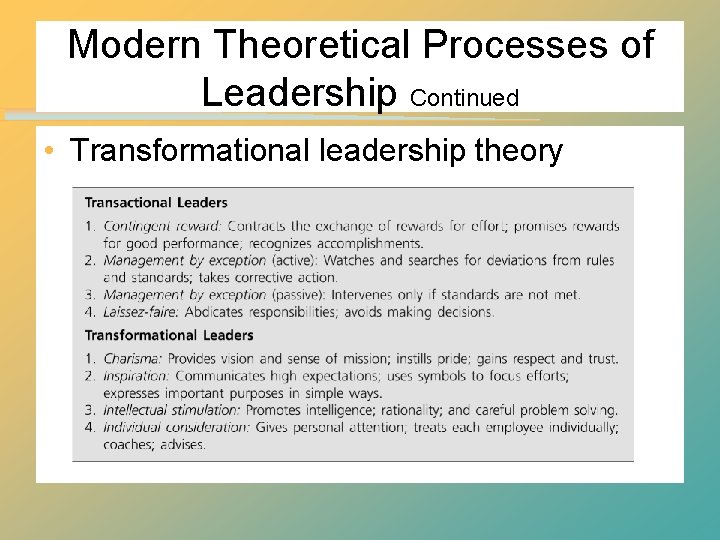
Modern Theoretical Processes of Leadership Continued • Transformational leadership theory
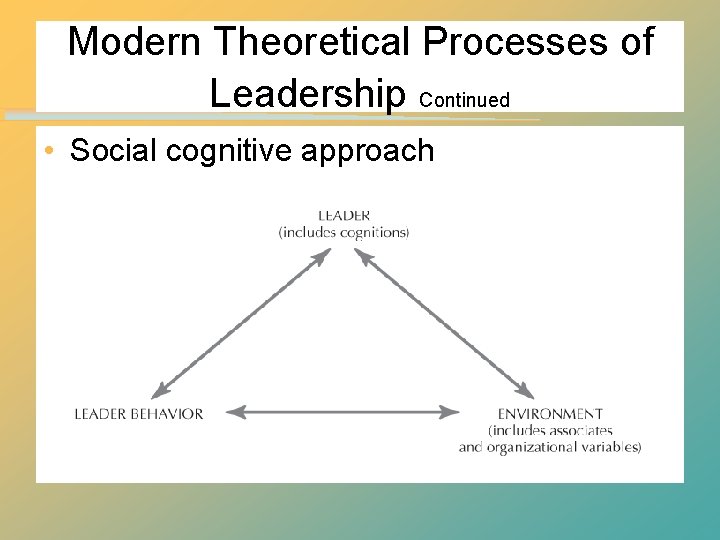
Modern Theoretical Processes of Leadership Continued • Social cognitive approach
Modern Theoretical Processes of Leadership Continued • Substitutes for leadership – Subordinate characteristics – Task characteristics – Organizational characteristics
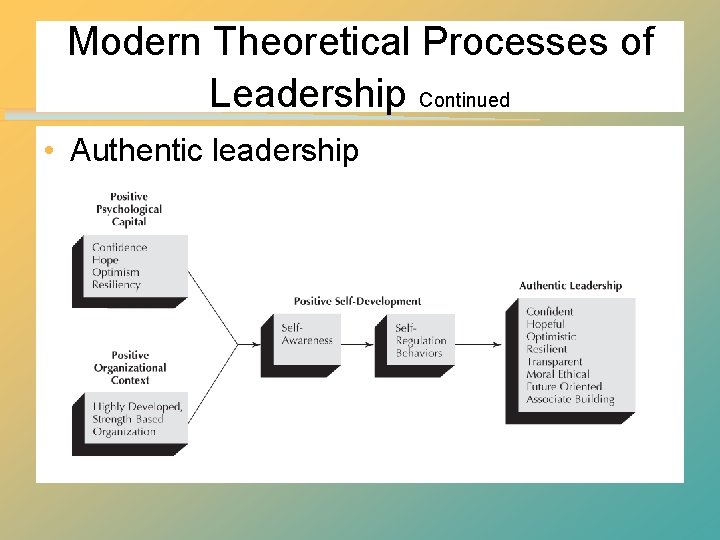
Modern Theoretical Processes of Leadership Continued • Authentic leadership
Modern Theoretical Processes of Leadership Continued • Leadership across cultures – Personal Values – Backgrounds of the managers – Interpersonal skills
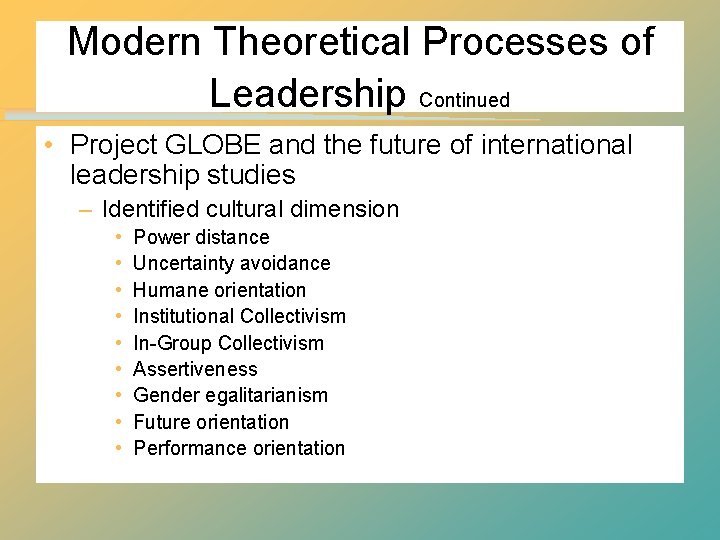
Modern Theoretical Processes of Leadership Continued • Project GLOBE and the future of international leadership studies – Identified cultural dimension • • • Power distance Uncertainty avoidance Humane orientation Institutional Collectivism In-Group Collectivism Assertiveness Gender egalitarianism Future orientation Performance orientation
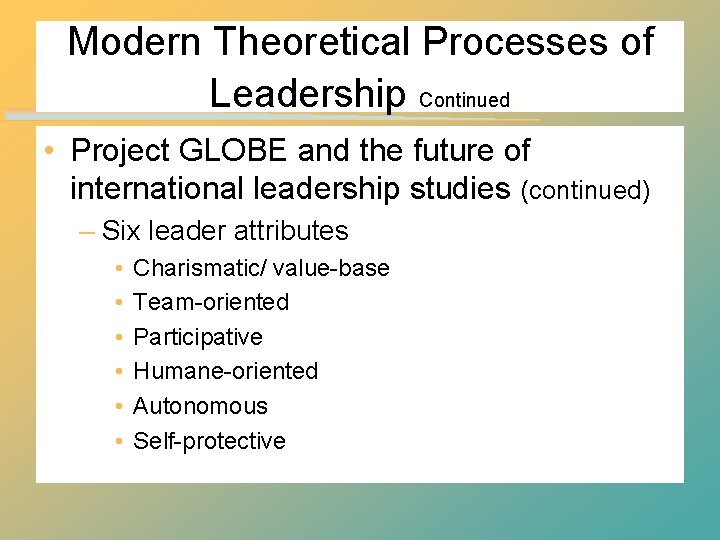
Modern Theoretical Processes of Leadership Continued • Project GLOBE and the future of international leadership studies (continued) – Six leader attributes • • • Charismatic/ value-base Team-oriented Participative Humane-oriented Autonomous Self-protective
Questions ?