
Chapter Thirteen CHEMICAL EQUILIBRIUM The Equilibrium Condition Figure
Chapter Thirteen: CHEMICAL EQUILIBRIUM

The Equilibrium Condition
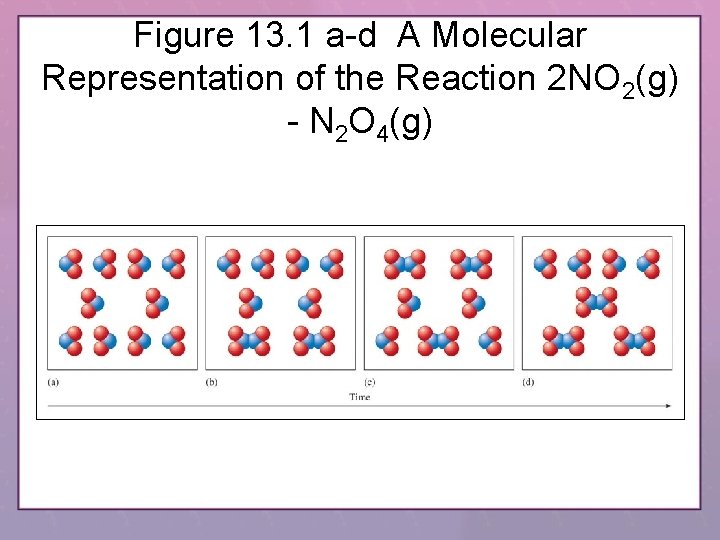
Figure 13. 1 a-d A Molecular Representation of the Reaction 2 NO 2(g) - N 2 O 4(g)
Chemical Equilibrium • The state where the concentrations of all reactants and products remain constant with time. • On the molecular level, there is frantic activity. Equilibrium is not static, but is a highly dynamic situation. Copyright © Houghton Mifflin Company. All rights reserved. 13– 4
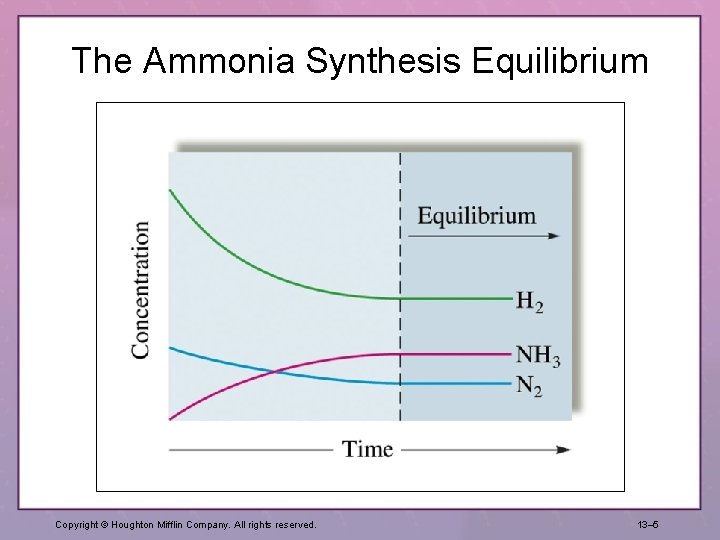
The Ammonia Synthesis Equilibrium Copyright © Houghton Mifflin Company. All rights reserved. 13– 5

Equilibrium Is: • Macroscopically static. • Microscopically dynamic Copyright © Houghton Mifflin Company. All rights reserved. 13– 6
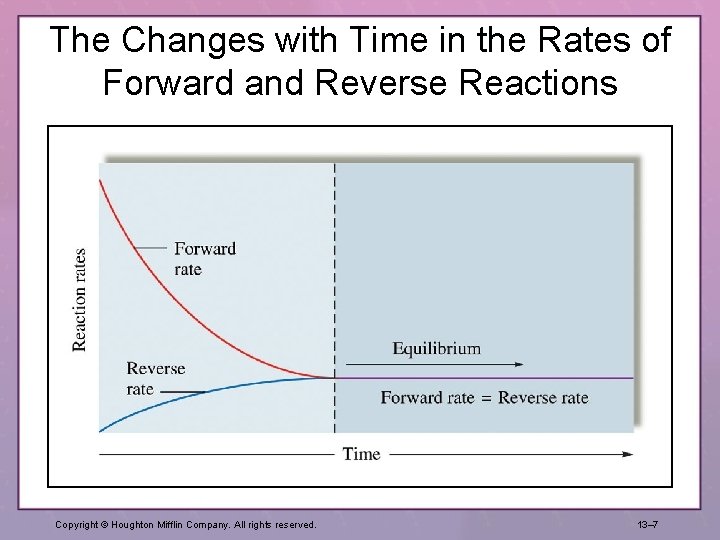
The Changes with Time in the Rates of Forward and Reverse Reactions Copyright © Houghton Mifflin Company. All rights reserved. 13– 7

1 t eac R Consider an equilibrium mixture in a closed vessel reacting according to the equation H 2 O(g) + CO(g) H 2(g) + CO 2(g) • You add more H 2 O to the flask. How does the concentration of each chemical compare to its original concentration after equilibrium is reestablished? Justify your answer. Copyright © Houghton Mifflin Company. All rights reserved. 13– 8
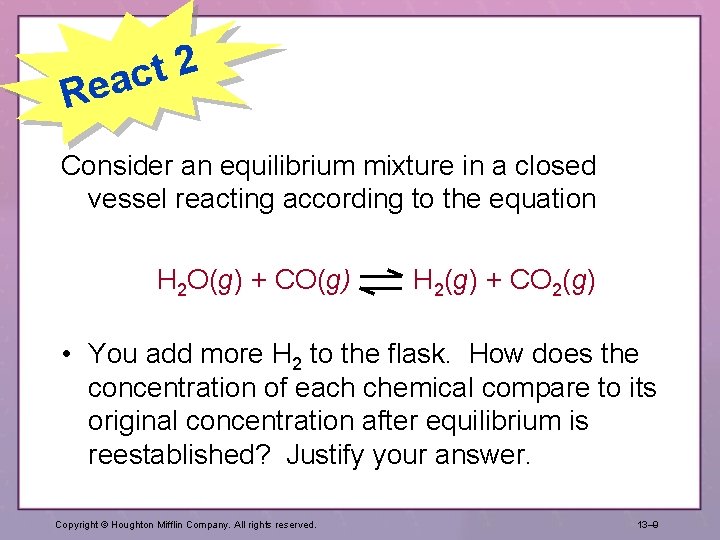
2 t eac R Consider an equilibrium mixture in a closed vessel reacting according to the equation H 2 O(g) + CO(g) H 2(g) + CO 2(g) • You add more H 2 to the flask. How does the concentration of each chemical compare to its original concentration after equilibrium is reestablished? Justify your answer. Copyright © Houghton Mifflin Company. All rights reserved. 13– 9
The Equilibrium Constant and Applications
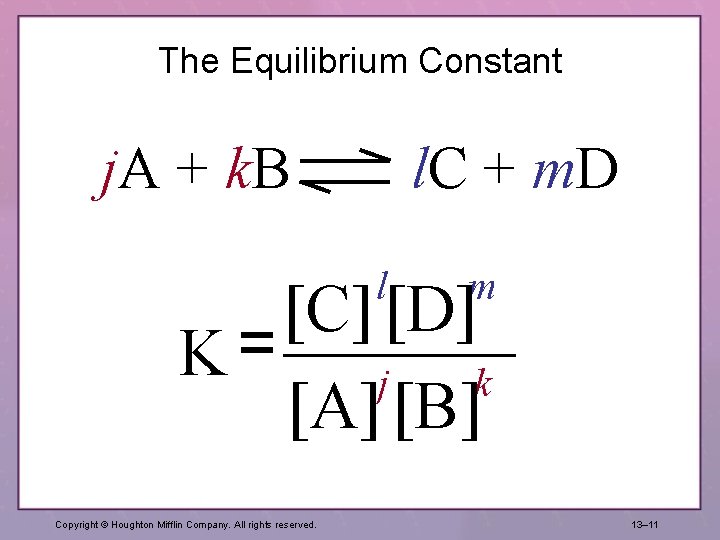
The Equilibrium Constant j. A + k. B l. C + m. D l m [C] [D] K= j k [A] [B] Copyright © Houghton Mifflin Company. All rights reserved. 13– 11
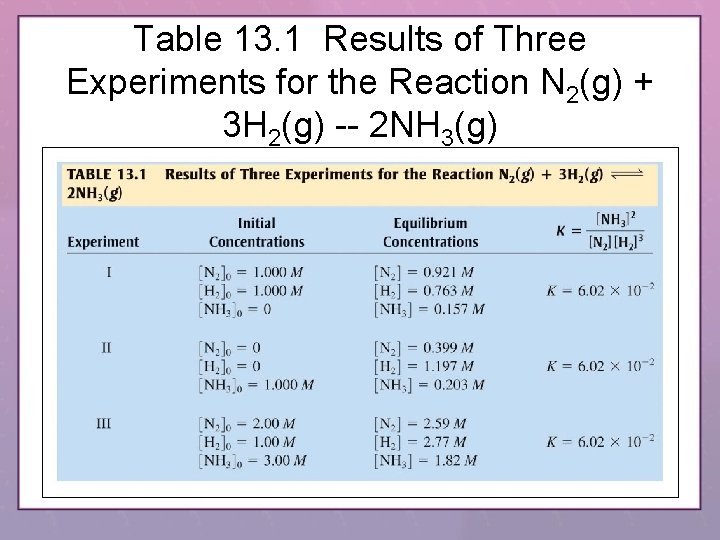
Table 13. 1 Results of Three Experiments for the Reaction N 2(g) + 3 H 2(g) -- 2 NH 3(g)
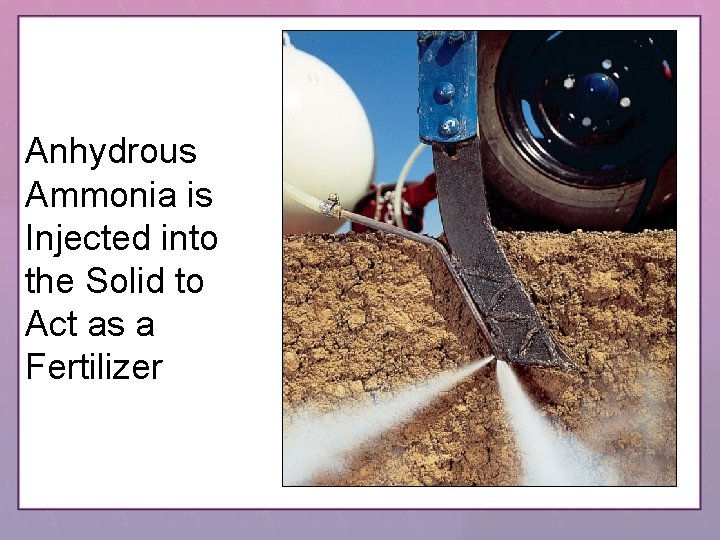
Anhydrous Ammonia is Injected into the Solid to Act as a Fertilizer
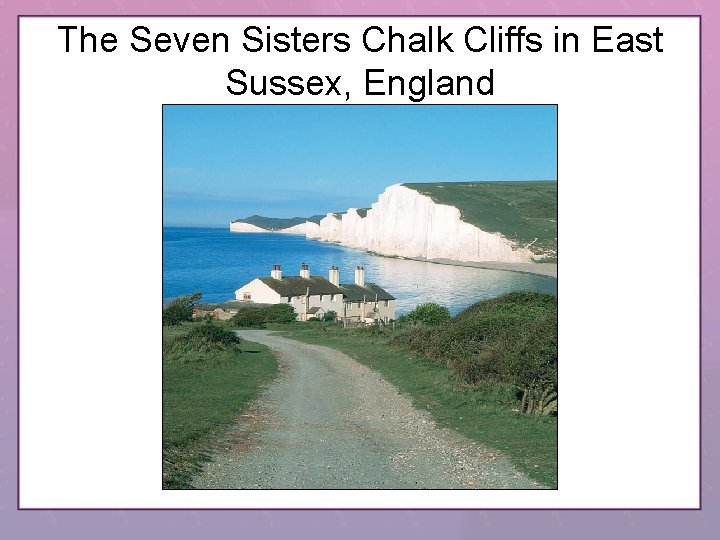
The Seven Sisters Chalk Cliffs in East Sussex, England
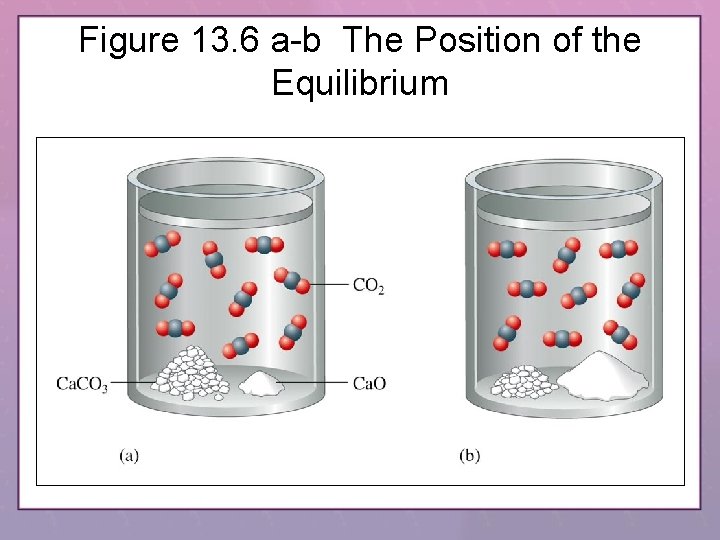
Figure 13. 6 a-b The Position of the Equilibrium
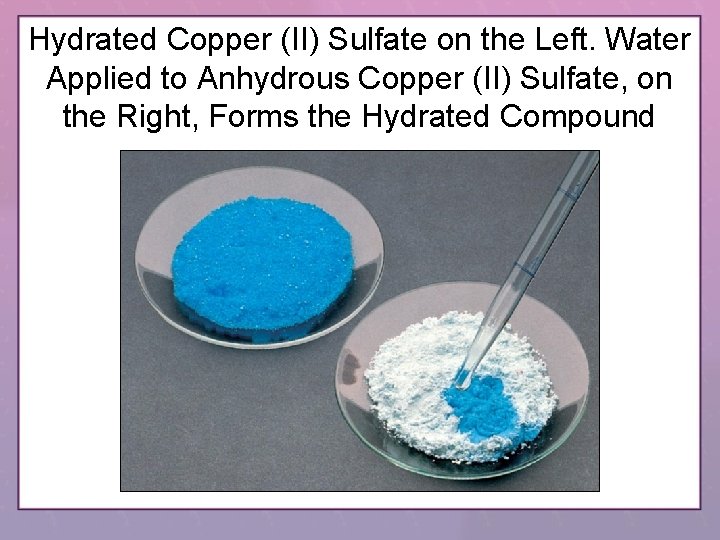
Hydrated Copper (II) Sulfate on the Left. Water Applied to Anhydrous Copper (II) Sulfate, on the Right, Forms the Hydrated Compound
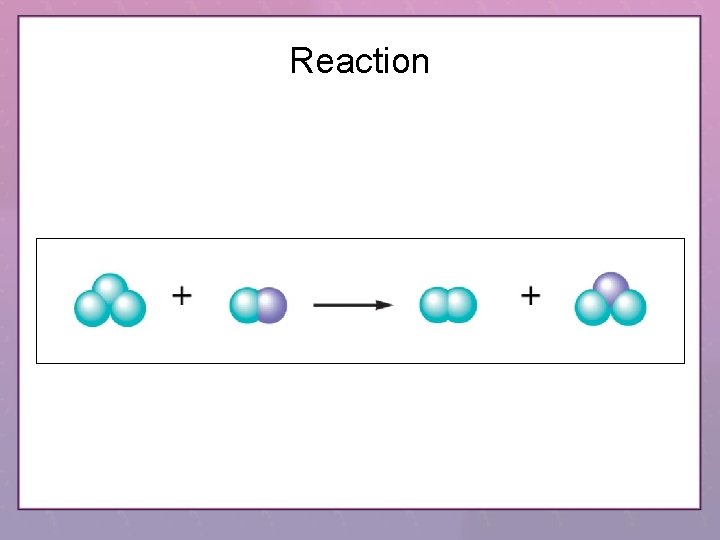
Reaction
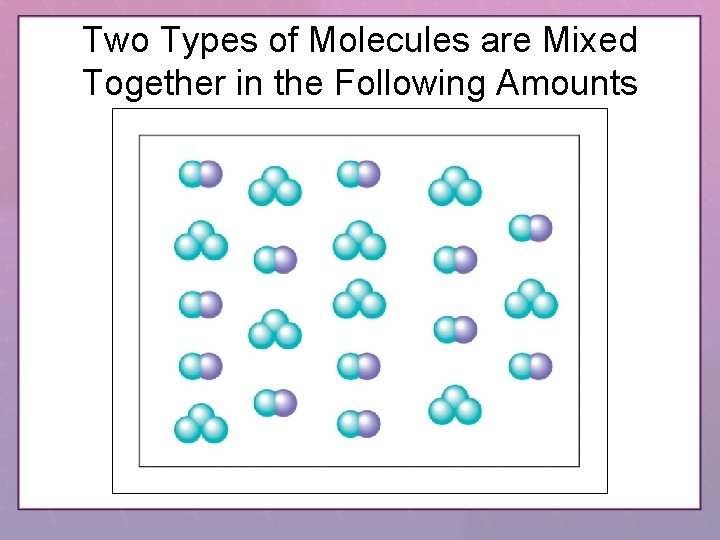
Two Types of Molecules are Mixed Together in the Following Amounts
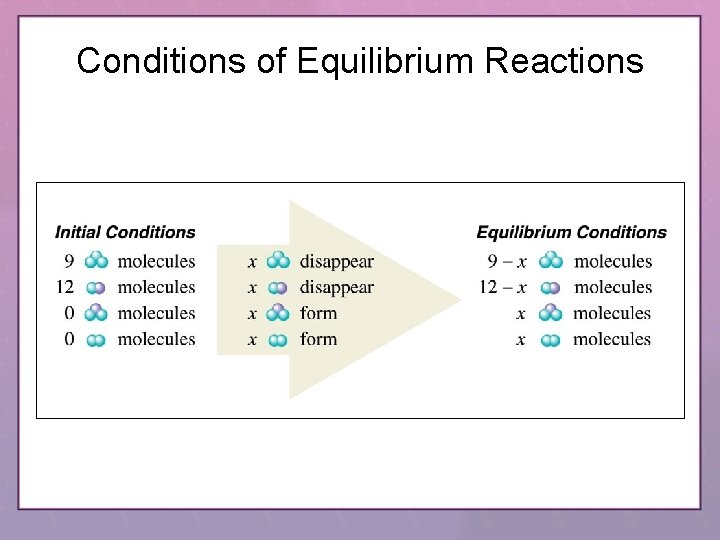
Conditions of Equilibrium Reactions
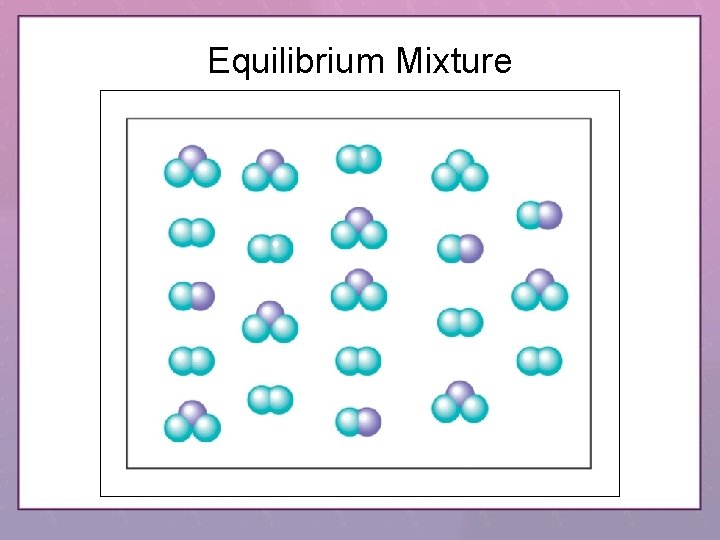
Equilibrium Mixture
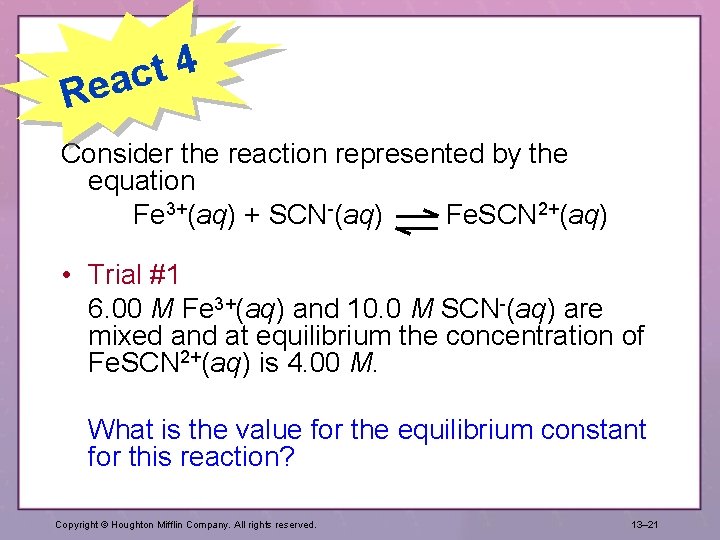
4 t eac R Consider the reaction represented by the equation Fe 3+(aq) + SCN-(aq) Fe. SCN 2+(aq) • Trial #1 6. 00 M Fe 3+(aq) and 10. 0 M SCN-(aq) are mixed and at equilibrium the concentration of Fe. SCN 2+(aq) is 4. 00 M. What is the value for the equilibrium constant for this reaction? Copyright © Houghton Mifflin Company. All rights reserved. 13– 21
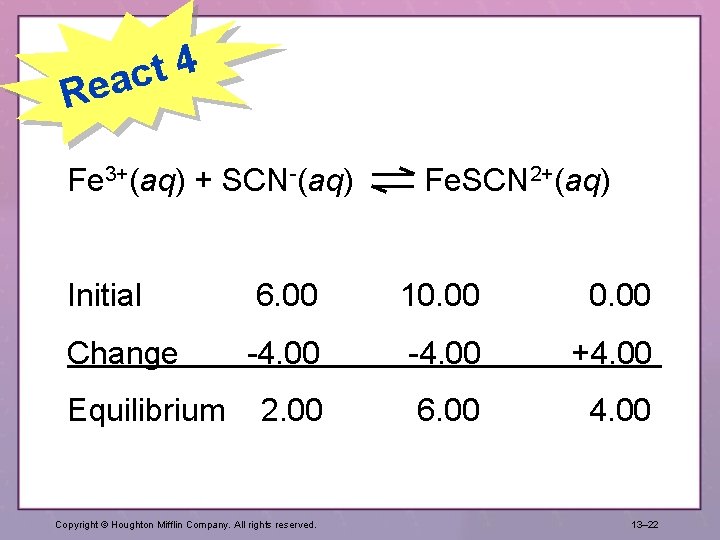
4 t eac R Fe 3+(aq) + SCN-(aq) Fe. SCN 2+(aq) Initial 6. 00 10. 00 Change -4. 00 +4. 00 Equilibrium 2. 00 4. 00 Copyright © Houghton Mifflin Company. All rights reserved. 6. 00 13– 22
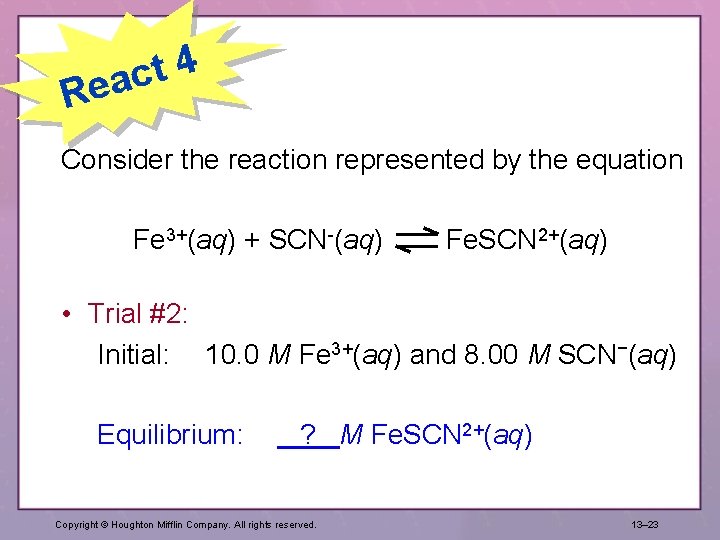
4 t eac R Consider the reaction represented by the equation Fe 3+(aq) + SCN-(aq) Fe. SCN 2+(aq) • Trial #2: Initial: 10. 0 M Fe 3+(aq) and 8. 00 M SCN−(aq) Equilibrium: ? M Fe. SCN 2+(aq) Copyright © Houghton Mifflin Company. All rights reserved. 13– 23
4 t eac R Consider the reaction represented by the equation Fe 3+(aq) + SCN-(aq) Fe. SCN 2+(aq) • Trial #3: Initial: 6. 00 M Fe 3+(aq) and 6. 00 M SCN−(aq) Equilibrium: ? M Fe. SCN 2+(aq) Copyright © Houghton Mifflin Company. All rights reserved. 13– 24
7 t eac R A 2. 0 mol sample of ammonia is introduced into a 1. 00 L container. At a certain temperature, the ammonia partially dissociates according to the equation NH 3(g) N 2(g) + H 2(g) At equilibrium 1. 00 mol of ammonia remains. Calculate the value for K. Copyright © Houghton Mifflin Company. All rights reserved. 13– 25
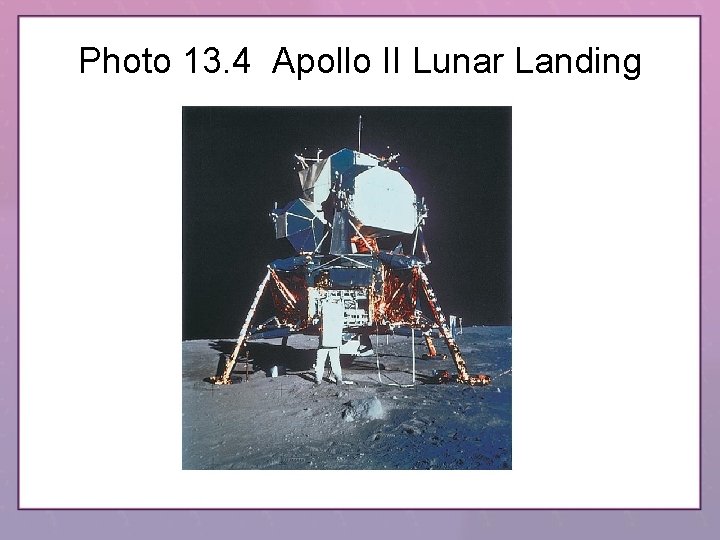
Photo 13. 4 Apollo II Lunar Landing
8 t eac R A 1. 00 mol sample of N 2 O 4(g) is placed in a 10. 0 L vessel and allowed to reach equilibrium according to the equation N 2 O 4(g) 2 NO 2(g) K = 4. 00 x 10 -4 Calculate the equilibrium concentrations of N 2 O 4(g) and NO 2(g). Copyright © Houghton Mifflin Company. All rights reserved. 13– 27
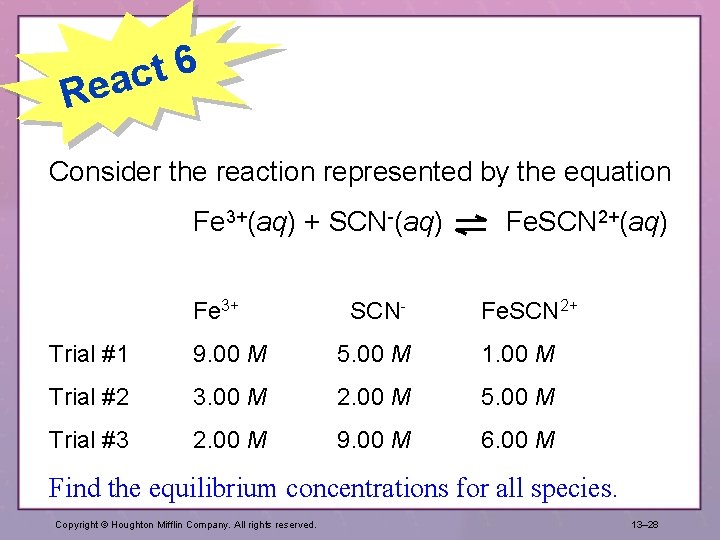
6 t eac R Consider the reaction represented by the equation Fe 3+(aq) + SCN-(aq) Fe. SCN 2+(aq) Fe 3+ SCN- Fe. SCN 2+ Trial #1 9. 00 M 5. 00 M 1. 00 M Trial #2 3. 00 M 2. 00 M 5. 00 M Trial #3 2. 00 M 9. 00 M 6. 00 M Find the equilibrium concentrations for all species. Copyright © Houghton Mifflin Company. All rights reserved. 13– 28
Le. Châtelier’s Principle
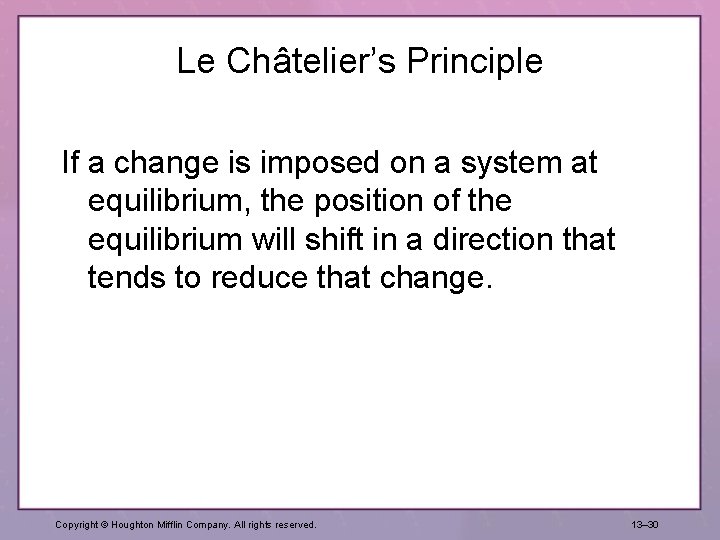
Le Châtelier’s Principle If a change is imposed on a system at equilibrium, the position of the equilibrium will shift in a direction that tends to reduce that change. Copyright © Houghton Mifflin Company. All rights reserved. 13– 30
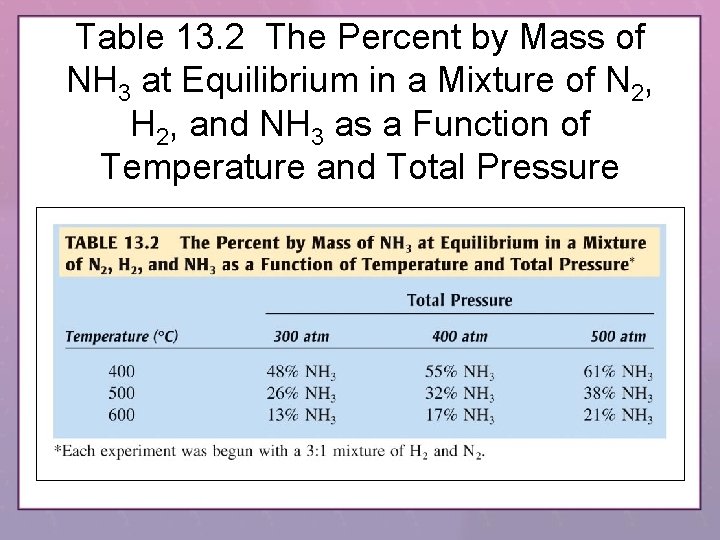
Table 13. 2 The Percent by Mass of NH 3 at Equilibrium in a Mixture of N 2, H 2, and NH 3 as a Function of Temperature and Total Pressure
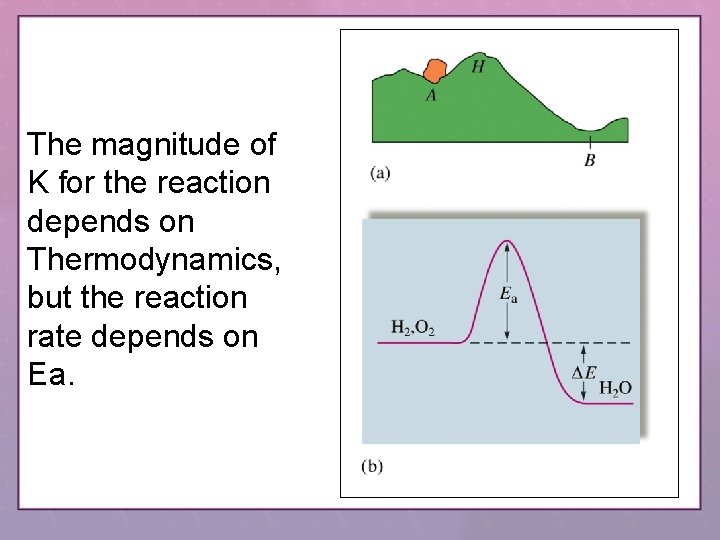
The magnitude of K for the reaction depends on Thermodynamics, but the reaction rate depends on Ea.
Effects of Changes on the System 1. Concentration: The system will shift away from the added component. 2. Temperature: K will change depending upon the temperature (treat the energy change as a reactant). Copyright © Houghton Mifflin Company. All rights reserved. 13– 33
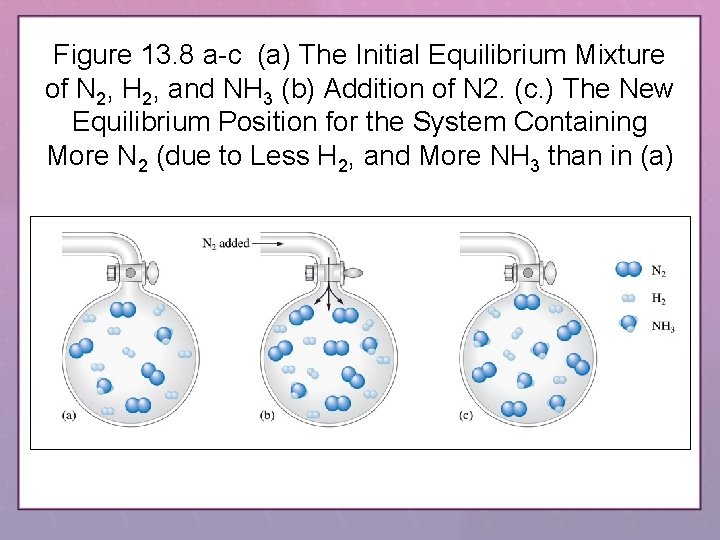
Figure 13. 8 a-c (a) The Initial Equilibrium Mixture of N 2, H 2, and NH 3 (b) Addition of N 2. (c. ) The New Equilibrium Position for the System Containing More N 2 (due to Less H 2, and More NH 3 than in (a)
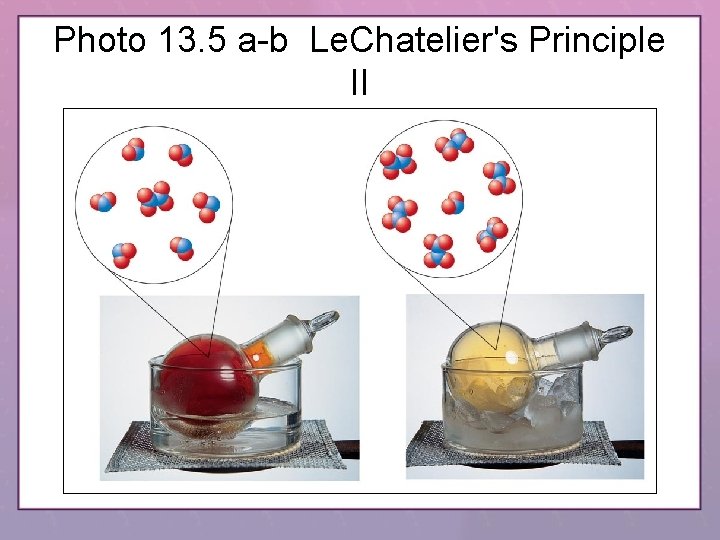
Photo 13. 5 a-b Le. Chatelier's Principle II
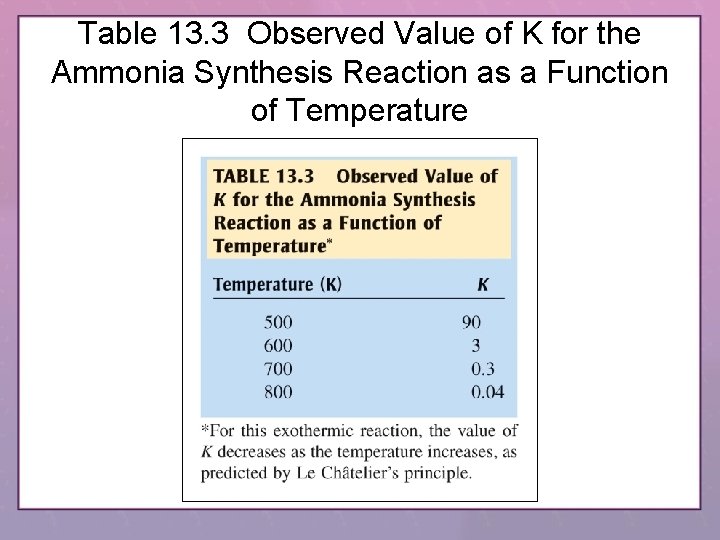
Table 13. 3 Observed Value of K for the Ammonia Synthesis Reaction as a Function of Temperature
Effects of Changes on the System 3. Pressure: a) Addition of inert gas does not affect the equilibrium position. b) Decreasing the volume shifts the equilibrium toward the side with fewer moles. Copyright © Houghton Mifflin Company. All rights reserved. 13– 37
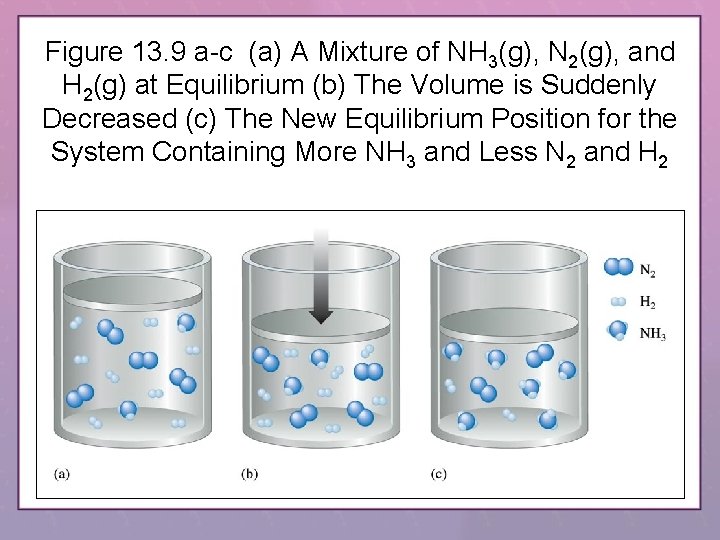
Figure 13. 9 a-c (a) A Mixture of NH 3(g), N 2(g), and H 2(g) at Equilibrium (b) The Volume is Suddenly Decreased (c) The New Equilibrium Position for the System Containing More NH 3 and Less N 2 and H 2
Le. Châtelier’s Principle Copyright © Houghton Mifflin Company. All rights reserved. 13– 39
Equilibrium Decomposition of N 2 O 4 Copyright © Houghton Mifflin Company. All rights reserved. 13– 40
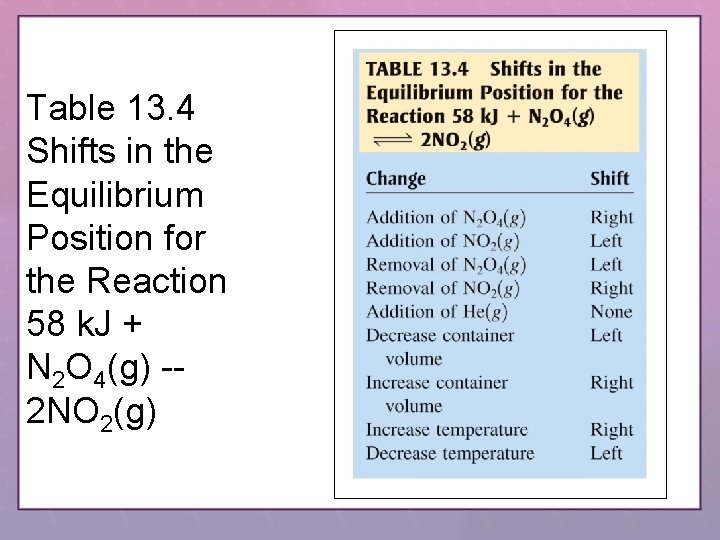
Table 13. 4 Shifts in the Equilibrium Position for the Reaction 58 k. J + N 2 O 4(g) -2 NO 2(g)
- Slides: 41