
Chapter Ten Managing Organizational Structure and Culture Mc
- Slides: 31
Chapter Ten Managing Organizational Structure and Culture Mc. Graw-Hill/Irwin Copyright © 2009 by The Mc. Graw-Hill Companies, Inc. All rights reserved.
Organizational Structure Ø Organizational Architecture ≈ The organizational structure, control systems, culture, and human resource management systems that together determine how efficiently and effectively organizational resources are used. § Mngt 443 10 -2
Designing Organizational Structure Ø Organizing ≈ The process by which managers establish working relationships among employees to achieve goals. Ø Organizational Structure ≈ Formal system of task and reporting relationships showing how workers use resources. 10 -3
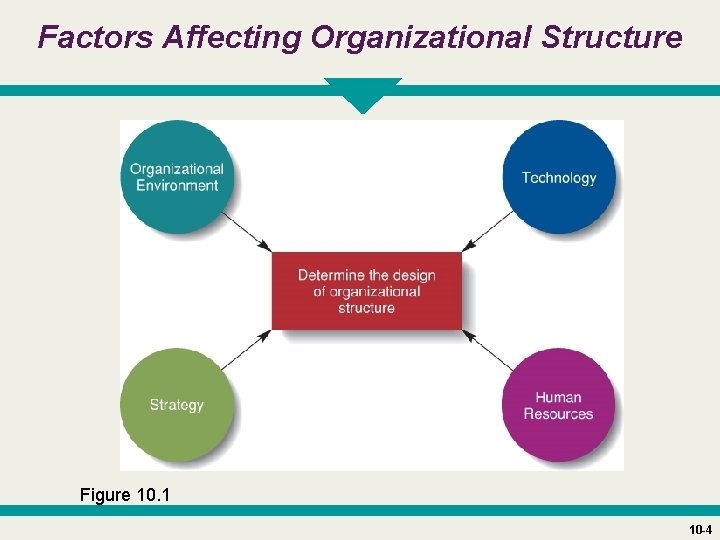
Factors Affecting Organizational Structure Figure 10. 1 10 -4
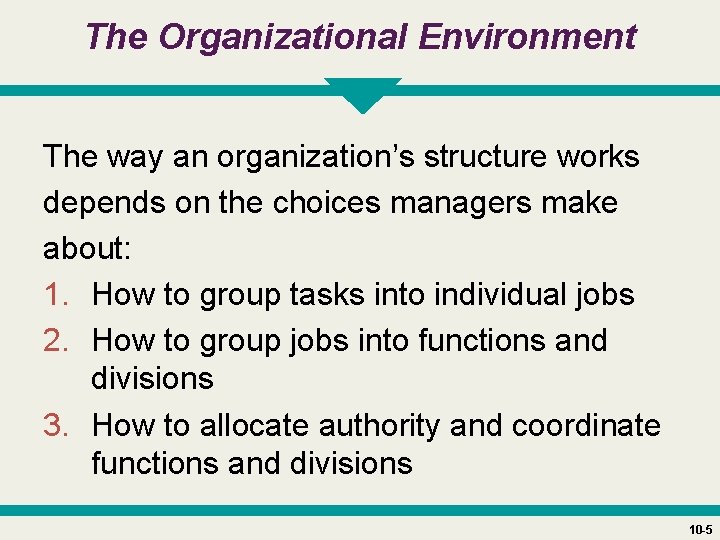
The Organizational Environment The way an organization’s structure works depends on the choices managers make about: 1. How to group tasks into individual jobs 2. How to group jobs into functions and divisions 3. How to allocate authority and coordinate functions and divisions 10 -5
Job Design Ø Job Design ≈ The process by which managers decide how to divide tasks into specific jobs. ≈ The appropriate division of labor results in an effective and efficient workforce. 10 -6
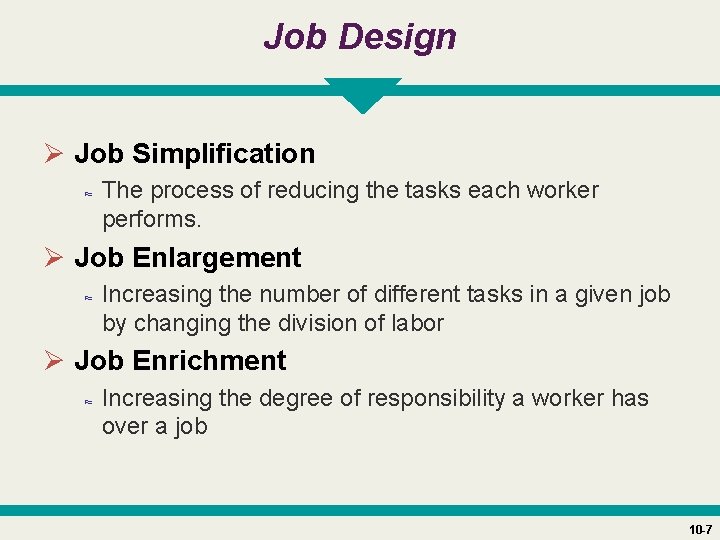
Job Design Ø Job Simplification ≈ The process of reducing the tasks each worker performs. Ø Job Enlargement ≈ Increasing the number of different tasks in a given job by changing the division of labor Ø Job Enrichment ≈ Increasing the degree of responsibility a worker has over a job 10 -7
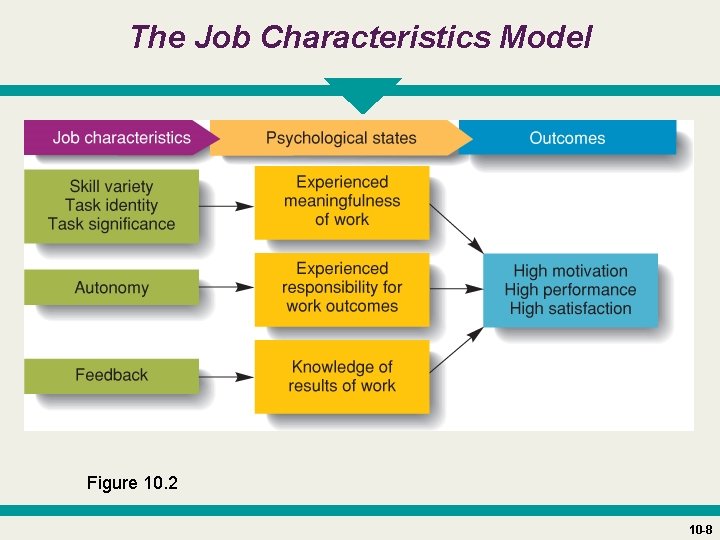
The Job Characteristics Model Figure 10. 2 10 -8
Grouping Jobs into Functions Ø Functional Structure ≈ An organizational structure composed of all the departments that an organization requires to produce its goods or services. 10 -9
Functional Structure Ø Advantages ≈ Encourages learning from others doing similar jobs. ≈ Easy for managers to monitor and evaluate workers. ≈ Allows managers to create the set of functions they need in order to scan and monitor the competitive environment 10 -10
Functional Structure Ø Disadvantages ≈ Difficult for departments to communicate with others. ≈ Preoccupation with own department and losing sight of organizational goals. 10 -11
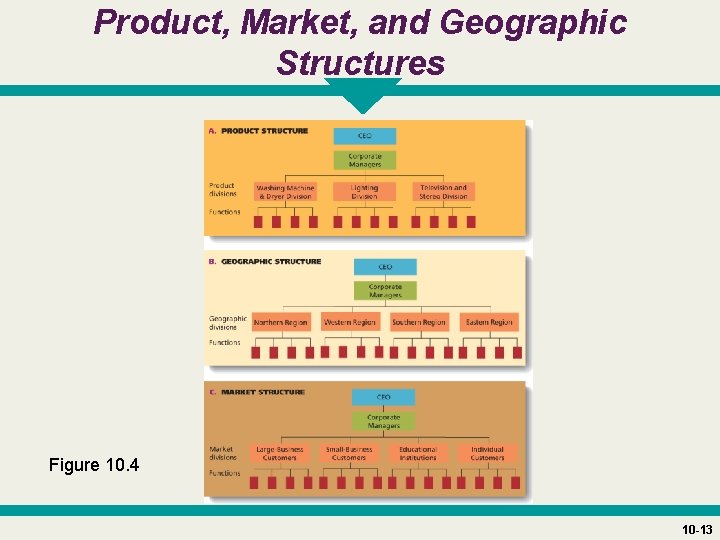
Divisional Structures Ø Divisional Structure ≈ Managers create a series of business units to produce a specific kind of product for a specific kind of customer ≈ Product, market, geographic 10 -12
Product, Market, and Geographic Structures Figure 10. 4 10 -13
Types of Divisional Structures Ø Product Structure ≈ Managers place each distinct product line or business in its own self-contained division ≈ Divisional managers have the responsibility for devising an appropriate business-level strategy to allow the division to compete effectively in its industry 10 -14
Types of Divisional Structures Ø Geographic Structure ≈ Divisions are broken down by geographic location Ø Global geographic structure ≈ Managers locate different divisions in each of the world regions where the organization operates. ≈ Generally, occurs when managers are pursuing a multi-domestic strategy 10 -15
Types of Divisional Structures Ø Market Structure ≈ Groups divisions according to the particular kinds of customers they serve ≈ Allows managers to be responsive to the needs of their customers and act flexibly in making decisions in response to customers’ changing needs 10 -16
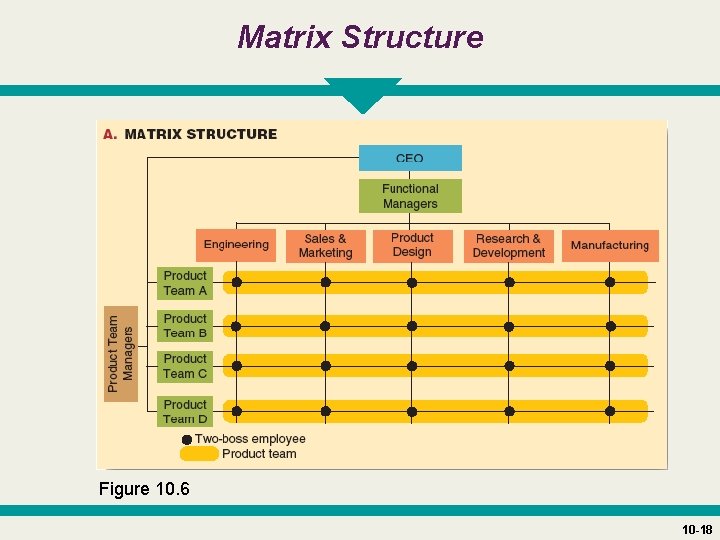
Matrix Design Structure Ø Matrix Structure ≈ An organizational structure that simultaneously groups people and resources by function and product. ≈ The structure is very flexible and can respond rapidly to the need for change. ≈ Each employee has two bosses 10 -17
Matrix Structure Figure 10. 6 10 -18
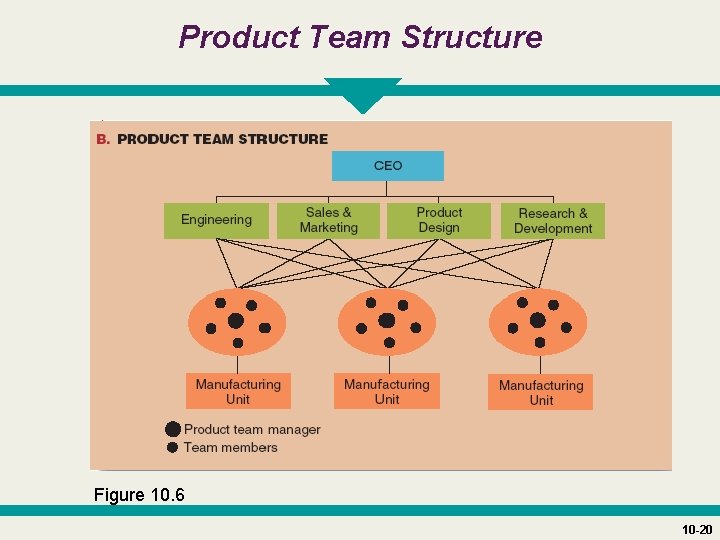
Product Team Design Structure Ø Product Team Structure ≈ Does away with dual reporting relationships and two-boss managers ≈ Functional employees are permanently assigned to a cross-functional team that is empowered to bring a new or redesigned product to work 10 -19
Product Team Structure Figure 10. 6 10 -20
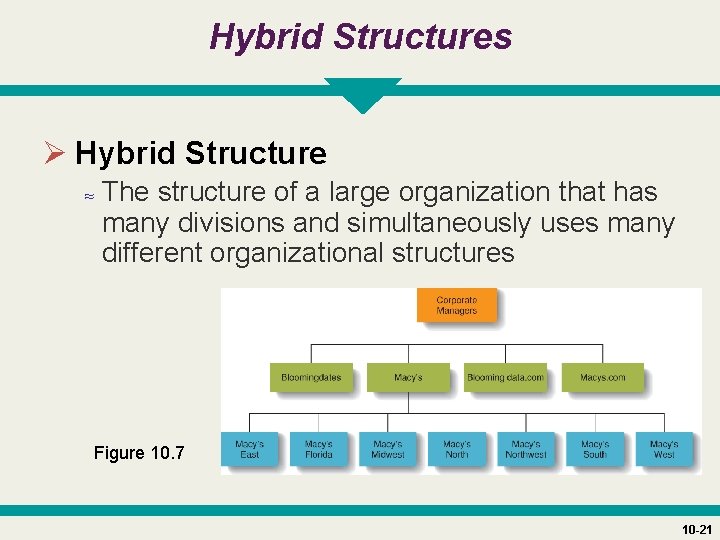
Hybrid Structures Ø Hybrid Structure ≈ The structure of a large organization that has many divisions and simultaneously uses many different organizational structures Figure 10. 7 10 -21
Coordinating Functions: Allocating Authority Ø Authority ≈ The power vested in a manager to make decisions and use resources to achieve organizational goals by virtue of his position in an organization 10 -22
Allocating Authority Ø Line Manager ≈ Someone in the direct line or chain of command who has formal authority over people and resources § Line function is directly involved in production of good/service Ø Staff Manager ≈ Managers who are functional-area specialists that give advice to line managers. § Clarification re: p. 362: staff managers DO have formal authority over people and resources, i. e. , staff function (accounting and finance, HR, etc. ) 10 -23
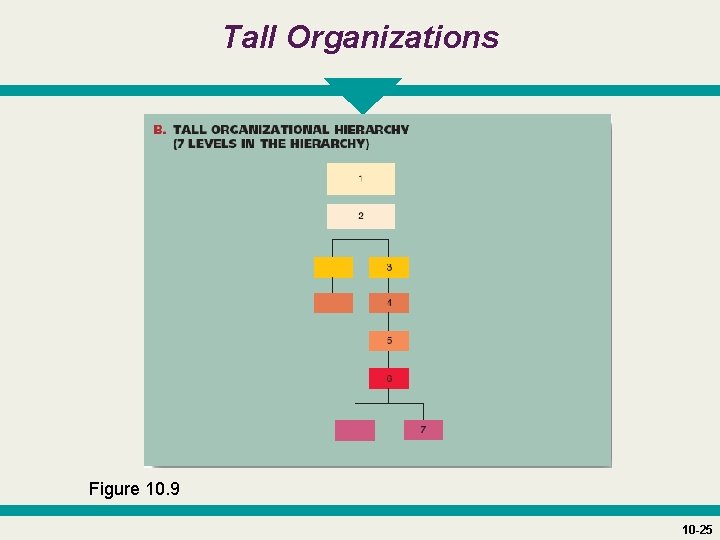
Tall and Flat Organizations Ø Tall structures have many levels of authority and narrow spans of control. ≈ As hierarchy levels increase, communication gets difficult creating delays in the time being taken to implement decisions. ≈ Communications can also become distorted as it is repeated through the firm. ≈ Can become expensive 10 -24
Tall Organizations Figure 10. 9 10 -25
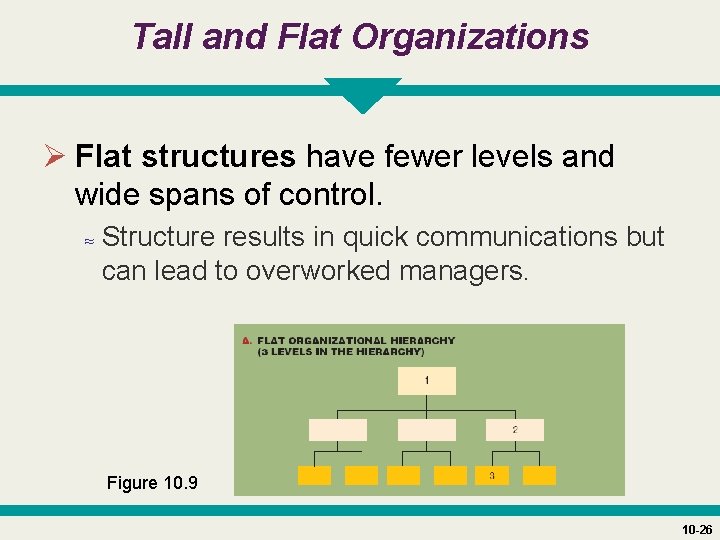
Tall and Flat Organizations Ø Flat structures have fewer levels and wide spans of control. ≈ Structure results in quick communications but can lead to overworked managers. Figure 10. 9 10 -26
Centralization and Decentralization of Authority Ø Decentralizing authority ≈ giving lower-level managers and nonmanagerial employees the right to make important decisions about how to use organizational resources 10 -27
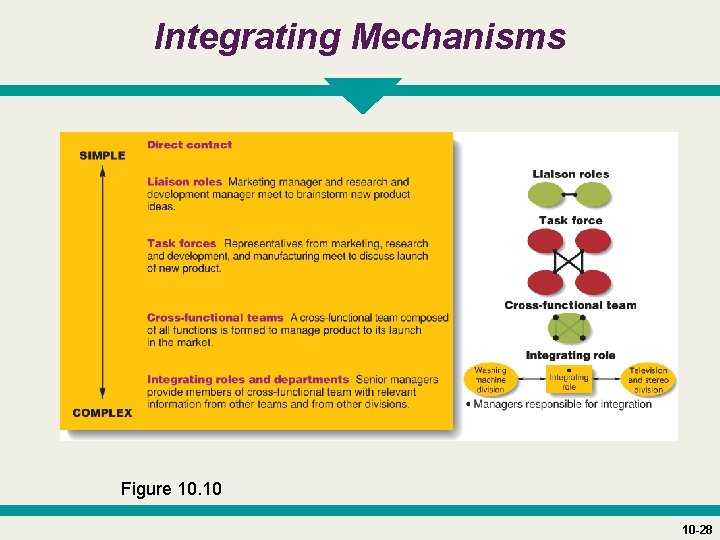
Integrating Mechanisms Figure 10. 10 10 -28
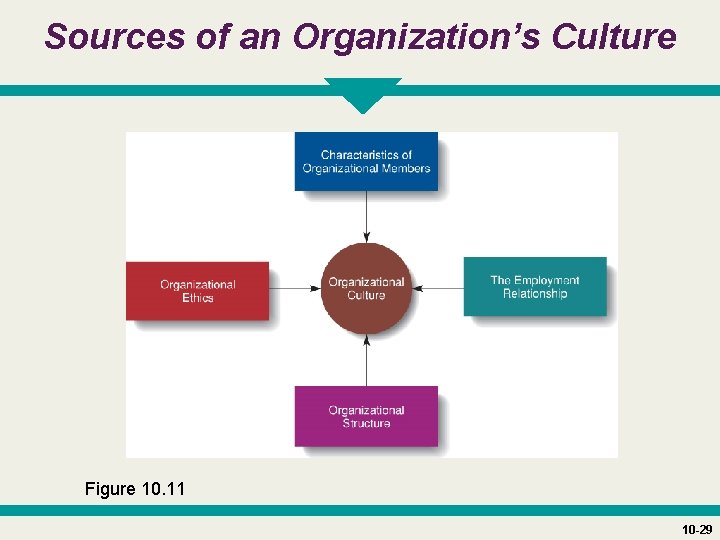
Sources of an Organization’s Culture Figure 10. 11 10 -29
Employment Relationship Ø Human resource policies: ≈ Can influence how hard employees will work to achieve the organization’s goals, ≈ How attached they will be to it ≈ Whether or not they will buy into its values and norms 10 -30
Strong, Adaptive Cultures Versus Weak, Inert Cultures Ø Adaptive cultures ≈ values and norms help an organization to build momentum and to grow and change as needed to achieve its goals and be effective Ø Inert cultures ≈ Those that lead to values and norms that fail to motivate or inspire employees ≈ Lead to stagnation and often failure over time 10 -31