
Chapter Six Supervisory Behavior Continuum Know Thyself Valid
Chapter Six: Supervisory Behavior Continuum: Know Thyself Valid Self-Assessment Johari Window Cognitive Dissonance Self-Perceptions

Supervisory Behaviors: Purposeful Supervision: l Listening: Supervisor looks at speaker, giving feedback to indicate understanding. l (Glickman, 1981, 2002)

Supervisory Behaviors: l Clarifying: Supervisor asks questions and makes statements to clarify speaker's point of view.
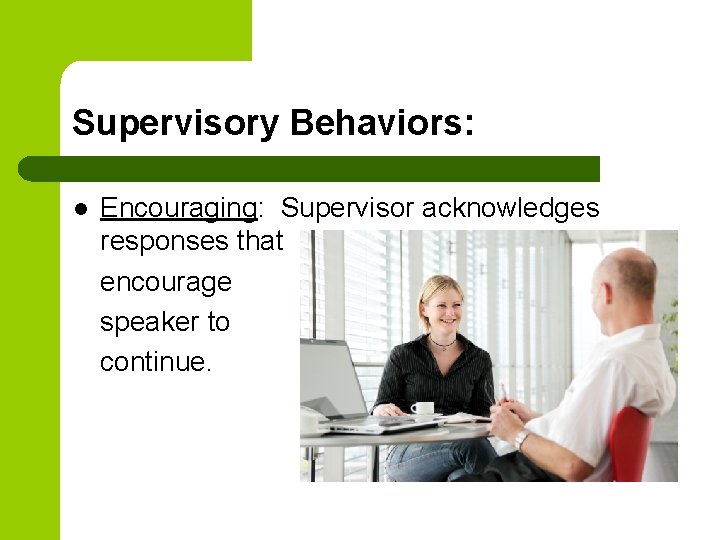
Supervisory Behaviors: l Encouraging: Supervisor acknowledges responses that encourage speaker to continue.
Supervisory Behaviors: l Reflecting: Supervisor summarizes and paraphrases the speaker's message.
Supervisory Behaviors: l Presenting: Supervisor gives his or her own ideas about the issues being discussed.
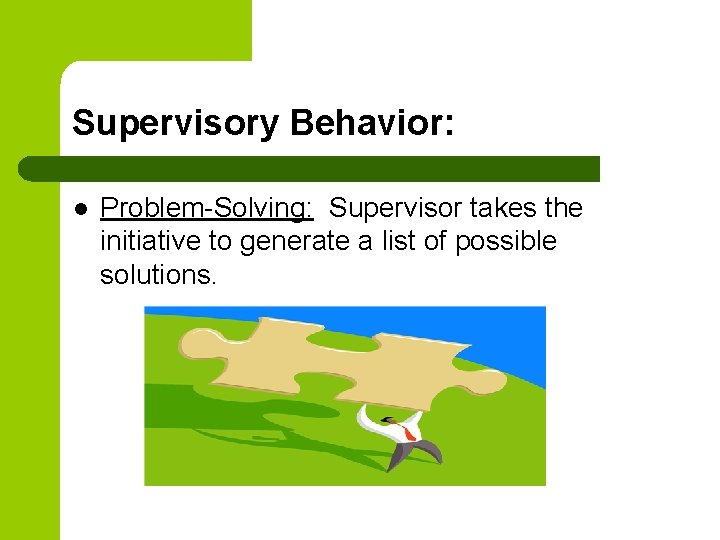
Supervisory Behavior: l Problem-Solving: Supervisor takes the initiative to generate a list of possible solutions.
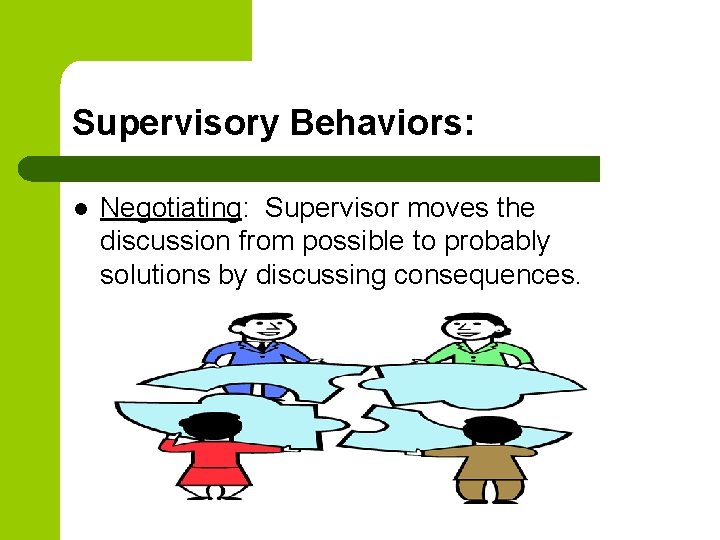
Supervisory Behaviors: l Negotiating: Supervisor moves the discussion from possible to probably solutions by discussing consequences.
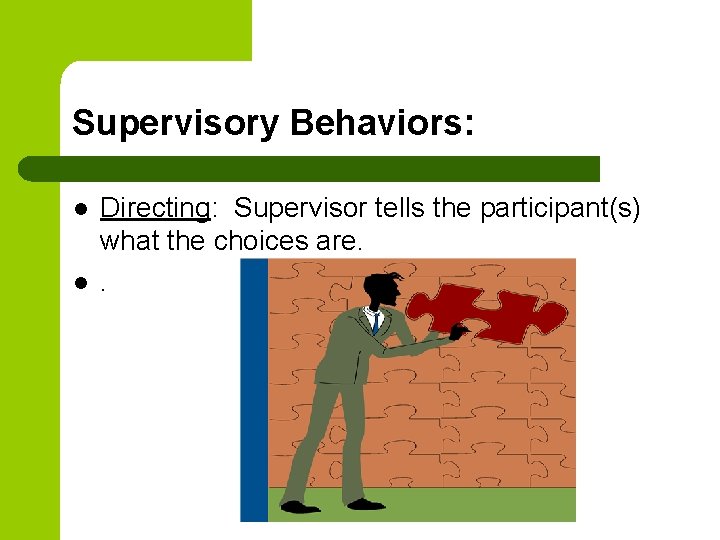
Supervisory Behaviors: l l Directing: Supervisor tells the participant(s) what the choices are. .
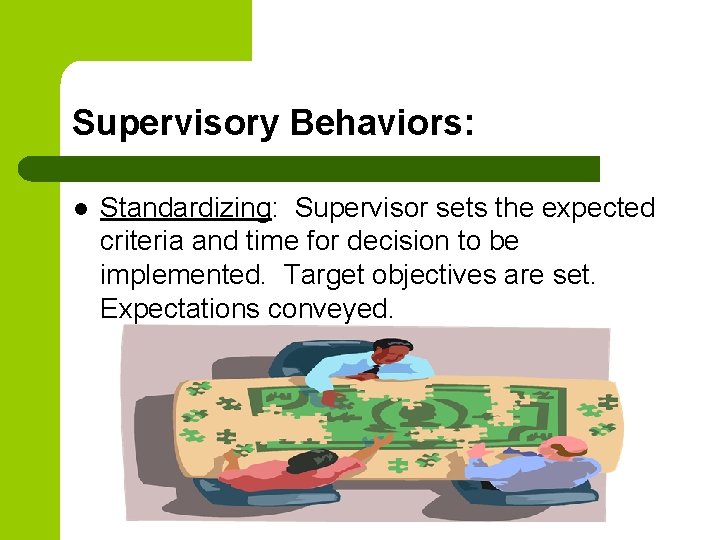
Supervisory Behaviors: l Standardizing: Supervisor sets the expected criteria and time for decision to be implemented. Target objectives are set. Expectations conveyed.
Supervisory Behaviors: Outcomes of Conference: l Nondirective: Teacher self-plan. l Collaborative: Mutual Plan l Directive Informational: Supervisor-suggested plan. l Directive Control: Supervisor-assigned plan. l
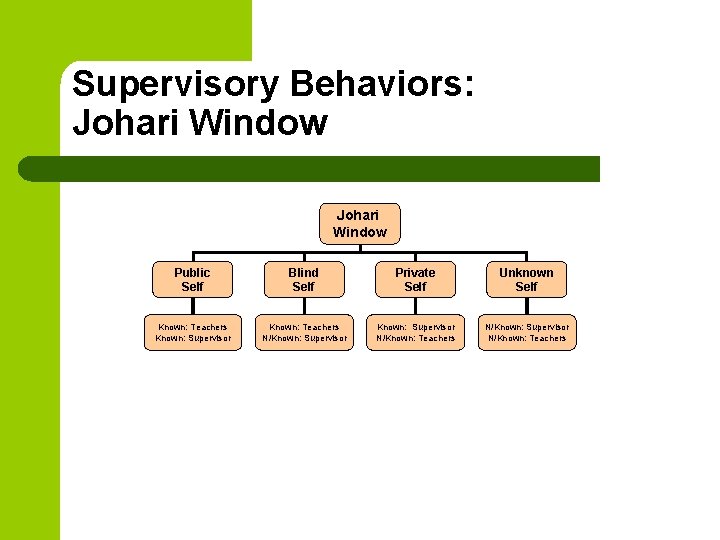
Supervisory Behaviors: Johari Window Public Self Blind Self Private Self Unknown Self Known: Teachers Known: Supervisor Known: Teachers N/Known: Supervisor N/Known: Teachers

Johari Window Public Self: Known to teachers Known to supervisor l
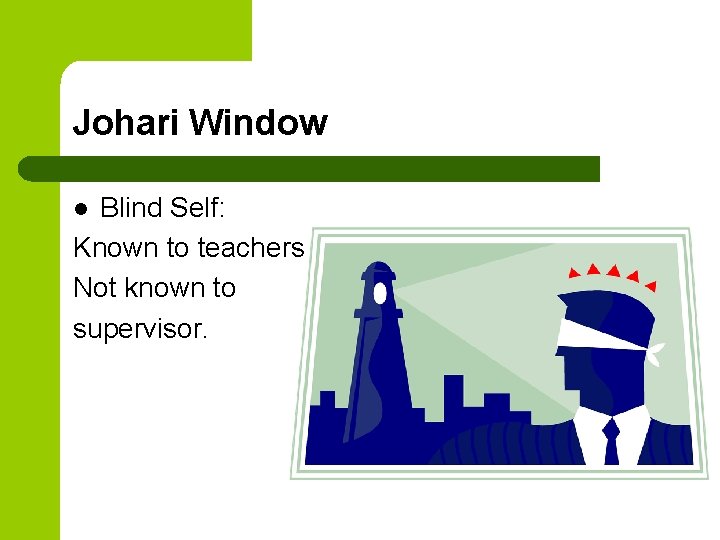
Johari Window Blind Self: Known to teachers Not known to supervisor. l
Johairi Window: Private Self: Not known to teachers Known to supervisor l
Johari Window Unknown Self: Not known to teachers. Not known to supervisor. l
Supervisory Behaviors: l Cognitive Dissonance: l Contradictory psychological evidence creates cognitive dissonance. (Festinger, 1957) Perceptions don't match contradictory evidence. l l l
Supervisory Behaviors: l Dismiss source of contrary evidence
Supervisory Behaviors: l Change self-perception to conform to evidence
Supervisory Behaviors: l Create behavioral change.
- Slides: 20