
Chapter Six Strategic Management How Star Managers Realize

- Slides: 48
Chapter Six Strategic Management How Star Managers Realize a Grand Design Mc. Graw-Hill/Irwin Copyright © 2009 by The Mc. Graw-Hill Companies, All Rights Reserved.
Key Points • • • Competitive Advantage Effective Strategy Strategic Process Different forms of Grand Strategies SWOT Predictive Tools Porter Five Strategic Forces Porter Strategies Product Life Cycle Competitve Intelligence 6 -2
Major Questions You Should Be Able to Answer 6. 1 Am I really managing if I don’t have a strategy? 6. 2 What’s the five-step recipe for the strategic management process? 6. 3 How can SWOT and forecasting help me establish my strategy? 6 -3
Major Questions You Should Be Able to Answer 6. 4 How can two techniques-Porter’s competitive strategies and the product life cycle-help me formulate strategy? 6. 5 How does effective execution help managers during the strategicmanagement process? 6 -4
The Dynamics of Strategic Planning • Strategy large-scale action plan that sets the direction for an organization • Strategic management process that involves managers from all parts of the organization in the formulation and the implementation of strategies and strategic goals 6 -5
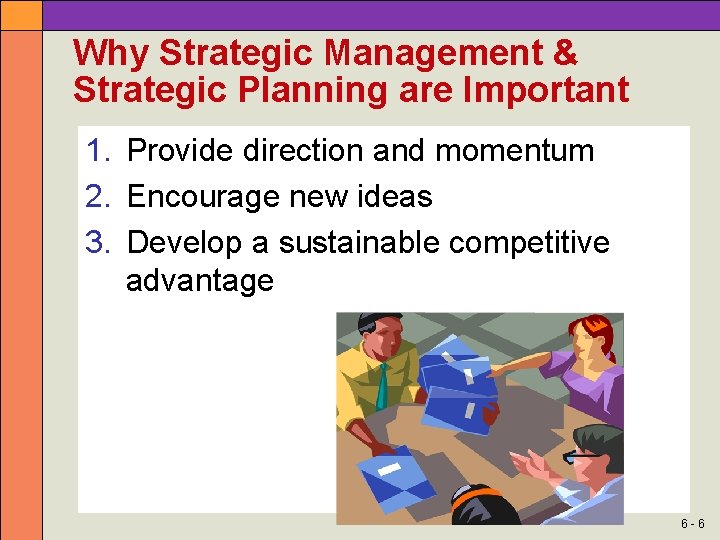
Why Strategic Management & Strategic Planning are Important 1. Provide direction and momentum 2. Encourage new ideas 3. Develop a sustainable competitive advantage 6 -6
Why Strategic Management & Strategic Planning are Important Sustainable competitive advantage occurs when an organization can stay ahead in four areas: • Being responsive to customers • Innovation • Quality • Effectiveness 6 -7
Example: Staples Simplifies Its Shopping Experience • Staples remodeled stores • Removed superfluous items from inventory • Retrained salespeople to walk customers to the correct aisle • Launched the “Easy Button” • In 2007, profit was up 7% 6 -8
What Is an Effective Strategy? • Strategic positioning attempts to achieve sustainable competitive advantage by preserving what is distinctive about a company 6 -9
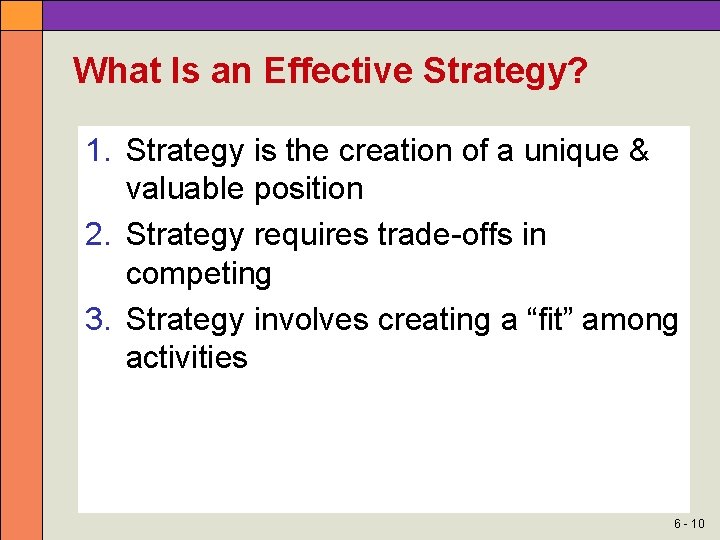
What Is an Effective Strategy? 1. Strategy is the creation of a unique & valuable position 2. Strategy requires trade-offs in competing 3. Strategy involves creating a “fit” among activities 6 - 10
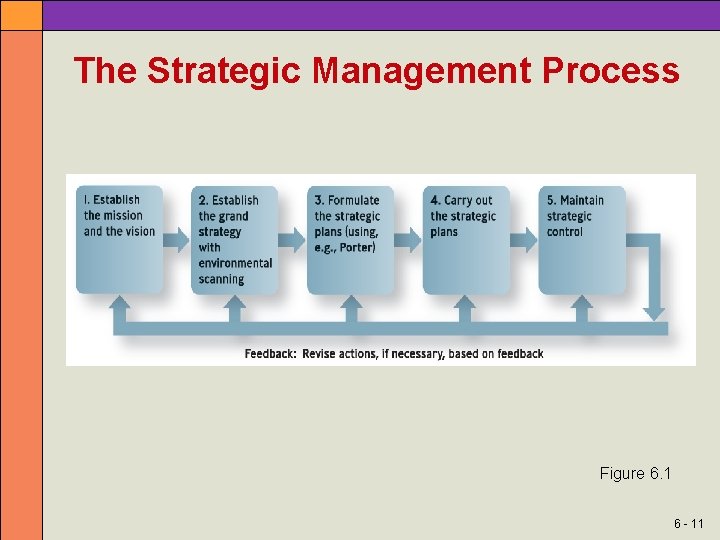
The Strategic Management Process Figure 6. 1 6 - 11
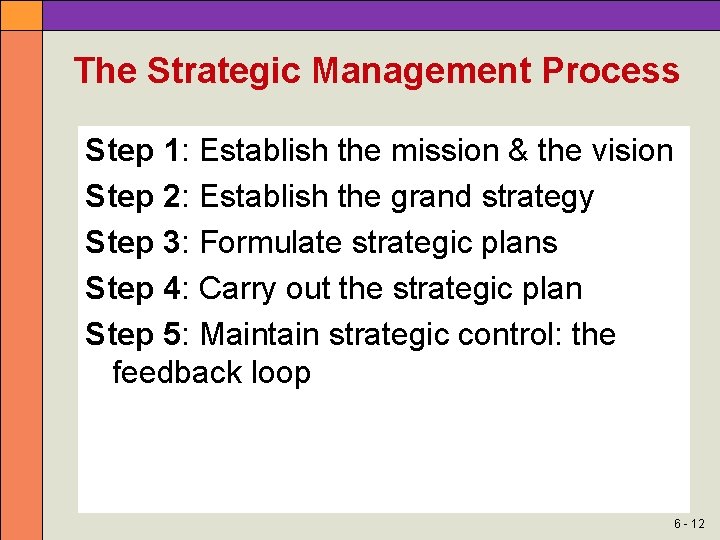
The Strategic Management Process Step 1: Establish the mission & the vision Step 2: Establish the grand strategy Step 3: Formulate strategic plans Step 4: Carry out the strategic plan Step 5: Maintain strategic control: the feedback loop 6 - 12
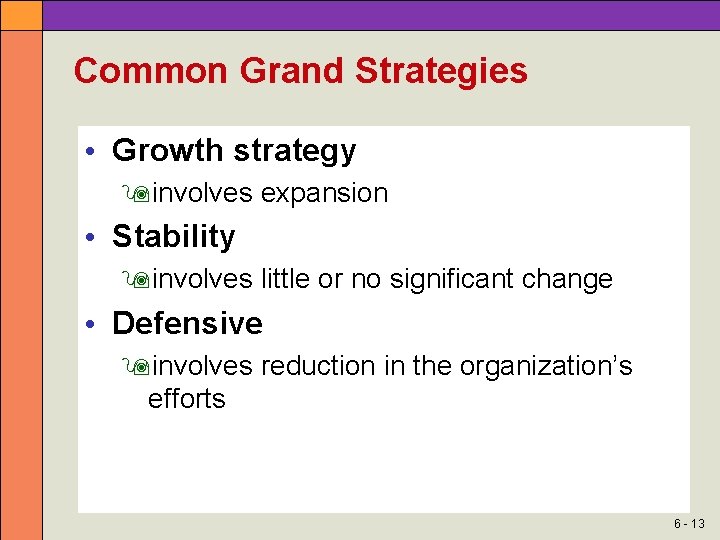
Common Grand Strategies • Growth strategy involves expansion • Stability involves little or no significant change • Defensive involves reduction in the organization’s efforts 6 - 13
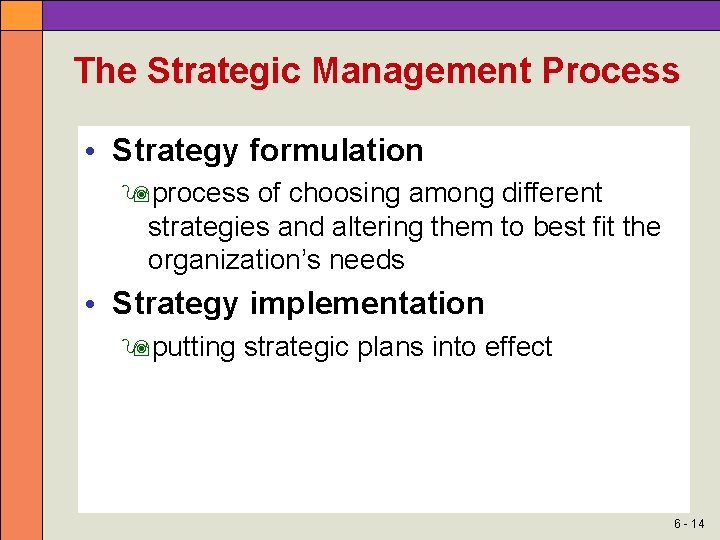
The Strategic Management Process • Strategy formulation process of choosing among different strategies and altering them to best fit the organization’s needs • Strategy implementation putting strategic plans into effect 6 - 14
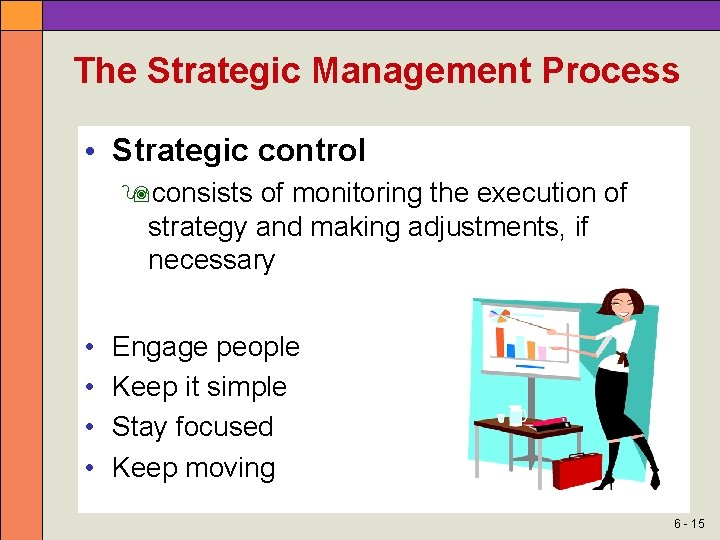
The Strategic Management Process • Strategic control consists of monitoring the execution of strategy and making adjustments, if necessary • • Engage people Keep it simple Stay focused Keep moving 6 - 15
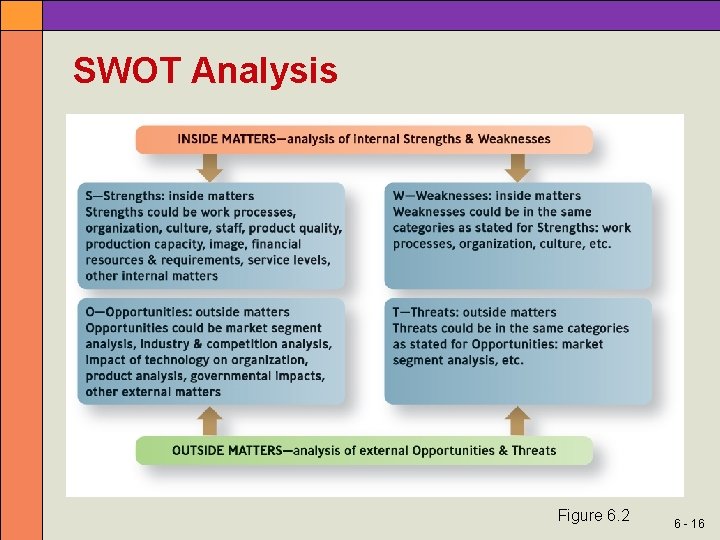
SWOT Analysis Figure 6. 2 6 - 16
SWOT Analysis • Organizational strengths skills and capabilities that give the organization special competencies and competitive advantages in executing strategies in pursuit of its mission 6 - 17
SWOT Analysis • Organizational weaknesses drawbacks that hinder an organization in executing strategies in pursuit of its mission 6 - 18
SWOT Analysis • Organizational opportunities environmental factors that the organization may exploit for competitive advantage • Organizational threats environmental factors that hinder an organization’s achieving a competitive 6 - 19
Example: How Would You Analyze Starbucks Coffee? • Strengths – much of success is based on loyalty of staff • Weaknesses – too fast growth • Opportunities – numerous overseas opportunities • Threats – national chains, mom & pop coffeehouses 6 - 20
6 - 21
Forecasting: Predicting the Future • Trend analysis hypothetical extension of a past series of events into the future • Contingency planning creation of alternative hypothetical but equally likely future conditions Also called scenario planning and scenario analysis 6 - 22
Porter’s Five Competitive Forces 1. 2. 3. 4. Threat of new entrants Bargaining power of suppliers Bargaining power of buyers Threat of substitute products or services 5. Rivalry among competitors 6 - 23
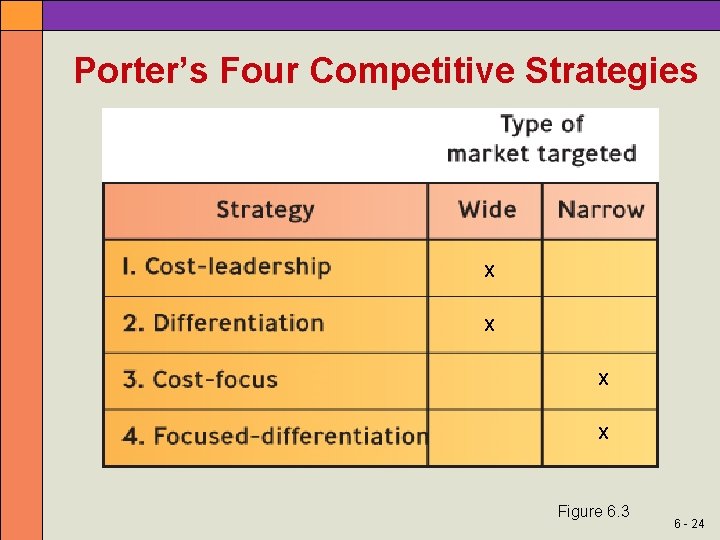
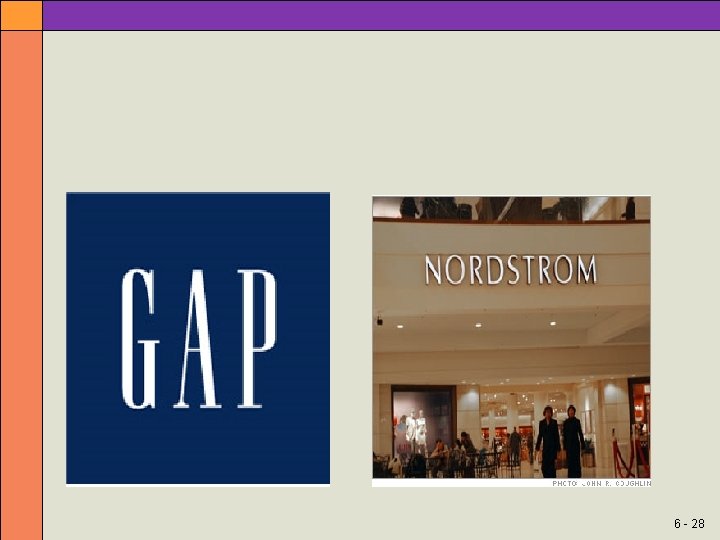
Porter’s Four Competitive Strategies X X Figure 6. 3 6 - 24
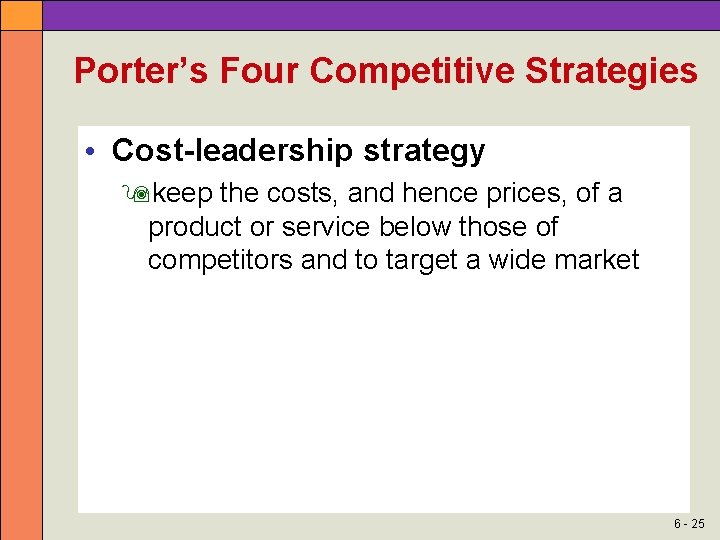
Porter’s Four Competitive Strategies • Cost-leadership strategy keep the costs, and hence prices, of a product or service below those of competitors and to target a wide market 6 - 25
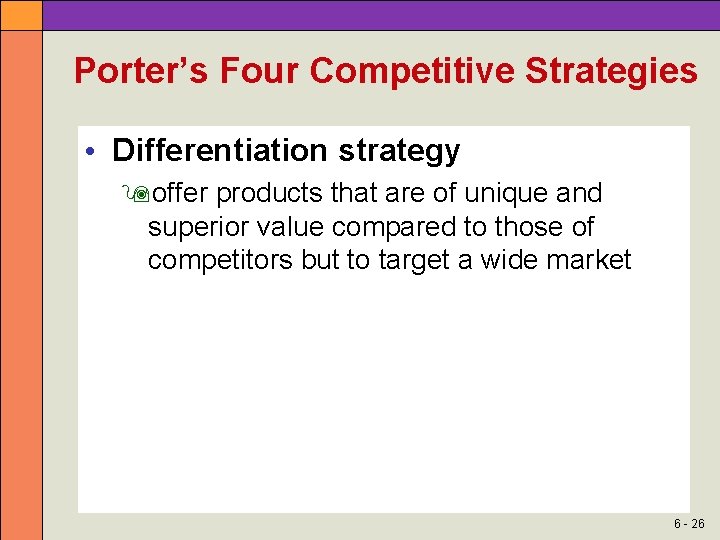
Porter’s Four Competitive Strategies • Differentiation strategy offer products that are of unique and superior value compared to those of competitors but to target a wide market 6 - 26
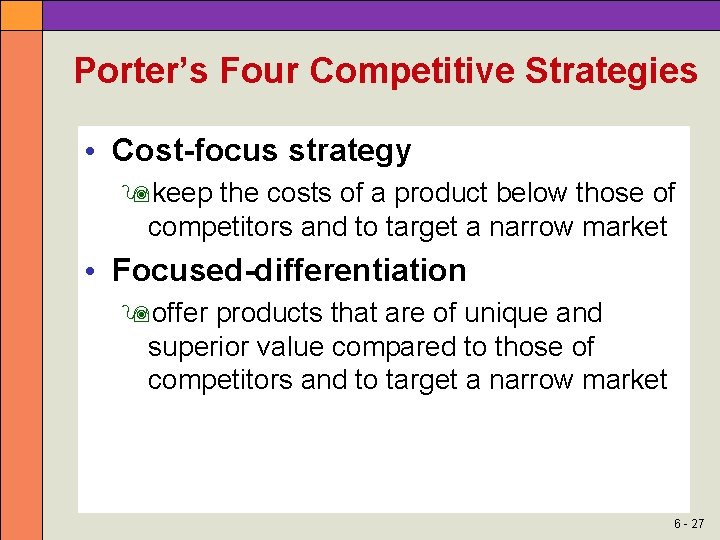
Porter’s Four Competitive Strategies • Cost-focus strategy keep the costs of a product below those of competitors and to target a narrow market • Focused-differentiation offer products that are of unique and superior value compared to those of competitors and to target a narrow market 6 - 27
6 - 28
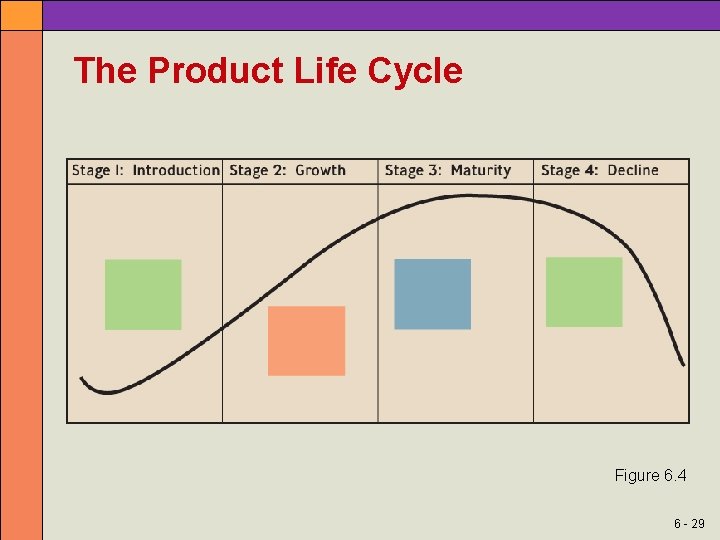
The Product Life Cycle Figure 6. 4 6 - 29
The Product Life Cycle Stage 1: Introduction the new product is introduced into the marketplace Stage 2: Growth most profitable stage period in which customer demand increases, the product’s sales grow, and competitors may enter the market 6 - 30
The Product Life Cycle Stage 3: Maturity period in which the product starts to fall out of favor and sales and profit begin to fall off Stage 4: Decline period in which the product falls out of favor and the organization withdraws from the marketplace 6 - 31
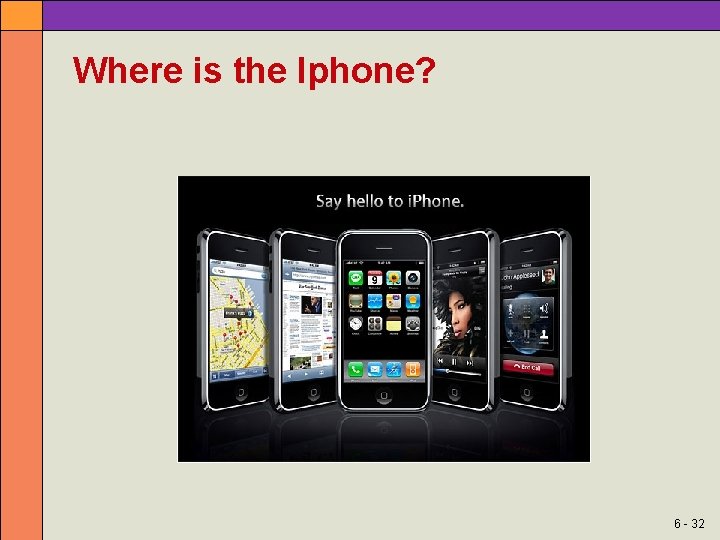
Where is the Iphone? 6 - 32
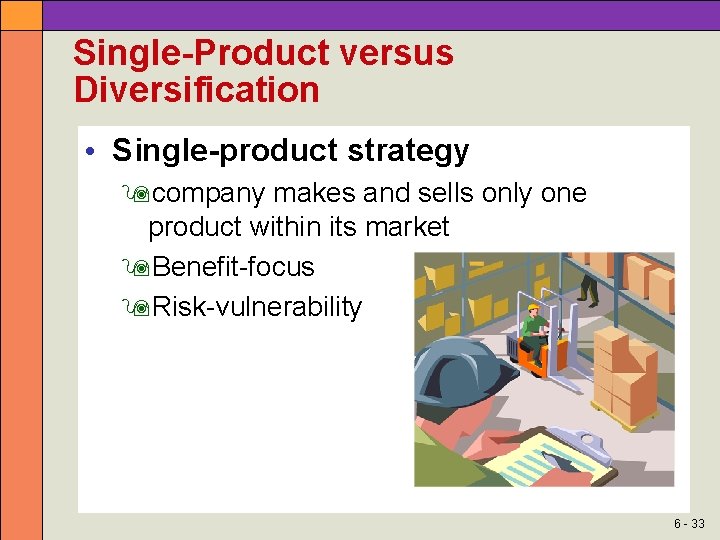
Single-Product versus Diversification • Single-product strategy company makes and sells only one product within its market Benefit-focus Risk-vulnerability 6 - 33
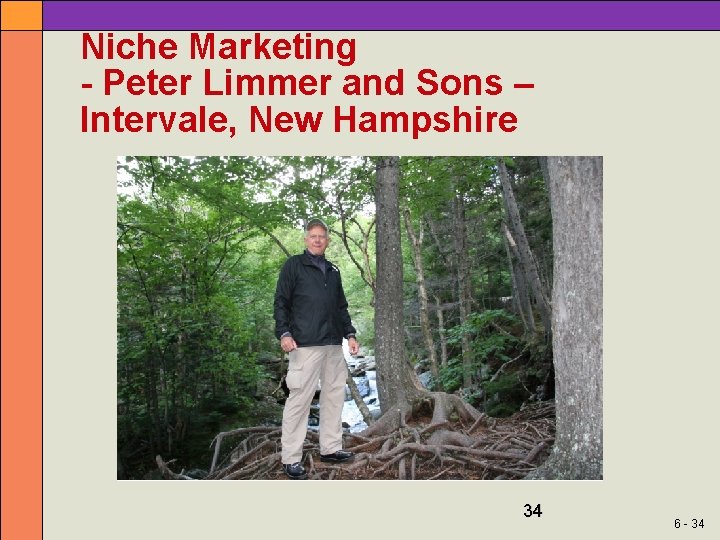
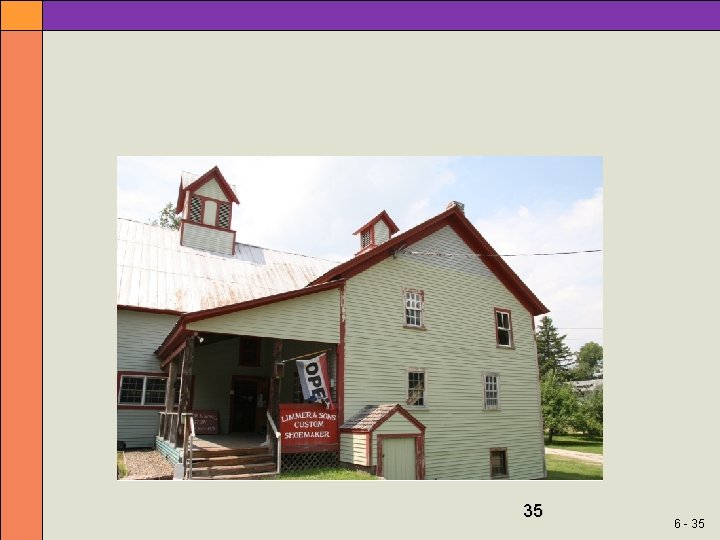
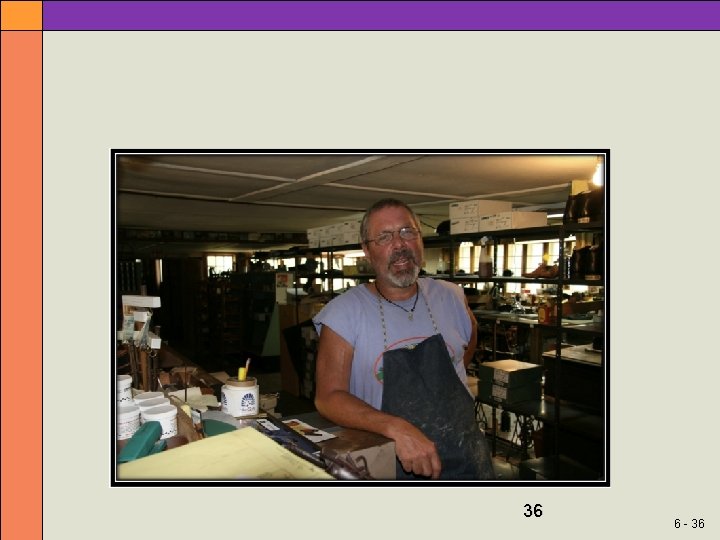
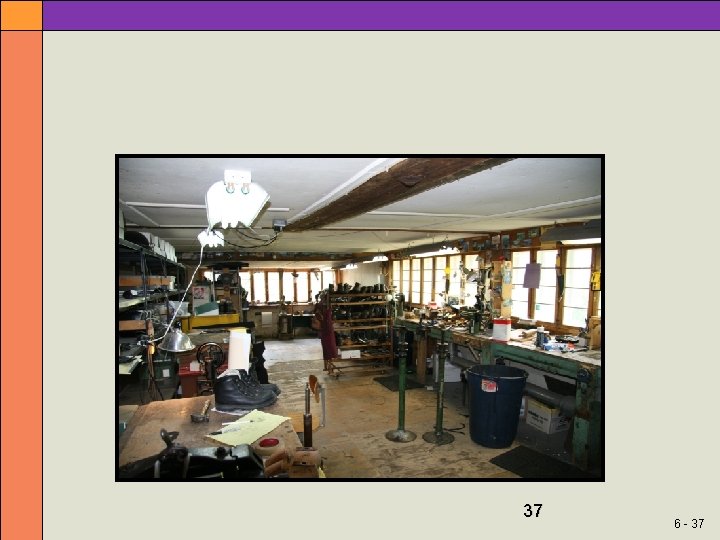
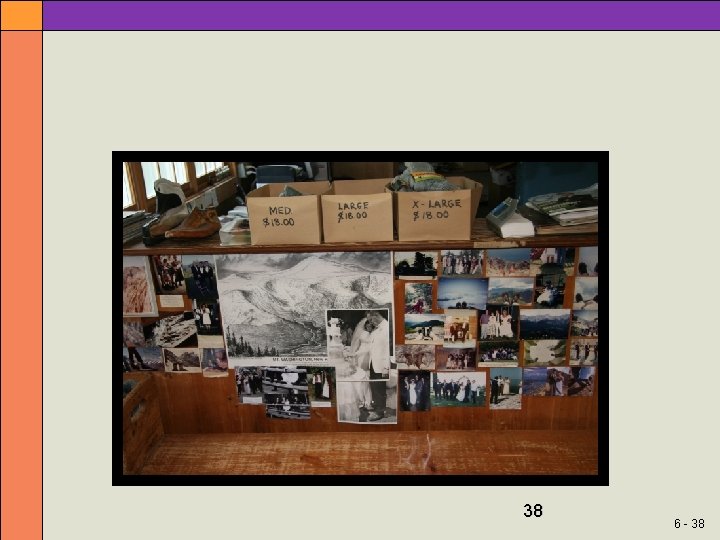
Niche Marketing - Peter Limmer and Sons – Intervale, New Hampshire 34 6 - 34
35 6 - 35
36 6 - 36
37 6 - 37
38 6 - 38
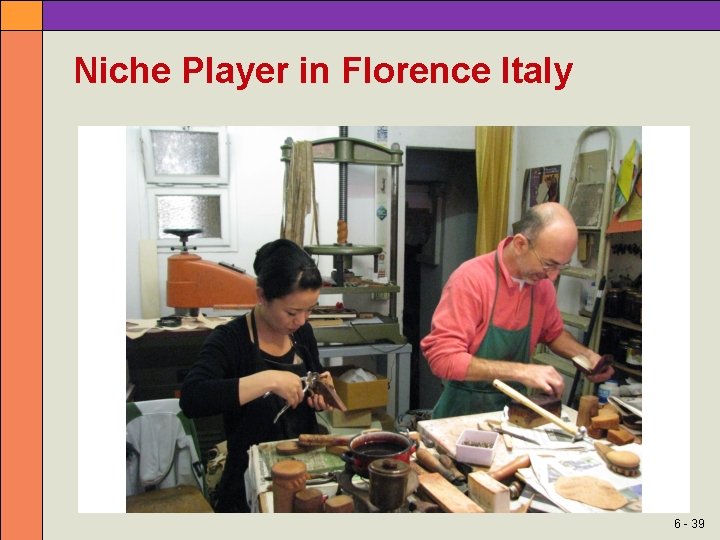
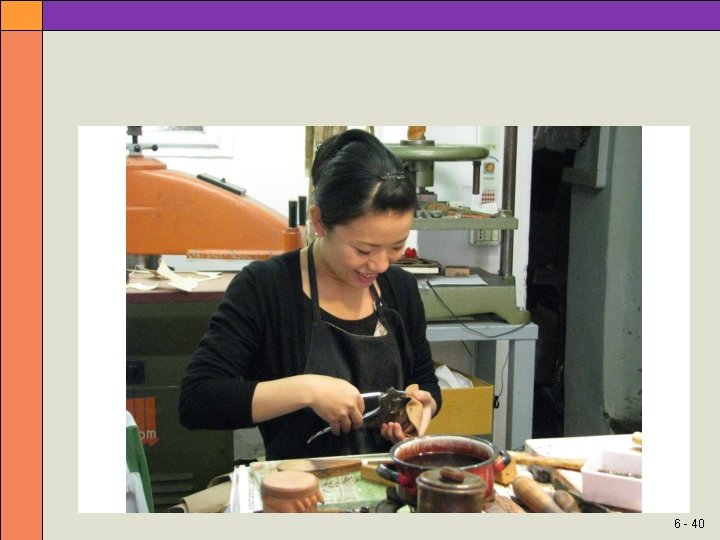
Niche Player in Florence Italy 6 - 39
6 - 40
6 - 41
Single-Product versus Diversification • Diversification operating several businesses under one ownership that are not related to one another Related, unrelated 6 - 42
Competitive Intelligence • Competitive intelligence gaining information about one’s competitors’ activities so that you can anticipate their moves and react appropriately 6 - 43
Sources of Competitive Intelligence • Public prints and advertising • Investor information • Informal sources Trade shows, salespeople, marketers 6 - 44
Execution: Getting Things Done • Execution consists of using questioning, analysis, and follow-through in order to mesh strategy with reality, align people with goals, and achieve results promised central part of any company’s strategy 6 - 45
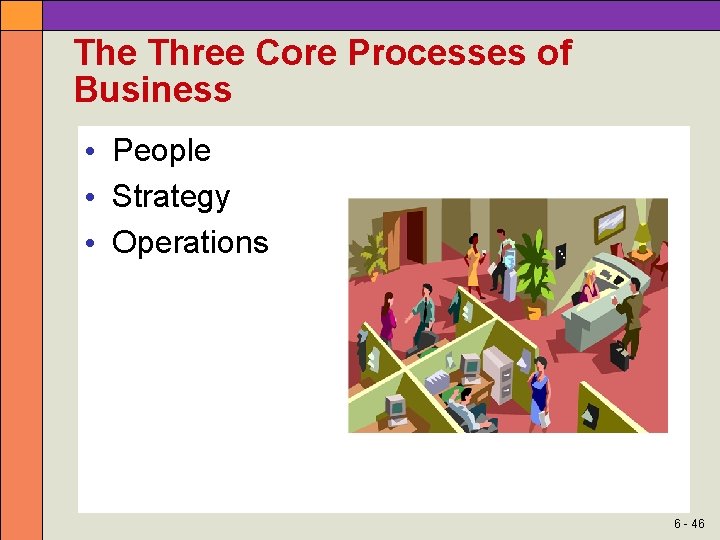
The Three Core Processes of Business • People • Strategy • Operations 6 - 46
Building a Foundation of Execution • • Know your people & your business Insist on realism Set clear goals & priorities Follow through Reward the doers Expand the capabilities Know yourself 6 - 47
Flying in Brazil 6 - 48