
Chapter Six Romance Love and Loving Relationships Why

- Slides: 21
Chapter Six Romance, Love, and Loving Relationships
Why relationships? • Physical Needs • • Social support Sexual urges • Emotional Needs • validation • Other? • Challenge: defining types of relationships and “love”
Defining Love in Greek • Agápe means love in a "spiritual" sense. "true unconditional love" • Éros (ἔρως érōs[2]) is "physical" passionate love, with sensual desire and longing. • Philia (φιλία philía[3]) is "mental" love or friendship • Storge (στοργή storgē[4]) means "affection" like that felt by parents for offspring
Eight Important Qualities of Friendship—by Keith Davis 1. 2. 3. 4. 5. 6. 7. 8. Enjoyment Acceptance Trust Respect Mutual support Confiding Understanding Honesty
Beyond Friendship What Is Consummate Love? • Friendship plus: – Sexual desire – Priority over other relationships – Caring to the point of self-sacrifice • Grows over time.
Physical Components • Regan and Berscheid describe • • • sexual arousal as a physiological Sexual desire as a psychological state. Romantic love is an intense feeling that can provide ecstasy when fulfilled or deep suffering when the feeling isn’t reciprocated.
Love also includes • Caring - responding to the other person’s needs. • Intimacy emphasizes feelings of closeness. From • • shared history an identity as a couple emotional interest in each other and share hopes and dreams for the future (P. M. Brown, 1995). • Commitment is a person’s intention to remain in a relationship and work through any problems.
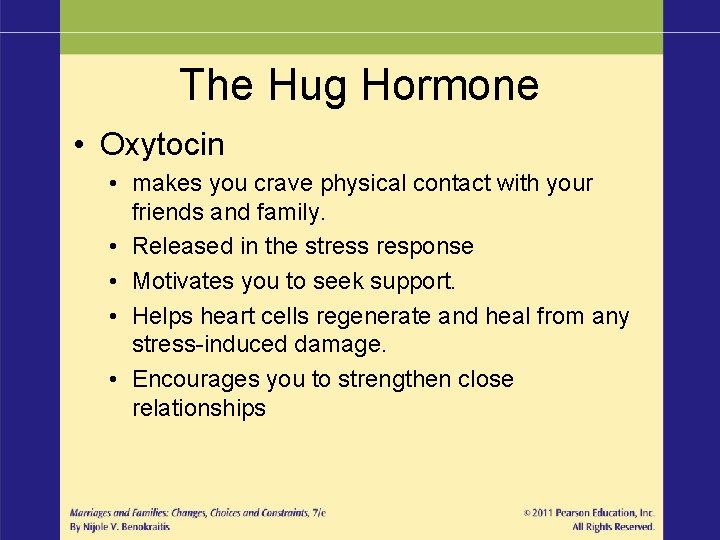
The Hug Hormone • Oxytocin • makes you crave physical contact with your friends and family. • Released in the stress response • Motivates you to seek support. • Helps heart cells regenerate and heal from any stress-induced damage. • Encourages you to strengthen close relationships
Sources of Commitment – sense of loyalty and fidelity – a religious or legal belief in the sanctity of marriage – or a legal contract.
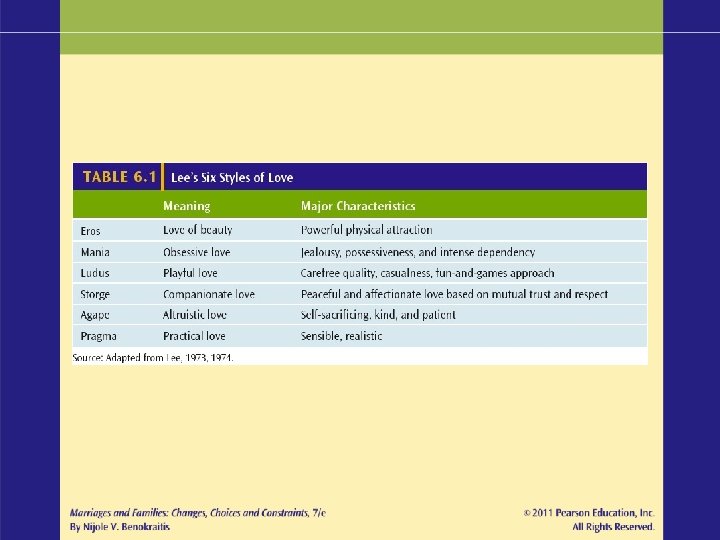
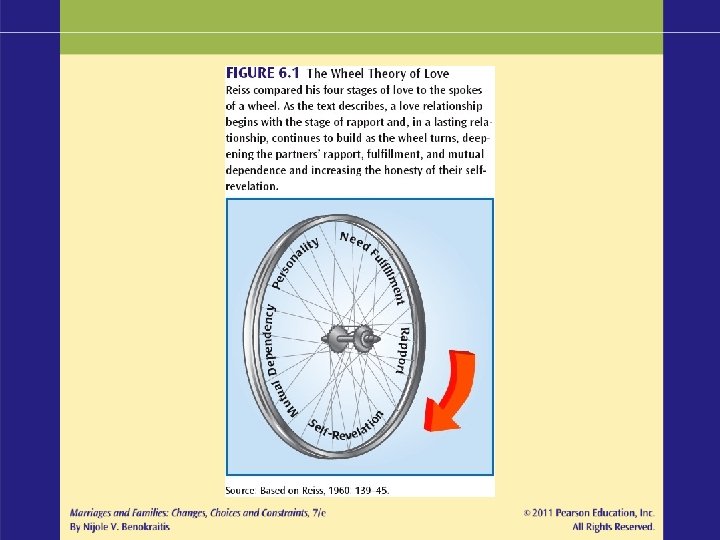
Theories about Love and Loving These theories include: • Attachment theory • Reiss’s wheel theory of love • Sternberg’s triangular theory of love • Lee’s research on the styles of loving • Exchange theories
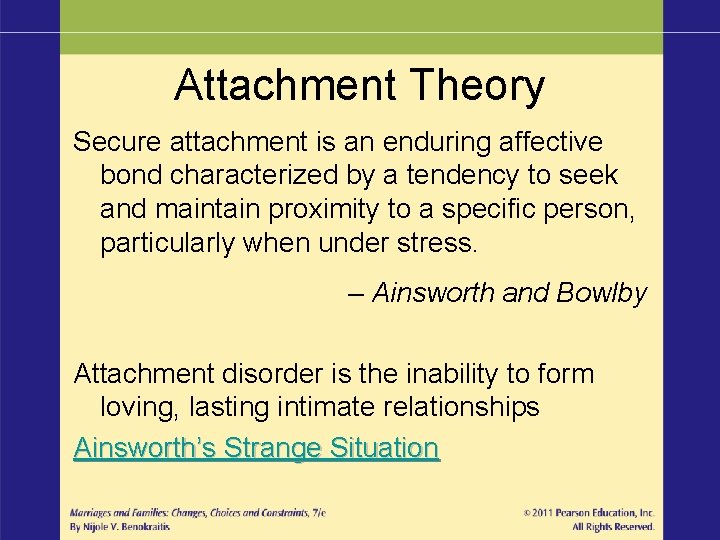
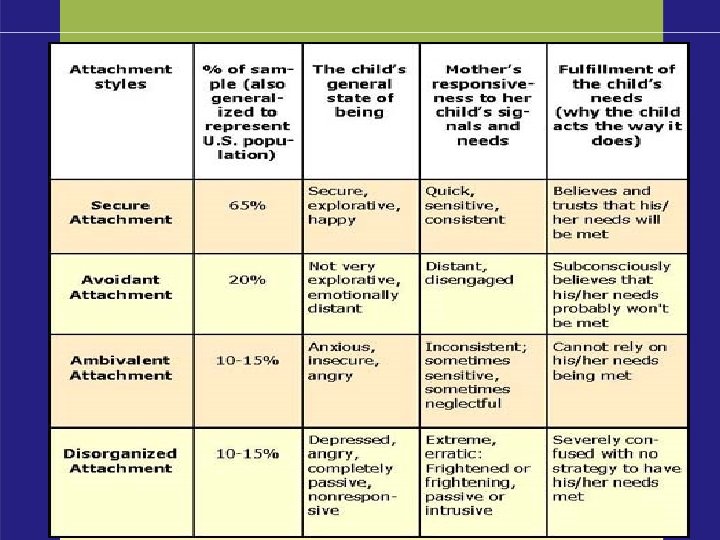
Attachment Theory Secure attachment is an enduring affective bond characterized by a tendency to seek and maintain proximity to a specific person, particularly when under stress. – Ainsworth and Bowlby Attachment disorder is the inability to form loving, lasting intimate relationships Ainsworth’s Strange Situation
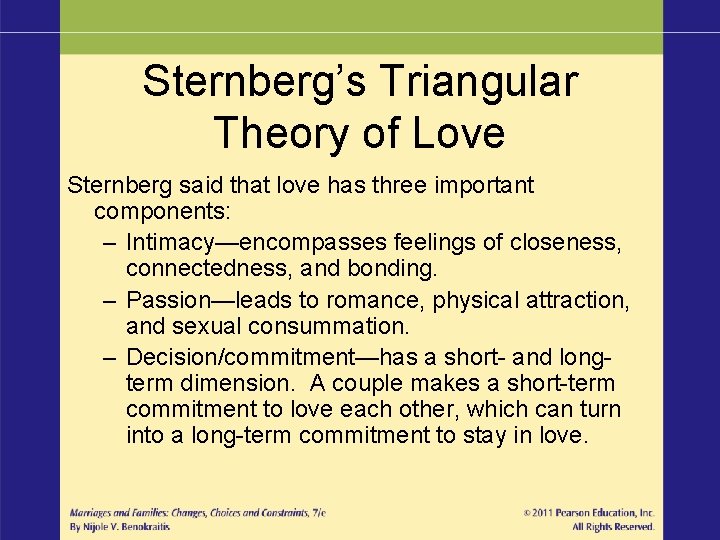
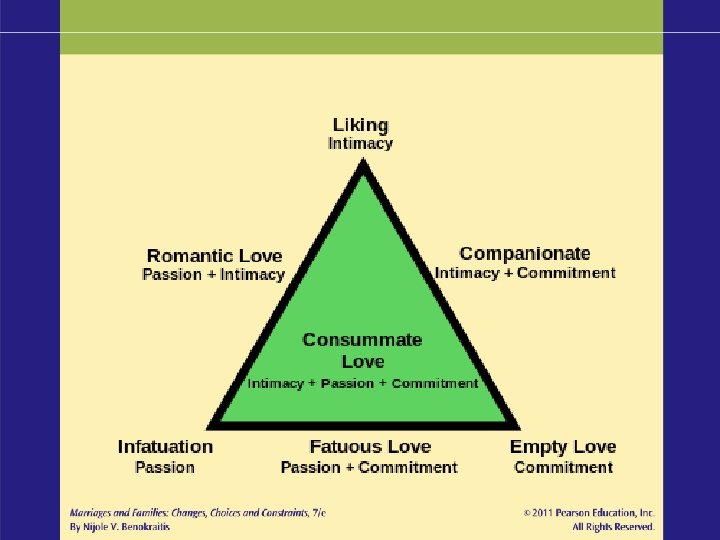
Sternberg’s Triangular Theory of Love Sternberg said that love has three important components: – Intimacy—encompasses feelings of closeness, connectedness, and bonding. – Passion—leads to romance, physical attraction, and sexual consummation. – Decision/commitment—has a short- and longterm dimension. A couple makes a short-term commitment to love each other, which can turn into a long-term commitment to stay in love.
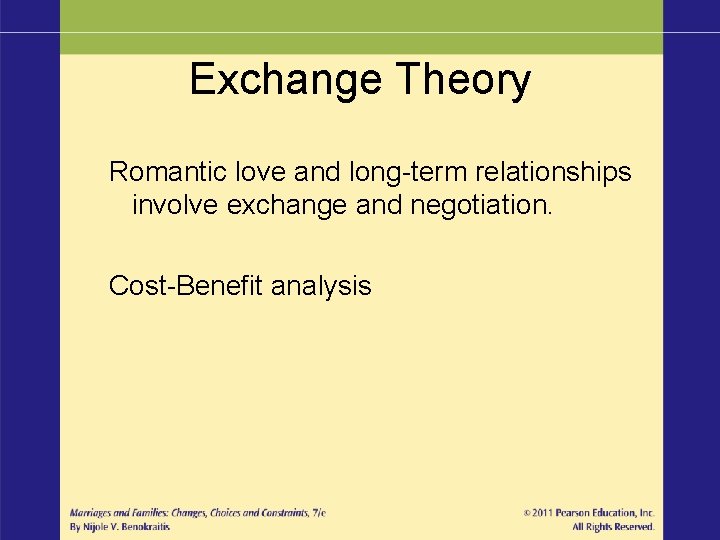
Exchange Theory Romantic love and long-term relationships involve exchange and negotiation. Cost-Benefit analysis
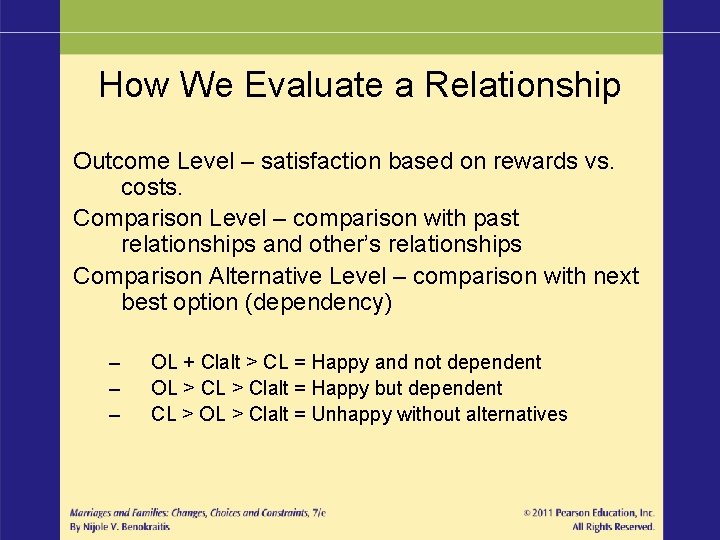
How We Evaluate a Relationship Outcome Level – satisfaction based on rewards vs. costs. Comparison Level – comparison with past relationships and other’s relationships Comparison Alternative Level – comparison with next best option (dependency) – – – OL + Clalt > CL = Happy and not dependent OL > Clalt = Happy but dependent CL > OL > Clalt = Unhappy without alternatives
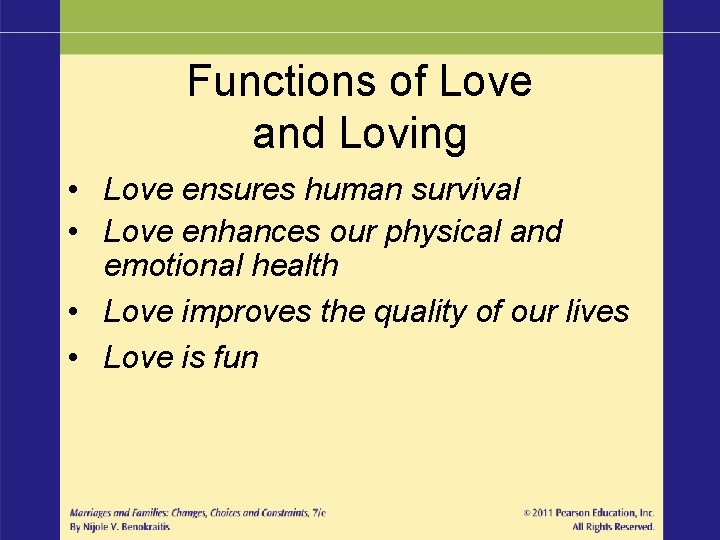
Functions of Love and Loving • Love ensures human survival • Love enhances our physical and emotional health • Love improves the quality of our lives • Love is fun