
CHAPTER SIX Final Consumers and Their Buying Behavior
CHAPTER SIX Final Consumers and Their Buying Behavior For use only with Perreault/Cannon/Mc. Carthy or Perreault/Mc. Carthy texts. © 2008 Mc. Graw-Hill Companies, Inc. Mc. Graw-Hill/Irwin www. mhhe. com/fourps
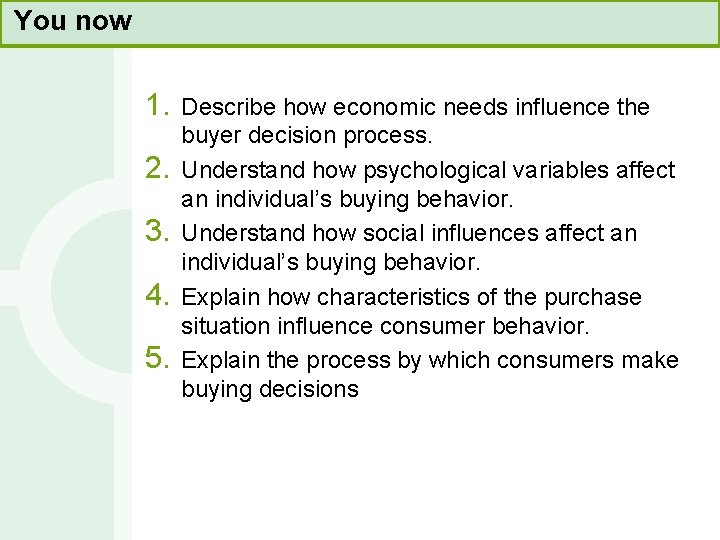
When we finish this lecture you should 1. 2. 3. 4. 5. Describe how economic needs influence the buyer decision process. Understand how psychological variables affect an individual’s buying behavior. Understand how social influences affect an individual’s buying behavior. Explain how characteristics of the purchase situation influence consumer behavior. Explain the process by which consumers make buying decisions
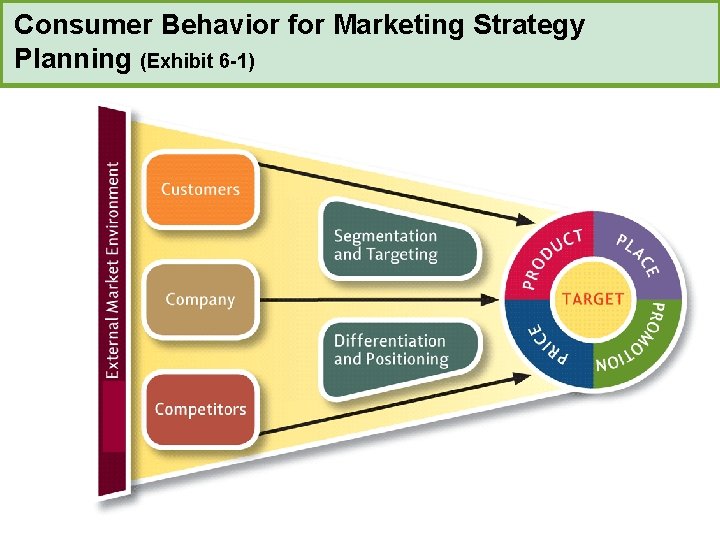
Consumer Behavior for Marketing Strategy Planning (Exhibit 6 -1)
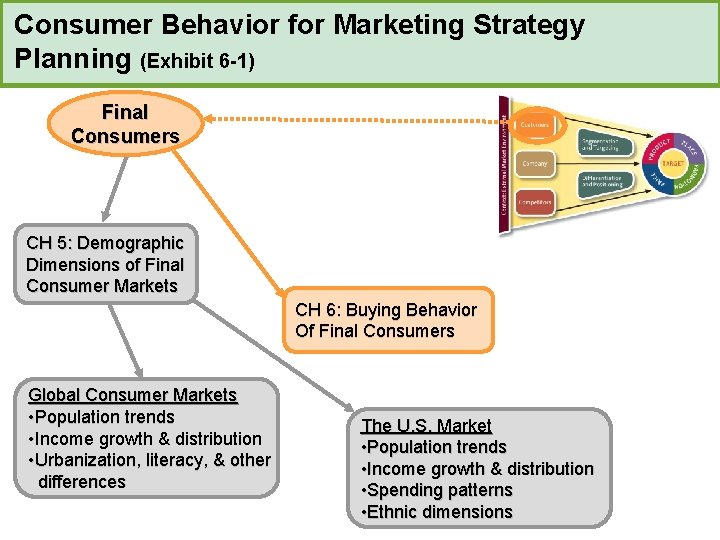
Consumer Behavior for Marketing Strategy Planning (Exhibit 6 -1) Final Consumers CH 5: Demographic Dimensions of Final Consumer Markets CH 6: Buying Behavior Of Final Consumers Global Consumer Markets • Population trends • Income growth & distribution • Urbanization, literacy, & other differences The U. S. Market • Population trends • Income growth & distribution • Spending patterns • Ethnic dimensions
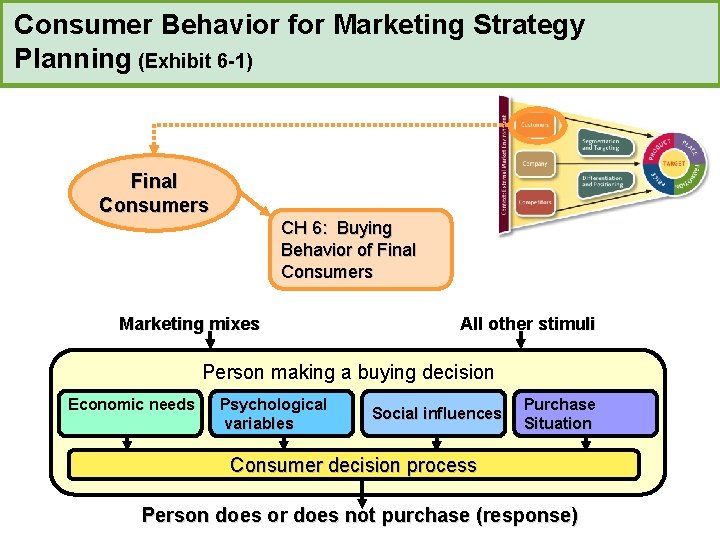
Consumer Behavior for Marketing Strategy Planning (Exhibit 6 -1) Final Consumers CH 6: Buying Behavior of Final Consumers Marketing mixes All other stimuli Person making a buying decision Economic needs Psychological variables Social influences Purchase Situation Consumer decision process Person does or does not purchase (response)
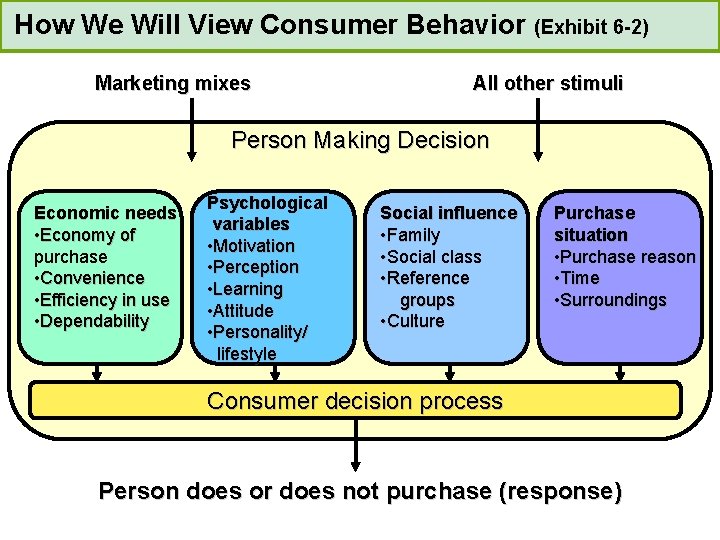
How We Will View Consumer Behavior (Exhibit 6 -2) Marketing mixes All other stimuli Person Making Decision Economic needs • Economy of purchase • Convenience • Efficiency in use • Dependability Psychological variables • Motivation • Perception • Learning • Attitude • Personality/ lifestyle Social influence • Family • Social class • Reference groups • Culture Purchase situation • Purchase reason • Time • Surroundings Consumer decision process Person does or does not purchase (response)
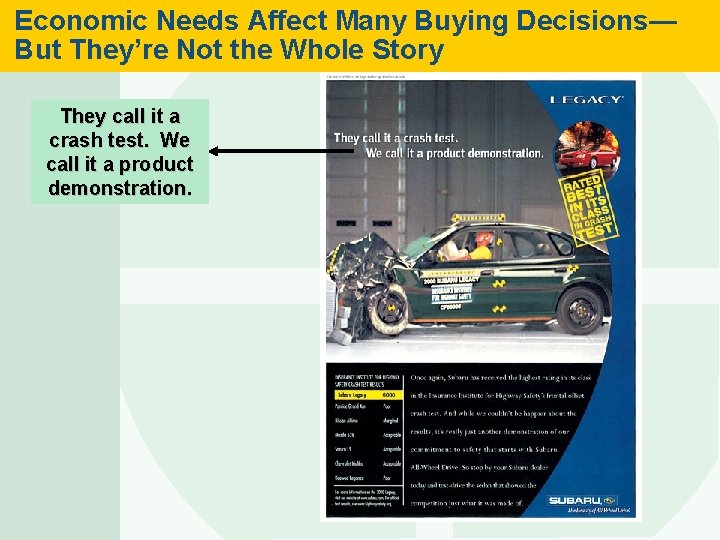
Economic Needs Affect Many Buying Decisions— But They’re Not the Whole Story They call it a crash test. We call it a product demonstration.
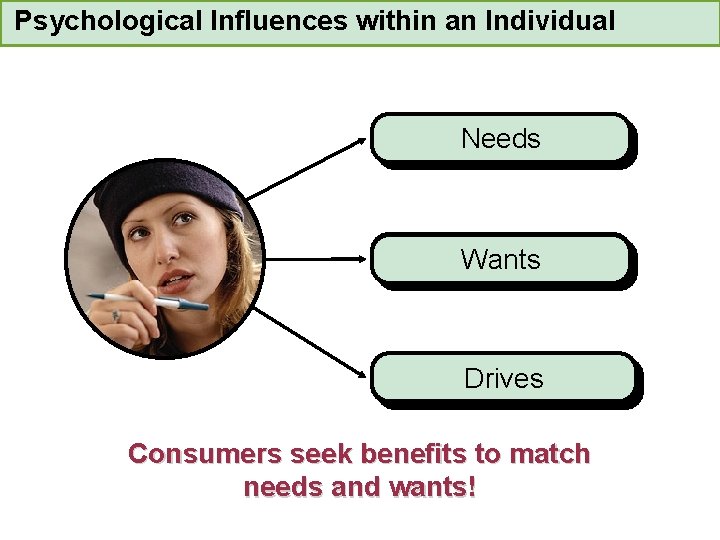
Psychological Influences within an Individual Needs Wants Drives Consumers seek benefits to match needs and wants!
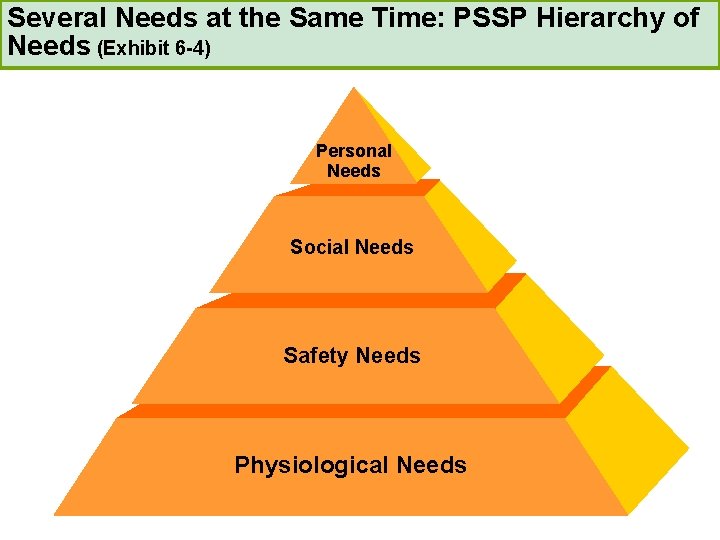
Several Needs at the Same Time: PSSP Hierarchy of Needs (Exhibit 6 -4) Personal Needs Social Needs Safety Needs Physiological Needs
Checking your knowledge Ads for Haynes Jeep-Chrysler feature the slogan, “Come to Haynes, where the fun begins. ” This is an appeal to the consumer’s: A. physiological need. B. safety need. C. personal need. D. social need. E. information need.
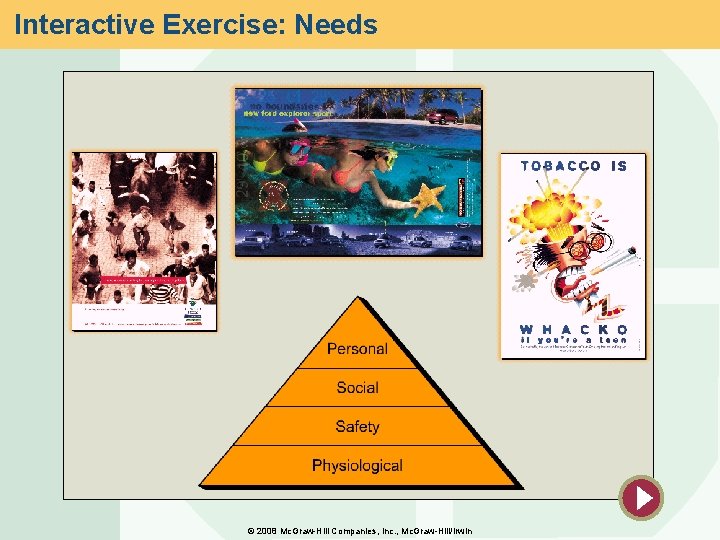
Interactive Exercise: Needs © 2008 Mc. Graw-Hill Companies, Inc. , Mc. Graw-Hill/Irwin
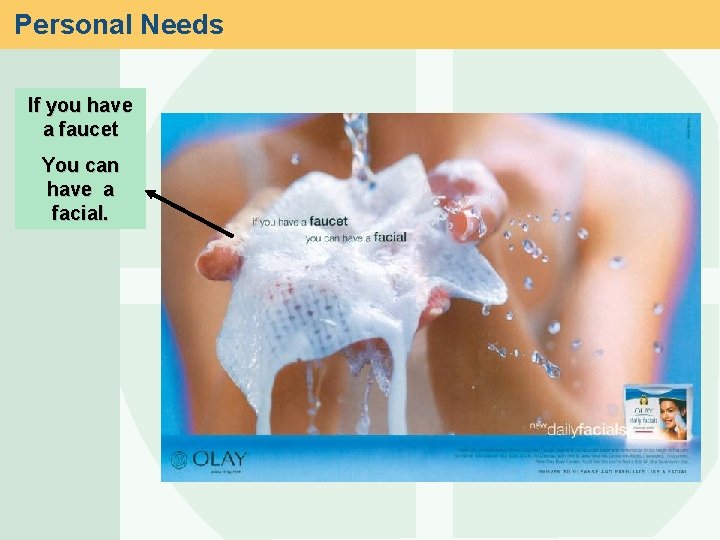
Personal Needs If you have a faucet You can have a facial.

Perception Determines What Consumers See and Feel Selective Exposure Selective Retention Selective Perception
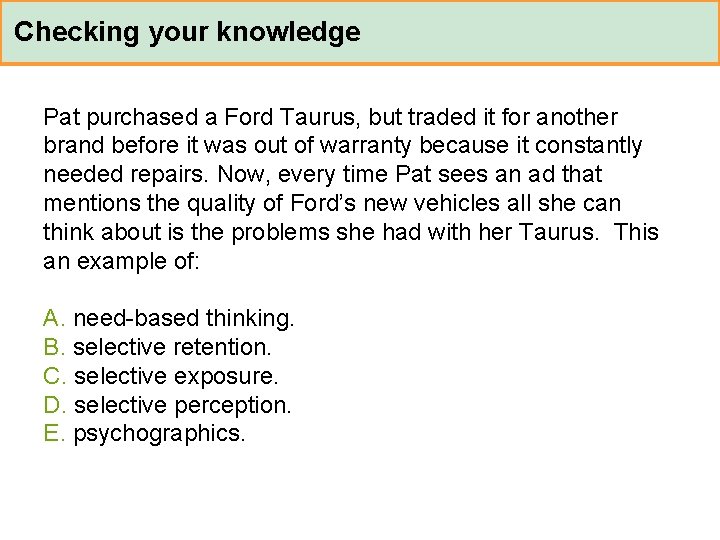
Checking your knowledge Pat purchased a Ford Taurus, but traded it for another brand before it was out of warranty because it constantly needed repairs. Now, every time Pat sees an ad that mentions the quality of Ford’s new vehicles all she can think about is the problems she had with her Taurus. This an example of: A. need-based thinking. B. selective retention. C. selective exposure. D. selective perception. E. psychographics.
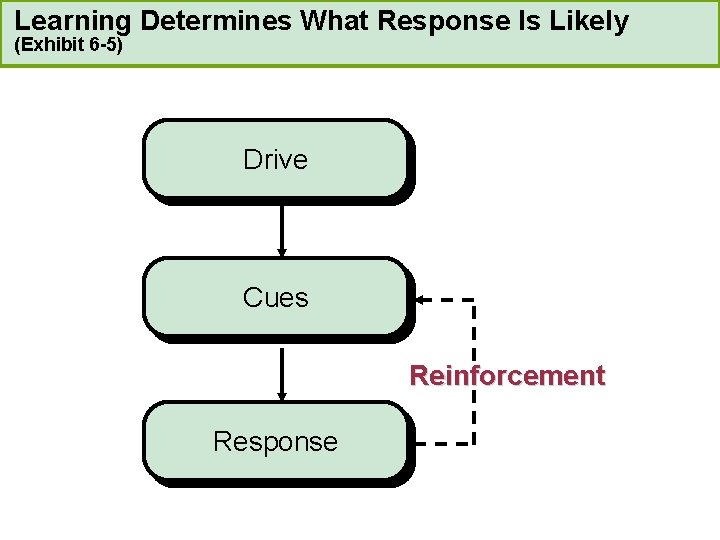
Learning Determines What Response Is Likely (Exhibit 6 -5) Drive Cues Reinforcement Response
Cue © 2008 Mc. Graw-Hill Companies, Inc. , Mc. Graw-Hill/Irwin
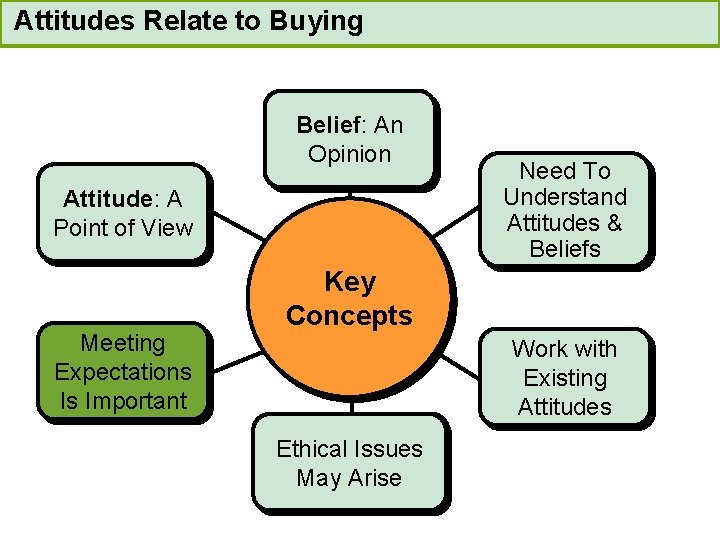
Attitudes Relate to Buying Belief: An Opinion Attitude: A Point of View Meeting Expectations Is Important Need To Understand Attitudes & Beliefs Key Concepts Work with Existing Attitudes Ethical Issues May Arise
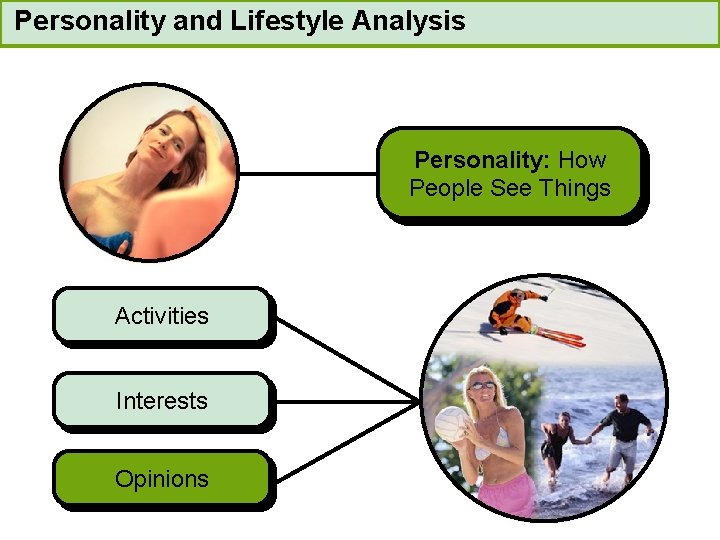
Personality and Lifestyle Analysis Personality: How People See Things Activities Interests Opinions
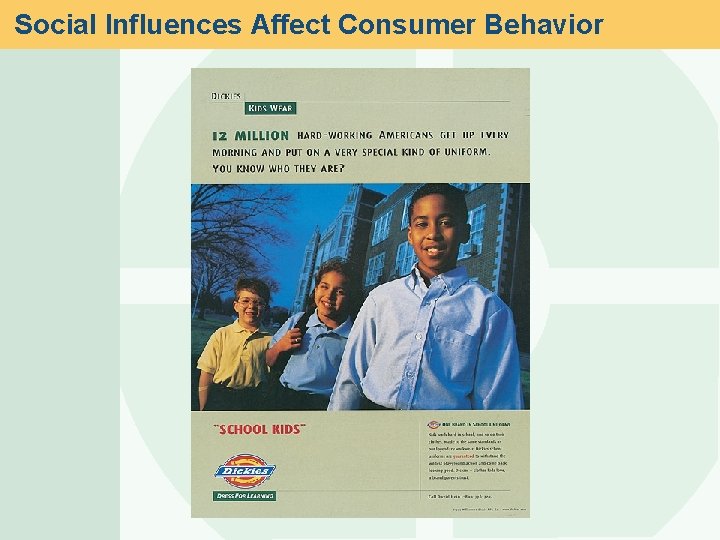
Social Influences Affect Consumer Behavior
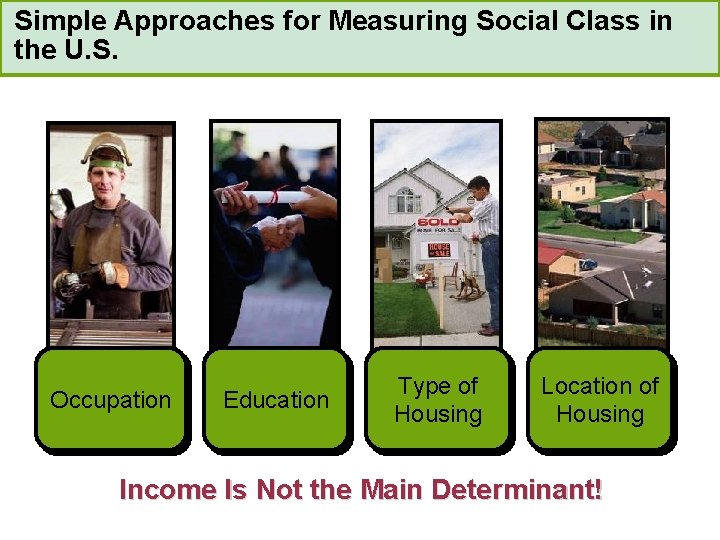
Simple Approaches for Measuring Social Class in the U. S. Occupation Education Type of Housing Location of Housing Income Is Not the Main Determinant!
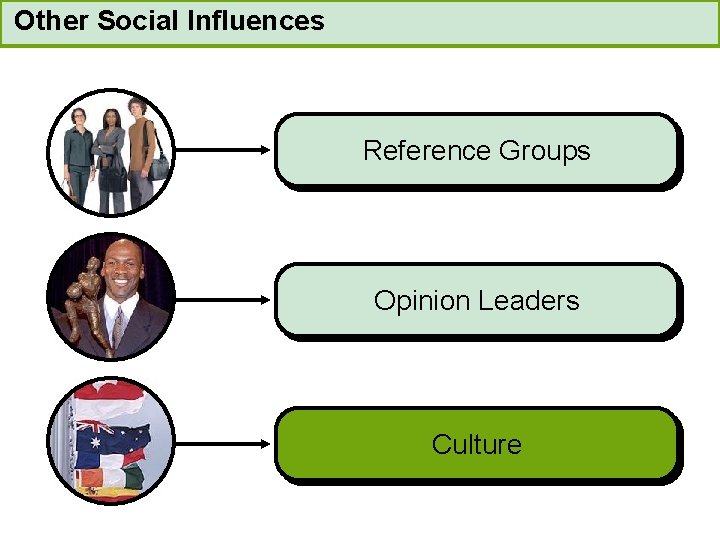
Other Social Influences Reference Groups Opinion Leaders Culture
Checking your knowledge Anime, the cartoon-like Japanese art form, has generated significant interest among Generation Y consumers in the U. S. Anime conventions occur frequently and the largest ones draw more than 20, 000 attendees. Anime fans, many in costume, come to these conventions to shop, participate in anime workshops, and to simply hang out with people with similar interests. Promotion of these conventions capitalizes mainly on: A. learning. B. psychological needs. C. selective processes. D. reference group influences. E. culture.
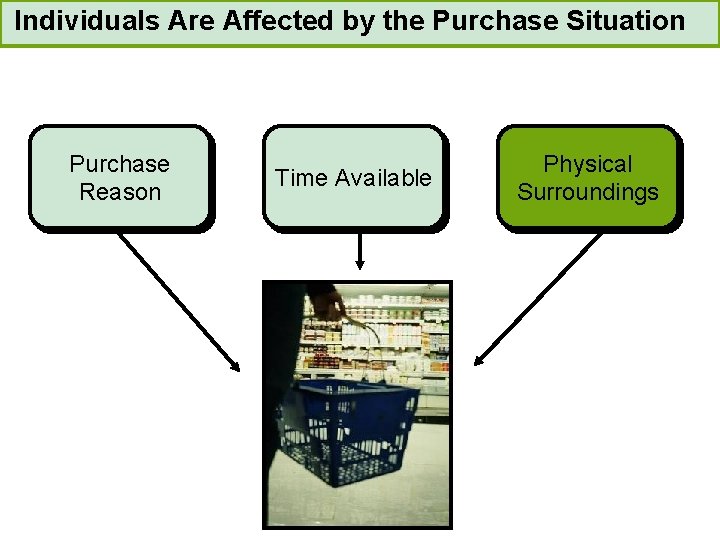
Individuals Are Affected by the Purchase Situation Purchase Reason Time Available Physical Surroundings
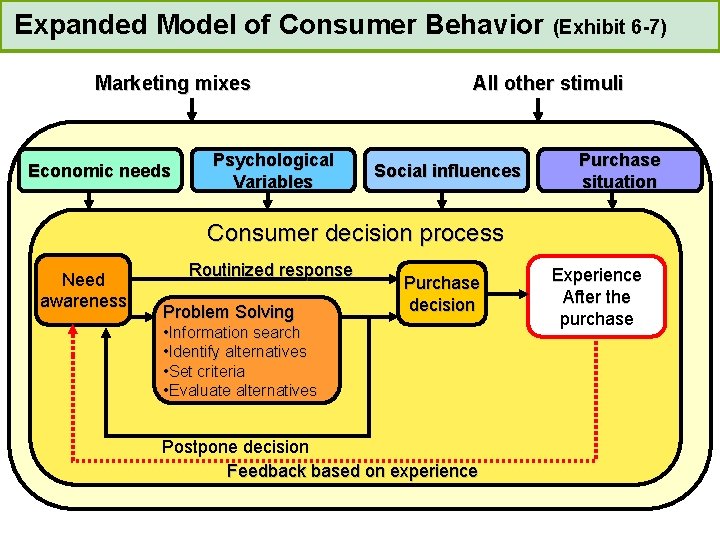
Expanded Model of Consumer Behavior (Exhibit 6 -7) Marketing mixes Economic needs Psychological Variables All other stimuli Social influences Purchase situation Consumer decision process Need awareness Routinized response Problem Solving Purchase decision • Information search • Identify alternatives • Set criteria • Evaluate alternatives Postpone decision Feedback based on experience Experience After the purchase
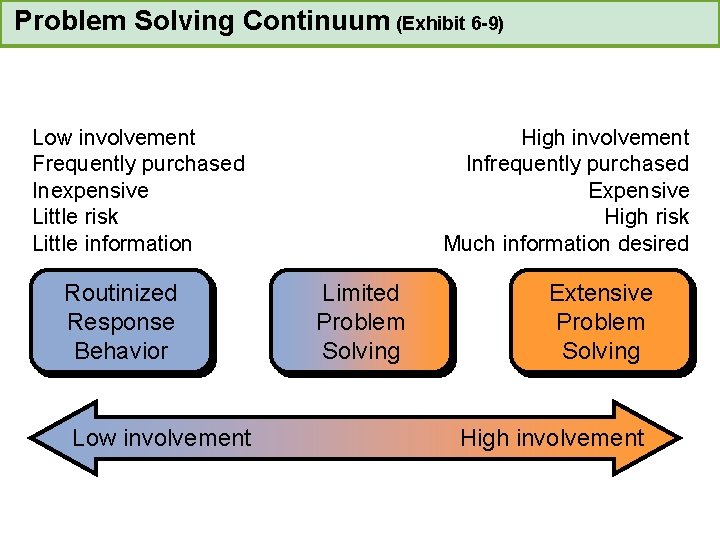
Problem Solving Continuum (Exhibit 6 -9) Low involvement Frequently purchased Inexpensive Little risk Little information Routinized Response Behavior Low involvement High involvement Infrequently purchased Expensive High risk Much information desired Limited Problem Solving Extensive Problem Solving High involvement
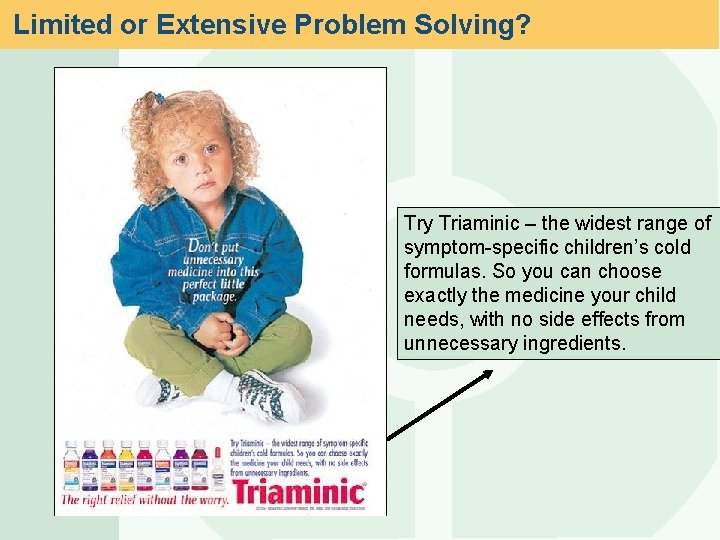
Limited or Extensive Problem Solving? Try Triaminic – the widest range of symptom-specific children’s cold formulas. So you can choose exactly the medicine your child needs, with no side effects from unnecessary ingredients.
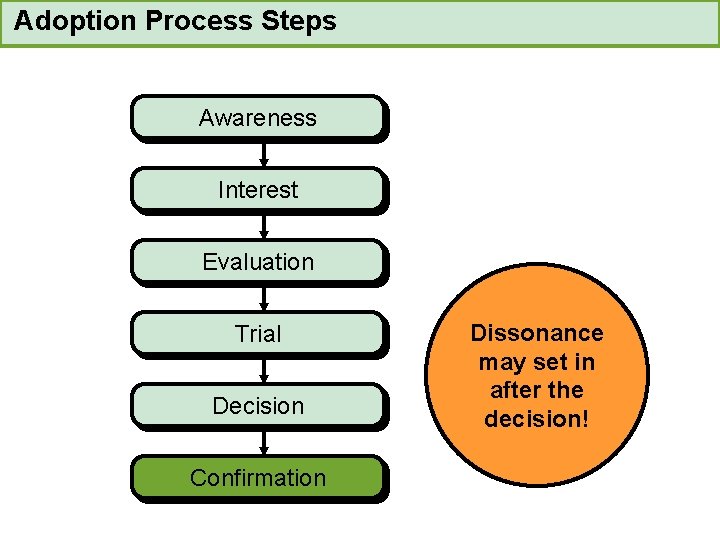
Adoption Process Steps Awareness Interest Evaluation Trial Decision Confirmation Dissonance may set in after the decision!
Problem Solving © 2008 Mc. Graw-Hill Companies, Inc. , Mc. Graw-Hill/Irwin
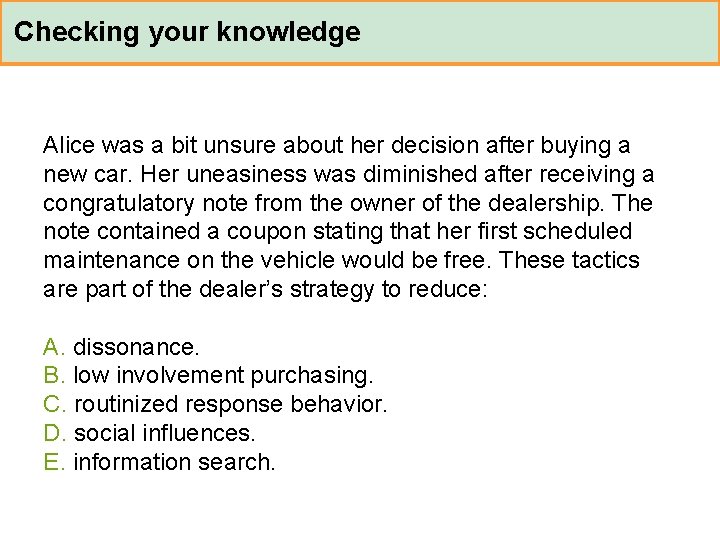
Checking your knowledge Alice was a bit unsure about her decision after buying a new car. Her uneasiness was diminished after receiving a congratulatory note from the owner of the dealership. The note contained a coupon stating that her first scheduled maintenance on the vehicle would be free. These tactics are part of the dealer’s strategy to reduce: A. dissonance. B. low involvement purchasing. C. routinized response behavior. D. social influences. E. information search.
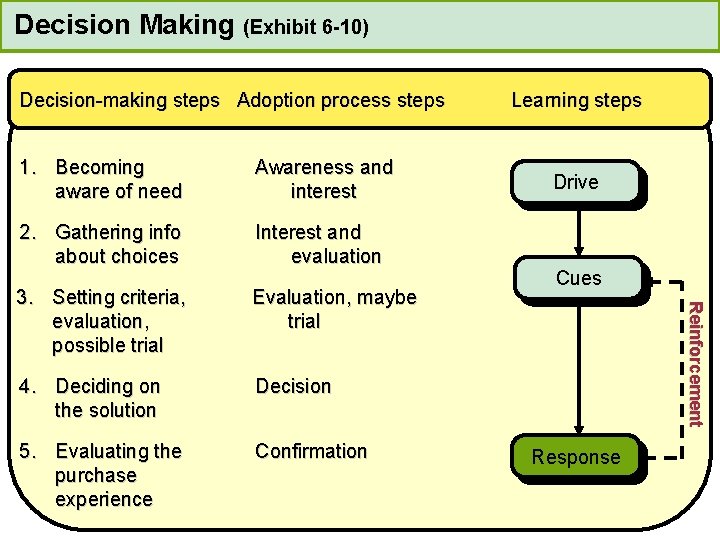
Decision Making (Exhibit 6 -10) Decision-making steps Adoption process steps Awareness and interest 2. Gathering info about choices Interest and evaluation 3. Setting criteria, evaluation, possible trial Evaluation, maybe trial 4. Deciding on the solution Decision 5. Evaluating the purchase experience Confirmation Drive Cues Reinforcement 1. Becoming aware of need Learning steps Response
You now 1. 2. 3. 4. 5. Describe how economic needs influence the buyer decision process. Understand how psychological variables affect an individual’s buying behavior. Understand how social influences affect an individual’s buying behavior. Explain how characteristics of the purchase situation influence consumer behavior. Explain the process by which consumers make buying decisions
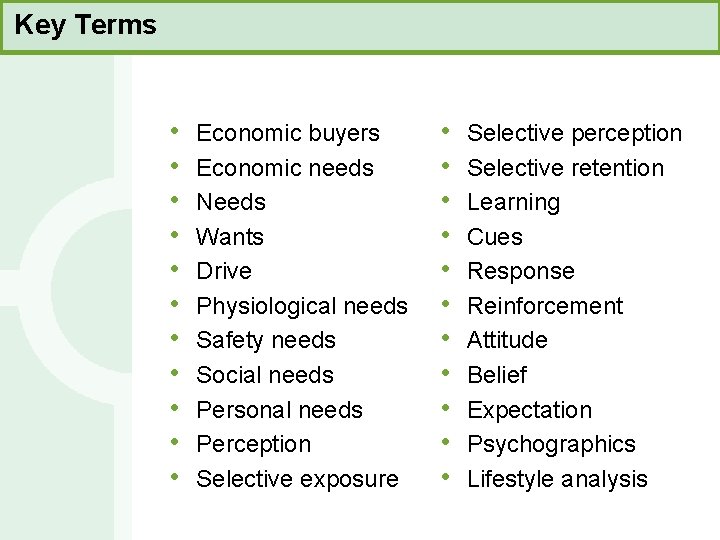
Key Terms • • • Economic buyers Economic needs Needs Wants Drive Physiological needs Safety needs Social needs Personal needs Perception Selective exposure • • • Selective perception Selective retention Learning Cues Response Reinforcement Attitude Belief Expectation Psychographics Lifestyle analysis
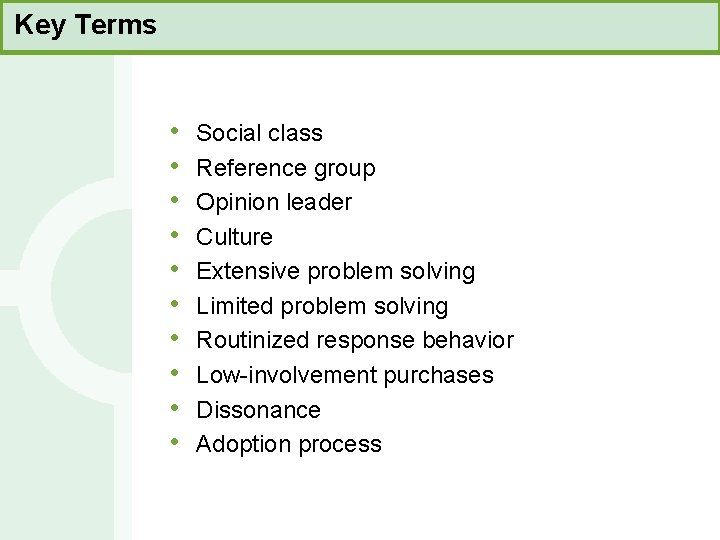
Key Terms • • • Social class Reference group Opinion leader Culture Extensive problem solving Limited problem solving Routinized response behavior Low-involvement purchases Dissonance Adoption process
- Slides: 33