
Chapter Seventeen Personal Selling and Sales Management Objectives
Chapter Seventeen Personal Selling and Sales Management
Objectives b. Describe roles of selling and relationship management b. Identify when to use personal selling b. Understand contributions of a salesperson b. Outline the steps involved in making a sale b. Understand ongoing nature of selling & marketing b. Describe major aspects of sales manager’s job b. Classify various forms of sales compensation b. Identify ethical issues facing sales personnel

Methods of Personal Selling Retail selling Field selling Telemarketing Inside selling
Personal Selling b 12 million people are engaged in personal selling in the United States b. Represents 10% of the United States work force
Characteristics of Personal Selling Flexibility Builds Relationships b. Identify best prospects b. Adapt to situations b. Engage in dialog b. Long term b. Assure buyers receive appropriate services b. Solves customer’s problems
Personal Selling Limitations b. Can not reach mass audience b. Expensive per contact b. Numerous calls needed to generate sale b. Labor intensive
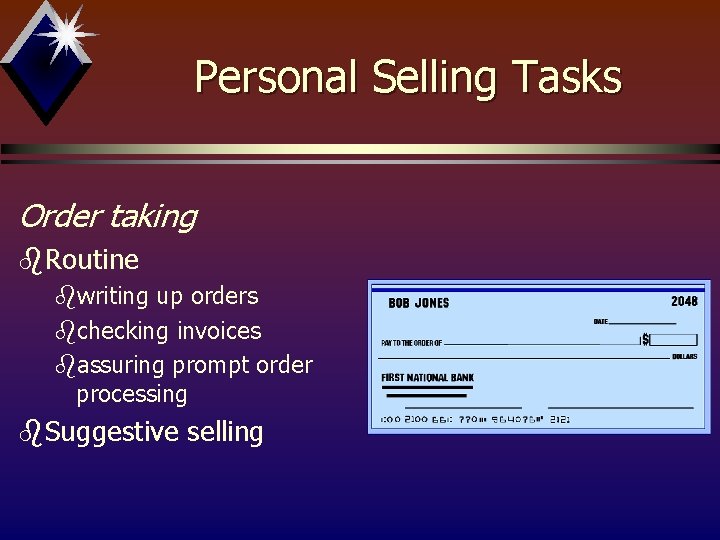
Personal Selling Tasks Order taking b. Routine bwriting up orders bchecking invoices bassuring prompt order processing b. Suggestive selling
Personal Selling Tasks Order getting b. Seeking out customers b. Creative selling b. Pioneering b. Account management
Personal Selling Tasks b. Missionary b. Detailer b. Goodwill b“Closers” b. Cross-functional b. Account service rep
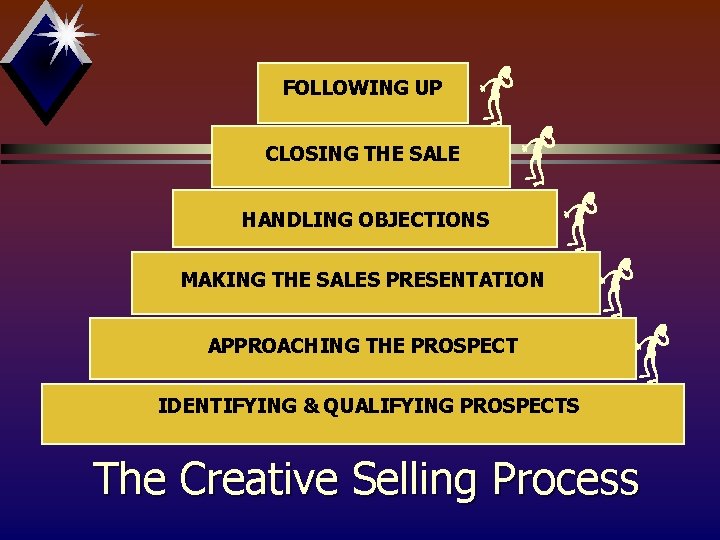
FOLLOWING UP CLOSING THE SALE HANDLING OBJECTIONS MAKING THE SALES PRESENTATION APPROACHING THE PROSPECT IDENTIFYING & QUALIFYING PROSPECTS The Creative Selling Process

Creative Selling Process Identify and Qualifying Prospects b. Prospecting: Identifying likely new customers b. Leads b. Qualifying: Evaluating a prospect’s potential

Creative Selling Process Approaching the Prospect b. Contact b. Rapport b“Only one chance to make a first impression”

Creative Selling Process Sales Presentation b. Persuasive communication b. Attention b. Interest b. Desire b“Tell the product’s story”
Creative Selling Process Handling Objections b. Questions b. Reservations b. Understand Concern b. Counterarguments b. Acknowledge concern b. Clues to process
Creative Selling Process Closing the Sale b. Closing signals b. Trial close b. Ask for the sale
Creative Selling Process Following Up b. Commitments met b. Shipment b. Performance b. Reinforce relationship b. Satisfied customers rebuy & recommend
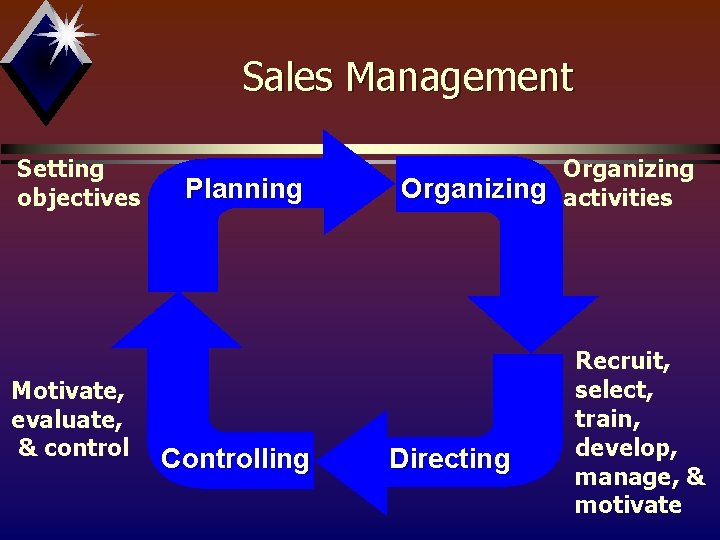
Sales Management Setting objectives Motivate, evaluate, & control Planning Controlling Organizing activities Directing Recruit, select, train, develop, manage, & motivate
Organizing Sales Activities Sales Territory: b. Geographic divisions b. Customer types b. Product lines b. Selling task
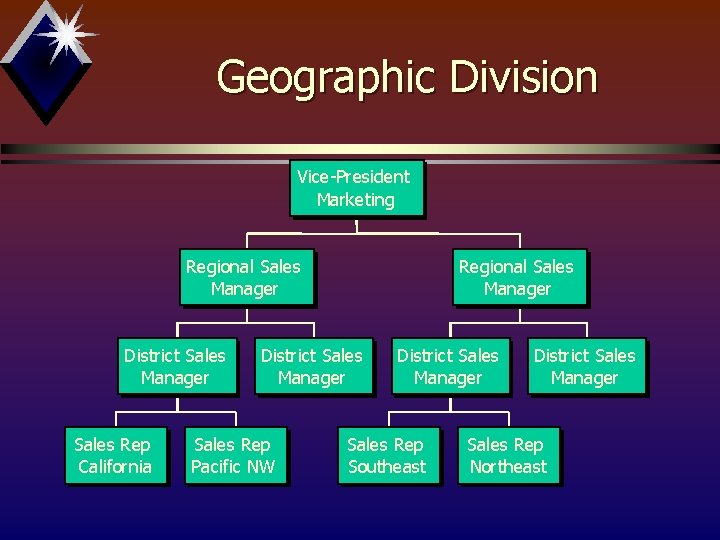
Geographic Division Vice-President Marketing Regional Sales Manager District Sales Manager Sales Rep California Regional Sales Manager District Sales Manager Sales Rep Pacific NW District Sales Manager Sales Rep Southeast District Sales Manager Sales Rep Northeast
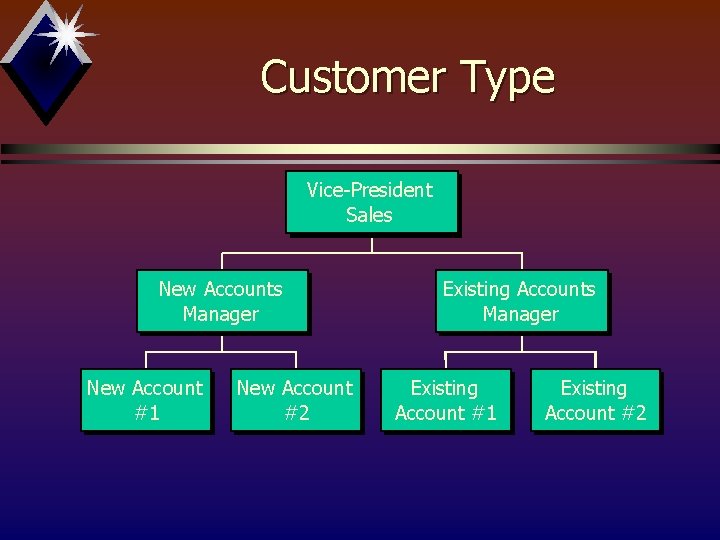
Customer Type Vice-President Sales New Accounts Manager New Account #1 New Account #2 Existing Accounts Manager Existing Account #1 Existing Account #2
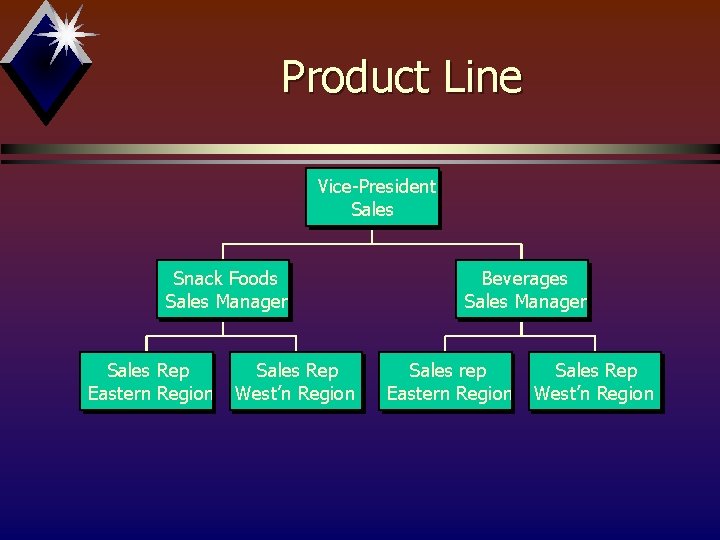
Product Line Vice-President Sales Snack Foods Sales Manager Sales Rep Eastern Region Sales Rep West’n Region Beverages Sales Manager Sales rep Eastern Region Sales Rep West’n Region
Directing the Sales Force b. Recruiting and selecting b. Training & develop b. Compensating b. Motivating
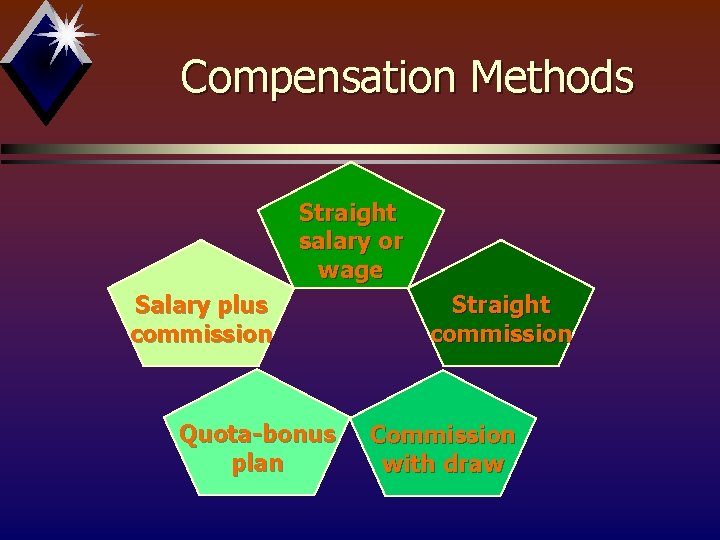
Compensation Methods Straight salary or wage Salary plus commission Quota-bonus plan Straight commission Commission with draw
Evaluation and Control b. Required reports b. Measurement against plan or sales standards b. Expense control b. Productivity b. New account development
Ethical Issues b. Kickbacks, bribes and “gifts” b. Price discrimination b. Cheating on expense accounts b. Misrepresentation
Review b. Describe roles of selling and relationship management b. Identify when to use personal selling b. Understand contributions of a salesperson b. Outline the steps involved in making a sale b. Understand ongoing nature of selling & marketing b. Describe major aspects of sales manager’s job b. Classify various forms of sales compensation b. Identify ethical issues facing sales personnel
- Slides: 26