
Chapter Seven Heredity and Breeding ALAT Presentations Study
Chapter Seven Heredity and Breeding
ALAT Presentations Study Tips Ø If viewing this in Power. Point, use the icon to run the show (bottom left of screen). 4 Mac users go to “Slide Show > View Show” in menu bar Ø Click on the Audio icon: when it appears on the left of the slide to hear the narration. Ø From “File > Print” in the menu bar, choose “notes pages”, “slides 3 per page” or “outline view” for taking notes as you listen and watch the presentation. 4 Start your own notebook with a 3 ring binder, for later study!
Breeding and Husbandry Ø Genetics deals with heredity. 4 why offspring resemble or differ from their parents Ø Similarities and differences: 4 due to heredity 4 caused by environmental factors or mutations Ø Successful breeding of animals depends on: 4 an understanding of basic genetics 4 breeding system that suits the needs of a particular protocol.
Genes & Chromosomes Ø Physical characteristics of organisms are passed from one generation to next by genes. 4 an inherited characteristic such as fur or eye color, number of toes or the length of the intestine Ø Genes are on chromosomes & made of DNA. Ø Chromosomes = paired structures in cell nuclei. 4 Number of pairs differs for various species. 4 Normal members of a species have = number of pairs. Ø Only ova & sperm chromosomes are not paired. 4 When the ovum is fertilized by the sperm, the zygote forms paired chromosomes from the unpaired sets. 4 Half of each parent’s genes passed to next generation.
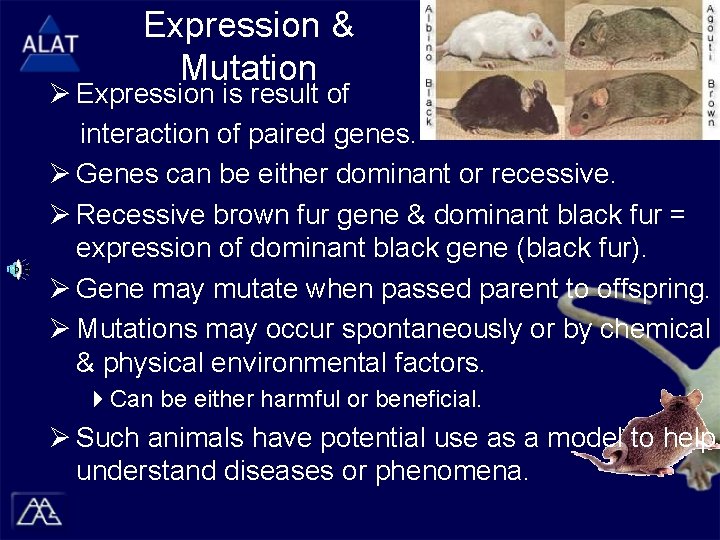
Expression & Mutation Ø Expression is result of interaction of paired genes. Ø Genes can be either dominant or recessive. Ø Recessive brown fur gene & dominant black fur = expression of dominant black gene (black fur). Ø Gene may mutate when passed parent to offspring. Ø Mutations may occur spontaneously or by chemical & physical environmental factors. 4 Can be either harmful or beneficial. Ø Such animals have potential use as a model to help understand diseases or phenomena.
Reproduction Ø 1 st step in sexual reproduction is production of sperm & eggs. Ø Fertilization location/manner depend on species. Ø In most mammals fertilization occurs within ’s reproductive tract. 4 In other types of animals, it occurs outside the body. Ø Development site also depends on species. 4 In most mammals, zygote becomes implanted & grows in the uterus. 4 In birds and reptiles, embryonic development usually occurs outside body, inside an egg.
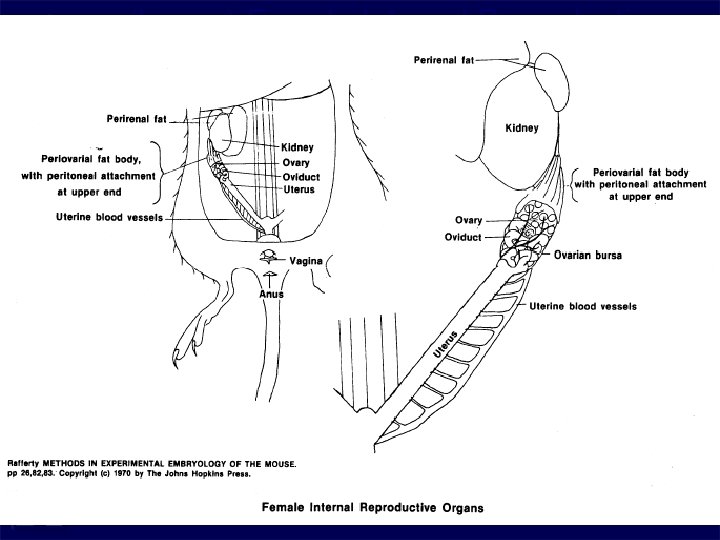
(Image) Female Internal Reproductive Organs
Gestation & Estrus Ø Time required for a zygote to develop into a fetus & be born = gestation period. Ø Natural end of gestation period called parturition. Ø Males produce sperm continually & are ready to mate almost any time after reaching maturity. Ø Females mate only during specific times. Ø During estrous cycles, female’s eggs undergo changes which prepare them for fertilization. 4 During estrus the female allows mating. 4 Ovulation usually occurs at or near this time. 4 Cells in vaginal wall change in phases of cycle. 8 In some species samples can be collected from the vagina & examined to determine phase of estrous cycle.
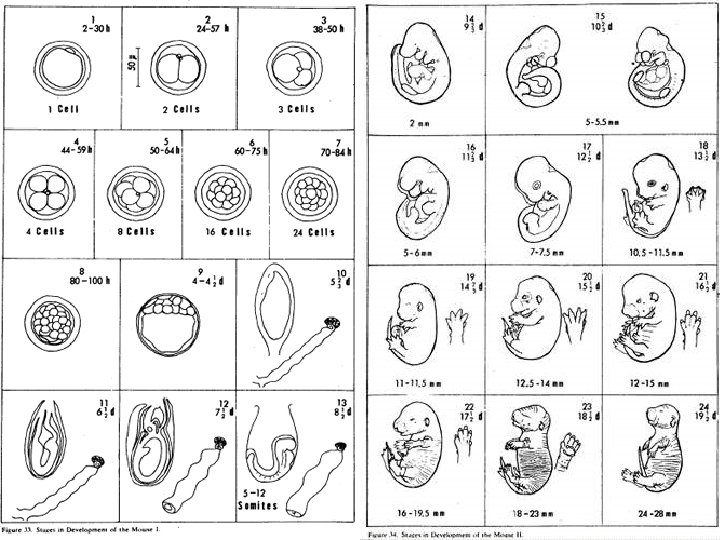
(Image) Embryonic Growth Phases
Breeding Schemes Ø Breeding schemes determine how similar or different parents are from offspring. 4 Scheme depends on animal & requirements. Ø Inbreeding is used to produce animals with minimal genetic variation. 4 share characteristics & are identified as specific strain Ø Strains are inbred after >20 generations. Ø Rodents are the most frequently inbred animals. 4 C 57 BL, DBA/2, C 3 H, and BALB/c Ø A mating to an unrelated animal or a different strain contaminates the inbred line. 4 Escaped animal should not be returned to a cage.
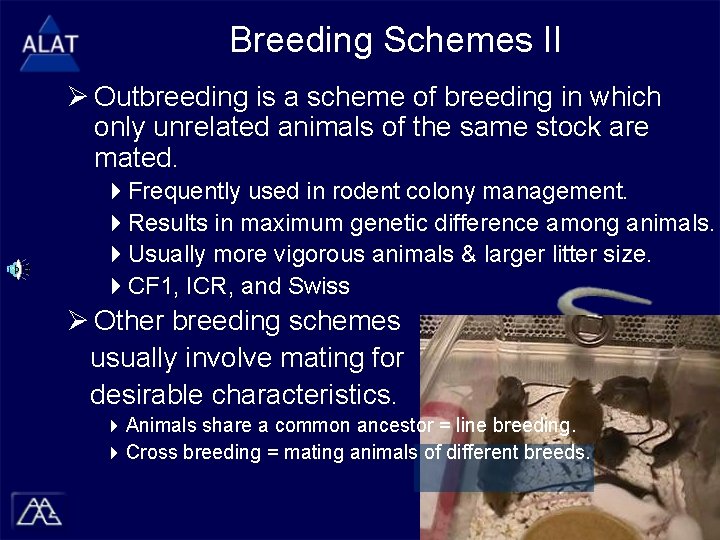
Breeding Schemes II Ø Outbreeding is a scheme of breeding in which only unrelated animals of the same stock are mated. 4 Frequently used in rodent colony management. 4 Results in maximum genetic difference among animals. 4 Usually more vigorous animals & larger litter size. 4 CF 1, ICR, and Swiss Ø Other breeding schemes usually involve mating for desirable characteristics. 4 Animals share a common ancestor = line breeding. 4 Cross breeding = mating animals of different breeds.
Mating Systems Ø After determining genetic type required for a project & selecting mating system appropriate to species being used, more than one mating system may be appropriate. 4 depends on management considerations Ø Monogamous mating = 1 & 1 paired together for the duration of their breeding life. 4 Simplifies record keeping & lends itself well to maintaining inbred or outbred colonies. Ø Gerbil is bred most successfully with monogamous pairs.
Harem Mating Ø Polygamous mating system = 1 with > 2 s 4 results in large # of young from least # of breeders 4 economical method of production 4 difficult to keep accurate records 8 s often share nursing responsibilities, causes uncertainty of which female gave birth to offspring. 8 for colonies when not critical to know which is the mother Ø Cage must be large enough for adults and young until offspring are weaned. Ø Separate housed & are together for breeding. 4 Reduces # of animals needed, permits accurate record keeping, but labor costs are high. 4 Used when s kill the young or & are aggressive.
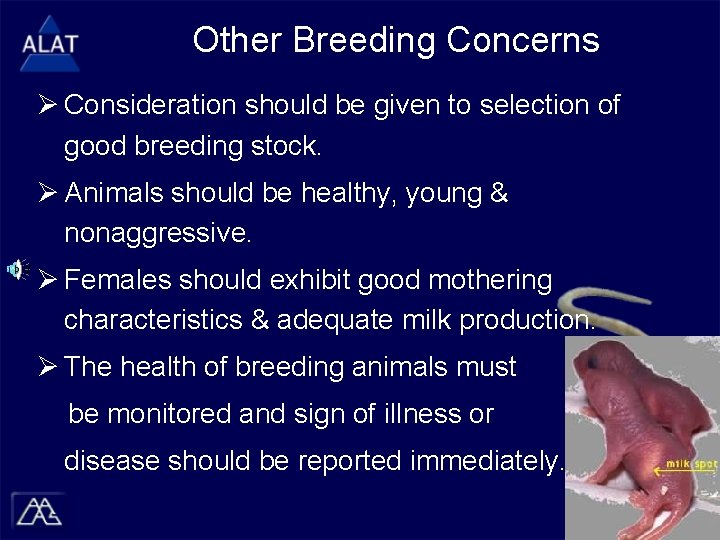
Other Breeding Concerns Ø Consideration should be given to selection of good breeding stock. Ø Animals should be healthy, young & nonaggressive. Ø Females should exhibit good mothering characteristics & adequate milk production. Ø The health of breeding animals must be monitored and sign of illness or disease should be reported immediately.
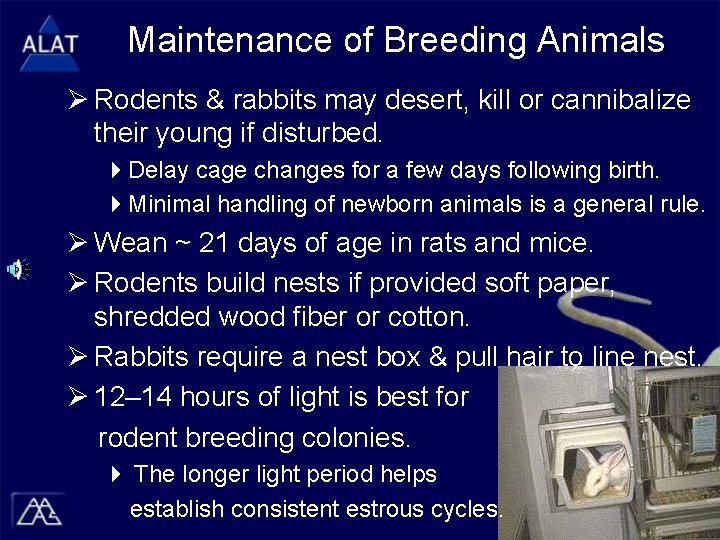
Maintenance of Breeding Animals Ø Rodents & rabbits may desert, kill or cannibalize their young if disturbed. 4 Delay cage changes for a few days following birth. 4 Minimal handling of newborn animals is a general rule. Ø Wean ~ 21 days of age in rats and mice. Ø Rodents build nests if provided soft paper, shredded wood fiber or cotton. Ø Rabbits require a nest box & pull hair to line nest. Ø 12– 14 hours of light is best for rodent breeding colonies. 4 The longer light period helps establish consistent estrous cycles.
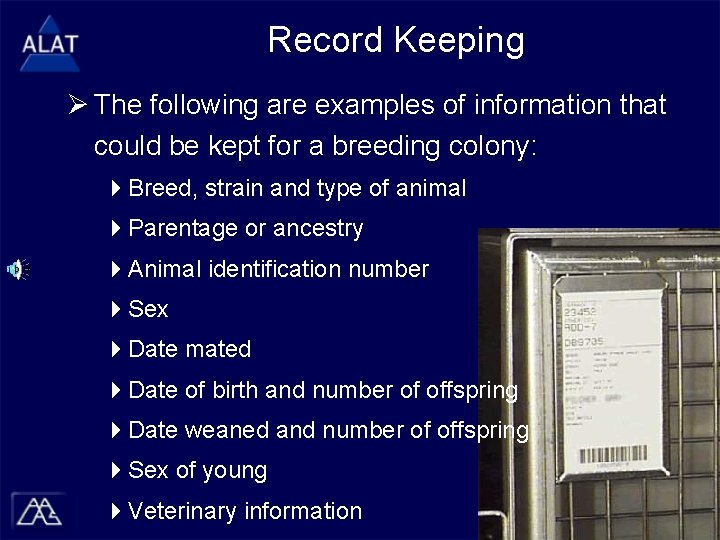
Record Keeping Ø The following are examples of information that could be kept for a breeding colony: 4 Breed, strain and type of animal 4 Parentage or ancestry 4 Animal identification number 4 Sex 4 Date mated 4 Date of birth and number of offspring 4 Date weaned and number of offspring 4 Sex of young 4 Veterinary information
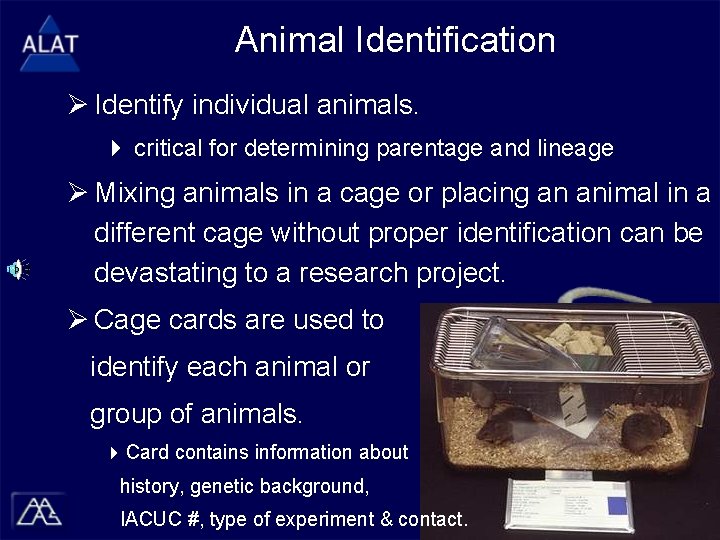
Animal Identification Ø Identify individual animals. 4 critical for determining parentage and lineage Ø Mixing animals in a cage or placing an animal in a different cage without proper identification can be devastating to a research project. Ø Cage cards are used to identify each animal or group of animals. 4 Card contains information about history, genetic background, IACUC #, type of experiment & contact.
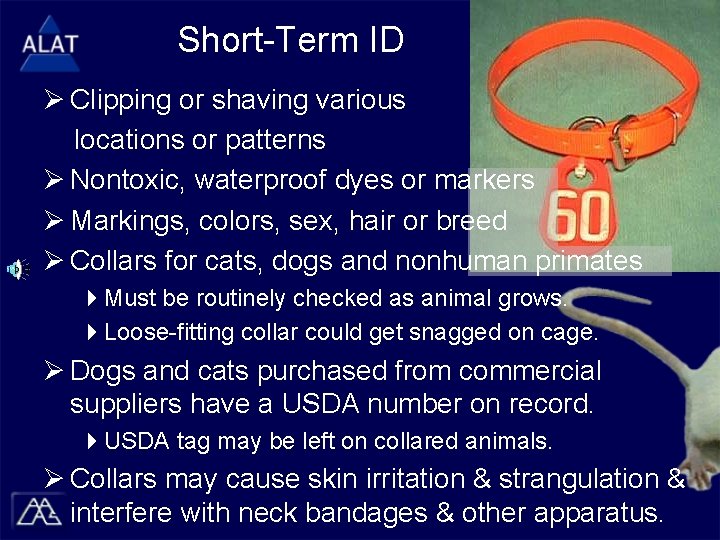
Short-Term ID Ø Clipping or shaving various locations or patterns Ø Nontoxic, waterproof dyes or markers Ø Markings, colors, sex, hair or breed Ø Collars for cats, dogs and nonhuman primates 4 Must be routinely checked as animal grows. 4 Loose-fitting collar could get snagged on cage. Ø Dogs and cats purchased from commercial suppliers have a USDA number on record. 4 USDA tag may be left on collared animals. Ø Collars may cause skin irritation & strangulation & interfere with neck bandages & other apparatus.
Permanent Identification Methods Ø Implantable microchip transponders transmit ID. 4 Subcutaneous chip implanted 4 Recording device scans chip and reads # Ø Ear notching = holes at various positions 4 Notches & holes = a numbering code. 4 Easy to read and produces little trauma to animal. 4 Used in pigs & rodents, not hamsters & guinea pigs. 4 Holes or notches close over a period of time. 4 Sanitize punch tool between animals. Ø Toe clipping must have strong justification. 4 removal of 1 st bone of certain toes = a # code 4>time, >difficult, >stress than ear marking 4 Anesthesia is recommended.
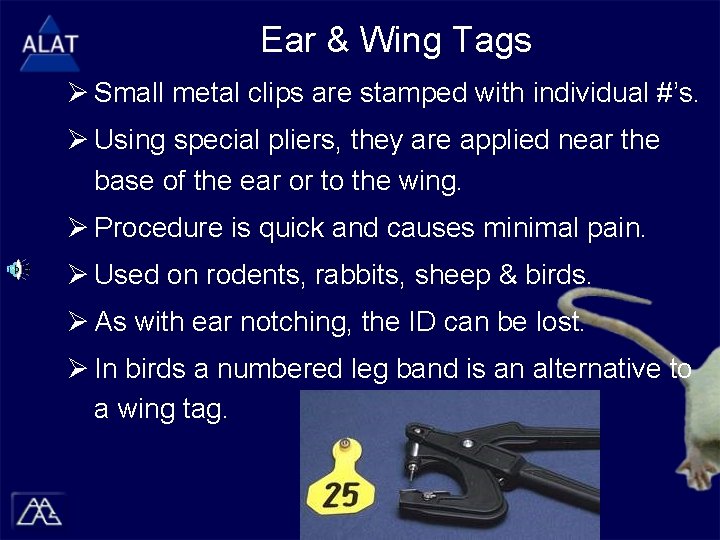
Ear & Wing Tags Ø Small metal clips are stamped with individual #’s. Ø Using special pliers, they are applied near the base of the ear or to the wing. Ø Procedure is quick and causes minimal pain. Ø Used on rodents, rabbits, sheep & birds. Ø As with ear notching, the ID can be lost. Ø In birds a numbered leg band is an alternative to a wing tag.
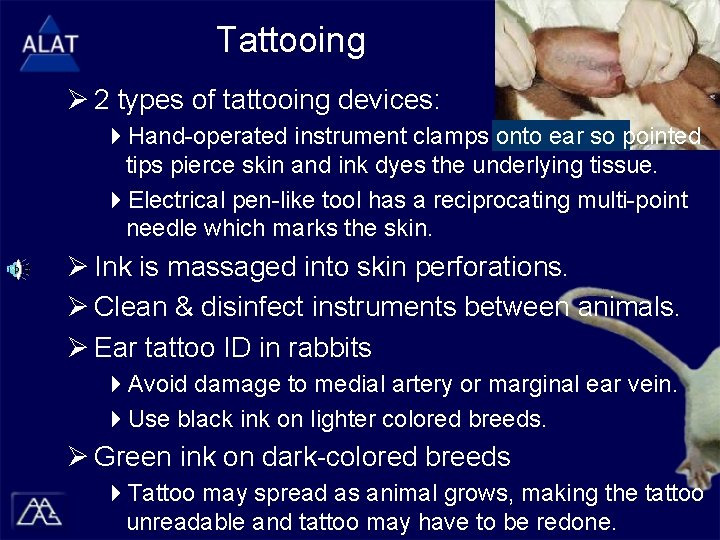
Tattooing Ø 2 types of tattooing devices: 4 Hand-operated instrument clamps onto ear so pointed tips pierce skin and ink dyes the underlying tissue. 4 Electrical pen-like tool has a reciprocating multi-point needle which marks the skin. Ø Ink is massaged into skin perforations. Ø Clean & disinfect instruments between animals. Ø Ear tattoo ID in rabbits 4 Avoid damage to medial artery or marginal ear vein. 4 Use black ink on lighter colored breeds. Ø Green ink on dark-colored breeds 4 Tattoo may spread as animal grows, making the tattoo unreadable and tattoo may have to be redone.
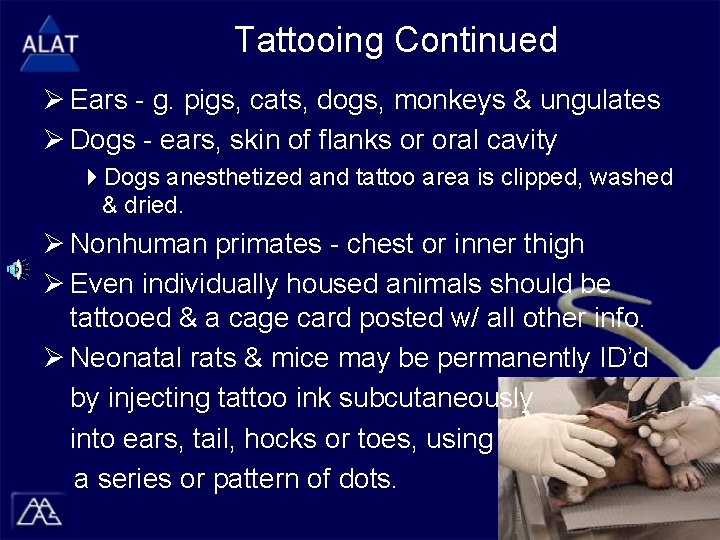
Tattooing Continued Ø Ears - g. pigs, cats, dogs, monkeys & ungulates Ø Dogs - ears, skin of flanks or oral cavity 4 Dogs anesthetized and tattoo area is clipped, washed & dried. Ø Nonhuman primates - chest or inner thigh Ø Even individually housed animals should be tattooed & a cage card posted w/ all other info. Ø Neonatal rats & mice may be permanently ID’d by injecting tattoo ink subcutaneously into ears, tail, hocks or toes, using a series or pattern of dots.
Additional Reading Nicholas, F. W. Veterinary Genetics. Iowa State University Press, Ames, IA. 1987.
- Slides: 23