
CHAPTER SEVEN Consumer Learning Definition and elements of
- Slides: 21
CHAPTER SEVEN Consumer Learning
Definition and elements of Learning 1 - Learning definition 2 - Elements of learning Chapter Seven Slide 2
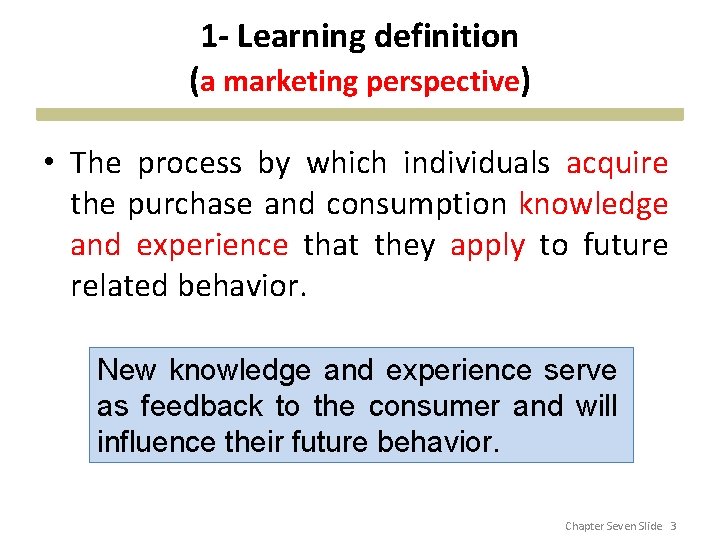
1 - Learning definition (a marketing perspective) • The process by which individuals acquire the purchase and consumption knowledge and experience that they apply to future related behavior. New knowledge and experience serve as feedback to the consumer and will influence their future behavior. Chapter Seven Slide 3
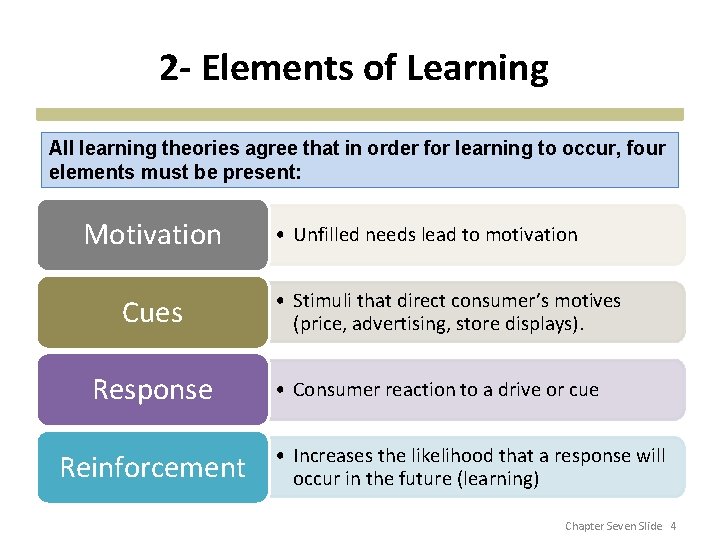
2 - Elements of Learning All learning theories agree that in order for learning to occur, four elements must be present: Motivation Cues Response Reinforcement • Unfilled needs lead to motivation • Stimuli that direct consumer’s motives (price, advertising, store displays). • Consumer reaction to a drive or cue • Increases the likelihood that a response will occur in the future (learning) Chapter Seven Slide 4
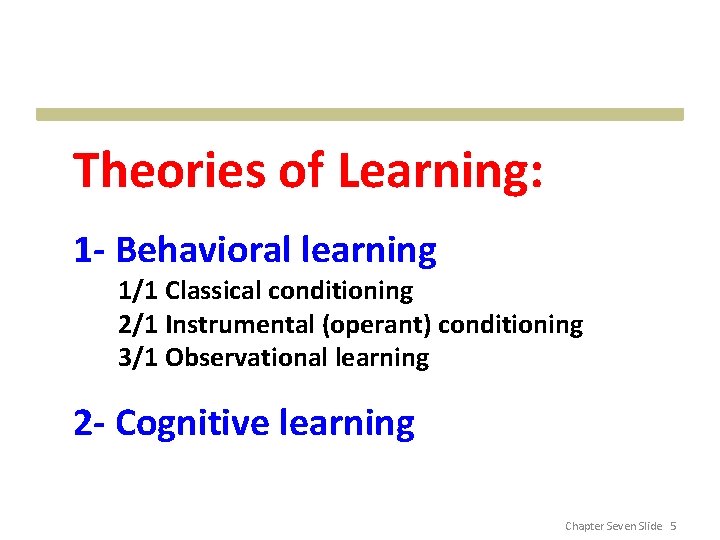
Theories of Learning: 1 - Behavioral learning 1/1 Classical conditioning 2/1 Instrumental (operant) conditioning 3/1 Observational learning 2 - Cognitive learning Chapter Seven Slide 5
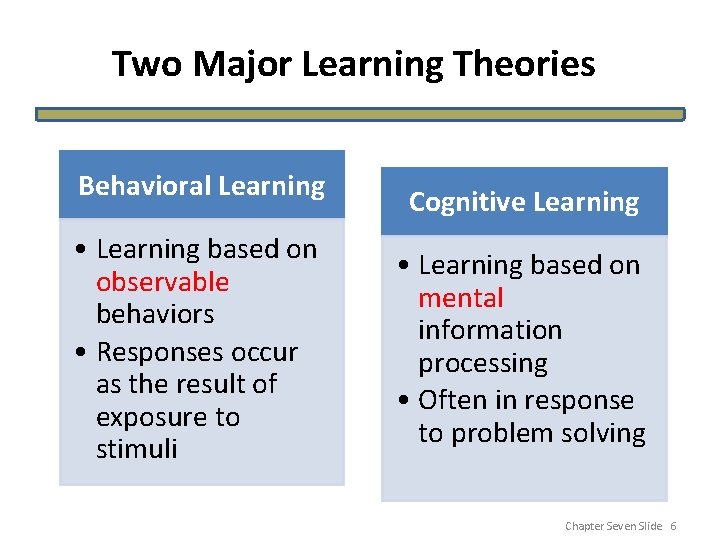
Two Major Learning Theories Behavioral Learning • Learning based on observable behaviors • Responses occur as the result of exposure to stimuli Cognitive Learning • Learning based on mental information processing • Often in response to problem solving Chapter Seven Slide 6
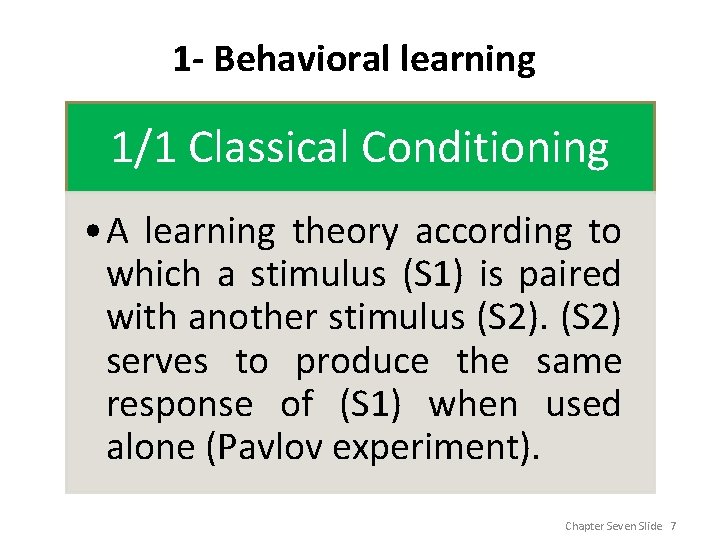
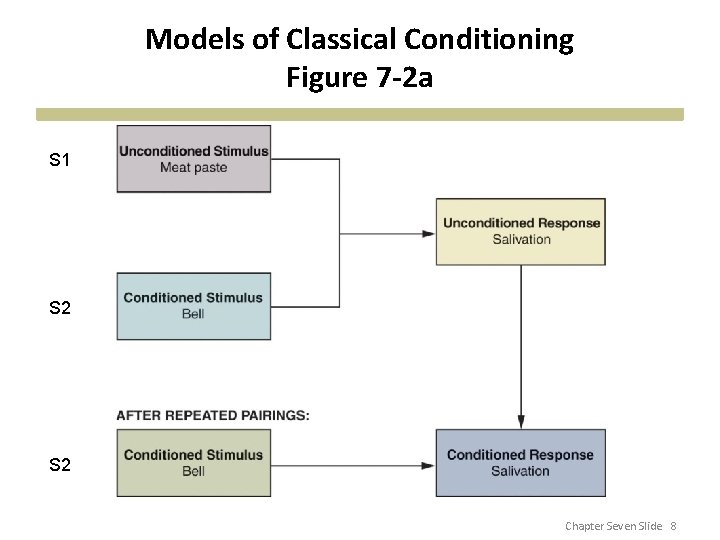
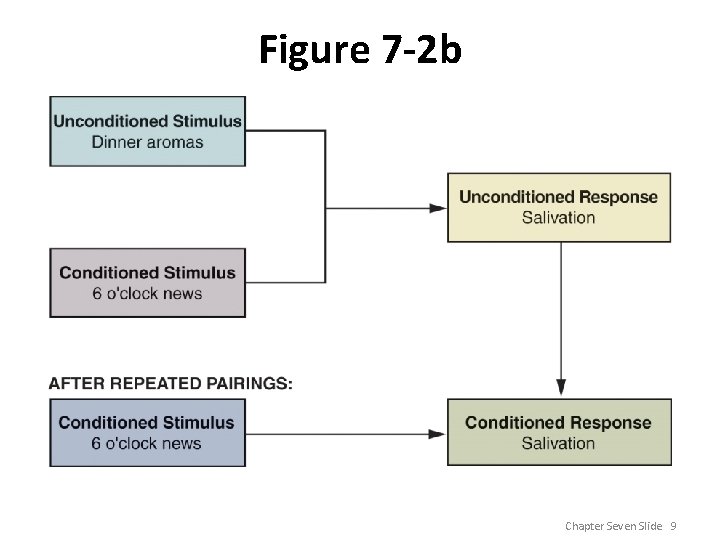
1 - Behavioral learning 1/1 Classical Conditioning • A learning theory according to which a stimulus (S 1) is paired with another stimulus (S 2) serves to produce the same response of (S 1) when used alone (Pavlov experiment). Chapter Seven Slide 7
Models of Classical Conditioning Figure 7 -2 a S 1 S 2 Chapter Seven Slide 8
Figure 7 -2 b Chapter Seven Slide 9
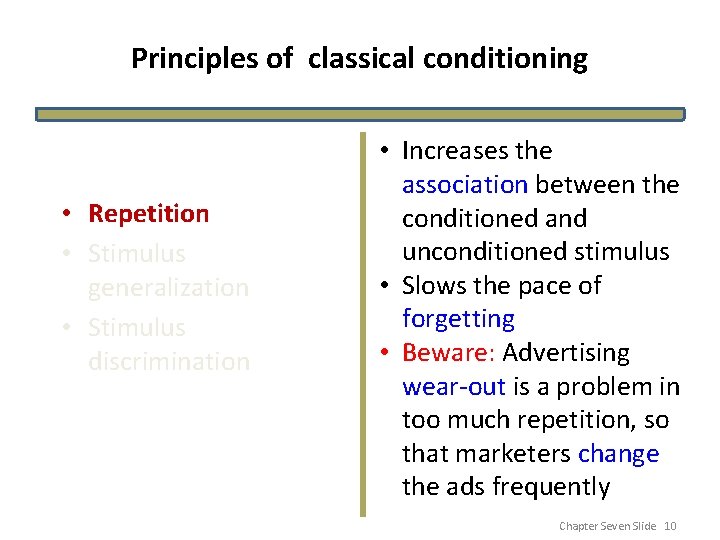
Principles of classical conditioning • Repetition • Stimulus generalization • Stimulus discrimination • Increases the association between the conditioned and unconditioned stimulus • Slows the pace of forgetting • Beware: Advertising wear-out is a problem in too much repetition, so that marketers change the ads frequently Chapter Seven Slide 10
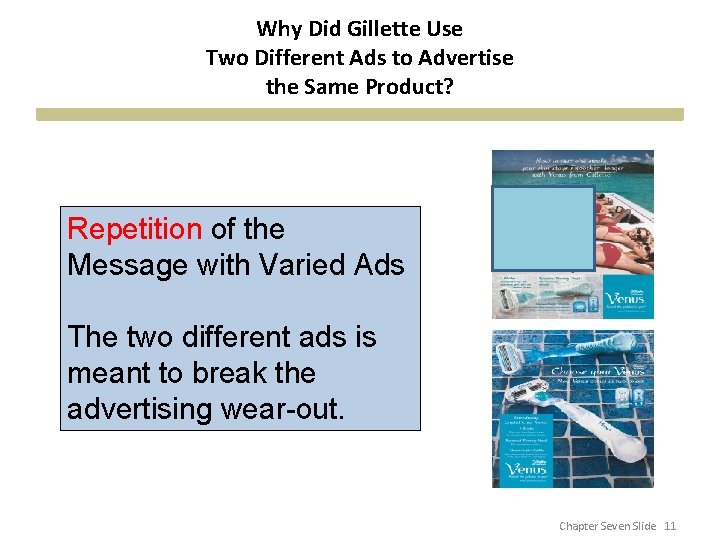
Why Did Gillette Use Two Different Ads to Advertise the Same Product? Repetition of the Message with Varied Ads The two different ads is meant to break the advertising wear-out. Chapter Seven Slide 11
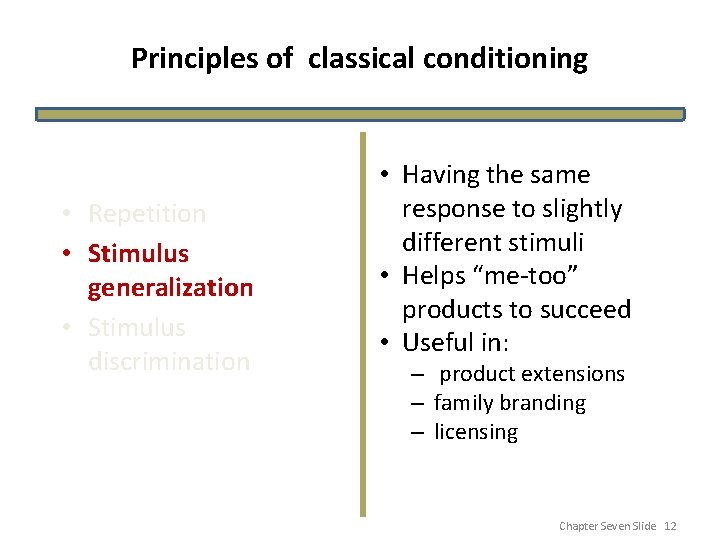
Principles of classical conditioning • Repetition • Stimulus generalization • Stimulus discrimination • Having the same response to slightly different stimuli • Helps “me-too” products to succeed • Useful in: – product extensions – family branding – licensing Chapter Seven Slide 12
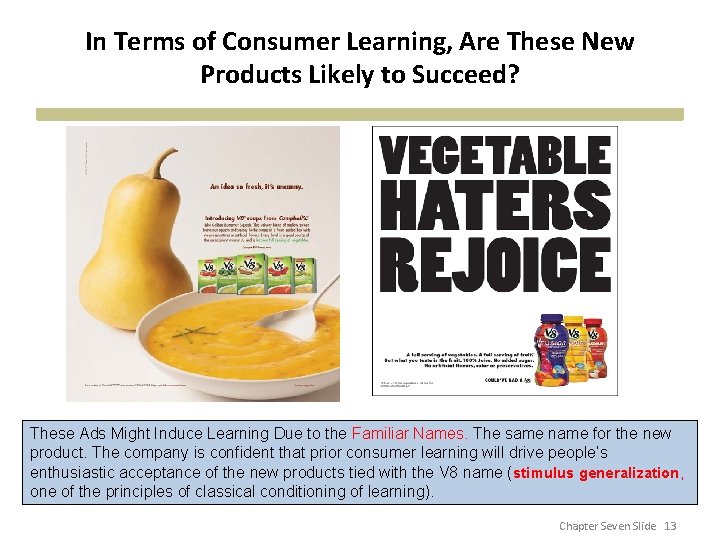
In Terms of Consumer Learning, Are These New Products Likely to Succeed? These Ads Might Induce Learning Due to the Familiar Names. The same name for the new product. The company is confident that prior consumer learning will drive people’s enthusiastic acceptance of the new products tied with the V 8 name (stimulus generalization, one of the principles of classical conditioning of learning). Chapter Seven Slide 13
Principles of classical conditioning • Repetition • Stimulus generalization • Stimulus discrimination • Selection of a specific stimulus • Opposite of stimulus generalization • This discrimination is the basis of positioning, which looks for unique ways to fill needs in a competitive market Chapter Seven Slide 14
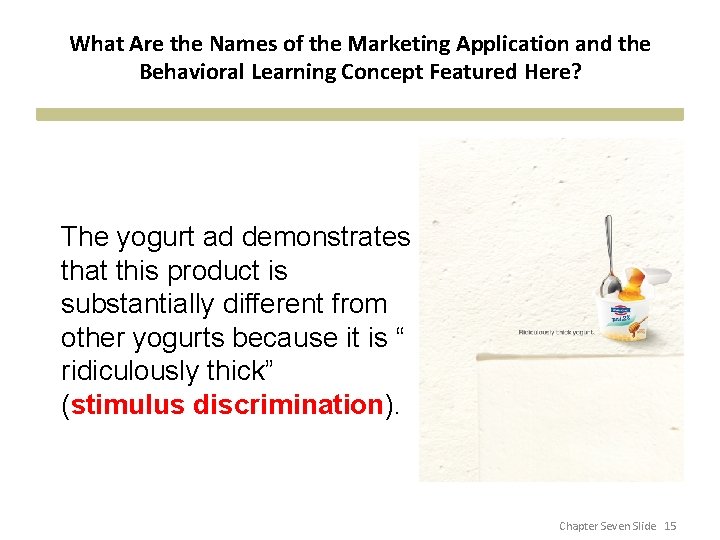
What Are the Names of the Marketing Application and the Behavioral Learning Concept Featured Here? The yogurt ad demonstrates that this product is substantially different from other yogurts because it is “ ridiculously thick” (stimulus discrimination). Chapter Seven Slide 15
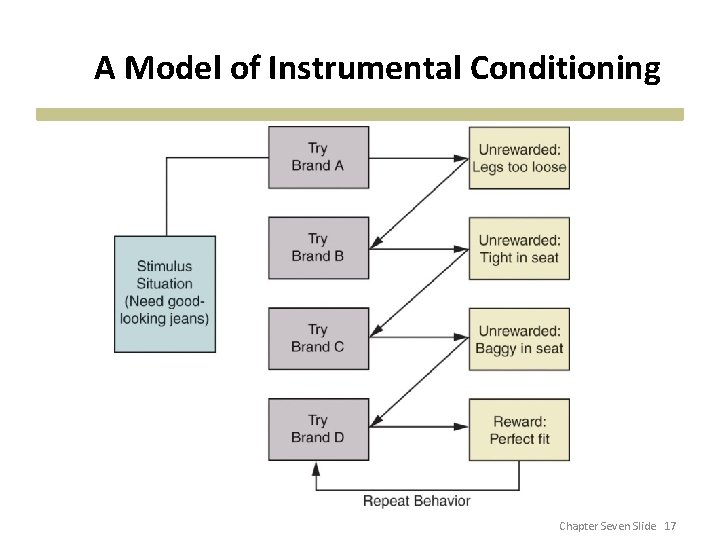
1 - Behavioral learning 2/1 Instrumental (Operant) Conditioning • A behavioral theory of learning based on a trialand-error process. Habits forced as a result of experiences (reinforcement) resulting from certain responses or behaviors. • learning occurs based on rewards. Through trial and error, consumers learn which behaviors lead to rewards and which do not. Chapter Seven Slide 16
A Model of Instrumental Conditioning Chapter Seven Slide 17
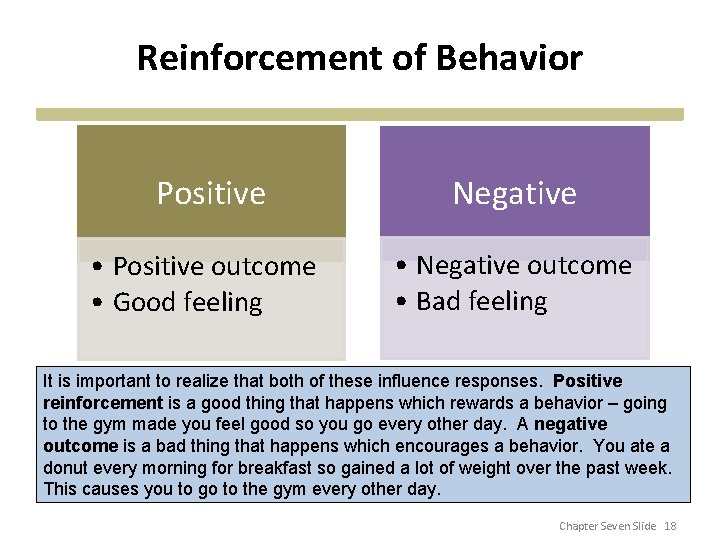
Reinforcement of Behavior Positive Negative • Positive outcome • Good feeling • Negative outcome • Bad feeling It is important to realize that both of these influence responses. Positive reinforcement is a good thing that happens which rewards a behavior – going to the gym made you feel good so you go every other day. A negative outcome is a bad thing that happens which encourages a behavior. You ate a donut every morning for breakfast so gained a lot of weight over the past week. This causes you to go to the gym every other day. Chapter Seven Slide 18
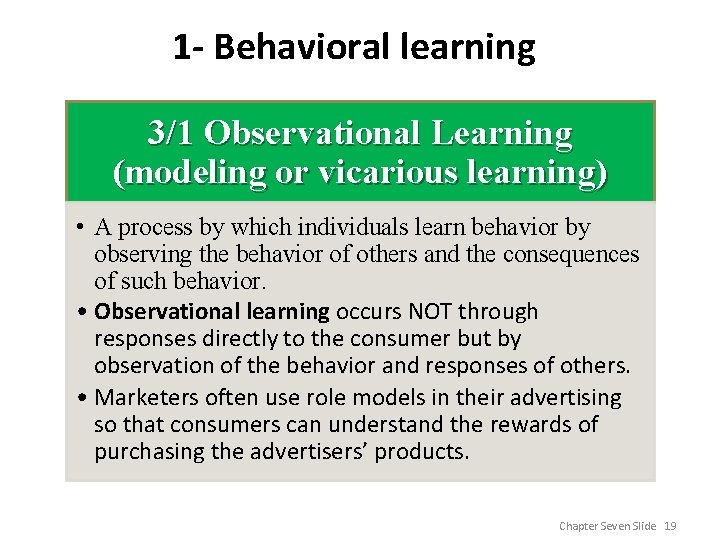
1 - Behavioral learning 3/1 Observational Learning (modeling or vicarious learning) • A process by which individuals learn behavior by observing the behavior of others and the consequences of such behavior. • Observational learning occurs NOT through responses directly to the consumer but by observation of the behavior and responses of others. • Marketers often use role models in their advertising so that consumers can understand the rewards of purchasing the advertisers’ products. Chapter Seven Slide 19
2 - Cognitive Learning • In Cognitive Learning, learning involves complex mental processing of information • Cognitive learning focuses on problem solving and consumer thinking. • It is closely tied to information processing and how consumers store, retain, and retrieve information. Chapter Seven Slide 20
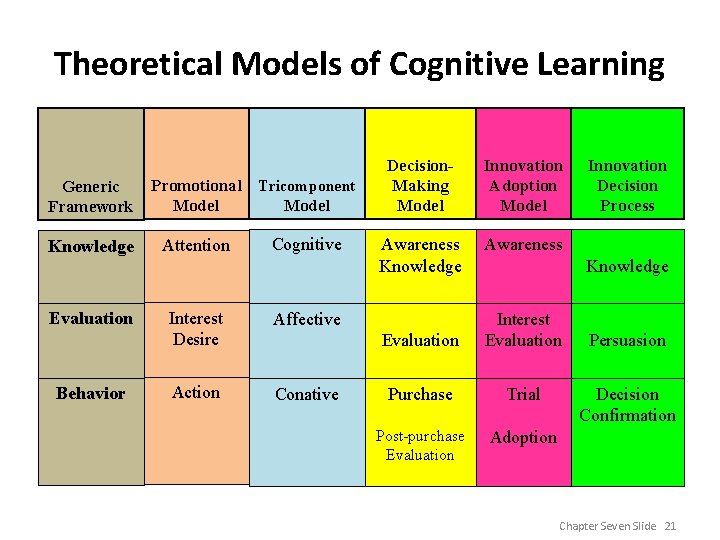
Theoretical Models of Cognitive Learning Promotional Tricomponent Generic Model Framework Knowledge Evaluation Behavior Attention Cognitive Interest Desire Affective Action Conative Decision. Making Model Innovation Adoption Model Awareness Knowledge Awareness Innovation Decision Process Knowledge Evaluation Interest Evaluation Purchase Trial Post-purchase Evaluation Adoption Persuasion Decision Confirmation Chapter Seven Slide 21