
Chapter Safety 2 Objectives Explain what OSHA is
Chapter Safety 2
Objectives • Explain what OSHA is and its purpose. • Explain housekeeping measures that promote safe working conditions. • List and describe clothing safety as it applies to carpenters. • List other personal protective equipment recommended for carpenters to use. OSHA. gov Copyright Goodheart-Willcox Co. , Inc. May not be posted to a publicly accessible website.
Objectives (Cont. ) • List safety measures relating to shoring and scaffolding. • Cite safety measures relating to hand power tools. • Explain how electrical power is used safely on a jobsite. • Describe proper methods of lifting and carrying to avoid personal injury. • Describe the classes of fires. Leviton Copyright Goodheart-Willcox Co. , Inc. May not be posted to a publicly accessible website.
Workplace Safety • Carpentry tools and materials can cause serious injury • 17. 6% of fatalities in industry are construction related • Causes of construction worker deaths – – Falls Electrocution Struck by object Caught-in/between Copyright Goodheart-Willcox Co. , Inc. May not be posted to a publicly accessible website.
Occupational Safety and Health Administration • OSHA protects workers – – Standards for workplace safety Health information and training Safety training for employers and workers Inspecting workplaces • States to establish their own safety and health programs Copyright Goodheart-Willcox Co. , Inc. May not be posted to a publicly accessible website.
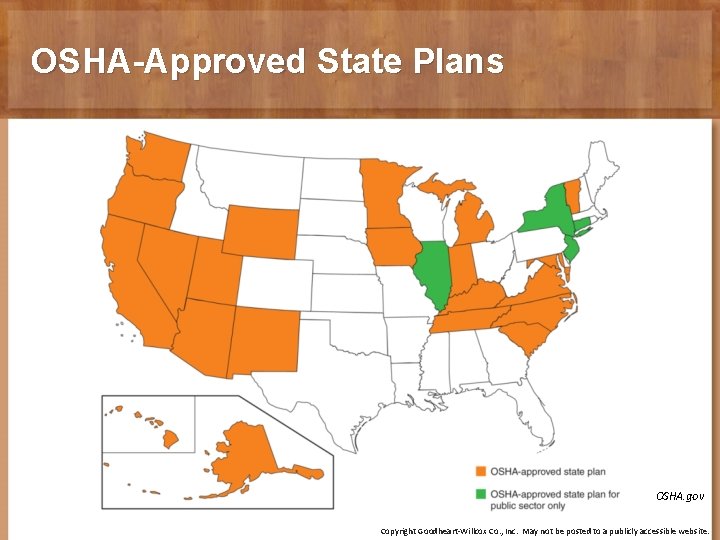
OSHA-Approved State Plans OSHA. gov Copyright Goodheart-Willcox Co. , Inc. May not be posted to a publicly accessible website.
Employers’ Responsibilities under OSHA • Provide safe workplaces • Try to eliminate or reduce hazards • Provide “competent person” to perform certain functions Copyright Goodheart-Willcox Co. , Inc. May not be posted to a publicly accessible website.
Workers’ Responsibilities under OSHA • • • Become familiar with OSHA poster Follow safety and health rules Follow safe work practices Report safety hazards to employer Report to OSHA if employer fails to correct problems Copyright Goodheart-Willcox Co. , Inc. May not be posted to a publicly accessible website.
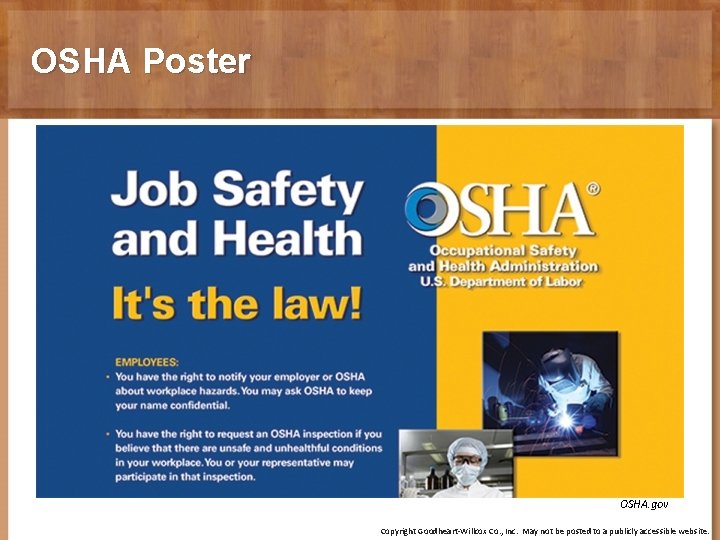
OSHA Poster OSHA. gov Copyright Goodheart-Willcox Co. , Inc. May not be posted to a publicly accessible website.
Safety Culture • In good safety culture, workers: – Watch for potential hazards and take action to eliminate them – Use proper safety equipment; perform tasks safely • In good safety culture, employers: – Provide safety training – Provide equipment and materials for safe work – Consider safety when planning work Copyright Goodheart-Willcox Co. , Inc. May not be posted to a publicly accessible website.
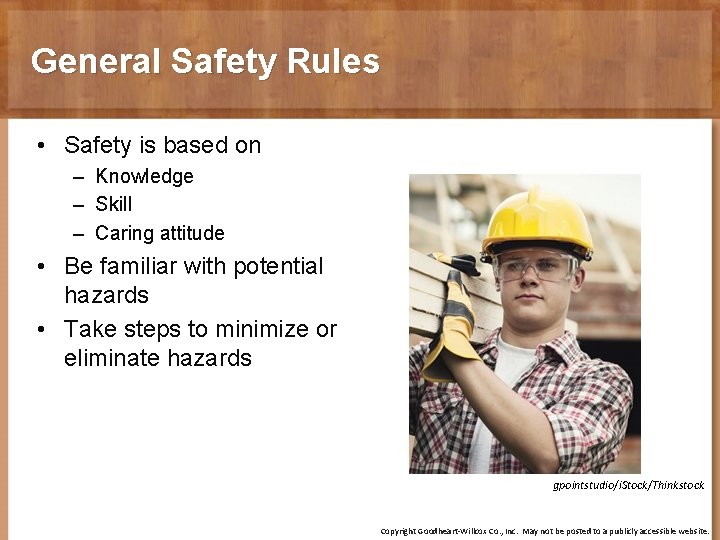
General Safety Rules • Safety is based on – Knowledge – Skill – Caring attitude • Be familiar with potential hazards • Take steps to minimize or eliminate hazards gpointstudio/i. Stock/Thinkstock Copyright Goodheart-Willcox Co. , Inc. May not be posted to a publicly accessible website.
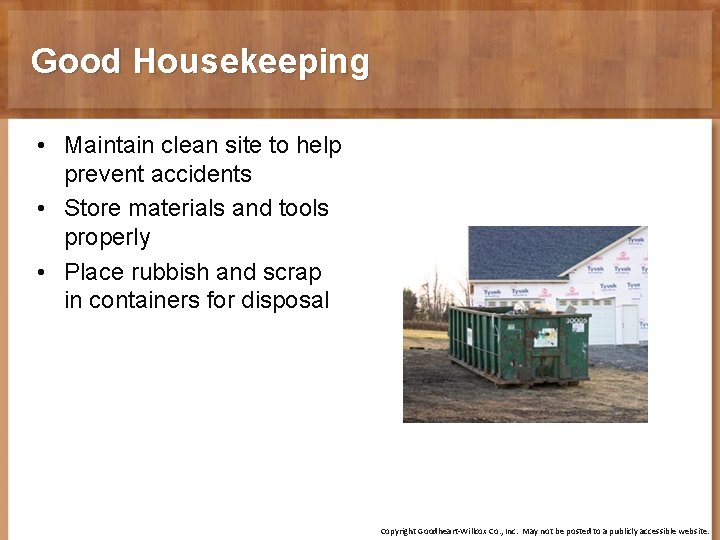
Good Housekeeping • Maintain clean site to help prevent accidents • Store materials and tools properly • Place rubbish and scrap in containers for disposal Copyright Goodheart-Willcox Co. , Inc. May not be posted to a publicly accessible website.
Pro Tip • Remove nails from lumber scraps before discarding them • Failure to do so could result in injury from puncture • Injuries can lead to lost time on job Copyright Goodheart-Willcox Co. , Inc. May not be posted to a publicly accessible website.
Thinking Green • • • Damaged and lost materials create unnecessary waste Store materials in secure location to minimize theft Protect stored materials from bad weather Locate materials away from worker pathways Keep materials neatly organized Copyright Goodheart-Willcox Co. , Inc. May not be posted to a publicly accessible website.
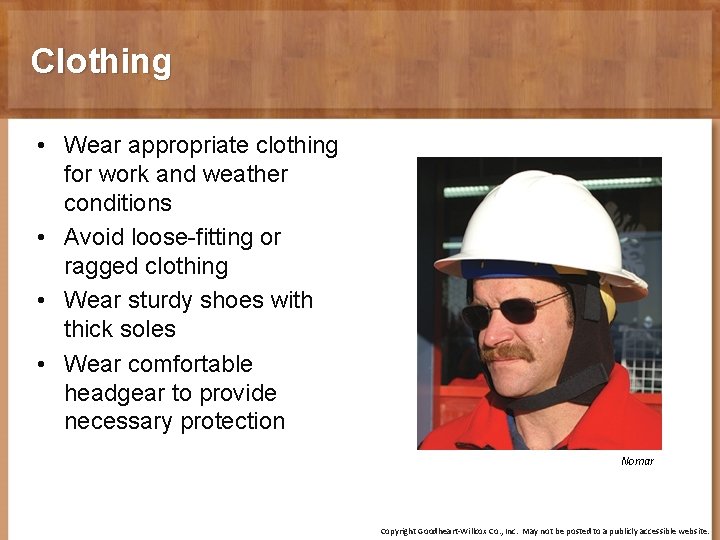
Clothing • Wear appropriate clothing for work and weather conditions • Avoid loose-fitting or ragged clothing • Wear sturdy shoes with thick soles • Wear comfortable headgear to provide necessary protection Nomar Copyright Goodheart-Willcox Co. , Inc. May not be posted to a publicly accessible website.
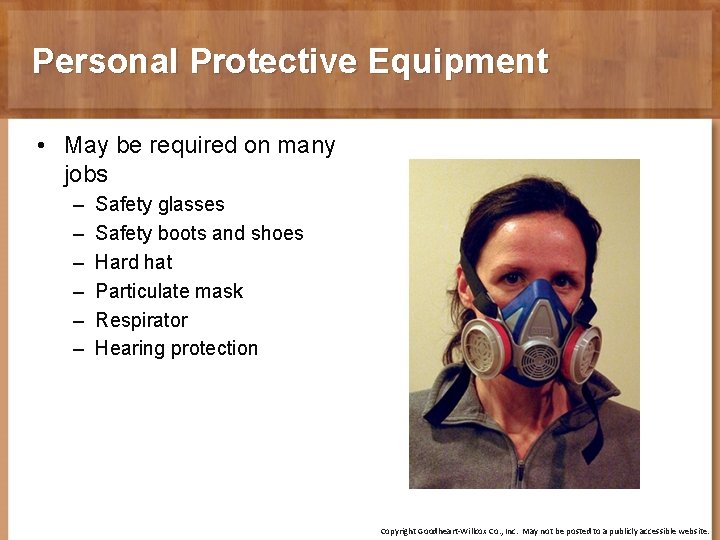
Personal Protective Equipment • May be required on many jobs – – – Safety glasses Safety boots and shoes Hard hat Particulate mask Respirator Hearing protection Copyright Goodheart-Willcox Co. , Inc. May not be posted to a publicly accessible website.
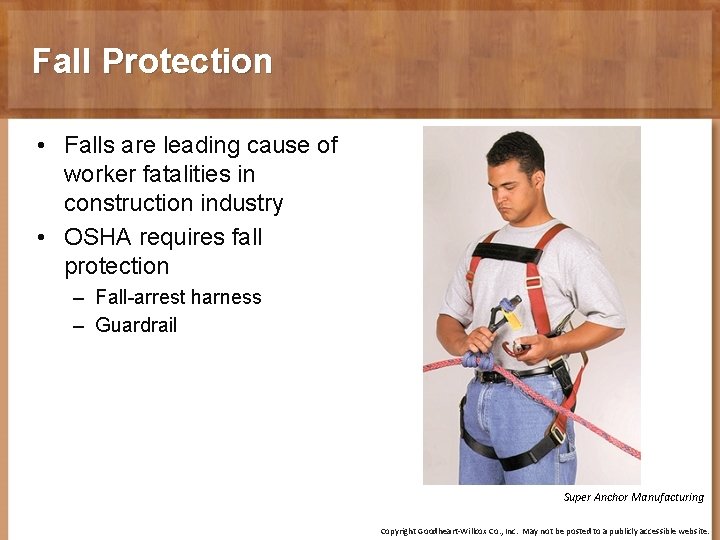
Fall Protection • Falls are leading cause of worker fatalities in construction industry • OSHA requires fall protection – Fall-arrest harness – Guardrail Super Anchor Manufacturing Copyright Goodheart-Willcox Co. , Inc. May not be posted to a publicly accessible website.
Scaffolds and Ladders • Scaffolds – Must have minimum safety factor of four – May pose electrocution hazard • Ladders – Inspect regularly – Use only for climbing from one level to another – May also pose electrocution hazard Copyright Goodheart-Willcox Co. , Inc. May not be posted to a publicly accessible website.
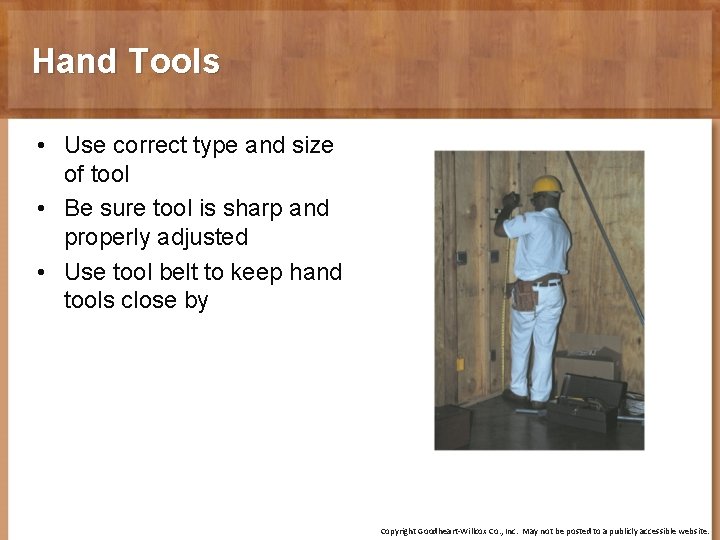
Hand Tools • Use correct type and size of tool • Be sure tool is sharp and properly adjusted • Use tool belt to keep hand tools close by Copyright Goodheart-Willcox Co. , Inc. May not be posted to a publicly accessible website.
Rules for Hand Tools • • • Hold hand tools correctly Be careful when starting cut with handsaw Keep edged and pointed tools turned downward Carry only few tools at one time Do not carry sharp tools in your pockets Store tools properly Copyright Goodheart-Willcox Co. , Inc. May not be posted to a publicly accessible website.
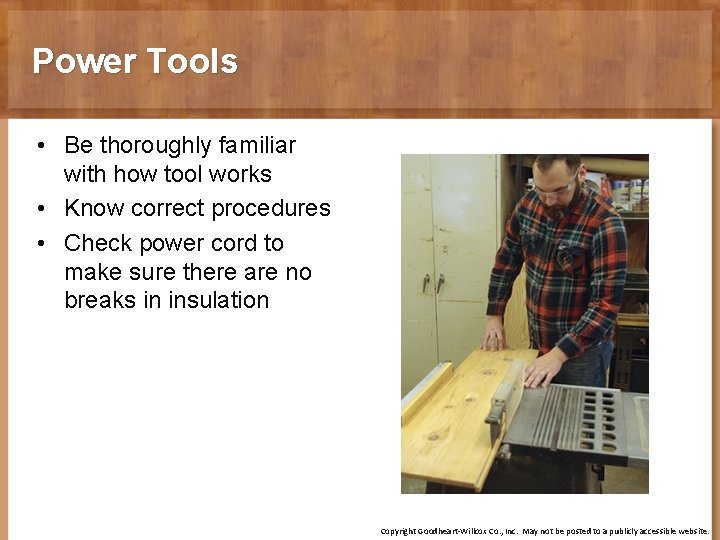
Power Tools • Be thoroughly familiar with how tool works • Know correct procedures • Check power cord to make sure there are no breaks in insulation Copyright Goodheart-Willcox Co. , Inc. May not be posted to a publicly accessible website.
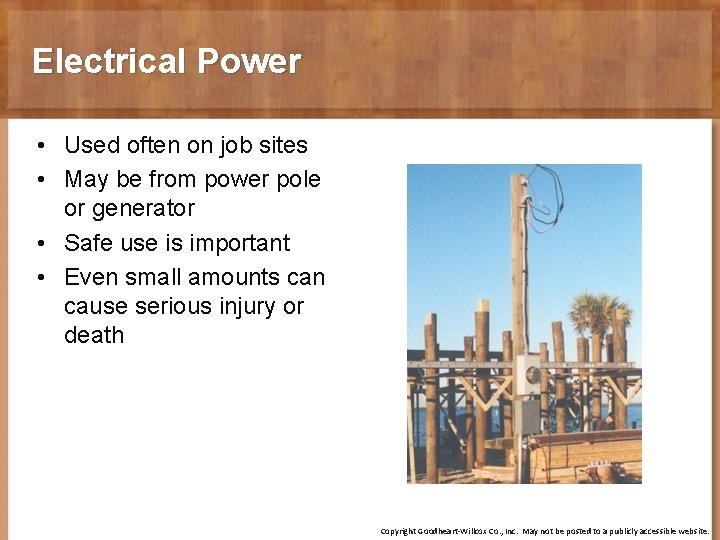
Electrical Power • Used often on job sites • May be from power pole or generator • Safe use is important • Even small amounts can cause serious injury or death Copyright Goodheart-Willcox Co. , Inc. May not be posted to a publicly accessible website.
Electrical Conductors • • Moisture can turn many materials into conductors Workers can receive electrical shocks Make sure tools you use are grounded Circuit breakers and fuses provide some protection against shock Copyright Goodheart-Willcox Co. , Inc. May not be posted to a publicly accessible website.
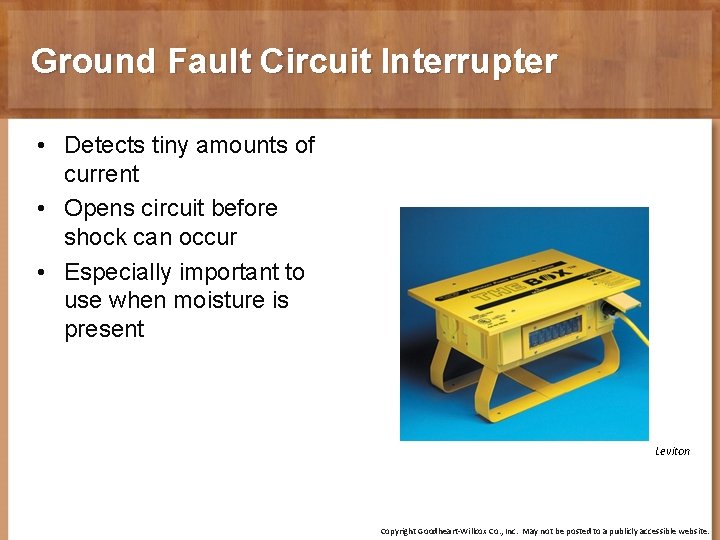
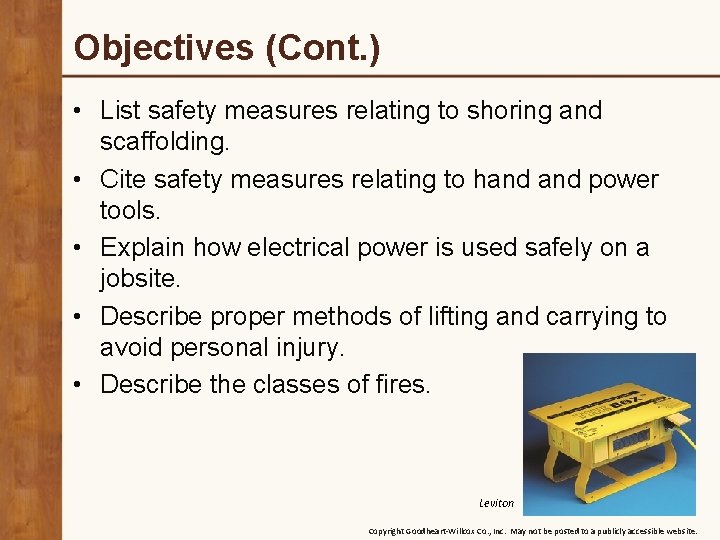
Ground Fault Circuit Interrupter • Detects tiny amounts of current • Opens circuit before shock can occur • Especially important to use when moisture is present Leviton Copyright Goodheart-Willcox Co. , Inc. May not be posted to a publicly accessible website.
Compressed Air • Tools powered by compressed air are called pneumatic tools: – Can be dangerous – High pressure can cause particles to puncture human skin – Serious damage can occur if directed at eyes or ears Copyright Goodheart-Willcox Co. , Inc. May not be posted to a publicly accessible website.
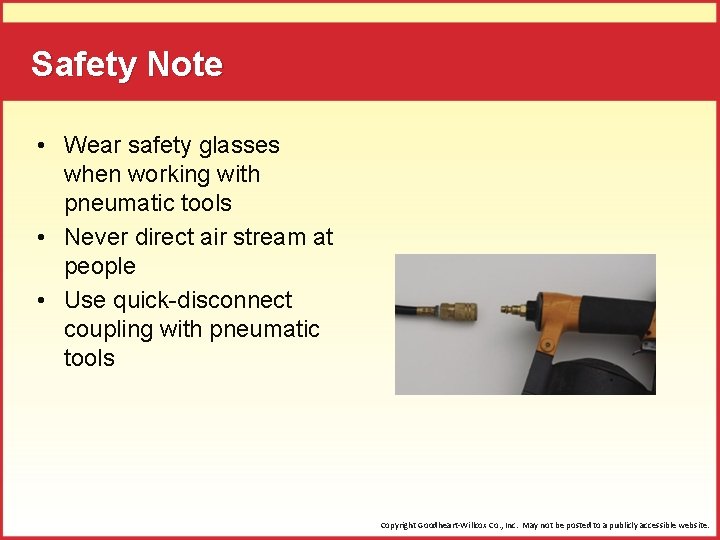
Safety Note • Wear safety glasses when working with pneumatic tools • Never direct air stream at people • Use quick-disconnect coupling with pneumatic tools Copyright Goodheart-Willcox Co. , Inc. May not be posted to a publicly accessible website.
Decks and Floors • Carpenter should stand on firm, solid base • Surface should be smooth, but not slippery • Do not attempt to work over rough piles of earth or on stacks of material • Stay well away from floor openings, floor edges, and excavations Copyright Goodheart-Willcox Co. , Inc. May not be posted to a publicly accessible website.
Excavations • Shoring and bracing must be placed where ground is cracked or cave-in may occur • Ask utility companies to mark any buried utilities on site • Trenches pose hazards from shifting soil • Shoring or trench box can be used to work safely in trenches Copyright Goodheart-Willcox Co. , Inc. May not be posted to a publicly accessible website.
Falling Objects • On upper levels of structure, be cautious when handling materials • Falling materials can be hazards to workers below you • Position pieces of lumber on angle so they will not fall sideways • Be aware of overhead work and wear approved hard hat Copyright Goodheart-Willcox Co. , Inc. May not be posted to a publicly accessible website.
Handling Hazardous Materials • Materials used can pose hazards • Employers should notify employees about hazardous materials • Safety data sheet – Hazard descriptions – How to avoid hazards – What to do in case of exposure to hazards Copyright Goodheart-Willcox Co. , Inc. May not be posted to a publicly accessible website.
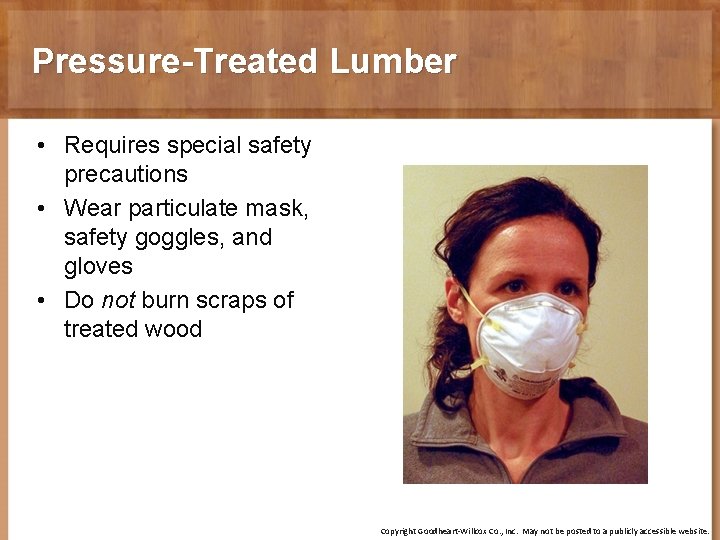
Pressure-Treated Lumber • Requires special safety precautions • Wear particulate mask, safety goggles, and gloves • Do not burn scraps of treated wood Copyright Goodheart-Willcox Co. , Inc. May not be posted to a publicly accessible website.
Lifting and Carrying • Improper lifting and carrying of heavy objects may cause injuries • Follow safety procedures when lifting – Stand close to load – Bend your knees and grasp object firmly – Lift by straightening your legs • If load is heavy or bulky, have others help Copyright Goodheart-Willcox Co. , Inc. May not be posted to a publicly accessible website.
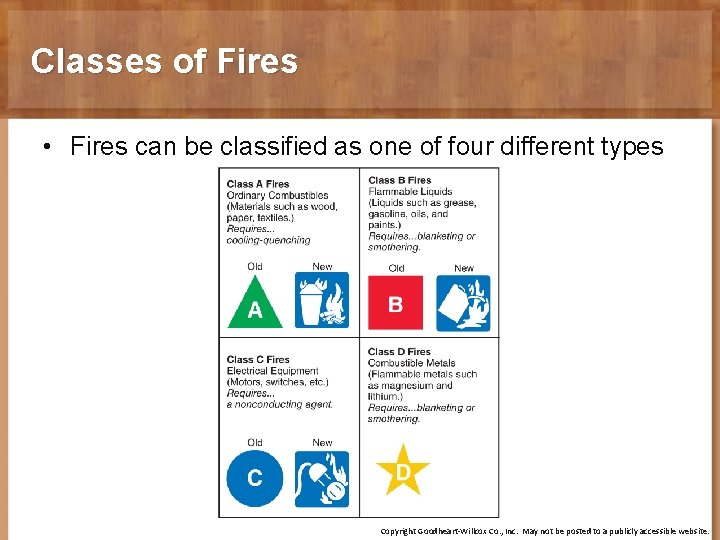
Classes of Fires • Fires can be classified as one of four different types Copyright Goodheart-Willcox Co. , Inc. May not be posted to a publicly accessible website.
Fire Protection • Know causes of fires and methods of controlling them • Follow approved fire prevention practices – Follow good housekeeping procedures – Keep containers of flammable materials closed when not in use – Dispose of oily rags and combustible materials promptly Copyright Goodheart-Willcox Co. , Inc. May not be posted to a publicly accessible website.
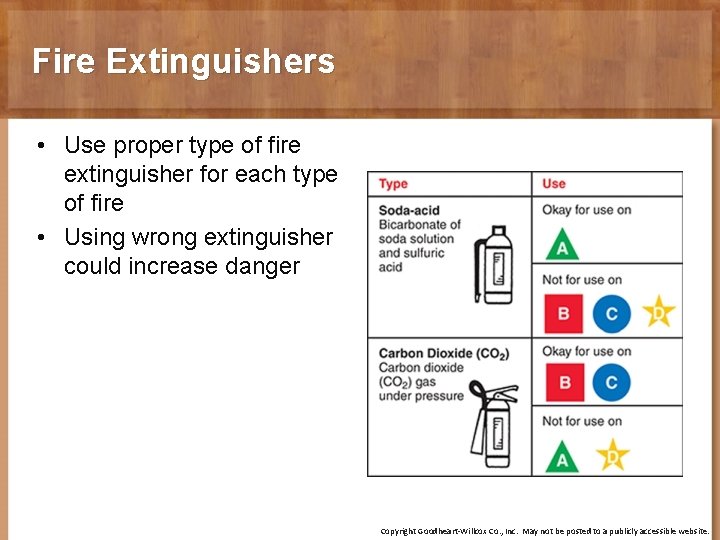
Fire Extinguishers • Use proper type of fire extinguisher for each type of fire • Using wrong extinguisher could increase danger Copyright Goodheart-Willcox Co. , Inc. May not be posted to a publicly accessible website.
First Aid • Knowledge of first aid is important • Accident victim may receive additional injury from unskilled treatment • Keep approved first aid kit on jobsite • Clean, sterilize, and bandage all cuts and nicks • Maintain current tetanus shot Copyright Goodheart-Willcox Co. , Inc. May not be posted to a publicly accessible website.
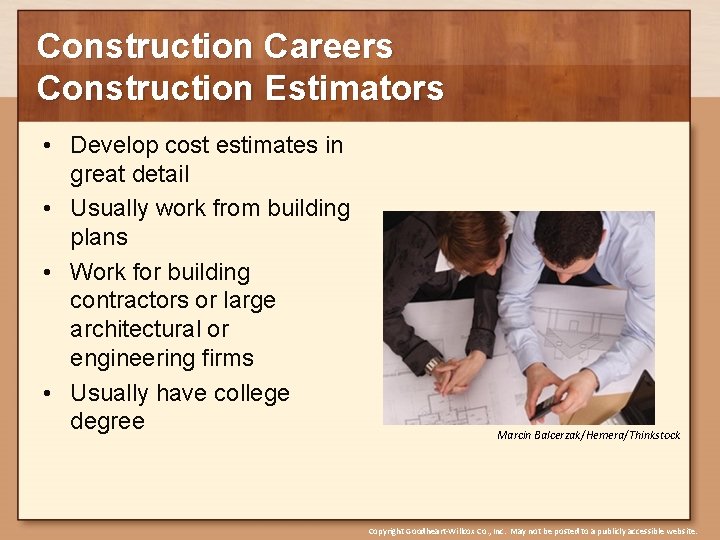
Construction Careers Construction Estimators • Develop cost estimates in great detail • Usually work from building plans • Work for building contractors or large architectural or engineering firms • Usually have college degree Marcin Balcerzak/Hemera/Thinkstock Copyright Goodheart-Willcox Co. , Inc. May not be posted to a publicly accessible website.
- Slides: 38