
Chapter One The Nature of Strategic Management Chapter
- Slides: 24
Chapter One The Nature of Strategic Management
Chapter Objectives 1. Describe the strategic-management process. 2. Discuss the nature of strategy formulation, implementation, and evaluation activities. 3. Describe the benefits of good strategic management. 4. Discuss how a firm may achieve sustained competitive advantage. 1 -2
Defining Strategic Management v Strategic management 9 the art and science of formulating, implementing, and evaluating cross-functional decisions that enable an organization to achieve its objectives. 1 -3
Defining Strategic Management v Sometimes the term strategic management is used to mention to : ü strategy formulation, implementation, and evaluation, ü Strategic planning referring only to strategy formulation. 1 -4
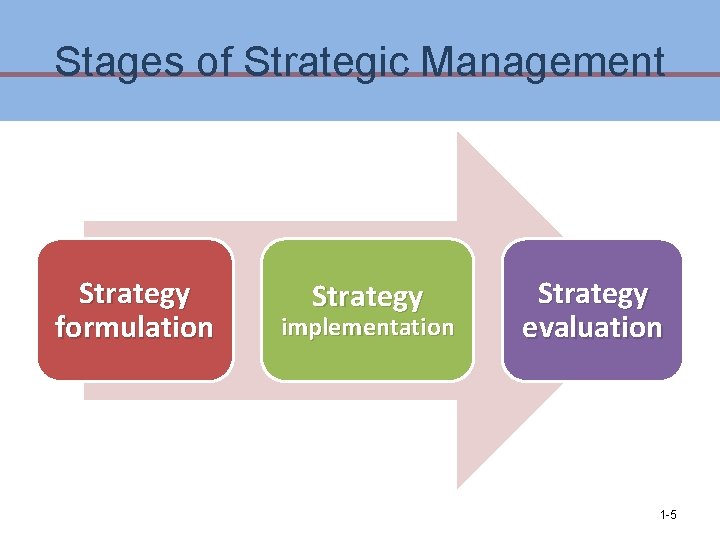
Stages of Strategic Management Strategy formulation Strategy implementation Strategy evaluation 1 -5
Stages of Strategic Management v Strategy formulation : 9 includes developing a vision and mission, identifying an organization’s external opportunities and threats, determining internal strengths and weaknesses, establishing longterm objectives, generating alternative strategies, and choosing particular strategies to follow. 1 -6
Strategy Formulation v Deciding what new businesses to enter, v What businesses to throw away, v How to allocate resources, v Whether to expand operations or diversify, v Whether to enter international markets, Copyright © 2013 Pearson Education 1 -7
Stages of Strategic Management v Strategy implementation 9 Requires a firm to establish annual objectives, create policies, motivate employees, and allocate resources so that formulated strategies can be implemented. Ø Also called the action stage. Copyright © 2013 Pearson Education 1 -8
Stages of Strategic Management v Strategy Evaluation 9 Reviewing external and internal factors that are the bases for current strategies, measuring performance, and taking corrective actions. Copyright © 2013 Pearson Education 1 -9
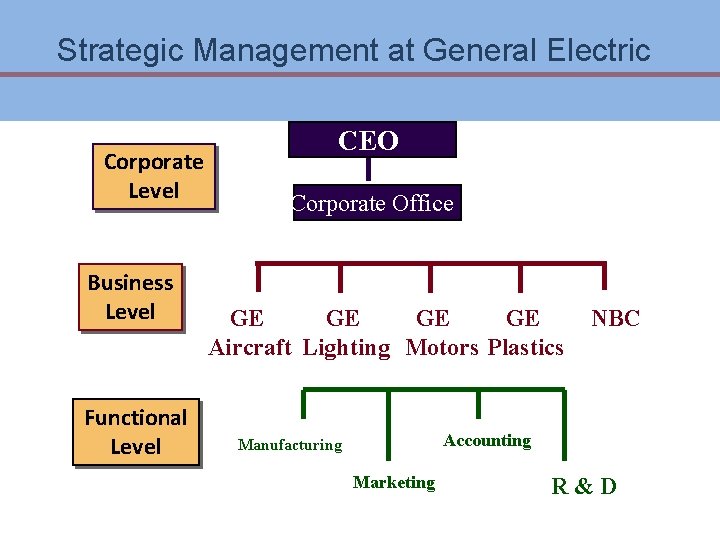
Stages of Strategic Management v Strategy formulation, implementation, and evaluation activities take place at three hierarchical levels in a large organization: v Corporate level, Business unit level, and functional level. v Strategic management helps a firm function as a competitive team. 1 -10
Strategic Management at General Electric Corporate Level Business Level Functional Level CEO Corporate Office GE GE Aircraft Lighting Motors Plastics NBC Accounting Manufacturing Marketing R&D
Key Terms in Strategic Management v Competitive advantage 9 anything that a firm does especially well compared to competitors. Copyright © 2013 Pearson Education 1 -12
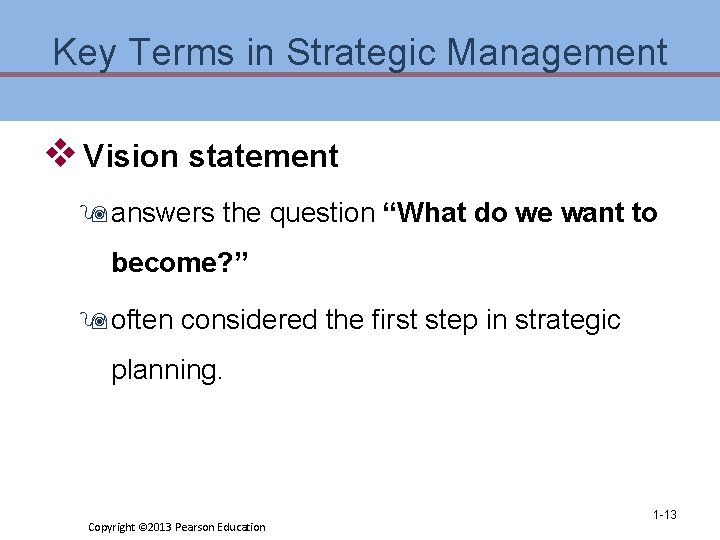
Key Terms in Strategic Management v Vision statement 9 answers the question “What do we want to become? ” 9 often considered the first step in strategic planning. Copyright © 2013 Pearson Education 1 -13
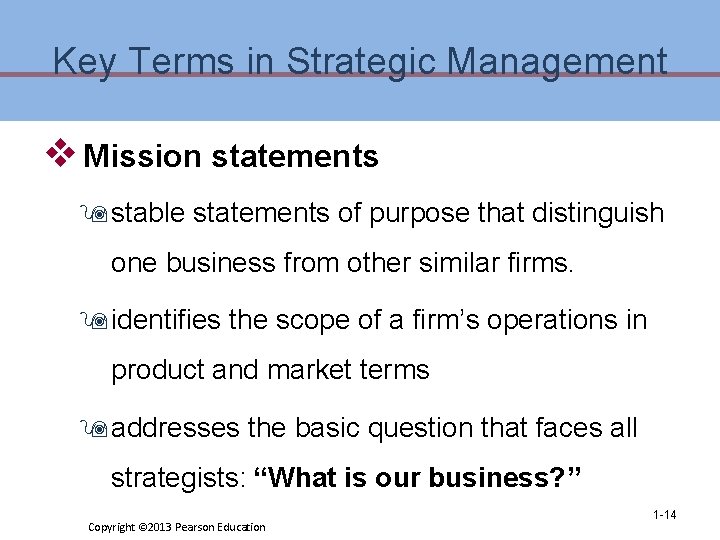
Key Terms in Strategic Management v Mission statements 9 stable statements of purpose that distinguish one business from other similar firms. 9 identifies the scope of a firm’s operations in product and market terms 9 addresses the basic question that faces all strategists: “What is our business? ” Copyright © 2013 Pearson Education 1 -14
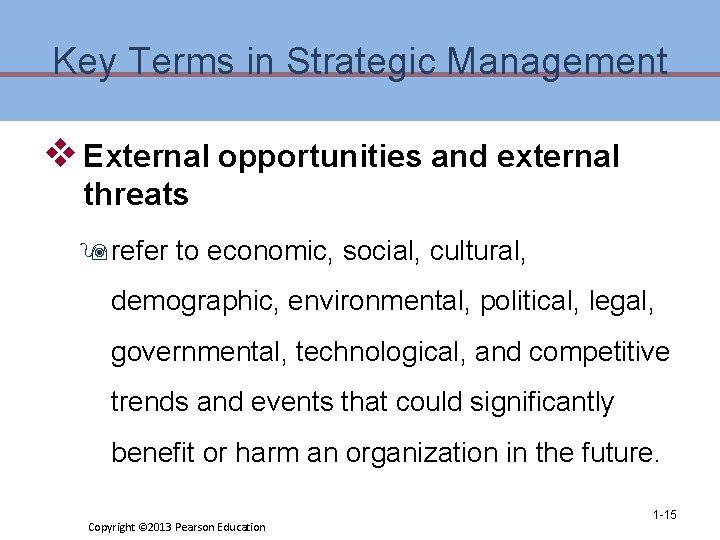
Key Terms in Strategic Management v External opportunities and external threats 9 refer to economic, social, cultural, demographic, environmental, political, legal, governmental, technological, and competitive trends and events that could significantly benefit or harm an organization in the future. Copyright © 2013 Pearson Education 1 -15
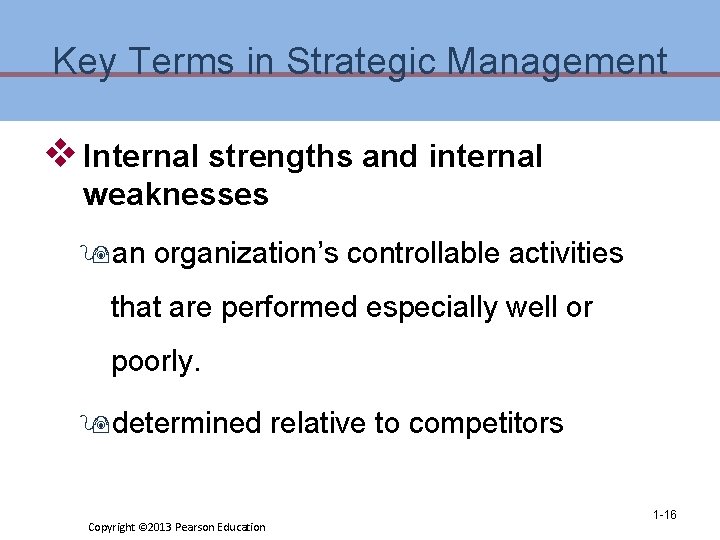
Key Terms in Strategic Management v Internal strengths and internal weaknesses 9 an organization’s controllable activities that are performed especially well or poorly. 9 determined relative to competitors Copyright © 2013 Pearson Education 1 -16
Key Terms in Strategic Management v Objectives 9 specific results that an organization seeks to achieve in pursuing its basic mission. 9 long-term means more than one year. 9 should be challenging, measurable, consistent, reasonable, and clear. Copyright © 2013 Pearson Education 1 -17
Key Terms in Strategic Management v Annual objectives 9 short-term milestones that organizations must achieve to reach long-term objectives 9 should be measurable, quantitative, challenging, realistic, consistent, and prioritized. 9 should be established at the corporate, divisional, and functional levels in a large organization. Copyright © 2013 Pearson Education 1 -18
Key Terms in Strategic Management v Policies 9 the means by which annual objectives will be achieved. 9 include guidelines, rules, and procedures established to support efforts to achieve stated objectives. 9 guides to decision making and address repetitive or recurring situations. Copyright © 2013 Pearson Education 1 -19
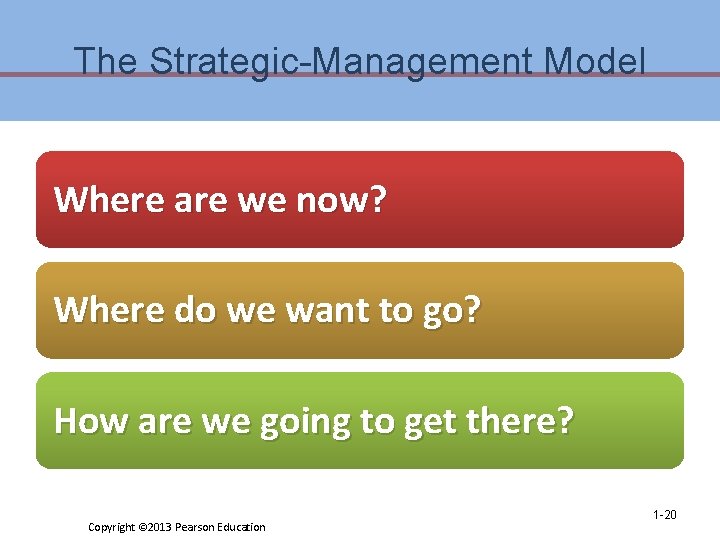
The Strategic-Management Model Where are we now? Where do we want to go? How are we going to get there? Copyright © 2013 Pearson Education 1 -20
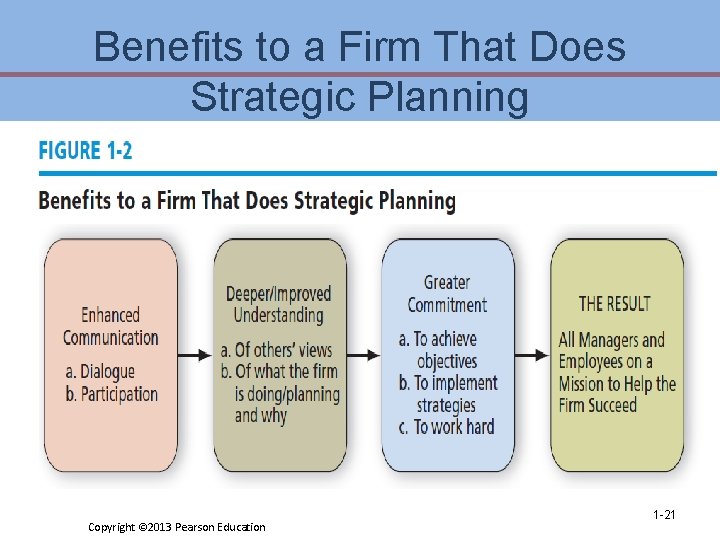
Benefits to a Firm That Does Strategic Planning Copyright © 2013 Pearson Education 1 -21
Financial Benefits v Businesses using strategic-management concepts show significant improvement in sales, profitability, and productivity compared to firms without systematic planning activities. 1 -22
Nonfinancial Benefits v It allows major decisions to better support established objectives. v It allows more effective allocation of time and resources to identified opportunities. v It creates a framework for internal communication among personnel. 1 -23
Why Some Firms Do Not Do Strategic Planning v Lack of knowledge in strategic planning v Poor reward structures v Waste of time v Too expensive v Laziness v Fear of failure v Overconfidence 1 -24