
Chapter One Science Practices Lesson 1 1 Observing
Chapter One: Science Practices Lesson 1. 1 Observing the World Lesson 1. 2 Thinking Like a Scientist Lesson 1. 3 Systems, Experiments, and Models
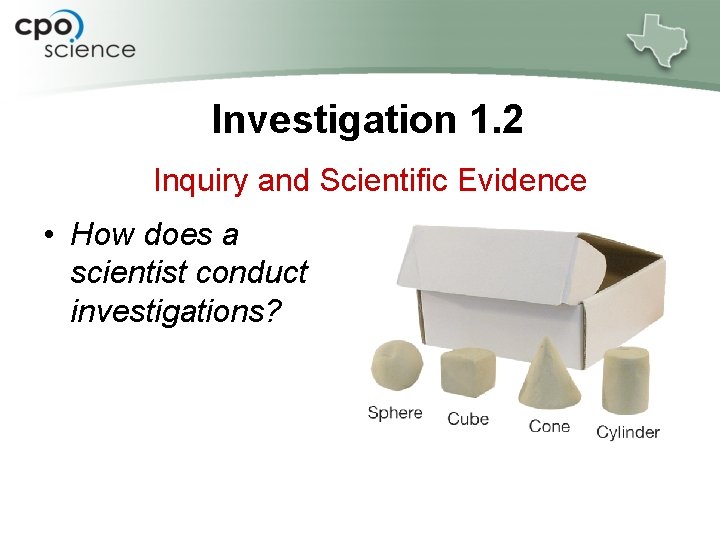
Investigation 1. 2 Inquiry and Scientific Evidence • How does a scientist conduct investigations?
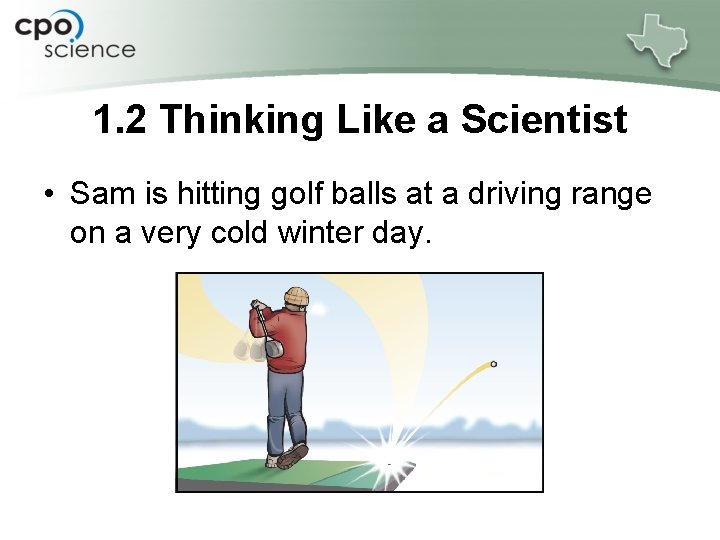
1. 2 Thinking Like a Scientist • Sam is hitting golf balls at a driving range on a very cold winter day.
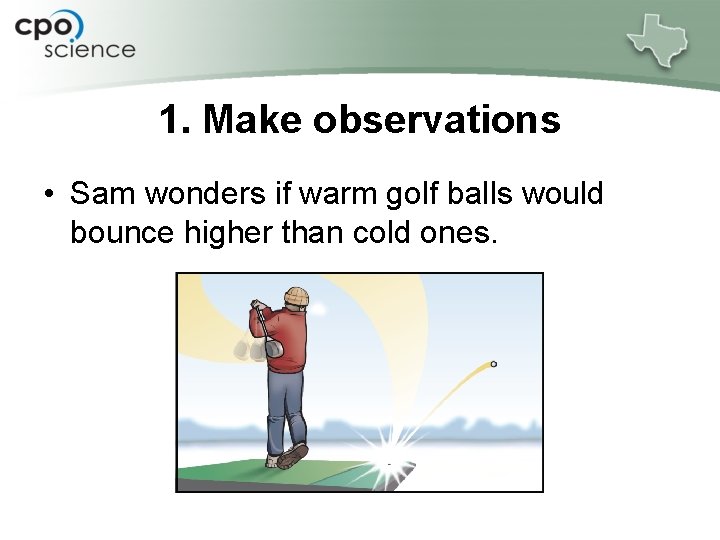
1. Make observations • Sam wonders if warm golf balls would bounce higher than cold ones.
2. Ask a question • His question is: “Do golf balls bounce differently when they are at different temperatures? ”
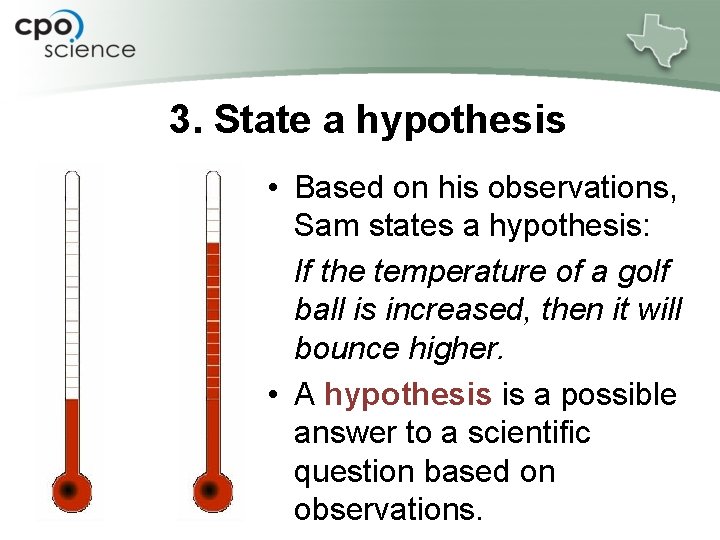
3. State a hypothesis • Based on his observations, Sam states a hypothesis: If the temperature of a golf ball is increased, then it will bounce higher. • A hypothesis is a possible answer to a scientific question based on observations.
A good hypothesis • Sam’s hypothesis was good because it could be tested with an experiment. • Here are some other testable hypotheses that Sam could have made: – If the temperature of a golf ball is increased, then it will go farther when hit with a golf club. – If the temperature of a golf ball is increased, then it will make a different sound when dropped on the floor.
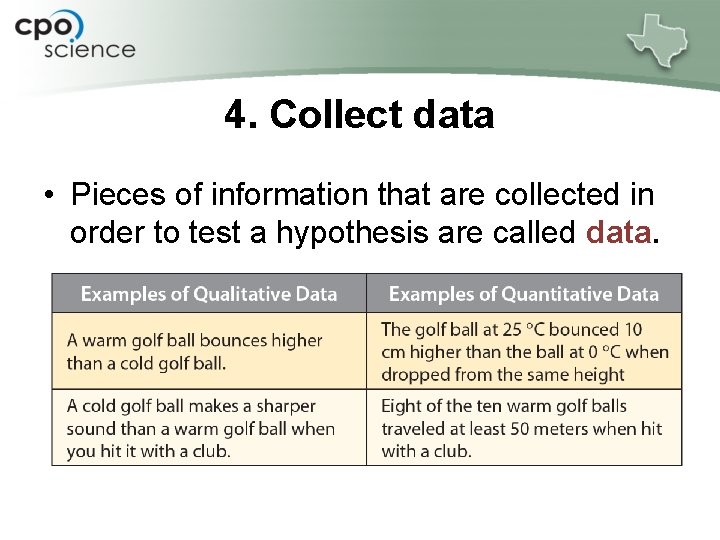
4. Collect data • Pieces of information that are collected in order to test a hypothesis are called data.
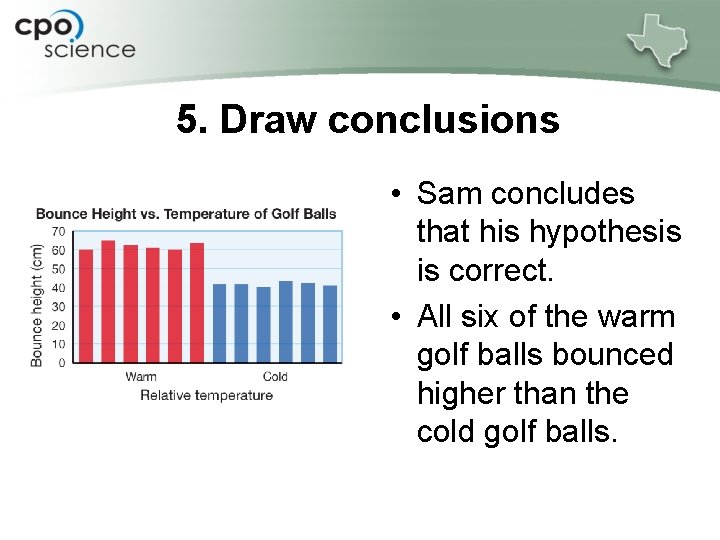
5. Draw conclusions • Sam concludes that his hypothesis is correct. • All six of the warm golf balls bounced higher than the cold golf balls.
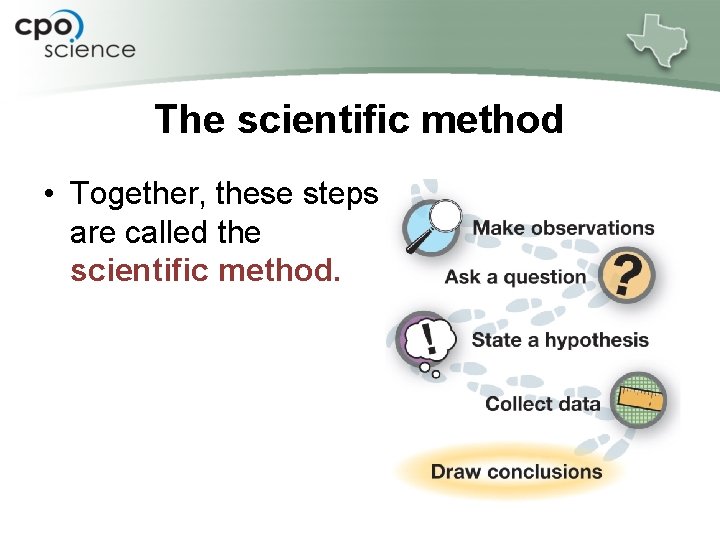
The scientific method • Together, these steps are called the scientific method.
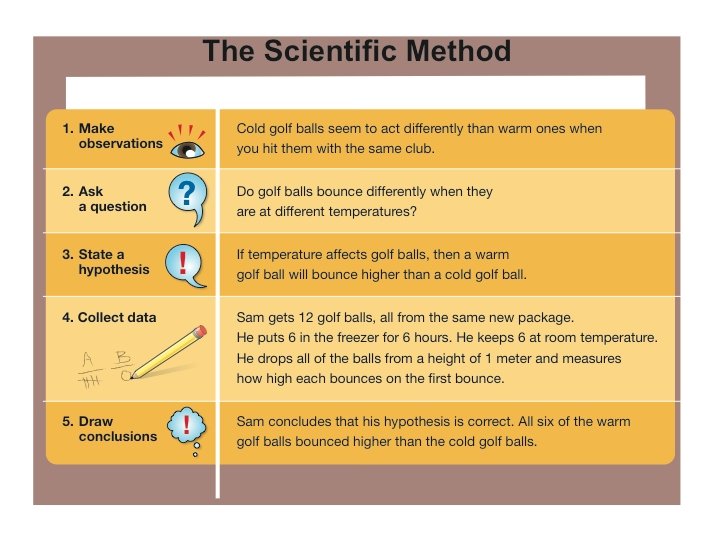
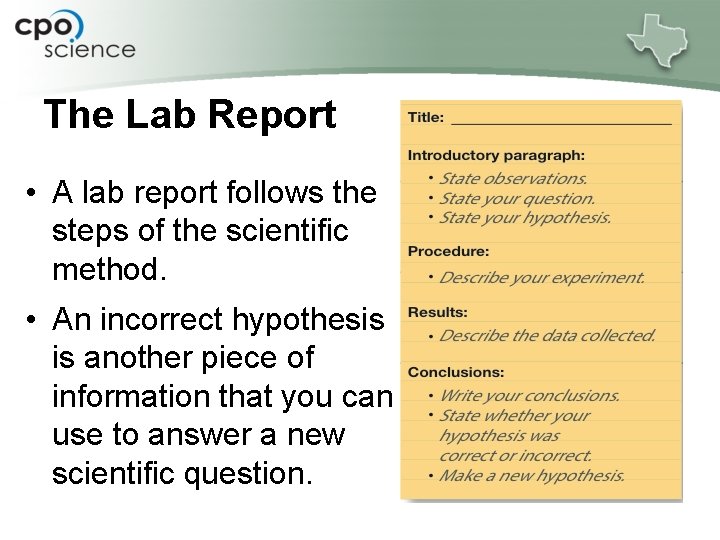
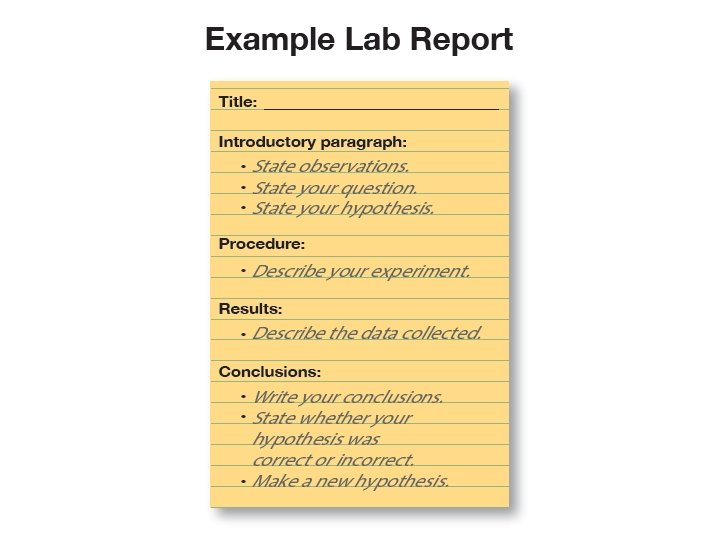
The Lab Report • A lab report follows the steps of the scientific method. • An incorrect hypothesis is another piece of information that you can use to answer a new scientific question.
Scientific facts, laws, and theories • Scientific facts are statements that are accepted as being true and have been repeatedly measured or observed. • Here are some scientific facts: – Plants use the energy of sunlight to make sugar. – It takes 365. 25 Earth days for Earth to orbit around the Sun.
Scientific facts, laws, and theories • Scientific laws and theories are statements that are supported by the observations and evidence from these experiments. • Scientific laws describe, but do not explain, observed phenomena. • An example of a scientific law is the law of gravity.
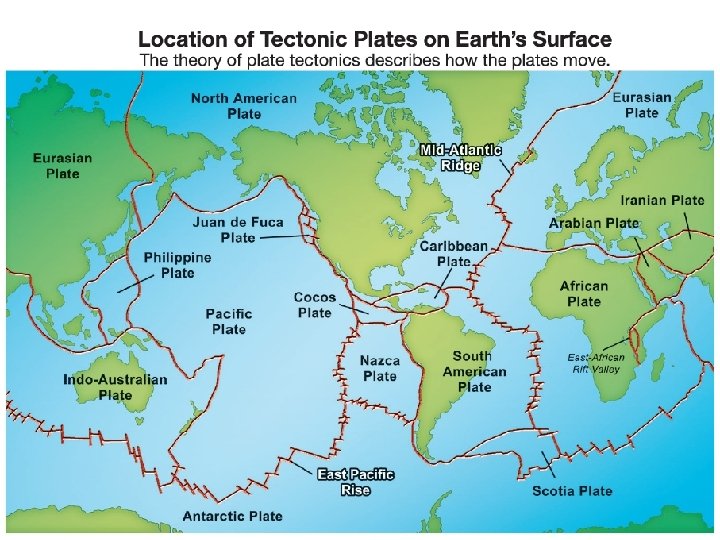
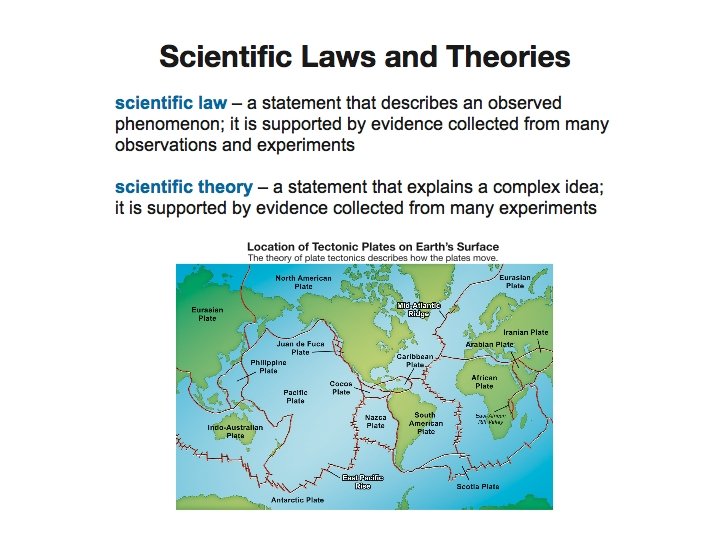
Scientific facts, laws, and theories • Scientific theories address more complex ideas. • Even accepted scientific laws and theories are constantly tested by new experiments. • An example of a scientific theory is theory of plate tectonics.
- Slides: 19