
Chapter One Plate Tectonics Section One Earths Interior
- Slides: 17
Chapter One: Plate Tectonics Section One: Earth’s Interior Pages 16 -24
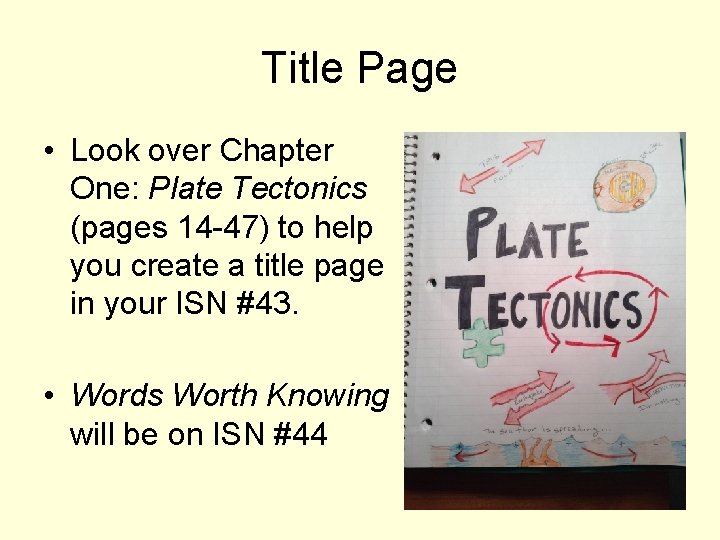
Title Page • Look over Chapter One: Plate Tectonics (pages 14 -47) to help you create a title page in your ISN #43. • Words Worth Knowing will be on ISN #44
Geologists… • are scientists who study the forces that make and shape planet Earth. • study the chemical and physical characteristics of rock. • map where different types of rocks are found on and beneath the surface. • describe landforms, features that form in rock by water, wind, and waves.
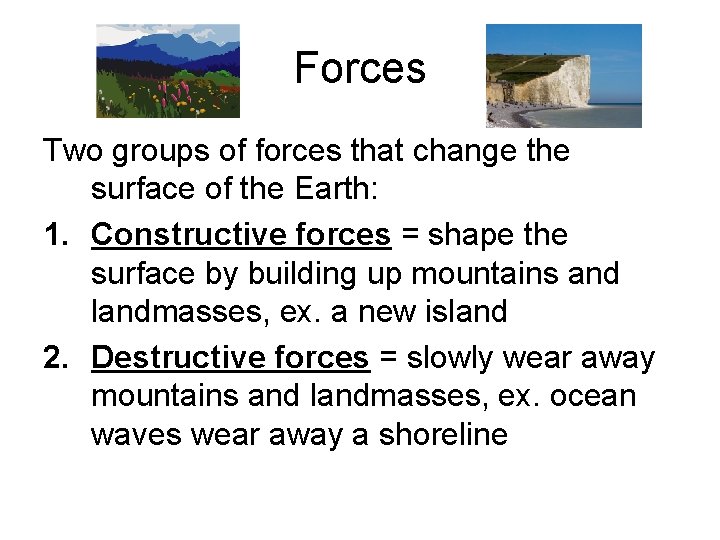
Forces Two groups of forces that change the surface of the Earth: 1. Constructive forces = shape the surface by building up mountains and landmasses, ex. a new island 2. Destructive forces = slowly wear away mountains and landmasses, ex. ocean waves wear away a shoreline
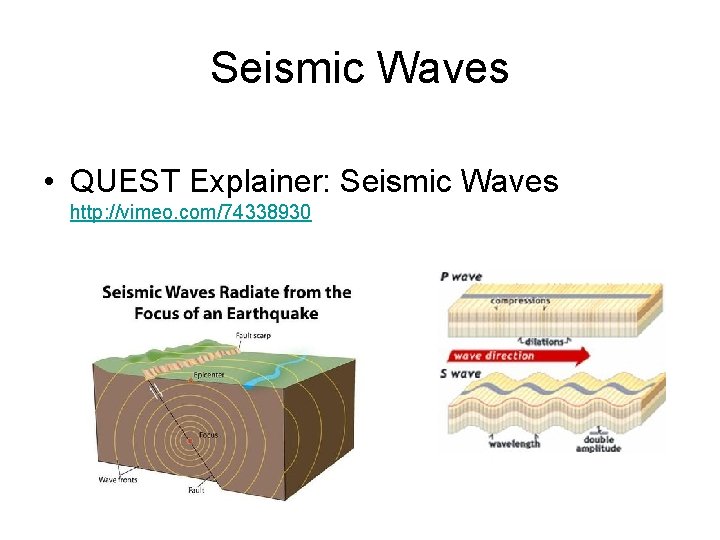
What is inside the Earth? • Geologists cannot observe Earth’s interior directly so they rely on observations. • When earthquakes occur, they produce seismic waves. Geologists record the seismic waves and study how they travel through Earth. • The data tells us that the Earth is made up of many layers.
Seismic Waves • QUEST Explainer: Seismic Waves http: //vimeo. com/74338930
Journey to the Center of Earth If you could travel to the center of Earth… • What would happen to the temperature as you traveled? – the temperature would rise as you descend • What happens with pressure? – the deeper you go, the greater the pressure; this is because of the weight of the rock
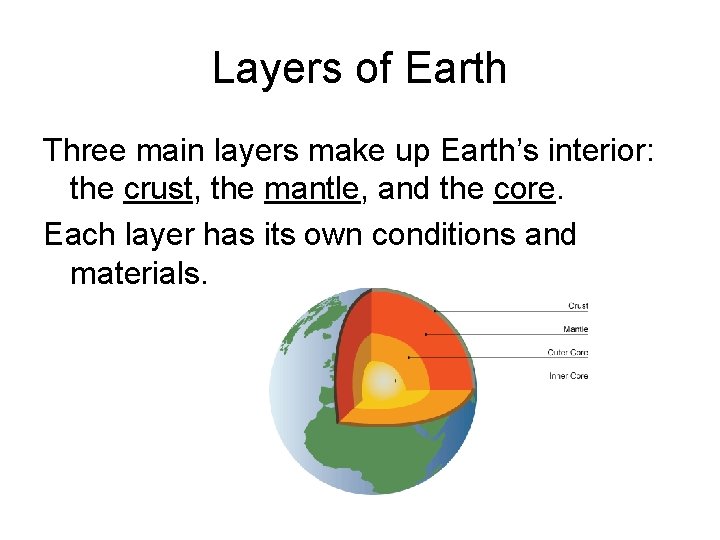
Layers of Earth Three main layers make up Earth’s interior: the crust, the mantle, and the core. Each layer has its own conditions and materials.
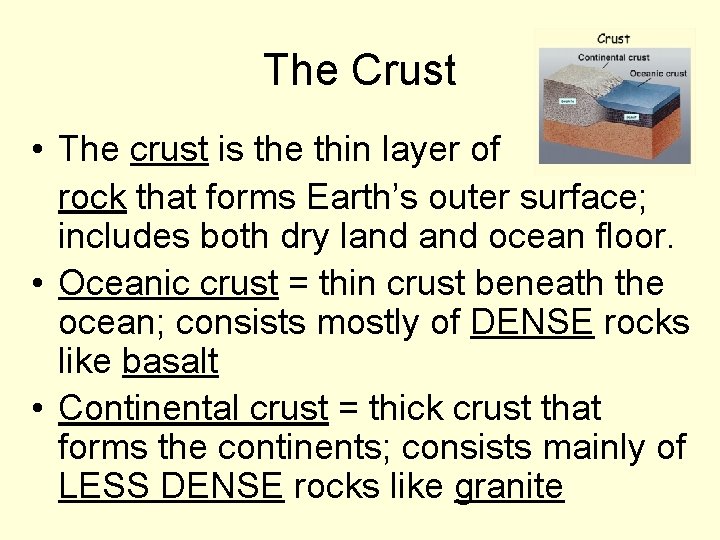
The Crust • The crust is the thin layer of rock that forms Earth’s outer surface; includes both dry land ocean floor. • Oceanic crust = thin crust beneath the ocean; consists mostly of DENSE rocks like basalt • Continental crust = thick crust that forms the continents; consists mainly of LESS DENSE rocks like granite
The Mantle • The mantle is the hot, solid material between Earth’s crust and core. • The mantle is very thick, nearly 3, 000 km thick; it goes almost halfway to the center of Earth. • There are 2 fancy layers in the mantle, the lithosphere and asthenosphere.
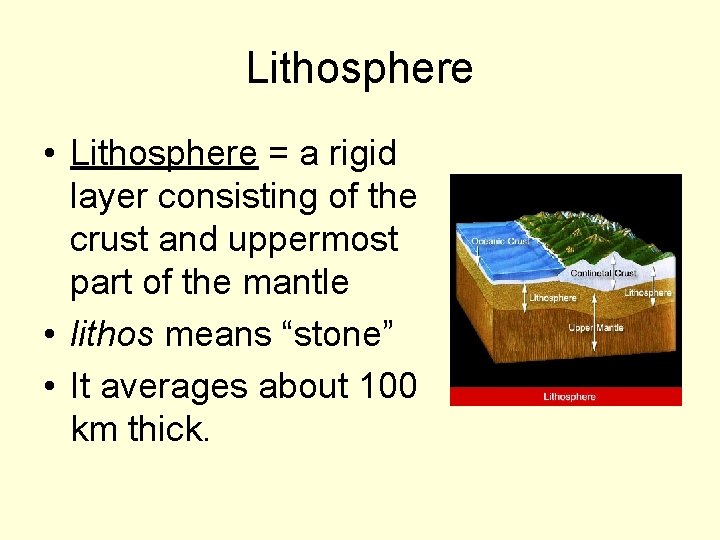
Lithosphere • Lithosphere = a rigid layer consisting of the crust and uppermost part of the mantle • lithos means “stone” • It averages about 100 km thick.
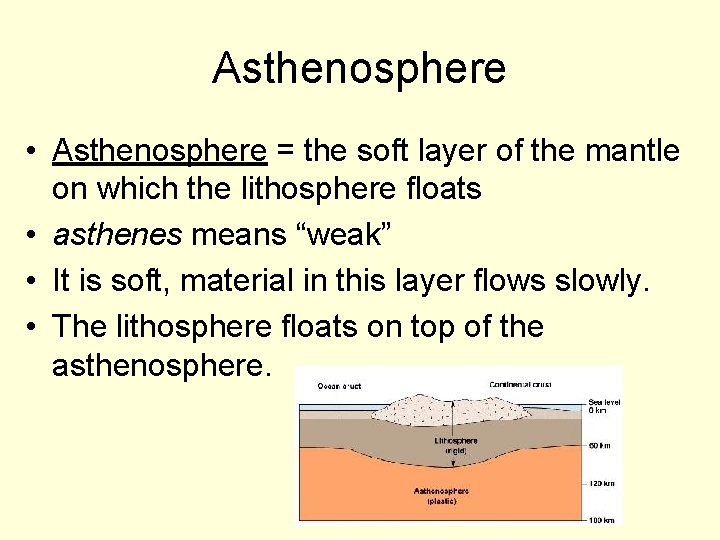
Asthenosphere • Asthenosphere = the soft layer of the mantle on which the lithosphere floats • asthenes means “weak” • It is soft, material in this layer flows slowly. • The lithosphere floats on top of the asthenosphere.
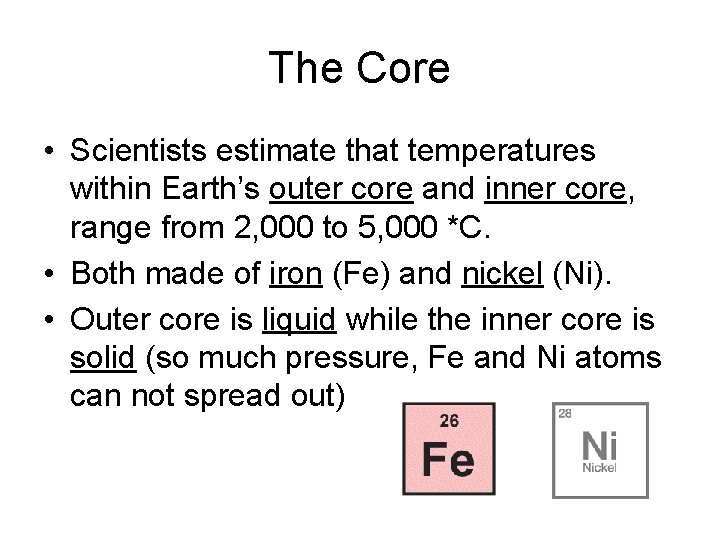
The Core • Scientists estimate that temperatures within Earth’s outer core and inner core, range from 2, 000 to 5, 000 *C. • Both made of iron (Fe) and nickel (Ni). • Outer core is liquid while the inner core is solid (so much pressure, Fe and Ni atoms can not spread out)
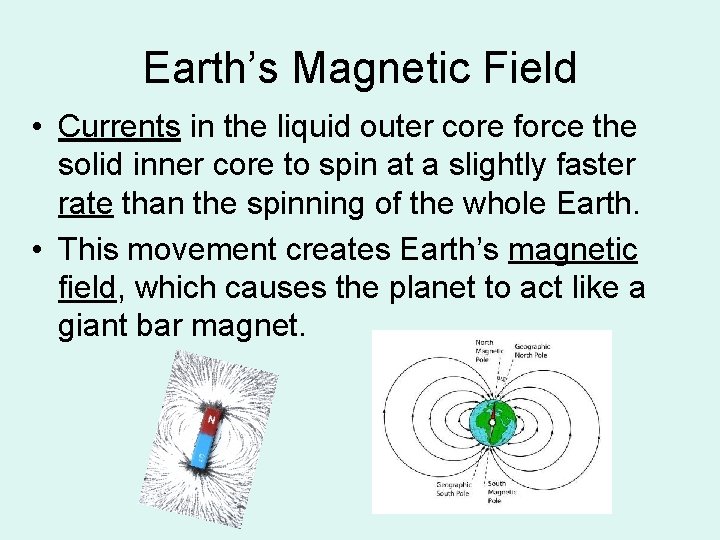
Earth’s Magnetic Field • Currents in the liquid outer core force the solid inner core to spin at a slightly faster rate than the spinning of the whole Earth. • This movement creates Earth’s magnetic field, which causes the planet to act like a giant bar magnet.
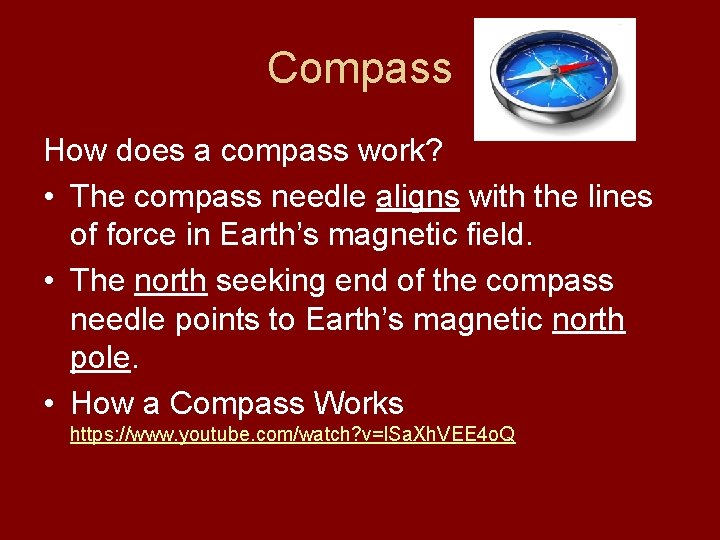
Compass How does a compass work? • The compass needle aligns with the lines of force in Earth’s magnetic field. • The north seeking end of the compass needle points to Earth’s magnetic north pole. • How a Compass Works https: //www. youtube. com/watch? v=l. Sa. Xh. VEE 4 o. Q
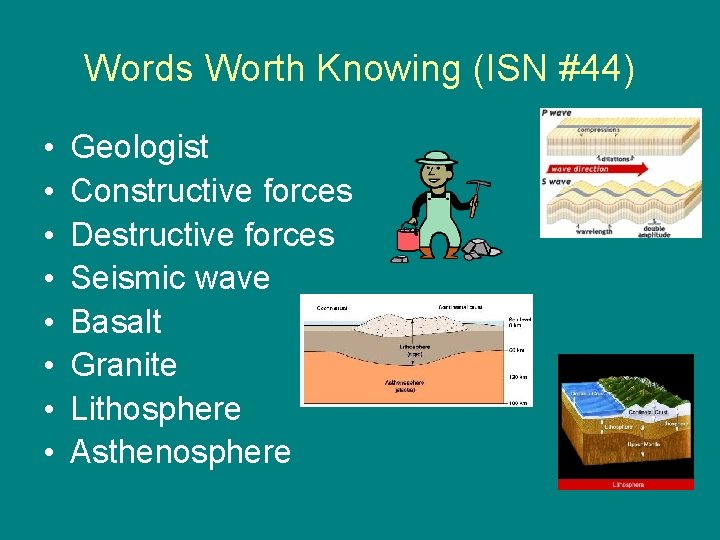
Words Worth Knowing (ISN #44) • • Geologist Constructive forces Destructive forces Seismic wave Basalt Granite Lithosphere Asthenosphere