
Chapter one Mole Balances 1 3 Batch Reactor
Chapter one Mole Balances
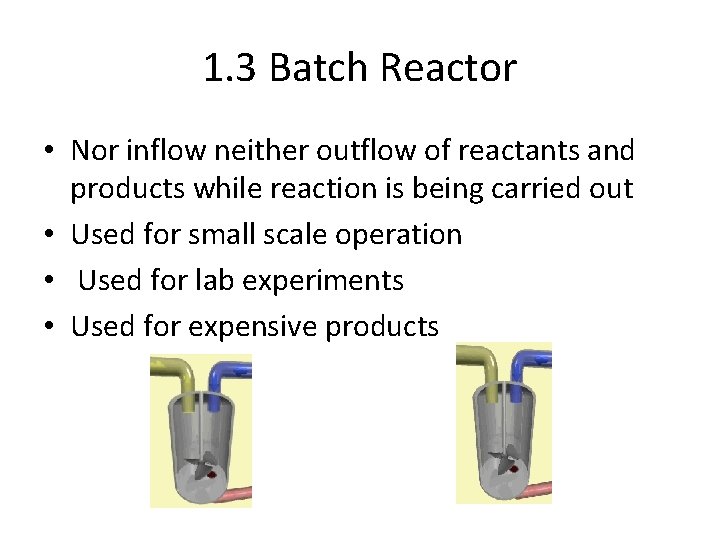
1. 3 Batch Reactor • Nor inflow neither outflow of reactants and products while reaction is being carried out • Used for small scale operation • Used for lab experiments • Used for expensive products
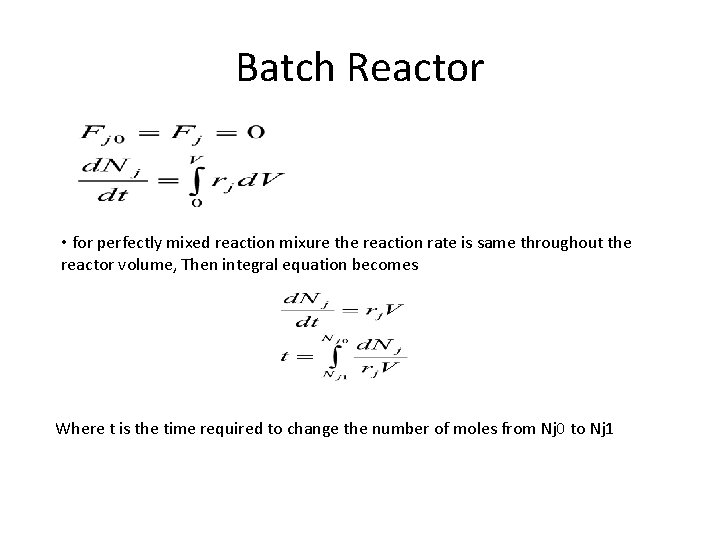
Batch Reactor • for perfectly mixed reaction mixure the reaction rate is same throughout the reactor volume, Then integral equation becomes Where t is the time required to change the number of moles from Nj 0 to Nj 1
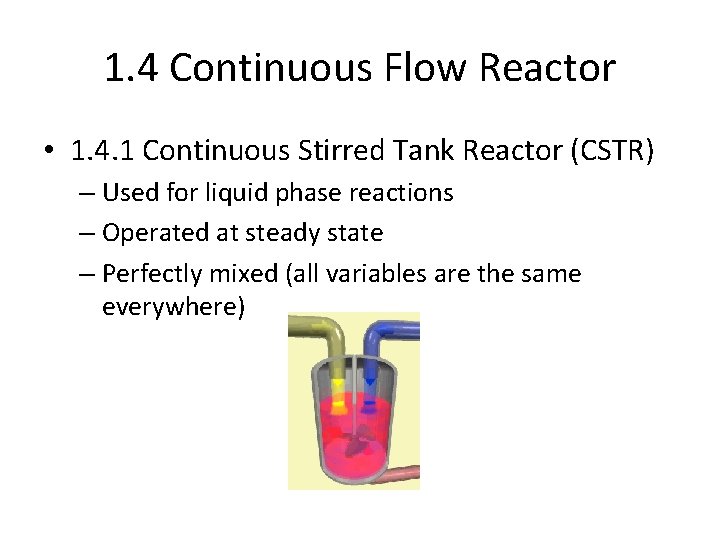
1. 4 Continuous Flow Reactor • 1. 4. 1 Continuous Stirred Tank Reactor (CSTR) – Used for liquid phase reactions – Operated at steady state – Perfectly mixed (all variables are the same everywhere)
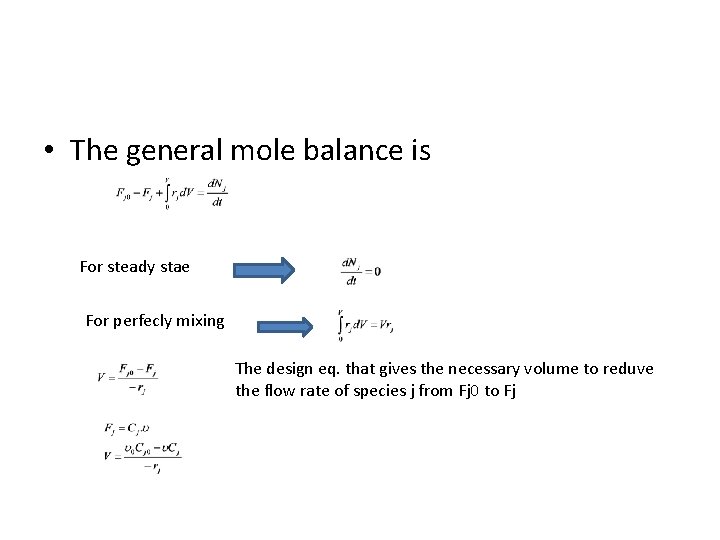
• The general mole balance is For steady stae For perfecly mixing The design eq. that gives the necessary volume to reduve the flow rate of species j from Fj 0 to Fj
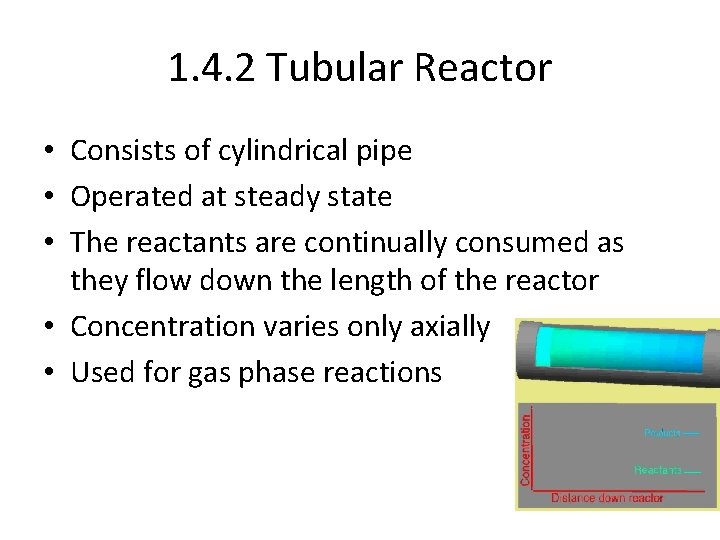
1. 4. 2 Tubular Reactor • Consists of cylindrical pipe • Operated at steady state • The reactants are continually consumed as they flow down the length of the reactor • Concentration varies only axially • Used for gas phase reactions
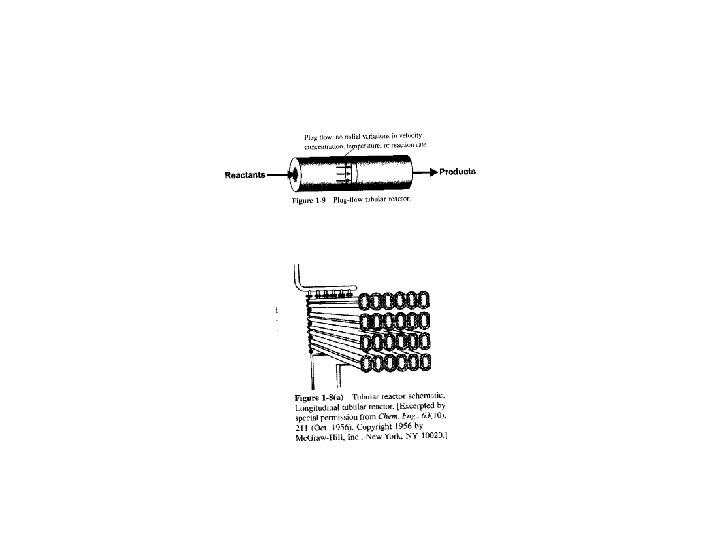
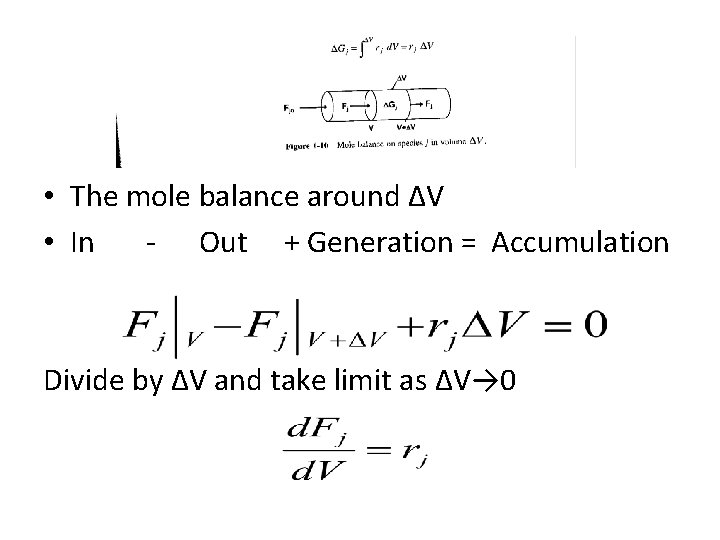
• The mole balance around ΔV • In - Out + Generation = Accumulation Divide by ΔV and take limit as ΔV→ 0
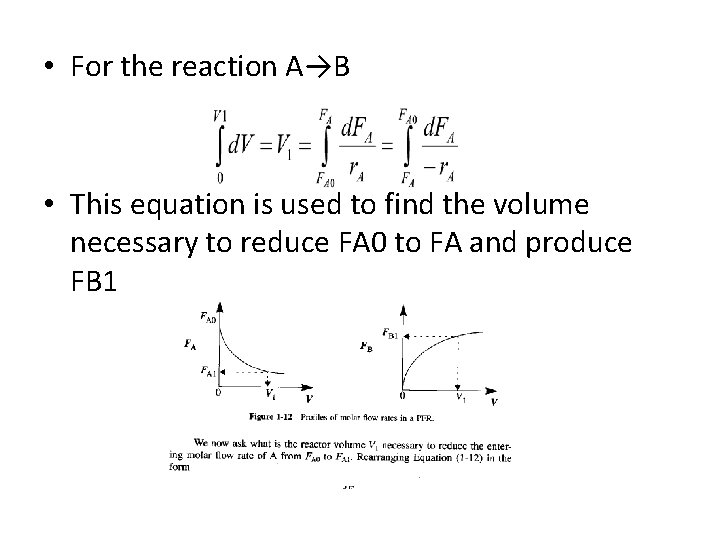
• For the reaction A→B • This equation is used to find the volume necessary to reduce FA 0 to FA and produce FB 1
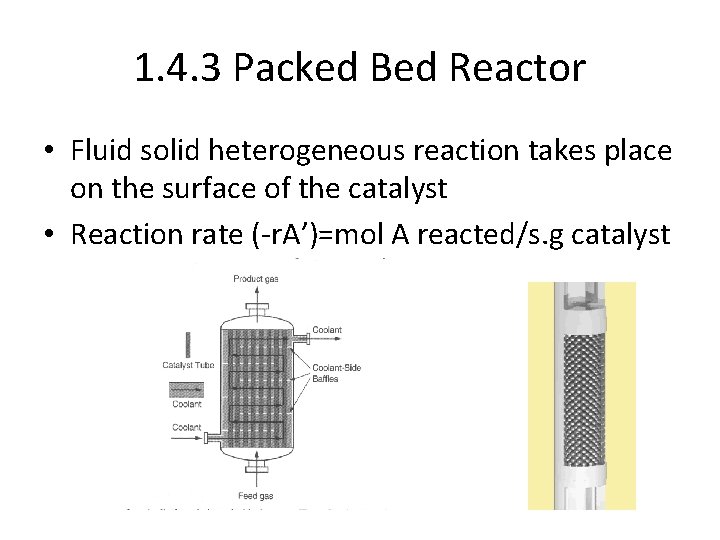
1. 4. 3 Packed Bed Reactor • Fluid solid heterogeneous reaction takes place on the surface of the catalyst • Reaction rate (-r. A’)=mol A reacted/s. g catalyst
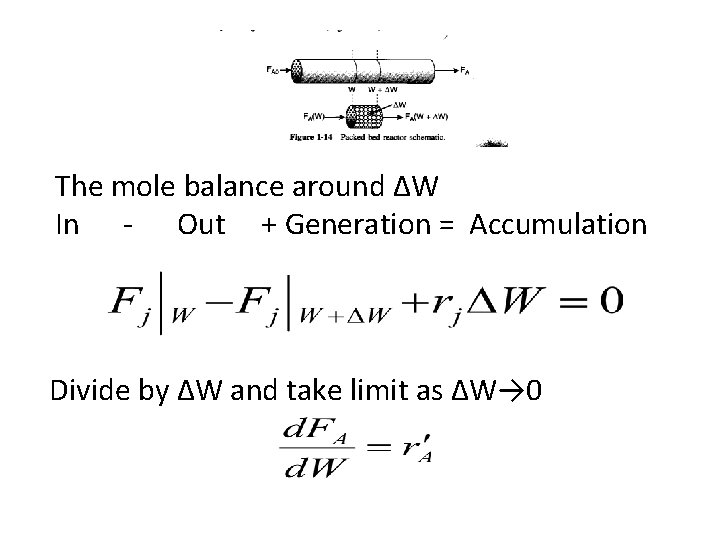
The mole balance around ΔW In - Out + Generation = Accumulation Divide by ΔW and take limit as ΔW→ 0
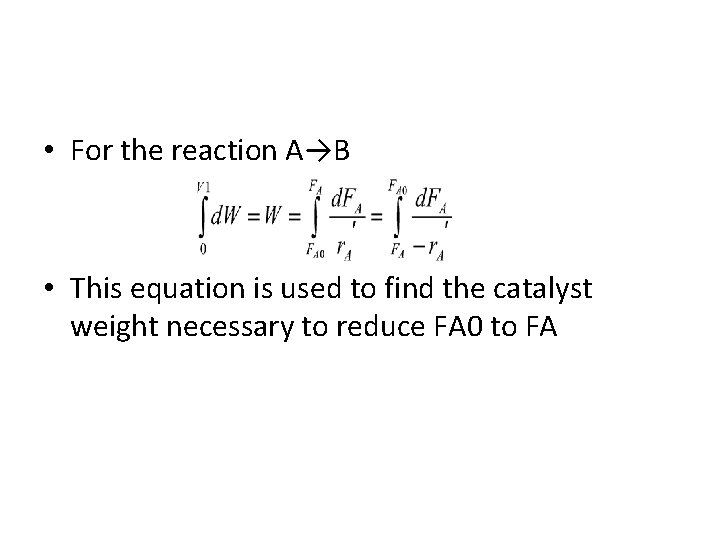
• For the reaction A→B • This equation is used to find the catalyst weight necessary to reduce FA 0 to FA
- Slides: 12