
CHAPTER ONE MANAGEMENT INFORMATION SYSTEMS BUSINESS DRIVEN MIS
CHAPTER ONE MANAGEMENT INFORMATION SYSTEMS BUSINESS DRIVEN MIS © The Mc. Graw-Hill Companies, All Rights Reserved
SECTION 1. 1 BUSINESS DRIVEN MIS © The Mc. Graw-Hill Companies, All Rights Reserved
3 COMPETING IN THE INFORMATION AGE § Fact - The confirmation or validation of an event or object § Information age - The present time, during which infinite quantities of facts are widely available to anyone who can use a computer
4 COMPETING IN THE INFORMATION AGE § Examples of the power of business and technology • Amazon – Not a technology company; primary business focus is selling books • Netflix – Not a technology company; primary business focus is renting videos • Zappos – Not a technology company; primary business focus is selling shoes
5 COMPETING IN THE INFORMATION AGE § The core drivers of the information age • Data • Information • Business intelligence • Knowledge
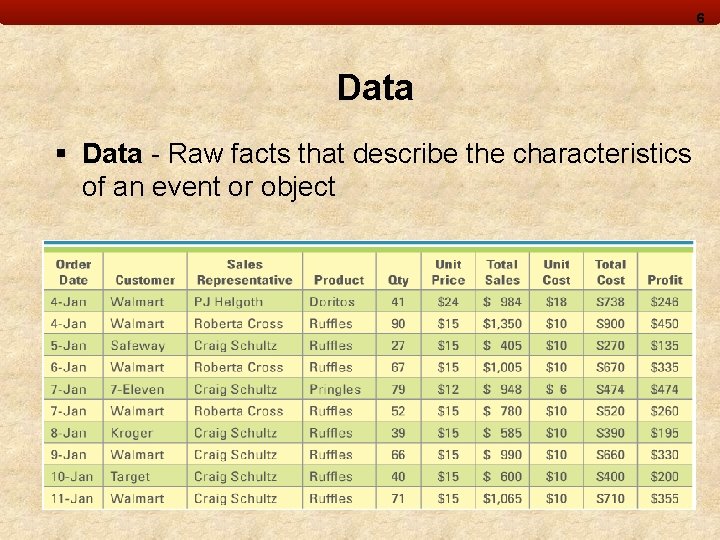
6 Data § Data - Raw facts that describe the characteristics of an event or object
7 Big Data § Big Data – Collection of large, complex datasets, which cannot be analyzed using traditional database methods and tools. § Four common characteristics of big data (4 Vs) Variety: Different forms of data Veracity: Uncertainty of data Volume: Scale of data Velocity: Analysis of streaming data
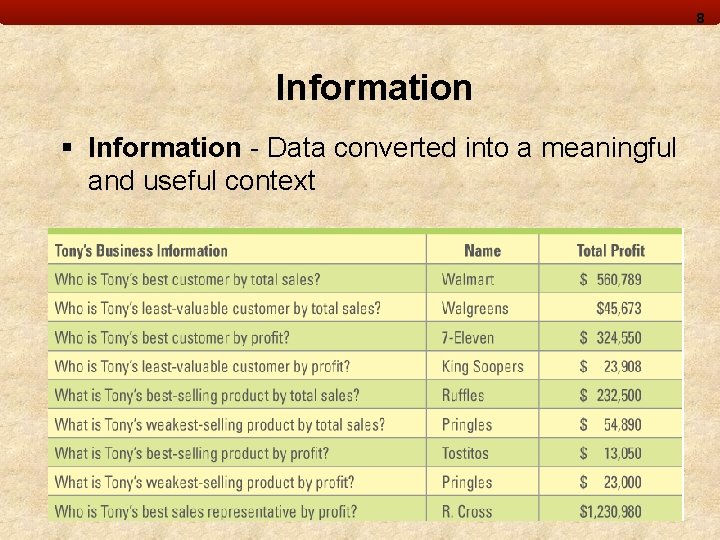
8 Information § Information - Data converted into a meaningful and useful context
9 Business Intelligence § Business intelligence Information collected from multiple sources such as suppliers, customers, competitors, partners, and industries that analyzes patterns, trends, and relationships for strategic decision making
10 Knowledge § Knowledge - Skills, experience, and expertise coupled with information and intelligence that creates a person’s intellectual resources § Knowledge worker – Individual valued for their ability to interpret and analyze information
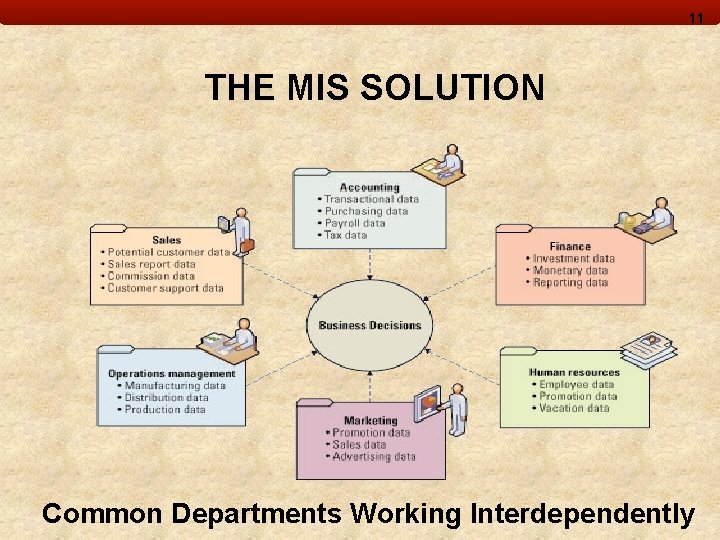
11 THE MIS SOLUTION Common Departments Working Interdependently
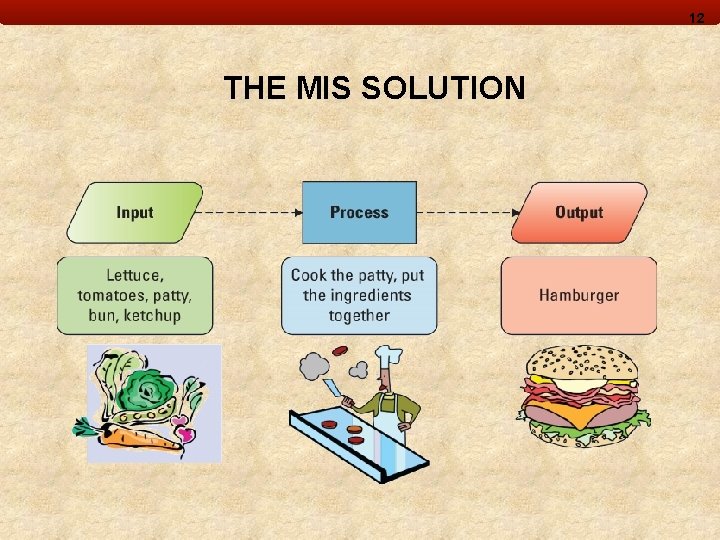
12 THE MIS SOLUTION
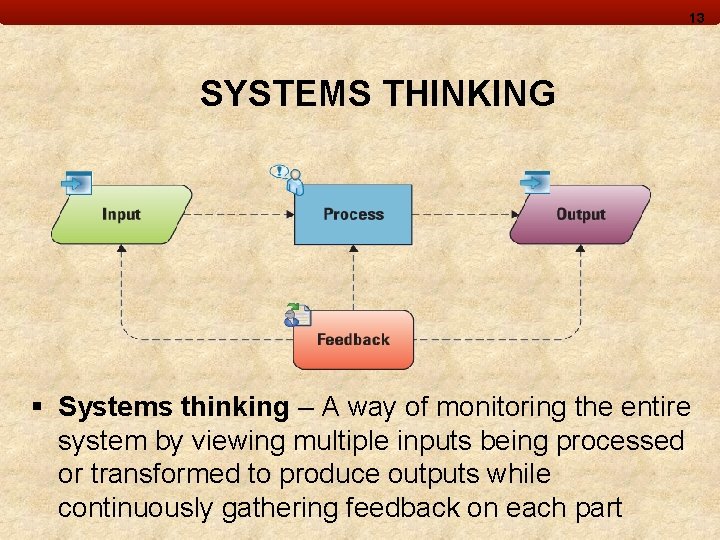
13 SYSTEMS THINKING § Systems thinking – A way of monitoring the entire system by viewing multiple inputs being processed or transformed to produce outputs while continuously gathering feedback on each part
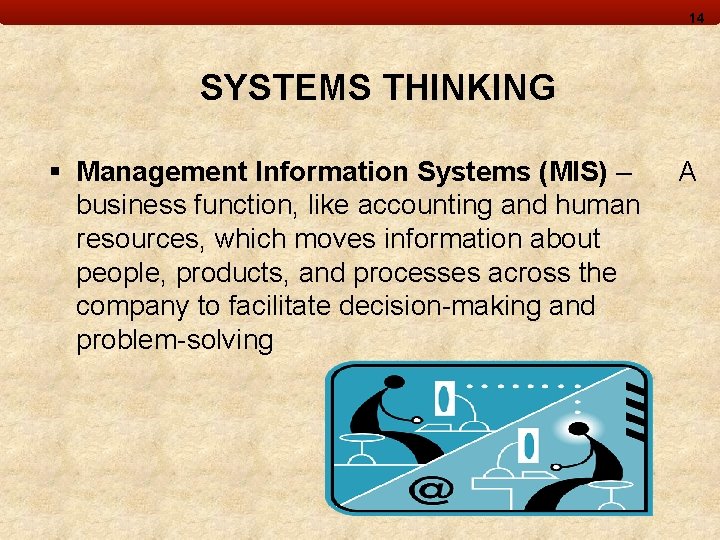
14 SYSTEMS THINKING § Management Information Systems (MIS) – business function, like accounting and human resources, which moves information about people, products, and processes across the company to facilitate decision-making and problem-solving A
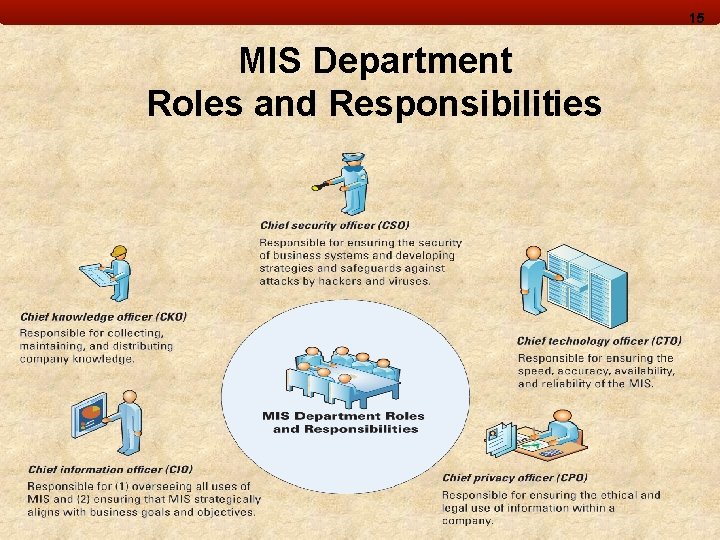
15 MIS Department Roles and Responsibilities
SECTION 1. 2 BUSINESS STRATEGY © The Mc. Graw-Hill Companies, All Rights Reserved
17 IDENTIFYING COMPETITIVE ADVANTAGES § Competitive advantage – A product or service that an organization’s customers place a greater value on than similar offerings from a competitor § First-mover advantage – Occurs when an organization can significantly impact its market share by being first to market with a competitive advantage
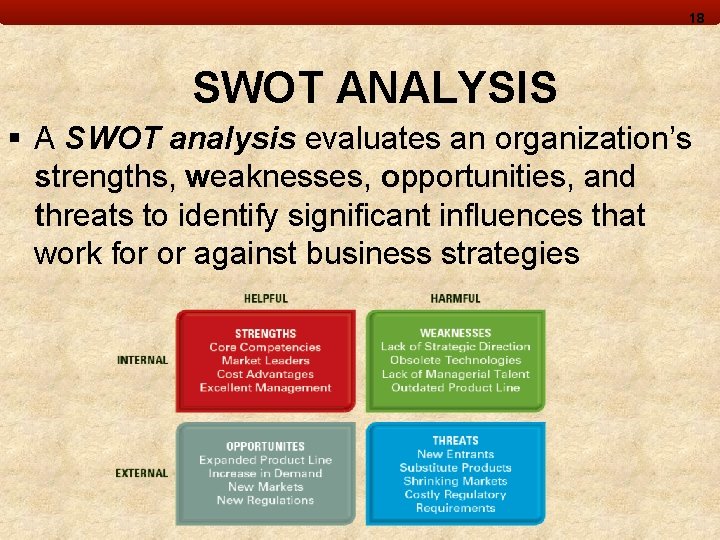
18 SWOT ANALYSIS § A SWOT analysis evaluates an organization’s strengths, weaknesses, opportunities, and threats to identify significant influences that work for or against business strategies
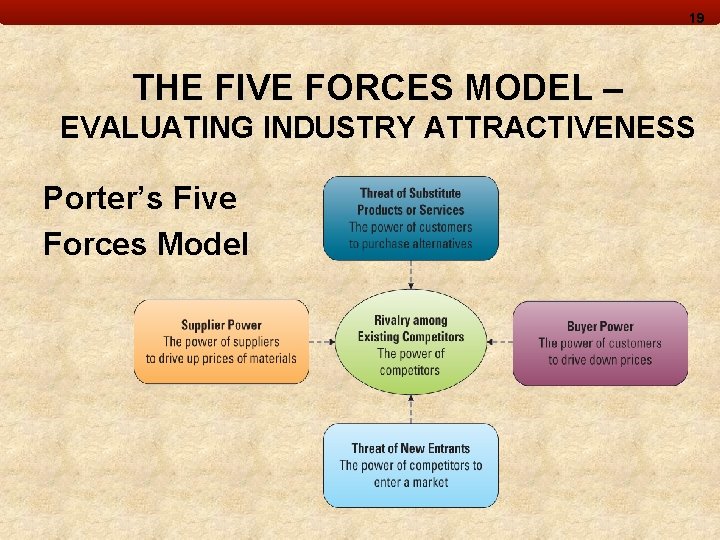
19 THE FIVE FORCES MODEL – EVALUATING INDUSTRY ATTRACTIVENESS Porter’s Five Forces Model
20 Buyer Power § Buyer power – The ability of buyers to affect the price of an item • Switching cost – Manipulating costs that make customers reluctant to switch to another product • Loyalty program – Rewards customers based on the amount of business they do with a particular organization
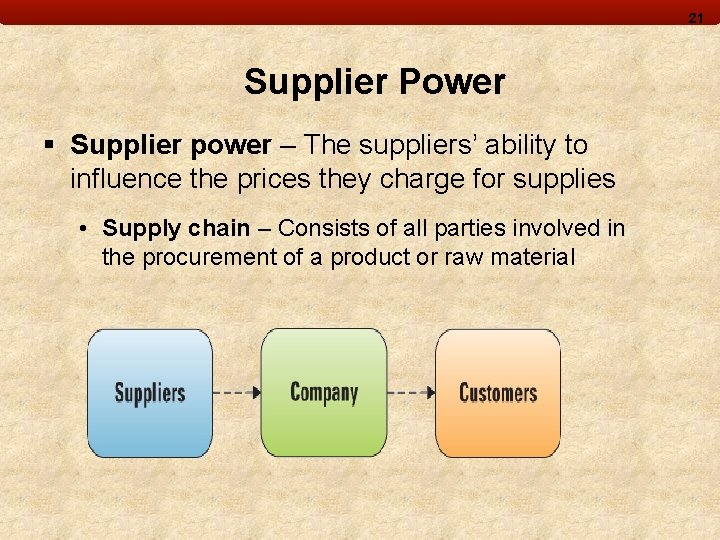
21 Supplier Power § Supplier power – The suppliers’ ability to influence the prices they charge for supplies • Supply chain – Consists of all parties involved in the procurement of a product or raw material
22 Threat of Substitute Products or Services § Threat of substitute products or services – High when there are many alternatives to a product or service and low when there are few alternatives
23 Threat of New Entrants § Threat of new entrants – High when it is easy for new competitors to enter a market and low when there are significant entry barriers • Entry barrier – A feature of a product or service that customers have come to expect and entering competitors must offer the same for survival
24 Rivalry Among Existing Competitors § Rivalry among existing competitors – High when competition is fierce in a market and low when competitors are more complacent • Product differentiation – Occurs when a company develops unique differences in its products or services with the intent to influence demand
25 Analyzing the Airline Industry § Perform a Porter’s Five Forces analysis of each of the following for a company entering the commercial airline industry • Buyer power • Supplier power • Threat of substitute products/services • Threat of new entrants • Rivalry among competitors
- Slides: 25