
CHAPTER ONE Consumer Behavior Meeting Changes and Challenges
CHAPTER ONE Consumer Behavior: Meeting Changes and Challenges
Consumer Behavior • “The behavior that consumers display in searching for, purchasing, using, evaluating, and disposing of products and services that they expect will satisfy their needs”. • The what, why, when, where, and how of consumer purchases. • It is not just individuals, but households, families, and groups that influence the decisions we make. Chapter One Slide 2

Two Consumer Entities Personal Consumer Organizational Consumer • The individual who buys goods and services for his or her own use, for household use, for the use of a family member, or for a friend. • A business, government agency, or other institution (profit or nonprofit) that buys the goods, services, and/or equipment necessary for the organization to function. Chapter One Slide 3
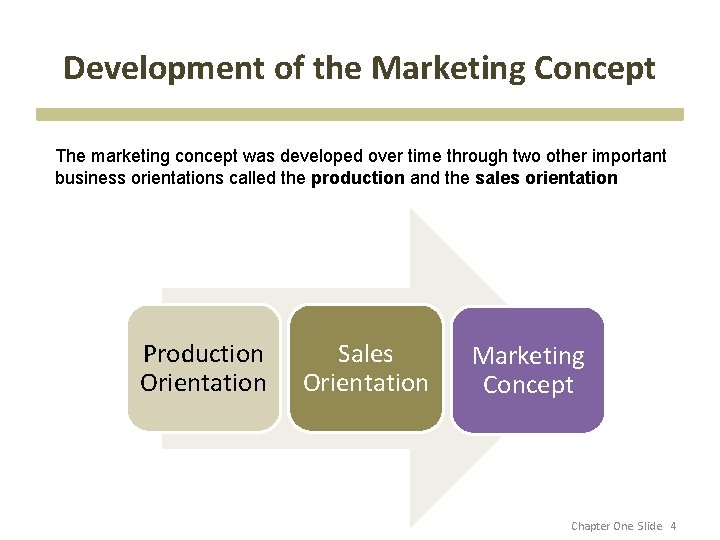
Development of the Marketing Concept The marketing concept was developed over time through two other important business orientations called the production and the sales orientation Production Orientation Sales Orientation Marketing Concept Chapter One Slide 4
Production Orientation • From the 1850 s to the late 1920 s • Consumer demand exceeded supply (consumers were content (happy) to get a product and were not focused on product variation). • Companies focus on production capabilities to mass produce the product for the consumers and reduce the cost. • No need for selling efforts “if we make it they will buy it. ” Chapter One Slide 5
Sales Orientation • From the 1930 s to the mid 1950 s • Supply exceeded customer demand (overproduction). • Producers produce similar products (no variation). • Focus on selling. • The aggressive selling problems. Copyright 2010 Pearson Education, Inc. Chapter One Slide 6
Marketing Concept • 1950 s to current - Focus on the customer! • Determine the needs and wants of specific target markets (customer is a king). • Deliver satisfaction better than competition, delivering the customers with products that meet their needs and what they prefer. • We are remaining focused on the marketing concept today. Chapter One Slide 7
Societal Marketing Concept • The societal marketing concept was developed from the marketing concept. It Considers consumers’ long-run best interest. • Marketers and consumers are increasingly focusing on what is good for themselves, their family, their country, and the planet. • Marketing looks for opportunities to provide products and services to help consumers reach their goals while also making profitable decisions for their companies. Chapter One Slide 8
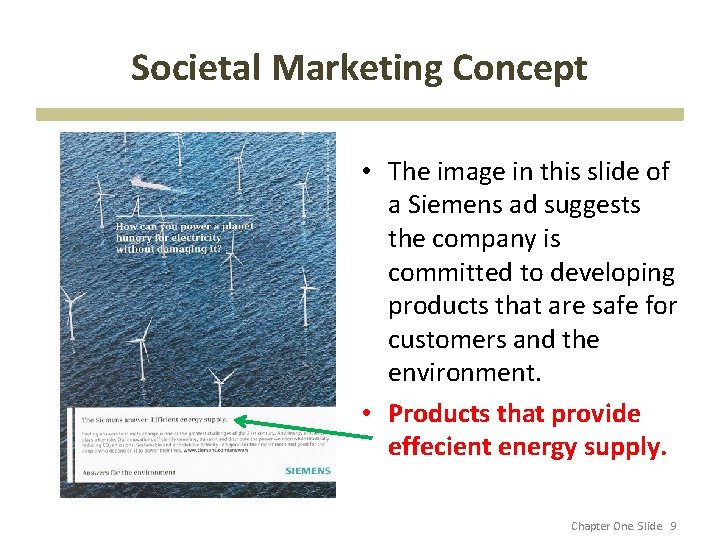
Societal Marketing Concept • The image in this slide of a Siemens ad suggests the company is committed to developing products that are safe for customers and the environment. • Products that provide effecient energy supply. Chapter One Slide 9
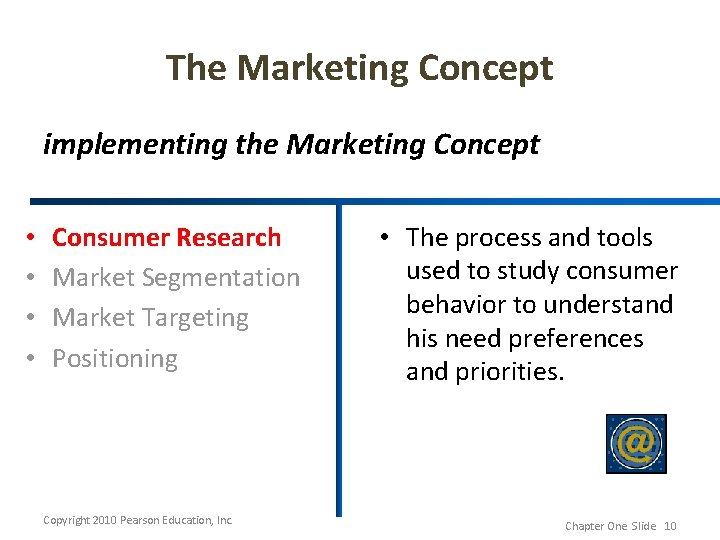
The Marketing Concept implementing the Marketing Concept • • Consumer Research Market Segmentation Market Targeting Positioning Copyright 2010 Pearson Education, Inc. • The process and tools used to study consumer behavior to understand his need preferences and priorities. Chapter One Slide 10
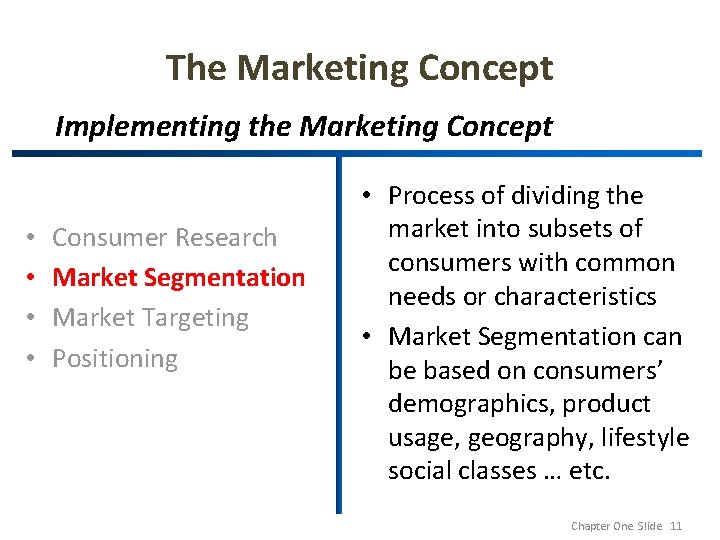
The Marketing Concept Implementing the Marketing Concept • • Consumer Research Market Segmentation Market Targeting Positioning • Process of dividing the market into subsets of consumers with common needs or characteristics • Market Segmentation can be based on consumers’ demographics, product usage, geography, lifestyle social classes … etc. Chapter One Slide 11
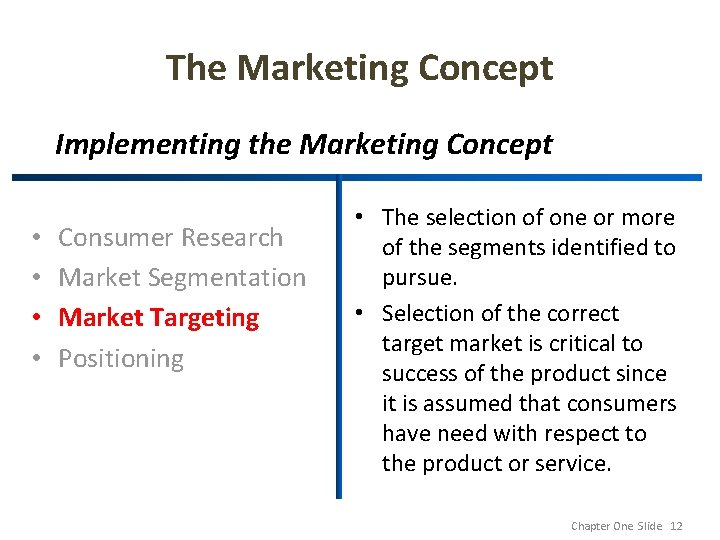
The Marketing Concept Implementing the Marketing Concept • • Consumer Research Market Segmentation Market Targeting Positioning • The selection of one or more of the segments identified to pursue. • Selection of the correct target market is critical to success of the product since it is assumed that consumers have need with respect to the product or service. Chapter One Slide 12
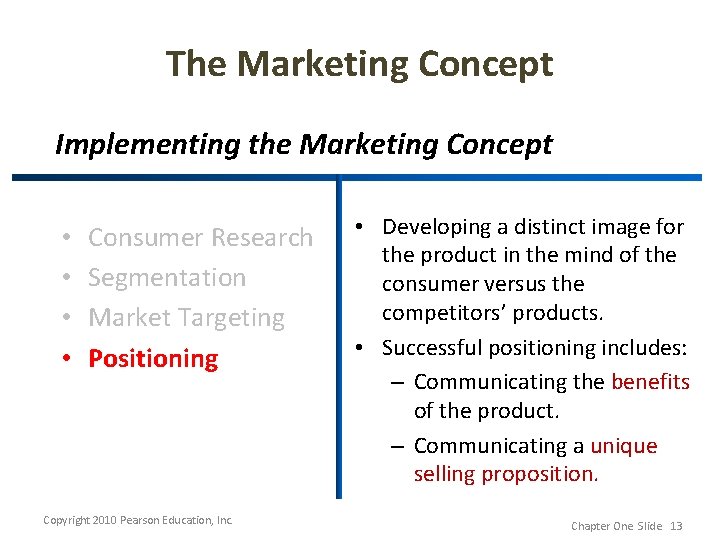
The Marketing Concept Implementing the Marketing Concept • • Consumer Research Segmentation Market Targeting Positioning Copyright 2010 Pearson Education, Inc. • Developing a distinct image for the product in the mind of the consumer versus the competitors’ products. • Successful positioning includes: – Communicating the benefits of the product. – Communicating a unique selling proposition. Chapter One Slide 13
Marketer’s main benefit of studying consumer behavior • Producing the right product • Selling the product with a right price • Making the products available At a the right time and in the right place • Providing consumers with product information and where to buy + encouraging consumers to by the products (promotion) Chapter One Slide 14
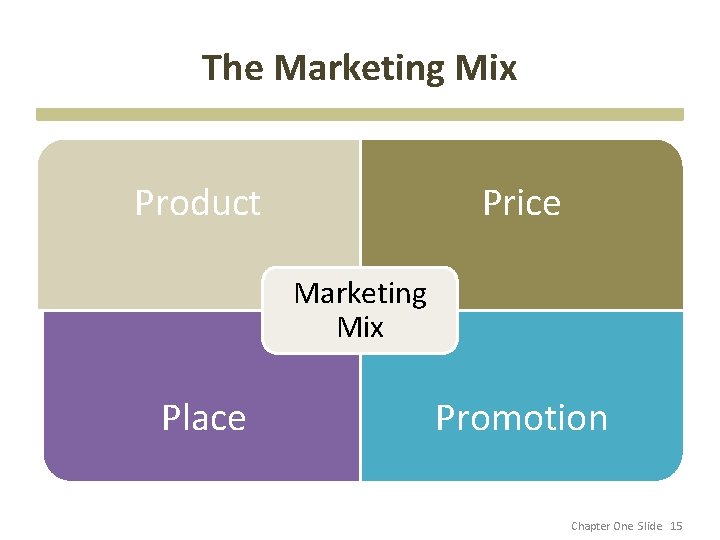
The Marketing Mix Price Product Marketing Mix Place Promotion Chapter One Slide 15
successful customer relationship • The right marketing mix to a potential consumers leads to successful customer relationship: - Customer value - Customer satisfaction - Customer trust - Customer retention (loyalty) Chapter One Slide 16
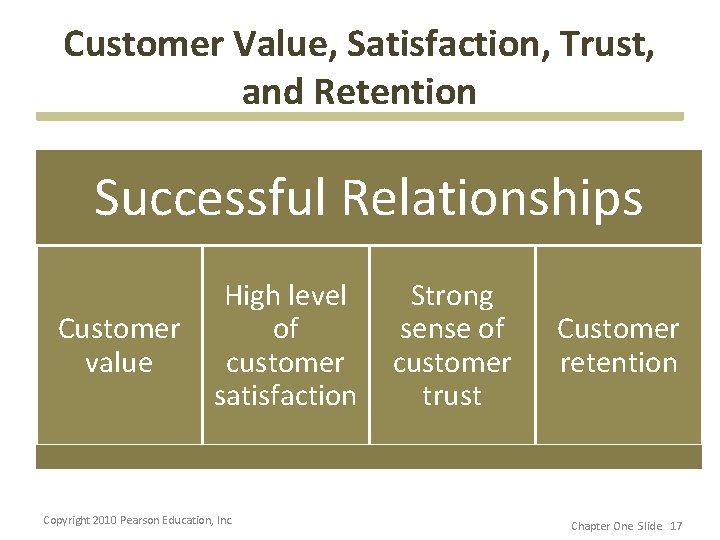
Customer Value, Satisfaction, Trust, and Retention Successful Relationships Customer value High level of customer satisfaction Copyright 2010 Pearson Education, Inc. Strong sense of customer trust Customer retention Chapter One Slide 17
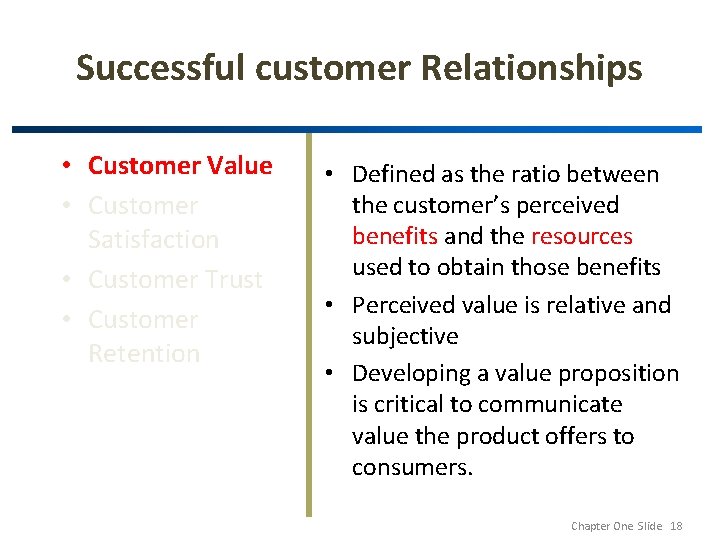
Successful customer Relationships • Customer Value • Customer Satisfaction • Customer Trust • Customer Retention • Defined as the ratio between the customer’s perceived benefits and the resources used to obtain those benefits • Perceived value is relative and subjective • Developing a value proposition is critical to communicate value the product offers to consumers. Chapter One Slide 18
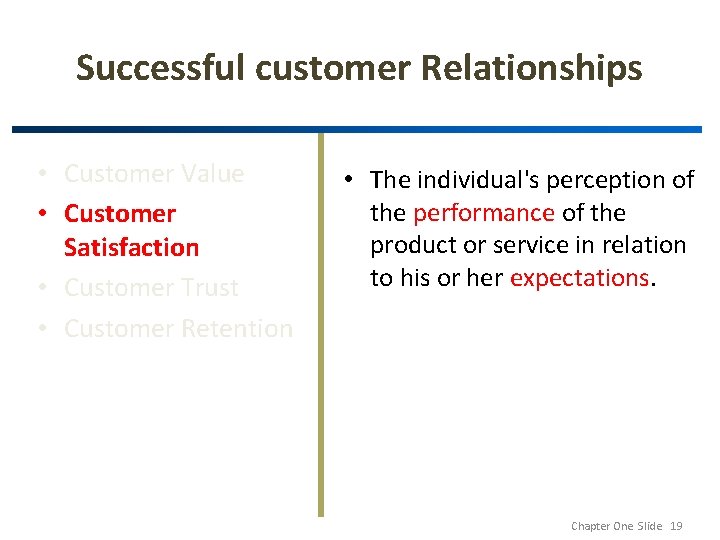
Successful customer Relationships • Customer Value • Customer Satisfaction • Customer Trust • Customer Retention • The individual's perception of the performance of the product or service in relation to his or her expectations. Chapter One Slide 19
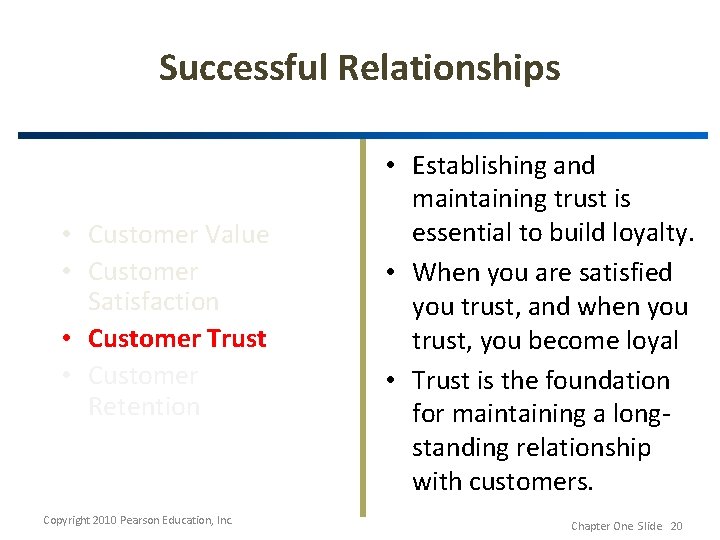
Successful Relationships • Customer Value • Customer Satisfaction • Customer Trust • Customer Retention Copyright 2010 Pearson Education, Inc. • Establishing and maintaining trust is essential to build loyalty. • When you are satisfied you trust, and when you trust, you become loyal • Trust is the foundation for maintaining a longstanding relationship with customers. Chapter One Slide 20
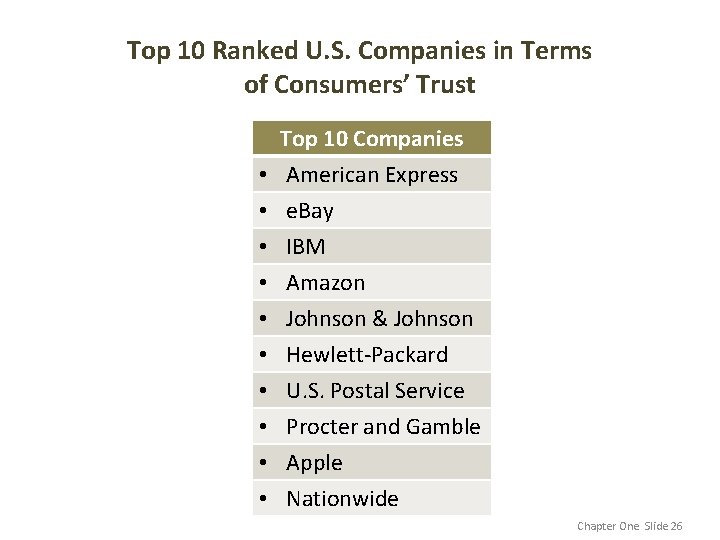
Top 10 Ranked U. S. Companies in Terms of Consumers’ Trust Top 10 Companies • American Express • e. Bay • IBM • • Amazon Johnson & Johnson Hewlett-Packard U. S. Postal Service Procter and Gamble Apple Nationwide Chapter One Slide 26
Successful Relationships • Customer Value • Customer Satisfaction • Customer Trust • Customer Retention • The objective of providing value is to retain highly satisfied customers (loyal customers). • Loyal customers are key: – – They buy more products They are less price sensitive Servicing them is cheaper They spread positive word of mouth • Customer groups based on loyalty include loyalists, apostles, defectors, terrorists, hostages, and mercenaries. Chapter One Slide 22
Customer loyalty groups Loyalists: who continue to purchase Apostles: who provide very positive word-ofmouth. Mercenaries: are satisfied but are not really considered loyal and will move from company to company. Hostages: Some dissatisfied customers who stay with the company but are very unhappy. Terrorists: who spread negative word-of-mouth. Defectors: disappointed customers who move to the competitors. Chapter One Slide 23
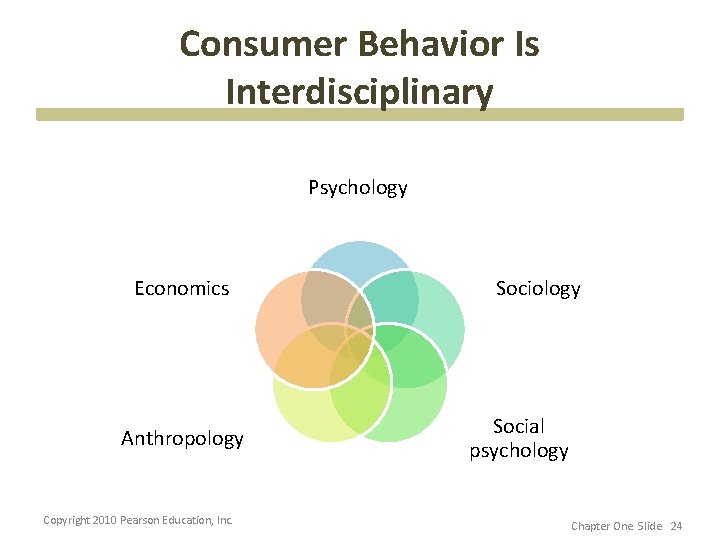
Consumer Behavior Is Interdisciplinary Psychology Economics Anthropology Copyright 2010 Pearson Education, Inc. Sociology Social psychology Chapter One Slide 24
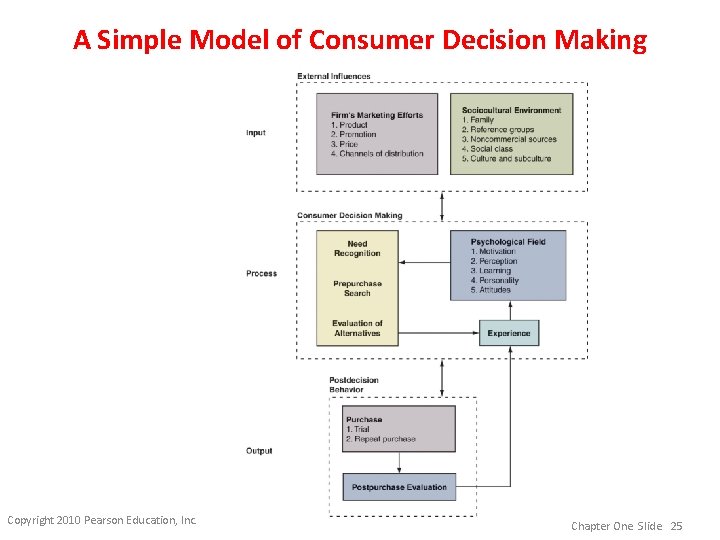
A Simple Model of Consumer Decision Making Copyright 2010 Pearson Education, Inc. Chapter One Slide 25
Components of consumer decision making model • Input stage includes sources of information to the consumer – how they learn and are influenced by the marketer and their environment. • Process stage ties to the decision-making process the consumer undergoes when considering a purchase. It moves from the inputs to the psychological factors involved in recognizing a need, searching for information, and evaluating alternatives. • Output stage involves the actual purchase and the postpurchase evaluation. This post-purchase evaluation ties to the satisfaction topics discussed earlier in this presentation and the importance of customer loyalty to marketing’s profitability. Chapter One Slide 26
- Slides: 26