
Chapter One CHEMICAL FOUNDATIONS Chemistry An Overview Figure
- Slides: 66
Chapter One: CHEMICAL FOUNDATIONS
Chemistry: An Overview
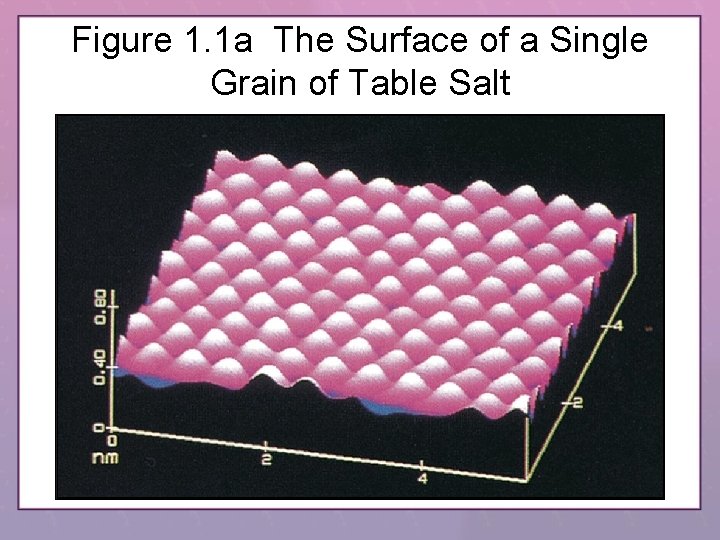
Figure 1. 1 a The Surface of a Single Grain of Table Salt
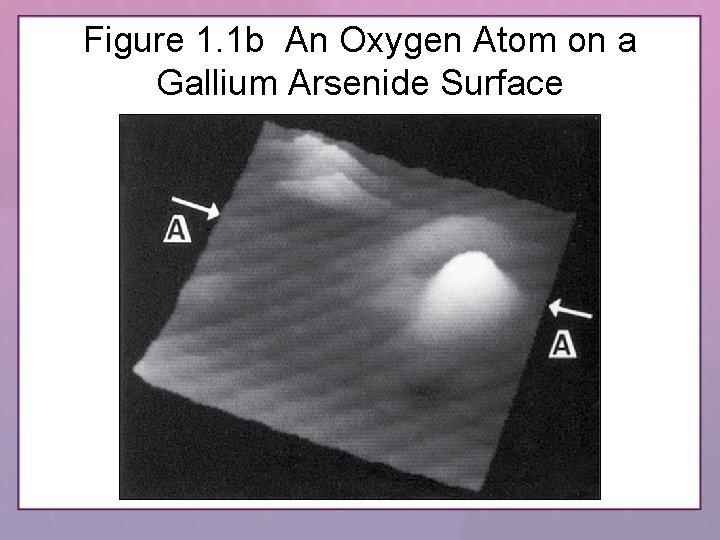
Figure 1. 1 b An Oxygen Atom on a Gallium Arsenide Surface
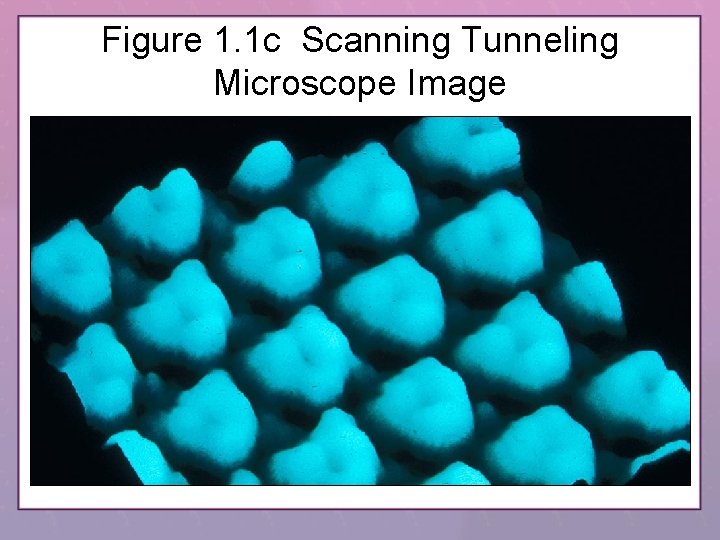
Figure 1. 1 c Scanning Tunneling Microscope Image
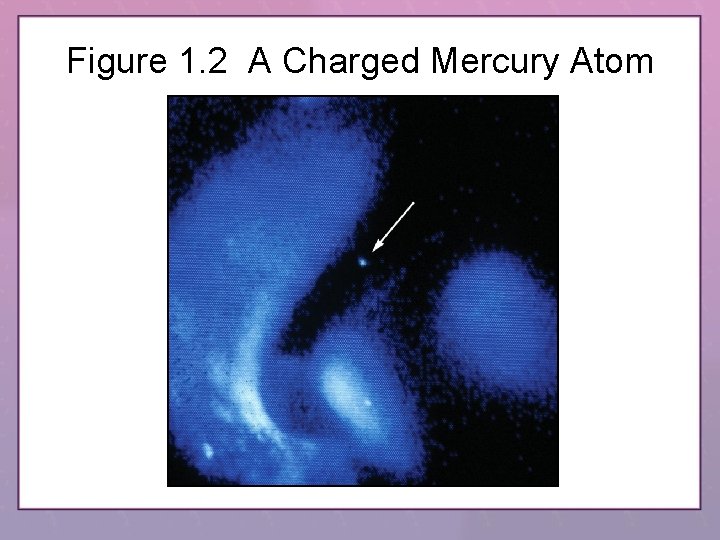
Figure 1. 2 A Charged Mercury Atom
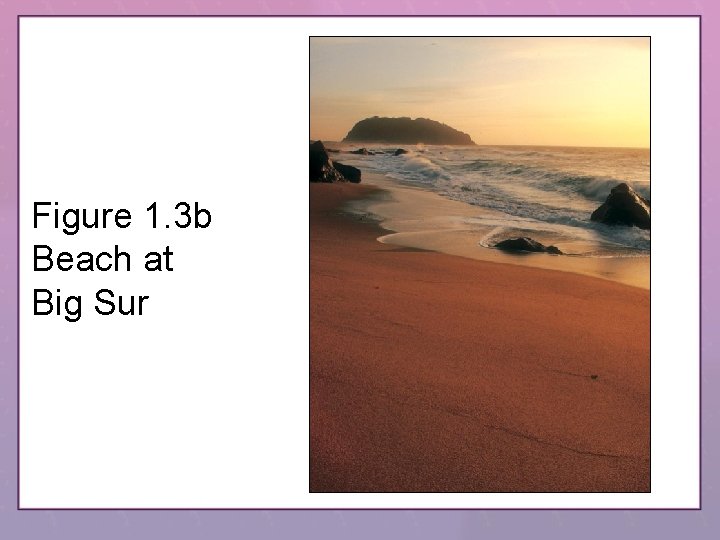
Figure 1. 3 b Beach at Big Sur
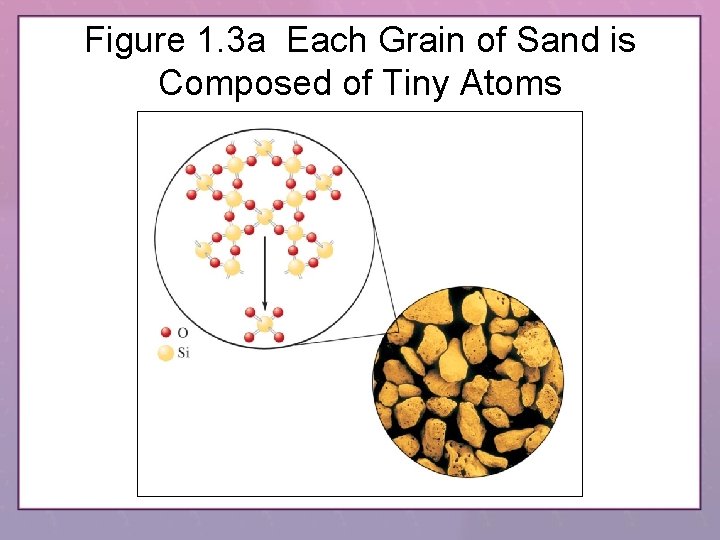
Figure 1. 3 a Each Grain of Sand is Composed of Tiny Atoms
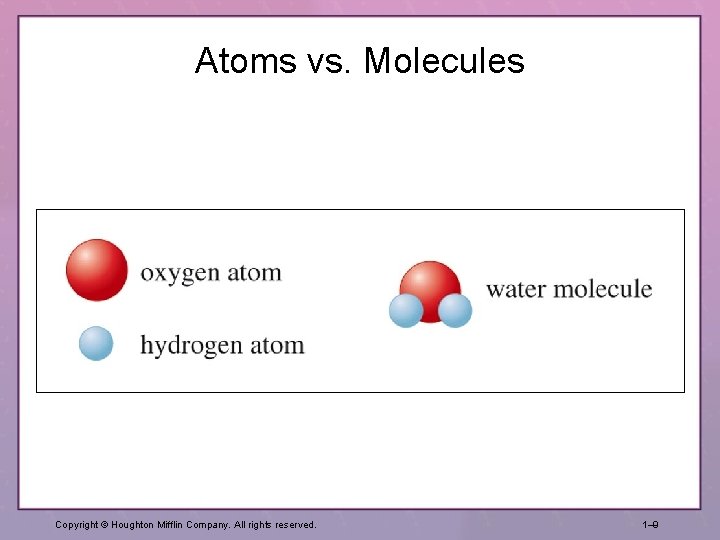
Atoms vs. Molecules Copyright © Houghton Mifflin Company. All rights reserved. 1– 9
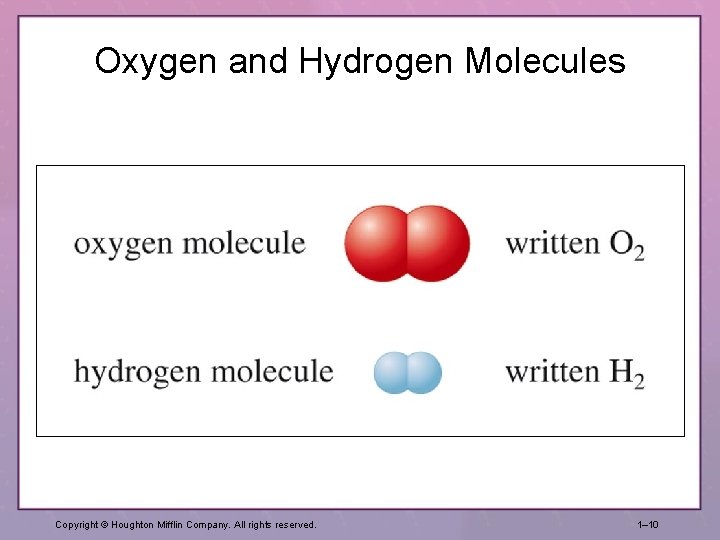
Oxygen and Hydrogen Molecules Copyright © Houghton Mifflin Company. All rights reserved. 1– 10
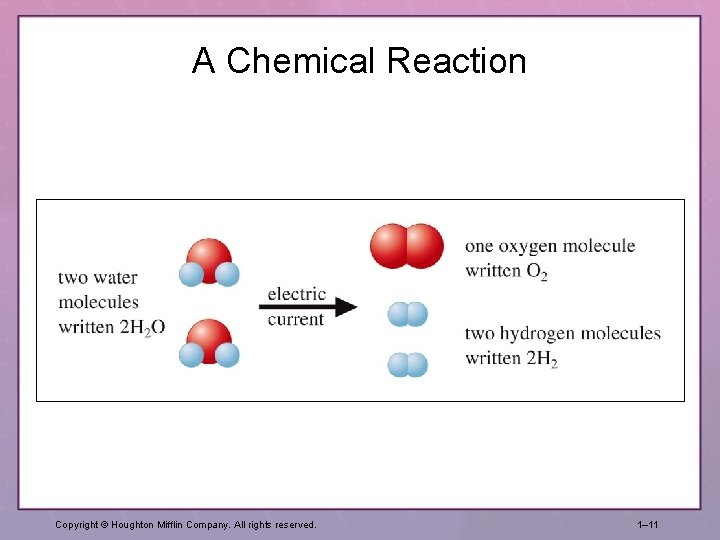
A Chemical Reaction Copyright © Houghton Mifflin Company. All rights reserved. 1– 11
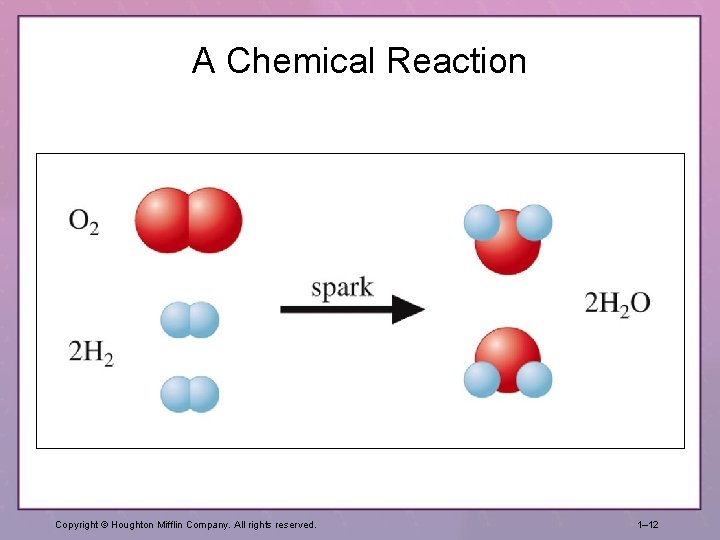
A Chemical Reaction Copyright © Houghton Mifflin Company. All rights reserved. 1– 12
The Scientific Method
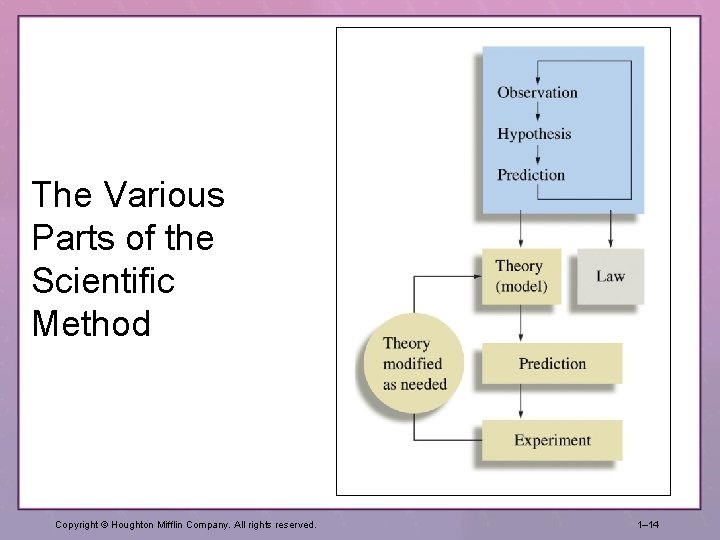
The Various Parts of the Scientific Method Copyright © Houghton Mifflin Company. All rights reserved. 1– 14
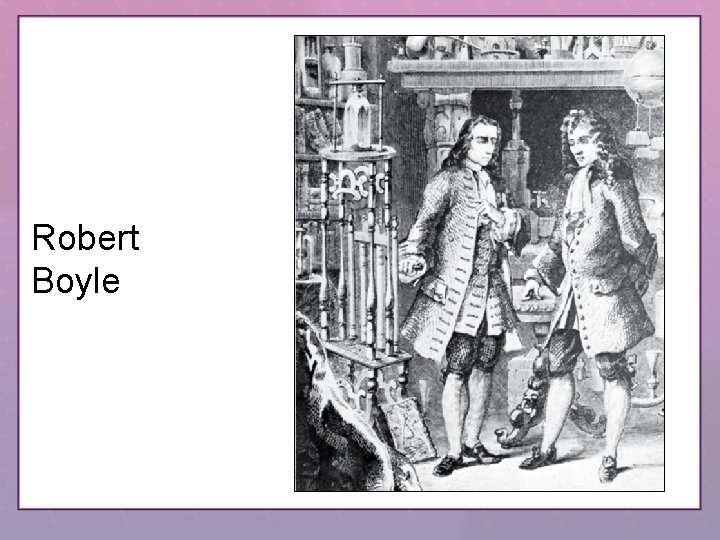
Robert Boyle
Law vs. Theory • A law summarizes what happens. • A theory (model) is an attempt to explain why it happens. Copyright © Houghton Mifflin Company. All rights reserved. 1– 16
Units of Measurement
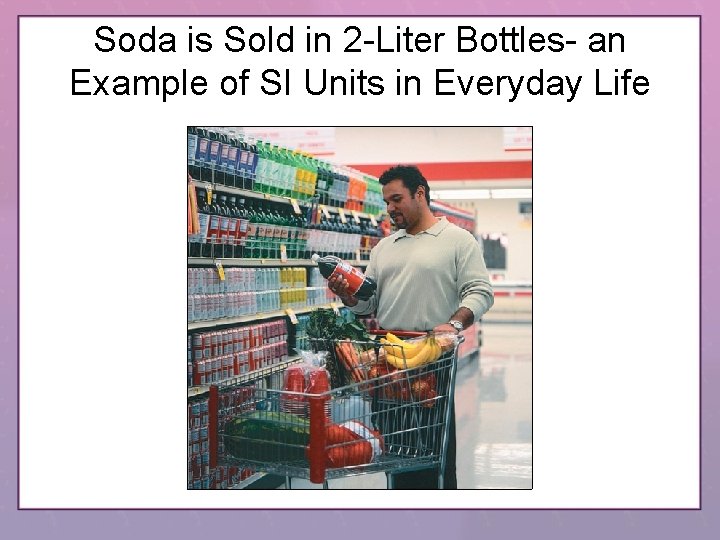
Soda is Sold in 2 -Liter Bottles- an Example of SI Units in Everyday Life
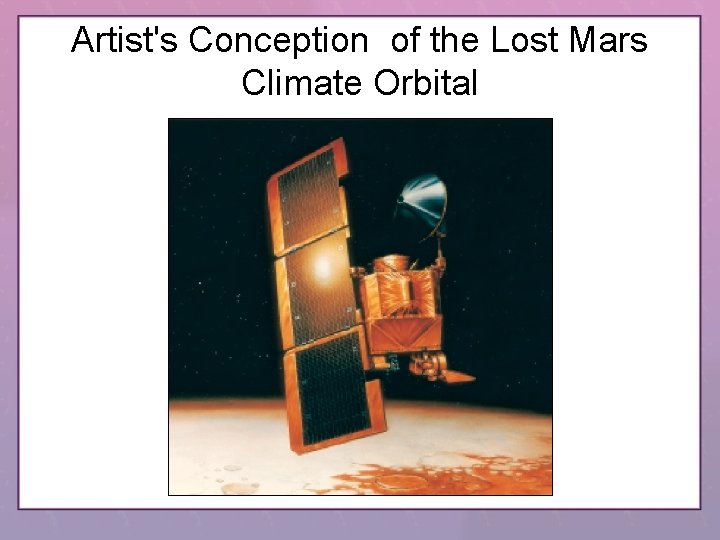
Artist's Conception of the Lost Mars Climate Orbital
Nature of Measurement • Measurement - quantitative observation consisting of 2 parts • Part 1 – number • Part 2 – scale (unit) • Examples: • 20 grams • 6. 63 × 10 -34 Joule seconds Copyright © Houghton Mifflin Company. All rights reserved. 1– 20
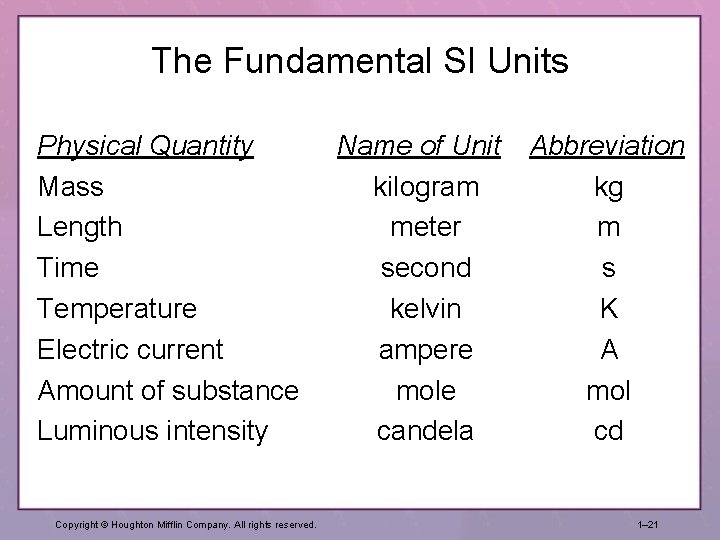
The Fundamental SI Units Physical Quantity Mass Length Time Temperature Electric current Amount of substance Luminous intensity Copyright © Houghton Mifflin Company. All rights reserved. Name of Unit kilogram meter second kelvin ampere mole candela Abbreviation kg m s K A mol cd 1– 21
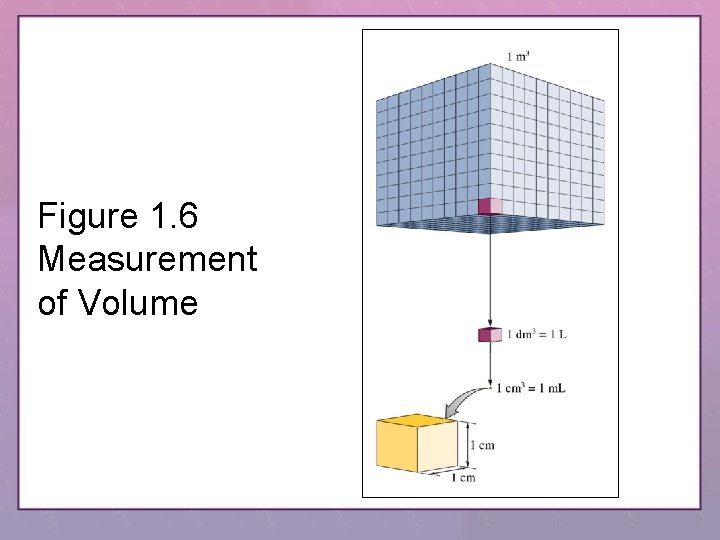
Figure 1. 6 Measurement of Volume
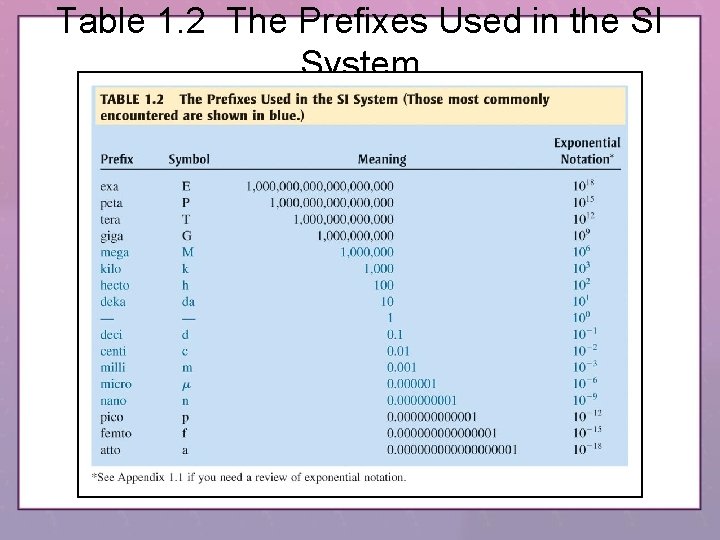
Table 1. 2 The Prefixes Used in the SI System
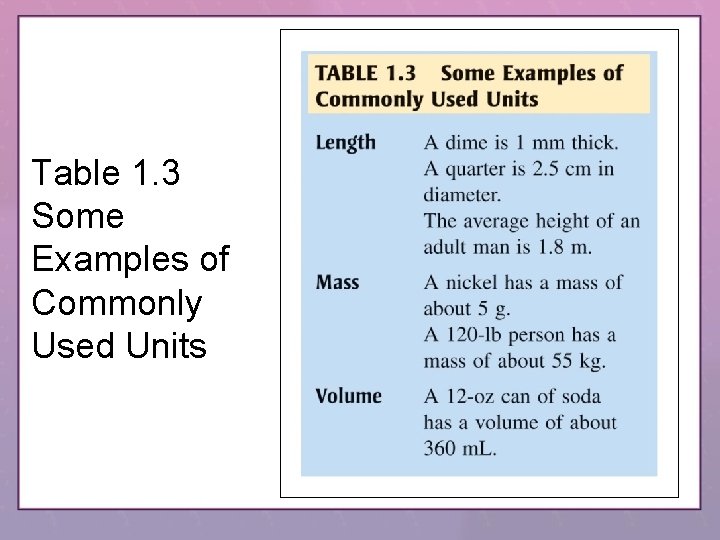
Table 1. 3 Some Examples of Commonly Used Units
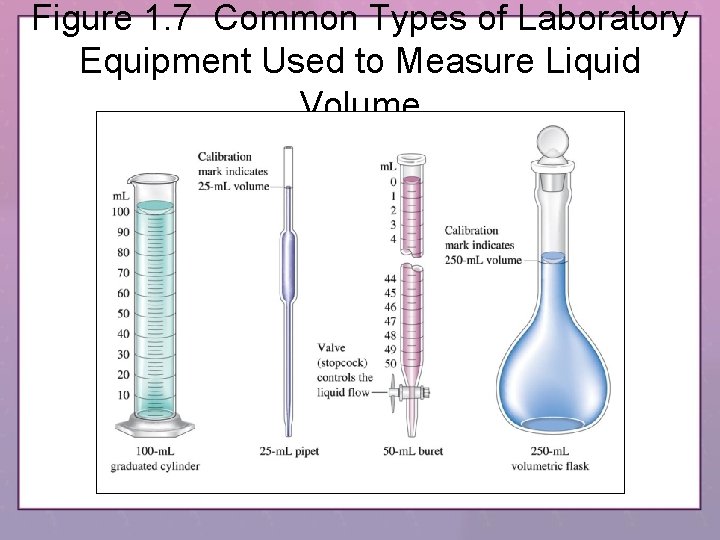
Figure 1. 7 Common Types of Laboratory Equipment Used to Measure Liquid Volume
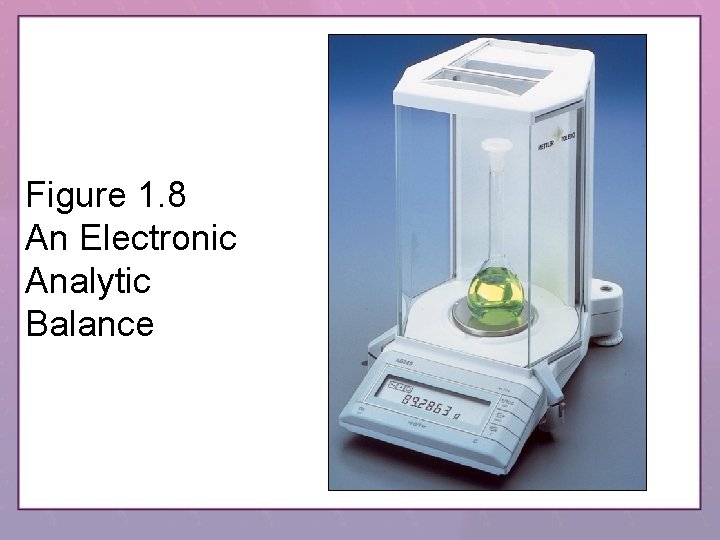
Figure 1. 8 An Electronic Analytic Balance
Uncertainty in Measurement
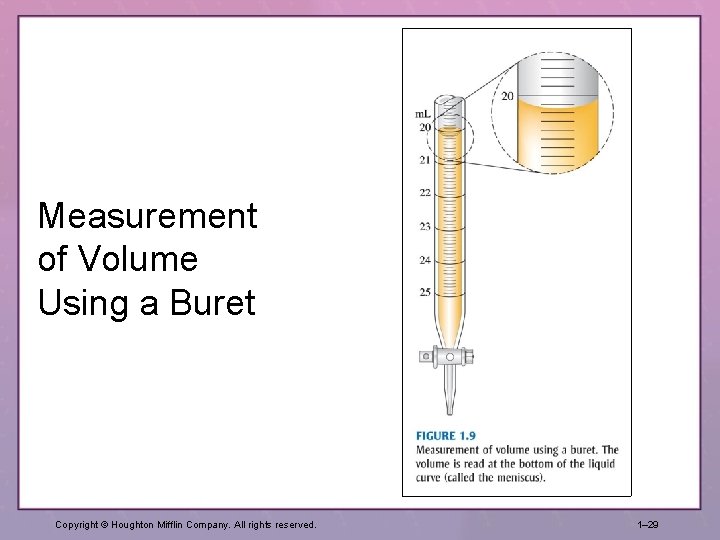
Uncertainty in Measurement • A digit that must be estimated is called uncertain. • A measurement always has some degree of uncertainty. Copyright © Houghton Mifflin Company. All rights reserved. 1– 28
Measurement of Volume Using a Buret Copyright © Houghton Mifflin Company. All rights reserved. 1– 29
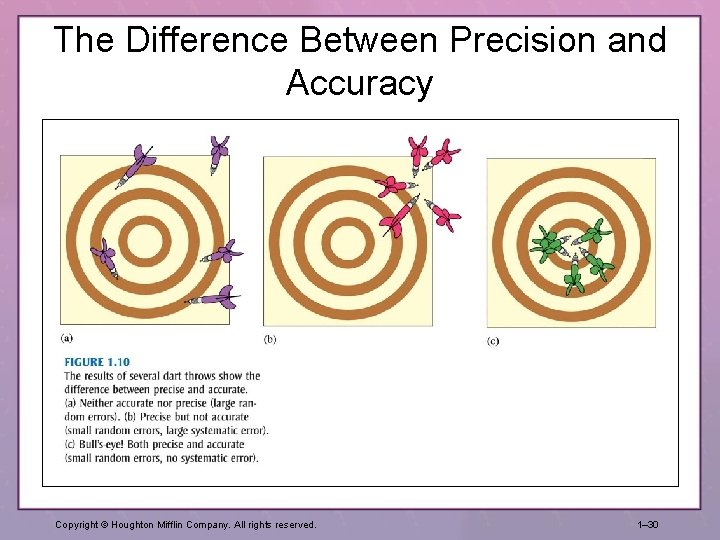
The Difference Between Precision and Accuracy Copyright © Houghton Mifflin Company. All rights reserved. 1– 30
Significant Figures and Calculations
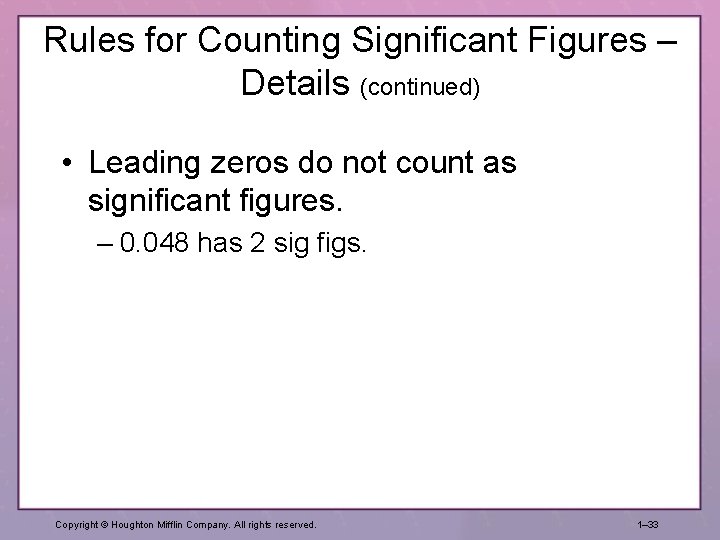
Rules for Counting Significant Figures Details • Nonzero integers always count as significant figures. – 3456 has 4 sig figs. Copyright © Houghton Mifflin Company. All rights reserved. 1– 32
Rules for Counting Significant Figures – Details (continued) • Leading zeros do not count as significant figures. – 0. 048 has 2 sig figs. Copyright © Houghton Mifflin Company. All rights reserved. 1– 33
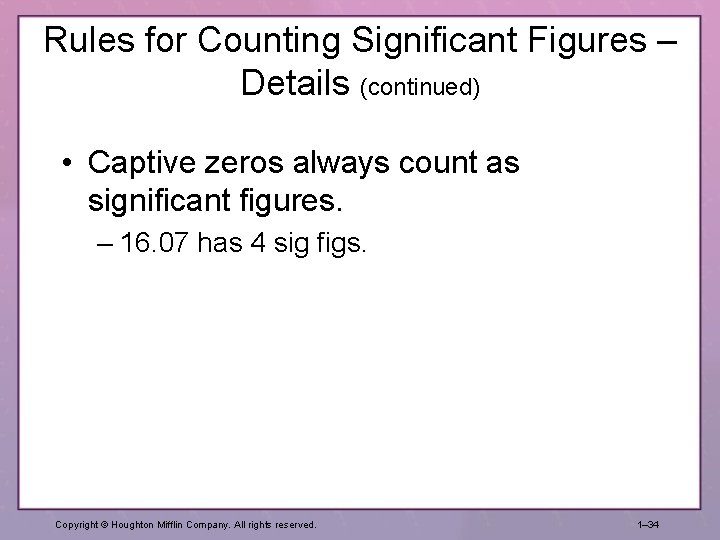
Rules for Counting Significant Figures – Details (continued) • Captive zeros always count as significant figures. – 16. 07 has 4 sig figs. Copyright © Houghton Mifflin Company. All rights reserved. 1– 34
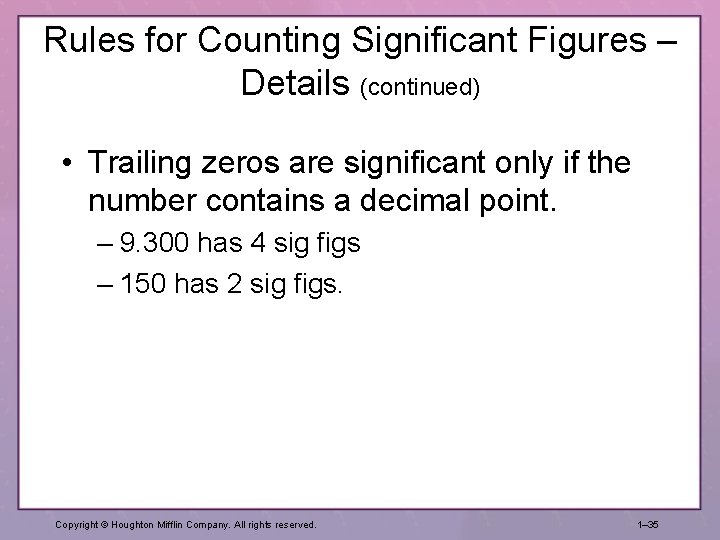
Rules for Counting Significant Figures – Details (continued) • Trailing zeros are significant only if the number contains a decimal point. – 9. 300 has 4 sig figs – 150 has 2 sig figs. Copyright © Houghton Mifflin Company. All rights reserved. 1– 35
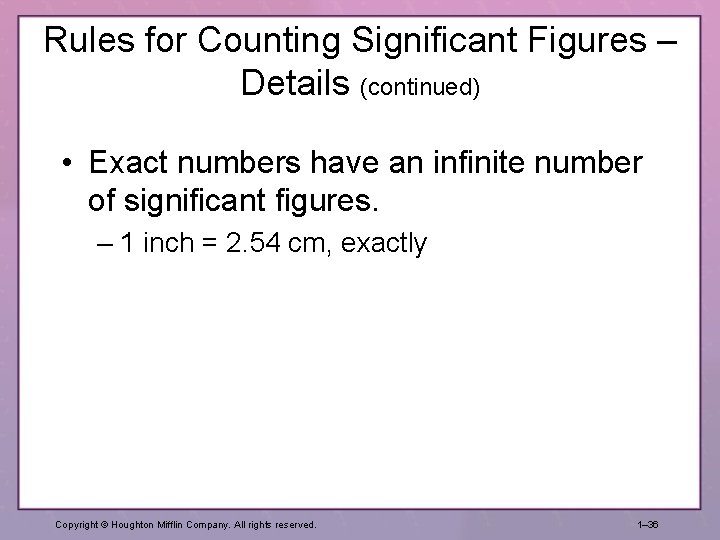
Rules for Counting Significant Figures – Details (continued) • Exact numbers have an infinite number of significant figures. – 1 inch = 2. 54 cm, exactly Copyright © Houghton Mifflin Company. All rights reserved. 1– 36
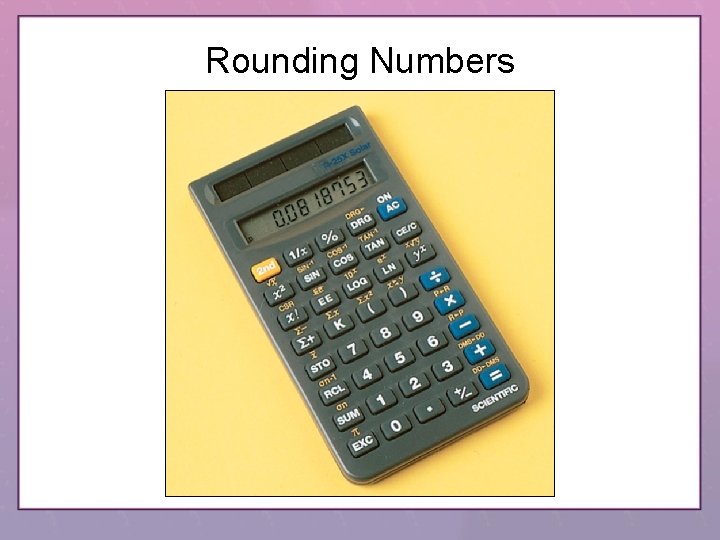
Rounding Numbers
1 t eac R • Measure your textbook using the four rulers provided and fill in the table in your Course Guide. • Justify the precision for each of your measurements, and the number of significant figures in each of your calculations.
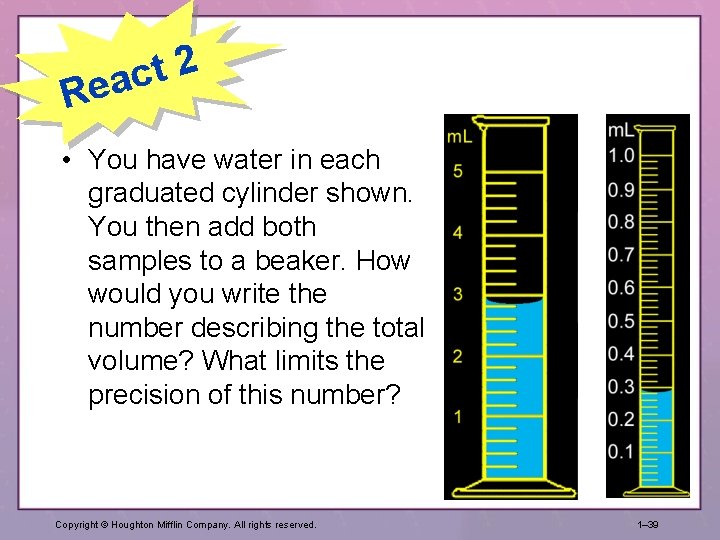
2 t eac R • You have water in each graduated cylinder shown. You then add both samples to a beaker. How would you write the number describing the total volume? What limits the precision of this number? Copyright © Houghton Mifflin Company. All rights reserved. 1– 39
Dimensional Analysis
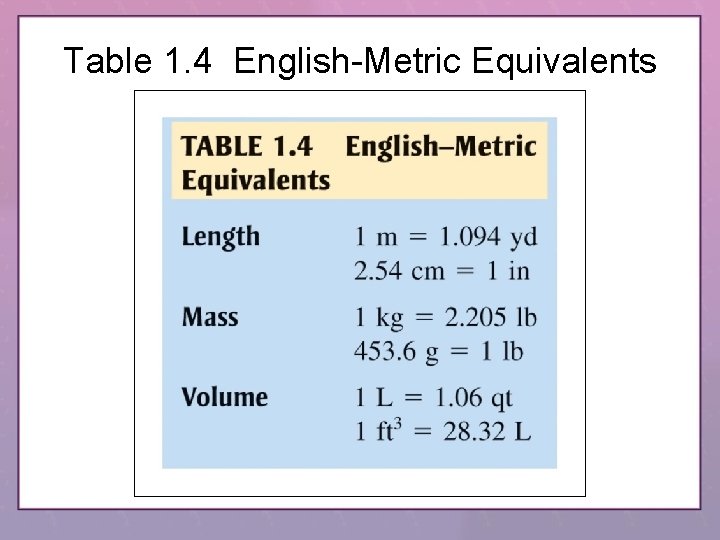
Table 1. 4 English-Metric Equivalents
3 t eac R • What data would you need to estimate the money you would spend on gasoline to drive your car from New York to Chicago? Provide estimates of values and a sample calculation. Copyright © Houghton Mifflin Company. All rights reserved. 1– 42
Temperature
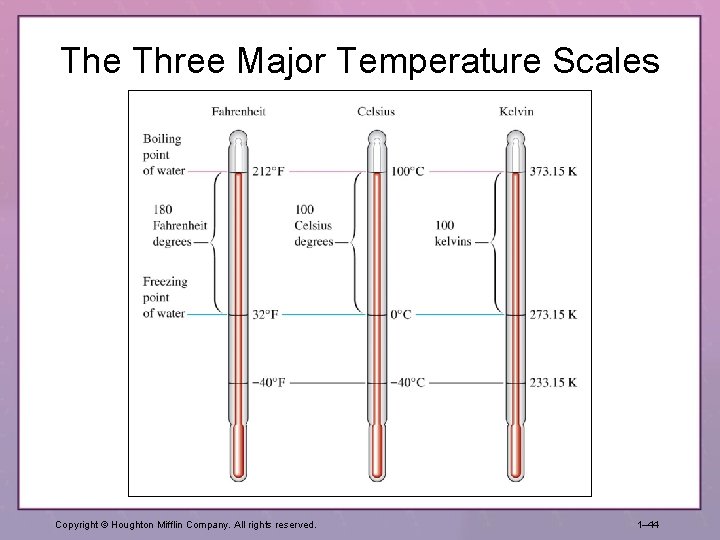
The Three Major Temperature Scales Copyright © Houghton Mifflin Company. All rights reserved. 1– 44
4 t eac R • At what temperature does C = F? • Prove your answer. Copyright © Houghton Mifflin Company. All rights reserved. 1– 45
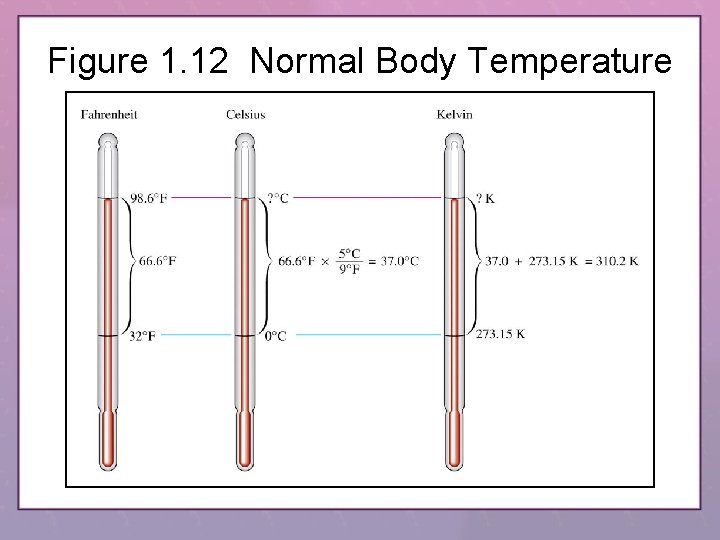
Figure 1. 12 Normal Body Temperature
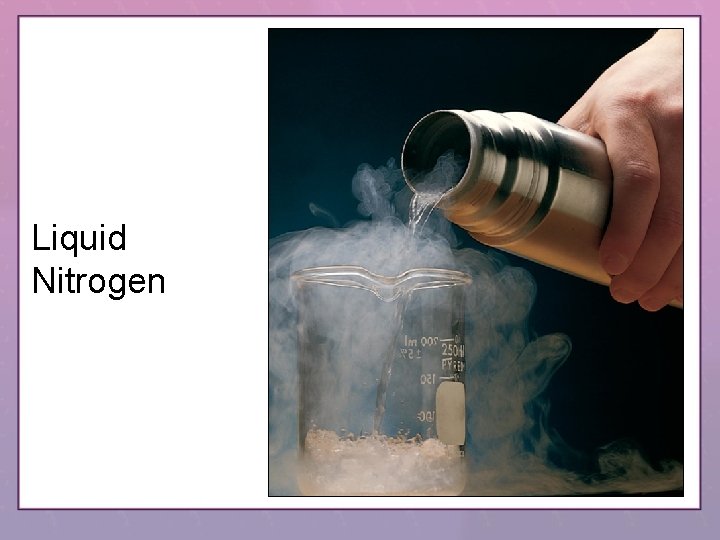
Liquid Nitrogen
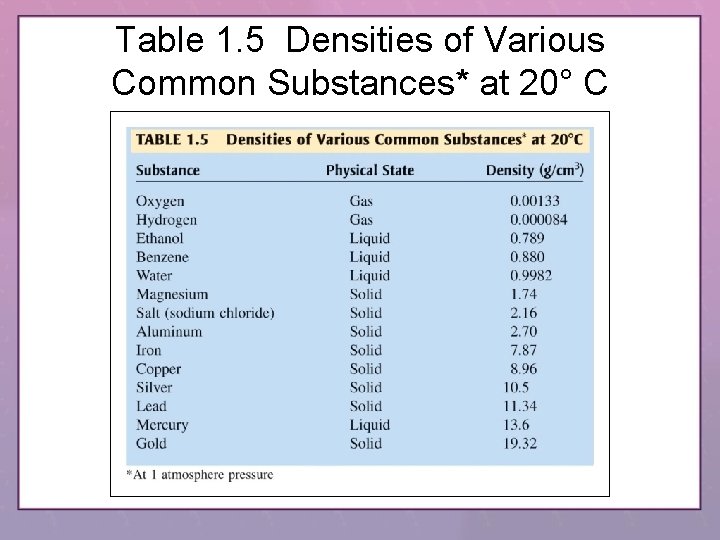
Table 1. 5 Densities of Various Common Substances* at 20° C
Classification of Matter
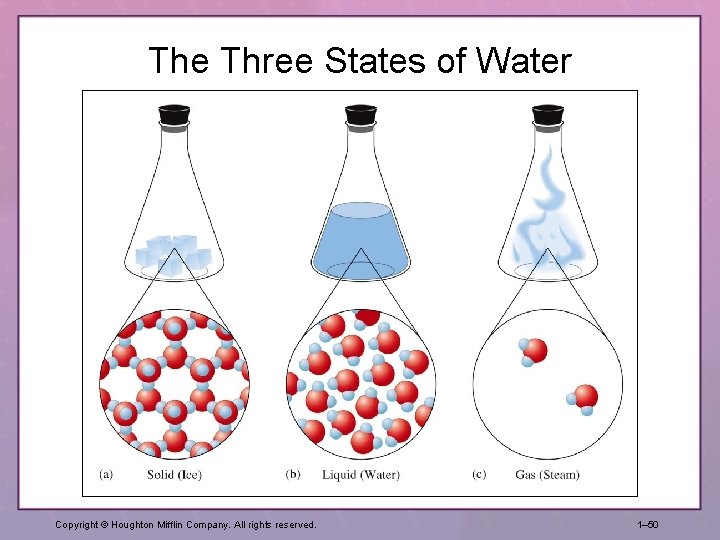
The Three States of Water Copyright © Houghton Mifflin Company. All rights reserved. 1– 50
Structure of a Solid Copyright © Houghton Mifflin Company. All rights reserved. 1– 51
Structure of a Liquid Copyright © Houghton Mifflin Company. All rights reserved. 1– 52
Structure of a Gas Copyright © Houghton Mifflin Company. All rights reserved. 1– 53
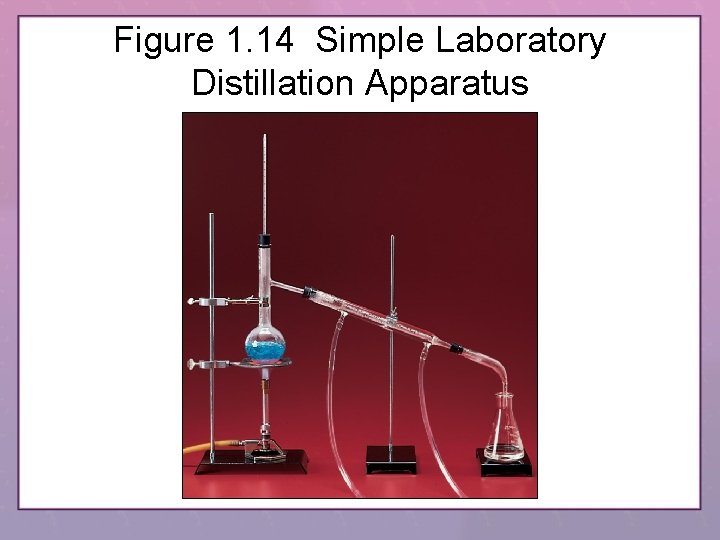
Figure 1. 14 Simple Laboratory Distillation Apparatus
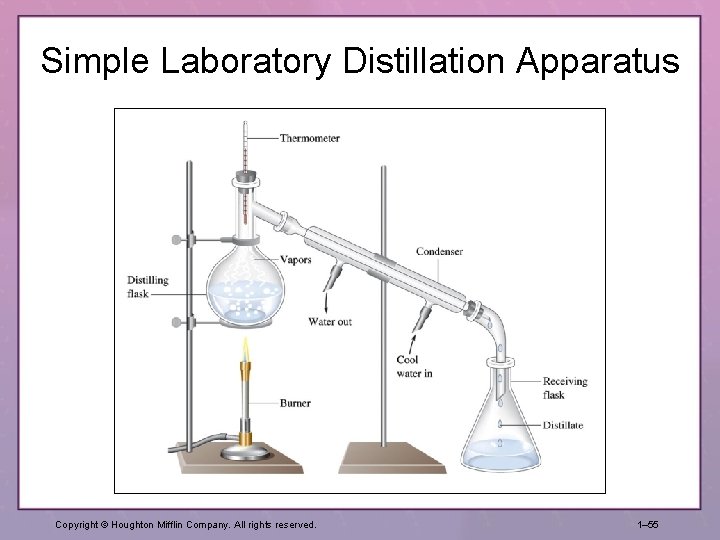
Simple Laboratory Distillation Apparatus Copyright © Houghton Mifflin Company. All rights reserved. 1– 55
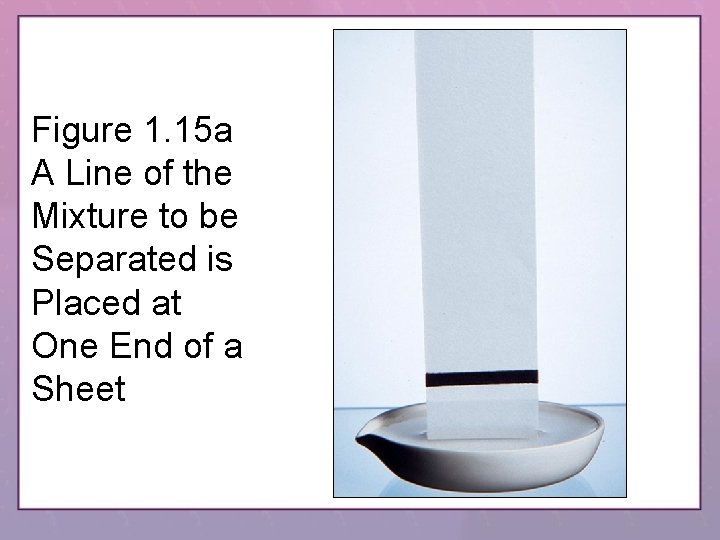
Figure 1. 15 a A Line of the Mixture to be Separated is Placed at One End of a Sheet
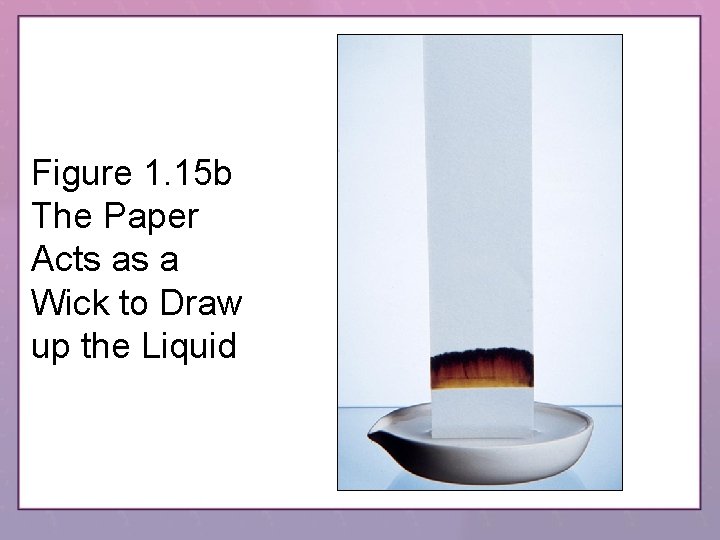
Figure 1. 15 b The Paper Acts as a Wick to Draw up the Liquid
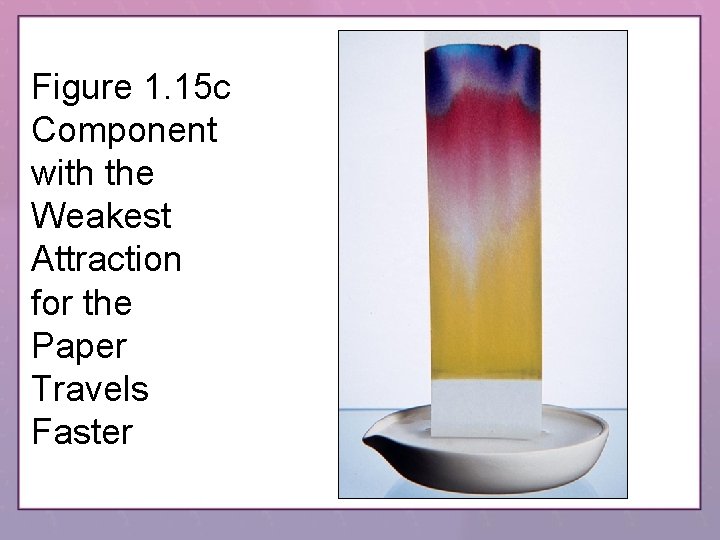
Figure 1. 15 c Component with the Weakest Attraction for the Paper Travels Faster
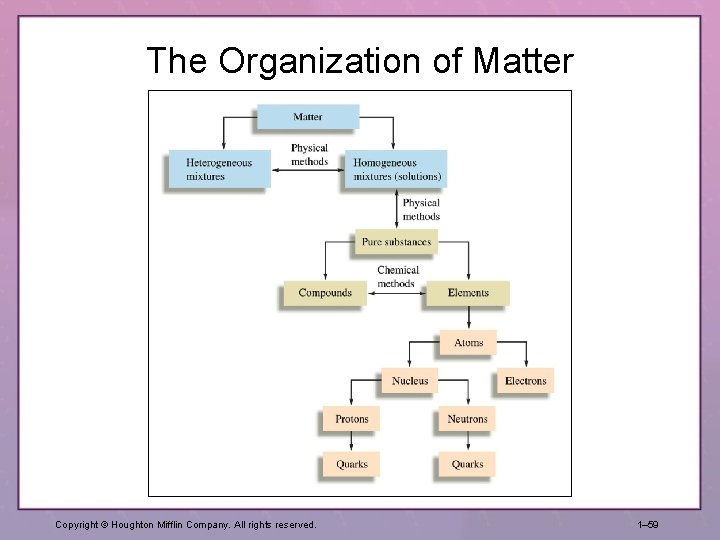
The Organization of Matter Copyright © Houghton Mifflin Company. All rights reserved. 1– 59
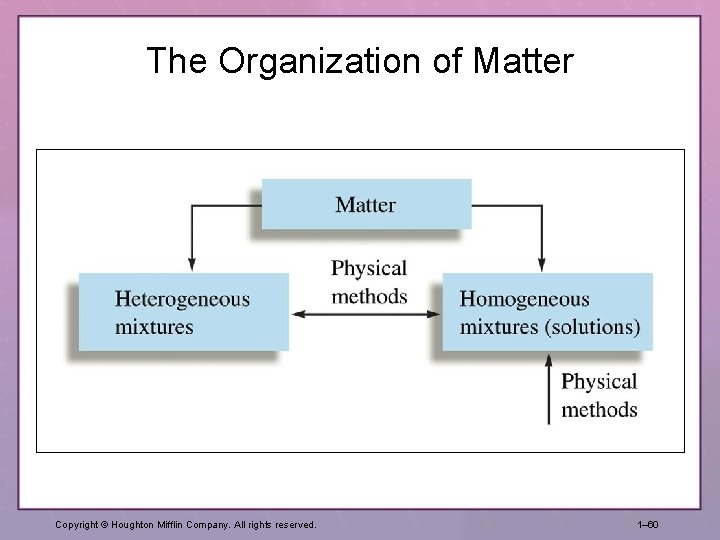
The Organization of Matter Copyright © Houghton Mifflin Company. All rights reserved. 1– 60
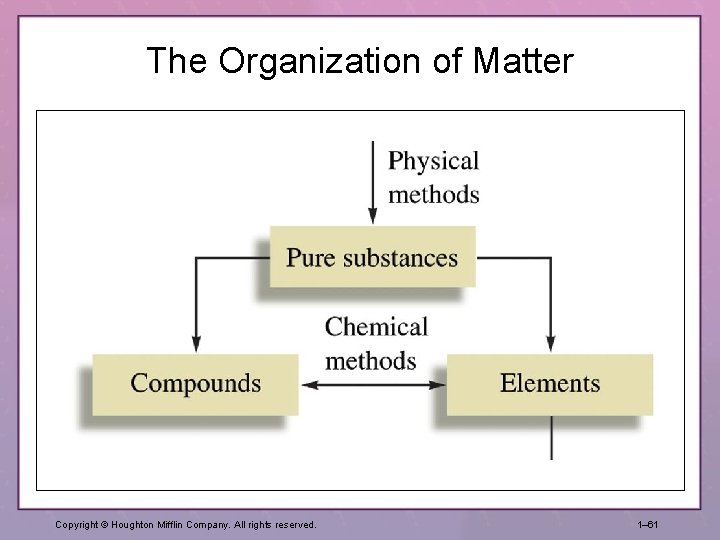
The Organization of Matter Copyright © Houghton Mifflin Company. All rights reserved. 1– 61
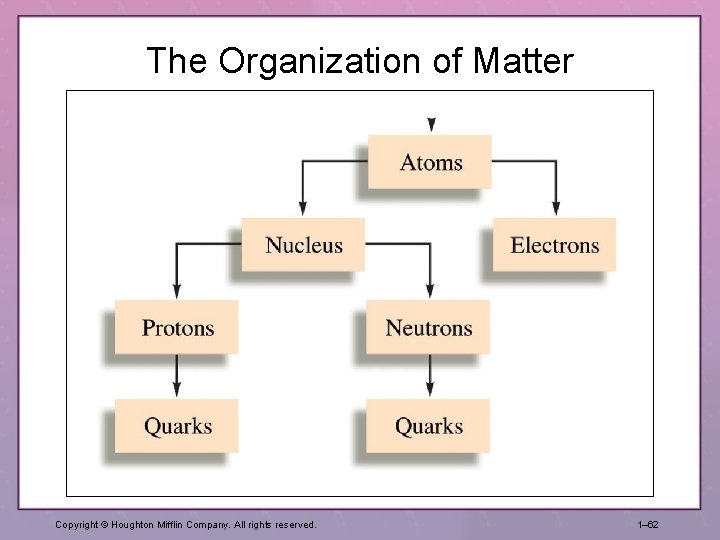
The Organization of Matter Copyright © Houghton Mifflin Company. All rights reserved. 1– 62
Homogeneous Mixtures Copyright © Houghton Mifflin Company. All rights reserved. 1– 63
Mixture vs. Solution Copyright © Houghton Mifflin Company. All rights reserved. 1– 64
Mixture vs. Compound Copyright © Houghton Mifflin Company. All rights reserved. 1– 65
5 t eac R • Sketch a magnified view (showing atoms/molecules) of each of the following: – a heterogeneous mixture of two different compounds. – a homogeneous mixture of an element and a compound. Copyright © Houghton Mifflin Company. All rights reserved. 1– 66