
Chapter Objectives Intersections Rightofway Railroad crossings Copyright 2005

Chapter Objectives • Intersections • Right-of-way • Railroad crossings Copyright 2005 Thomson Delmar Learning.
Railroad Crossings • Railroad crossing controls • Approaching a railroad crossing Copyright 2005 Thomson Delmar Learning.
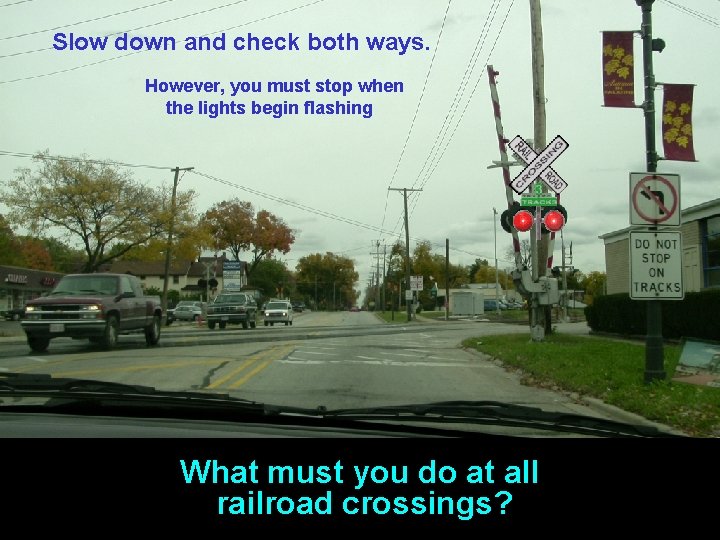
Slow down and check both ways. However, you must stop when the lights begin flashing What must you do at all railroad crossings?
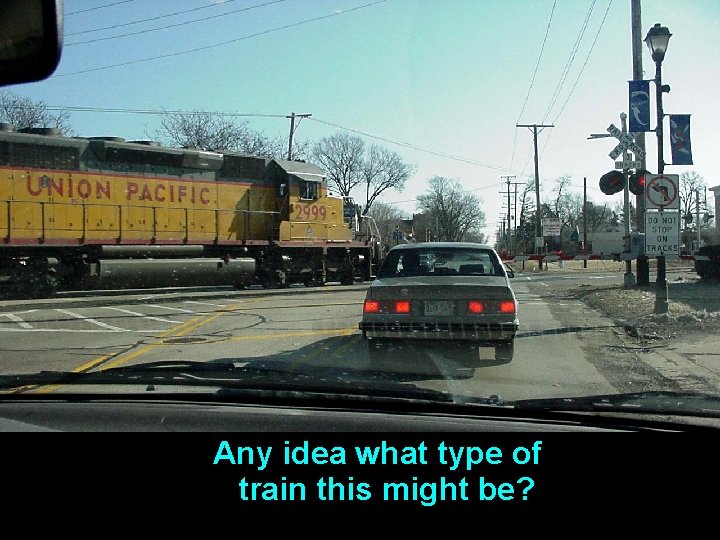
Any idea what type of train this might be?
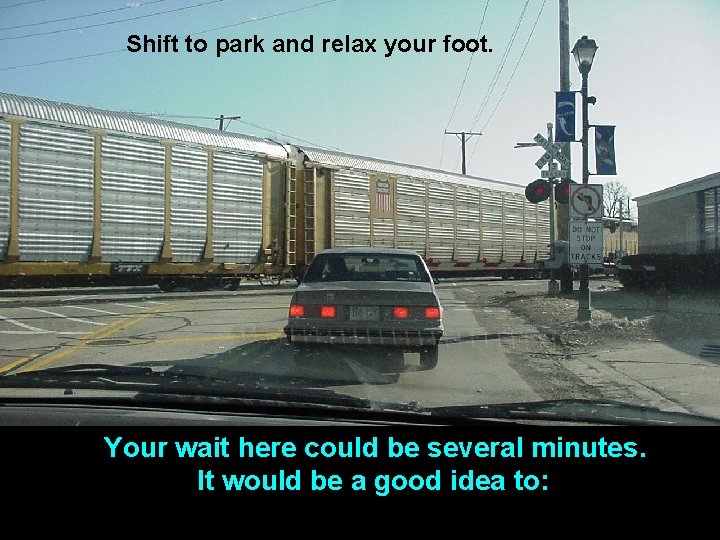
Shift to park and relax your foot. Your wait here could be several minutes. It would be a good idea to:
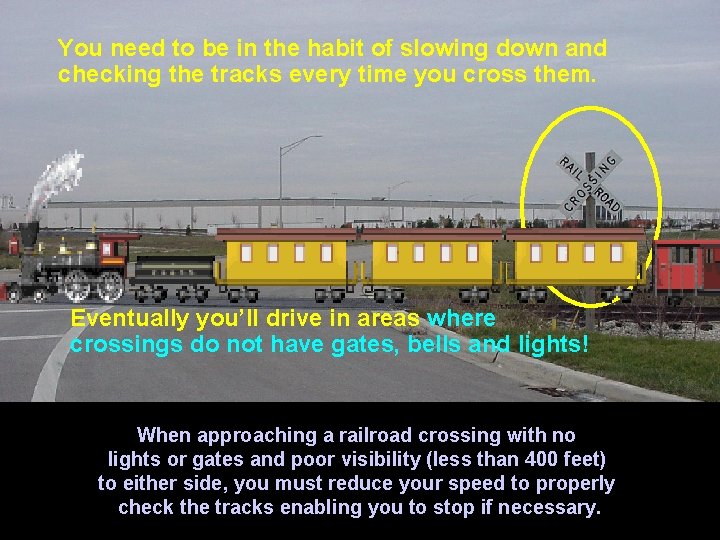
You need to be in the habit of slowing down and checking the tracks every time you cross them. Eventually you’ll drive in areas where crossings do not have gates, bells and lights! When approaching a railroad crossing with no lights or gates and poor visibility (less than 400 feet) to either side, you must reduce your speed to properly check the tracks enabling you to stop if necessary.
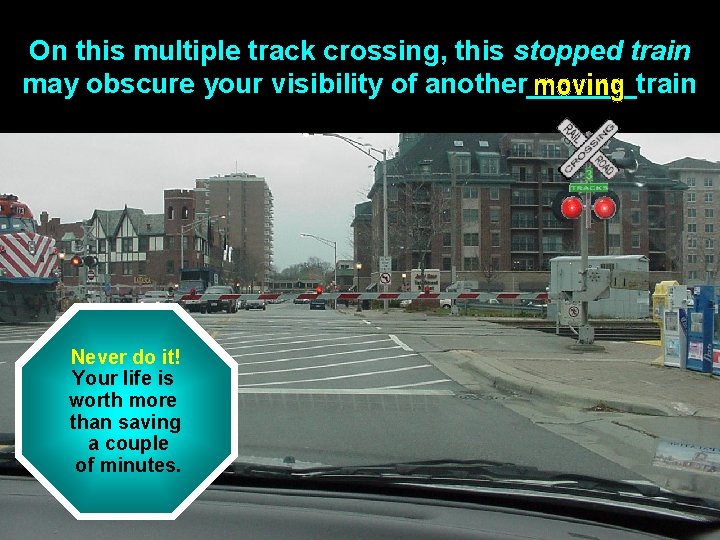
On this multiple track crossing, this stopped train may obscure your visibility of another_______train If you do took Never it! a chance going Your lifethe is around worth more lowered gate, than saving would you a couple survive a collision? of minutes. STOP and THINK
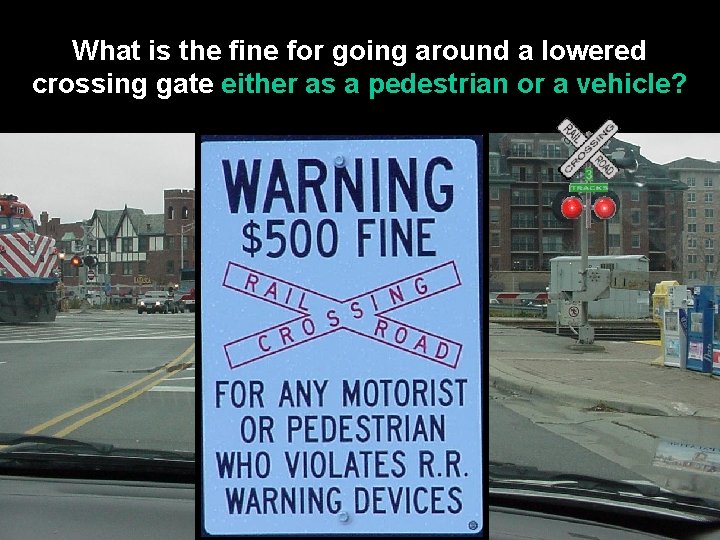
What is the fine for going around a lowered crossing gate either as a pedestrian or a vehicle?
Intersections Controlled intersection • red lights and STOP signs • yellow lights and YIELD signs • green lights • automated signals Copyright 2005 Thomson Delmar Learning.
Intersections • Uncontrolled intersection • Other types of intersections – alley intersections – traffic circles – large parking lots Copyright 2005 Thomson Delmar Learning.
Right-of-Way • Right-of-way at intersections • Right-hand rule Copyright 2005 Thomson Delmar Learning.
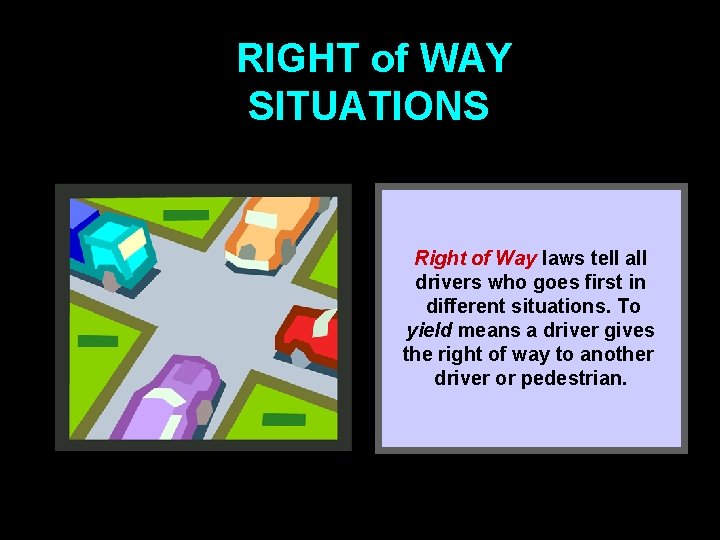
RIGHT of WAY SITUATIONS Right of Way laws tell all drivers who goes first in different situations. To yield means a driver gives the right of way to another driver or pedestrian.
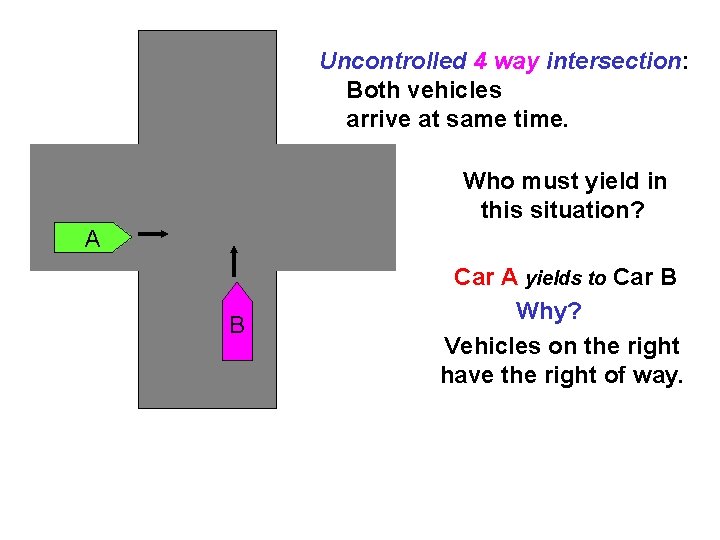
Uncontrolled 4 way intersection: Both vehicles arrive at same time. Who must yield in this situation? A B Car A yields to Car B Why? Vehicles on the right have the right of way.
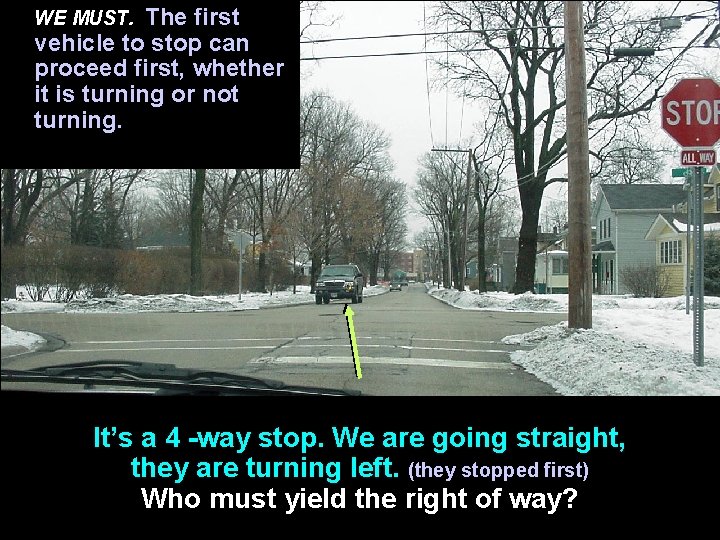
The first vehicle to stop can proceed first, whether it is turning or not turning. WE MUST. It’s a 4 -way stop. We are going straight, they are turning left. (they stopped first) Who must yield the right of way?
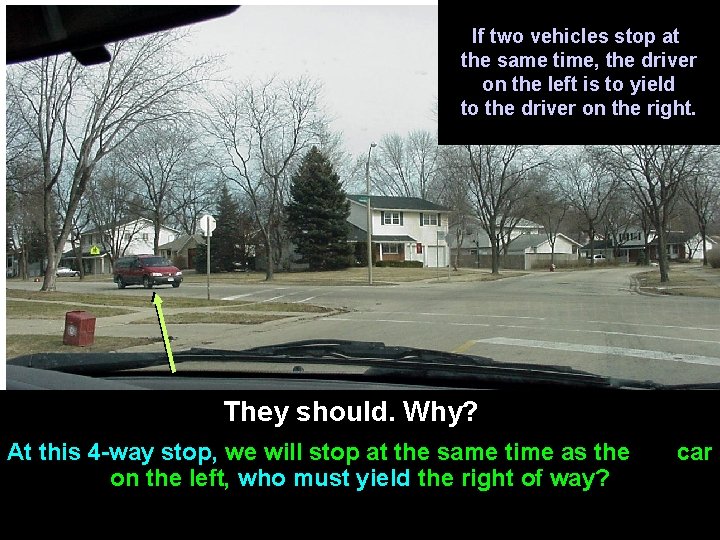
If two vehicles stop at the same time, the driver on the left is to yield to the driver on the right. They should. Why? At this 4 -way stop, we will stop at the same time as the on the left, who must yield the right of way? car
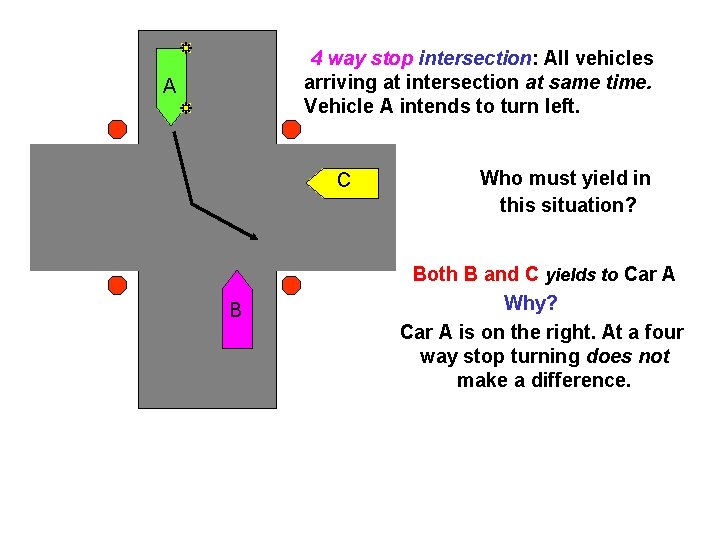
4 way stop intersection: All vehicles arriving at intersection at same time. Vehicle A intends to turn left. A C B Who must yield in this situation? Both B and C yields to Car A Why? Car A is on the right. At a four way stop turning does not make a difference.
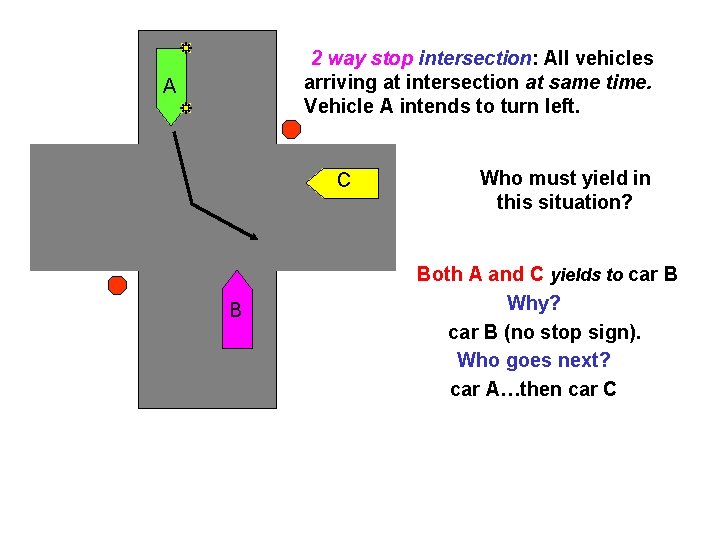
2 way stop intersection: All vehicles arriving at intersection at same time. Vehicle A intends to turn left. A C B Who must yield in this situation? Both A and C yields to car B Why? car B (no stop sign). Who goes next? car A…then car C
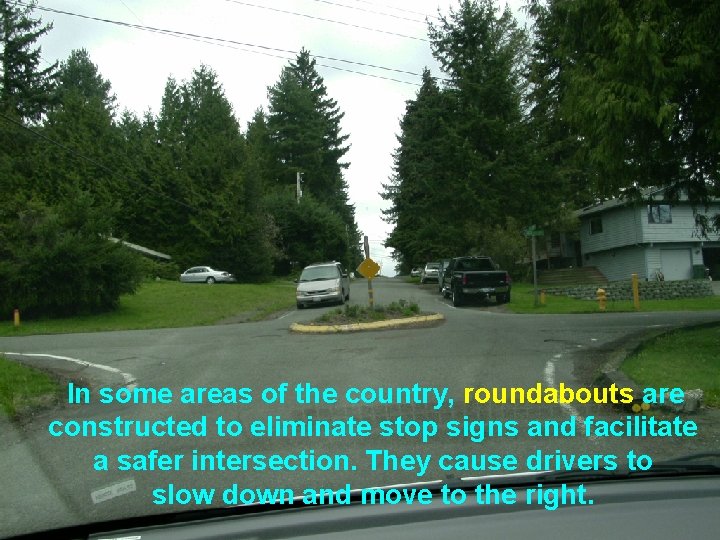
In some areas of the country, roundabouts are constructed to eliminate stop signs and facilitate a safer intersection. They cause drivers to slow down and move to the right.
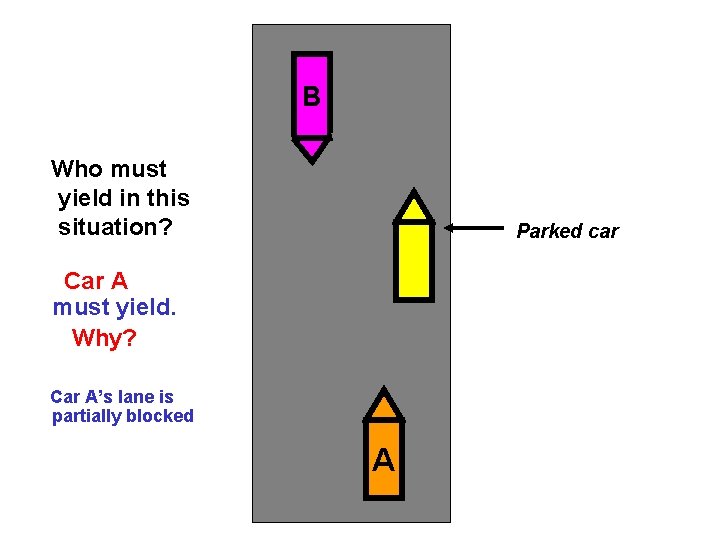
B Who must yield in this situation? Parked car Car A must yield. Why? Car A’s lane is partially blocked A
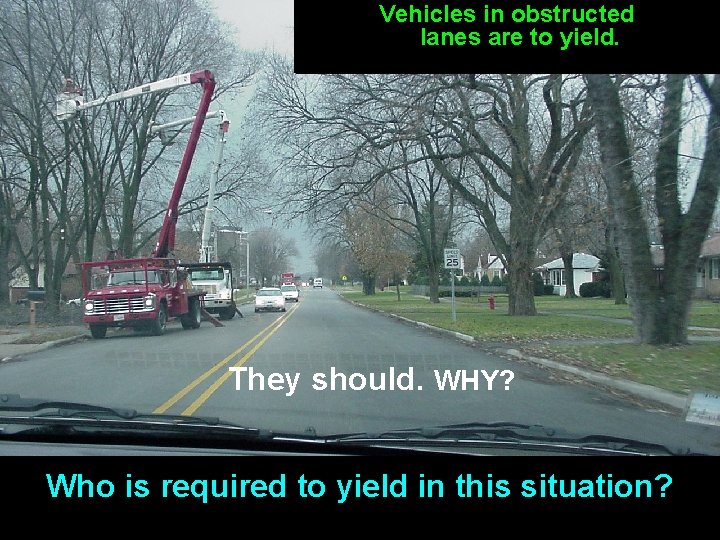
Vehicles in obstructed lanes are to yield. They should. WHY? Who is required to yield in this situation?
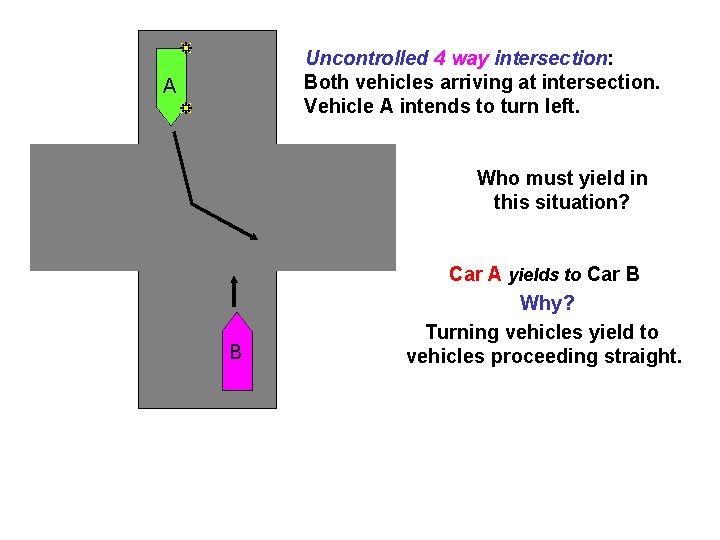
Uncontrolled 4 way intersection: Both vehicles arriving at intersection. Vehicle A intends to turn left. A Who must yield in this situation? B Car A yields to Car B Why? Turning vehicles yield to vehicles proceeding straight.
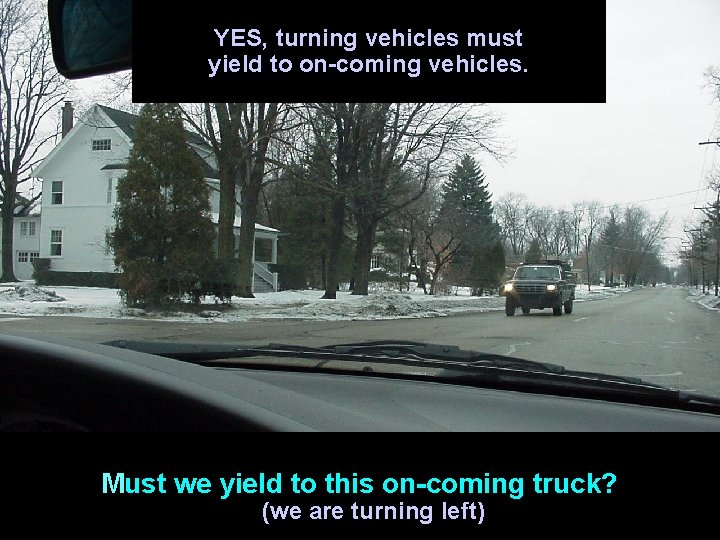
YES, turning vehicles must yield to on-coming vehicles. Must we yield to this on-coming truck? (we are turning left)
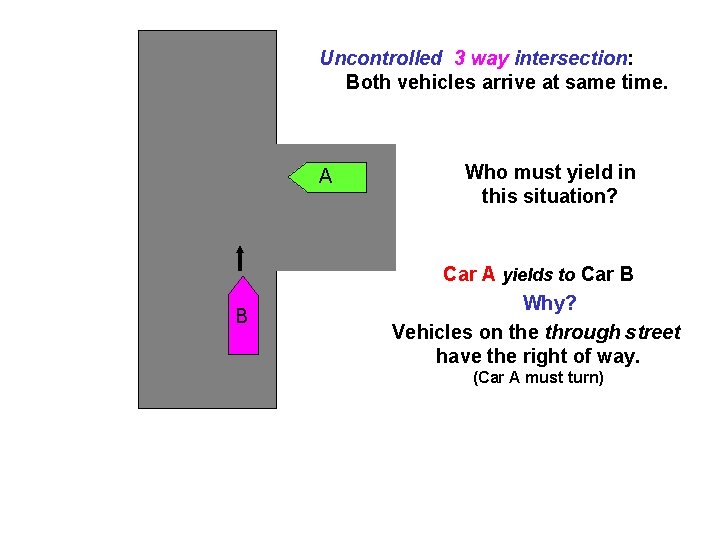
Uncontrolled 3 way intersection: Both vehicles arrive at same time. A B Who must yield in this situation? Car A yields to Car B Why? Vehicles on the through street have the right of way. (Car A must turn)
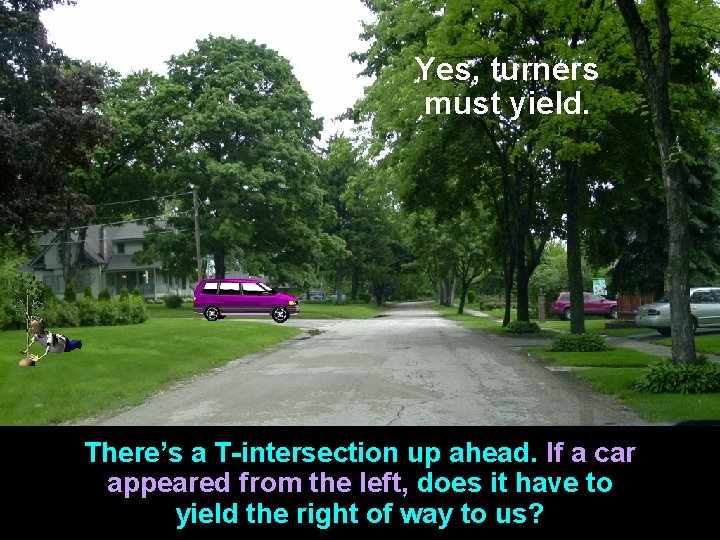
Yes, turners must yield. There’s a T-intersection up ahead. If a car appeared from the left, does it have to yield the right of way to us?
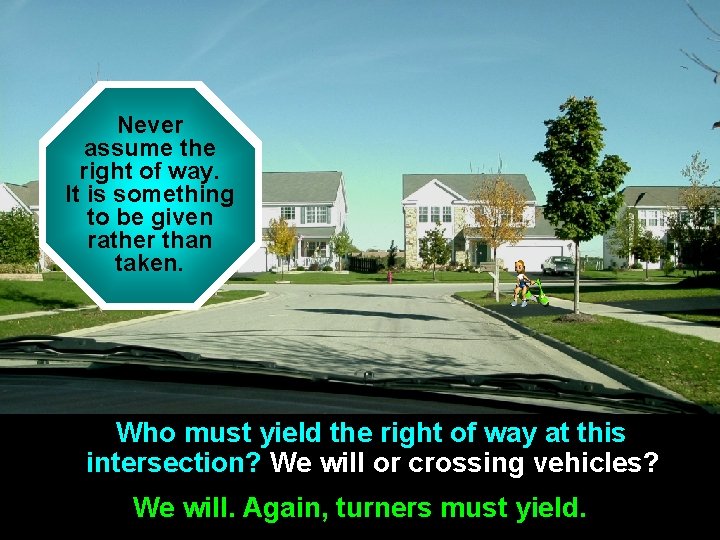
Never Should we assume the STOP view the right of way. ofsomething way as and It is something to be given THINK we have? rather than taken. Who must yield the right of way at this intersection? We will or crossing vehicles? We will. Again, turners must yield.
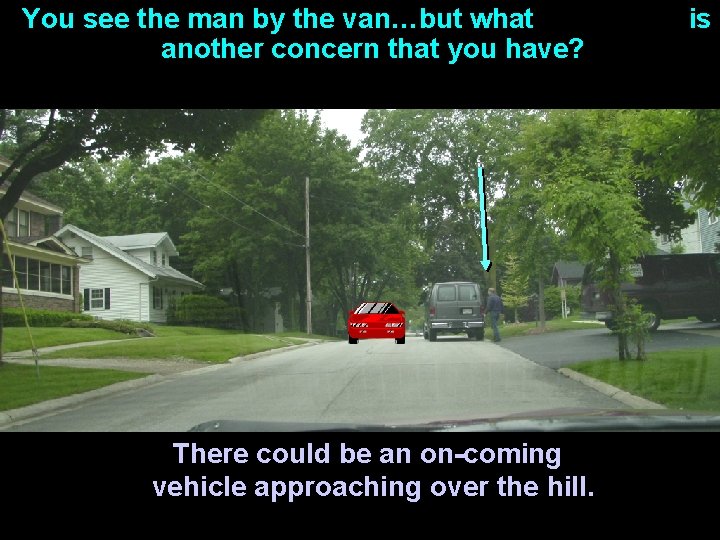
You see the man by the van…but what another concern that you have? There could be an on-coming vehicle approaching over the hill. is
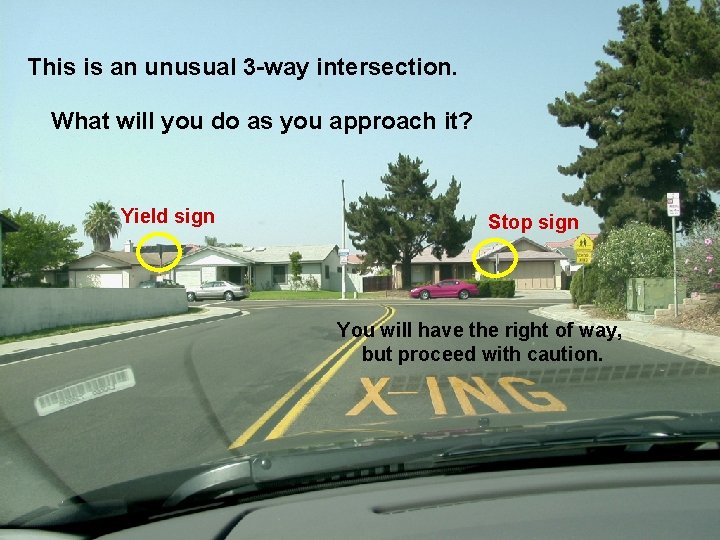
This is an unusual 3 -way intersection. What will you do as you approach it? Yield sign Stop sign You will have the right of way, but proceed with caution.
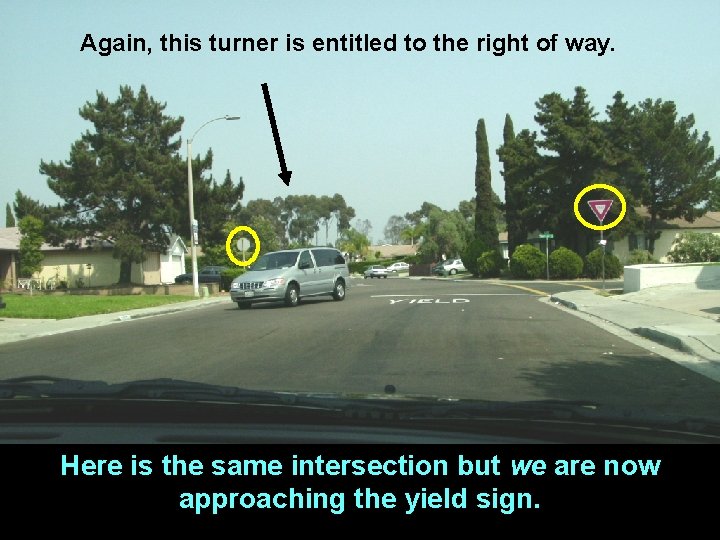
Again, this turner is entitled to the right of way. Here is the same intersection but we are now approaching the yield sign.
Other Right-of-Way Situations • • • Passing Merging lanes Roadway parking Pedestrians Emergency vehicles Funeral processions and motorcades Copyright 2005 Thomson Delmar Learning.
Pedestrians, cyclists and other hazards
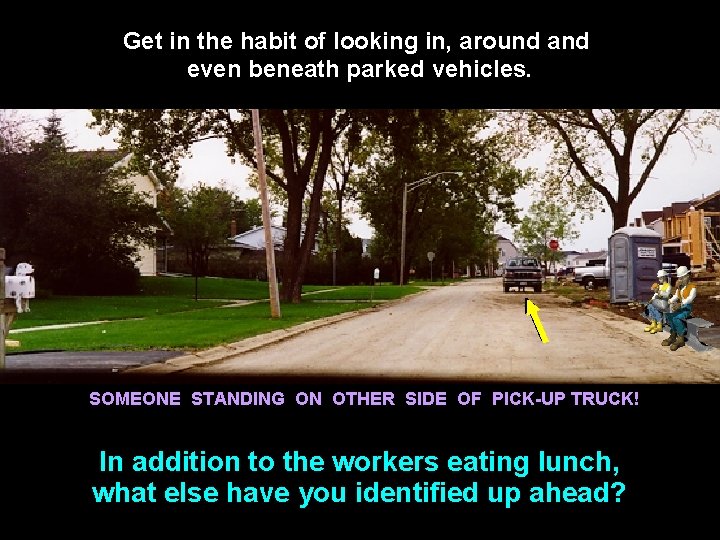
Get in the habit of looking in, around and even beneath parked vehicles. SOMEONE STANDING ON OTHER SIDE OF PICK-UP TRUCK! In addition to the workers eating lunch, what else have you identified up ahead?
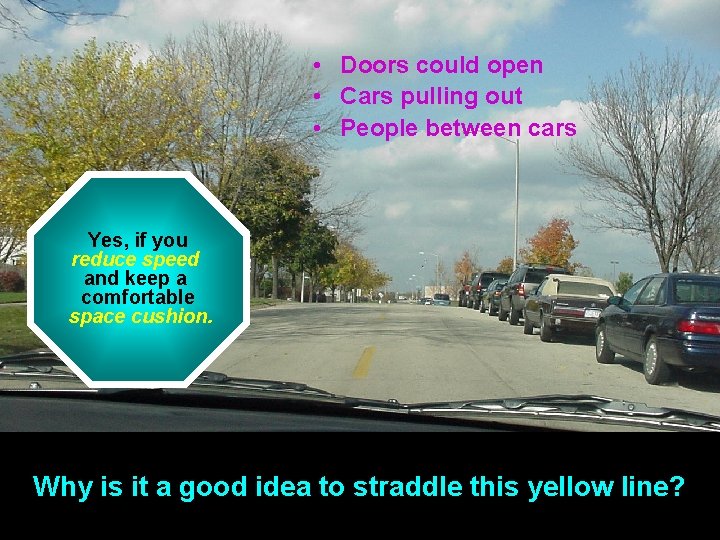
• Doors could open • Cars pulling out • People between cars Would you Yes, if you STOP be able to reduce speed react in time andand keep a ifcomfortable something THINK space cushion. happened? Why is it a good idea to straddle this yellow line?
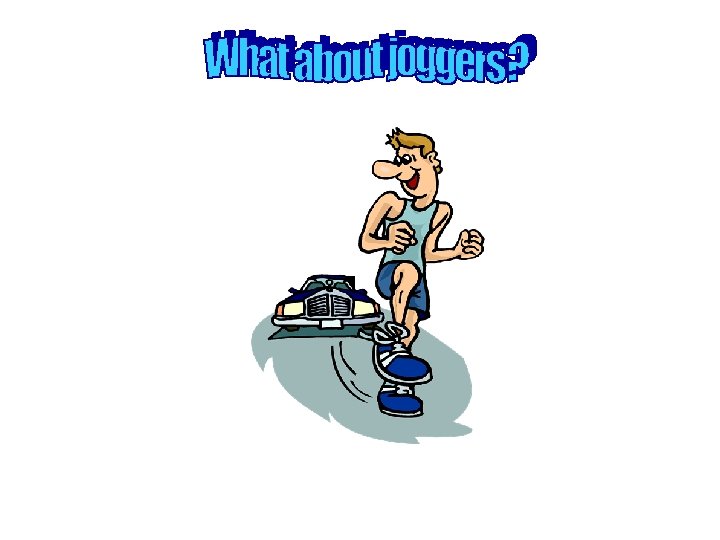
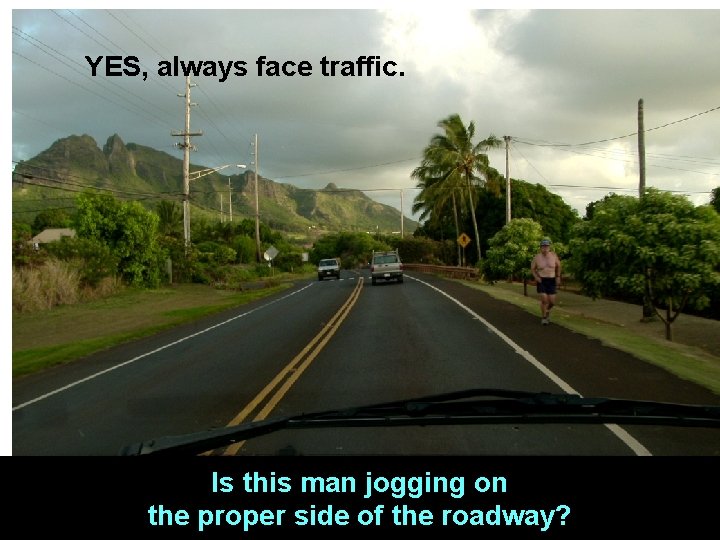
YES, always face traffic. Is this man jogging on the proper side of the roadway?
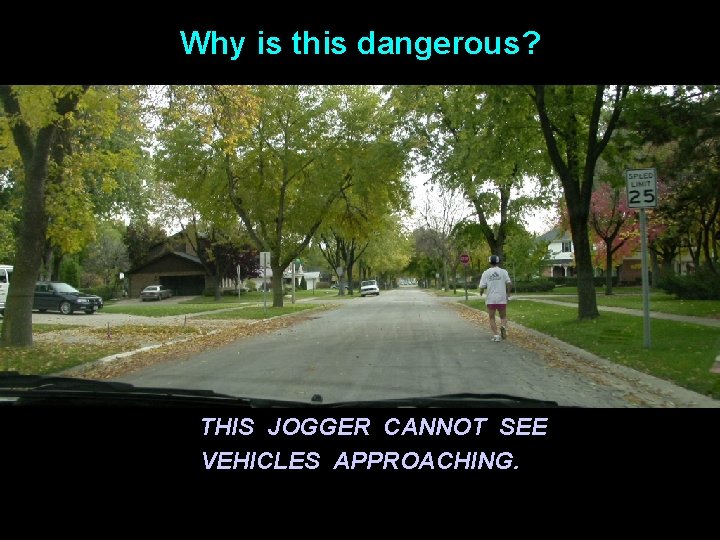
Why is this dangerous? THIS JOGGER CANNOT SEE VEHICLES APPROACHING.
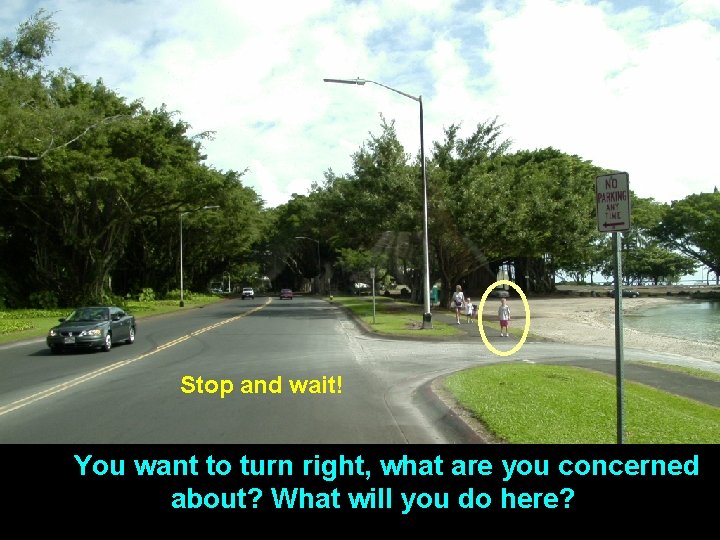
Stop and wait! You want to turn right, what are you concerned about? What will you do here?
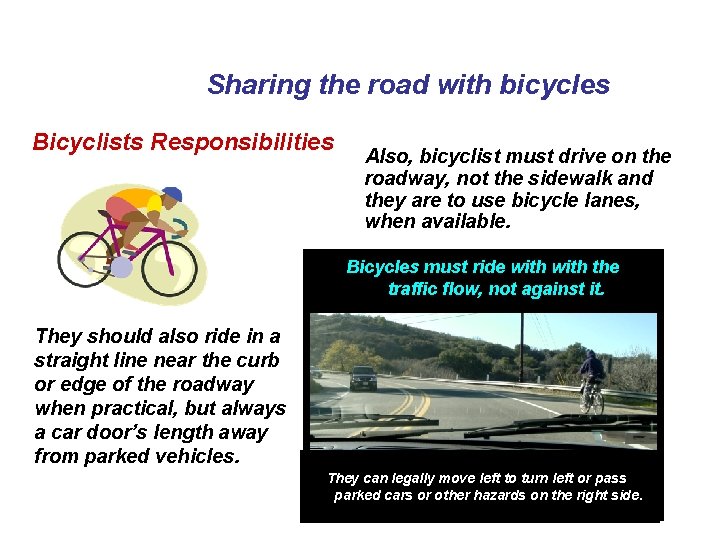
Sharing the road with bicycles Bicyclists Responsibilities Also, bicyclist must drive on the roadway, not the sidewalk and they are to use bicycle lanes, when available. Bicycles must ride with the traffic flow, not against it. They should also ride in a straight line near the curb or edge of the roadway when practical, but always a car door’s length away from parked vehicles. They can legally move left to turn left or pass parked cars or other hazards on the right side.
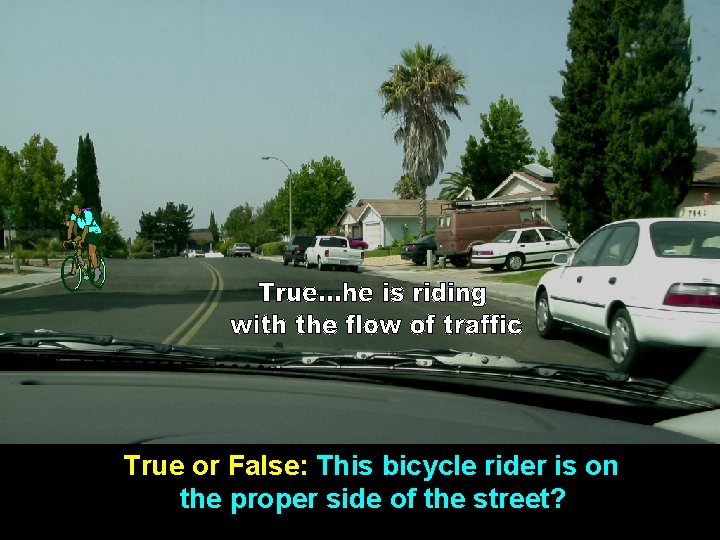
True or False: This bicycle rider is on the proper side of the street?
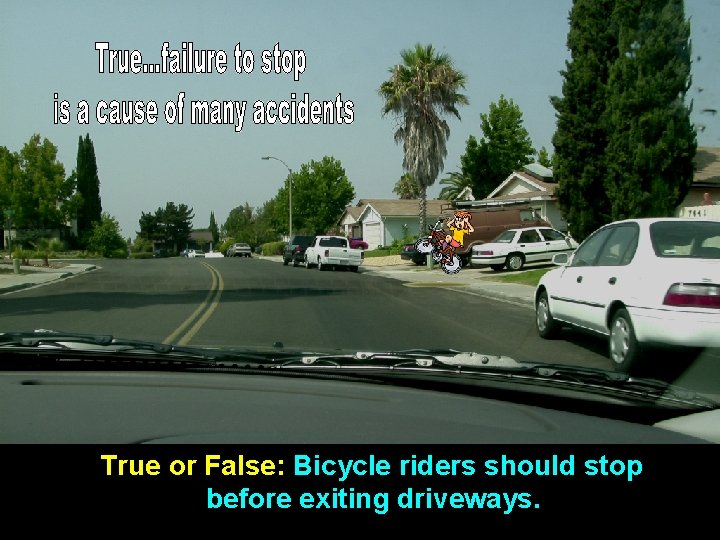
True or False: Bicycle riders should stop before exiting driveways.
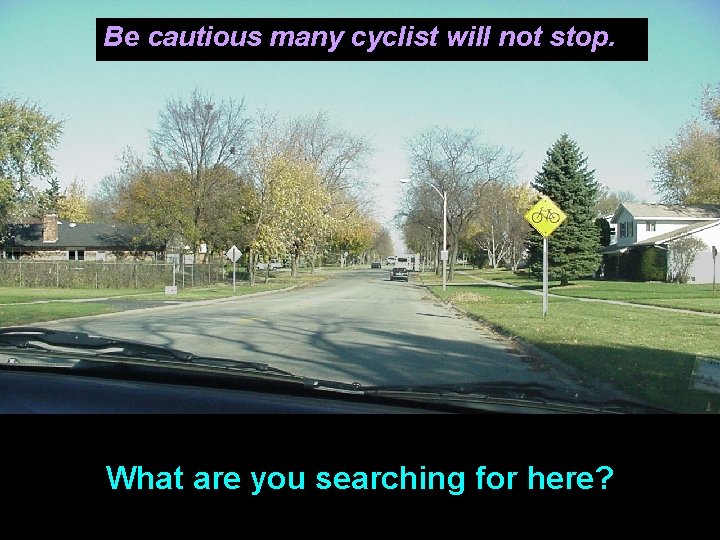
Be cautious many cyclist will not stop. What are you searching for here?
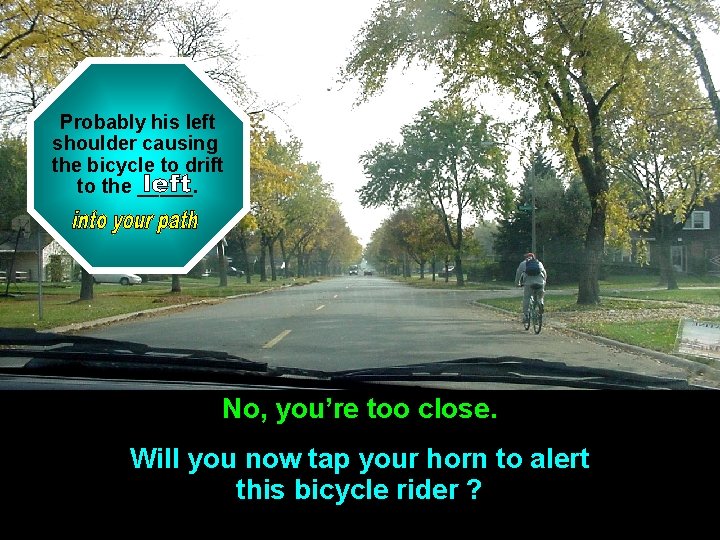
What shoulder Probably his left might thecausing cyclist shoulder look over to if he the bicycle drift your toheard the _____. horn blast? STOP and THINK No, you’re too close. Will you now tap your horn to alert this bicycle rider ?
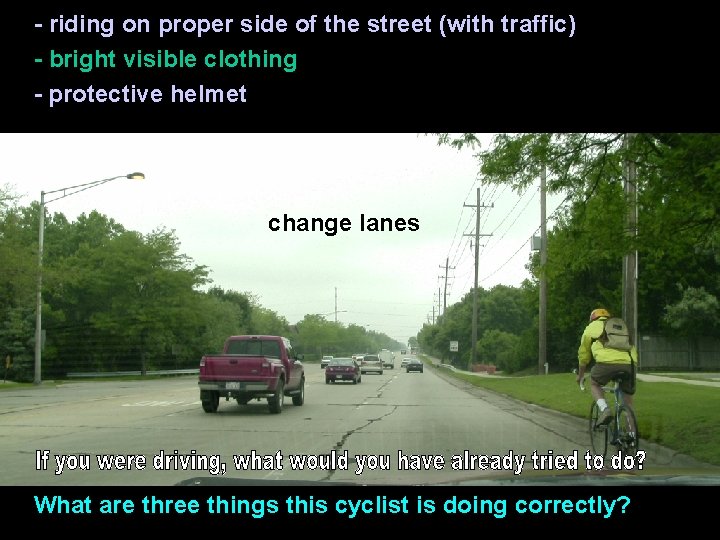
- riding on proper side of the street (with traffic) - bright visible clothing - protective helmet change lanes What are three things this cyclist is doing correctly?
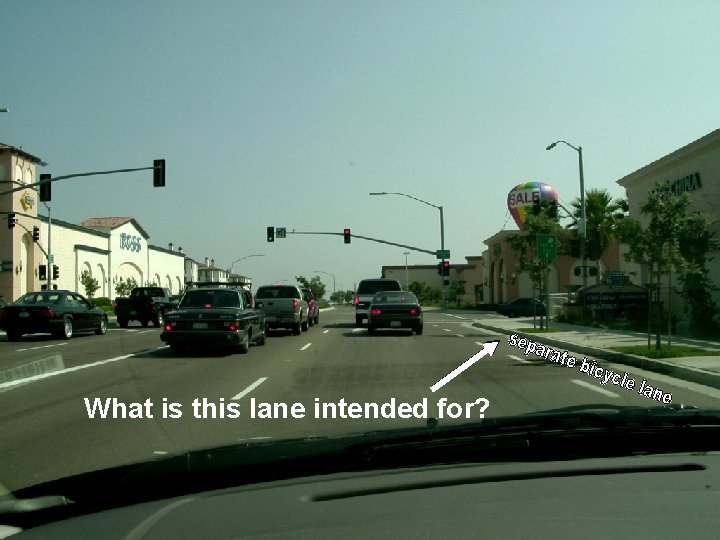
What is this lane intended for?
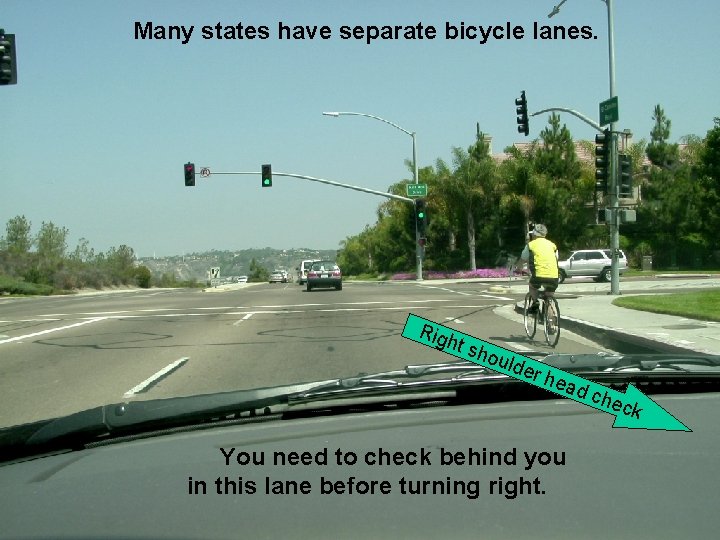
Many states have separate bicycle lanes. Rig ht s hou lder hea You need to check behind you in this lane before turning right. d ch eck
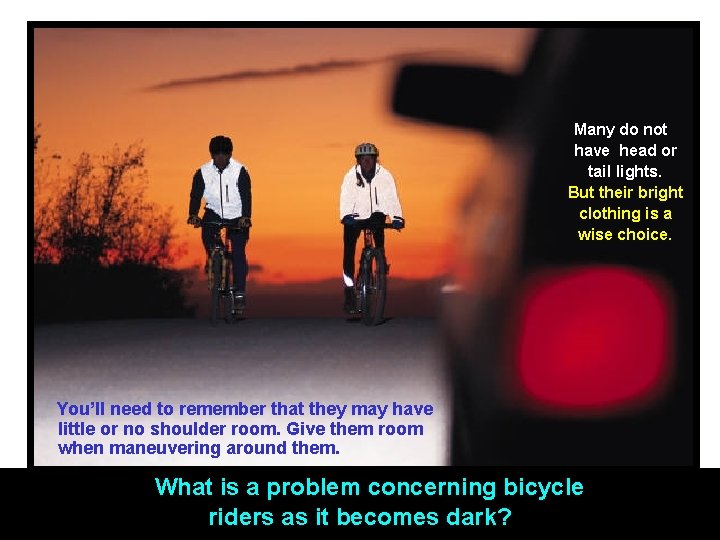
Many do not have head or tail lights. But their bright clothing is a wise choice. You’ll need to remember that they may have little or no shoulder room. Give them room when maneuvering around them. What is a problem concerning bicycle riders as it becomes dark?
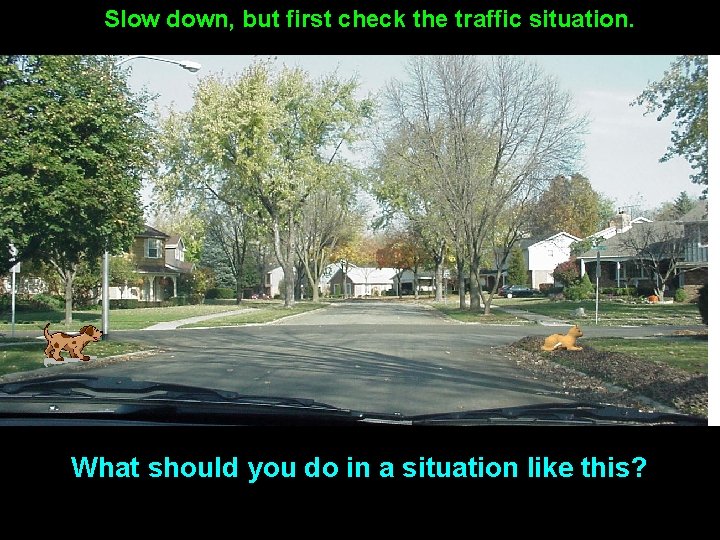
Slow down, but first check the traffic situation. What should you do in a situation like this?
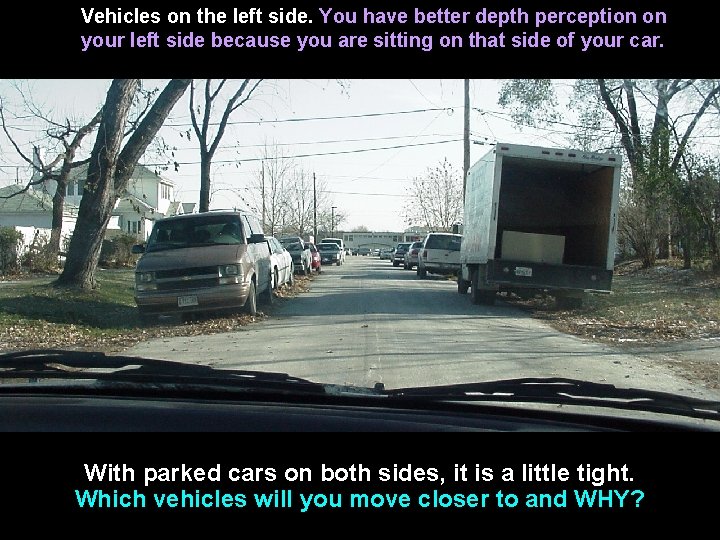
Vehicles on the left side. You have better depth perception on your left side because you are sitting on that side of your car. With parked cars on both sides, it is a little tight. Which vehicles will you move closer to and WHY?
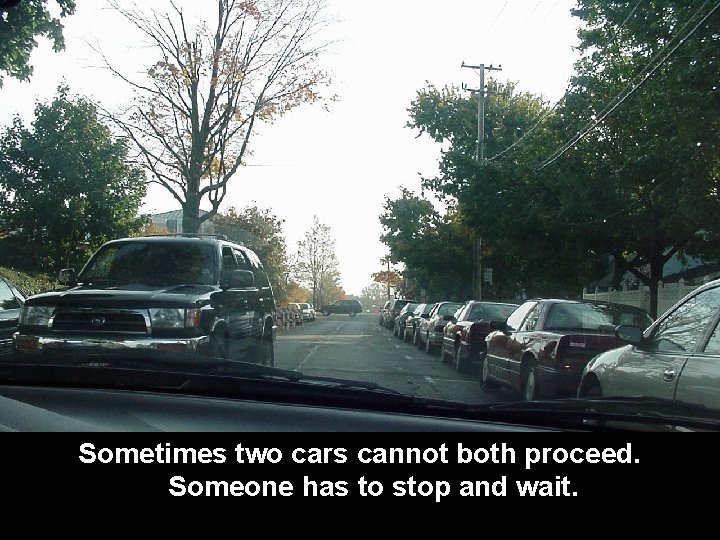
Sometimes two cars cannot both proceed. Someone has to stop and wait.
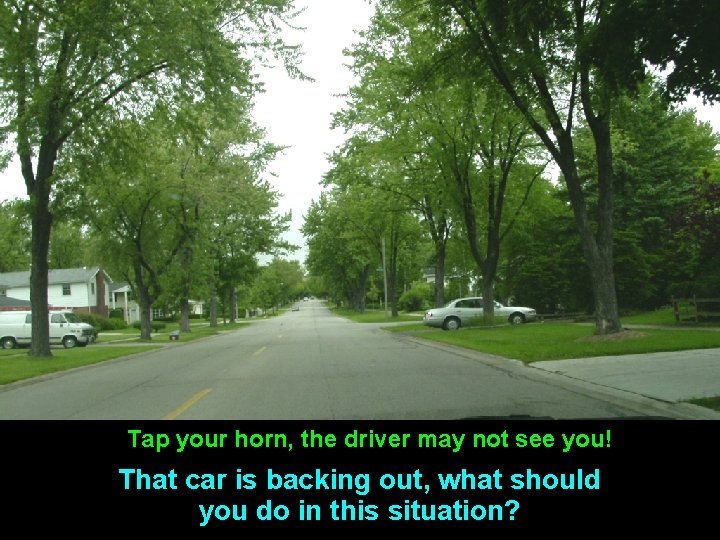
. Tap your horn, the driver may not see you! That car is backing out, what should you do in this situation?
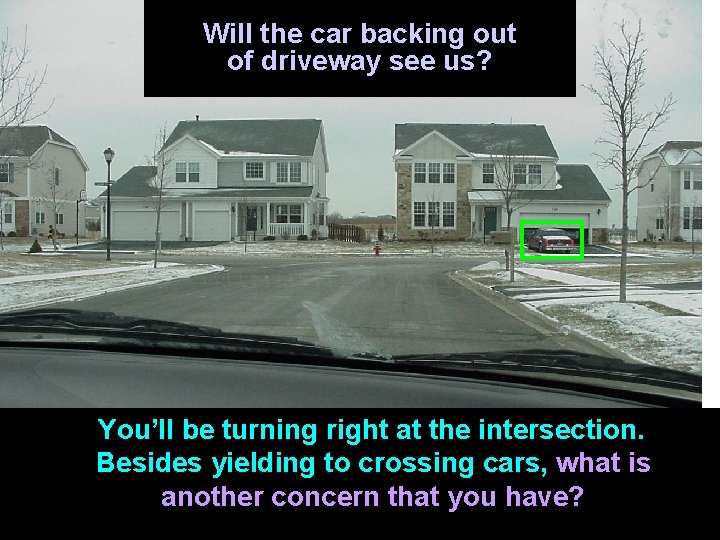
Will the car backing out of driveway see us? You’ll be turning right at the intersection. Besides yielding to crossing cars, what is another concern that you have?
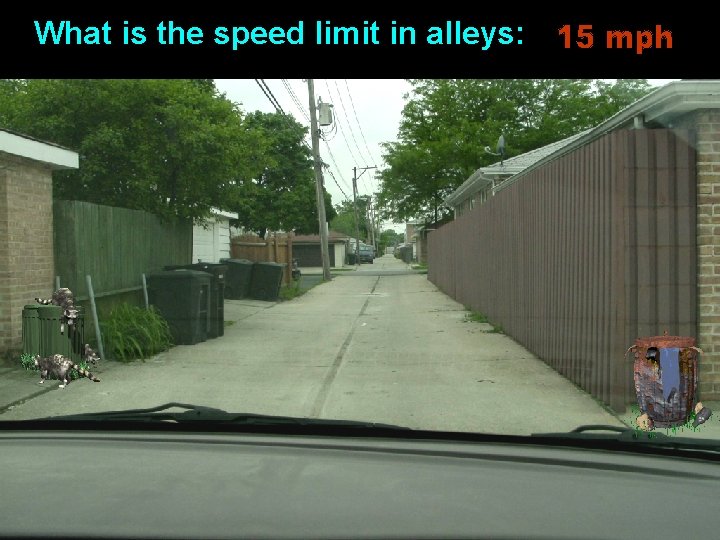
What is the speed limit in alleys:
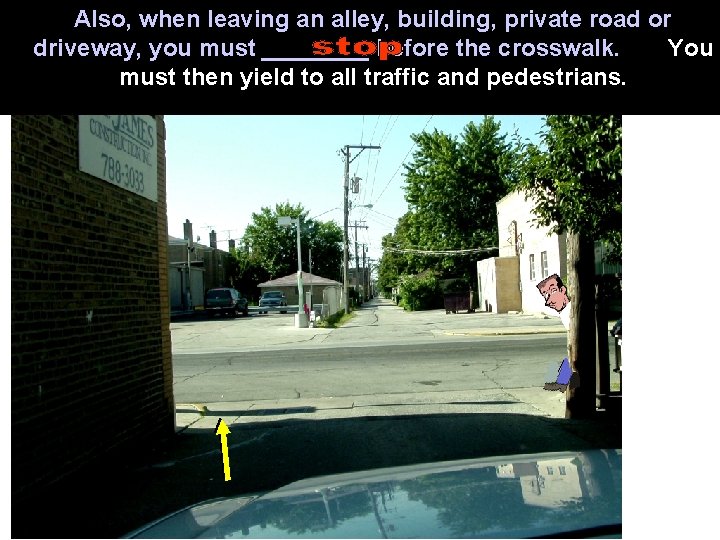
Also, when leaving an alley, building, private road or driveway, you must ____ before the crosswalk. You must then yield to all traffic and pedestrians.
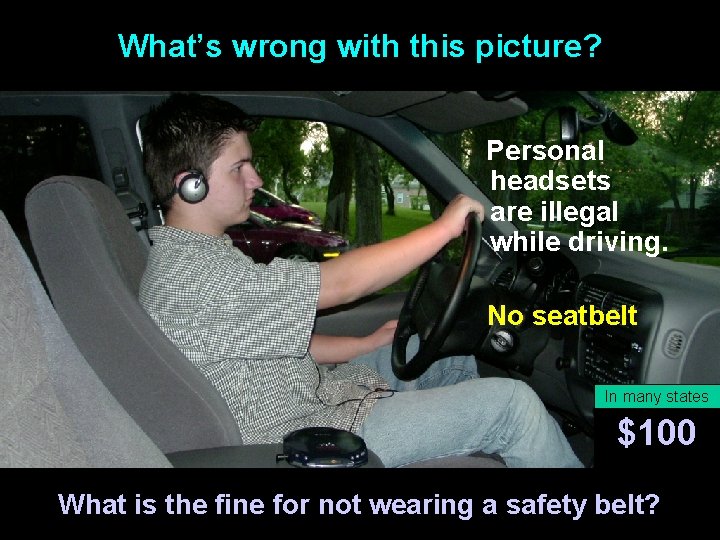
What’s wrong with this picture? Personal headsets are illegal while driving. No seatbelt In many states $100 What is the fine for not wearing a safety belt?
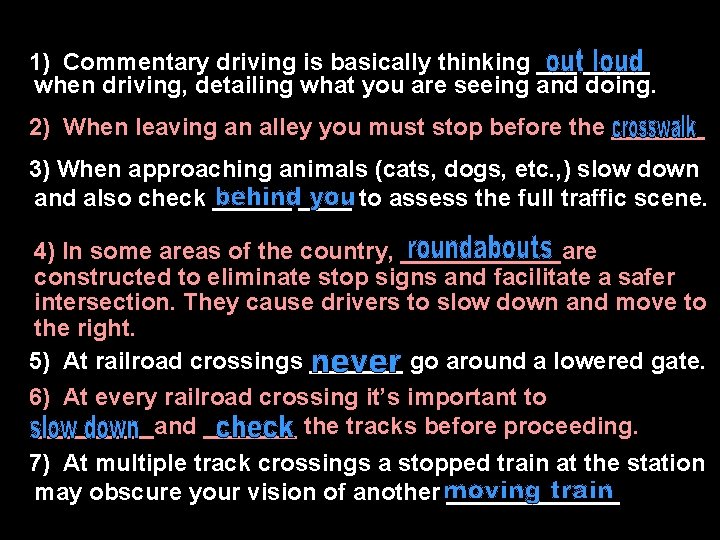
1)1) Commentary driving is basically thinking _____ when driving, detailing what you are seeing and doing. 1)2) When leaving an alley you must stop before the _______ 1)3) When approaching animals (cats, dogs, etc. , ) slow down and also check ______ to assess the full traffic scene. 4) In some areas of the country, ______are constructed to eliminate stop signs and facilitate a safer intersection. They cause drivers to slow down and move to the right. 1)5) At railroad crossings _______ go around a lowered gate. 1)6) At every railroad crossing it’s important to _____and _______ the tracks before proceeding. 1)7) At multiple track crossings a stopped train at the station may obscure your vision of another _______
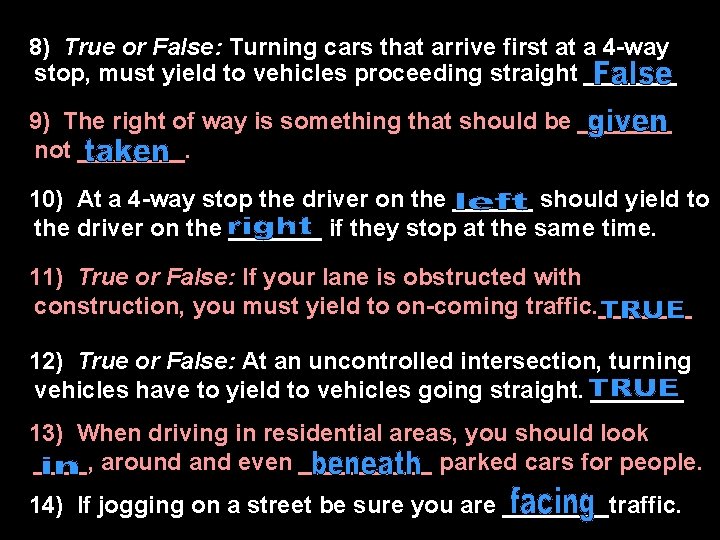
1)8) True or False: Turning cars that arrive first at a 4 -way stop, must yield to vehicles proceeding straight _______ 1)9) The right of way is something that should be _______ not ____. 1)10) At a 4 -way stop the driver on the ______ should yield to the driver on the _______ if they stop at the same time. 1)11) True or False: If your lane is obstructed with construction, you must yield to on-coming traffic. _______ 1)12) True or False: At an uncontrolled intersection, turning vehicles have to yield to vehicles going straight. _______ 1)13) When driving in residential areas, you should look ____, around and even _____ parked cars for people. 1)14) If jogging on a street be sure you are ____traffic.
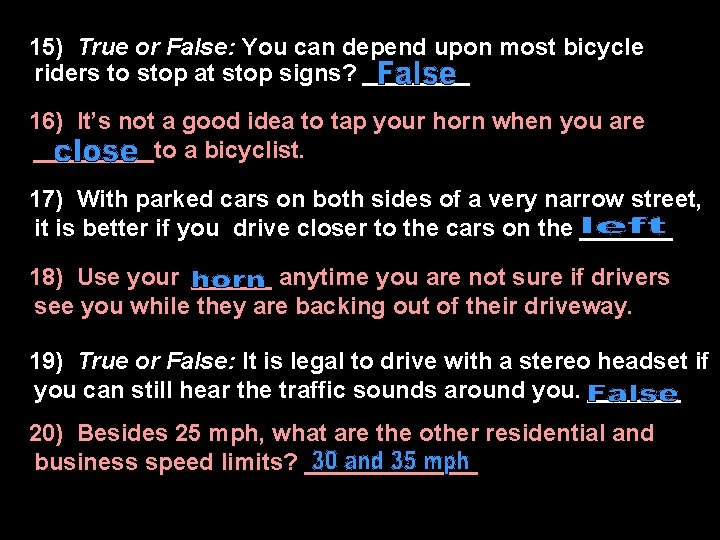
1)15) True or False: You can depend upon most bicycle riders to stop at stop signs? ____ 1)16) It’s not a good idea to tap your horn when you are _____to a bicyclist. 1)17) With parked cars on both sides of a very narrow street, it is better if you drive closer to the cars on the _______ 1)18) Use your ______ anytime you are not sure if drivers see you while they are backing out of their driveway. 1)19) True or False: It is legal to drive with a stereo headset if you can still hear the traffic sounds around you. _______ 1)20) Besides 25 mph, what are the other residential and business speed limits? _______
- Slides: 56