
Chapter No 3 Inheritance and Polymorphism Topic Learning

- Slides: 24
Chapter No. : 3 Inheritance and Polymorphism
Topic Learning Outcomes • Explain inheritance and polymorphism. • Explain different types of inheritance supported by java. • Apply method overriding and dynamic method dispatch. • Identify and create abstract classes to solve a given scenario. School of Computer Science & Engineering
Content 1. Inheritance: Basics 2. Usage of super key word 3. Method overriding 4. Dynamic method dispatch 5. Abstract classes 6. Object class School of Computer Science & Engineering
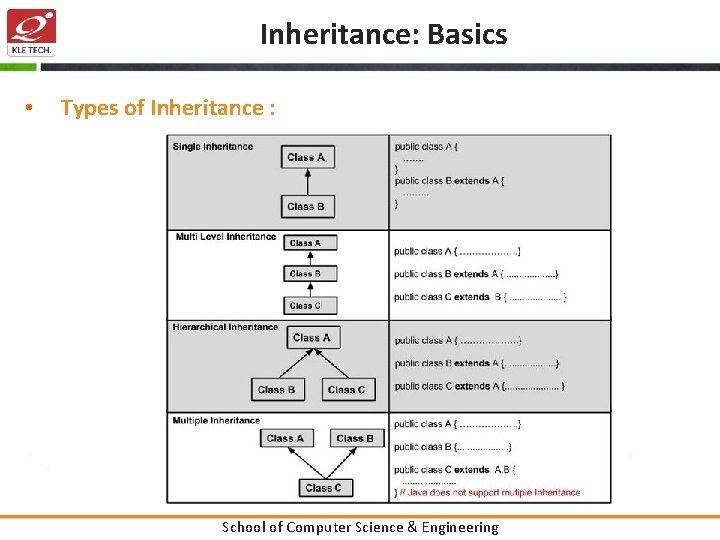
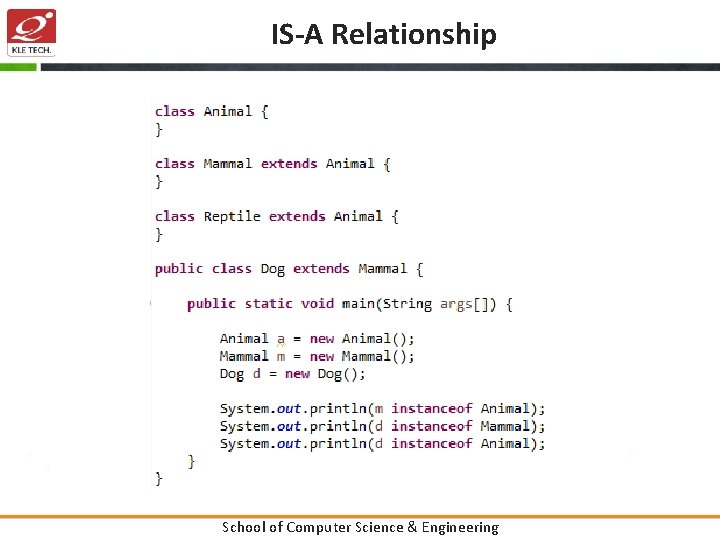
Inheritance: Basics • Inheritance in java is a mechanism in which one object acquires all the properties and behaviours of parent object. • Inheritance represents the IS-A relationship, also known as parent-child relationship. • Advantages of Inheritance. • For Method Overriding (so runtime polymorphism can be achieved). • For Code Reusability. School of Computer Science & Engineering
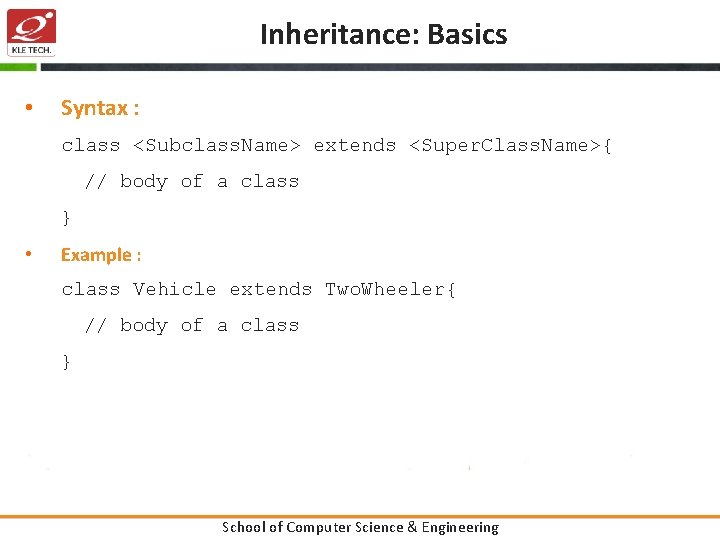
Inheritance: Basics • Syntax : class <Subclass. Name> extends <Super. Class. Name>{ // body of a class } • Example : class Vehicle extends Two. Wheeler{ // body of a class } School of Computer Science & Engineering
Inheritance: Basics • Types of Inheritance : School of Computer Science & Engineering
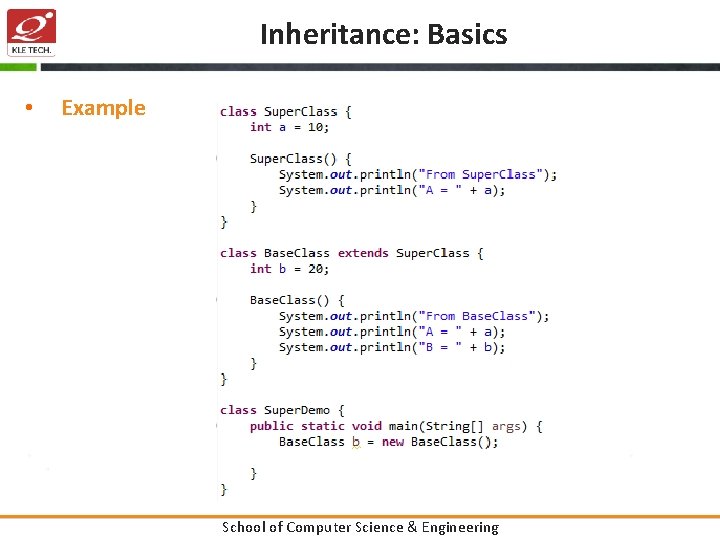
Inheritance: Basics • Example School of Computer Science & Engineering
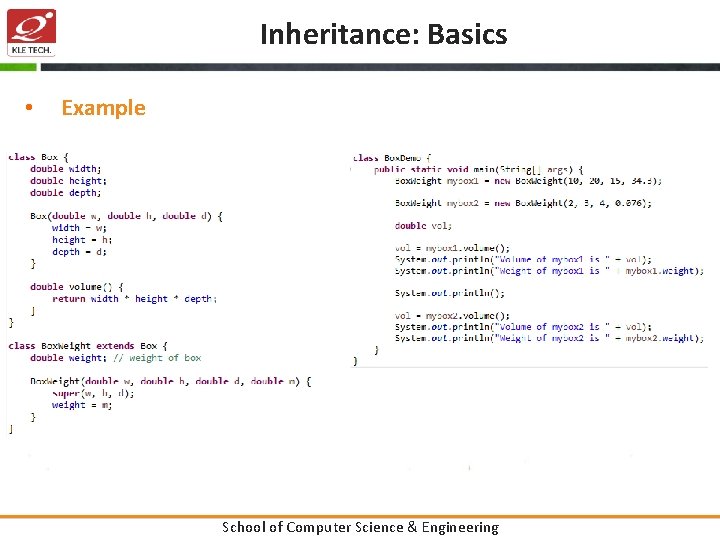
Inheritance: Basics • Example School of Computer Science & Engineering
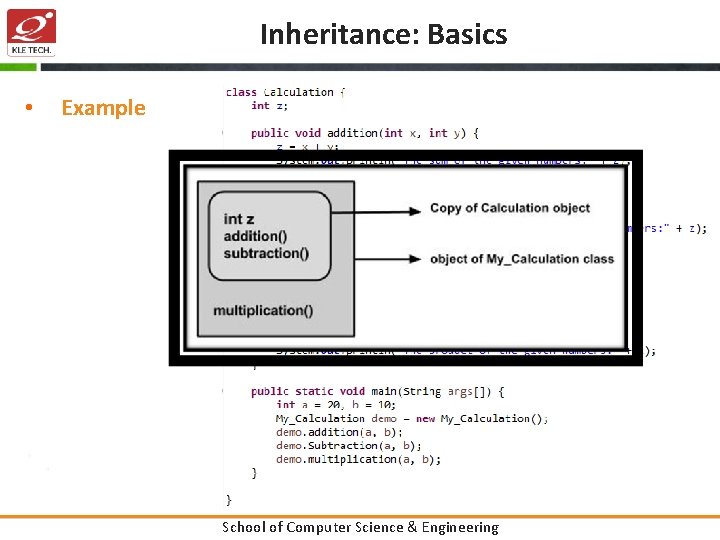
Inheritance: Basics • Example School of Computer Science & Engineering
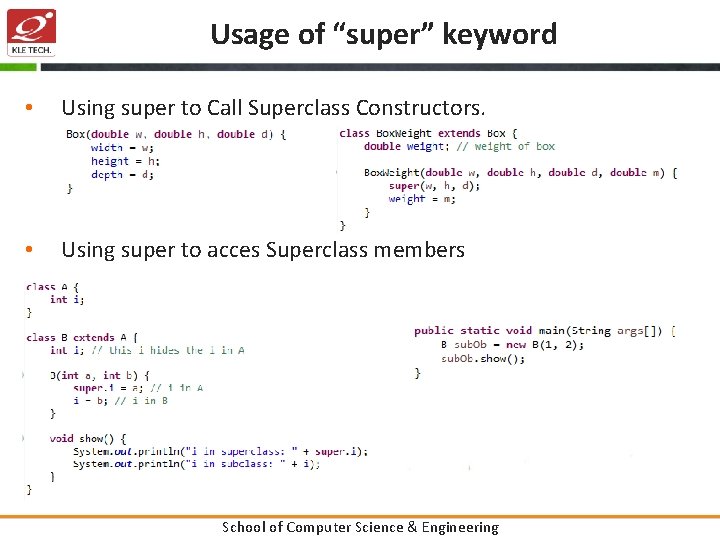
Usage of “super” keyword • Using super to Call Superclass Constructors. • Using super to acces Superclass members School of Computer Science & Engineering
IS-A Relationship School of Computer Science & Engineering
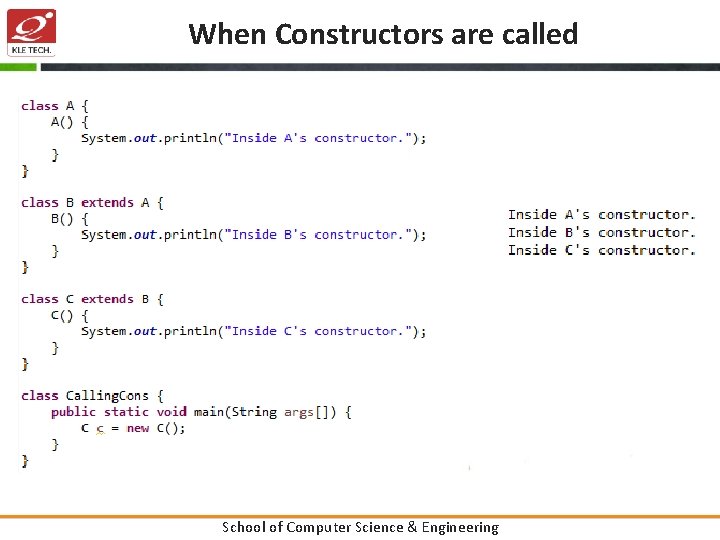
When Constructors are called School of Computer Science & Engineering
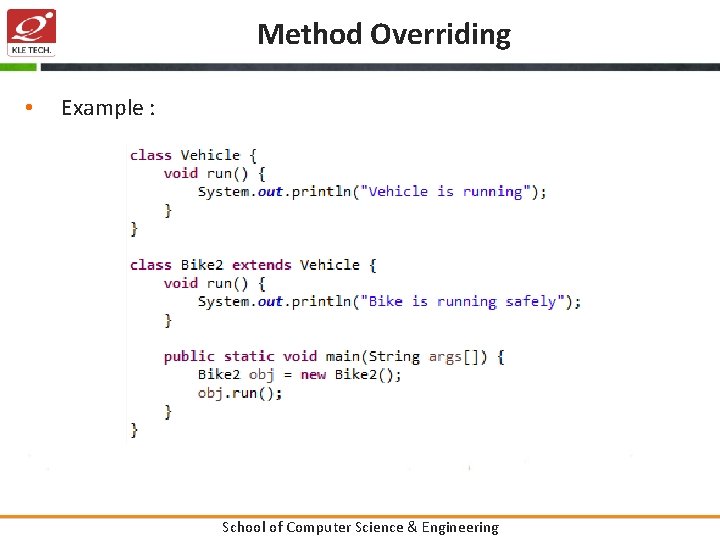
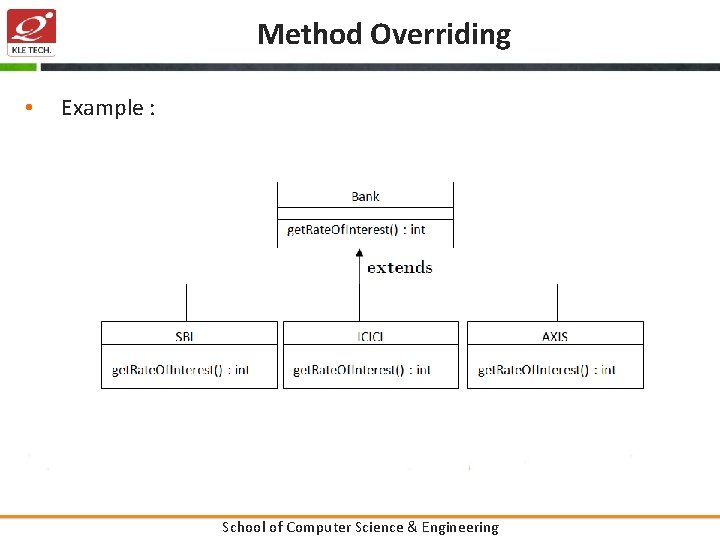
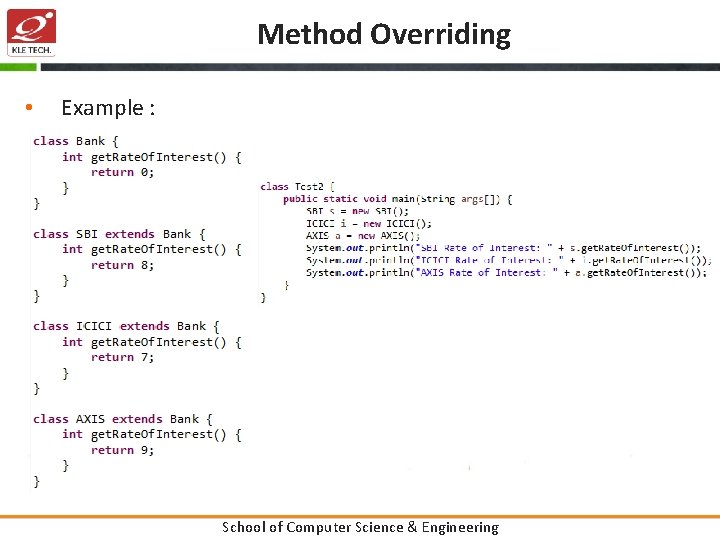
Method Overriding • If subclass (child class) has the same method as declared in the parent class, it is known as method overriding in java. • Usage : • Method overriding is used to provide specific implementation of a method that is already provided by its super class. • • Method overriding is used for runtime polymorphism. Rules : • method must have same name as in the parent class • method must have same parameter as in the parent class. • must be IS-A relationship (inheritance). School of Computer Science & Engineering
Method Overriding • Example : School of Computer Science & Engineering
Method Overriding • Example : School of Computer Science & Engineering
Method Overriding • Example : School of Computer Science & Engineering
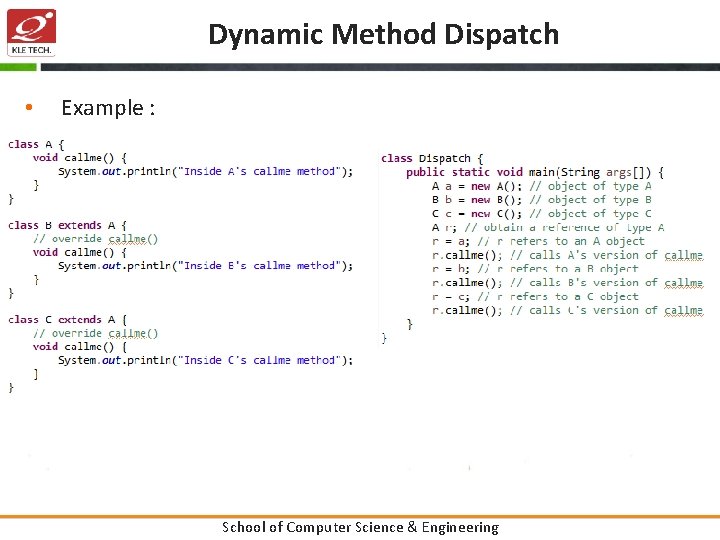
Dynamic Method Dispatch • Dynamic method dispatch is the mechanism by which a call to an overridden method is resolved at run time, rather than compile time. • Dynamic method dispatch is important because this is how Java implements run-time polymorphism. School of Computer Science & Engineering
Dynamic Method Dispatch • Example : School of Computer Science & Engineering
Abstract Classes • Abstraction is a process of hiding the implementation details and showing only functionality to the user. • Another way, it shows only important things to the user and hides the internal details for example sending sms, you just type the text and send the message. You don't know the internal processing about the message delivery. • Abstraction lets you focus on what the object does instead of how it does it. School of Computer Science & Engineering
Abstract Classes • Summary : • Abstract classes may or may not contain abstract methods i. e. , methods with out body ( public void get(); ) • But, if a class have at least one abstract method, then the class mustbe declared abstract. • If a class is declared abstract it cannot be instantiated. • To use an abstract class you have to inherit it from another class, provide implementations to the abstract methods in it. • If you inherit an abstract class you have to provide implementations to all the abstract methods in it. School of Computer Science & Engineering
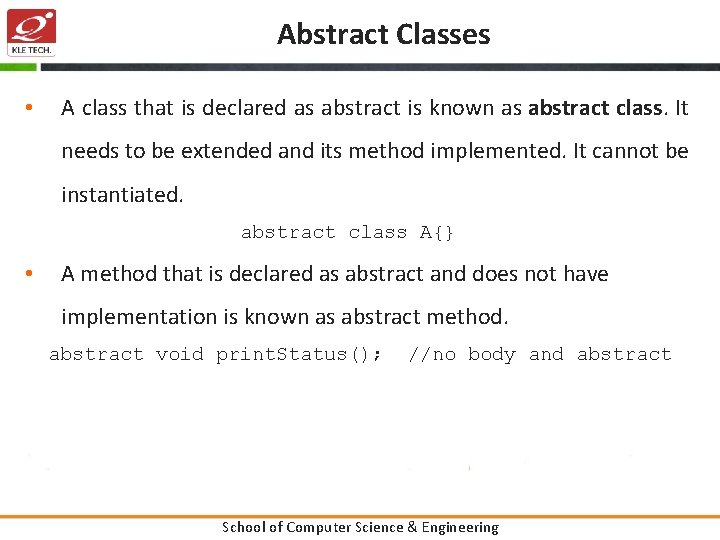
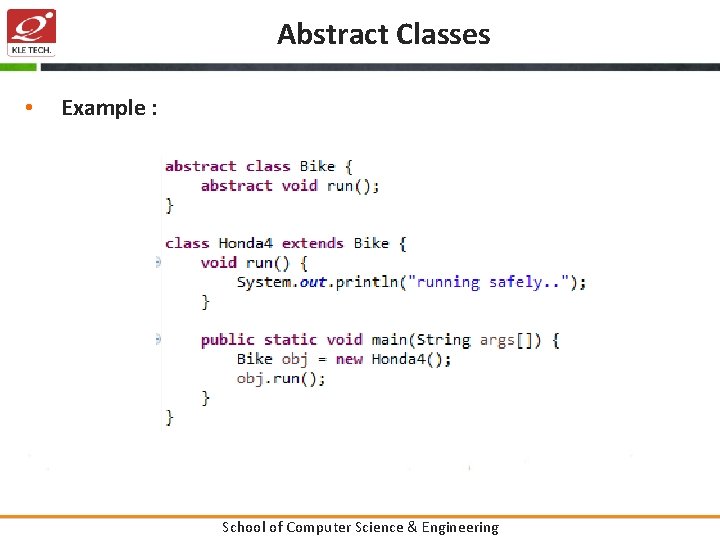
Abstract Classes • A class that is declared as abstract is known as abstract class. It needs to be extended and its method implemented. It cannot be instantiated. abstract class A{} • A method that is declared as abstract and does not have implementation is known as abstract method. abstract void print. Status(); //no body and abstract School of Computer Science & Engineering
Abstract Classes • Example : School of Computer Science & Engineering
Object Class • There is one special class defined by Java. All other classes are subclasses of Object. • That is, Object is a superclass of all other classes. This means that a reference variable of type Object can refer to an object of any other class. • Also, since arrays are implemented as classes, a variable of type Object can also refer to any array. School of Computer Science & Engineering
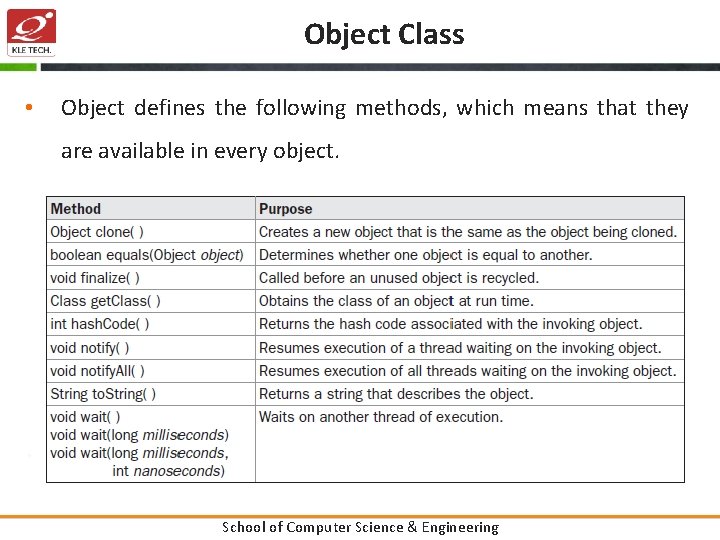
Object Class • Object defines the following methods, which means that they are available in every object. School of Computer Science & Engineering