
Chapter Nine Working Area Height Hazards Introduction Fires
- Slides: 42
Chapter Nine Working Area & Height Hazards
Introduction • Fires and explosions kill more than 200 and injure more than 5, 000 workers each year • There is a long and tragic history of workplace fires in this country caused by problems with fire exits and extinguishing systems • OSHA requires employers to provide proper exits, fire fighting equipment, and employee training to prevent fire deaths and injuries in the workplace
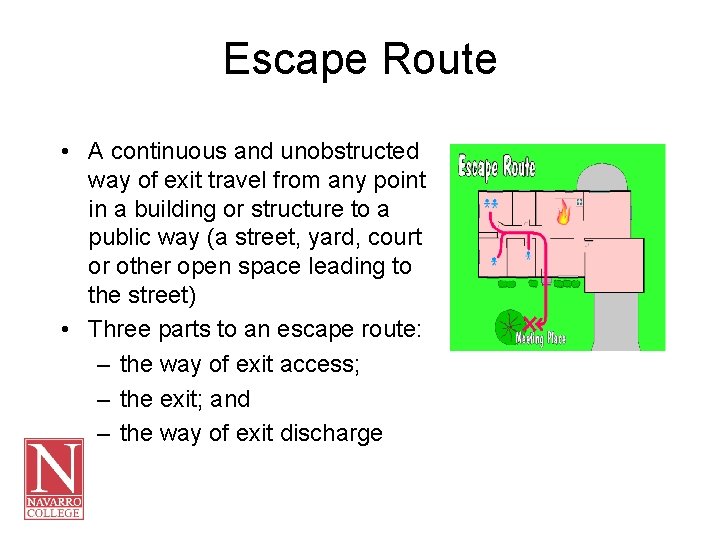
Escape Route • A continuous and unobstructed way of exit travel from any point in a building or structure to a public way (a street, yard, court or other open space leading to the street) • Three parts to an escape route: – the way of exit access; – the exit; and – the way of exit discharge
Escape Routes General Requirements • Fire alarms are required if a fire could start without providing adequate warning to occupants • There must be enough exits in the proper arrangement for quick escape • Adequate and reliable illumination must be provided for all exit facilities • Escape Routes: – Minimum width = 28 inches – Minimum ceiling height = 7½ feet
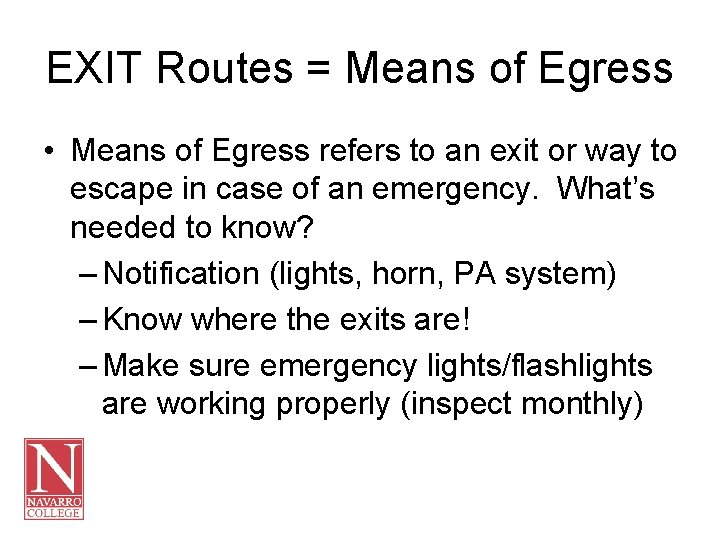
EXIT Routes = Means of Egress • Means of Egress refers to an exit or way to escape in case of an emergency. What’s needed to know? – Notification (lights, horn, PA system) – Know where the exits are! – Make sure emergency lights/flashlights are working properly (inspect monthly)
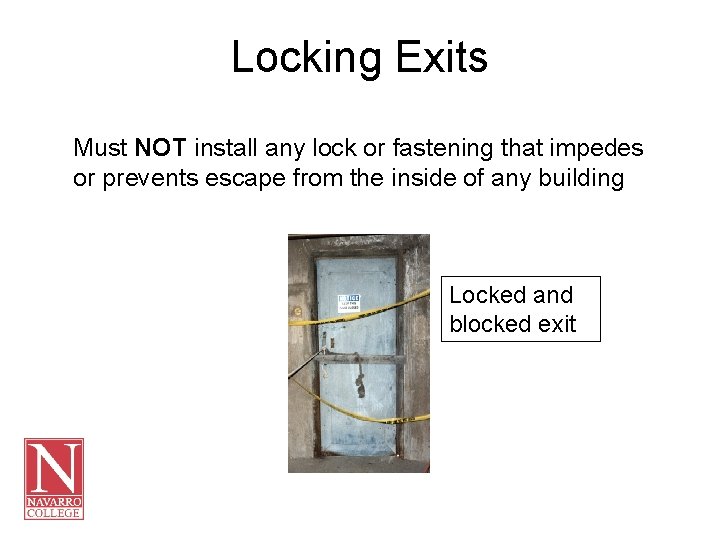
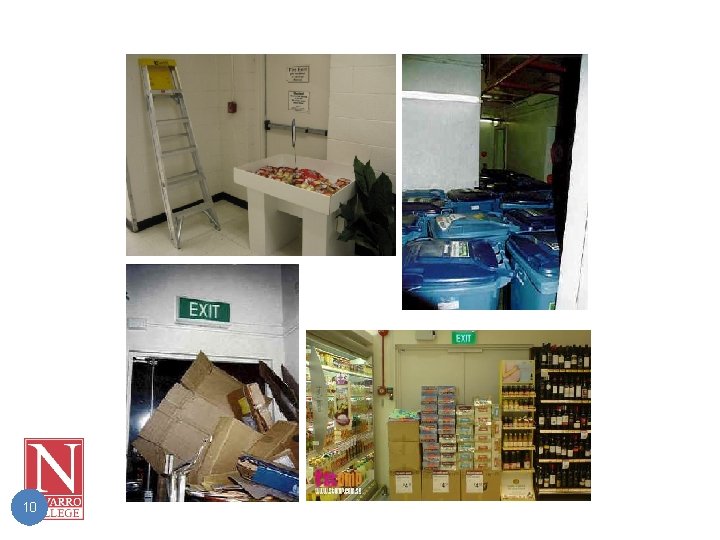
Locking Exits Must NOT install any lock or fastening that impedes or prevents escape from the inside of any building Locked and blocked exit
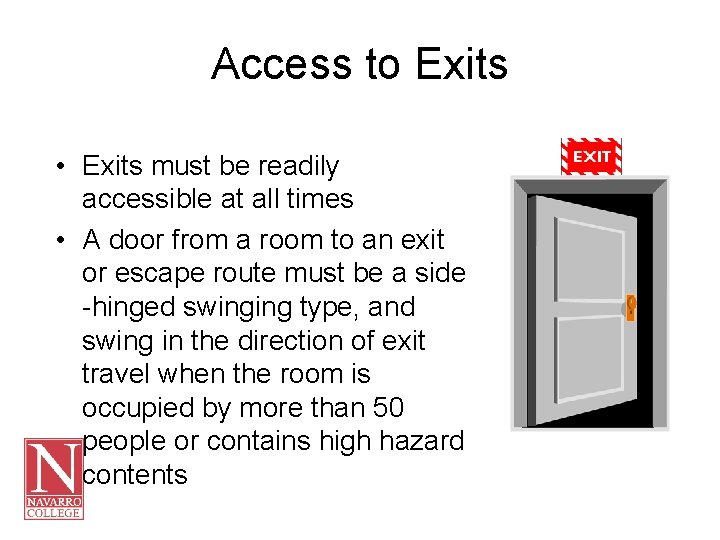
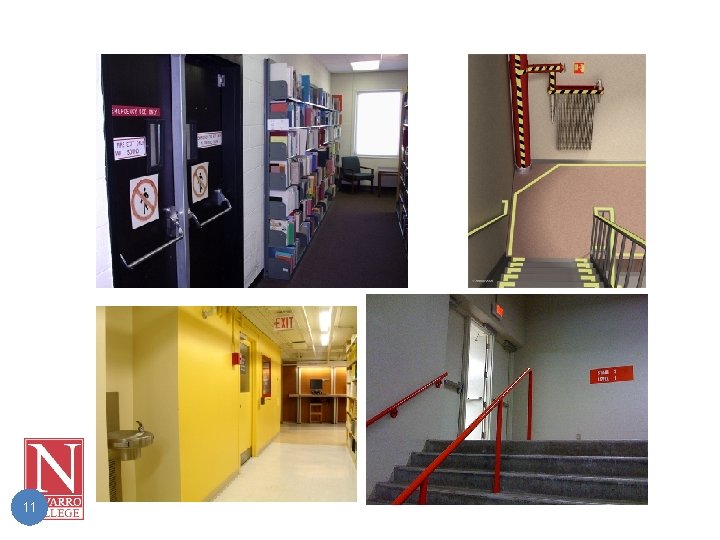
Access to Exits • Exits must be readily accessible at all times • A door from a room to an exit or escape route must be a side -hinged swinging type, and swing in the direction of exit travel when the room is occupied by more than 50 people or contains high hazard contents
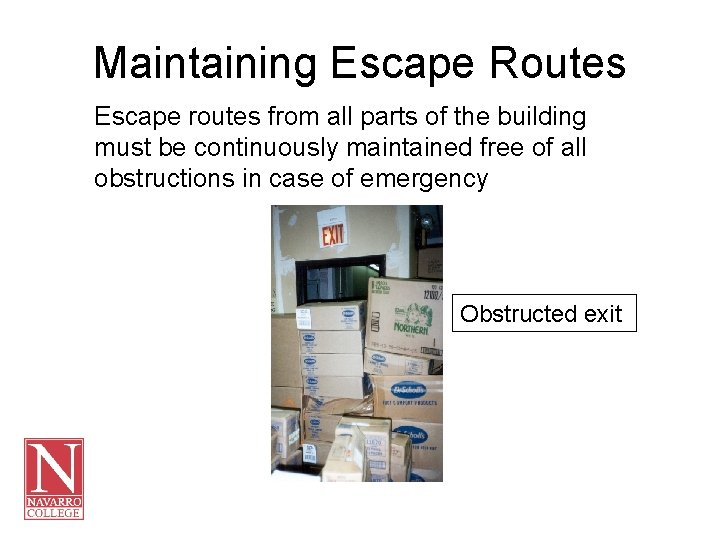
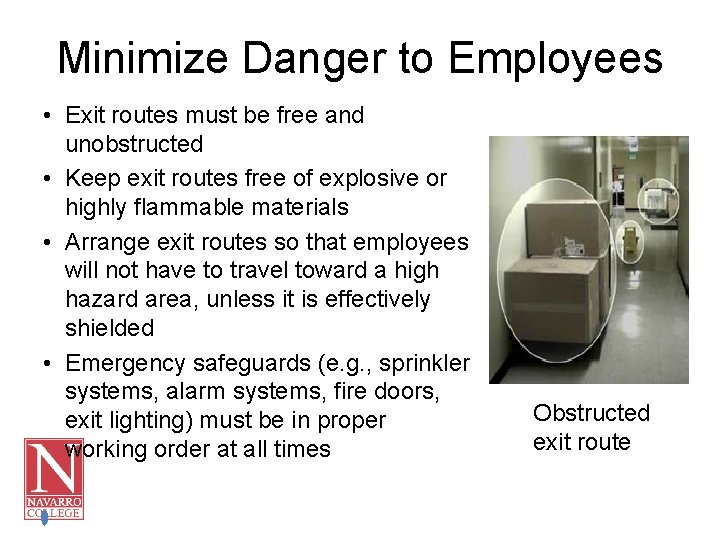
Maintaining Escape Routes Escape routes from all parts of the building must be continuously maintained free of all obstructions in case of emergency Obstructed exit
Minimize Danger to Employees • Exit routes must be free and unobstructed • Keep exit routes free of explosive or highly flammable materials • Arrange exit routes so that employees will not have to travel toward a high hazard area, unless it is effectively shielded • Emergency safeguards (e. g. , sprinkler systems, alarm systems, fire doors, exit lighting) must be in proper working order at all times 9 Obstructed exit route
10
11
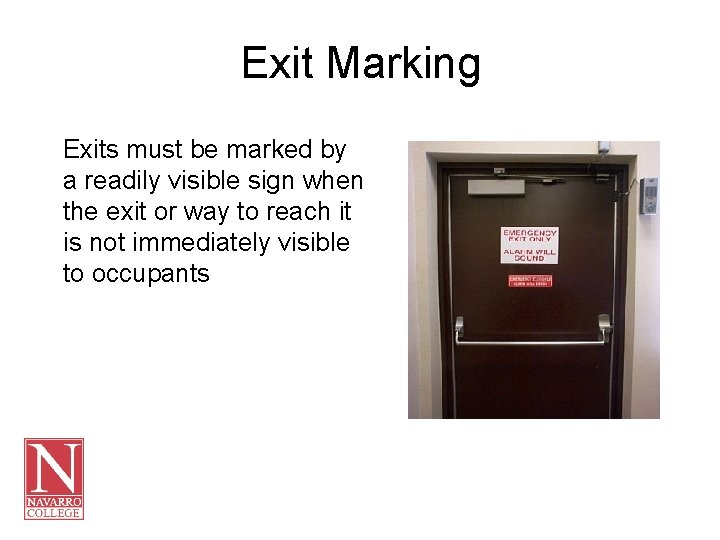
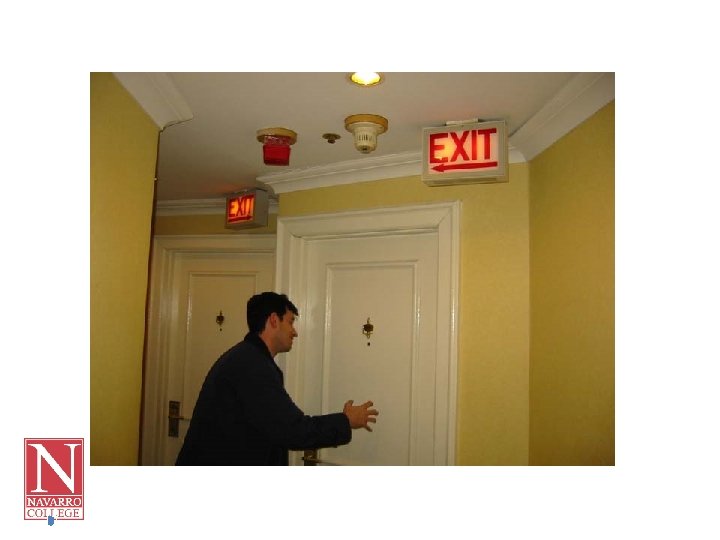
Exit Marking Exits must be marked by a readily visible sign when the exit or way to reach it is not immediately visible to occupants
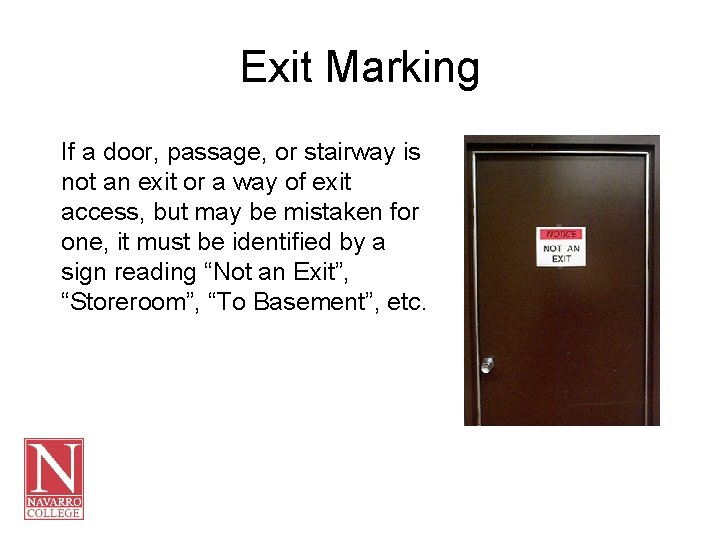
Exit Marking If a door, passage, or stairway is not an exit or a way of exit access, but may be mistaken for one, it must be identified by a sign reading “Not an Exit”, “Storeroom”, “To Basement”, etc.
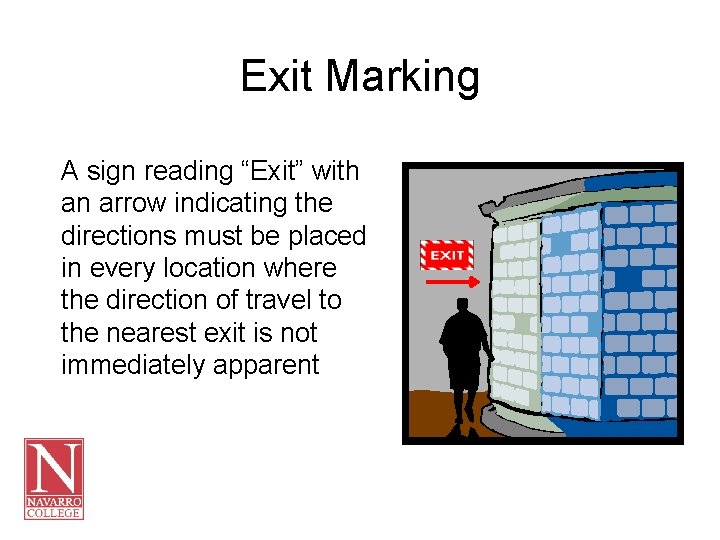
Exit Marking A sign reading “Exit” with an arrow indicating the directions must be placed in every location where the direction of travel to the nearest exit is not immediately apparent
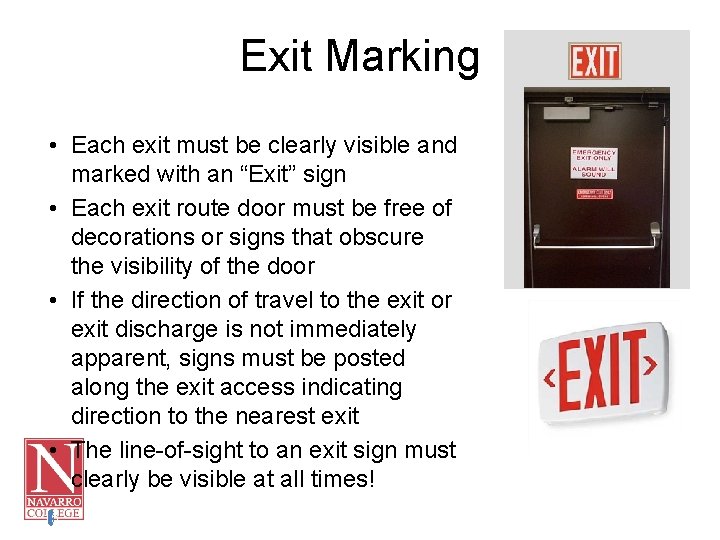
Exit Marking • Each exit must be clearly visible and marked with an “Exit” sign • Each exit route door must be free of decorations or signs that obscure the visibility of the door • If the direction of travel to the exit or exit discharge is not immediately apparent, signs must be posted along the exit access indicating direction to the nearest exit • The line-of-sight to an exit sign must clearly be visible at all times! 15
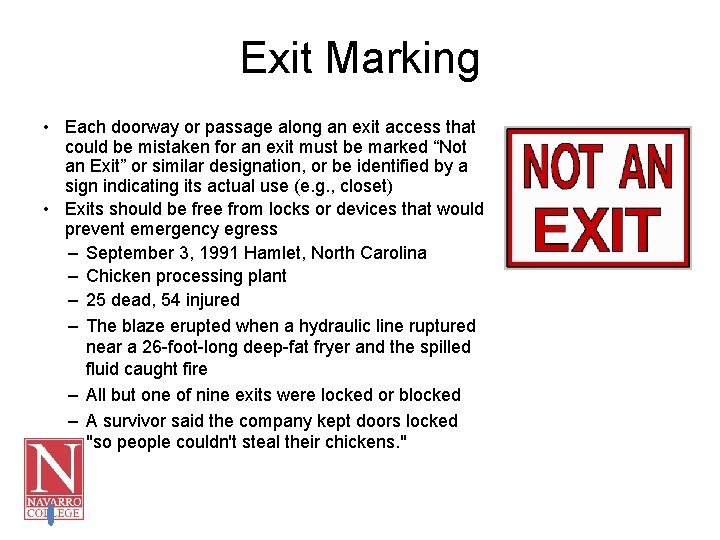
Exit Marking • Each doorway or passage along an exit access that could be mistaken for an exit must be marked “Not an Exit” or similar designation, or be identified by a sign indicating its actual use (e. g. , closet) • Exits should be free from locks or devices that would prevent emergency egress – September 3, 1991 Hamlet, North Carolina – Chicken processing plant – 25 dead, 54 injured – The blaze erupted when a hydraulic line ruptured near a 26 -foot-long deep-fat fryer and the spilled fluid caught fire – All but one of nine exits were locked or blocked – A survivor said the company kept doors locked "so people couldn't steal their chickens. " 16
17
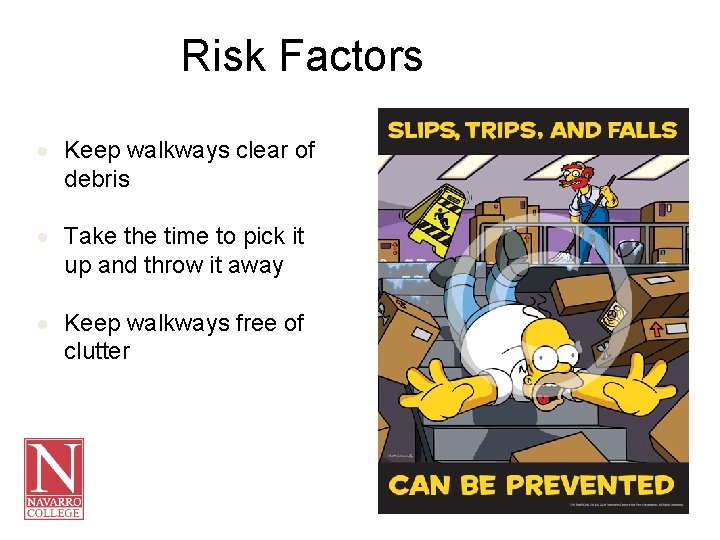
Risk Factors Keep walkways clear of debris Take the time to pick it up and throw it away Keep walkways free of clutter
Obstacles in Walkways • Take the time to move materials out of the way – Plan your route to avoid obstacles – Don’t string cords or lines across walkways – Secure mats, rugs, or carpets so they lay flat. Lighting: • Make sure you can see where you are stepping • Common trips and falls occur from hidden steps, loose, irregular surfaces, wet spots, and oil and grease • If any of these conditions exits, correct them
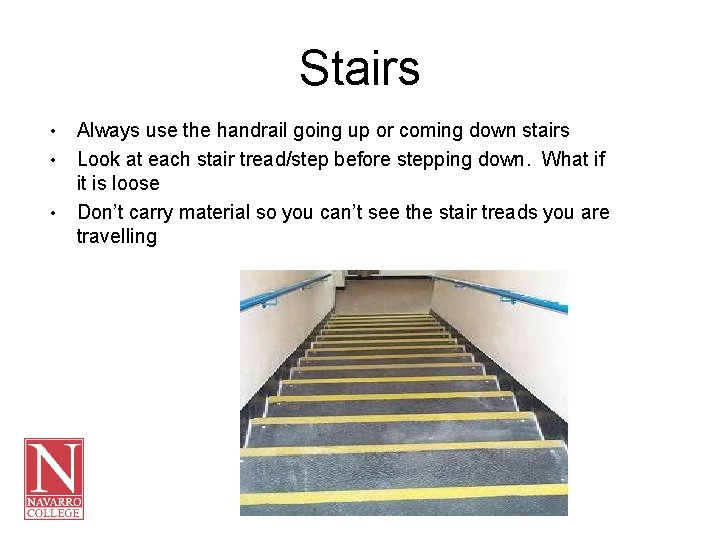
Stairs • • • Always use the handrail going up or coming down stairs Look at each stair tread/step before stepping down. What if it is loose Don’t carry material so you can’t see the stair treads you are travelling
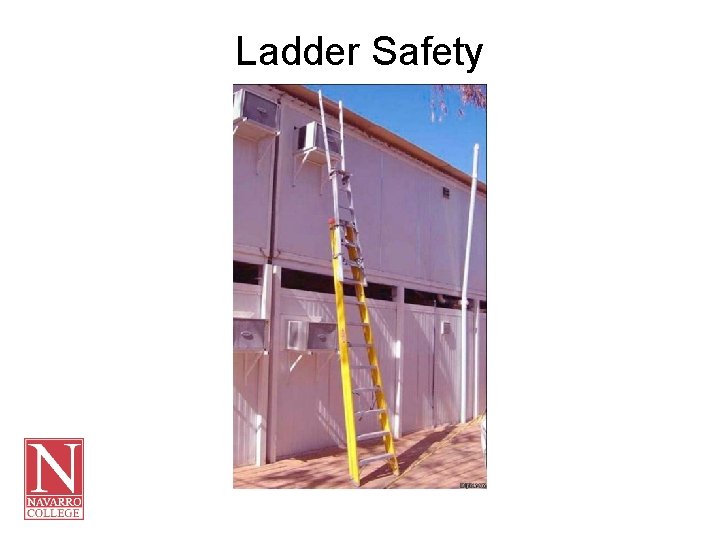
Ladder Safety
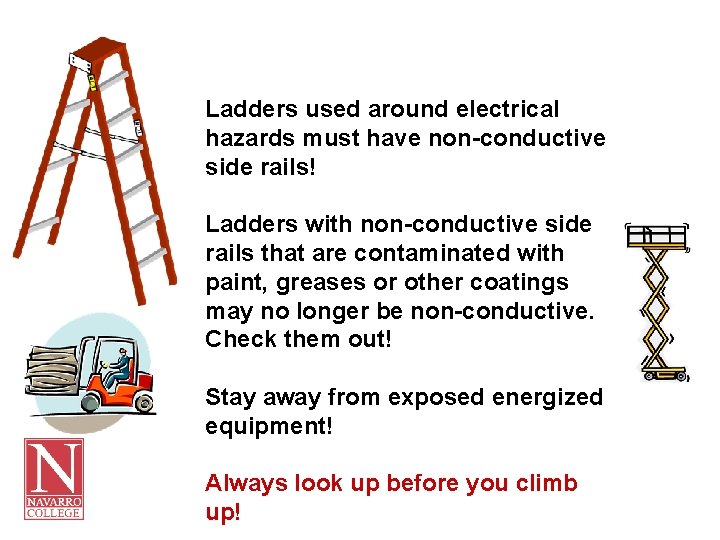
Ladders used around electrical hazards must have non-conductive side rails! Ladders with non-conductive side rails that are contaminated with paint, greases or other coatings may no longer be non-conductive. Check them out! Stay away from exposed energized equipment! Always look up before you climb up!
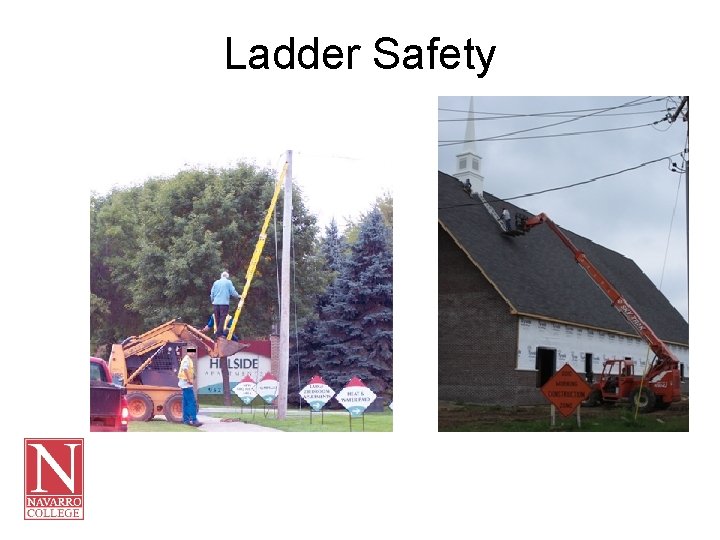
Ladder Safety
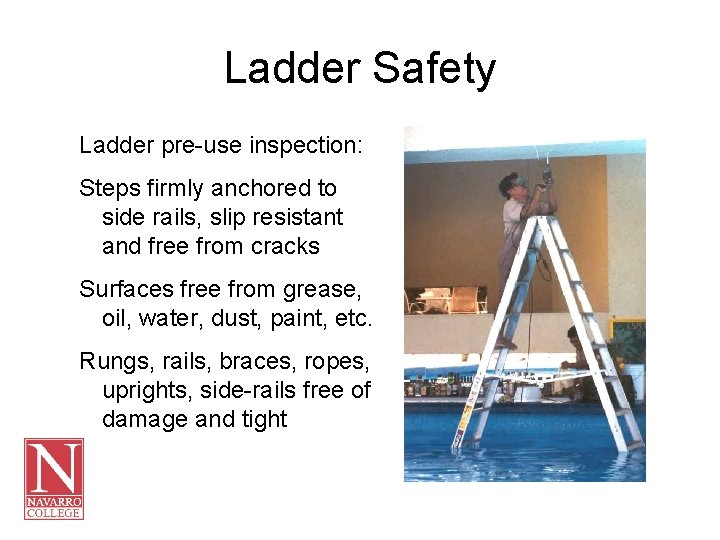
Ladder Safety Ladder pre-use inspection: Steps firmly anchored to side rails, slip resistant and free from cracks Surfaces free from grease, oil, water, dust, paint, etc. Rungs, rails, braces, ropes, uprights, side-rails free of damage and tight
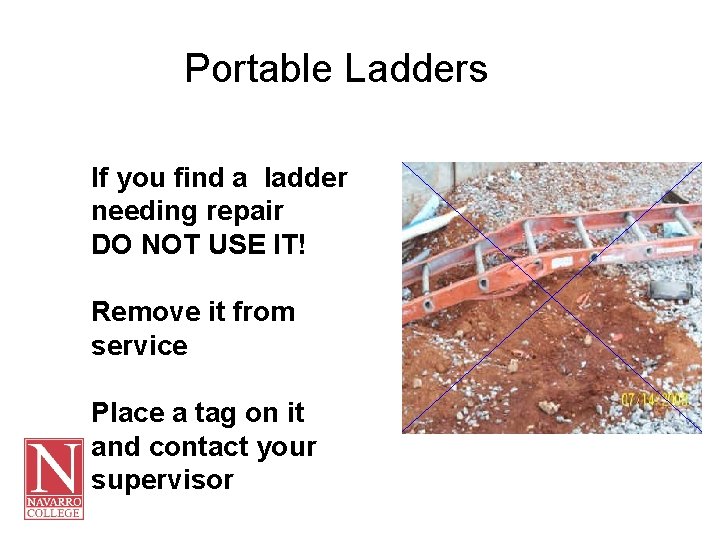
Portable Ladders If you find a ladder needing repair DO NOT USE IT! Remove it from service Place a tag on it and contact your supervisor
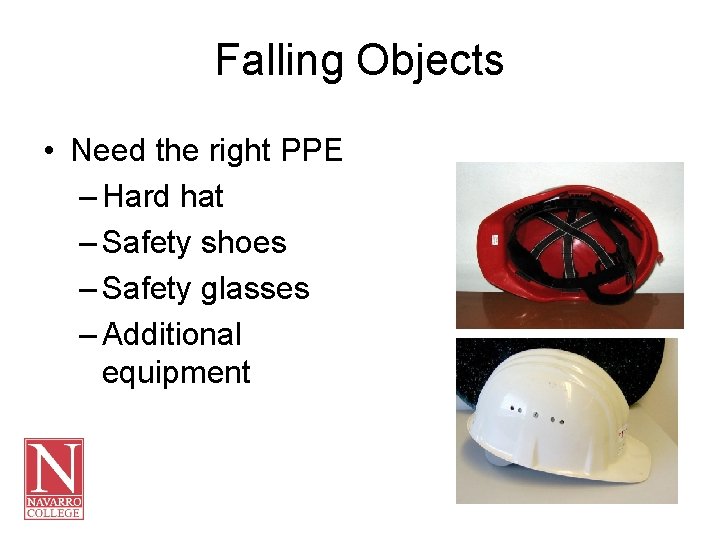
Falling Objects • Need the right PPE – Hard hat – Safety shoes – Safety glasses – Additional equipment
Classes of Hard Hats Class G (formerly Class A)1 • General service (e. g. , mining, building construction, shipbuilding, lumbering, and manufacturing) • Good impact protection but limited voltage protection Class E (formerly Class B)1 • Electrical work • Protect against falling objects, high-voltage shock/burns Class C • Designed for comfort, offer limited protection • Protects heads that may bump against fixed objects, but do not protect against falling objects or electrical shock 1 Per ANSI Z 89. 1 -1997
Selecting the Right Hard Hat Class G (formerly Class A)1 • General service (e. g. , mining, building construction, shipbuilding, lumbering, and manufacturing) • Good impact protection but limited voltage protection Class E (formerly Class B)1 • Electrical work • Protect against falling objects, high-voltage shock/burns Class C • Designed for comfort, offer limited protection • Protects heads that may bump against fixed objects, but do not protect against falling objects or electrical shock 1 Per ANSI Z 89. 1 -1997
Confined Space Program • OSHA 29 CFR 1910. 146 - federal law! • Has anyone been involved in a Confined Space or Permit Required Confined Space incidents?
ENTRY • The action by which a person passes through an opening into a permitrequired confined space, and includes ensuing work activities in that space • Considered to have occurred as soon as any part of the entrant’s body breaks the plane of an opening into the space
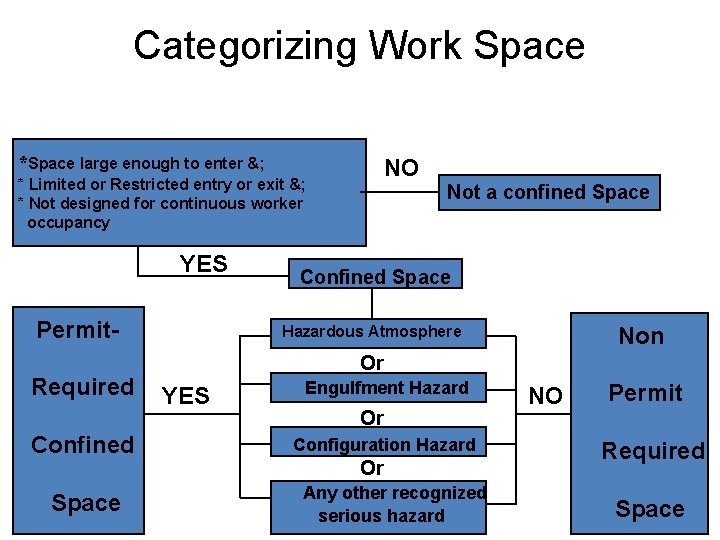
Three Elements Of Confined Space • Is large enough and so configured that an • employee can bodily enter and perform assigned work; and Has limited openings for entry and exit, • Unfavorable Natural Ventilation, and • Is not designed for continuous worker occupancy
Confined Space Purpose • Protect employees, contractors, and subcontractors from hazards associated with entry into permit required confined spaces (PRCF) – Even if the work is contracted out, the company is responsible for the protection of all personnel on it’s properties
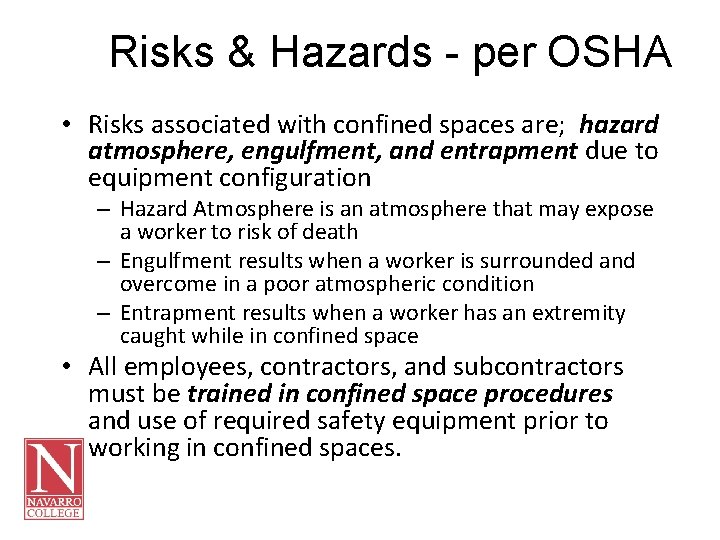
Risks & Hazards - per OSHA • Risks associated with confined spaces are; hazard atmosphere, engulfment, and entrapment due to equipment configuration – Hazard Atmosphere is an atmosphere that may expose a worker to risk of death – Engulfment results when a worker is surrounded and overcome in a poor atmospheric condition – Entrapment results when a worker has an extremity caught while in confined space • All employees, contractors, and subcontractors must be trained in confined space procedures and use of required safety equipment prior to working in confined spaces.
Categorizing Work Space *Space large enough to enter &; NO * Limited or Restricted entry or exit &; * Not designed for continuous worker occupancy YES Permit. Required Confined Space Not a confined Space Confined Space Non Hazardous Atmosphere Or YES Engulfment Hazard Or Configuration Hazard Or Any other recognized serious hazard NO Permit Required Space
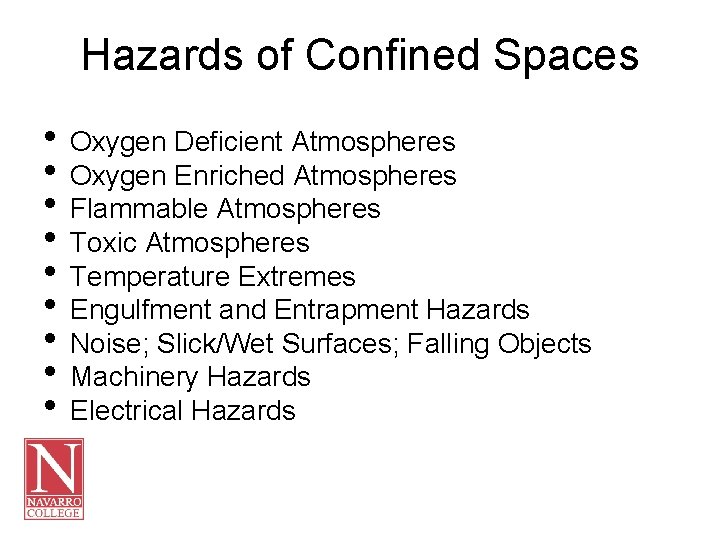
Hazards of Confined Spaces • Oxygen Deficient Atmospheres • Oxygen Enriched Atmospheres • Flammable Atmospheres • Toxic Atmospheres • Temperature Extremes • Engulfment and Entrapment Hazards • Noise; Slick/Wet Surfaces; Falling Objects • Machinery Hazards • Electrical Hazards
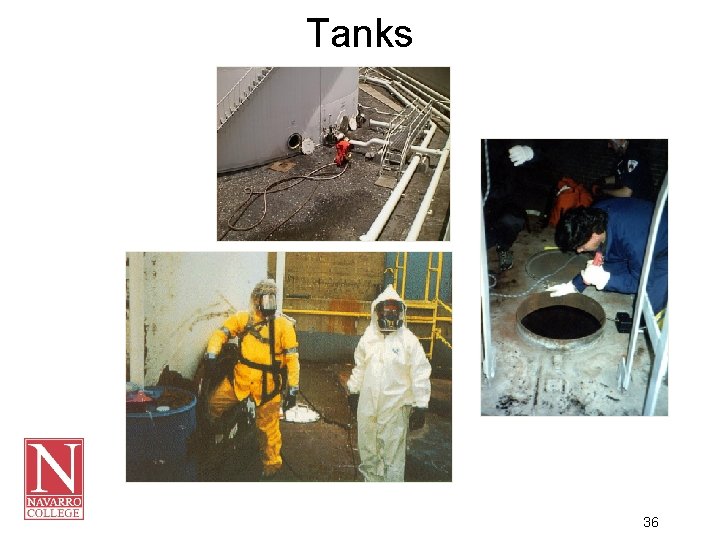
Tanks 36
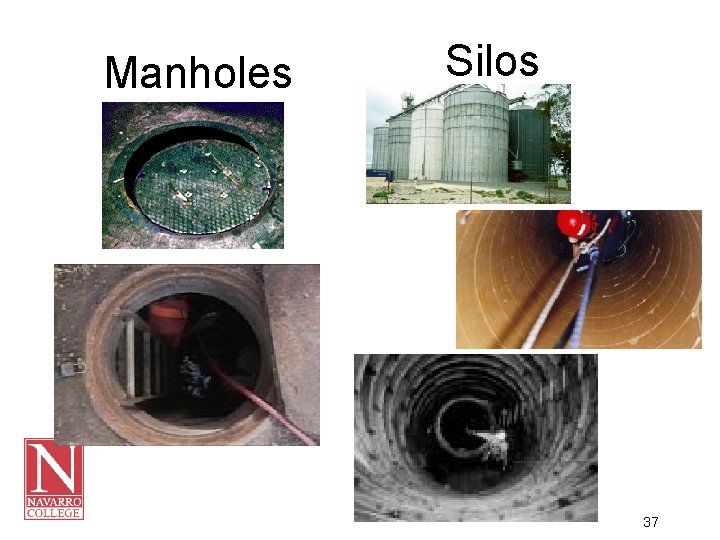
Manholes Silos 37
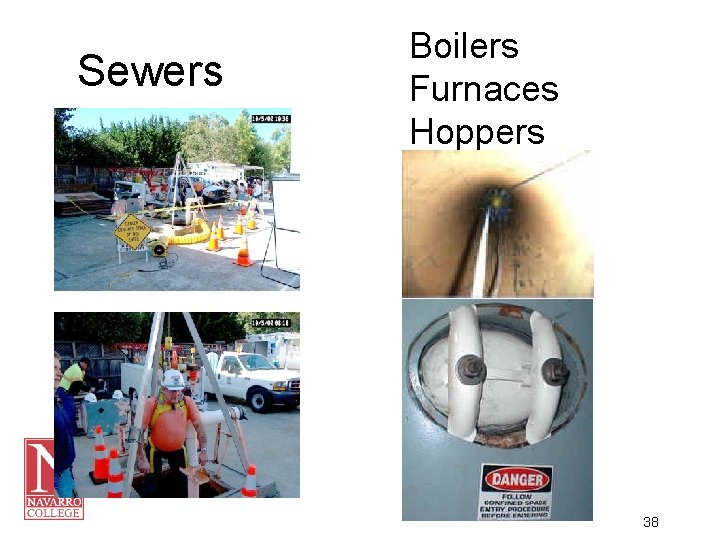
Sewers Boilers Furnaces Hoppers 38
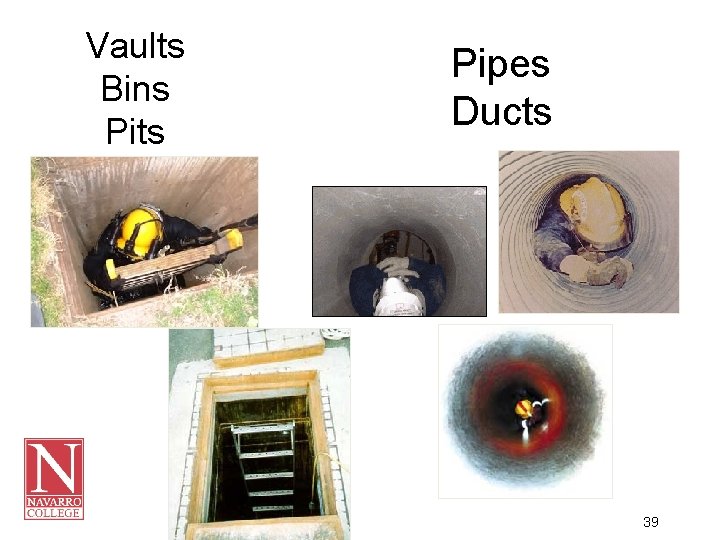
Vaults Bins Pits Pipes Ducts 39
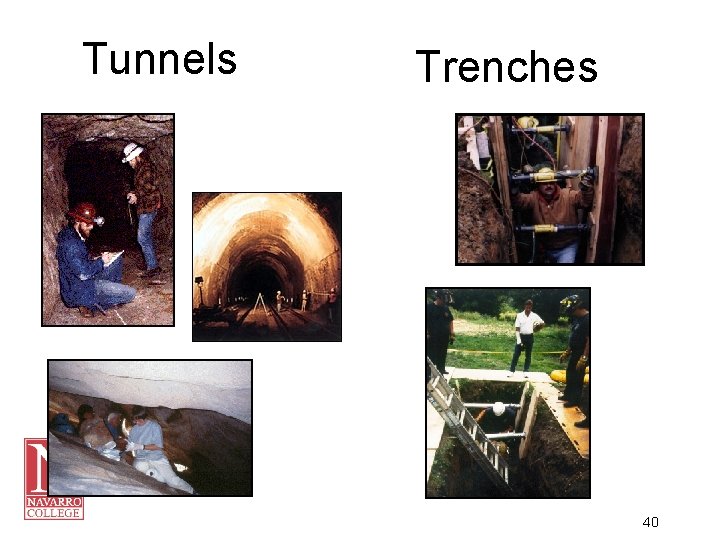
Tunnels Trenches 40
Summary • Workers need to understand what needs to be done prior to working with heights and confined spaces! • THINK BEFORE YOU DO!
End Of Chapter Nine Questions? Comments? Concerns?