
CHAPTER NINE UPPER ECHELON VIEW STRATEGIC LEADERSHIP Learning
- Slides: 19
CHAPTER NINE UPPER ECHELON VIEW: STRATEGIC LEADERSHIP
Learning Objectives 1. Differentiate between micro and upper-echelon leadership. 2. Describe the domain and roles of strategic leaders in the management of an organization. 3. Identify the external and internal factors that impact strategic leaders’ discretion. 4. List the individual characteristics of strategic leaders and their impact on their style.
Learning Objectives (cont’d) 5. Contrast the four strategic leadership types and discuss the role of culture and gender in strategic leadership. 6. Explain the processes through which strategic leaders manage their organization. 7. Review issues of executive compensation and accountability.
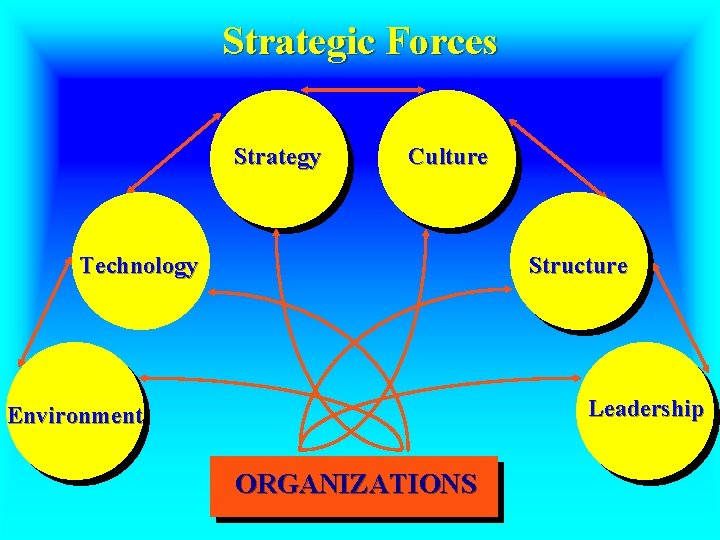
Strategic Forces Strategy Culture Structure Technology Leadership Environment ORGANIZATIONS
Differences Between Lower Level and Upper Echelon Leaders § Who the leader is § Scope of responsibility § Focus § Effectiveness criteria
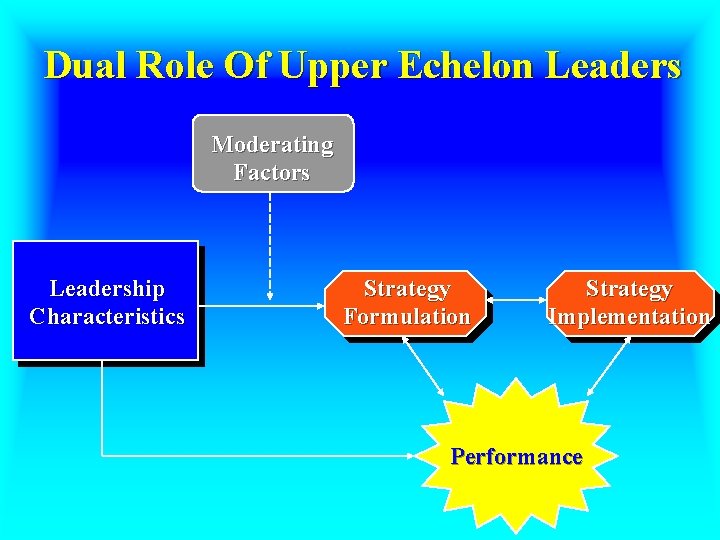
Dual Role Of Upper Echelon Leaders Moderating Factors Leadership Characteristics Strategy Formulation Strategy Implementation Performance
External Moderators Of Executive Discretion ò Environmental uncertainty ò Type of industry ò Market growth ò Legal constraints
Internal Moderators Of Executive Discretion s Stability s Size and structure s Organizational culture s Stage of organizational growth s Presence, power, and makeup of TMT
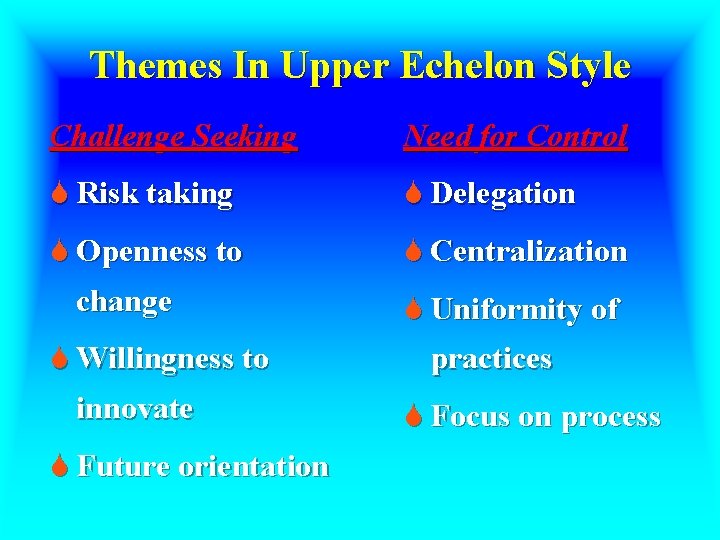
Themes In Upper Echelon Style Challenge Seeking Need for Control S Risk taking S Delegation S Openness to change S Centralization S Willingness to innovate S Future orientation S Uniformity of practices S Focus on process
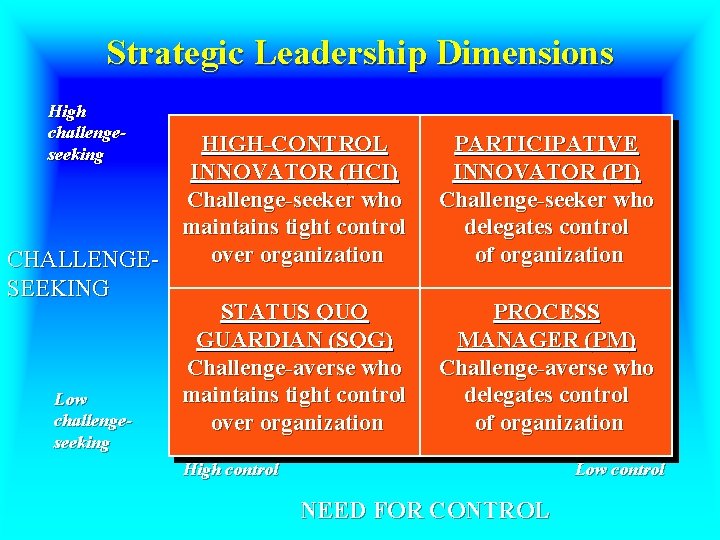
Strategic Leadership Dimensions High challengeseeking HIGH-CONTROL INNOVATOR (HCI) Challenge-seeker who maintains tight control over organization CHALLENGESEEKING STATUS QUO GUARDIAN (SQG) Challenge-averse who maintains tight control Low challengeover organization seeking PARTICIPATIVE INNOVATOR (PI) Challenge-seeker who delegates control of organization PROCESS MANAGER (PM) Challenge-averse who delegates control of organization High control Low control NEED FOR CONTROL
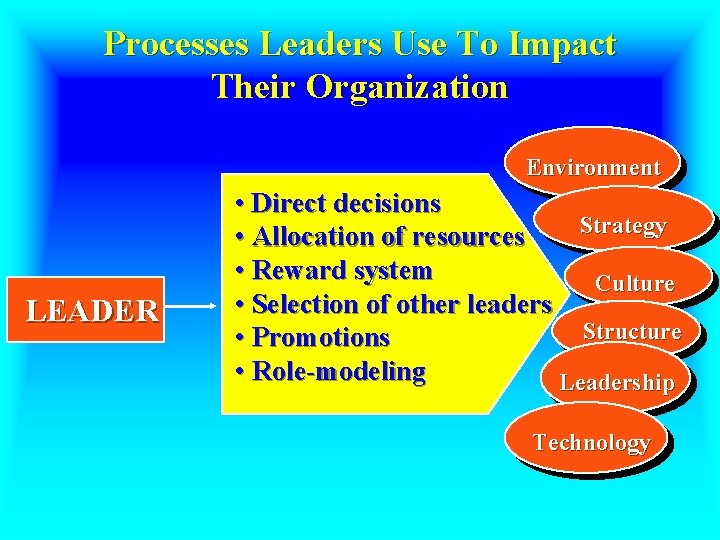
Processes Leaders Use To Impact Their Organization Environment LEADER • Direct decisions Strategy • Allocation of resources • Reward system Culture • Selection of other leaders Structure • Promotions • Role-modeling Leadership Technology
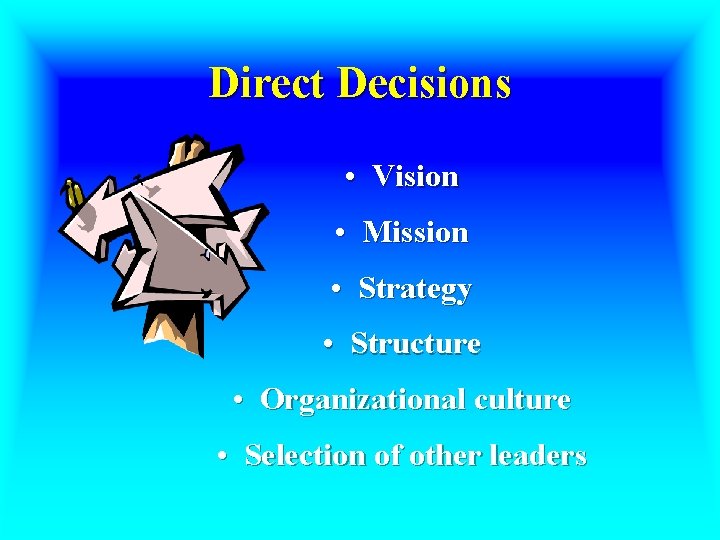
Direct Decisions • Vision • Mission • Strategy • Structure • Organizational culture • Selection of other leaders
Allocation of Resources and Reward System • Decisions regarding funding and budgets • Allocation of resources to support goals • Formal rewards, such as salary and bonuses • Informal rewards such as recognition • Promotion of other leaders and managers
Setting the Norms and Role Modeling • Setting decision criteria and rules by which others make decisions • Active or subtle role modeling of behaviors and styles
Responsibility Of Upper Echelon Leaders ü Organizational performance ü Accountability to various internal and external constituents ü Ethical behavior and rolemodeling
Factors that Affect Executive Salaries ² Firm size ² Industry competition ² C. E. O. power and discretion ² Internationalization ² High stress and instability
Leading Change: Sari Baldauf of Nokia • • Extensive experience in the industry Recognizes need for flexibility and change Focus on using teams Partnerships with universities
Leadership In Action: Fernando Capellàn ³ President of largest private employer in Dominican Republic ³ Focus on employees and community first and profit second ³ Extensive programs to educate and support employees and their families ³ Participation from employees
The Leadership Challenge • C. E. O. involvement in nomination of board members helps assure that members with the right skills and expertise are selected • Those nominated by C. E. O. may have a conflict of interest and a positive bias towards the C. E. O. • Creation of a balance of members nominated by different stakeholders is essential