
CHAPTER nine Segmentation and positioning Principles of Marketing

- Slides: 34
CHAPTER nine Segmentation and positioning Principles of Marketing FIFTH EUROPEAN EDITION Kotler, Armstrong, Wong, Saunders
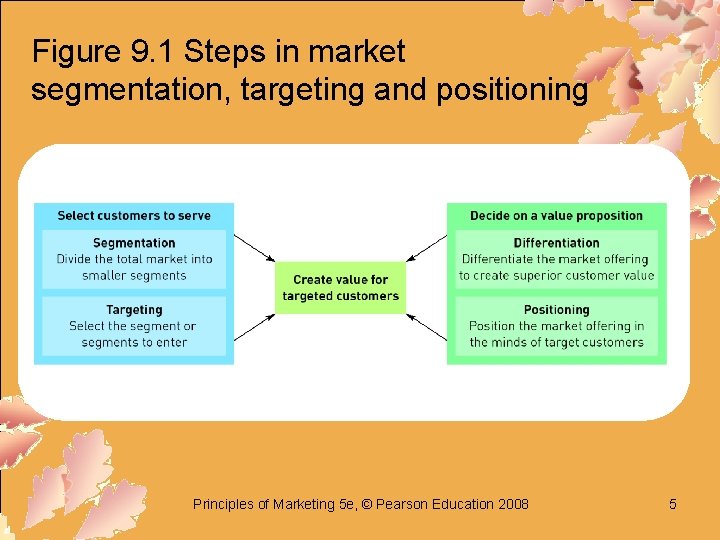
Previewing concepts (1) • Define the four major steps in designing a customer-driven marketing strategy: market segmentation, market targeting, differentiation, and positioning • List and discuss the major bases for segmenting consumer and business markets Principles of Marketing 5 e, © Pearson Education 2008 2
Previewing concepts (2) • Explain how companies identify attractive market segments and choose a market targeting strategy • Discuss how companies position their products for maximum competitive advantage in the marketplace Principles of Marketing 5 e, © Pearson Education 2008 3
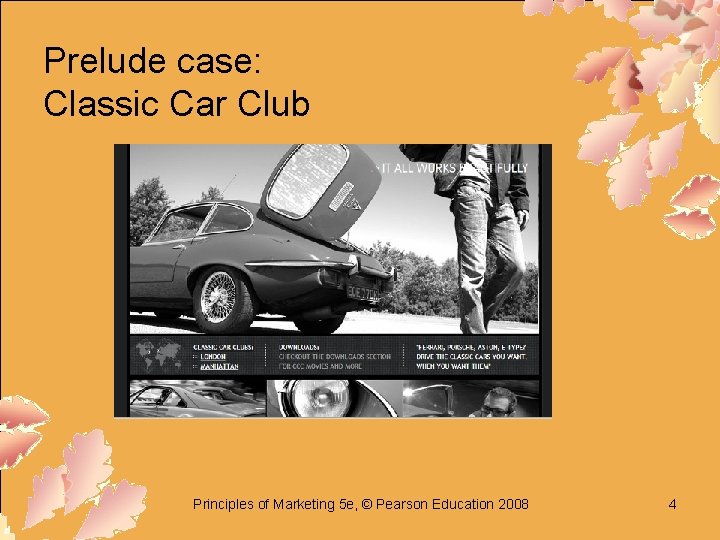
Prelude case: Classic Car Club Principles of Marketing 5 e, © Pearson Education 2008 4
Figure 9. 1 Steps in market segmentation, targeting and positioning Principles of Marketing 5 e, © Pearson Education 2008 5
What is market segmentation? Market segmentation involves dividing large, heterogeneous markets into smaller segments that can be reached more efficiently and effectively with products and services that match their unique needs. Principles of Marketing 5 e, © Pearson Education 2008 6
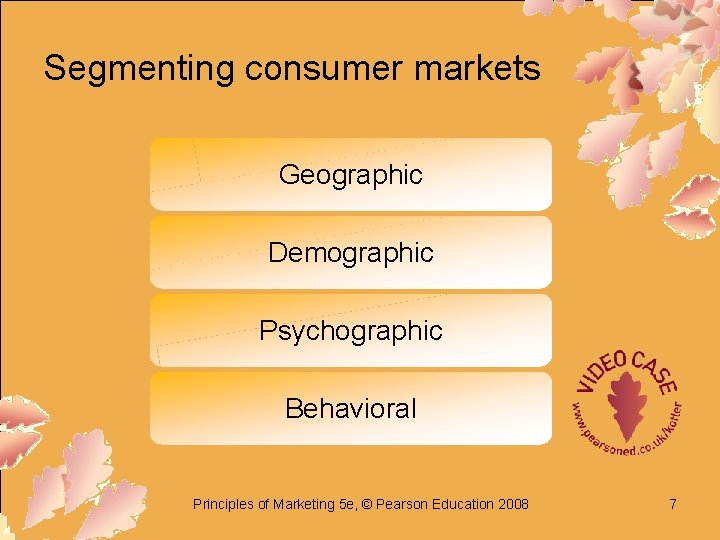
Segmenting consumer markets Geographic Demographic Psychographic Behavioral Principles of Marketing 5 e, © Pearson Education 2008 7
Segmenting consumer markets Marketing Birmingham Principles of Marketing 5 e, © Pearson Education 2008 8
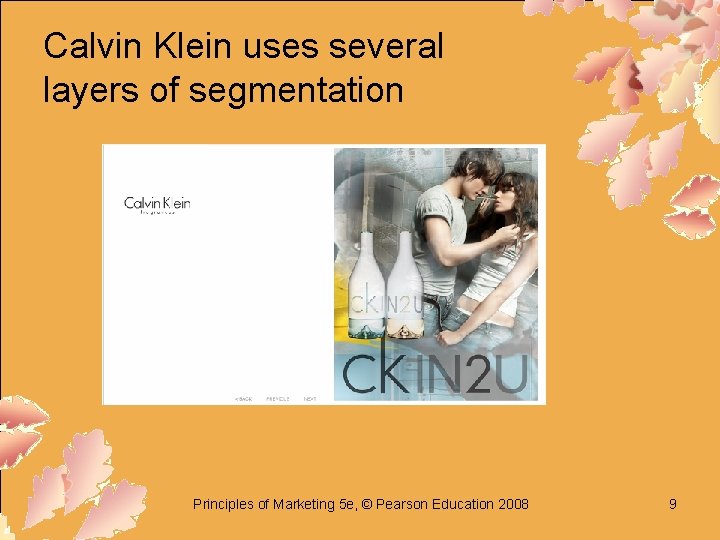
Calvin Klein uses several layers of segmentation Principles of Marketing 5 e, © Pearson Education 2008 9
What is geographic segmentation? Geographic segmentation means dividing the market into different geographical units such as nations, regions, states, counties, cities, or neighbourhoods. Principles of Marketing 5 e, © Pearson Education 2008 10
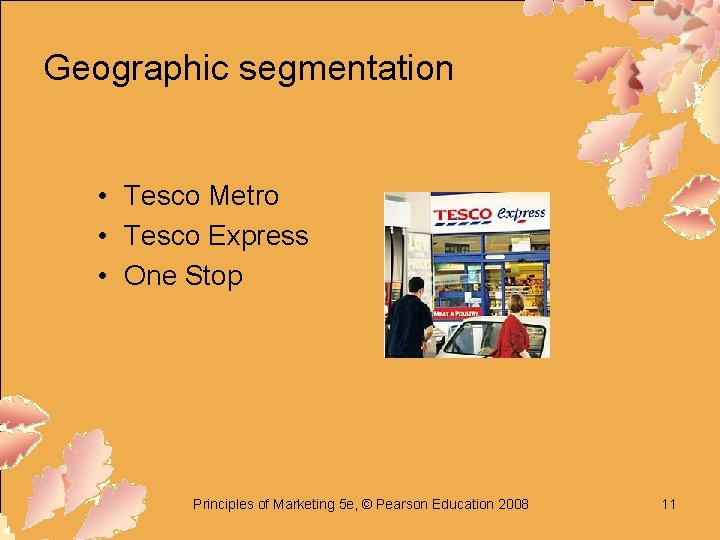
Geographic segmentation • Tesco Metro • Tesco Express • One Stop Principles of Marketing 5 e, © Pearson Education 2008 11
What is demographic segmentation? Demographic segmentation means dividing the market into groups based on variables such as age, gender, family size, family life cycle, income, occupation, education, religion, race, generation and nationality. Principles of Marketing 5 e, © Pearson Education 2008 12
What is psychographic segmentation? Psychographic segmentation means dividing the market into groups based on social class, lifestyle or personality characteristics. Principles of Marketing 5 e, © Pearson Education 2008 13
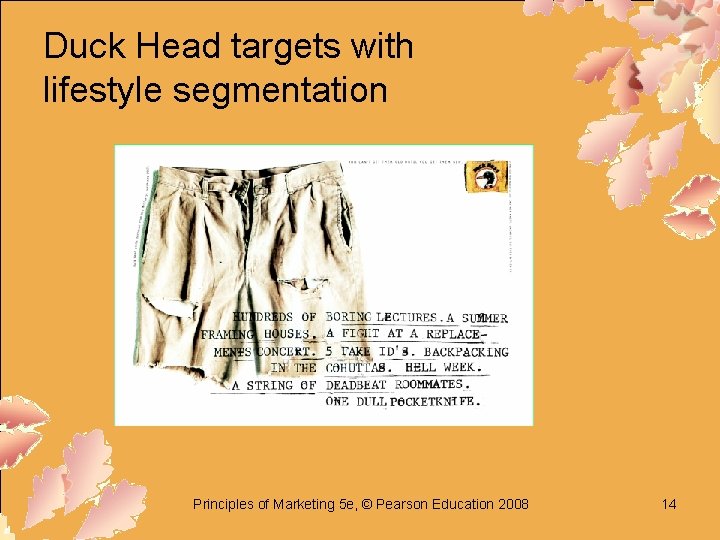
Duck Head targets with lifestyle segmentation Principles of Marketing 5 e, © Pearson Education 2008 14
What is behavioural segmentation? Behavioural segmentation means dividing the market into groups based on their knowledge, attitudes, uses or responses to a product. Principles of Marketing 5 e, © Pearson Education 2008 15
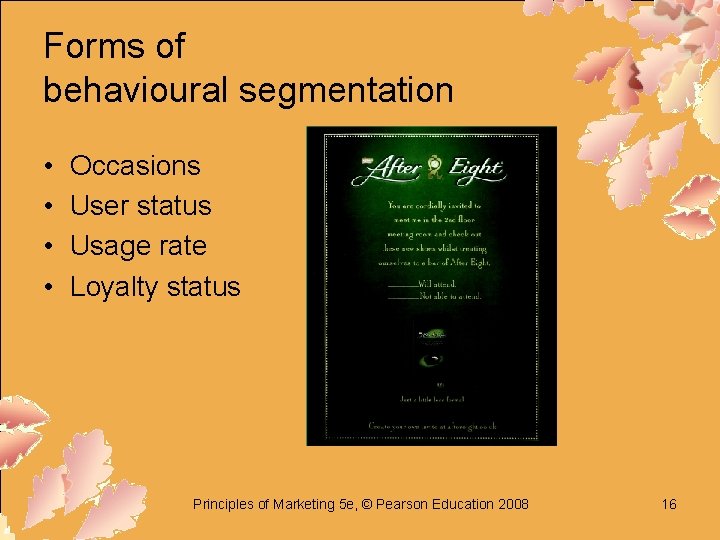
Forms of behavioural segmentation • • Occasions User status Usage rate Loyalty status Principles of Marketing 5 e, © Pearson Education 2008 16
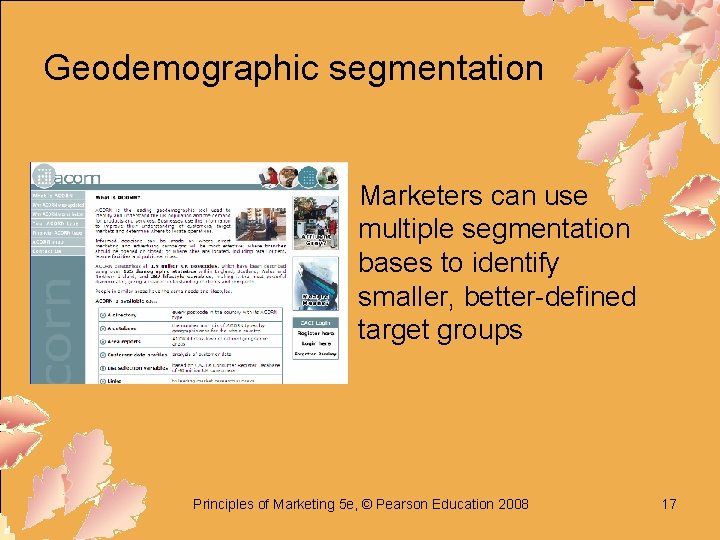
Geodemographic segmentation Marketers can use multiple segmentation bases to identify smaller, better-defined target groups Principles of Marketing 5 e, © Pearson Education 2008 17
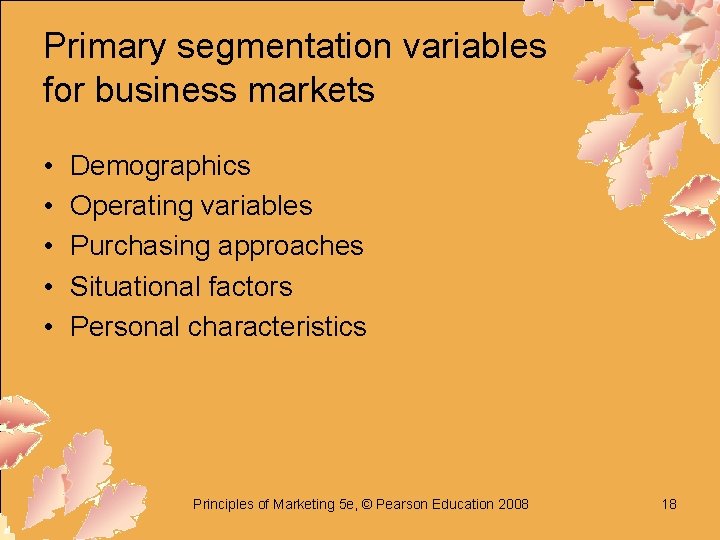
Primary segmentation variables for business markets • • • Demographics Operating variables Purchasing approaches Situational factors Personal characteristics Principles of Marketing 5 e, © Pearson Education 2008 18
What is intermarket segmentation? Intermarket segmentation means forming segments of consumers who have similar needs and buying behaviour even though they are from different countries. Principles of Marketing 5 e, © Pearson Education 2008 19
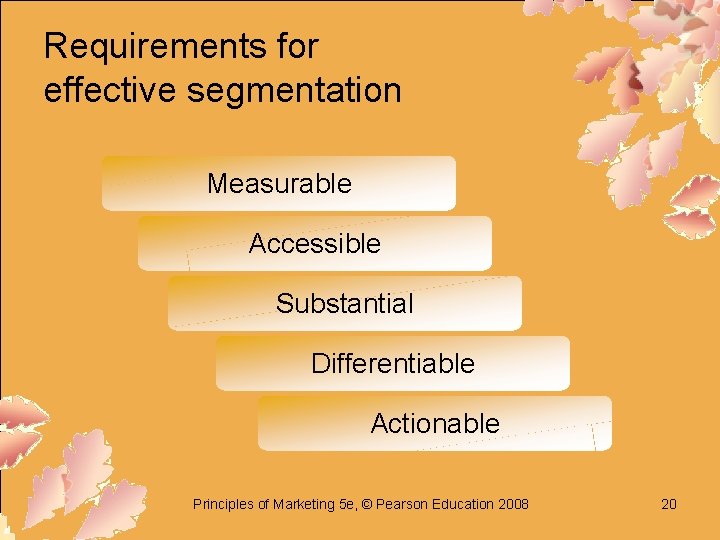
Requirements for effective segmentation Measurable Accessible Substantial Differentiable Actionable Principles of Marketing 5 e, © Pearson Education 2008 20
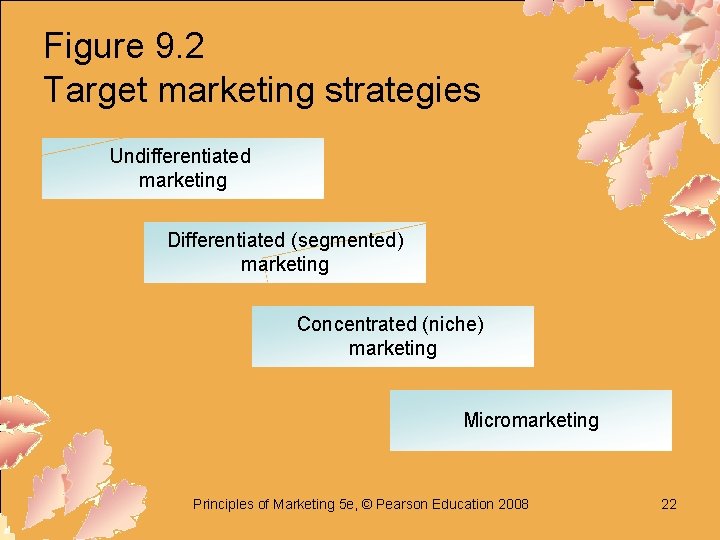
What is market targeting? Market targeting involves evaluating the various segments identified during the segmentation process and deciding how many and which segments it can serve best. Principles of Marketing 5 e, © Pearson Education 2008 21
Figure 9. 2 Target marketing strategies Undifferentiated marketing Differentiated (segmented) marketing Concentrated (niche) marketing Micromarketing Principles of Marketing 5 e, © Pearson Education 2008 22
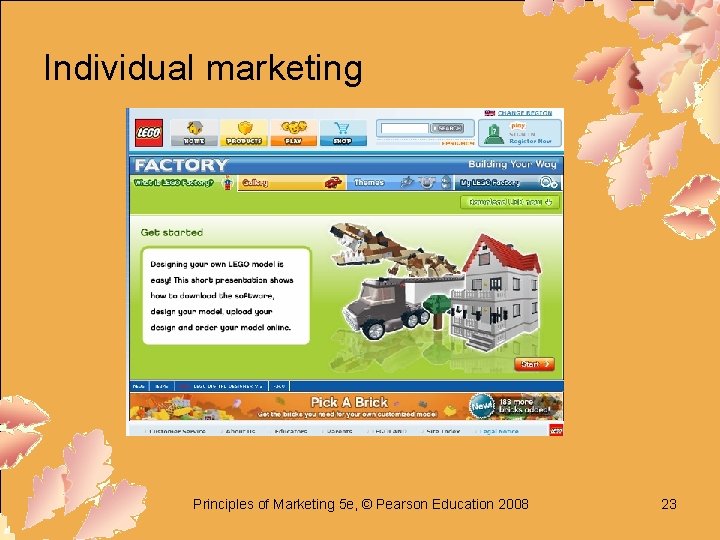
Individual marketing Principles of Marketing 5 e, © Pearson Education 2008 23
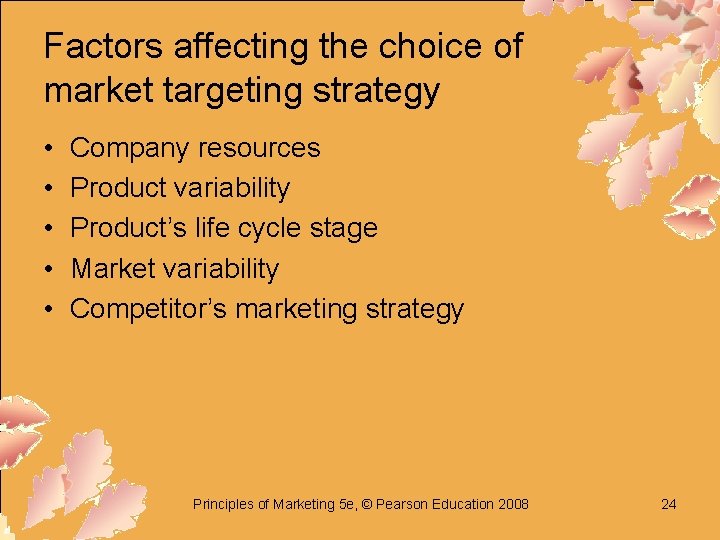
Factors affecting the choice of market targeting strategy • • • Company resources Product variability Product’s life cycle stage Market variability Competitor’s marketing strategy Principles of Marketing 5 e, © Pearson Education 2008 24
Differentiation and positioning Companies must decide on a value proposition – how it will create differentiated value for targeted segments and what positions it wants to occupy in those segments. A product’s position is the way the product is defined by consumers on important attributes. Principles of Marketing 5 e, © Pearson Education 2008 25
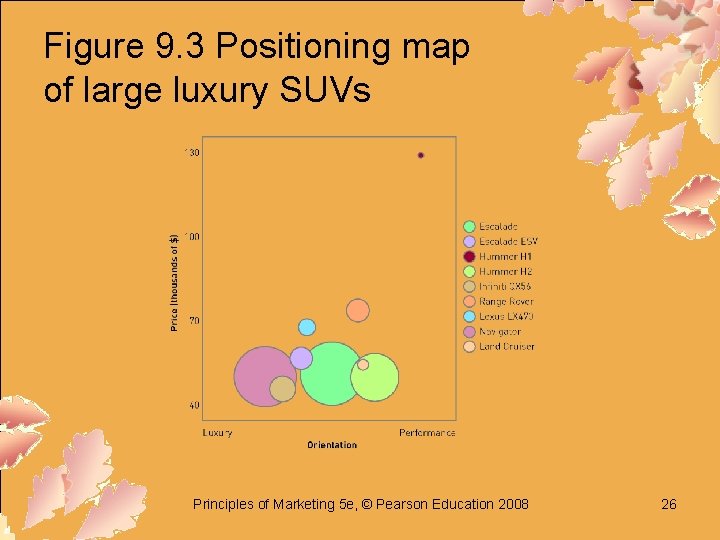
Figure 9. 3 Positioning map of large luxury SUVs Principles of Marketing 5 e, © Pearson Education 2008 26
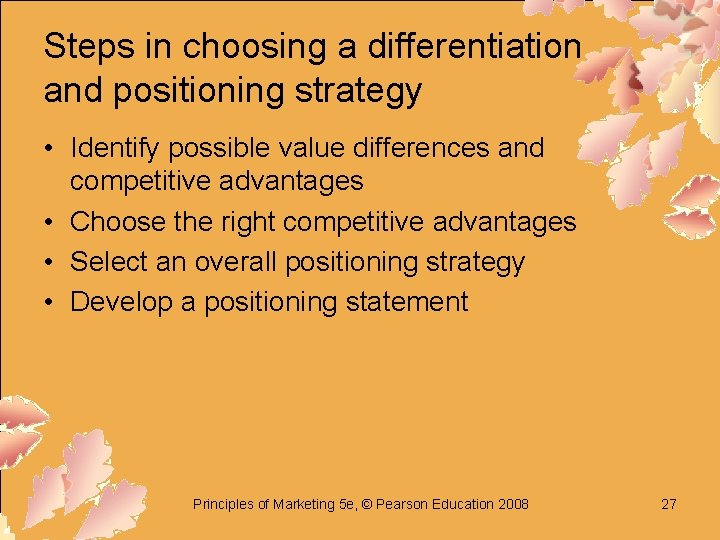
Steps in choosing a differentiation and positioning strategy • Identify possible value differences and competitive advantages • Choose the right competitive advantages • Select an overall positioning strategy • Develop a positioning statement Principles of Marketing 5 e, © Pearson Education 2008 27
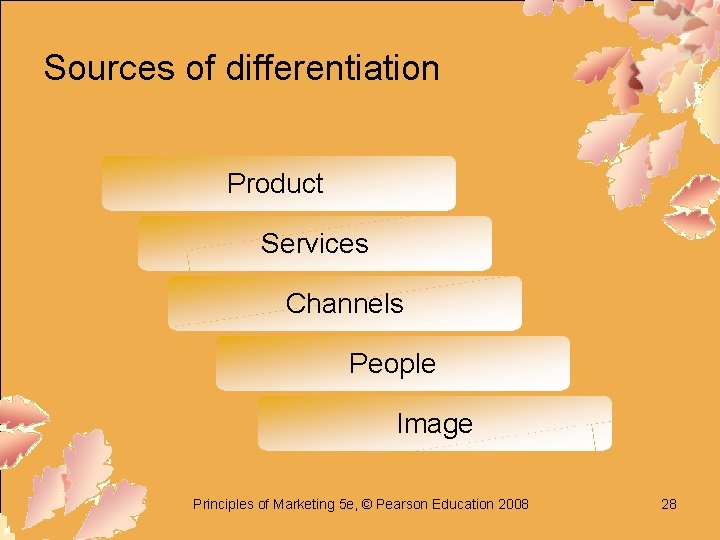
Sources of differentiation Product Services Channels People Image Principles of Marketing 5 e, © Pearson Education 2008 28
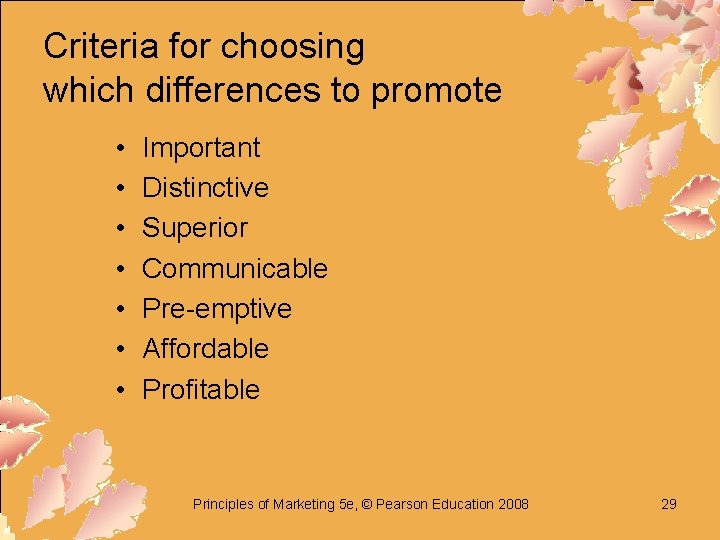
Criteria for choosing which differences to promote • • Important Distinctive Superior Communicable Pre-emptive Affordable Profitable Principles of Marketing 5 e, © Pearson Education 2008 29
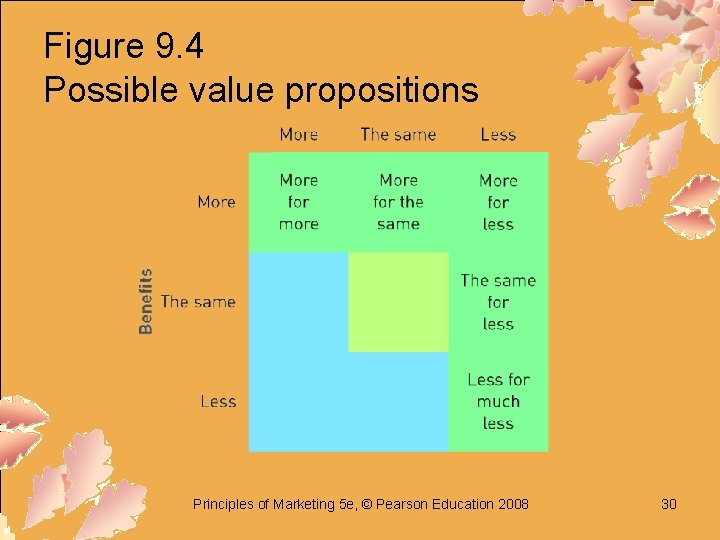
Figure 9. 4 Possible value propositions Principles of Marketing 5 e, © Pearson Education 2008 30
What is a positioning statement? A positioning statement is a statement that summarises company or brand positioning. It takes this form: To (target segment ad need) our (brand) is (concept) that (point of difference). Principles of Marketing 5 e, © Pearson Education 2008 31
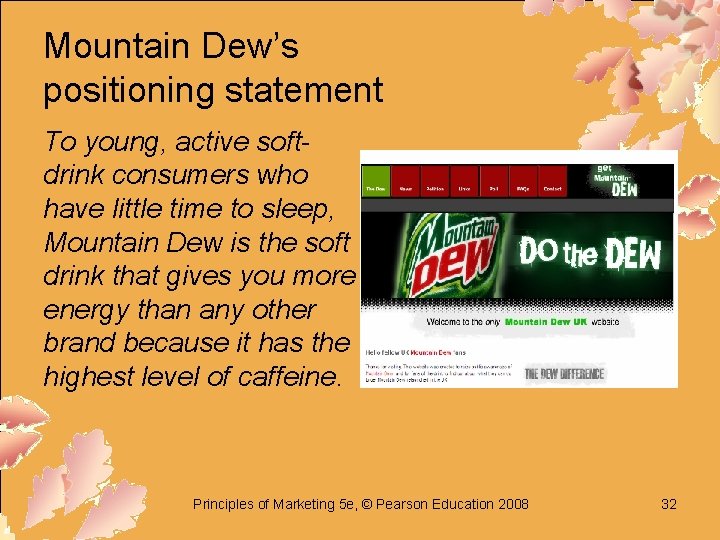
Mountain Dew’s positioning statement To young, active softdrink consumers who have little time to sleep, Mountain Dew is the soft drink that gives you more energy than any other brand because it has the highest level of caffeine. Principles of Marketing 5 e, © Pearson Education 2008 32
Discussing the concepts (1) • What are the benefits of mass marketing versus market segmentation for a business? • Is the EU an attractive and distinctive geographic market segment? Can businesses market in the same way to different consumers in member states? • How can financial service providers segment their markets and implement targeting strategies? Principles of Marketing 5 e, © Pearson Education 2008 33
Discussing the concepts (2) • What examples of famous personalities used for advertising products can you think of and what value does the personality bring to the brand? • How can segmentation help with the adoption of environmentally friendly ideas like black bins and chipping bins? Principles of Marketing 5 e, © Pearson Education 2008 34