
Chapter Nine Effective Groups and Teamwork Mc GrawHillIrwin

- Slides: 38
Chapter Nine Effective Groups and Teamwork Mc. Graw-Hill/Irwin Organizational Behavior: Key Concepts, Skills & Best Practices, 3/e Copyright © 2008 The Mc. Graw-Hill Companies, Inc. All rights reserved.
After reading the material in this chapter, you should be able to: • Describe the five stages of Tuckman’s theory of group development. • Contrast roles and norms, and specify four reasons norms are enforced in organizations. • Explain how a work group becomes a team, and identify five teamwork competencies. • List at least four things managers can do to build trust. • Describe self-managed teams and virtual teams. • Describe groupthink, and identify at least four of its symptoms. 3
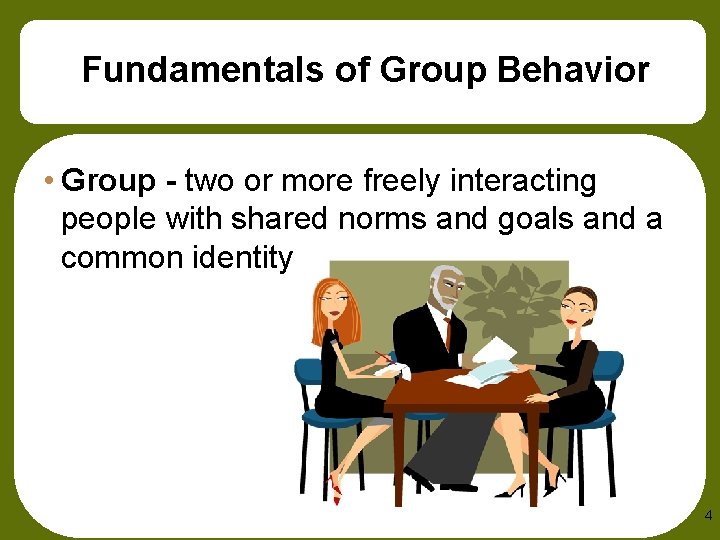
Fundamentals of Group Behavior • Group - two or more freely interacting people with shared norms and goals and a common identity 4
Formal and Informal Groups • Formal group - formed by the organization. • Informal group - formed by friends 5
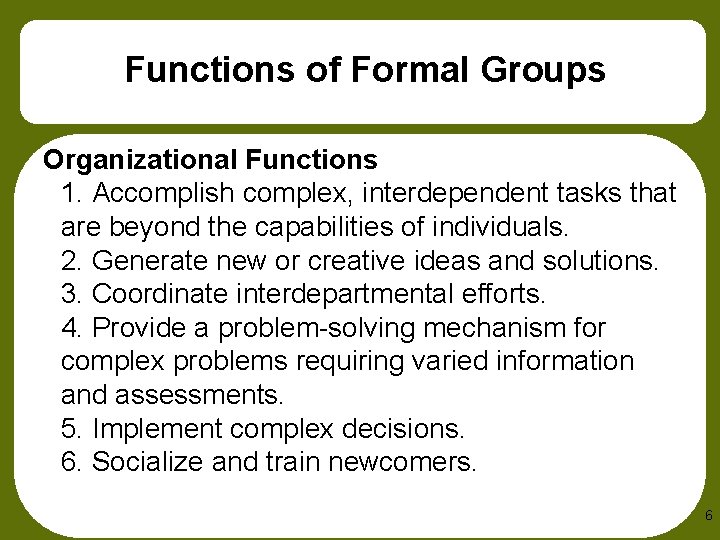
Functions of Formal Groups Organizational Functions 1. Accomplish complex, interdependent tasks that are beyond the capabilities of individuals. 2. Generate new or creative ideas and solutions. 3. Coordinate interdepartmental efforts. 4. Provide a problem-solving mechanism for complex problems requiring varied information and assessments. 5. Implement complex decisions. 6. Socialize and train newcomers. 6
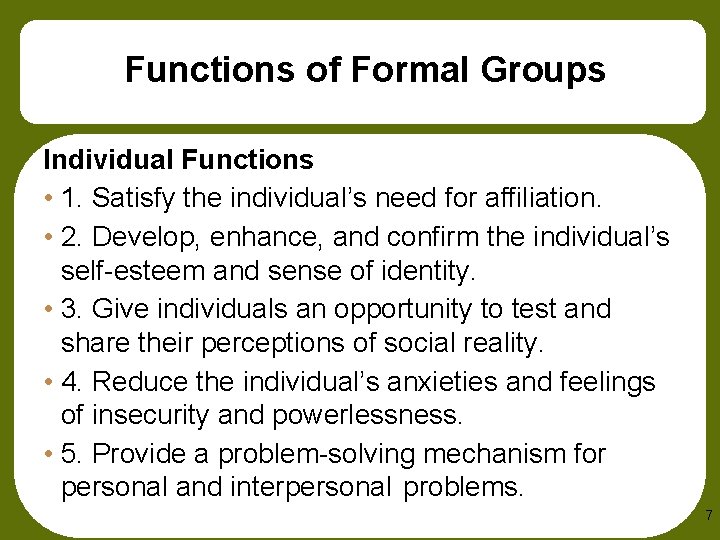
Functions of Formal Groups Individual Functions • 1. Satisfy the individual’s need for affiliation. • 2. Develop, enhance, and confirm the individual’s self-esteem and sense of identity. • 3. Give individuals an opportunity to test and share their perceptions of social reality. • 4. Reduce the individual’s anxieties and feelings of insecurity and powerlessness. • 5. Provide a problem-solving mechanism for personal and interpersonal problems. 7
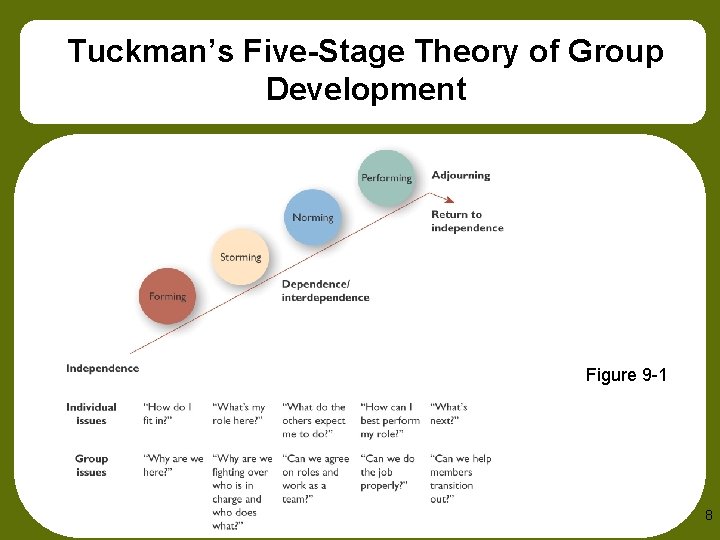
Tuckman’s Five-Stage Theory of Group Development Figure 9 -1 8
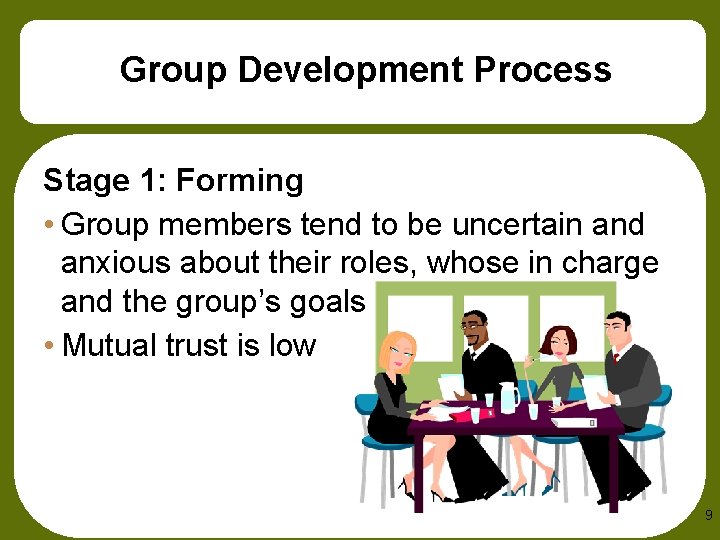
Group Development Process Stage 1: Forming • Group members tend to be uncertain and anxious about their roles, whose in charge and the group’s goals • Mutual trust is low 9
Group Development Process Stage 2: Storming • Time of testing • Individuals try to determine how they fit into the power structure • Procrastination may occur 10
Group Development Process Stage 3: Norming • Questions about authority and power are resolved through unemotional, matter-offact group discussion • Group cohesiveness – “we feeling” binding group members together 11
Group Development Process Stage 4: Performing • Activity focused on solving task problems • Climate of open communication, strong cooperation, and lots of helping behavior 12
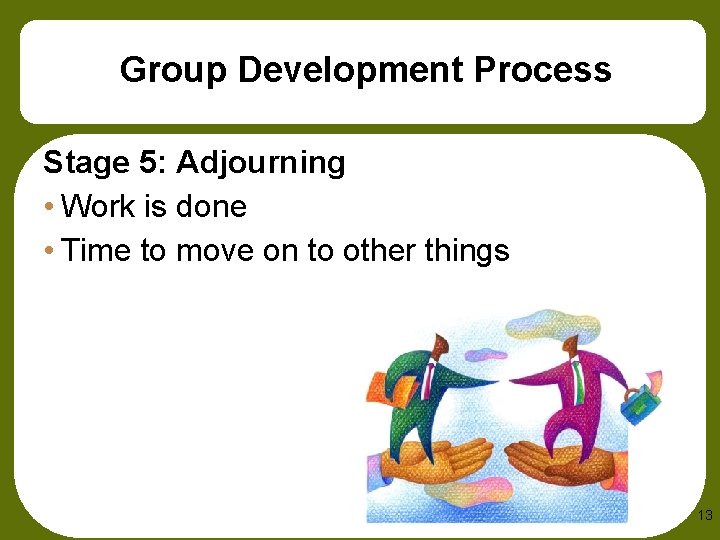
Group Development Process Stage 5: Adjourning • Work is done • Time to move on to other things 13
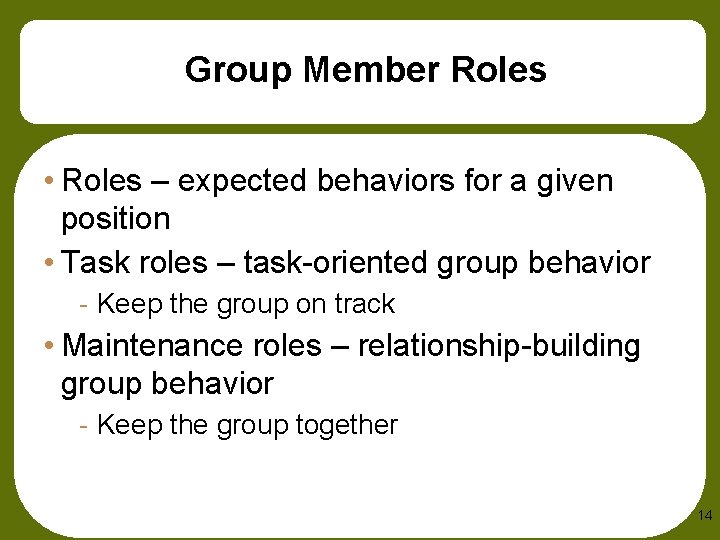
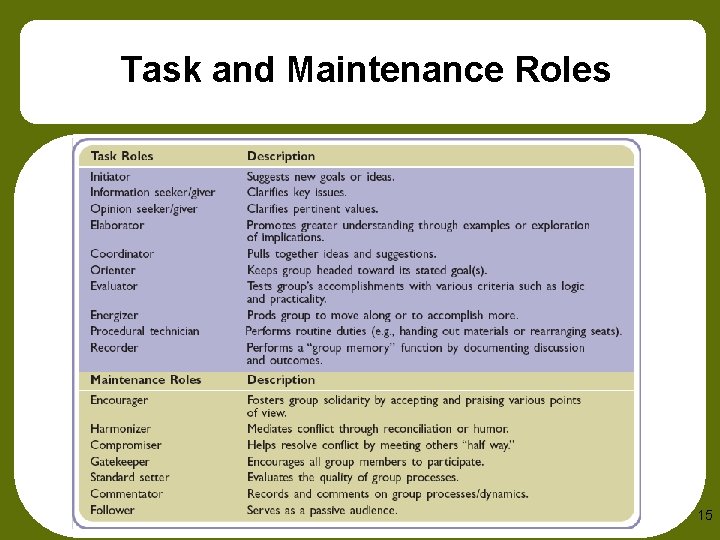
Group Member Roles • Roles – expected behaviors for a given position • Task roles – task-oriented group behavior - Keep the group on track • Maintenance roles – relationship-building group behavior - Keep the group together 14
Task and Maintenance Roles 15
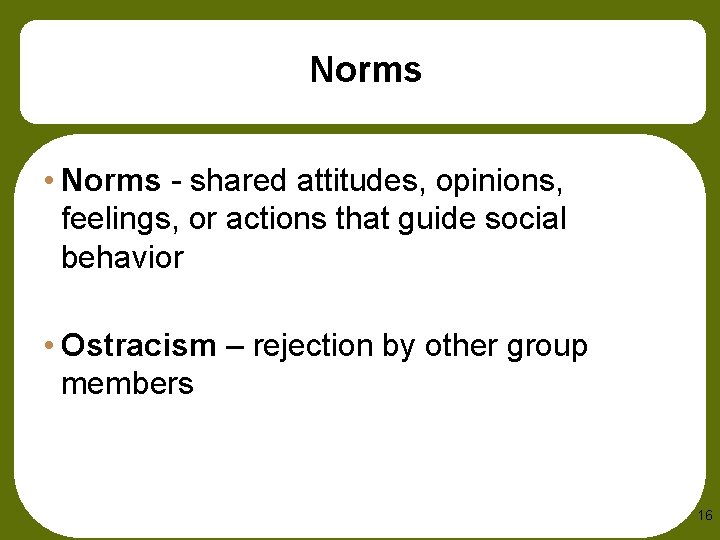
Norms • Norms - shared attitudes, opinions, feelings, or actions that guide social behavior • Ostracism – rejection by other group members 16
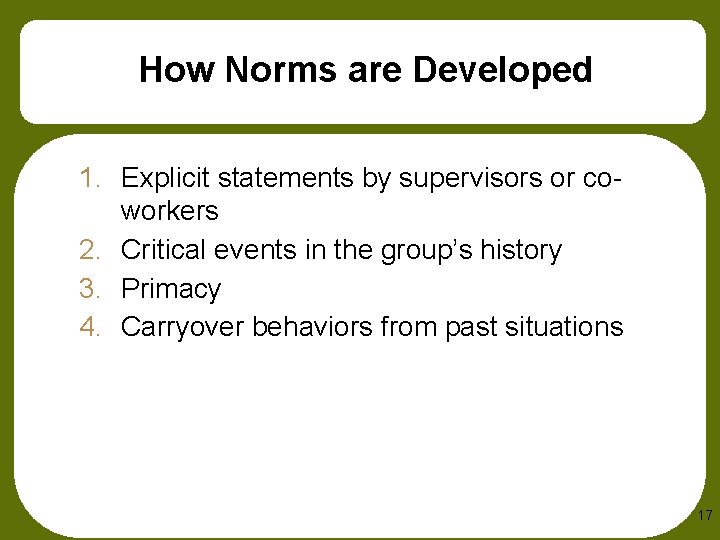
How Norms are Developed 1. Explicit statements by supervisors or coworkers 2. Critical events in the group’s history 3. Primacy 4. Carryover behaviors from past situations 17
Why Norms are Enforced • Help the group or organization survive • Clarify or simplify behavioral expectations • Help individuals avoid embarrassing situations • Clarify the group’s or organization’s central values and/or unique identity 18
Question? What is a small group with complementary skills who hold themselves mutually accountable for common purpose? A. Group B. Huddle C. Team D. Platoon 19
Teams • Team - small group with complementary skills who hold themselves mutually accountable for common purpose, goals, and approach. - Task groups that have matured to the performing stage 20
Teams A group becomes a team when: • Leadership becomes a shared activity • Accountability shifts from strictly individual to both individual and collective • The group develops its own purpose or mission • Problem solving becomes a way of life, not a part-time activity • Effectiveness is measured by the group’s collective outcomes and products 21
Team Building • Team building – experiential learning aimed at better internal functioning of groups 22
Trust • Trust - reciprocal faith in other’ intentions and behavior. 23
Three Dimensions of Trust • Overall trust – expecting fair play, the truth, and empathy • Emotional trust – having faith that someone will not misrepresent you to others or betray you • Reliableness – believing that promises and appointments will be kept and commitments met 24
How to Build Trust 1. 2. 3. 4. 5. 6. Communication Support Respect Fairness Predictability Competence 25
Self-Managed Teams • Self-managed teams – groups of employees granted administrative oversight for their work 26
Indirect Influence Tactics of Self Managed Teams • Relating • Scouting • Persuading • Empowering 27
Teams • Cross-functionalism – team made up of technical specialists from different areas 28
Are Self Managed Teams Effective? • Have a positive effect on productivity • Have a positive effect on specific attitudes relating to self-management • No significant effect on general attitudes • No significant effect on absenteeism or turnover 29
Question? What type of team uses information technology to allow group members in different locations to conduct business? A. Psychic team B. Virtual team C. Fundamental team D. Internet team 30
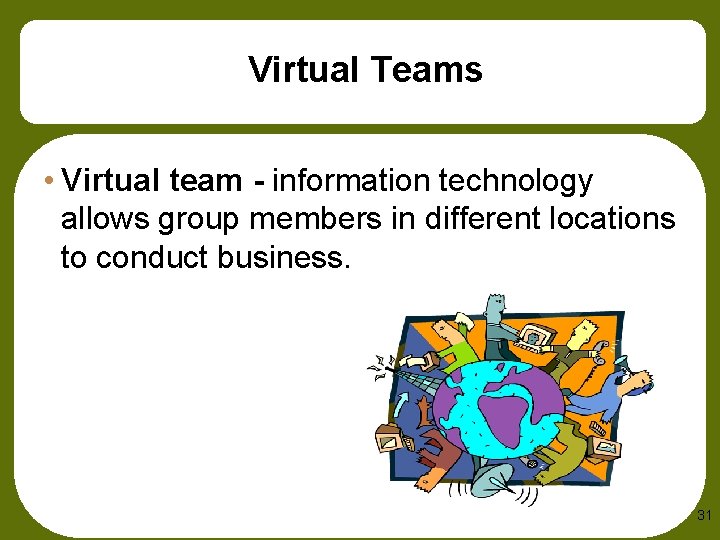
Virtual Teams • Virtual team - information technology allows group members in different locations to conduct business. 31
Research Insights • Virtual groups formed over the Internet follow a group development process similar to that of face-to-face groups - Meaningful face-to-face contact during early phases of group development process is essential • Internet chat rooms create more work and yield poorer decisions than face-to-face meetings 32
Research Insights • Successful use of groupware requires training and hands-on experience • Inspirational leadership has a positive impact on creativity in electronic brainstorming groups 33
Threats to Group and Team Effectiveness • Groupthink - Janis’s term for cohesive ingroup’s unwillingness to realistically view alternatives. Read an article on groupthink 34
Threats to Group and Team Effectiveness • Symptoms of groupthink - Invulnerability - Inherent morality - Rationalization - Stereotyped views of opposition - Self-censorship - Illusion of unanimity - Peer pressure - Mindguards 35
Social Loafing • Social Loafing decrease in individual effort as group size increases 36
Reasons for Social Loafing • Equity of effort • Loss of personal accountability • Motivational loss due to sharing of rewards • Coordination loss as more people perform the task 37
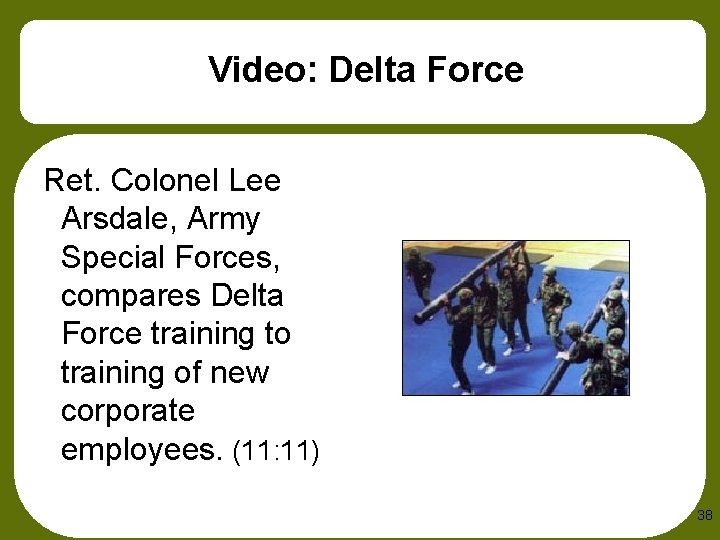
Video: Delta Force Ret. Colonel Lee Arsdale, Army Special Forces, compares Delta Force training to training of new corporate employees. (11: 11) 38