
Chapter Lecture Chapter 10 1 Lecture HUMAN ANATOMY
- Slides: 25
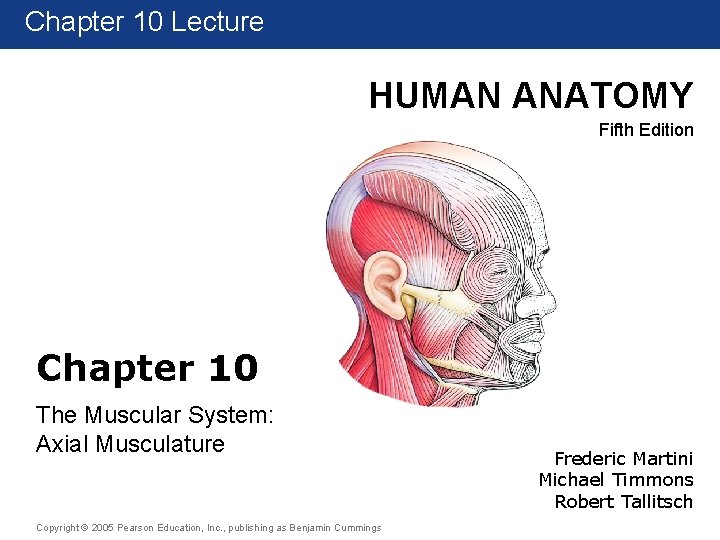
Chapter Lecture Chapter 10 1 Lecture HUMAN ANATOMY Fifth Edition Chapter 10 The Muscular System: Axial Musculature Copyright © 2005 Pearson Education, Inc. , publishing as Benjamin Cummings Frederic Martini Michael Timmons Robert Tallitsch
Introduction • The axial musculature arises on the axial skeleton. – It positions the head and vertebral column. – It moves the rib cage. – It does not play a role in the movement or stabilization of the pectoral or pelvic girdles or the limbs. • Roughly 60% of the skeletal muscles in the body are axial muscles.
Introduction • The axial muscles fall into four groups based on location and/or function: – Muscles of the head and neck: • • • Laughing Talking Frowning Smiling Whistling • Sucking • Chewing • Swallowing • Contractions of the eye muscles – Muscles of the vertebral column – Oblique and rectus muscles: • diaphragm – Muscles of the pelvic floor
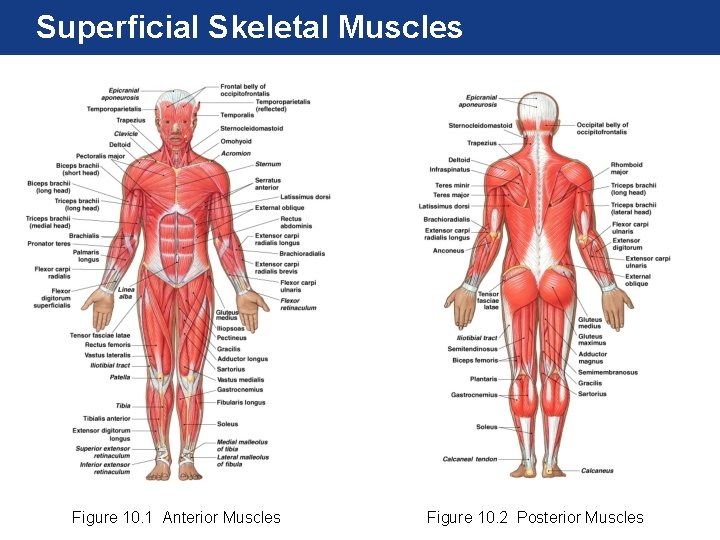
Superficial Skeletal Muscles Figure 10. 1 Anterior Muscles Figure 10. 2 Posterior Muscles
Muscles of the Head and Neck • The muscles of the head and neck can be subdivided into several groups. – Muscles of facial expression – Extra-ocular muscles – Muscles of mastication – Muscles of the tongue – Muscles of the pharynx – Anterior muscles of the neck
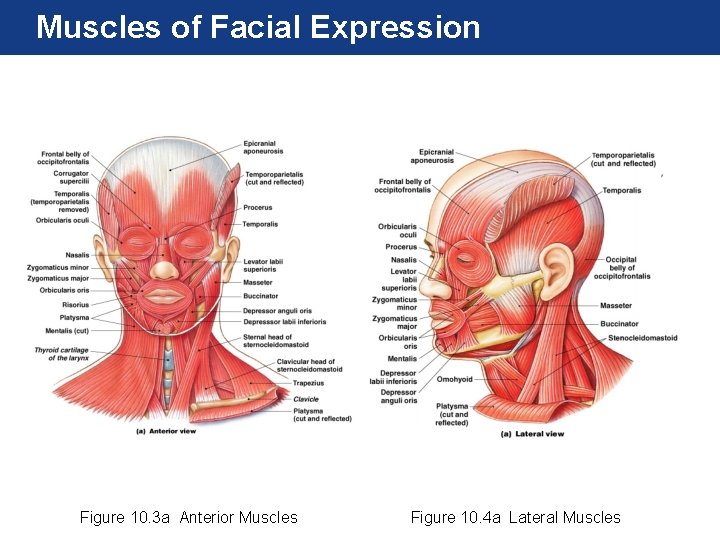
Muscles of Facial Expression Figure 10. 3 a Anterior Muscles Figure 10. 4 a Lateral Muscles
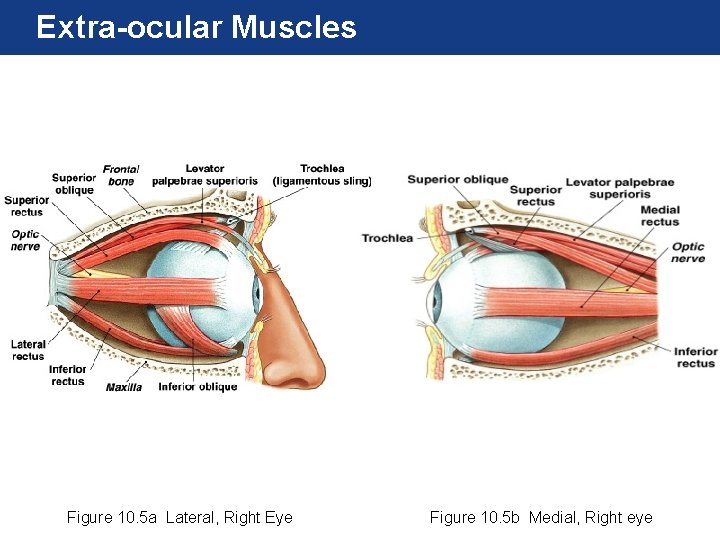
Extra-ocular Muscles Figure 10. 5 a Lateral, Right Eye Figure 10. 5 b Medial, Right eye
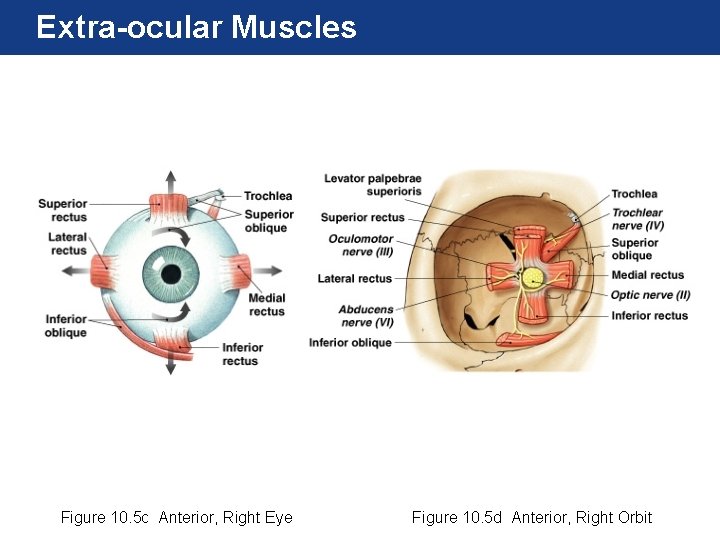
Extra-ocular Muscles Figure 10. 5 c Anterior, Right Eye Figure 10. 5 d Anterior, Right Orbit
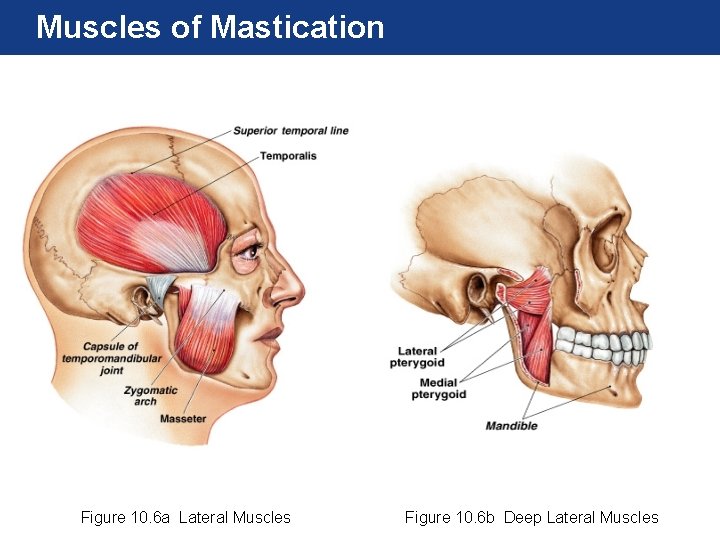
Muscles of Mastication Figure 10. 6 a Lateral Muscles Figure 10. 6 b Deep Lateral Muscles
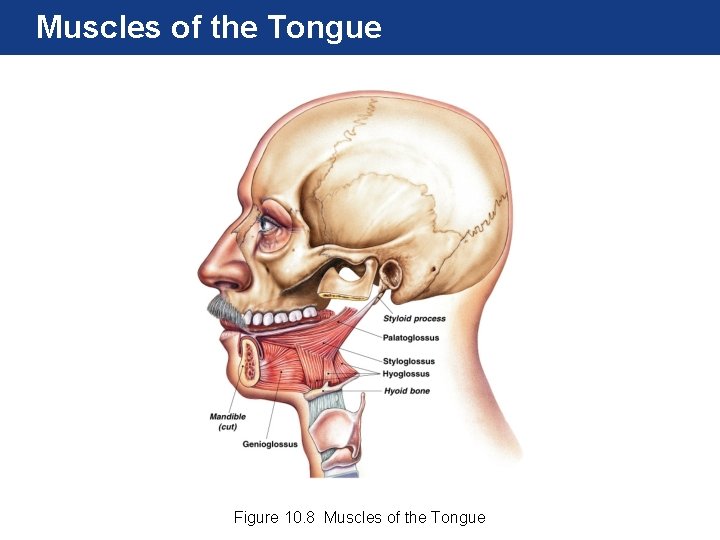
Muscles of the Tongue Figure 10. 8 Muscles of the Tongue
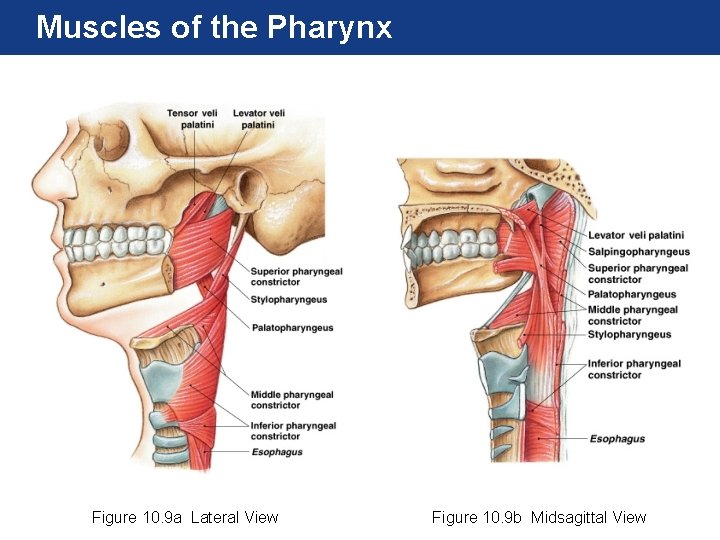
Muscles of the Pharynx Figure 10. 9 a Lateral View Figure 10. 9 b Midsagittal View
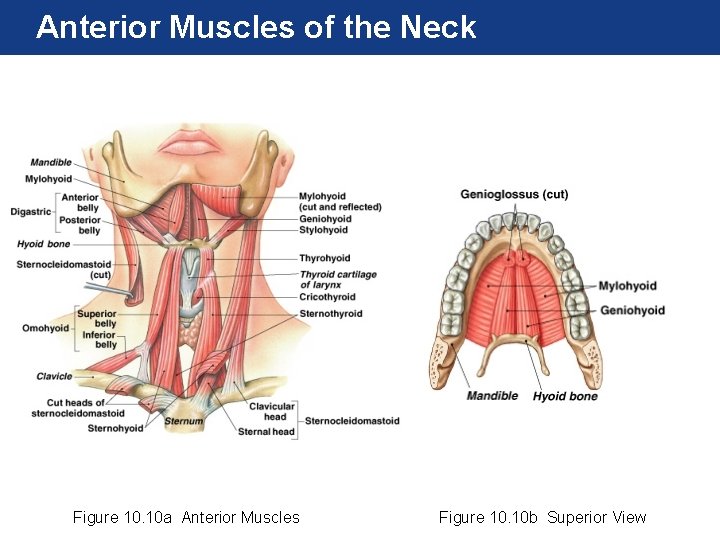
Anterior Muscles of the Neck Figure 10. 10 a Anterior Muscles Figure 10. 10 b Superior View
Muscles of the Head and Neck • Summary of the head and neck muscles PLAY The Head and Neck
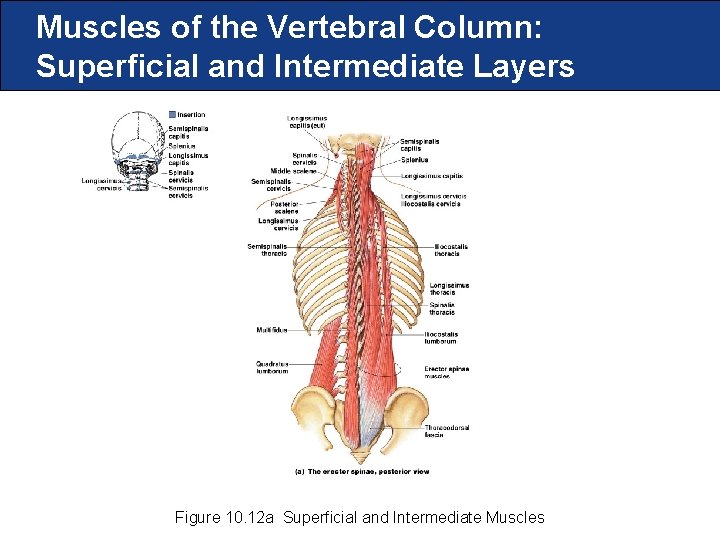
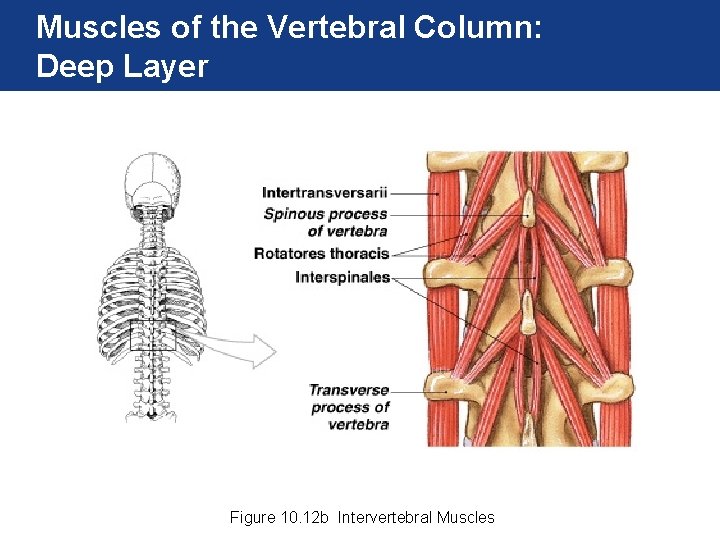
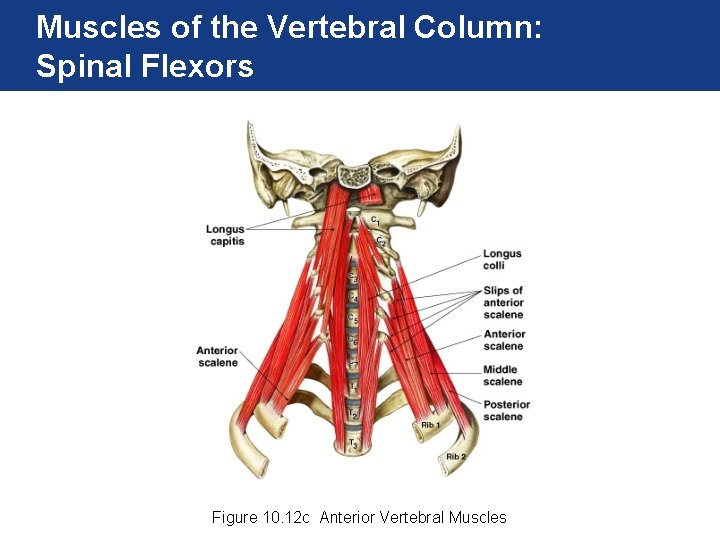
Muscles of the Vertebral Column • The muscles of the back form three distinct layers: – Superficial: move the neck – Intermediate: extend the vertebral column – Deep: interconnect vertebrae
Muscles of the Vertebral Column: Superficial and Intermediate Layers Figure 10. 12 a Superficial and Intermediate Muscles
Erector Spinae • Summary of the erector spinae muscles PLAY The Erector Spinae Muscles
Muscles of the Vertebral Column: Deep Layer Figure 10. 12 b Intervertebral Muscles
Muscles of the Vertebral Column: Spinal Flexors Figure 10. 12 c Anterior Vertebral Muscles
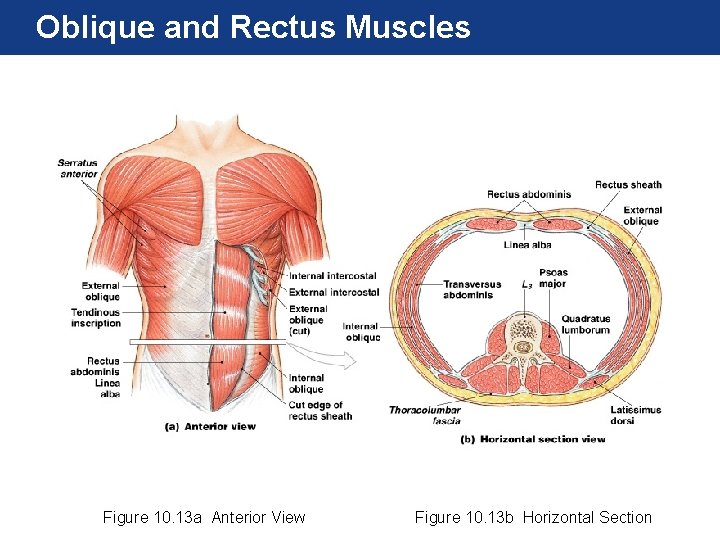
Oblique and Rectus Muscles • The muscles of the oblique and rectus groups lie between the vertebral column and the ventral midline. • The oblique muscles can compress underlying structures or rotate the vertebral column, depending on whether one or both sides are contracting. • The rectus muscles are important flexors of the vertebral column, acting in opposition to the erector spinae.
Oblique and Rectus Muscles Figure 10. 13 a Anterior View Figure 10. 13 b Horizontal Section
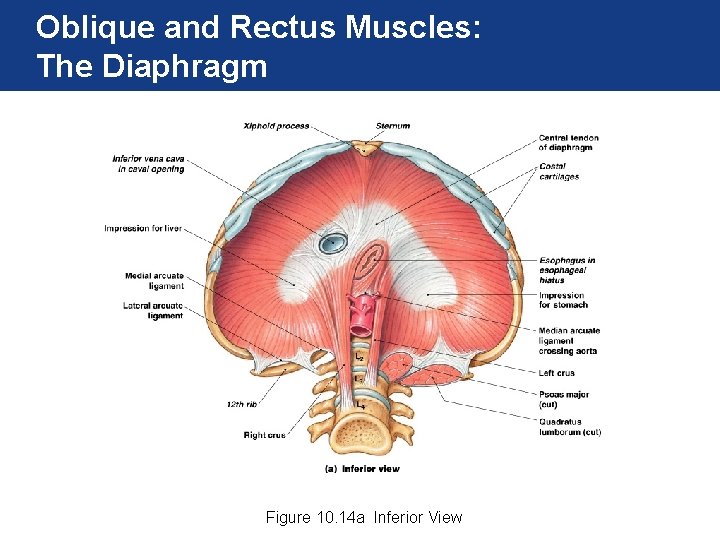
Oblique and Rectus Muscles: The Diaphragm Figure 10. 14 a Inferior View
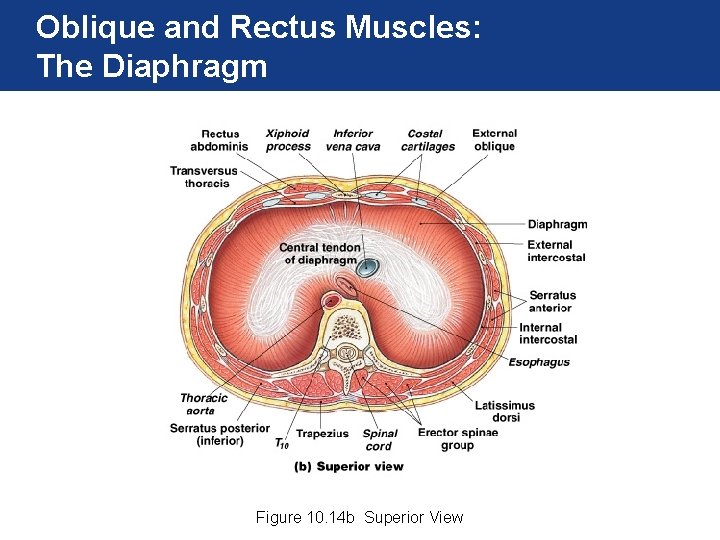
Oblique and Rectus Muscles: The Diaphragm Figure 10. 14 b Superior View
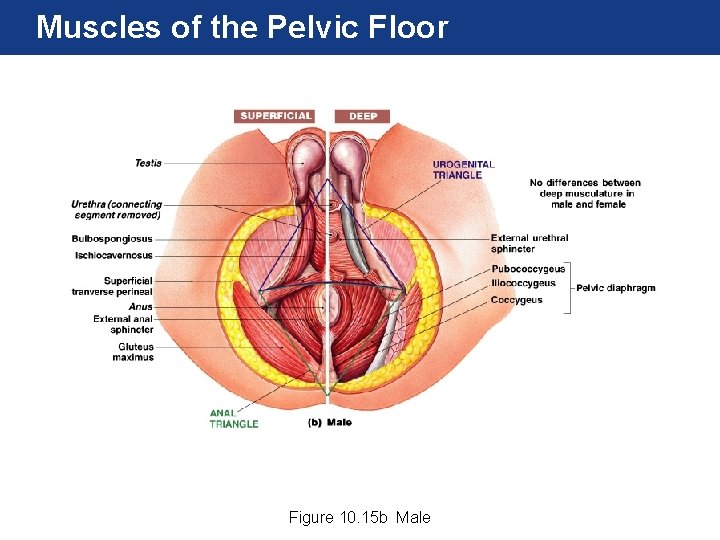
Muscles of the Pelvic Floor • Muscles of the pelvic floor have three main functions: – Support the organs of the pelvic cavity – Flex the joints of the sacrum and coccyx – Control the movement of materials through the urethra and anus
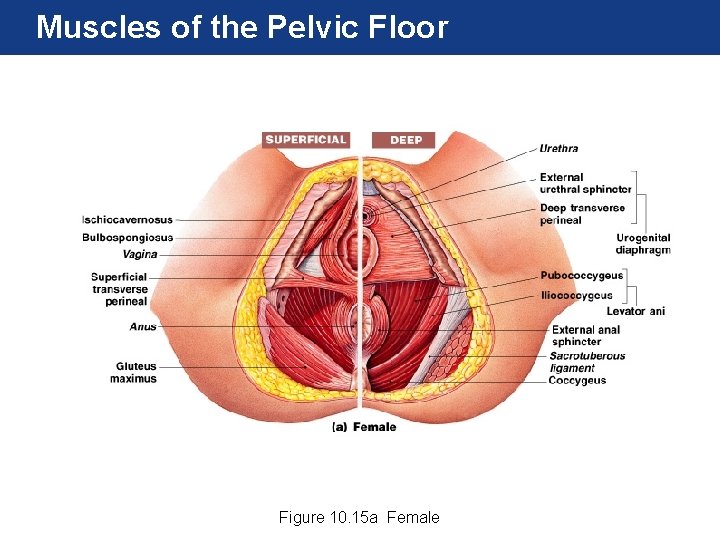
Muscles of the Pelvic Floor Figure 10. 15 a Female
Muscles of the Pelvic Floor Figure 10. 15 b Male