
Chapter Introduction Section 1 Macroeconomic Equilibrium Section 2
Chapter Introduction Section 1: Macroeconomic Equilibrium Section 2: Stabilization Policies Section 3: Economics and Politics Visual Summary
Do you remember Hurricane Katrina or the invasion of Iraq and the subsequent war? How did these events—along with growing demand—affect gasoline prices? Did the higher gasoline prices change the spending habits of you and your friends? How and why? Conduct a simple survey of your friends and family to find out how higher prices impacted their lives. Present the survey to your class. Read Chapter 15 to learn what the government might do to stabilize the economy.
Governments strive for a balance between the costs and benefits of their economic policies to promote economic stability and growth.
Section Preview In this section, you will learn that macroeconomic equilibrium takes place at the intersection of aggregate demand aggregate supply. Section Objectives: Students will be able to: • Describe the difference between microeconomics and macroeconomics. • Describe aggregate supply, aggregate demand macroeconomic equilibrium.
Macroeconomics refers to A. Businesses or individuals B. Economy as a whole C. Specific parts of the economy A. A B. B C. C
Macroeconomic Equilibrium • Macroeconomics seeks balance through supply and demand.

Aggregate Supply and Demand Aggregate supply and demand help us study supply and demand for the economy as a whole.
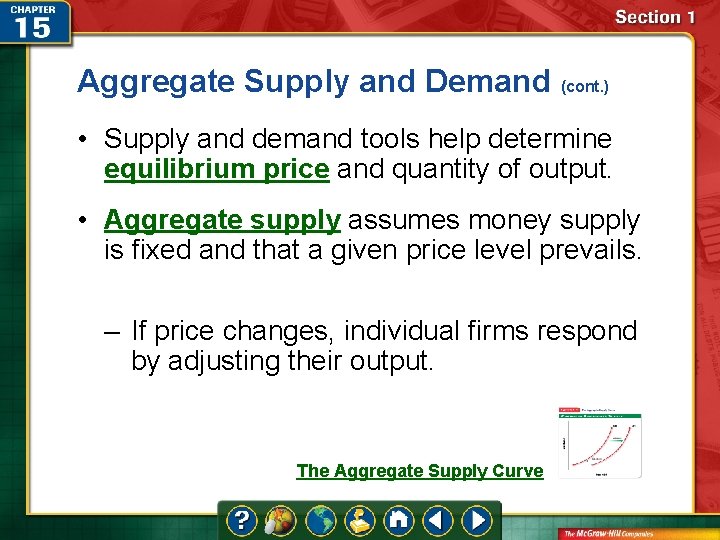
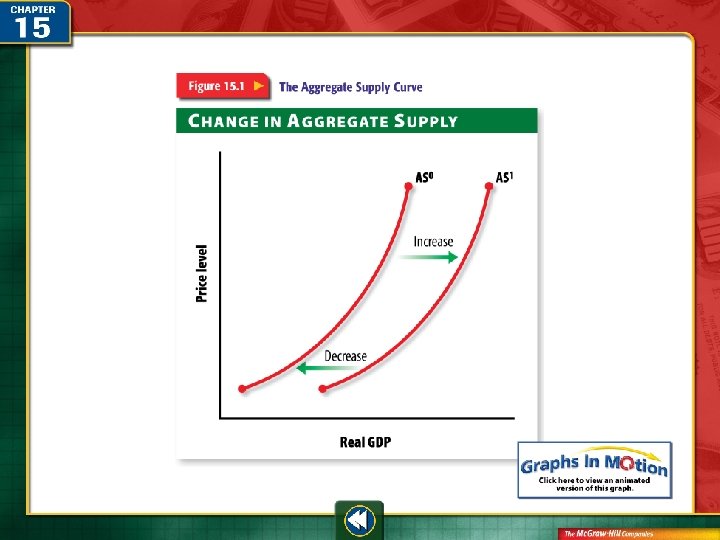
Aggregate Supply and Demand (cont. ) • Supply and demand tools help determine equilibrium price and quantity of output. • Aggregate supply assumes money supply is fixed and that a given price level prevails. – If price changes, individual firms respond by adjusting their output. The Aggregate Supply Curve
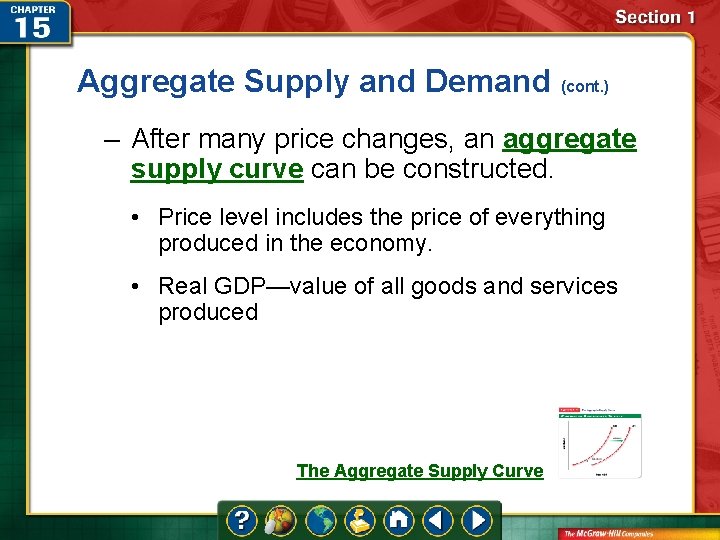
Aggregate Supply and Demand (cont. ) – After many price changes, an aggregate supply curve can be constructed. • Price level includes the price of everything produced in the economy. • Real GDP—value of all goods and services produced The Aggregate Supply Curve
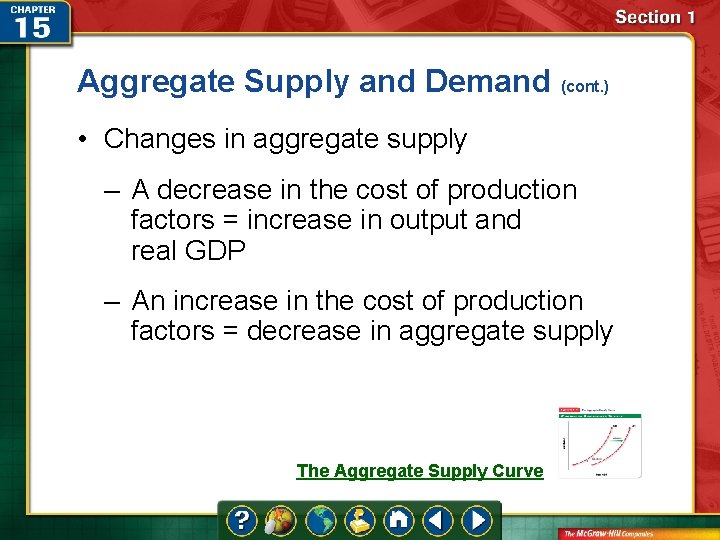
Aggregate Supply and Demand (cont. ) • Changes in aggregate supply – A decrease in the cost of production factors = increase in output and real GDP – An increase in the cost of production factors = decrease in aggregate supply The Aggregate Supply Curve
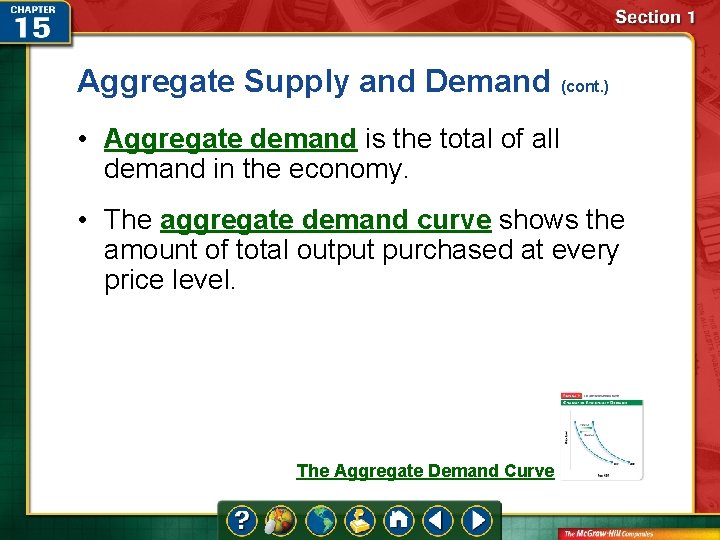
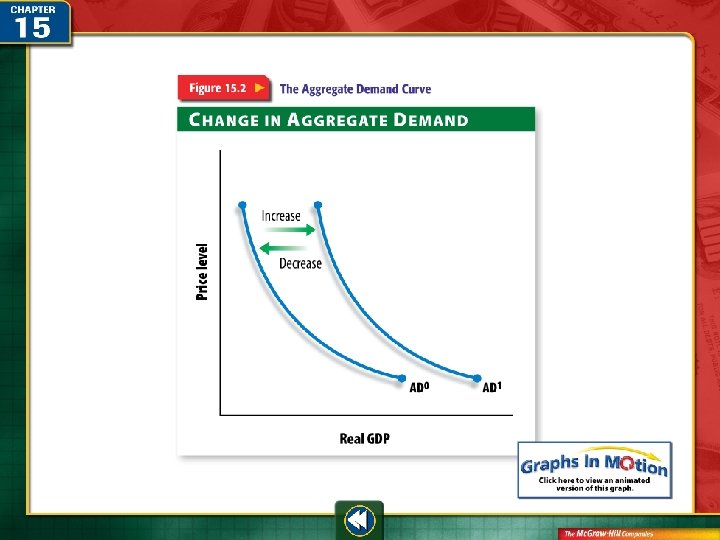
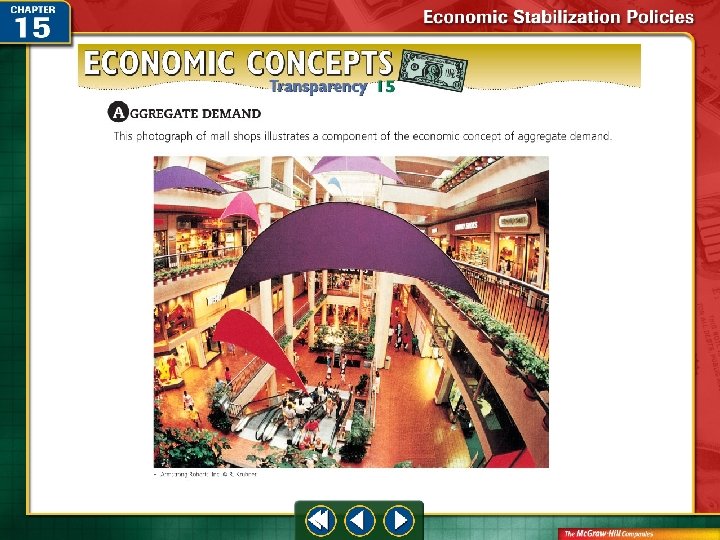
Aggregate Supply and Demand (cont. ) • Aggregate demand is the total of all demand in the economy. • The aggregate demand curve shows the amount of total output purchased at every price level. The Aggregate Demand Curve
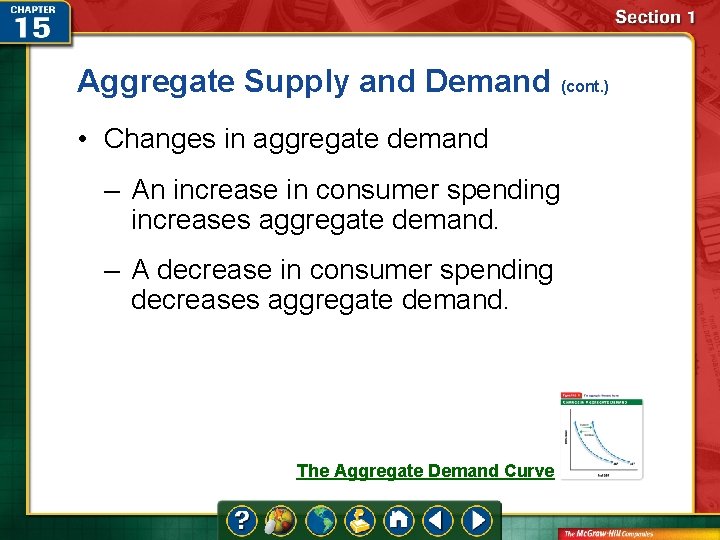
Aggregate Supply and Demand (cont. ) • Changes in aggregate demand – An increase in consumer spending increases aggregate demand. – A decrease in consumer spending decreases aggregate demand. The Aggregate Demand Curve
When you go out and spend your money on music and entertainment instead of saving it, what impact is that on the aggregate demand curve? A. Slope of the curve shifts left B. Curve shifts to the right C. Curve shifts to the left D. Slope of curve shifts right A. B. C. D. A B C D
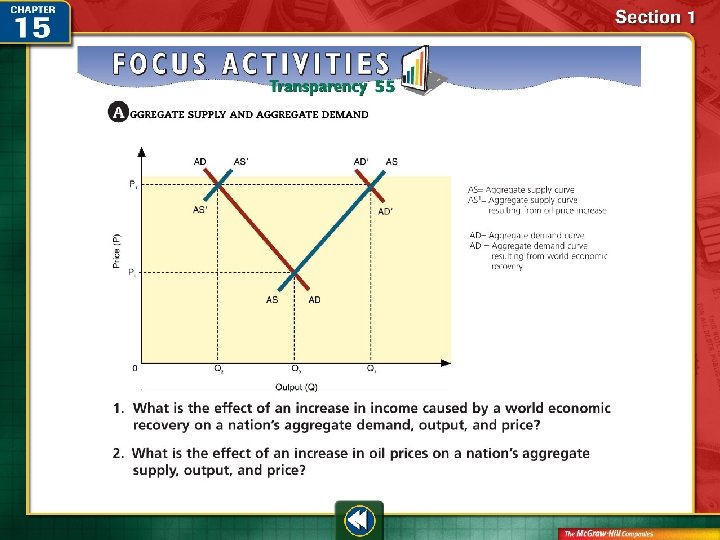
Macroeconomic Equilibrium Macroeconomic equilibrium is reached when the level of real GDP is consistent with a given price level.
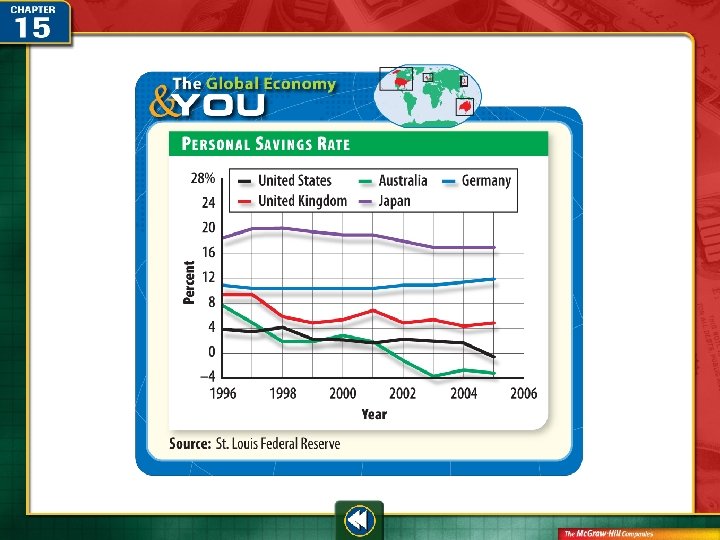
Macroeconomic Equilibrium (cont. ) • Aggregate supply and demand curves provide a framework to help analyze the impact of economic policy proposals on economic growth and price stability. • Macroeconomic equilibrium is the point at which the level of real GDP is consistent with a given price level. The Global Economy & YOU Personal Savings Rate
Macroeconomic Equilibrium (cont. ) • The equilibrium will change if either AS or AD changes. The Economy in Equilibrium
Why is the study of macroeconomic equilibrium important? A. Helps economists analyze the impact of economic policy ideas on growth and stability B. Provides an idea on the way and direction things will change C. Provides us with exact predictions of the way and direction things will change D. Helps economists determine Americans’ level of savings A. B. C. D. A B C D
Section Objectives: Students will be able to: • Describe the difference between microeconomics and macroeconomics. • Describe aggregate supply, aggregate demand macroeconomic equilibrium.
Section Preview In this section, you will learn how government can promote economic growth through economic policies. Section Objectives: Students will be able to: • Describe and give examples of demand – side policies used by governments to define their role in the economy. • Describe and give examples of supply – side policies used by governments to define their role in the economy.
Medicare provides health-care to the A. Elderly B. Working poor C. Employees of the government D. Young A. B. C. D. A B C D
Stabilization Policies • Medicare expenditures—continually rise, shifting aggregate demand curve to the right
Demand-Side Policies Demand-side policies are designed to affect total demand through taxing, government spending, and automatic stabilizers.
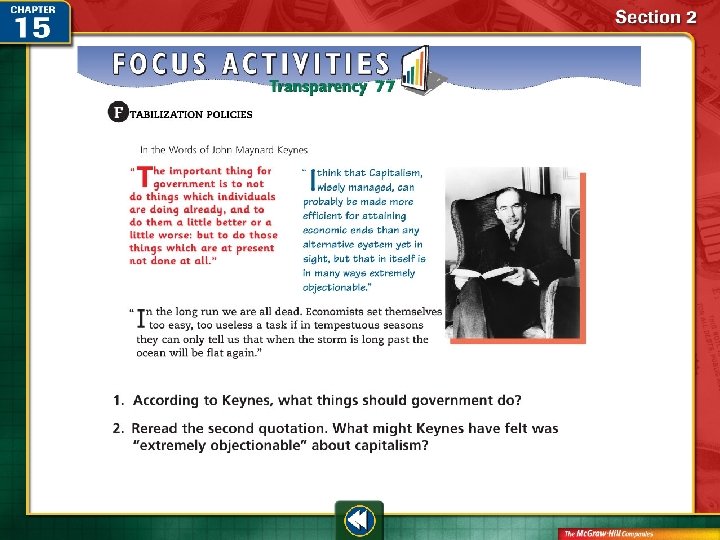
Demand-Side Policies (cont. ) • Demand-side policies are designed to increase or decrease total demand in the economy. – Fiscal policy is derived from Keynesian economics. • John Keynes used the output-expenditure model. • GDP = C + I + G + F Profiles in Economics: John Maynard Keynes
Demand-Side Policies (cont. ) • Investment sector was unstable. • Magnified the effect on other spending— multiplier • The accelerator can lead the economy in a downward spiral.
Demand-Side Policies (cont. ) • Role of government according to John Keynes – Only government is big enough to counterbalance changes in investmentsector spending. – Directly—major construction or rehabilitation projects – Indirectly—altering taxes – Government’s risk of a short-term deficit unfortunate but necessary
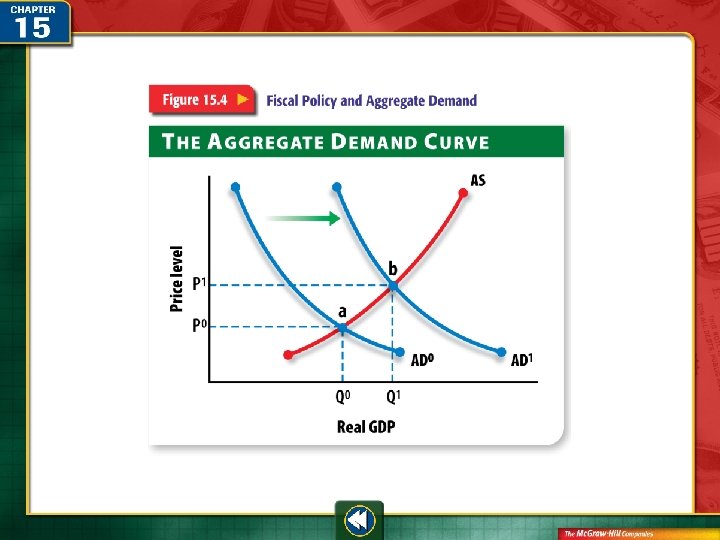
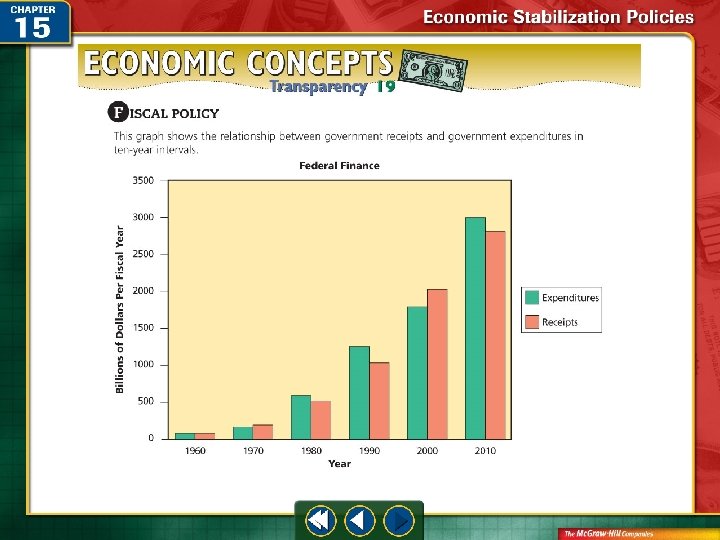
Demand-Side Policies (cont. ) • Problem with Keynesian theory: Federal government does not limit spending when business spending increases. • Automatic stabilizers—another component of fiscal policy – Entitlement programs • Unemployment insurance – Progressive income tax Fiscal Policy and Aggregate Demand
The combined multiplier-accelerator effect contributes to GDP A. Growth B. Instability C. Loss D. None of the above A. B. C. D. A B C D
Supply-Side Policies Supply-side economics focuses on policies that increase production through less government and lower taxes.
Supply-Side Policies (cont. ) • Supply-side policies—designed to stimulate output by increasing production. – Popular with President Reagan’s administration – Reduce government’s role in the economy

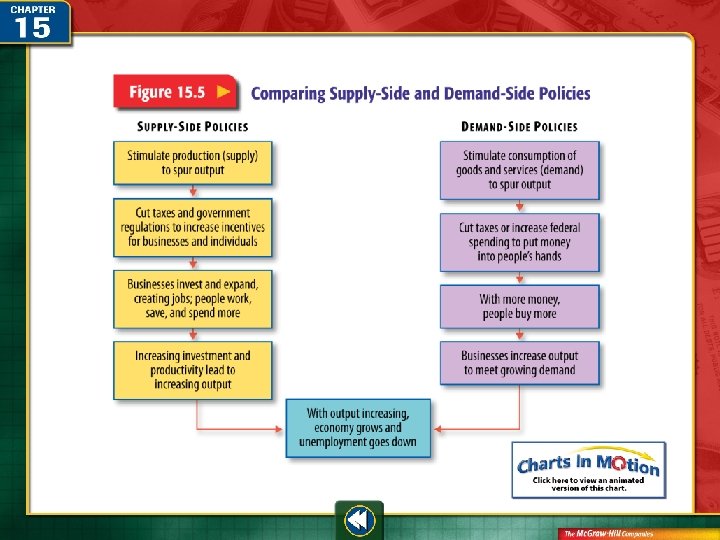
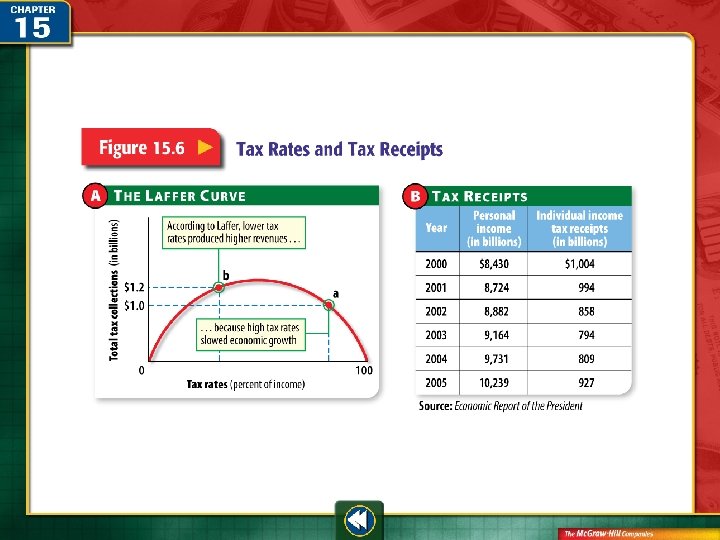
Supply-Side Policies (cont. ) • Reduce number of federal agencies • Spend less at federal level • Deregulation • Lower federal taxes • Laffer curve Comparing Supply-Side and Demand-Side Policies

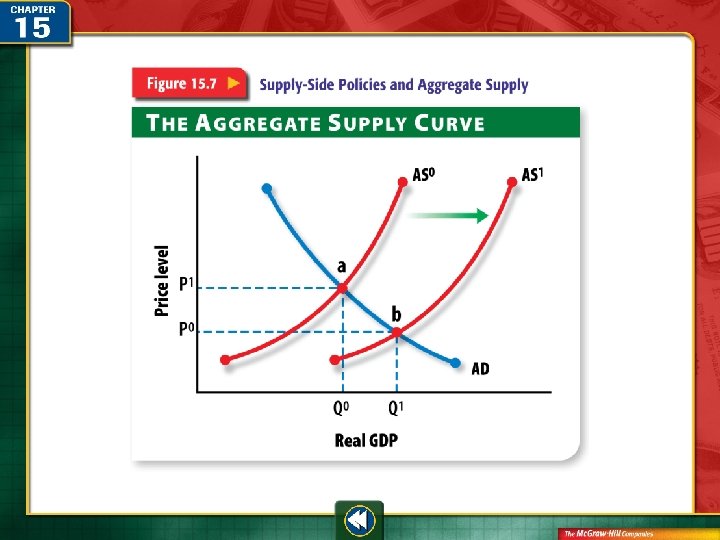
Supply-Side Policies (cont. ) • Successful supply-side policies produce more at every price level. • If no corresponding change in aggregate demand, real output grows and price decreases. Tax Rates and Tax Receipts
Supply-Side Policies (cont. ) • Limitations of supply-side policies – Not enough experience to know how they affect economy – Designed to promote growth, not remedy economic instability Supply-Side Policies and Aggregate Supply
What is the goal of supply-side or demand-side policies? A. Increase production/output B. Decrease unemployment C. Keep inflation same or lower D. All of the above A. B. C. D. A B C D
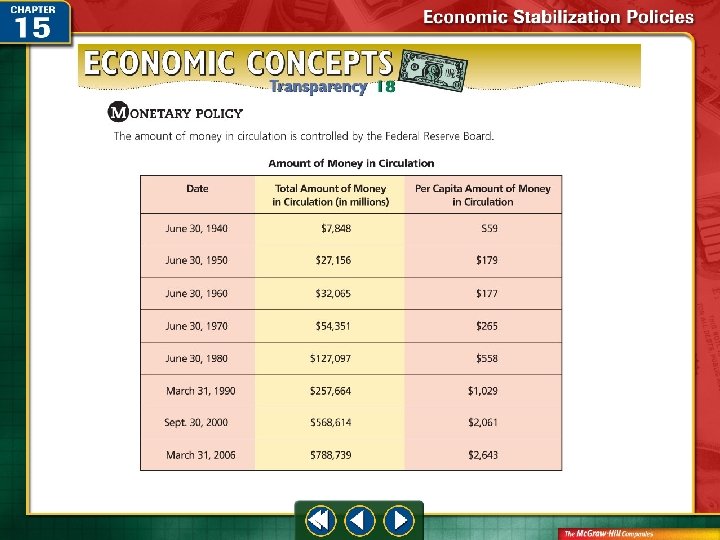
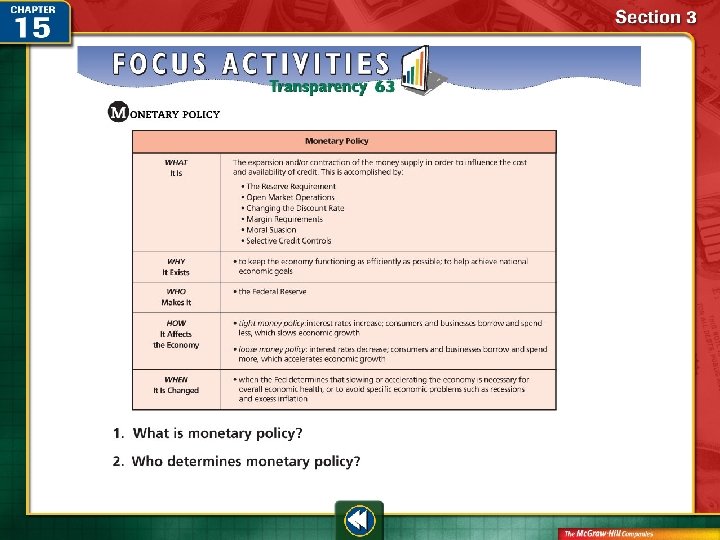
Monetary Policies Monetarist policies seek steady economic growth by controlling the money supply.
Monetary Policies (cont. ) • Monetarism—primarily concerned with the role of money in the economy – Fluctuations can be destabilizing, leading to unemployment and inflation. – Contractionary monetary policy—money supply is tightened, raising interest rates – Expansionary policy—increases the money supply and lowers interest rates
Monetary Policies (cont. ) • In short run, monetary policy has a significant impact on demand for real GDP. • Long run impact—increase possibility of future inflation • Growth of money supply should equate to growth of real GDP and productivity. – Wage-price controls—an approach to control inflation by President Nixon
Monetary Policies (cont. ) • Desired changes are difficult to time with monetary policy. • Not effective for short term unemployment but effective for long-term price stability.
Monetarists believe A. Wage-price controls should be used to promote money supply growth. B. Growth of money supply should be slow and steady. C. Money supply growth should equate to the growth total of real GDP and labor. D. Money supply growth should be fast and rapid. A. B. C. D. A B C D

Section Objectives: Students will be able to: • Describe and give examples of demand – side policies used by governments to define their role in the economy. • Describe and give examples of supply – side policies used by governments to define their role in the economy.
Section Preview In this section, you will learn that economic policies change as time and circumstances change. Section Objectives: Students will be able to: • Describe the various types of fiscal policies employed in the U. S. • Describe the different reasons why economists might not agree on one economic policy.
Who are the baby boomers? A. Individuals born between 1936 and 1945 B. Individuals born between 1946 and 1964 C. Individuals born between 1929 and 1935 A. A B. B C. C

Changing Nature of Economic Policy The government can influence the economy with discretionary, passive, or structural fiscal policies.
Changing Nature of Economic Policy (cont. ) • Fiscal policies—government attempts to influence economy through tax and spending • Types of fiscal policy – Discretionary fiscal policy is policy that someone must choose to implement. – Passive fiscal policies do not require new or special action to go into effect.
Changing Nature of Economic Policy (cont. ) – Structural fiscal policies are policies designed to strengthen the economy over a longer period of time. • For several reasons, discretionary fiscal policy is used less today. – The various lags that inevitably occur between recognizing that there is a problem and actually doing something about it

Changing Nature of Economic Policy (cont. ) – The gridlock that can occur when the political parties in Congress oppose each other’s views on the budget – Ideology
Changing Nature of Economic Policy (cont. ) • The declining use of discretionary fiscal policy left a void filled by the Federal Reserve System, which has the responsibility for conducting monetary policy.
What has increased to replace the decreased use of discretionary fiscal policy? A. Structural fiscal policy B. Monetary policy C. Passive fiscal policy A. A B. B C. C
Economics and Politics Today Current conditions shape the views of economists and policy makers.
Economics and Politics Today (cont. ) • Economists and politicians work together fairly closely. • Economists’ thinking differs – Differing critical problems – Economic theories are a product of the times • Baby boomers
Economics and Politics Today (cont. ) • Council of Economic Advisers reports economic developments/strategies to President. • Economists have – Developed statistical measures of the economy’s performance – Helped Americans become more aware of the workings of the economy
Economics and Politics Today (cont. ) – Learned enough to prevent another Great Depression – Devise policies to stimulate growth, lower inflation and unemployment – Made the American economy more successful
Do you think your representatives to Congress care the economic consequences of their decisions? A. Yes B. No C. Somewhat A. A B. B C. C
Section Objectives: Students will be able to: • Describe the various types of fiscal policies employed in the U. S. • Describe the different reasons why economists might not agree on one economic policy.
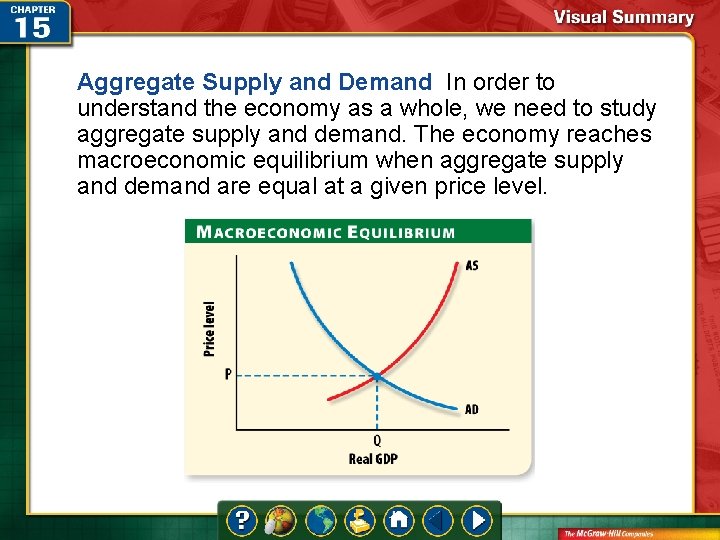
Aggregate Supply and Demand In order to understand the economy as a whole, we need to study aggregate supply and demand. The economy reaches macroeconomic equilibrium when aggregate supply and demand are equal at a given price level.
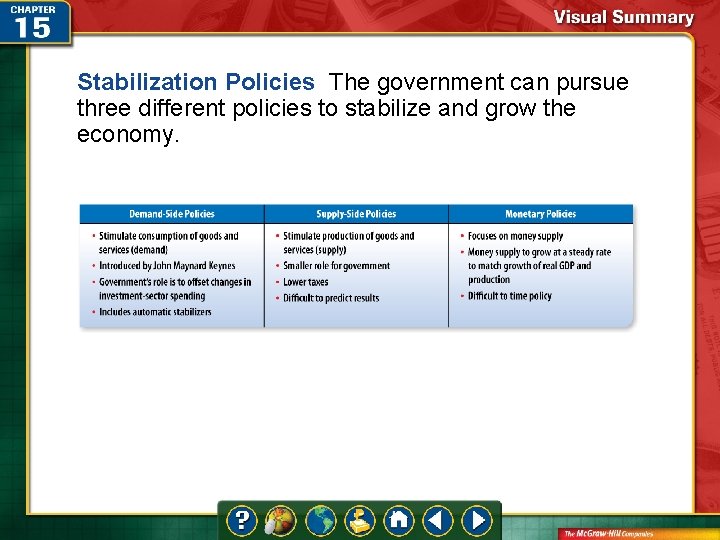
Stabilization Policies The government can pursue three different policies to stabilize and grow the economy.
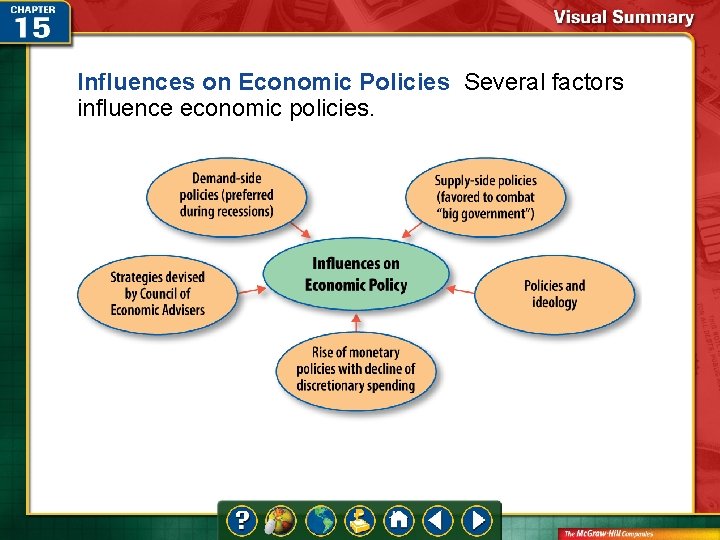
Influences on Economic Policies Several factors influence economic policies.

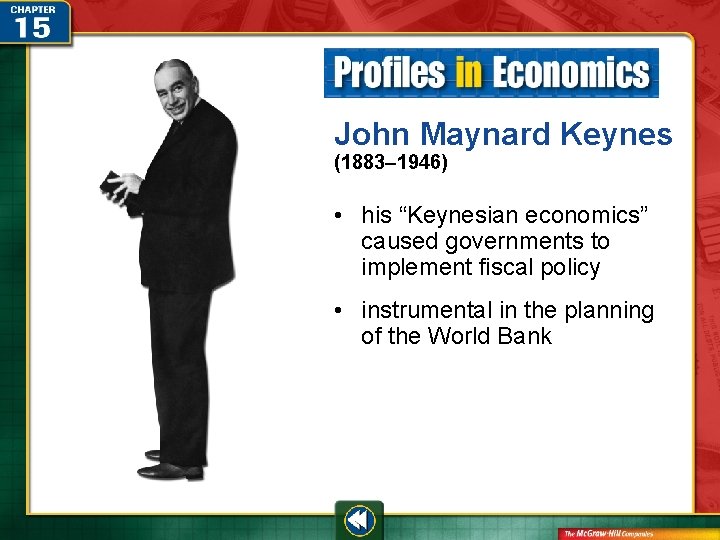
John Maynard Keynes (1883– 1946) • his “Keynesian economics” caused governments to implement fiscal policy • instrumental in the planning of the World Bank

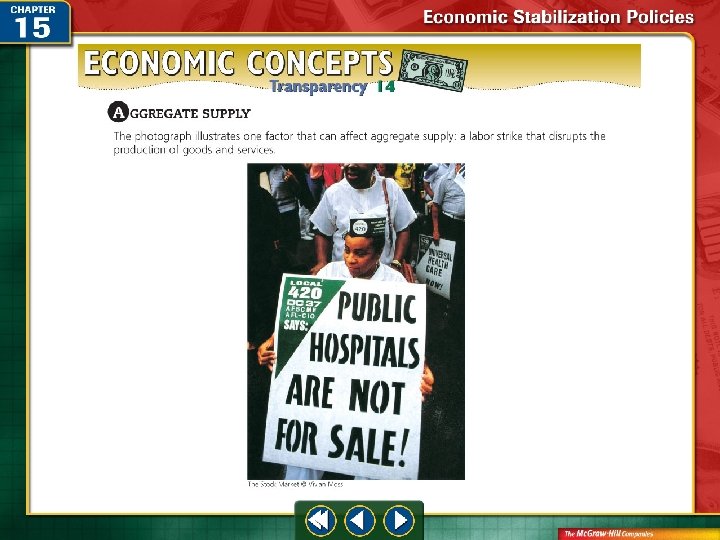
Economic Concepts Transparencies Transparency 14 Aggregate Supply Transparency 15 Aggregate Demand Transparency 18 Monetary Policy Transparency 19 Fiscal Policy Select a transparency to view.

macroeconomics part of economics that deals with the economy as a whole
equilibrium price where quantity supplied equals quantity demanded
aggregate supply the total value of all goods and services that all firms would produce in a specific period of time at various price levels
aggregate supply curve hypothetical curve showing different levels of real GDP that would be produced at various price levels
aggregate demand the total value of goods and services demanded at all different price levels
aggregate demand curve hypothetical curve showing different levels of real GDP that would be purchased at various price levels

macroeconomic equilibrium level of real GDP consistent with a given price level and marked by the intersection of aggregate supply and aggregate demand
framework point of reference
unduly too much
Medicare federal health-care program for senior citizens, regardless of income
fiscal policy use of government spending and revenue collection measures to influence the economy

Keynesian economics government spending and taxation policies suggested by John Maynard Keynes to stimulate the economy
multiplier magnified change in overall spending caused by a change in investment spending
accelerator change in investment spending caused by a change in overall spending
automatic stabilizer program that automatically provides benefits to offset a change in people’s incomes
entitlements broad social program that uses established eligibility requirements to provide health, nutritional, or income supplements to individuals
unemployment insurance government program providing payments to unemployed workers

supply-side policies economic policies designed to stimulate the economy by increasing production
deregulation relaxation or removal of government regulations on business activities
monetarism school of thought stressing the importance of stable monetary growth to control inflation and stimulate longterm economic growth
wage-price controls policies and regulations making it illegal for firms to give raises or raise prices without government permission
unstable unsteady
explicit openly and clearly expressed
monetary policy actions by the Federal Reserve System to expand or contract the money supply in order to affect the cost and availability of credit
baby boomers people born in the United States during the historically high birthrate years from 1946 to 1964
Council of Economic Advisers three-member group that devises strategies and advises the president of the United States on economic matters
ideology a set of beliefs
advocates supports; speaks in favor of
To use this Presentation Plus! product: Click the Forward button to go to the next slide. Click the Previous button to return to the previous slide. Click the Home button to return to the Chapter Menu. Click the Transparency button from the Chapter Menu, Chapter Introduction, or Visual Summary slides to access the Economic Concepts transparencies that are relevant to this chapter. From within a section, click on this button to access the relevant Daily Focus Skills Transparency. Click the Return button in a feature to return to the main presentation. Click the Economics Online button to access online textbook features. Click the Reference Atlas button to access the Interactive Reference Atlas. Click the Exit button or press the Escape key [Esc] to end the chapter slide show. Click the Help button to access this screen. Links to Presentation Plus! features such as Graphs in Motion, Charts in Motion, and figures from your textbook are located at the bottom of relevant screens.
- Slides: 107