
CHAPTER Introduction on Biotechnology Power Point Lecture by
CHAPTER Introduction on Biotechnology Power. Point® Lecture by: Melissa Rowland-Goldsmith Chapman University
1. 1 What Is Biotechnology and What Does It Mean to You? • Biotechnology – using living organisms, or the products of living organisms, for human benefit to make a product or solve a problem • Historical Examples – Fermentation – Selective breeding – Use of antibiotics © 2013 Pearson Education, Inc.

1. 1 What Is Biotechnology and What Does It Mean to You? • Based on this tree, can you become successful in the biotech industry only studying biology? © 2013 Pearson Education, Inc.
1. 1 What Is Biotechnology and What Does It Mean to You? • Modern Examples – Gene cloning – Genetic engineering – Recombinant DNA technology – Human Genome Project © 2013 Pearson Education, Inc.
1. 1 What Is Biotechnology and What Does It Mean to You? • Example of "modern" biotechnology: – recombinant DNA technology started modern biotech as an industry • Examples of applications – development of disease-resistant plants – food crops that produce greater yields – "golden rice" engineered to be more nutritious – genetically engineered bacteria that can degrade environmental pollutants • Work in groups to come up with more examples of applications © 2013 Pearson Education, Inc.
1. 2 Types of Biotechnology • • Microbial Biotechnology Agricultural Biotechnology Animal Biotechnology Forensic Biotechnology Bioremediation Aquatic Biotechnology Medical Biotechnology Regulatory Biotechnology © 2013 Pearson Education, Inc.
1. 2 Types of Biotechnology • Microbial Biotechnology – manipulation of microorganisms such as yeast and bacteria – Create better enzymes – More efficient decontamination processes for industrial waste product removal – Used to clone and produce large amounts of important proteins used in human medicine © 2013 Pearson Education, Inc.
1. 2 Types of Biotechnology • Agricultural Biotechnology – United Nations Food and Agricultural Org. predicts by 2050, we will need to feed a world population of 9. 1 billion! This requires raising food production by approximately 70%! – Work in groups to brainstorm a few solutions to better feed the world by 2050. © 2013 Pearson Education, Inc.
1. 2 Types of Biotechnology • Agricultural Biotechnology – Plants more environmentally friendly that yield more per acre (genetically engineered) – Resistance to diseases and insects – Foods with higher protein or vitamin content – Drugs developed and grown as plant products – These better plants ultimately reduce production costs to help feed the growing world population © 2013 Pearson Education, Inc.
1. 2 Types of Biotechnology • Agricultural Biotechnology – Work in groups to discuss how you can use this technology in a third world country to create a better corn crop (main crop in that country) that contains all of the 22 essential amino acids. © 2013 Pearson Education, Inc.
1. 2 Types of Biotechnology • Will improved crops that are created to satisfy world hunger reduce available land for biofuel crops? Discuss in groups. © 2013 Pearson Education, Inc.
1. 2 Types of Biotechnology • Animal Biotechnology – Animals as a source of medically valuable proteins • Antibodies • Transgenic animals – Animals as important models in basic research • Gene "knockout" experiments • Design and testing of drugs and genetic therapies – Animal cloning • Source of transplant organs © 2013 Pearson Education, Inc.
1. 2 Types of Biotechnology • Animal Biotechnology – transgenic animal: way to achieve large scale production of therapeutic proteins from animals for use in humans – Female transgenic animals express therapeutic proteins in milk (contains genes from another source) – Example: human genes coding for clotting proteins can be introduced into female goats for production of these proteins in their milk © 2013 Pearson Education, Inc.
1. 2 Types of Biotechnology • Animal Biotechnology – Gene knockout: • Disrupt a gene in the animal and then look at what functions are affected in the animal as a result of the loss of the gene • This allows researchers to determine the role and function of the gene • Since humans are similar to rats and mice, gene knockout studies in rats and mice can lead to better understanding of gene function in humans. • Work in groups and give an example of a gene you would like to knockout in mice. © 2013 Pearson Education, Inc.
1. 2 Types of Biotechnology • Forensic Biotechnology – DNA fingerprinting • • • Inclusion or exclusion of a person from suspicion Paternity cases Identification of human remains Endangered species Tracking and confirmation of the spread of disease © 2013 Pearson Education, Inc.
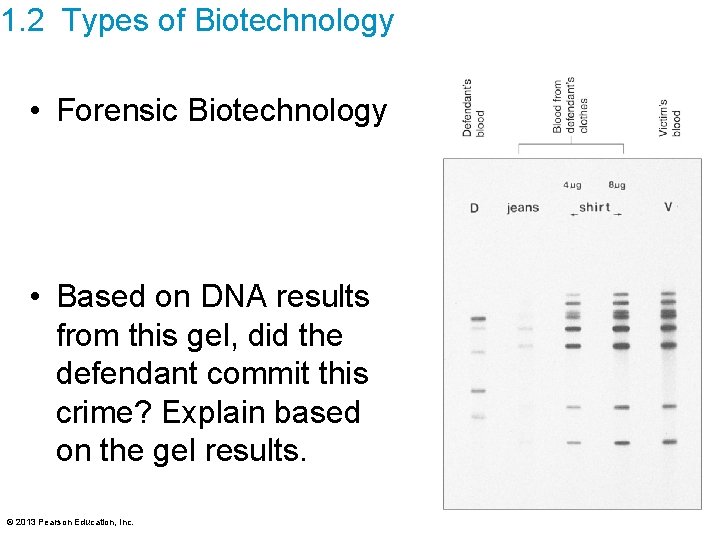
1. 2 Types of Biotechnology • Forensic Biotechnology • Based on DNA results from this gel, did the defendant commit this crime? Explain based on the gel results. © 2013 Pearson Education, Inc.
1. 2 Types of Biotechnology • Bioremediation – The use of biotechnology to process and degrade a variety of natural and manmade substances • Particularly those that contribute to environmental pollution – Example – stimulated growth of bacteria that degrade components in crude oil • 1989 Exxon Valdez oil spill in Alaska • 2010 Deep Water Horizon spill promoted research into natural oil-degrading organisms and enzymes © 2013 Pearson Education, Inc.
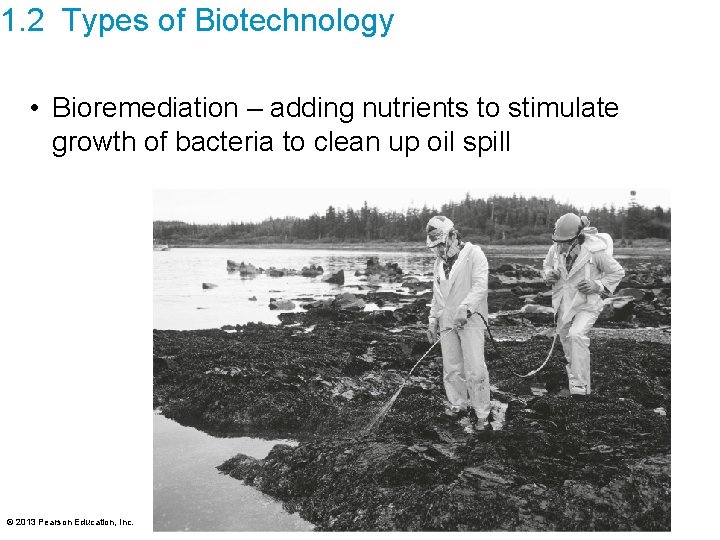
1. 2 Types of Biotechnology • Bioremediation – adding nutrients to stimulate growth of bacteria to clean up oil spill © 2013 Pearson Education, Inc.
1. 2 Types of Biotechnology • Aquatic Biotechnology – Aquaculture – raising finfish or shellfish in controlled conditions for use as food sources • 50% of all fish consumed by humans worldwide – Genetic engineering • Disease-resistant strains of oysters • Vaccines against viruses that infect salmon and other finfish • Transgenic salmon that overproduce growth hormone http: //www. webmd. com/food-recipes/news/20100922/geneticallyengineered-salmon-faq – Bioprospecting: rich and valuable sources of new genes, proteins and metabolic processes with important applications for human benefits • Marine plankton and snails found to be rich sources of antitumor and anticancer molecules © 2013 Pearson Education, Inc.
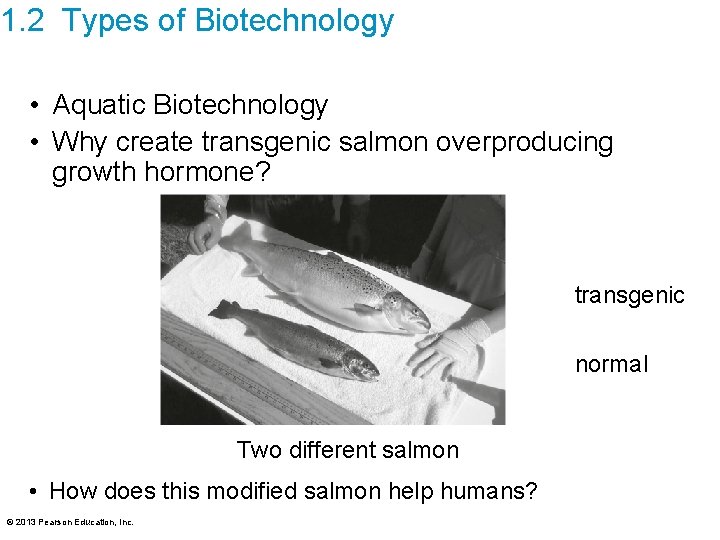
1. 2 Types of Biotechnology • Aquatic Biotechnology • Why create transgenic salmon overproducing growth hormone? transgenic normal Two different salmon • How does this modified salmon help humans? © 2013 Pearson Education, Inc.
1. 2 Types of Biotechnology • Medical Biotechnology – Involved with the whole spectrum of human medicine • Preventive medicine • Diagnosis of health and illness • Treatment of human diseases – New information from Human Genome Project • Gene therapy – Stem cell technologies © 2013 Pearson Education, Inc.
1. 2 Types of Biotechnology • Stem cells – grown in lab and then treated with different chemicals to allow them to develop into specific kinds of tissues needed for transplant • Current use: stem cells are used for diabetes; spinal cord injuries • Work in groups to come up with a list of other diseases you have read about in the newspaper or heard on the news that scientists are testing with stem cells. © 2013 Pearson Education, Inc.

1. 2 Types of Biotechnology • Medical biotechnology – Genes are headline news items © 2013 Pearson Education, Inc.

1. 2 Types of Biotechnology • Regulatory Biotechnology – Quality Assurance (QA) • All activities involved in regulating the final quality of a product – Quality Control (QC) • Part of QA process that involves lab testing and monitoring of processes and applications to ensure consistent product standards • Together QA and QC ensure that biotechnology products meet strict standards for purity and performance • Why as a consumer should you care about a product undergoing intense regulations? © 2013 Pearson Education, Inc.
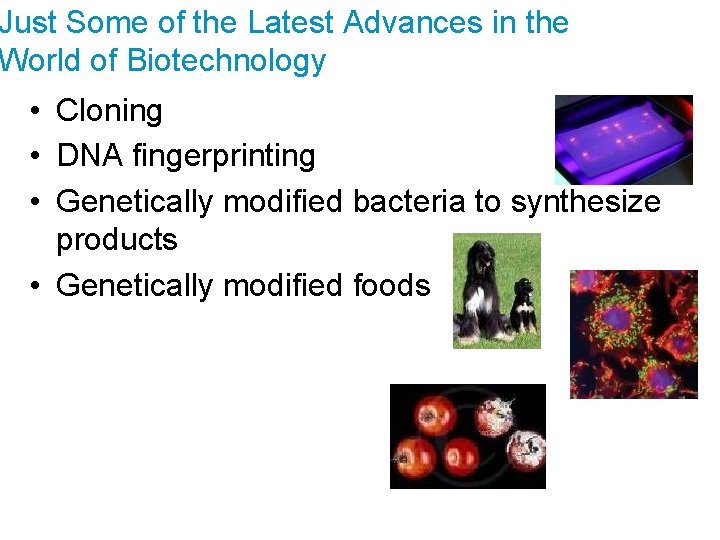
Just Some of the Latest Advances in the World of Biotechnology • Cloning • DNA fingerprinting • Genetically modified bacteria to synthesize products • Genetically modified foods
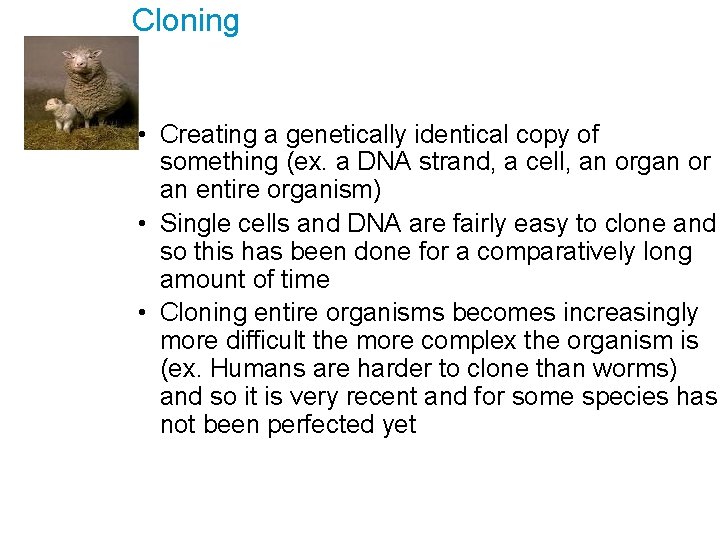
Cloning • Creating a genetically identical copy of something (ex. a DNA strand, a cell, an organ or an entire organism) • Single cells and DNA are fairly easy to clone and so this has been done for a comparatively long amount of time • Cloning entire organisms becomes increasingly more difficult the more complex the organism is (ex. Humans are harder to clone than worms) and so it is very recent and for some species has not been perfected yet
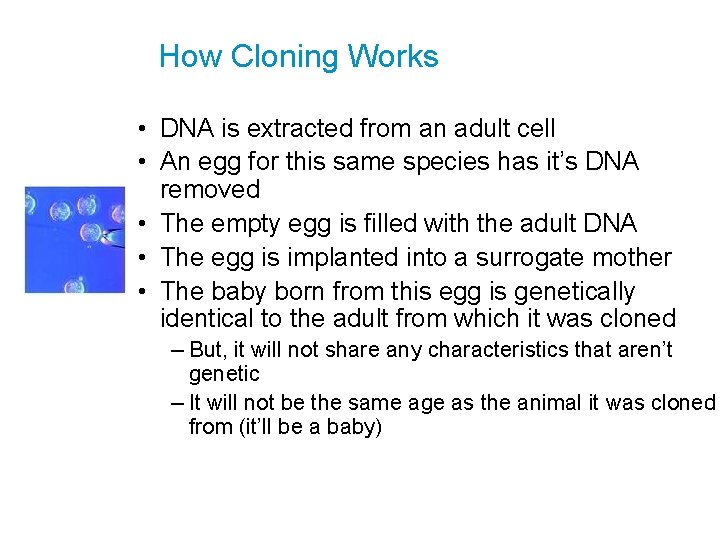
How Cloning Works • DNA is extracted from an adult cell • An egg for this same species has it’s DNA removed • The empty egg is filled with the adult DNA • The egg is implanted into a surrogate mother • The baby born from this egg is genetically identical to the adult from which it was cloned – But, it will not share any characteristics that aren’t genetic – It will not be the same age as the animal it was cloned from (it’ll be a baby)
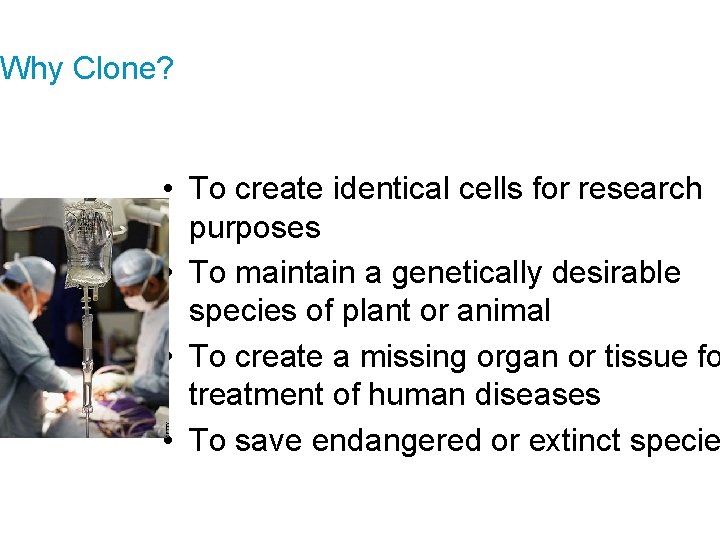
Why Clone? • To create identical cells for research purposes • To maintain a genetically desirable species of plant or animal • To create a missing organ or tissue fo treatment of human diseases • To save endangered or extinct specie
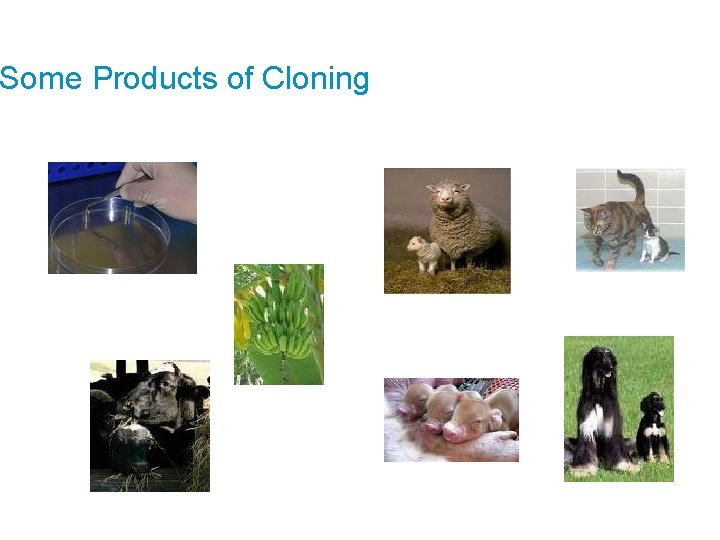
Some Products of Cloning
DNA Fingerprinting • Identifying the pattern of certain sequences in parts of a person’s DNA to determine if two samples come from the same person, related persons or two, non-related individuals • Only parts of the DNA sequence are used because the whole genome is too long to sequence repeatedly • Everyone has a unique sequence of DNA (even identical twins, although their genomes would be very close to identical) • In order to be an effective tool, we need to get DNA from many people to determine how often certain patterns show up in the population
How DNA Fingerprinting Works • The DNA is isolated from a cell sample and many copies are made with a process called PCR • The DNA is cut into pieces using restriction enzymes (they cut only at specific sequences) • The DNA is run on a gel electrophoresis to separate the pieces (separated based on size) • Probes are used to find certain DNA sequences (usually VNTR sequences) • Comparisons of these pieces of DNA are made to determine identity or relationships
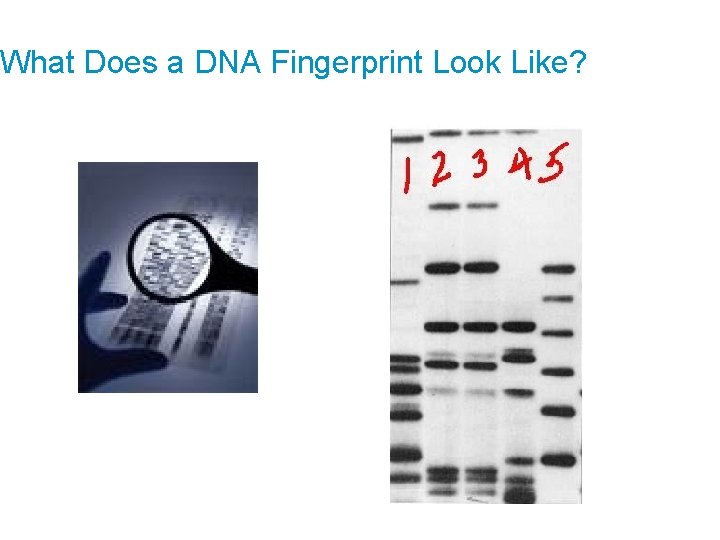
What Does a DNA Fingerprint Look Like?
What can DNA Fingerprints be used for? • Paternity/maternity tests • To determine if a suspect was at a crime scene • To identify a murder victim • To identify a soldier killed in the line of duty • To determine identity
Genetically-Modified Bacteria • Inserting new genes into a bacteria to trick it into making a product for us • Although each bacteria usually doesn’t make much product, millions of bacteria can be grown in bioreactors at the same time, and the product harvested from all of them at once
How are Genetically-Modified Bacteria Created? • A piece of DNA containing the gene for the desired product is cut with restriction enzymes • A plasmid (circular bacterial DNA) is cut with the same restriction enzyme • The piece and the plasmid are ligated (fused together) • The plasmid is transformed into the bacteria • The plasmid either stays in whole or the gene crosses over into the bacteria’s DNA
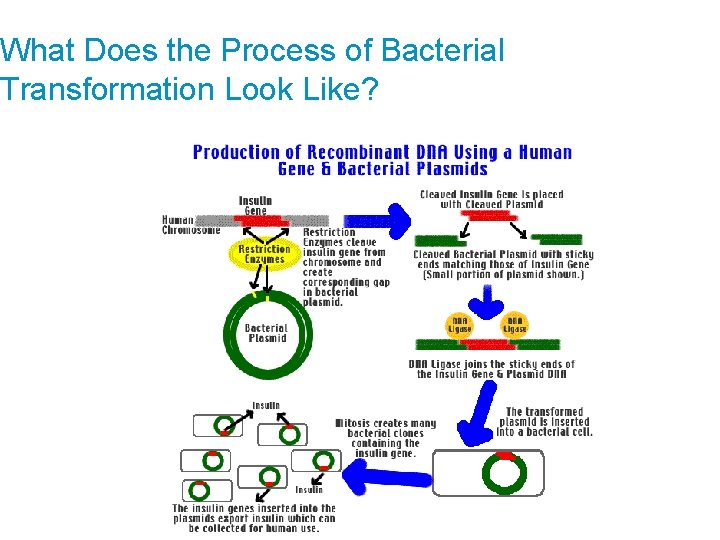
What Does the Process of Bacterial Transformation Look Like?
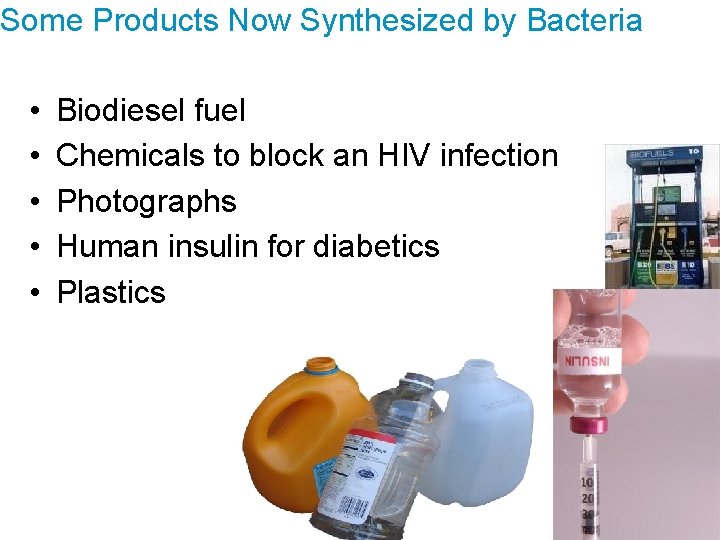
Some Products Now Synthesized by Bacteria • • • Biodiesel fuel Chemicals to block an HIV infection Photographs Human insulin for diabetics Plastics
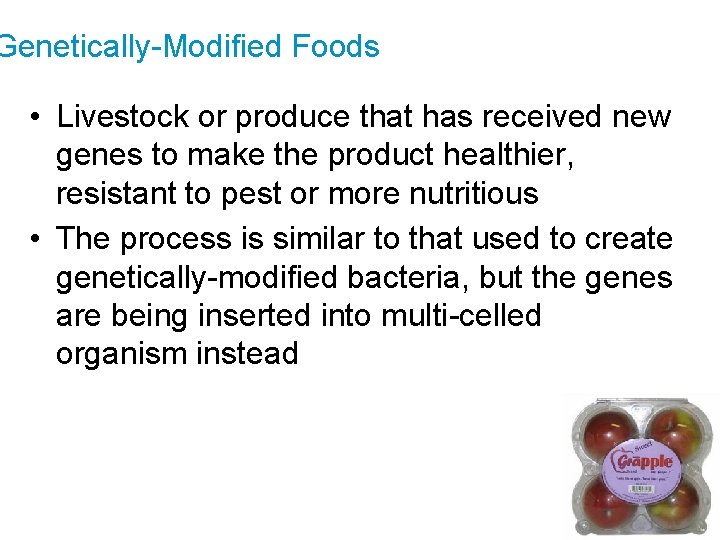
Genetically-Modified Foods • Livestock or produce that has received new genes to make the product healthier, resistant to pest or more nutritious • The process is similar to that used to create genetically-modified bacteria, but the genes are being inserted into multi-celled organism instead
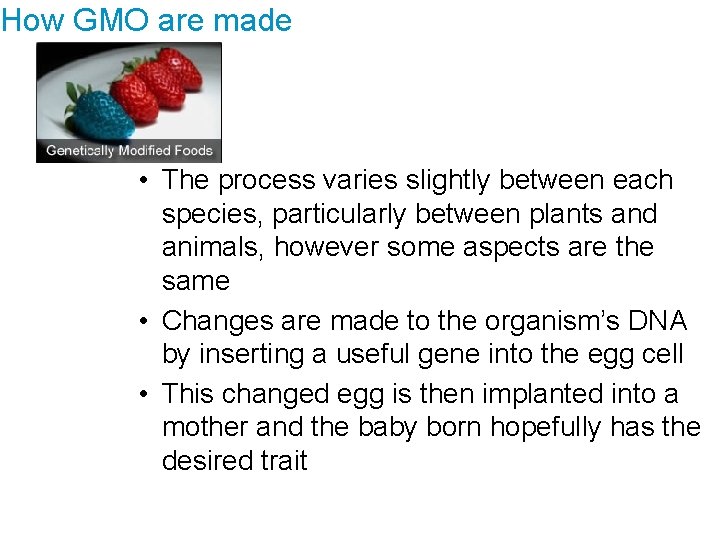
How GMO are made • The process varies slightly between each species, particularly between plants and animals, however some aspects are the same • Changes are made to the organism’s DNA by inserting a useful gene into the egg cell • This changed egg is then implanted into a mother and the baby born hopefully has the desired trait
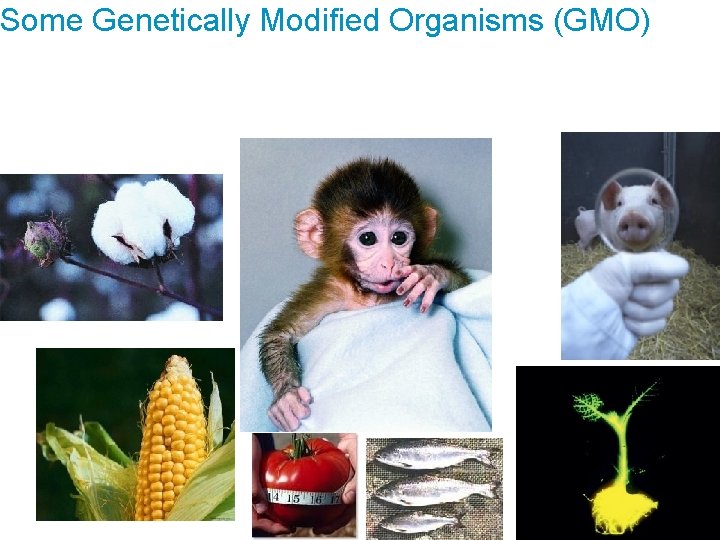
Some Genetically Modified Organisms (GMO)
Why make GMOs? • To give plants resistance to certain pests without the use of pesticides • To make plants drought resistant • To make cows that produce more milk • To make vegetables that can undergo long transport without over-ripening • To make chickens that contain extra vitamins that may be missing from our diets
- Slides: 41